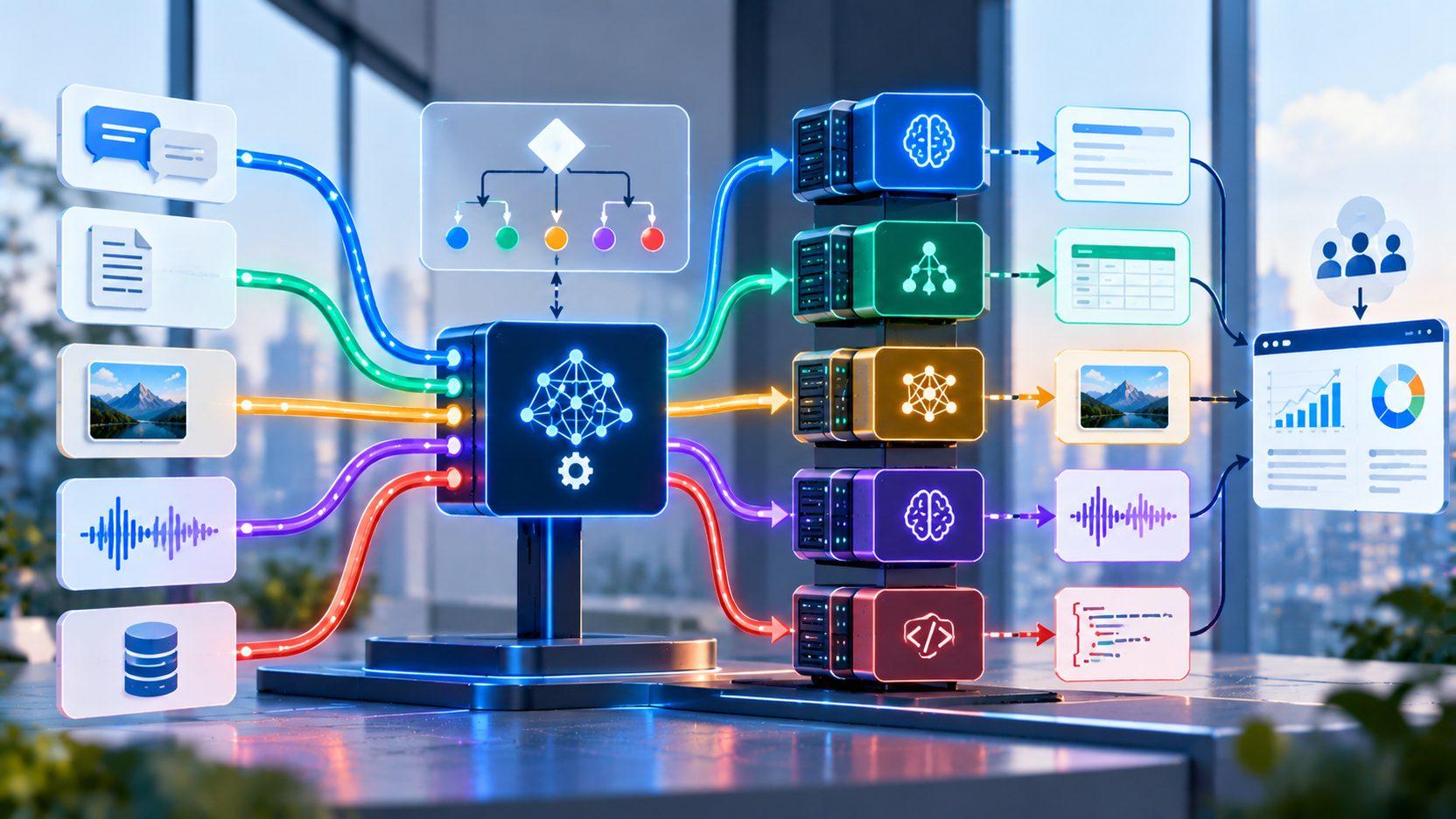

Section 1: Why Static AI Systems Are No Longer Enough: The Rise of Adaptive Intelligence
Artificial intelligence has become deeply embedded in the software products people use every day, from personalized shopping experiences and intelligent search engines to fraud detection systems and AI-powered assistants. While these applications appear seamless from a user's perspective, they operate in environments that change continuously. Customer preferences evolve, new products enter the market, seasonal trends emerge unexpectedly, regulations reshape business operations, and competitors influence user expectations through constant innovation. An AI model that performs exceptionally well today may gradually become less effective if it continues relying on assumptions learned from yesterday's data.
For software engineers moving into machine learning, this represents one of the most significant differences between traditional software development and AI engineering. Conventional software follows deterministic logic where identical inputs consistently produce identical outputs unless the underlying code changes. Machine learning systems, however, are driven by statistical patterns extracted from historical data, and those patterns are only reliable as long as the real world behaves similarly to the environment in which the model was trained. Once user behavior begins to shift, even highly accurate models can experience declining performance despite having no implementation defects.
Why User Behavior Evolves Faster Than AI Models
Every interaction between a user and a digital product generates valuable information about changing preferences, yet many AI systems fail because they assume those preferences remain relatively stable. In reality, user behavior changes for numerous reasons, many of which occur outside the boundaries of the application itself. Economic conditions influence purchasing decisions, new technologies reshape customer expectations, cultural events alter online activity, and even small interface updates can encourage users to interact with a product differently than before. These evolving patterns introduce changes into the underlying data distribution, making historical datasets progressively less representative of future behavior.
Consider an e-commerce platform that recommends products based on browsing history. During a major holiday season, purchasing patterns often differ dramatically from the rest of the year as users search for gifts rather than personal items. Similarly, after introducing a new product category, customers begin exploring unfamiliar sections of the platform, creating behavioral signals that did not exist when the recommendation model was originally trained. If the AI system continues relying on outdated patterns, recommendations become less relevant, reducing engagement and ultimately affecting revenue. The model itself may still function exactly as designed, but its understanding of user intent gradually becomes disconnected from reality.
This challenge extends well beyond recommendation systems. Fraud detection platforms encounter new attack strategies as cybercriminals modify their techniques. Intelligent search engines must adapt when users adopt emerging terminology. Customer support assistants need to recognize evolving product issues after software updates. In every case, the core problem remains the same: the environment changes more quickly than the model's internal representation of that environment.
Building Adaptive AI Systems Through Continuous Learning
The solution to changing user behavior is not simply to develop increasingly sophisticated machine learning algorithms. While advances in transformer models, reinforcement learning, and large language models have expanded what AI can accomplish, adaptability is primarily achieved through system design rather than algorithmic complexity alone. An adaptive AI system is built to learn from fresh interactions, evaluate its own performance, and incorporate new information into future predictions while maintaining stability and reliability.
Achieving this requires engineers to think beyond model training and focus on the complete machine learning lifecycle. Every click, search query, purchase, abandoned transaction, user rating, and navigation path becomes a feedback signal that can improve future predictions. Instead of treating these interactions as passive logs, modern AI platforms transform them into continuously evolving datasets that represent current user behavior. Feature engineering therefore becomes an ongoing process where recent activity, contextual information, temporal patterns, and engagement metrics are updated frequently to ensure that predictions reflect the latest state of the application rather than outdated assumptions.
Equally important is the ability to monitor production performance. An adaptive AI system should identify declining prediction quality before users begin experiencing noticeable issues. Monitoring frameworks evaluate changes in feature distributions, compare current predictions with historical baselines, measure business metrics such as engagement or conversion rates, and determine whether retraining or additional investigation is necessary. This operational mindset distinguishes production-ready AI systems from experimental machine learning projects because the objective is not merely to achieve high validation accuracy but to sustain that performance over months or years despite changing user behavior.
For engineers preparing for senior ML Engineering interviews, understanding this end-to-end lifecycle has become just as important as understanding machine learning algorithms themselves. Designing scalable pipelines that continuously collect feedback, monitor model health, and deploy improvements safely is now a core expectation in system design discussions. Readers who want a deeper understanding of how production-ready machine learning systems evolve from experimentation to deployment should also read "From Model to Product: How to Discuss End-to-End ML Pipelines in Interviews," which complements the concepts introduced in this guide and explains the broader engineering practices behind production AI systems.
Key Takeaway
Static machine learning models are no longer sufficient for real-world applications because user behavior, business objectives, and market conditions evolve continuously. The most successful AI systems are designed as adaptive learning platforms that monitor changing behavior, learn from fresh data, and improve over time through robust engineering practices rather than relying solely on increasingly complex algorithms. This shift from building accurate models to building continuously improving systems forms the foundation of modern AI engineering and sets the stage for the architectural principles explored in the next section.
Section 2: The Core Components of AI Systems That Learn from User Behavior
Designing an adaptive AI system requires far more than selecting the right machine learning algorithm. While predictive models receive significant attention, they represent only one component of a much larger ecosystem responsible for keeping AI relevant in dynamic environments. An intelligent system that successfully adapts to changing user behavior continuously captures new information, transforms that information into meaningful features, evaluates model performance, and updates itself without disrupting the user experience. The emphasis shifts from building a single high-performing model to creating an engineering architecture that enables continuous learning while maintaining reliability, scalability, and governance.
This architectural perspective has become increasingly important because production AI systems now operate in environments where millions of user interactions generate valuable behavioral signals every day. Every search query, product click, session duration, navigation path, purchase decision, or support request provides fresh evidence about evolving user preferences. Organizations that effectively convert these interactions into actionable learning signals gain a significant competitive advantage because their AI systems remain aligned with real-world behavior instead of relying solely on historical assumptions. Understanding how these components work together is therefore essential for software engineers preparing to build enterprise-scale AI applications.
Building Robust Feedback Loops That Capture Meaningful User Signals
At the heart of every adaptive AI system lies a feedback loop that enables the application to learn from its own predictions. Unlike conventional software, where functionality changes only after developers modify the codebase, adaptive AI continuously refines its understanding of users by analyzing how people respond to its recommendations, predictions, or decisions. This creates a cycle in which every interaction contributes to future improvements, allowing the system to evolve alongside changing user expectations.
Designing an effective feedback loop begins with identifying which user actions genuinely reflect intent. Explicit feedback, such as ratings, reviews, or survey responses, provides direct insight into user satisfaction, but it is often limited because relatively few users voluntarily provide it. Consequently, production AI systems rely heavily on implicit feedback collected through natural interactions. Metrics such as click-through rates, time spent viewing content, repeated searches, abandoned transactions, feature usage frequency, and navigation behavior collectively reveal far more about user preferences than isolated survey responses.
The challenge for engineers is determining which behavioral signals deserve greater influence during future learning cycles. A user who briefly clicks on a recommendation may simply be exploring options, whereas a completed purchase or sustained engagement typically represents a much stronger indicator of genuine interest. Adaptive AI systems therefore assign different levels of importance to different interactions, ensuring that meaningful behavioral patterns gradually shape future predictions while reducing the influence of noisy or accidental actions.
These feedback mechanisms also require careful engineering because production environments generate enormous volumes of interaction data. Streaming architectures, event-driven systems, and scalable data pipelines ensure that behavioral events are captured with minimal latency while maintaining data quality and consistency. Without reliable data collection, even the most sophisticated machine learning models lose their ability to adapt because they no longer receive an accurate representation of how users are interacting with the product.
Transforming Behavioral Data into Continuous Learning Pipelines
Collecting behavioral data is only the beginning of the adaptation process. Raw interaction logs have little value unless they can be transformed into structured information that machine learning models can interpret efficiently. This transformation is performed through continuous learning pipelines that bridge the gap between user activity and model improvement.
Modern AI systems rarely retrain models whenever new data arrives because doing so would consume excessive computational resources while introducing unnecessary operational complexity. Instead, engineering teams build pipelines that continuously validate incoming data, monitor feature quality, detect anomalies, and determine when behavioral changes are significant enough to justify updating the model. These pipelines ensure that learning remains both efficient and stable rather than reacting impulsively to every temporary fluctuation in user activity.
Feature freshness plays a particularly important role in adaptive AI. Features representing user interests, engagement history, purchasing frequency, search patterns, or contextual preferences gradually become outdated as behavior changes. By recalculating these features regularly, AI systems maintain an up-to-date representation of each user's evolving interests without requiring complete model redevelopment. This capability becomes especially valuable in applications where personalization directly influences business outcomes, such as recommendation systems, intelligent search, digital advertising, and customer engagement platforms.
Another important consideration involves balancing short-term behavioral changes with long-term user preferences. AI systems that respond too aggressively to recent interactions may become unstable, producing inconsistent recommendations based on temporary curiosity rather than sustained interest. Conversely, systems that rely too heavily on historical behavior risk becoming insensitive to genuine changes in user intent. Effective adaptive AI architectures therefore combine recent behavioral signals with longer historical patterns, enabling models to recognize meaningful changes while preserving stability over time.
Engineers preparing for machine learning system design interviews are increasingly expected to understand these production considerations because successful AI deployment depends as much on robust data infrastructure as it does on predictive accuracy. Readers interested in exploring how scalable machine learning infrastructure supports these continuous learning workflows should also read "MLOps vs. ML Engineering: What Interviewers Expect You to Know in 2025," which provides additional insight into the operational foundations that enable enterprise AI systems to evolve safely and efficiently.
Balancing Adaptability with Stability in Production AI Systems
One of the greatest engineering challenges in adaptive AI is ensuring that systems continue learning without becoming unpredictable. While continuous adaptation improves relevance, excessive responsiveness can introduce instability that negatively affects both users and business operations. Production AI therefore requires carefully designed safeguards that balance innovation with consistency.
A common strategy involves evaluating new models in controlled environments before exposing them to the entire user population. Engineers monitor prediction quality, business metrics, latency, and user engagement to determine whether updated models genuinely outperform existing deployments. This incremental approach minimizes operational risk while allowing organizations to benefit from continuous improvement.
Monitoring extends beyond traditional accuracy metrics because adaptive systems must also evaluate fairness, robustness, and reliability over time. A model that improves click-through rates while introducing demographic bias or reducing prediction consistency cannot be considered a successful update. Consequently, modern AI engineering incorporates comprehensive observability frameworks capable of tracking both technical performance and business outcomes throughout the model lifecycle.
Key Takeaway
Adaptive AI systems succeed because they are built around continuous feedback, reliable data pipelines, and carefully engineered learning workflows rather than relying solely on advanced machine learning algorithms. By capturing meaningful user interactions, transforming them into high-quality learning signals, and balancing continuous improvement with production stability, organizations create AI platforms capable of evolving alongside changing user behavior while maintaining the reliability expected from enterprise software.
Section 3: Engineering Challenges in Building Adaptive AI Systems
Developing an AI system that learns from changing user behavior is considerably more challenging than deploying a machine learning model into production. While the concept of continuous learning sounds straightforward, the engineering reality involves managing enormous volumes of behavioral data, preventing unstable model updates, maintaining user trust, and ensuring that system performance remains reliable under constantly changing conditions. As organizations scale their AI capabilities, these challenges become increasingly complex because every improvement introduced into the learning process has the potential to affect millions of users simultaneously.
For software engineers, this means that adaptive AI cannot be approached solely as a machine learning problem. It requires a combination of distributed systems engineering, data engineering, software architecture, model governance, and operational monitoring. The most successful engineering teams therefore spend as much time designing resilient infrastructure as they do developing predictive models. This systems-oriented approach has become one of the defining characteristics of modern AI engineering, particularly within organizations where intelligent applications directly influence customer experience and business outcomes.
Preventing Model Drift Without Sacrificing Stability
One of the most significant obstacles in adaptive AI is ensuring that models continue learning from new behavior without becoming unstable. Every day, production systems encounter fresh user interactions that differ from historical training data. Some changes represent meaningful shifts in customer preferences, while others are temporary fluctuations caused by seasonal events, marketing campaigns, product launches, or short-lived internet trends. Distinguishing between these scenarios is critical because updating a model too frequently can be just as damaging as failing to update it altogether.
A common mistake in adaptive AI design is assuming that every new behavioral pattern should immediately influence future predictions. In reality, reacting too aggressively often produces unstable systems that continuously change their behavior based on short-term noise rather than genuine long-term trends. Imagine an intelligent content recommendation platform where a viral topic suddenly dominates user engagement for several days. If the recommendation engine completely restructures its ranking strategy around this temporary spike, users may receive increasingly repetitive suggestions while other valuable content becomes difficult to discover. Once the trend disappears, the system must then readjust again, creating an inconsistent user experience.
To avoid this problem, engineering teams implement mechanisms that evaluate behavioral changes before incorporating them into production models. Statistical monitoring identifies whether new data represents a meaningful distribution shift rather than ordinary variation. Shadow deployments compare updated models against existing production models without exposing users to unnecessary risk, while gradual rollout strategies allow engineers to validate improvements using a small percentage of traffic before wider deployment. These practices ensure that adaptation occurs in a controlled and measurable manner instead of introducing unpredictable changes into production environments.
Another important consideration involves preserving institutional knowledge within the model. Users often display long-term preferences that remain valuable even as short-term interests fluctuate. An AI system should therefore balance historical understanding with recent behavioral signals rather than replacing one entirely with the other. Maintaining this equilibrium enables adaptive models to remain responsive without becoming erratic, ensuring that learning enhances user experience instead of creating inconsistency.
Scaling Adaptive AI Across Millions of Users
The complexity of adaptive AI increases dramatically as applications grow. A prototype developed for a few thousand users can often rely on periodic retraining and relatively simple monitoring processes, but production systems serving millions of users generate behavioral data at a scale that fundamentally changes architectural requirements. Every interaction becomes a potential learning signal, creating continuous streams of events that must be processed, validated, stored, and transformed into features without introducing unacceptable latency.
Scalability therefore becomes an architectural challenge rather than simply a computational one. Engineers must determine how behavioral events flow through streaming pipelines, how feature stores maintain fresh representations of user activity, and how model-serving infrastructure delivers predictions while simultaneously collecting feedback for future learning. Each component must operate independently while remaining synchronized with the rest of the ecosystem to ensure that adaptation occurs efficiently and reliably.
Maintaining consistency across distributed systems introduces additional complexity. Behavioral data collected from multiple devices, geographic regions, and application services may arrive at different times or contain incomplete information. Without robust validation processes, these inconsistencies can gradually reduce model quality because the learning pipeline begins incorporating inaccurate or duplicated observations. Modern AI platforms therefore include automated validation rules that detect missing values, unusual feature distributions, duplicate events, and unexpected schema changes before behavioral data reaches production models.
Scalability also extends beyond infrastructure into organizational processes. Data scientists, software engineers, ML engineers, platform engineers, and product managers must collaborate continuously because adaptive AI is no longer an isolated research initiative. Decisions regarding feature engineering, deployment schedules, monitoring thresholds, and business objectives all influence how effectively the system learns from changing user behavior. As AI becomes increasingly integrated into enterprise software, cross-functional collaboration has become just as important as technical expertise in delivering successful production systems.
For engineers preparing for senior machine learning roles, understanding these large-scale architectural considerations has become essential. Modern interviews increasingly evaluate whether candidates can explain not only how an AI model works but also how supporting infrastructure enables reliable deployment, monitoring, and continuous improvement. Readers interested in exploring these production engineering principles further should also read "Why ML Engineers Are Becoming the New Full-Stack Engineers," which examines how today's ML professionals combine software engineering, infrastructure, and machine learning expertise to build scalable AI platforms.
Maintaining User Trust Through Responsible Adaptation
An adaptive AI system cannot be considered successful if continuous learning undermines user confidence. Every model update has the potential to influence recommendations, automated decisions, search rankings, or personalized experiences, making trust one of the most valuable assets an AI product can possess. Engineers must therefore ensure that adaptation improves relevance without creating unpredictable behavior, unfair outcomes, or reduced transparency.
Responsible adaptation begins with comprehensive observability. Production AI systems should continuously monitor prediction quality, feature health, latency, and business metrics while also evaluating fairness across different user populations. A model that increases engagement while introducing systematic bias or inconsistent decision-making ultimately creates long-term risks that outweigh short-term performance gains. Monitoring frameworks therefore extend beyond technical accuracy to include ethical, operational, and business considerations throughout the model lifecycle.
Equally important is maintaining explainability within adaptive systems. As models evolve, engineering teams need sufficient visibility into why predictions change over time and whether those changes align with expected behavioral patterns. This enables faster debugging, more effective governance, and greater confidence when deploying updated models into production. Organizations increasingly document model lineage, feature evolution, and deployment history so that every production decision remains traceable even as the AI system continues learning.
Key Takeaway
Building adaptive AI systems involves far more than enabling continuous learning. Engineers must carefully balance responsiveness with stability, design infrastructure capable of processing behavioral data at scale, and establish governance practices that preserve reliability and user trust. Organizations that successfully address these challenges create AI platforms that remain accurate, resilient, and dependable even as user behavior evolves, transforming machine learning from a static prediction tool into a continuously improving engineering system.
Section 4: The Future of Adaptive AI: Emerging Trends Every Software Engineer Should Understand
The next generation of AI systems will not simply respond to changing user behavior more quickly; they will anticipate change, learn continuously, and make increasingly intelligent decisions with minimal human intervention. This evolution represents a significant departure from the traditional machine learning lifecycle, where engineers periodically retrained models using newly collected datasets. Instead, adaptive AI is becoming an always-on capability that combines real-time data processing, autonomous decision-making, and continuous optimization to create systems capable of evolving alongside the environments in which they operate.
For software engineers, this shift changes the nature of AI development itself. Success is no longer measured solely by achieving high model accuracy during offline evaluation but by building resilient systems that remain effective as user expectations, business objectives, and external conditions evolve. Organizations across industries are therefore investing heavily in architectures that prioritize flexibility, observability, and continuous improvement rather than static predictive performance. Understanding these emerging trends enables engineers to design systems that remain relevant for years rather than becoming obsolete shortly after deployment.
Agentic AI and Autonomous Decision-Making Will Redefine Adaptive Systems
One of the most significant developments shaping adaptive AI is the emergence of agentic AI systems. Unlike conventional machine learning models that produce predictions for individual requests, AI agents are capable of pursuing long-term objectives by planning actions, gathering information, evaluating outcomes, and adjusting their strategies based on feedback. This capability dramatically expands the role of adaptive AI because learning extends beyond improving predictions to optimizing entire workflows through continuous interaction with dynamic environments.
Consider an AI-powered customer support platform that initially assists users by answering common questions. A traditional system may improve response quality through periodic retraining, but an agentic system can go much further. It can recognize recurring customer issues, identify gaps in existing documentation, recommend improvements to internal knowledge bases, and adjust its problem-solving strategies based on evolving customer behavior. Instead of simply generating better answers, the AI continuously improves the overall support process by learning from operational outcomes.
This progression toward autonomous decision-making is particularly relevant as enterprises increasingly deploy AI across interconnected business functions. Recommendation engines, intelligent scheduling systems, cybersecurity platforms, and enterprise automation tools are gradually transitioning from reactive prediction models into adaptive agents capable of managing complex objectives with limited human supervision. Engineers building these systems must therefore think beyond traditional model training and consider planning algorithms, memory management, contextual reasoning, and safe decision-making frameworks that enable autonomous adaptation without compromising reliability.
Although these capabilities continue to mature, one principle remains constant: autonomy requires robust engineering safeguards. Adaptive agents must operate within clearly defined constraints, maintain comprehensive audit trails, and provide sufficient transparency to ensure that autonomous improvements remain aligned with organizational objectives and user expectations.
Real-Time AI Infrastructure Will Become a Competitive Advantage
The increasing demand for adaptive intelligence is also reshaping AI infrastructure. Historically, many machine learning systems relied on batch processing, where new behavioral data accumulated over hours or days before influencing future predictions. While this approach remains suitable for certain business applications, products that depend on immediate personalization increasingly require infrastructure capable of processing behavioral events within seconds or even milliseconds.
Achieving this level of responsiveness requires significant advances in engineering architecture. Event-driven systems, streaming data platforms, feature stores, low-latency model serving infrastructure, and automated monitoring pipelines must work together to ensure that new behavioral signals influence predictions without introducing operational instability. Rather than viewing data engineering and machine learning as separate disciplines, organizations now integrate them into unified production platforms where information flows continuously from user interactions to model improvement.
This architectural evolution also changes how engineering teams collaborate. ML Engineers work more closely with backend developers, platform engineers, DevOps specialists, and data engineers because maintaining adaptive AI requires coordinated ownership across the entire production ecosystem. Decisions regarding data quality, deployment automation, infrastructure scalability, observability, and governance all influence how effectively AI systems respond to changing user behavior.
The demand for these multidisciplinary skills explains why employers increasingly seek engineers who understand both software engineering principles and production machine learning workflows. Professionals capable of designing scalable infrastructure alongside intelligent algorithms are becoming essential contributors to enterprise AI initiatives because adaptive systems succeed only when every component of the architecture supports continuous learning.
Readers interested in expanding these production engineering capabilities should also explore "End-to-End ML Project Walkthrough: A Framework for Interview Success," which demonstrates how modern machine learning projects evolve from problem definition to production deployment while incorporating many of the architectural principles discussed throughout this guide.
Human Oversight Will Remain Essential as AI Becomes More Adaptive
Despite rapid advances in autonomous learning, adaptive AI will not eliminate the need for human expertise. Instead, engineers will increasingly focus on supervising intelligent systems, defining operational boundaries, validating model behavior, and ensuring that AI continues serving both business objectives and user interests responsibly. Human oversight becomes even more important as adaptive systems influence higher-stakes decisions involving finance, healthcare, cybersecurity, hiring, and enterprise operations.
Future AI platforms are expected to incorporate stronger governance mechanisms that monitor not only technical performance but also fairness, explainability, regulatory compliance, and operational risk. Continuous learning introduces new challenges because model behavior evolves over time, making it essential to understand why predictions change and whether those changes remain consistent with organizational policies. Engineering teams will therefore invest heavily in automated observability frameworks capable of tracking feature evolution, monitoring prediction quality, documenting deployment history, and identifying unintended consequences before they affect end users.
For software engineers, this evolution presents an exciting opportunity. As AI becomes more deeply integrated into modern applications, the ability to design systems that balance adaptability with governance will become one of the most valuable engineering competencies. Engineers who understand how to build AI that evolves responsibly will be well positioned to lead the next generation of intelligent software development.
Key Takeaway
The future of adaptive AI lies in intelligent systems that combine autonomous learning, real-time infrastructure, and responsible engineering practices. While AI will become increasingly capable of adapting to changing user behavior with minimal manual intervention, long-term success will continue to depend on robust architecture, comprehensive monitoring, and thoughtful human oversight. Software engineers who develop expertise in these areas will play a central role in shaping the next generation of scalable, trustworthy, and continuously evolving AI systems.
Conclusion
Designing AI systems that adapt to changing user behavior is no longer a futuristic concept, it is becoming a fundamental requirement for building intelligent software that remains effective in dynamic environments. As user preferences, market trends, and business priorities continue to evolve, static machine learning models quickly lose their relevance unless they are supported by continuous learning mechanisms. Modern AI systems must therefore go beyond generating accurate predictions; they must also monitor performance, learn from new interactions, detect behavioral shifts, and improve without compromising reliability or user trust.
For software engineers, this transformation expands the role of AI development beyond model training. Building adaptive AI requires expertise in data engineering, feature management, MLOps, model monitoring, and scalable system architecture. Organizations that invest in these capabilities can create AI-powered products that deliver more personalized experiences, respond faster to changing customer needs, and maintain long-term business value. As AI adoption accelerates across industries, engineers who understand how to design continuously evolving systems will be better equipped to build the next generation of intelligent applications and succeed in senior AI and Machine Learning Engineering roles.
Frequently Asked Questions
1. What is adaptive AI?
Adaptive AI refers to artificial intelligence systems that continuously learn from new data and user interactions after deployment, allowing them to improve performance as behavior and environments change.
2. Why do AI models need to adapt?
User behavior, business requirements, and market conditions evolve over time. Without adaptation, machine learning models become less accurate because they continue relying on outdated patterns learned during training.
3. How is adaptive AI different from traditional machine learning?
Traditional machine learning typically involves training a model and updating it periodically. Adaptive AI continuously monitors data, collects feedback, detects changes, and incorporates new information into future predictions.
4. What is model drift?
Model drift occurs when a production model's performance declines because the relationship between input data and expected outcomes changes over time, making historical training data less representative.
5. What are feedback loops in AI systems?
Feedback loops capture user interactions such as clicks, purchases, searches, or ratings and use them as learning signals to improve future predictions and recommendations.
6. Why is data quality important for adaptive AI?
Adaptive AI depends on accurate, timely, and consistent data. Poor-quality data can introduce incorrect learning patterns, reducing prediction accuracy and overall system reliability.
7. What role does MLOps play in adaptive AI?
MLOps provides the infrastructure for automating model deployment, monitoring, retraining, version control, and lifecycle management, ensuring adaptive AI systems remain reliable in production.
8. Which applications benefit the most from adaptive AI?
Recommendation systems, intelligent search, fraud detection, cybersecurity, virtual assistants, predictive maintenance, and personalized customer experiences all benefit from continuously learning AI.
9. Can adaptive AI update itself automatically?
Many adaptive AI systems automate data collection, monitoring, and retraining. However, production environments still require human oversight to validate updates and ensure fairness, reliability, and compliance.
10. What challenges do engineers face when building adaptive AI?
Common challenges include model drift, maintaining feature freshness, processing real-time data, ensuring scalability, preventing unstable model updates, and balancing automation with governance.
11. How do feature stores support adaptive AI?
Feature stores maintain consistent, reusable, and up-to-date features for both training and inference, enabling models to learn from the latest user behavior efficiently.
12. What skills should software engineers develop for adaptive AI?
Engineers should strengthen their understanding of machine learning, distributed systems, data engineering, cloud platforms, streaming architectures, MLOps, feature engineering, and ML system design.
13. How are adaptive AI concepts tested in ML interviews?
Interviewers often evaluate a candidate's ability to design scalable ML systems, explain feedback loops, detect model drift, manage data pipelines, and maintain production AI over time.
14. Is adaptive AI only useful for large technology companies?
No. Businesses of all sizes can benefit from adaptive AI, particularly those that rely on personalization, customer engagement, operational optimization, or data-driven decision-making.
15. Why is adaptive AI considered the future of machine learning?
Adaptive AI enables systems to evolve alongside changing users and business environments, making AI solutions more resilient, accurate, and valuable over the long term than static machine learning models.