
Section 1: The Shift from Memorization to Augmented Thinking
The New Reality of Interview Preparation
Interview preparation for engineers has moved through a quiet but profound transformation. What once depended heavily on memorizing algorithms, revisiting curated problem sets, and mastering repeatable patterns has now evolved into something far more dynamic. With the rise of tools from organizations like OpenAI, Google, and platforms such as GitHub, candidates are preparing in an environment where intelligence is no longer confined to the individual.
This shift does not reduce the importance of fundamentals. Instead, it changes how those fundamentals are applied. Engineers are no longer expected to operate as isolated problem solvers. They are expected to function in systems where AI assists with generating ideas, debugging approaches, and even proposing system designs. Preparation, therefore, has expanded beyond learning “what to do” into understanding how to think, evaluate, and adapt when assisted by intelligent tools.
In this new reality, the strongest candidates are not those who can recall the most solutions, but those who can navigate complexity with clarity, using both their own reasoning and external augmentation effectively.
From Static Knowledge to Adaptive Reasoning
Earlier preparation models rewarded repetition. Candidates would solve hundreds of problems to internalize patterns and recognize familiar structures quickly. While this approach still builds useful intuition, it is no longer sufficient in isolation.
Modern interview preparation emphasizes adaptive reasoning. Engineers must be comfortable working through unfamiliar problems, interpreting incomplete information, and adjusting their approach as new constraints emerge. AI tools can generate possible solutions instantly, but they cannot guarantee that those solutions are correct, optimal, or aligned with the problem’s intent.
This creates a new requirement: candidates must be able to critically evaluate generated ideas. Instead of asking “Do I know this pattern?”, the more relevant question becomes “Does this approach make sense in this context?”
For example, in system design discussions, AI might suggest a scalable architecture. However, without understanding the trade-offs, latency, cost, consistency, the candidate cannot justify or refine that design. Interviews are increasingly structured to reveal whether the candidate can move beyond surface-level correctness into deep, context-aware reasoning.
The Emergence of AI as a “Second Brain”
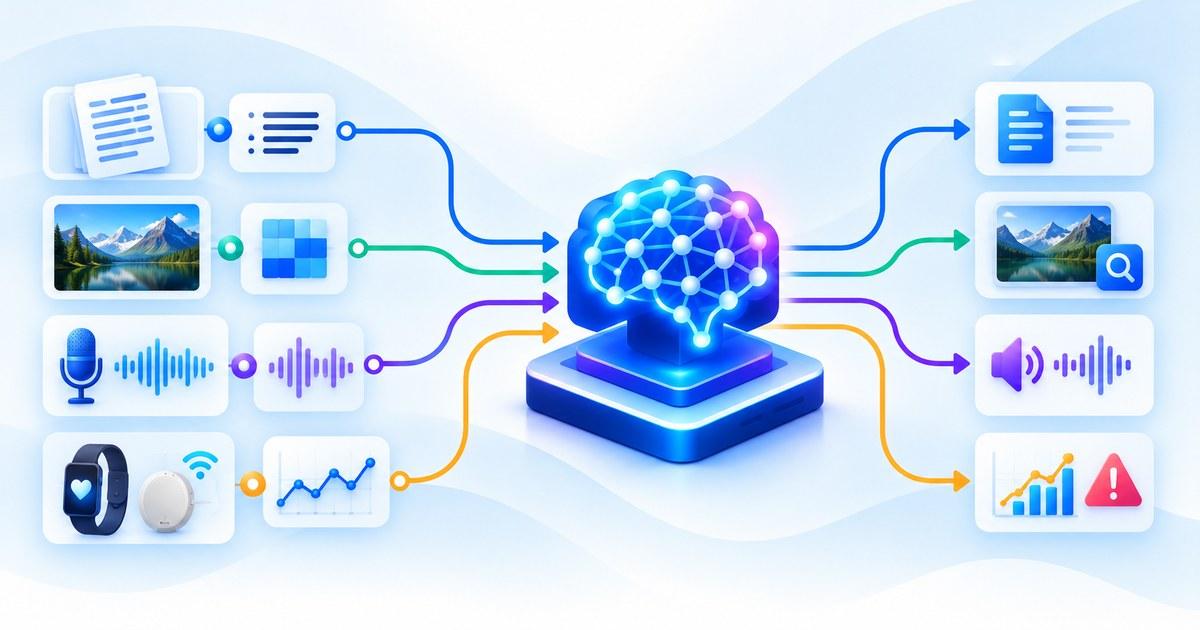
A defining feature of current preparation strategies is the integration of AI tools as an extension of cognition, a “second brain.” Engineers use these systems to explore concepts, generate explanations, and test alternative approaches at a speed that was previously impossible.
This changes how learning happens. Instead of spending hours searching for resources or piecing together information manually, candidates can now iterate rapidly, asking targeted questions and receiving immediate feedback. This accelerates exposure to diverse scenarios and broadens the range of problems candidates can engage with.
However, this advantage comes with a subtle risk. When information is readily available, it becomes easy to mistake access for understanding. Candidates may feel confident because they can produce answers quickly, but struggle when asked to explain underlying reasoning or adapt those answers to new conditions.
The most effective candidates treat AI not as a source of final answers, but as a tool for exploration and refinement. They use it to challenge their assumptions, test their thinking, and deepen their understanding rather than replace it.
How Interview Expectations Are Evolving
As preparation methods evolve, interview processes are adapting in parallel. Companies such as Meta, Amazon, and Google are increasingly designing interviews that surface skills that cannot be easily outsourced to AI.
The focus has shifted toward evaluating how candidates think under uncertainty. Interviewers are paying closer attention to how problems are framed, how assumptions are clarified, and how decisions are justified. The ability to articulate reasoning has become as important as arriving at a correct solution.
This shift is reinforced in The Second Brain Effect: How AI Tools Are Reshaping Technical Preparation, where preparation is described not as memorizing answers but as building the ability to navigate, validate, and synthesize information in real time .
Candidates are expected to demonstrate ownership of their thinking. Even when tools are available, the responsibility for correctness, clarity, and decision-making remains with the engineer.
The Augmented Engineer Mindset
The emerging standard is not defined by raw knowledge alone, but by the ability to operate as an augmented engineer. In this model, the engineer and the AI system form a complementary pair.
The engineer contributes judgment, context, and accountability. AI contributes speed, breadth of information, and rapid iteration. The effectiveness of this partnership depends entirely on how well the engineer can guide, question, and refine the outputs of the system.
This mindset changes how candidates approach preparation. Instead of competing with AI on speed or recall, they focus on developing capabilities that AI lacks, critical thinking, contextual awareness, and decision-making under ambiguity.
Interviews are increasingly designed to detect this mindset. Candidates who demonstrate independent reasoning, even when discussing ideas that could be generated by AI, signal that they can operate effectively in modern engineering environments.
Why This Shift Matters for Candidates
The transition from memorization to augmented thinking represents more than a change in tools; it represents a change in expectations. Candidates who rely solely on traditional preparation methods may find themselves well-prepared for familiar problems but less equipped to handle novel or evolving scenarios.
In contrast, candidates who embrace augmented thinking develop a more flexible approach. They become comfortable exploring multiple solutions, validating assumptions, and adapting their reasoning as new information becomes available.
This flexibility is what modern interviews are designed to evaluate. It reflects the realities of engineering work, where problems are rarely static and solutions must evolve continuously.
The Key Takeaway
Interview preparation in an AI-augmented workplace is no longer about memorizing solutions, it is about developing the ability to think, evaluate, and adapt in collaboration with intelligent tools. Engineers who can combine strong fundamentals with critical reasoning and effective use of AI are best positioned to succeed in both interviews and real-world environments.
Section 2: System Design - Applying AI-Augmented Thinking in ML/System Design Interviews
System Design in the Age of Augmentation
In modern interviews at companies like Google, Meta, and Amazon, system design is no longer evaluated as a static demonstration of memorized architectures. Instead, it has evolved into a test of how candidates reason through complex, evolving problems in real time, often reflecting how they would operate in an AI-augmented workplace.
AI has fundamentally changed how engineers approach system design in preparation. Candidates can now explore architectures, compare trade-offs, and simulate scenarios rapidly using tools powered by organizations like OpenAI. However, during interviews, the expectation is not that candidates replicate AI-generated answers, but that they demonstrate independent judgment, adaptability, and structured thinking.
System design discussions have therefore become a space where interviewers assess how well candidates can integrate augmented learning into human-driven reasoning.
Starting with Problem Framing, Not Architecture
One of the clearest differences in AI-augmented preparation is the emphasis on problem framing before solution design.
In earlier preparation models, candidates often began with a known architecture and adapted it to the problem. Today, strong candidates begin by understanding the problem deeply. They clarify requirements, identify constraints, and define success criteria before proposing any solution.
This shift is critical because AI tools can generate architectures quickly, but they cannot reliably determine whether those architectures are appropriate for a given context. The responsibility for framing the problem correctly lies entirely with the engineer.
During interviews, candidates who jump directly into architecture without establishing context often produce solutions that are technically sound but misaligned with the problem. In contrast, candidates who take time to frame the problem demonstrate a level of thinking that aligns with real-world engineering.
Using AI-Augmented Thinking Without Over-Reliance
AI has introduced a new dynamic into system design preparation: the ability to explore multiple design options rapidly. Candidates can evaluate different approaches, compare trade-offs, and understand edge cases more efficiently than before.
However, this capability creates a potential pitfall. Candidates may internalize solutions without fully understanding the reasoning behind them. In interviews, this becomes evident when they struggle to explain why a particular design was chosen or how it behaves under different conditions.
Strong candidates use AI as a tool for exploration, not as a source of final answers. They internalize the reasoning behind different design choices and develop the ability to reconstruct those choices independently.
This means that when discussing system design, they can explain not just what the system looks like, but why it is structured that way, how it handles constraints, and what trade-offs it involves.
Iterative Design and Real-Time Adaptation
System design interviews are inherently iterative. The initial solution is rarely complete, and interviewers introduce new constraints, edge cases, and follow-up questions throughout the discussion.
AI-augmented preparation helps candidates become more comfortable with this iterative process. By practicing with tools that allow rapid exploration and refinement, candidates develop an intuition for how systems evolve.
In interviews, this translates into the ability to adapt designs in real time. When new requirements are introduced, strong candidates do not treat them as minor adjustments. They reassess their design, identify impacted components, and explain how the system evolves.
This iterative approach mirrors real-world engineering, where systems are continuously refined based on new information and changing conditions.
Trade-Off Reasoning in an Augmented Context
One of the most important aspects of system design is trade-off reasoning, and AI has amplified its importance.
AI tools can suggest multiple design options, each with its own advantages and limitations. Candidates must be able to evaluate these options and select the one that best aligns with the problem.
In interviews, this requires a clear understanding of trade-offs such as latency versus throughput, consistency versus availability, and simplicity versus flexibility. It also requires the ability to explain these trade-offs in the context of user requirements and system constraints.
Candidates who rely on memorized architectures often struggle to articulate trade-offs. In contrast, candidates who have practiced evaluating AI-generated alternatives develop a deeper understanding of how different design choices impact system behavior.
This ability to reason about trade-offs is a key signal of system-level thinking.
Maintaining Ownership of the Solution
A critical expectation in AI-augmented environments is that engineers maintain ownership of their solutions.
Even if a design is inspired by AI-generated ideas, the candidate must be able to explain, justify, and adapt it independently. This includes understanding how the system handles edge cases, how it scales, and how it responds to failures.
In interviews, ownership is reflected in the clarity and confidence of the candidate’s explanations. Candidates who truly understand their design can answer follow-up questions, explore alternatives, and refine their approach without hesitation.
Those who rely too heavily on external inputs often struggle when the discussion moves beyond the initial solution.
Maintaining ownership ensures that the candidate’s reasoning remains the central driver of the discussion.
Bridging Augmented Preparation and Human Judgment
The ultimate goal of AI-augmented preparation is not to replace human thinking but to enhance it. System design interviews are designed to test this balance.
Candidates must demonstrate that they can leverage augmented learning while retaining independent judgment and critical thinking. This means being able to evaluate suggestions, adapt to new constraints, and make decisions that are grounded in a deep understanding of the problem.
The Key Takeaway
Applying AI-augmented thinking in system design interviews requires more than familiarity with tools. It demands the ability to frame problems clearly, reason about trade-offs, adapt designs iteratively, and maintain ownership of solutions. Candidates who can integrate these skills demonstrate not only technical expertise but also the judgment needed to succeed in modern engineering environments.
Section 3: How Interviews Test AI-Augmented Thinking
The Shift in Evaluation: From Answers to Reasoning Quality
In interviews at companies like Google, Meta, and Amazon, there has been a clear shift in what is being evaluated. The emphasis is no longer on whether a candidate can arrive at a correct answer quickly, but on how that answer is constructed, validated, and adapted.
This change is directly influenced by the presence of AI tools in everyday engineering workflows. Since generating a plausible solution is easier than ever, interviews are designed to assess whether candidates can demonstrate independent reasoning, critical evaluation, and contextual judgment.
As a result, interviewers are less interested in polished, pre-formed answers and more interested in the process behind the answer. They want to see how candidates navigate uncertainty, how they evaluate alternatives, and how they respond to feedback.
Ambiguity as a Deliberate Testing Mechanism
One of the primary ways interviews test AI-augmented thinking is through intentional ambiguity. Problems are often presented without complete information, requiring candidates to define the scope, clarify assumptions, and structure the problem before proposing solutions.
This ambiguity serves a specific purpose. It forces candidates to move beyond pattern recognition and engage in problem framing and decision-making. AI tools can suggest solutions, but they cannot reliably determine the right problem to solve without proper context.
Candidates who perform well in these scenarios take the time to understand the problem deeply. They ask clarifying questions, identify constraints, and define success criteria. This demonstrates that they can operate effectively even when the problem is not fully specified.
Candidates who struggle often attempt to apply familiar patterns without fully understanding the context, leading to misaligned solutions.
Probing for Validation and Critical Thinking
Another key evaluation method is probing for validation and critical thinking. After a candidate proposes a solution, interviewers often ask follow-up questions that challenge its assumptions.
For example, they may ask how the system behaves under edge cases, how it scales, or what trade-offs are involved. These questions are designed to assess whether the candidate has thought through the implications of their design.
Candidates who rely on surface-level understanding may struggle to answer these questions. They may repeat general principles without connecting them to the specific problem.
In contrast, strong candidates engage with these questions thoughtfully. They analyze the system’s behavior, identify potential weaknesses, and explain how they would address them. This demonstrates a deeper level of understanding and ownership.
Testing Adaptability Through Changing Constraints
Adaptability is another critical aspect of AI-augmented thinking, and interviews actively test it by introducing changing constraints.
A problem may start with certain assumptions, only for the interviewer to modify those assumptions midway. For example, a system designed for batch processing may suddenly require real-time capabilities, or a design optimized for small-scale data may need to scale significantly.
These changes are not arbitrary. They are designed to test whether candidates can re-evaluate their approach and adapt their solution.
Candidates who perform well acknowledge the new constraint, reassess their design, and explain how the system evolves. They treat the change as an opportunity to refine their solution.
Candidates who struggle often attempt to patch their existing design without fully considering the implications, leading to inconsistent or incomplete answers.
Evaluating Depth Through “Why” Questions
A common pattern in interviews is the use of “why” questions. After a candidate proposes a solution, the interviewer may ask why a particular approach was chosen.
This simple question is highly revealing. It tests whether the candidate understands the reasoning behind their decisions or is merely recalling a pattern.
Strong candidates can articulate the rationale for their choices, connecting them to the problem’s requirements and constraints. They can also discuss alternative approaches and explain why they were not chosen.
This level of explanation demonstrates ownership and depth of understanding, which are critical in an AI-augmented environment.
Candidates who cannot answer “why” questions effectively often reveal gaps in their understanding.
Detecting Over-Reliance on AI Patterns
Interviews are also designed to detect over-reliance on AI-generated patterns. As AI tools become more prevalent, candidates may internalize solutions without fully understanding them.
Interviewers look for signals that indicate whether a candidate is genuinely reasoning through the problem or simply reproducing familiar structures.
These signals include inconsistencies in explanations, inability to handle edge cases, and difficulty adapting to new constraints. Candidates who rely on memorized or generated patterns often struggle when the discussion moves beyond the initial solution.
Strong candidates, on the other hand, demonstrate flexibility and depth. They can modify their approach, explore alternatives, and justify their decisions in context.
Assessing Communication and Structured Thinking
Communication plays a crucial role in evaluating AI-augmented thinking. Candidates must be able to articulate their reasoning clearly and structure their thoughts effectively.
Interviewers observe how candidates explain their ideas, how they organize their responses, and how they respond to feedback. Clear communication indicates that the candidate has a strong grasp of the problem and can convey their thinking effectively.
Structured thinking is equally important. Candidates who present their ideas in a logical sequence, starting with problem framing, followed by solution design and trade-off analysis, demonstrate a disciplined approach to problem-solving.
This ability to communicate and structure ideas is essential in real-world engineering, where collaboration and clarity are critical.
The Underlying Evaluation Principle
At its core, the evaluation of AI-augmented thinking is about assessing whether the candidate can combine the strengths of AI with independent human judgment.
Interviewers are not testing whether you can use AI tools directly, but whether you have developed the skills that enable effective use of such tools. These skills include problem framing, critical evaluation, adaptability, and communication.
This perspective is highlighted in The Hidden Metrics: How Interviewers Evaluate ML Thinking, Not Just Code, where success is defined by the ability to navigate complexity, validate solutions, and adapt reasoning in real time .
The Key Takeaway
Interviews test AI-augmented thinking by focusing on reasoning, validation, adaptability, and communication rather than just correctness. Candidates who can frame problems clearly, evaluate solutions critically, and adapt to changing constraints demonstrate the skills needed to succeed in modern engineering environments.
Section 4: Preparation Strategy - How Engineers Are Adapting Their Study Systems
From Study Plans to Learning Systems
In the AI-augmented era, preparation is no longer a linear checklist of topics to cover. Engineers are moving away from rigid study plans toward building adaptive learning systems that evolve with their understanding.
At companies like Google, Meta, and Amazon, interviews reward candidates who can think dynamically, and preparation methods are aligning with that expectation.
Instead of treating preparation as a sequence of tasks, candidates are structuring it as a feedback-driven process. Each practice session becomes a source of insight, revealing gaps in understanding, weaknesses in reasoning, and opportunities for refinement. These insights are then used to adjust the learning approach, creating a cycle of continuous improvement.
This shift reflects the reality that learning in an AI-augmented environment is not about covering more material, but about deepening the quality of understanding and adaptability.
Integrating AI Into Daily Preparation Workflows
Engineers are increasingly integrating AI tools into their daily preparation workflows, not as occasional aids but as core components of their learning systems.
This integration changes how candidates interact with problems. Instead of solving a question once and moving on, they engage in iterative exploration. They generate multiple approaches, compare solutions, and test variations to understand how different choices affect outcomes.
AI enables rapid iteration, allowing candidates to explore a wider solution space in less time. However, the effectiveness of this approach depends on how well candidates can guide and evaluate the interaction.
Strong candidates use AI to challenge their thinking. They ask for alternative solutions, identify discrepancies, and refine their understanding through repeated cycles of questioning and validation. This process transforms preparation from a static activity into a dynamic exploration of possibilities.
Building Validation as a Habit
One of the most significant changes in preparation is the emphasis on validation as a continuous habit.
In traditional preparation, validation often meant checking whether a solution was correct. In an AI-augmented context, validation goes deeper. It involves assessing whether a solution is appropriate, efficient, and aligned with the problem’s constraints.
Candidates are training themselves to question every output, whether it comes from their own reasoning or from AI. They examine assumptions, test edge cases, and consider alternative approaches.
This habit of validation ensures that candidates maintain ownership of their understanding. It prevents over-reliance on external tools and strengthens the ability to reason independently.
Over time, validation becomes second nature, influencing how candidates approach both practice problems and interview questions.
Practicing Iterative Thinking and Adaptation
Preparation is increasingly focused on developing iterative thinking. Instead of aiming for a perfect solution on the first attempt, candidates treat each solution as a starting point that can be refined.
This approach mirrors the structure of modern interviews, where problems evolve through follow-up questions and changing constraints. Candidates who practice iterative thinking are better equipped to adapt their solutions in real time.
During preparation, this involves revisiting problems with new constraints, exploring how solutions change under different scenarios, and reflecting on how decisions impact system behavior.
This iterative mindset also reduces the pressure to be immediately correct. Candidates become more comfortable with uncertainty, focusing on the process of refinement rather than the initial answer.
Simulating Real Interview Dynamics
Another key adaptation is the emphasis on simulation of real interview conditions.
Engineers are moving beyond solitary practice and engaging in interactive sessions that mimic actual interviews. These sessions involve real-time feedback, changing requirements, and collaborative problem-solving.
AI tools can play a role in this simulation by introducing variability and prompting candidates to adapt. However, human interaction remains critical for developing communication and alignment skills.
Through these simulations, candidates learn to manage cognitive load, maintain clarity under pressure, and integrate feedback effectively. This prepares them for the dynamic nature of actual interviews.
Strengthening Explanation and Communication Skills
In an AI-augmented environment, the ability to explain reasoning has become more important than ever. Candidates must be able to articulate their thought process clearly, demonstrating that they understand not just the solution but also the reasoning behind it.
Preparation now includes practicing how to explain decisions, justify trade-offs, and respond to follow-up questions. This involves structuring responses in a way that is logical, concise, and aligned with the problem.
Candidates who focus on explanation develop a stronger grasp of their own thinking. They become more aware of gaps in their understanding and better equipped to address them.
This skill is critical in interviews, where communication is a key evaluation criterion.
Balancing Depth and Breadth in Learning
AI tools make it possible to explore a vast range of topics quickly, but this can lead to shallow understanding if not managed carefully.
Engineers are learning to balance breadth and depth in their preparation. They use AI to gain exposure to a wide range of concepts, but they also invest time in deeply understanding core principles.
This balance ensures that candidates are both versatile and grounded. They can adapt to different types of questions while maintaining a strong foundation in fundamental concepts.
Evolving Toward a Self-Correcting Preparation System
The most effective preparation strategies are evolving into self-correcting systems. These systems continuously adapt based on feedback, ensuring that learning remains aligned with the candidate’s goals.
Candidates track their performance, identify recurring challenges, and adjust their approach accordingly. AI tools support this process by providing insights and enabling rapid experimentation.
Over time, this creates a preparation system that becomes increasingly efficient and effective. Candidates develop a deeper understanding of their strengths and weaknesses, allowing them to focus their efforts more strategically.
The Key Takeaway
Engineers are adapting their preparation strategies to align with the demands of an AI-augmented workplace. By building adaptive learning systems, integrating AI thoughtfully, and focusing on validation, iteration, and communication, candidates can develop the skills needed to succeed in modern interviews. Preparation is no longer about covering material, it is about creating a system that continuously improves how you think, learn, and solve problems.
Conclusion: Preparing for Interviews in an AI-Augmented World
Interview preparation has entered a new phase. What was once centered on memorization and repetition has evolved into a process defined by adaptability, reasoning, and effective use of intelligent tools. At companies like Google, Meta, and Amazon, interviews are no longer designed to reward recall alone, they are structured to evaluate how engineers think in environments where AI is part of the workflow.
The most important shift is the transition from solving problems in isolation to solving them in augmented contexts. Engineers are expected to combine their own judgment with the speed and breadth of AI systems. This combination creates a new standard of performance, where success depends not just on knowledge, but on how that knowledge is applied, validated, and adapted.
A defining trait of strong candidates is their ability to maintain ownership of reasoning. Even when tools can generate solutions, the responsibility for correctness, clarity, and decision-making remains with the engineer. This is what interviews are designed to surface. Candidates who can explain why a solution works, how it behaves under constraints, and how it can be improved demonstrate a level of thinking that aligns with real-world expectations.
Another critical element is adaptability. Problems in interviews are intentionally dynamic, evolving through follow-up questions and changing constraints. Candidates who can adjust their approach, refine their solutions, and remain aligned with the problem demonstrate the flexibility required in modern engineering roles.
Communication has also become more important. In an AI-augmented environment, the ability to articulate reasoning clearly is essential. It ensures that ideas can be shared, evaluated, and improved collaboratively. Interviews reflect this by placing emphasis on how candidates explain their thought process, not just the final answer.
What emerges from all of this is a new model of preparation. It is not about knowing everything, but about being able to navigate complexity effectively. Engineers who can combine strong fundamentals with critical thinking, validation, and iterative problem-solving are best positioned to succeed.
Ultimately, preparing for interviews in an AI-augmented workplace is about developing a mindset. It is about learning how to think, not just what to think. Candidates who embrace this shift will find themselves better equipped not only for interviews but for the broader challenges of modern engineering.
Frequently Asked Questions (FAQs)
1. How has AI changed interview preparation for engineers?
AI has shifted preparation from memorization to dynamic problem-solving, where candidates use tools to explore, validate, and refine solutions.
2. Do I still need to memorize algorithms and concepts?
Yes, fundamentals are still important, but they must be combined with reasoning and adaptability.
3. What is AI-augmented thinking?
It is the ability to use AI tools effectively while maintaining independent judgment and critical reasoning.
4. Are companies allowing AI tools during interviews?
Most interviews still require independent problem-solving, but they are designed to reflect skills needed in AI-assisted environments.
5. What skills are most important now?
Problem framing, validation, trade-off reasoning, adaptability, and communication are key.
6. How can I avoid over-reliance on AI?
Use AI for exploration and learning, but always validate outputs and ensure you understand the reasoning behind them.
7. What is validation thinking?
It is the ability to critically assess whether a solution is correct, efficient, and aligned with the problem.
8. How should I practice system design in this new environment?
Focus on understanding principles, evaluating trade-offs, and adapting designs based on constraints.
9. Are traditional preparation methods still useful?
Yes, but they should be complemented with AI-assisted learning and iterative practice.
10. How do interviewers detect over-reliance on AI?
Through follow-up questions, edge cases, and requests for deeper explanations.
11. What is the biggest mistake candidates make today?
Relying on generated answers without understanding or being able to explain them.
12. How important is communication in AI-augmented interviews?
Very important, as candidates must clearly explain their reasoning and decisions.
13. What does “ownership of solution” mean?
It means being able to justify, adapt, and defend your solution independently.
14. How can I build an effective preparation system?
Use a feedback-driven approach that integrates AI tools, iterative practice, and continuous reflection.
15. What is the key takeaway?
Success in modern interviews depends on combining strong fundamentals with critical thinking, adaptability, and effective use of AI tools.
If you can consistently approach preparation with this mindset, leveraging AI while maintaining deep understanding and independent reasoning, you will not only perform better in interviews but also develop the skills required to thrive in the evolving landscape of engineering.