Section 1: Why ML Doesn’t End at Deployment
From Model Delivery to System Responsibility
A common misconception in machine learning is that the job is complete once a model is deployed. In reality, deployment is only the beginning of the lifecycle. At companies like Google, Meta, and Amazon, ML engineers are evaluated not just on how they build models, but on how they maintain and improve them in production.
Models operate in dynamic environments. Data changes, user behavior evolves, and system requirements shift over time. A model that performs well at deployment can degrade quickly if it is not monitored and updated. This makes production ML fundamentally different from experimental ML.
The focus shifts from achieving high accuracy during training to ensuring consistent performance over time. This requires engineers to think beyond models and consider the entire system lifecycle.
The Reality of Changing Data and Model Decay
One of the biggest challenges in production ML is that data is not static.
In controlled environments, models are trained on historical datasets that are assumed to represent future data. In reality, this assumption rarely holds. Data distributions change due to factors such as seasonality, user behavior shifts, or external events.
This phenomenon, often referred to as data drift, can cause model performance to degrade. For example, a recommendation system trained on past user preferences may become less effective as new trends emerge. Similarly, a fraud detection model may struggle to identify new patterns of fraudulent activity.
Model decay is a natural consequence of these changes. Without intervention, even the best models will lose effectiveness over time.
Understanding this reality is critical for ML engineers. It highlights the need for continuous monitoring and adaptation.
Why Monitoring Is a Core Production Requirement
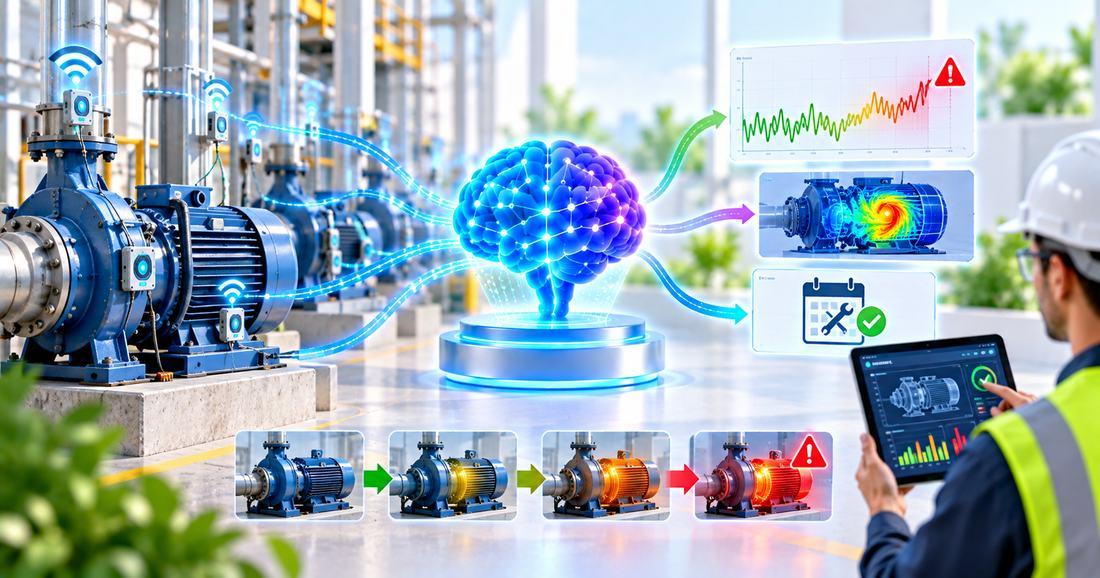
Monitoring is the first line of defense against model degradation.
In production systems, engineers must track not only system-level metrics such as latency and throughput, but also model-level metrics such as accuracy, precision, and recall. These metrics provide insight into how well the model is performing in real-world conditions.
However, monitoring goes beyond metrics. Engineers must also detect anomalies, identify data drift, and understand changes in input distributions. This requires a combination of statistical analysis and domain knowledge.
Effective monitoring allows teams to detect issues early and take corrective action before they impact users. Without it, problems may go unnoticed until they cause significant degradation in performance.
This importance of monitoring and lifecycle management is emphasized in “MLOps vs. ML Engineering: What Interviewers Expect You to Know in 2025”, which highlights that maintaining models in production is a core expectation for modern ML engineers .
Retraining as an Ongoing Process
Monitoring alone is not enough. Once issues are detected, models must be updated.
Retraining is the process of updating a model using new data to improve its performance. In production systems, this is not a one-time activity, it is an ongoing process.
The frequency of retraining depends on the application. Some systems may require frequent updates to keep up with rapidly changing data, while others may be updated less often. Engineers must determine the appropriate retraining strategy based on the problem context.
Retraining also introduces challenges. Engineers must ensure that new models are evaluated properly, that they do not introduce regressions, and that deployment is handled smoothly. This requires robust pipelines and validation processes.
Continuous Learning: Moving Beyond Static Models
As ML systems evolve, there is a growing emphasis on continuous learning.
Instead of relying on periodic retraining, continuous learning systems update models incrementally as new data becomes available. This allows systems to adapt more quickly to changes and maintain performance over time.
However, continuous learning introduces additional complexity. Engineers must ensure that updates are stable, that models do not drift in undesirable ways, and that the system remains reliable.
Despite these challenges, continuous learning represents an important direction for production ML systems. It reflects the need for systems that can adapt in real time to changing environments.
The Shift in How ML Engineers Are Evaluated
This lifecycle perspective is also reflected in how ML engineers are evaluated in interviews.
Candidates are increasingly expected to demonstrate an understanding of monitoring, retraining, and continuous learning. They must be able to explain how they would maintain a model in production, not just how they would build it.
This requires a broader skill set, including system design, data engineering, and operational awareness. Engineers must think about how systems behave over time, how issues are detected, and how improvements are implemented.
The Key Takeaway
Machine learning in production is an ongoing process, not a one-time task. Deployment marks the beginning of a lifecycle that includes monitoring, retraining, and continuous learning. Understanding this lifecycle is essential for building reliable and effective ML systems. Candidates who can explain these concepts clearly demonstrate the system-level thinking that modern ML roles require.
Section 2: Monitoring ML Systems - Metrics, Drift Detection, and Alerting
Why Monitoring Is the Backbone of Production ML
Once a model is deployed, the most important question is no longer “How accurate is the model?” but “Is the model still working as expected in the real world?” At companies like Google, Meta, and Amazon, this question is central to how ML systems are managed in production.
Monitoring is the mechanism that answers it.
Without monitoring, ML systems operate blindly. Engineers have no visibility into how models are performing, how data is changing, or whether the system is behaving correctly. Problems can go unnoticed until they cause significant impact, such as degraded user experience or incorrect business decisions.
Monitoring transforms ML systems from static deployments into observable systems. It provides the feedback needed to maintain performance, detect issues early, and drive continuous improvement.
Understanding What to Monitor: Beyond Accuracy
A common mistake is assuming that monitoring simply means tracking accuracy.
In production, accuracy alone is not enough. Engineers must monitor a range of metrics that capture different aspects of system behavior.
Model performance metrics, such as precision, recall, or error rates, provide insight into how well the model is making predictions. However, these metrics are often difficult to compute in real time because ground truth labels may not be immediately available.
This is why engineers also rely on proxy metrics. These may include user engagement, click-through rates, or other business indicators that reflect the effectiveness of the model indirectly.
In addition to model performance, system-level metrics are equally important. Latency, throughput, and error rates provide information about how the system is operating from an infrastructure perspective. A model that is accurate but slow or unreliable can still fail in production.
Strong candidates recognize that monitoring is multi-dimensional. It requires tracking both model behavior and system performance.
Data Drift: Detecting Changes in the Input Distribution
One of the most critical aspects of monitoring is detecting data drift.
Data drift occurs when the distribution of input data changes over time. This can happen due to shifts in user behavior, seasonal trends, or external factors. When the data changes, the model may encounter patterns it was not trained on, leading to degraded performance.
Detecting data drift involves comparing current data distributions with historical data. Engineers may use statistical methods to measure differences in feature distributions or track changes in key variables.
For example, a recommendation system may observe that user preferences are shifting toward new categories. If the model was trained on older data, it may struggle to adapt to these changes.
Early detection of data drift allows engineers to take action before performance degrades significantly. This makes drift detection a critical component of production ML systems.
Concept Drift: When the Relationship Changes
While data drift focuses on changes in input distributions, concept drift refers to changes in the relationship between inputs and outputs.
This is a more subtle and often more challenging problem.
For example, in a fraud detection system, the patterns that indicate fraud may change over time as attackers adopt new strategies. Even if the input data looks similar, the meaning of that data may have changed.
Concept drift is harder to detect because it requires understanding how model predictions relate to actual outcomes. This often involves delayed feedback, as ground truth labels may not be available immediately.
Engineers must design monitoring systems that can capture these changes and trigger retraining or model updates when necessary.
Alerting: Turning Monitoring into Action
Monitoring is only useful if it leads to action.
This is where alerting comes in.
Alerting systems are designed to notify engineers when certain conditions are met, such as a drop in performance metrics, a spike in latency, or significant data drift. These alerts enable teams to respond quickly to issues and minimize their impact.
Designing effective alerts requires careful consideration. Alerts must be sensitive enough to detect real problems, but not so sensitive that they generate excessive noise. Too many false positives can lead to alert fatigue, where engineers begin to ignore notifications.
Strong candidates understand that alerting is about signal, not noise. They explain how thresholds are set, how alerts are prioritized, and how responses are managed.
Closing the Loop: Monitoring as Part of the ML Lifecycle
Monitoring is not an isolated activity, it is part of a continuous feedback loop.
Insights from monitoring inform decisions about retraining, feature updates, and system improvements. This creates a cycle where the system is constantly evaluated and refined.
For example, detecting data drift may trigger a retraining pipeline. Observing changes in user behavior may lead to updates in feature engineering. Monitoring system performance may result in infrastructure optimizations.
This feedback loop is what enables ML systems to remain effective over time.
This perspective is emphasized in “The Hidden Metrics: How Interviewers Evaluate ML Thinking, Not Just Code”, which highlights that understanding how systems are evaluated and improved in production is a key expectation in ML interviews .
The Key Takeaway
Monitoring is the foundation of production ML systems. It provides visibility into model performance, detects changes in data and relationships, and enables timely intervention through alerting. By treating monitoring as part of a continuous lifecycle rather than a one-time setup, engineers can ensure that ML systems remain reliable, adaptable, and effective in dynamic environments.
Section 3: Retraining Strategies - Batch Retraining vs Continuous Learning
Why Retraining Is Not Optional in Production ML
Once a model is deployed, its performance is not guaranteed to remain stable. Data evolves, user behavior shifts, and external conditions change. At companies like Google, Meta, and Amazon, retraining is treated as a core part of the ML lifecycle, not an afterthought.
The key question is not whether to retrain, but how to retrain effectively.
Different applications require different retraining strategies. Some systems can tolerate periodic updates, while others require continuous adaptation. Choosing the right approach depends on how quickly data changes, how critical accuracy is, and how much complexity the system can handle.
Understanding these strategies, and the tradeoffs between them, is essential for both production systems and interviews.
Batch Retraining: Stability Through Periodic Updates
Batch retraining is the most traditional and widely used approach.
In this strategy, models are retrained at fixed intervals using accumulated data. This could be daily, weekly, or monthly, depending on the application. The retraining process typically involves collecting new data, updating features, retraining the model, and redeploying it after validation.
The primary advantage of batch retraining is stability. Because updates are controlled and infrequent, engineers have time to validate models thoroughly before deployment. This reduces the risk of introducing errors or regressions.
Batch retraining also simplifies system design. It fits well with existing data pipelines and does not require real-time updates. This makes it easier to implement and maintain.
However, the tradeoff is latency in adaptation. If data changes rapidly, the model may become outdated between retraining cycles. This can lead to degraded performance until the next update.
Strong candidates recognize that batch retraining is suitable for applications where data changes slowly or where immediate updates are not critical.
Continuous Learning: Adapting in Real Time
Continuous learning takes a different approach.
Instead of updating models at fixed intervals, continuous learning systems update models incrementally as new data becomes available. This allows the system to adapt quickly to changes and maintain performance in dynamic environments.
This approach is particularly useful in applications where data evolves rapidly, such as fraud detection or real-time personalization. In these cases, waiting for periodic retraining may not be sufficient to keep the model effective.
However, continuous learning introduces significant complexity. Updating models in real time requires careful handling to avoid instability. Small errors can propagate quickly, and there is less opportunity for thorough validation.
Engineers must design safeguards to ensure that updates improve performance rather than degrade it. This may involve techniques such as validation checkpoints, monitoring feedback loops, and fallback mechanisms.
Continuous learning also requires more sophisticated infrastructure, including streaming data pipelines and real-time processing systems.
The Tradeoff: Stability vs Adaptability
The choice between batch retraining and continuous learning is fundamentally a tradeoff between stability and adaptability.
Batch retraining prioritizes stability. It allows for controlled updates, thorough validation, and simpler system design. However, it may lag behind changes in data.
Continuous learning prioritizes adaptability. It enables rapid updates and responsiveness to new data, but at the cost of increased complexity and potential instability.
There is no universally correct choice. The decision depends on the specific requirements of the application.
Strong candidates articulate this tradeoff clearly. They explain how different factors, such as data volatility and latency requirements, influence the choice of retraining strategy.
Hybrid Approaches: Combining the Best of Both Worlds
In practice, many systems use a hybrid approach.
For example, a system may use batch retraining for the core model while incorporating real-time updates for certain components. This allows the system to maintain stability while still adapting to new information.
Another approach is to use batch retraining as the primary method while monitoring performance closely and triggering retraining when significant changes are detected. This creates a balance between periodic updates and responsiveness.
Hybrid strategies reflect the reality that production systems often require flexibility. They allow engineers to tailor the retraining process to the specific needs of the application.
Designing Retraining Pipelines
Retraining is not just about updating models, it is about designing robust pipelines.
A retraining pipeline includes data collection, preprocessing, feature engineering, model training, validation, and deployment. Each stage must be carefully managed to ensure that updates are reliable and consistent.
Validation is particularly important. New models must be evaluated against existing models to ensure that they provide improvements. This may involve offline evaluation, A/B testing, or shadow deployments.
Deployment strategies also matter. Engineers must decide how to roll out new models, whether gradually or all at once, and how to handle potential issues.
Strong candidates understand that retraining is a system-level process, not just a modeling task.
When to Retrain: Signals and Triggers
Deciding when to retrain is as important as how to retrain.
Retraining can be triggered by various signals, such as:
- Performance degradation
- Data drift detection
- Changes in user behavior
- Scheduled intervals
These triggers are often informed by monitoring systems. For example, a drop in key metrics may indicate that the model needs to be updated.
Strong candidates explain how they would use monitoring signals to guide retraining decisions. This demonstrates an understanding of the feedback loop between monitoring and retraining.
The Key Takeaway
Retraining is a critical component of production ML systems. Batch retraining offers stability and simplicity, while continuous learning provides adaptability and responsiveness. Hybrid approaches often combine the strengths of both. The key is to choose a strategy that aligns with the application’s requirements and to design robust pipelines that ensure reliable updates. Candidates who understand these strategies and can explain their tradeoffs clearly demonstrate the kind of system-level thinking that modern ML roles demand.
Section 4: Continuous Learning Systems - Design, Challenges, and Tradeoffs
From Periodic Updates to Always-Learning Systems
As machine learning systems mature, the limitations of periodic retraining become more apparent. In dynamic environments where data changes rapidly, waiting for scheduled updates can lead to outdated models and degraded performance. This is why companies like Google, Meta, and Amazon are increasingly exploring continuous learning systems.
Continuous learning represents a shift from static models to systems that adapt continuously as new data arrives. Instead of retraining models at fixed intervals, these systems update incrementally, allowing them to respond to changes in near real time.
While this approach offers clear advantages in terms of adaptability, it also introduces new complexities that engineers must carefully manage.
Designing Continuous Learning Systems
Designing a continuous learning system requires rethinking the traditional ML pipeline.
In a batch system, data is collected, processed, and used to retrain models periodically. In a continuous system, this process becomes ongoing. Data flows into the system continuously, and updates are applied incrementally.
This requires a streaming architecture. Engineers must build pipelines that can ingest, process, and update models in real time. This often involves technologies for stream processing, online learning algorithms, and real-time feature computation.
Another key component is feedback integration. Continuous learning systems rely on feedback signals, such as user interactions or delayed labels, to update models. These signals must be captured, processed, and incorporated into the model without disrupting system stability.
Strong candidates understand that continuous learning is not just about updating models, it is about designing a system that can learn safely and efficiently over time.
The Challenge of Stability in Continuous Updates
One of the biggest challenges in continuous learning is maintaining stability.
In batch retraining, updates are controlled and infrequent. Engineers can validate models thoroughly before deployment. In continuous systems, updates happen frequently, leaving less room for extensive validation.
This creates a risk of instability. Small errors in data or updates can accumulate over time, leading to degraded performance. In extreme cases, the system may drift away from optimal behavior.
To address this, engineers must implement safeguards. These may include validation checkpoints, monitoring thresholds, and rollback mechanisms. The goal is to ensure that updates improve the system rather than harm it.
Balancing adaptability with stability is one of the most important aspects of continuous learning design.
Handling Noisy and Delayed Feedback
Continuous learning systems often rely on feedback signals that are noisy or delayed.
For example, user interactions may provide implicit feedback, such as clicks or engagement metrics. However, these signals may not always accurately reflect the quality of the model’s predictions. Similarly, ground truth labels may be delayed, making it difficult to evaluate updates in real time.
This introduces uncertainty into the learning process. Engineers must design systems that can handle imperfect feedback while still improving performance.
Techniques such as smoothing, filtering, and weighting feedback signals can help mitigate noise. Delayed feedback may require combining real-time updates with periodic validation using more reliable data.
Strong candidates recognize these challenges and explain how they would handle them in system design.
Tradeoffs: Speed vs Control
Continuous learning systems involve a fundamental tradeoff between speed and control.
On one hand, rapid updates allow the system to adapt quickly to changes. This is particularly valuable in applications where data evolves rapidly, such as fraud detection or personalized recommendations.
On the other hand, frequent updates reduce the level of control engineers have over the system. Without proper safeguards, the system may become unstable or unpredictable.
This tradeoff requires careful management. Engineers must decide how frequently to update the model, how to validate changes, and how to handle potential failures.
Strong candidates articulate this tradeoff clearly. They explain how they would balance the need for adaptability with the need for reliability.
Infrastructure and Operational Complexity
Continuous learning systems are significantly more complex to build and operate than batch systems.
They require infrastructure capable of handling streaming data, real-time processing, and frequent updates. This includes components such as message queues, stream processors, and online learning frameworks.
Operational complexity also increases. Engineers must monitor the system continuously, manage updates, and ensure that performance remains stable.
This complexity comes with higher costs, both in terms of infrastructure and engineering effort. Organizations must evaluate whether the benefits of continuous learning justify these costs.
Candidates who understand these operational challenges demonstrate a realistic perspective on system design.
When Continuous Learning Makes Sense
Continuous learning is not always the right choice.
It is most beneficial in scenarios where data changes rapidly and immediate adaptation is critical. Examples include fraud detection, real-time personalization, and dynamic pricing systems.
In contrast, applications with stable data or less stringent latency requirements may benefit more from batch retraining. These systems can achieve high performance without the added complexity of continuous updates.
Strong candidates emphasize that the choice of approach depends on the problem context. They do not treat continuous learning as a universal solution, but as one option among many.
The Key Takeaway
Continuous learning systems represent an advanced stage of ML system design, enabling models to adapt in real time to changing data. While they offer significant advantages in dynamic environments, they also introduce challenges related to stability, feedback quality, and operational complexity. The key to designing effective continuous learning systems lies in balancing adaptability with control and choosing the approach that best fits the application’s requirements.
Conclusion: ML in Production Is a Continuous Process, Not a One-Time Task
Machine learning in production is fundamentally different from machine learning in experimentation. While building a model is important, it is only the beginning of a much larger lifecycle. At companies like Google, Meta, and Amazon, success is defined not by how well a model performs at deployment, but by how reliably it performs over time.
This shift requires ML engineers to think beyond models and focus on systems that can monitor, adapt, and improve continuously.
Monitoring provides the visibility needed to understand how models behave in real-world environments. It allows engineers to detect performance degradation, identify data drift, and respond to issues before they impact users. Without monitoring, ML systems operate blindly, making it impossible to maintain reliability.
Retraining ensures that models remain relevant as data evolves. Whether through batch updates or more advanced continuous learning approaches, retraining allows systems to adapt to changing conditions. The key is not just updating models, but doing so in a controlled and reliable way.
Continuous learning takes this a step further by enabling systems to adapt in near real time. While powerful, it introduces additional complexity and requires careful design to maintain stability. Engineers must balance adaptability with control, ensuring that updates improve performance without introducing instability.
Another critical insight is that these components are not isolated. Monitoring, retraining, and continuous learning form a feedback loop. Monitoring detects issues, retraining addresses them, and continuous learning enables faster adaptation. Together, they create systems that can evolve and remain effective over time.
This lifecycle perspective is emphasized in “The Future of ML Interview Prep: AI-Powered Mock Interviews”, which highlights that modern ML roles increasingly focus on system maintenance, adaptability, and real-world performance rather than just model development .
Ultimately, ML in production is about building systems that can sustain performance in dynamic environments. Candidates who understand this and can explain it clearly demonstrate the system-level thinking that companies expect.
Frequently Asked Questions (FAQs)
1. What is the difference between training and production ML?
Training focuses on building models, while production ML focuses on maintaining and improving them over time.
2. Why is monitoring important in ML systems?
It helps detect performance issues, data drift, and system failures early.
3. What is data drift?
A change in the distribution of input data over time, which can degrade model performance.
4. What is concept drift?
A change in the relationship between inputs and outputs, affecting how predictions should be made.
5. How often should models be retrained?
It depends on the application and how quickly the data changes.
6. What is batch retraining?
Updating models at fixed intervals using accumulated data.
7. What is continuous learning?
A system where models are updated incrementally as new data arrives.
8. Is continuous learning always better than batch retraining?
No, it depends on the use case and system requirements.
9. What are the challenges of continuous learning?
Maintaining stability, handling noisy feedback, and managing system complexity.
10. How do monitoring and retraining work together?
Monitoring detects issues, and retraining updates the model to address them.
11. What metrics should be monitored?
Model performance metrics, system metrics, and business-related indicators.
12. How do you detect when retraining is needed?
Through signals such as performance degradation or data drift.
13. What is the biggest mistake in production ML?
Assuming that deployment is the final step rather than the beginning of the lifecycle.
14. Do ML engineers need to understand system design?
Yes, because production ML involves managing complex systems.
15. What is the key takeaway?
ML systems must be continuously monitored, updated, and improved to remain effective.
By focusing on monitoring, retraining, and continuous learning, you can design ML systems that are not only accurate at deployment but also resilient and adaptable over time, an essential skill for modern ML engineers.