Section 1: Why AI Is Transforming Data Engineering
Data Has Become the Foundation of AI Systems
The rise of artificial intelligence has elevated the strategic importance of data to an unprecedented level.
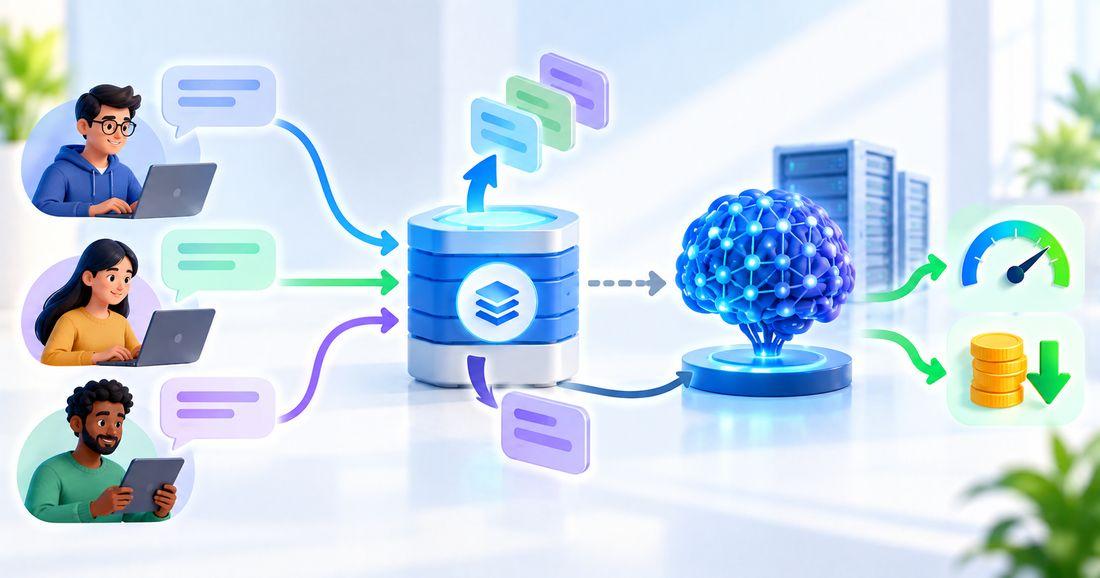
Traditional analytics systems primarily used data to generate reports, dashboards, and business insights. While these applications remain important, modern AI systems depend on data in far more direct ways. Large Language Models, recommendation systems, retrieval engines, fraud detection platforms, forecasting systems, and AI agents all rely on high-quality data to function effectively.
This shift means data engineering is no longer simply supporting analytics teams.
Instead, data engineers are becoming critical enablers of AI initiatives across organizations. Every intelligent system depends on reliable data pipelines, accessible knowledge repositories, scalable storage platforms, and well-governed information flows.
For example, an AI-powered customer support assistant may require access to product documentation, historical support tickets, customer records, and operational workflows. Ensuring that this information is available, accurate, and retrievable often falls within the broader responsibilities of modern data teams.
As AI adoption accelerates, data infrastructure increasingly becomes AI infrastructure.
AI Applications Demand Real-Time Data
One of the most significant changes introduced by AI is the growing importance of real-time data processing.
Traditional analytics environments often operated on batch schedules. Data might be collected throughout the day and processed overnight before becoming available for reporting and analysis. Many business intelligence workflows could tolerate these delays because decisions were based on historical trends rather than immediate responses.
AI applications frequently operate under different constraints.
Recommendation engines, fraud detection systems, personalization platforms, autonomous agents, and conversational AI systems often require access to fresh information in real time. Delayed or outdated data can significantly reduce effectiveness and user trust.
As a result, data engineers are increasingly responsible for building streaming architectures capable of processing and delivering information continuously. Event-driven systems, real-time pipelines, and low-latency data platforms are becoming central components of modern AI infrastructure.
This transition is reshaping technology stacks, architectural decisions, and operational practices across the industry.
Data Quality Is Becoming a Competitive Advantage
AI systems amplify both the value and the risks associated with data quality.
Poor-quality data has always created challenges for analytics initiatives. In AI environments, however, the consequences can be even more significant. Inaccurate information may lead to hallucinations, biased outputs, flawed recommendations, or unreliable automation.
Organizations are therefore investing more heavily in data quality management than ever before.
This trend is explored in "How Machine Learning Is Becoming Inseparable from Software Engineering: A Guide to Preparing for the Future," which examines why high-quality data often has a greater impact on AI performance than model complexity alone.
Modern data engineers increasingly work on validation frameworks, lineage tracking, observability systems, quality monitoring, and governance processes designed to ensure AI systems operate using reliable information.
As AI adoption expands, data quality is becoming a strategic differentiator rather than a purely technical concern.
The Scope of Data Engineering Is Expanding
Perhaps the most important change is the expansion of the data engineering role itself.
Historically, data engineers focused heavily on extraction, transformation, loading (ETL), warehousing, and analytics infrastructure. While these responsibilities remain important, AI is creating entirely new requirements.
Organizations now need professionals who understand vector databases, embedding pipelines, retrieval architectures, feature stores, AI data governance, and machine learning workflows. Data engineers increasingly collaborate with machine learning engineers, platform teams, infrastructure specialists, and AI product groups.
The boundaries between data engineering, ML engineering, and AI infrastructure are becoming increasingly interconnected.
Professionals who understand these relationships are finding themselves at the center of some of the most important initiatives in modern technology organizations.
Key Takeaway
AI is transforming data engineering from a discipline focused primarily on analytics infrastructure into one that powers intelligent systems. Real-time processing, data quality, AI infrastructure, retrieval architectures, and scalable information delivery are becoming central responsibilities. As organizations embrace AI-first strategies, data engineers are evolving into critical architects of the systems that enable intelligence at scale.
Section 2: The New Technologies Redefining Data Engineering
Vector Databases Are Becoming as Important as Data Warehouses
For years, data warehouses served as the foundation of enterprise data architecture. Platforms such as Snowflake, BigQuery, Redshift, and traditional warehouse systems allowed organizations to store structured data, perform analytics, and support business intelligence workloads.
While these systems remain critical, the rise of AI is introducing an entirely new category of infrastructure: vector databases.
Large Language Models and Retrieval-Augmented Generation (RAG) systems do not primarily search information using traditional SQL queries. Instead, they rely on embeddings, numerical representations of information that capture semantic meaning. Vector databases store and retrieve these embeddings efficiently, enabling AI systems to identify relevant information based on similarity rather than exact keyword matches.
This capability is transforming how organizations manage knowledge.
For example, an enterprise AI assistant may need to search thousands of documents, support tickets, product manuals, meeting transcripts, and internal policies. Traditional database queries often struggle with these use cases because users rarely know the exact terms that appear within documents. Vector search enables systems to retrieve information based on intent and meaning.
As AI adoption grows, data engineers are increasingly responsible for managing vector stores alongside traditional data warehouses.
This does not mean warehouses are disappearing. Instead, modern architectures often combine both approaches. Structured data continues to live within warehouses, while embeddings and semantic search capabilities are handled by vector databases.
The result is a more complex but significantly more powerful data ecosystem capable of supporting modern AI applications.
Retrieval Pipelines Are Becoming Core Data Infrastructure
One of the most significant architectural shifts occurring in AI-first organizations is the emergence of retrieval systems as a critical layer of infrastructure.
Historically, data engineering focused heavily on moving information from source systems into analytical environments. The primary goal was making data available for reporting, dashboards, and decision-making.
AI systems create a different challenge.
Models need access to relevant information at the exact moment a request occurs. This requires retrieval architectures capable of identifying, ranking, and delivering context efficiently.
As a result, retrieval pipelines are becoming a core component of modern data platforms.
These pipelines often include document ingestion systems, chunking processes, embedding generation, indexing frameworks, metadata management, and retrieval optimization mechanisms. Together, these components ensure that AI systems can access the most relevant information when generating responses.
The importance of retrieval-centric architectures aligns with trends discussed in "Scalable ML Systems for Senior Engineers – InterviewNode," which explores how retrieval systems are becoming foundational components of enterprise AI deployments.
Data engineers increasingly play a central role in designing and maintaining these environments.
In many organizations, retrieval infrastructure is becoming just as important as traditional ETL pipelines.
Real-Time Data Engineering Is Becoming the Default
The AI era is accelerating a trend that has been developing for years: the move from batch processing toward real-time systems.
Traditional data architectures often relied on scheduled processing jobs. Information was collected, transformed, and loaded according to predefined intervals. While this model worked well for reporting and analytics, many AI applications require much faster access to information.
Consider an AI-powered fraud detection system.
Waiting several hours to process transactions may render the system ineffective. Similarly, recommendation engines, personalization systems, customer support assistants, and autonomous agents often require immediate access to updated information.
These requirements are pushing organizations toward real-time architectures.
Data engineers increasingly build streaming pipelines capable of ingesting, transforming, and delivering information continuously. Event-driven architectures, streaming platforms, change-data-capture systems, and low-latency processing frameworks are becoming common components of modern data stacks.
This shift affects more than technology choices.
Real-time systems introduce new challenges related to monitoring, fault tolerance, scalability, consistency, and operational complexity. Data engineers must ensure that information remains accurate and reliable even as it flows continuously through large-scale environments.
As AI systems become more deeply integrated into business operations, real-time capabilities are evolving from competitive advantages into baseline expectations.
Data Observability Is Becoming Mission-Critical
As data systems grow more complex, organizations are realizing that simply moving data is no longer sufficient.
They also need visibility into how data behaves.
Modern AI applications depend heavily on data quality, freshness, completeness, consistency, and lineage. A small issue within a pipeline can propagate throughout downstream systems and negatively affect AI performance.
For example, missing records, delayed updates, schema changes, or corrupted information may reduce model accuracy, impact retrieval quality, or introduce operational risks.
To address these challenges, organizations are investing heavily in data observability.
Data observability platforms provide visibility into pipeline health, data freshness, schema evolution, quality metrics, lineage relationships, and operational performance. These tools help teams identify issues before they affect business-critical applications.
The growing importance of monitoring aligns closely with broader trends in AI operations. As intelligent systems become increasingly dependent on high-quality data, observability becomes a prerequisite for reliability.
Data engineers are therefore taking on responsibilities traditionally associated with operations and reliability teams.
The future of data engineering includes not only building pipelines but also continuously validating and monitoring them.
AI Is Driving the Convergence of Data Engineering and ML Engineering
Perhaps the most important trend shaping the future of data engineering is the growing convergence between data engineering and machine learning engineering.
Historically, these disciplines operated relatively independently.
Data engineers focused on data movement and storage. Machine learning engineers focused on model development and deployment. Collaboration occurred when necessary, but responsibilities were generally distinct.
AI-first organizations are changing this structure.
Modern AI systems require close coordination between data pipelines, feature stores, retrieval systems, model-serving infrastructure, observability platforms, and governance frameworks. As a result, the boundaries separating these roles are becoming less defined.
Data engineers increasingly work with embeddings, feature pipelines, model inputs, retrieval architectures, and AI infrastructure. Similarly, machine learning engineers often need a deeper understanding of data quality, lineage, governance, and large-scale data processing.
This convergence is creating a new generation of professionals who understand both data systems and AI systems.
Organizations increasingly value individuals capable of bridging these domains because intelligent applications depend on both reliable data infrastructure and effective machine learning capabilities.
Key Takeaway
The future of data engineering is being shaped by vector databases, retrieval architectures, real-time systems, data observability, and deeper integration with AI workflows. As organizations transition toward AI-first strategies, data engineers are moving beyond traditional ETL and analytics responsibilities to become architects of the infrastructure that powers intelligent systems. The professionals who understand both modern data platforms and AI ecosystems will play a central role in building the next generation of enterprise technology.
Section 3: The Skills Data Engineers Will Need to Stay Relevant in an AI-First World
Data Engineers Must Become AI-Literate
One of the biggest misconceptions about the future of data engineering is that AI will primarily affect machine learning engineers and data scientists. In reality, AI is transforming the entire data ecosystem, making AI literacy a critical skill for data engineers as well.
This does not mean every data engineer must become an expert in deep learning or build foundation models from scratch. However, understanding how modern AI systems work is becoming increasingly important.
Data engineers need to understand concepts such as embeddings, vector search, Retrieval-Augmented Generation (RAG), feature stores, inference pipelines, AI observability, and model serving architectures. These technologies are becoming deeply integrated into modern data platforms, and professionals who understand them can contribute more effectively to AI initiatives.
For example, when designing a data architecture for an enterprise AI assistant, engineers must understand how documents are transformed into embeddings, how retrieval systems access information, and how data quality affects AI outputs. Without this knowledge, building effective AI infrastructure becomes significantly more difficult.
Organizations increasingly seek data professionals who can collaborate effectively with AI teams and understand the broader ecosystem surrounding intelligent systems.
The growing convergence of data and AI disciplines is explored in "Why ML Engineers Are Becoming the New Full-Stack Engineers," which highlights how technical professionals across domains are increasingly expected to understand how AI systems create business value and support organizational objectives.
AI literacy is rapidly becoming a baseline requirement rather than a specialized skill.
Data Quality and Governance Will Become Strategic Responsibilities
Historically, data quality was often viewed as a technical challenge. Engineers focused on ensuring data pipelines functioned correctly, records were complete, and transformations were accurate.
In AI-first organizations, data quality is becoming a strategic business concern.
The reason is simple: AI systems amplify data problems.
A dashboard built on imperfect data may lead to a flawed business decision. An AI-powered customer assistant trained on poor-quality information can generate incorrect responses thousands of times per day. Similarly, inaccurate retrieval systems can undermine trust in AI applications across an organization.
As AI adoption grows, organizations are investing heavily in governance frameworks designed to ensure data remains accurate, secure, explainable, and compliant.
This shift is expanding the role of data engineers.
Modern data professionals increasingly work on lineage tracking, metadata management, governance policies, quality monitoring, access controls, and compliance frameworks. They help establish the standards that allow AI systems to operate responsibly and reliably.
In many organizations, governance is evolving from a compliance exercise into a strategic capability that directly affects AI effectiveness.
Professionals who understand how to build trustworthy data environments will become increasingly valuable as regulatory scrutiny and enterprise AI adoption continue growing.
Platform Engineering Is Becoming a Core Data Skill
Another major trend reshaping data engineering is the rise of platform thinking.
Traditional data teams often focused on individual pipelines and projects. Modern organizations increasingly treat data infrastructure as a platform that serves multiple teams, applications, and AI systems simultaneously.
This shift changes how data engineers approach their work.
Instead of building one-off solutions, engineers design reusable systems capable of supporting analytics, machine learning, AI agents, business intelligence, and operational applications at scale. The goal is to create platforms that enable innovation while reducing complexity and duplication.
Platform engineering requires a broader perspective.
Engineers must think about scalability, reliability, observability, developer experience, governance, and operational efficiency. They need to design systems that remain effective even as workloads, data volumes, and AI adoption increase.
This trend closely mirrors broader developments in cloud computing and software engineering. Organizations increasingly prefer standardized platforms because they accelerate development, improve consistency, and reduce operational risk.
As AI becomes a central business capability, platform-oriented data engineers will play a critical role in enabling organizational agility.
Business Understanding Will Differentiate Future Data Engineers
Perhaps the most important skill separating future data leaders from traditional data practitioners will be business understanding.
For many years, data engineering focused primarily on technical execution. Success was measured by throughput, latency, reliability, and scalability. While these metrics remain important, AI is creating a stronger connection between data infrastructure and business outcomes.
Organizations increasingly want data professionals who understand why systems are being built, not just how they function.
For example, a retrieval system may improve customer support efficiency. A real-time data platform may reduce fraud losses. A feature store may accelerate AI deployment. Understanding these business implications helps engineers make better decisions about architecture, prioritization, and investment.
Data engineers who can connect technical systems to measurable outcomes often gain greater influence within organizations.
They contribute more effectively to strategic discussions, collaborate more closely with product and business teams, and help ensure that technology investments create meaningful value.
As AI becomes embedded throughout enterprises, the most successful data engineers will likely be those who combine technical depth with strong business awareness.
They will understand not only data flows but also how those flows support customers, operations, products, and organizational goals.
Key Takeaway
The future of data engineering extends far beyond pipelines and warehouses. AI literacy, data governance, platform engineering, and business understanding are becoming essential skills for modern data professionals. As organizations adopt AI-first strategies, data engineers are evolving into strategic enablers of intelligence, responsible for building the trusted, scalable, and business-aligned data foundations that power the next generation of AI applications.
Section 4: How Data Engineers Can Prepare for the Next Decade
Shift From Pipeline Builder to Data Platform Architect
One of the most important mindset changes data engineers must make is moving beyond the traditional role of pipeline builder.
For many years, success in data engineering was often measured by the ability to design ETL processes, move data between systems, and maintain reliable analytical environments. While these responsibilities remain valuable, AI-first organizations increasingly need professionals who think at a platform level rather than a project level.
Modern enterprises operate dozens of AI applications simultaneously. These may include recommendation systems, AI assistants, search platforms, fraud detection engines, forecasting systems, and autonomous workflows. Supporting these applications requires shared infrastructure rather than isolated pipelines.
As a result, organizations increasingly seek engineers capable of designing scalable data platforms that support multiple teams and use cases.
Data platform architects focus on governance, observability, developer experience, scalability, security, and operational efficiency. They build reusable systems that allow organizations to deploy AI solutions more quickly and consistently.
This shift creates significant career opportunities.
Engineers who understand how to design and manage enterprise-wide data ecosystems often become central figures within AI transformation initiatives. Their work directly influences productivity, innovation speed, and long-term scalability.
The future of data engineering belongs increasingly to platform builders rather than pipeline operators.
Learn to Work With AI Systems, Not Just Data Systems
Another major adjustment involves expanding expertise beyond traditional data technologies.
Historically, data engineers primarily interacted with databases, warehouses, data lakes, streaming platforms, and analytical tools. AI-first organizations increasingly require professionals who understand how data interacts with intelligent systems.
This includes familiarity with embeddings, vector databases, retrieval systems, feature stores, model-serving pipelines, and AI observability platforms.
The objective is not necessarily to become a machine learning engineer.
Instead, data engineers should understand how modern AI applications consume and utilize information. This understanding helps teams design better architectures and anticipate future requirements.
For example, building a retrieval pipeline for an enterprise AI assistant requires different considerations than building a traditional reporting workflow. Engineers must think about semantic search, document chunking, metadata enrichment, retrieval latency, and context optimization.
The growing overlap between AI and infrastructure is discussed in "Career Pivots in the Age of AI: How to Transition Successfully," which examines how modern AI systems depend on sophisticated infrastructure, retrieval architectures, observability platforms, and scalable data ecosystems.
As AI adoption accelerates, data engineers who understand both domains will be uniquely positioned to drive innovation.
Prioritize Data Reliability and Trust
The future of data engineering will increasingly revolve around trust.
As organizations deploy AI systems into customer-facing and business-critical environments, confidence in data becomes essential. AI applications are only as reliable as the information they consume.
This reality is elevating the importance of reliability engineering within data teams.
Future-focused engineers invest heavily in monitoring, observability, validation frameworks, lineage tracking, governance controls, and automated quality checks. Their goal is not simply moving information efficiently but ensuring information remains accurate and trustworthy throughout its lifecycle.
The stakes continue rising.
A reporting error may influence a business decision. An AI-powered customer assistant operating on incorrect information may affect thousands of users simultaneously. A retrieval system that surfaces outdated content can damage trust across an organization.
As a result, reliable data is becoming a competitive advantage.
Organizations increasingly value engineers who can create trustworthy data ecosystems because these systems directly influence AI performance, user confidence, and business outcomes.
Trust is rapidly becoming one of the most valuable products a data team can deliver.
Develop Business and Product Awareness
Perhaps the most important long-term career investment for data engineers is developing stronger business and product understanding.
AI is bringing technical teams closer to strategic decision-making than ever before. Organizations no longer view data infrastructure as a purely operational function. Instead, data systems increasingly influence customer experiences, product capabilities, operational efficiency, and competitive differentiation.
This creates new expectations.
Data engineers are increasingly asked to justify investments, prioritize initiatives, evaluate trade-offs, and explain how infrastructure decisions support organizational objectives. Professionals who understand business context often perform these responsibilities more effectively than those focused exclusively on technical execution.
For example, understanding customer behavior can influence data architecture decisions. Knowing how revenue is generated may help prioritize data quality efforts. Awareness of product strategy can guide infrastructure investments.
The most influential data engineers increasingly think like business partners rather than technical specialists.
They understand that data infrastructure exists to create value, not simply process information.
As AI continues reshaping enterprises, professionals who combine technical expertise with product and business awareness will likely emerge as the next generation of data leaders.
Key Takeaway
Preparing for the future of data engineering requires more than learning new tools. Engineers must evolve into platform architects, develop AI literacy, prioritize reliability and trust, and strengthen their understanding of business outcomes. As organizations become increasingly AI-first, the most successful data engineers will be those who can connect data infrastructure, intelligent systems, and organizational strategy into a unified foundation for innovation and growth.
Conclusion
The future of data engineering is being shaped by one of the most significant technological shifts in modern history: the rise of artificial intelligence. While data engineering has always been critical to analytics, reporting, and machine learning, AI is elevating its importance to an entirely new level. In an AI-first world, data is no longer simply a business asset, it is the foundation upon which intelligent systems operate.
This transformation is expanding the role of data engineers far beyond traditional ETL pipelines and data warehouses. Modern organizations increasingly require professionals who can build real-time data platforms, manage vector databases, support retrieval systems, ensure data quality, enable AI governance, and create reliable infrastructure capable of supporting intelligent applications at scale.
The rise of AI is also changing the skills required for success. Technical expertise in data processing remains important, but it is no longer sufficient on its own. Data engineers must become AI-literate, understand retrieval architectures, embrace platform engineering principles, and develop stronger business awareness. The ability to connect data systems with business outcomes is becoming just as valuable as the ability to move and transform information efficiently.
Perhaps the most important takeaway is that data engineering is becoming more strategic rather than less relevant. Some professionals worry that AI will automate portions of data work. In reality, AI is increasing demand for high-quality, trusted, accessible data. Every AI model, agent, recommendation engine, and intelligent workflow depends on the infrastructure that data engineers build and maintain.
Organizations that succeed with AI will often be those that invest in strong data foundations. Reliable pipelines, high-quality information, robust governance frameworks, scalable retrieval systems, and real-time architectures will determine whether AI initiatives generate meaningful value or fail to meet expectations.
For data engineers, this creates tremendous opportunity. The profession is evolving from supporting analytics to enabling intelligence. Those who embrace AI, expand their skill sets, and develop platform-oriented thinking will find themselves at the center of some of the most important technology initiatives of the next decade.
The future of AI depends on data. And the future of data engineering has never been more important.
Frequently Asked Questions
1. How is AI changing data engineering?
AI is expanding data engineering responsibilities beyond traditional ETL and analytics. Modern data engineers increasingly work with real-time systems, vector databases, retrieval architectures, AI governance, and infrastructure that supports intelligent applications.
2. Will AI replace data engineers?
No. AI is more likely to increase the importance of data engineering. Intelligent systems require high-quality data, reliable pipelines, governance frameworks, and scalable infrastructure, all of which depend on skilled data engineers.
3. What new technologies should data engineers learn?
Data engineers should become familiar with vector databases, embeddings, Retrieval-Augmented Generation (RAG), feature stores, real-time streaming systems, AI observability platforms, and modern data governance frameworks.
4. What is a vector database?
A vector database stores embeddings that represent semantic meaning. These databases enable AI systems to perform similarity searches and support applications such as semantic search, recommendation systems, and enterprise AI assistants.
5. Why are Retrieval-Augmented Generation (RAG) systems important?
RAG systems allow AI models to retrieve relevant information from external knowledge sources before generating responses. This improves accuracy, reduces hallucinations, and enables AI systems to work with up-to-date information.
6. What role does real-time data play in AI applications?
Many AI systems require fresh information to make effective decisions. Real-time data pipelines support applications such as fraud detection, recommendation engines, personalization systems, AI agents, and customer support platforms.
7. What is data observability?
Data observability refers to monitoring data quality, freshness, lineage, schema changes, and pipeline health. It helps organizations identify and resolve issues before they affect downstream applications.
8. How are data engineering and ML engineering becoming connected?
AI-first architectures require close integration between data pipelines, feature stores, retrieval systems, model-serving infrastructure, and monitoring platforms. This is causing greater collaboration between data and machine learning teams.
9. Why is data quality becoming more important?
AI systems depend heavily on the information they consume. Poor-quality data can lead to inaccurate predictions, unreliable recommendations, hallucinations, and loss of user trust.
10. What skills will make data engineers valuable by 2030?
AI literacy, platform engineering, data governance, real-time processing, observability, cloud architecture, business awareness, and system design are expected to be highly valuable skills.
11. What is platform engineering in the context of data engineering?
Platform engineering focuses on building reusable infrastructure that supports multiple teams and use cases. Instead of creating isolated pipelines, engineers design scalable platforms that enable analytics, machine learning, and AI applications.
12. How important is business knowledge for data engineers?
Business knowledge is becoming increasingly important because data infrastructure directly influences customer experiences, operational efficiency, AI performance, and organizational outcomes. Engineers who understand business goals often contribute more strategically.
13. Are data warehouses still relevant in an AI-first world?
Yes. Data warehouses remain essential for structured analytics and reporting. However, they are increasingly complemented by vector databases, real-time systems, and retrieval architectures that support AI applications.
14. What career opportunities are emerging for data engineers?
New opportunities include AI Data Engineer, Data Platform Engineer, ML Infrastructure Engineer, Data Reliability Engineer, AI Governance Specialist, Real-Time Data Architect, and AI Platform Engineer.
15. What is the biggest challenge facing data engineers in the AI era?
The biggest challenge is balancing scalability, quality, governance, and real-time accessibility while supporting increasingly complex AI systems. Organizations need data engineers who can build trusted foundations for intelligence at scale while maintaining reliability and operational efficiency.