Section 1: Identify the Right ML Feature and Define Its Engineering Requirements
Start With a Business Problem Rather Than a Machine-Learning Model
Integrating machine learning into an existing application should begin with identifying a problem that would benefit from predictive capabilities rather than selecting an algorithm and searching for a place to use it. Established applications often contain opportunities to improve recommendations, search relevance, transaction screening, demand forecasting, document processing, or operational monitoring, but each opportunity introduces different data requirements, performance expectations, and implementation costs. Engineers should first understand where the existing application struggles, what decisions users or backend services need to make, and whether predictions would improve those decisions enough to justify the additional complexity.
A useful starting point is to examine whether the current application already solves the problem adequately through deterministic logic. Eligibility checks, permission validation, fixed pricing rules, and explicit business constraints often remain better suited to conventional software because their expected behavior can be defined and tested directly. Machine learning becomes more attractive when the application needs to recognize complex patterns, estimate future outcomes, interpret unstructured information, or adapt decisions using historical examples that are difficult to represent through manually maintained rules.
Once a suitable use case has been identified, engineers should define how the proposed feature will fit into the existing user journey and backend workflow. A recommendation model, for example, might influence which products appear on a page, while a fraud model could contribute a risk score before a transaction is approved, and these integrations require different levels of latency, reliability, and decision control.
Define Success Metrics and Operational Constraints
After selecting the use case, the engineering team needs to define measurable success criteria before choosing a model or designing the integration architecture. Predictive quality is one important dimension, but the feature must also satisfy operational requirements involving response time, throughput, availability, infrastructure cost, resource consumption, and the effect on the surrounding application. A recommendation feature might prioritize engagement and ranking quality, while transaction-risk scoring may require strict latency limits alongside carefully controlled false-positive and false-negative rates.
The team should distinguish between model-level metrics and product-level outcomes because an improvement in offline model evaluation does not automatically translate into a better user experience. A classification model might achieve a stronger F1 score while increasing inference latency enough to slow a critical workflow, and a ranking model might improve its offline relevance metric without producing measurable improvements in user engagement. Establishing both predictive and application-level objectives creates a clearer basis for evaluating whether the integration delivers meaningful value.
Operational constraints should also be defined early because retrofitting them after model integration can require substantial architectural changes. Engineers need to determine whether predictions must be returned synchronously, whether occasional delays are acceptable, how requests should behave when the model service becomes unavailable, and whether the feature can operate with cached results or deterministic fallbacks. These requirements influence deployment decisions, API design, serving infrastructure, and monitoring from the beginning rather than appearing as separate operational concerns later in the project.
Assess Data Readiness Before Committing to the Architecture
An ML feature is only as practical as the data available to support it, making data readiness an essential part of the initial engineering assessment. Existing applications may already collect useful information through databases, event streams, transaction records, logs, or user interactions, but the presence of data does not guarantee that it is suitable for training or production inference. Engineers need to determine whether the relevant signals are accurate, sufficiently complete, available at the required frequency, and representative of the situations the model will encounter after deployment.
Historical data also needs to contain an appropriate target or evaluation signal when supervised learning is being considered. A fraud detection model requires meaningful information about transaction outcomes, for example, while a recommendation system may use interaction data as an imperfect indication of relevance. Teams should investigate missing labels, inconsistent records, selection bias, and changes in data collection because these issues can limit the quality of the resulting model even when the dataset appears large.
Data accessibility during inference must be evaluated separately from training data availability because features that can be calculated offline may be too expensive to retrieve during an online request. A model dependent on multiple database joins or complex historical aggregations may introduce unacceptable latency if those features are calculated synchronously for every request. The ideas discussed in “The Journey of a Dataset: From Raw Data to Production ML” highlight why engineers need to understand the complete path from raw information to production features before committing to a particular integration design.
Key Takeaway
Successful ML integration begins with a clearly defined business problem, measurable predictive and operational goals, and a realistic assessment of available data and infrastructure. By validating the value of machine learning before choosing a model, identifying constraints early, and planning an incremental release with explicit acceptance criteria, engineers can introduce predictive functionality in a controlled way while protecting the stability, maintainability, and reliability of the existing application.
Section 2: Prepare the Data and Design the Integration Architecture
Identify Reliable Data Sources and Build Production-Ready Features
Integrating machine learning into an existing application requires engineers to establish a reliable path from application data to model inputs, because the data available in production must support both the model's predictive requirements and the application's operational constraints. Existing databases, event streams, transaction histories, application logs, and user interactions can provide useful signals, but each source needs to be assessed for quality, accessibility, freshness, and compatibility with the model's requirements before it becomes part of the inference pipeline.
Feature engineering should be designed around the actual prediction workflow rather than implemented as an isolated preprocessing script. Engineers need to determine which features can be retrieved directly from existing records, which require aggregation or transformation, and which must be generated from recent events. When a recommendation model depends on historical user behavior, for example, the integration might combine persistent account attributes with precomputed interaction statistics and recent activity signals, allowing the inference service to construct a useful feature vector without performing expensive queries during every request.
Data contracts should define the expected schemas, data types, permissible values, missing-value handling, and ownership of upstream fields so that changes in the existing application do not silently alter model inputs. These controls are particularly important when several services contribute features because a field can remain syntactically valid while its meaning changes, potentially affecting predictions without triggering a conventional application error.
Choose Between Embedded Models and Dedicated Inference Services
The next architectural decision is where model inference should execute, because embedding a model inside the existing backend and deploying it as an independent service create different trade-offs involving latency, resource utilization, deployment flexibility, and operational complexity. A lightweight model that requires limited memory and compute may run effectively within the application process, reducing network overhead and simplifying request handling when its lifecycle aligns with that of the application.
Larger models or workloads requiring specialized hardware may benefit from a dedicated inference service that can scale independently, manage model versions, and allocate resources according to prediction demand. This separation also allows ML teams to update models without necessarily deploying the entire backend application, although the additional service introduces network latency, service discovery, timeout handling, and another dependency that must remain available. Engineers should therefore compare the operational benefits of independent serving against the complexity of maintaining another distributed-system component.
A hybrid architecture can be appropriate when some predictions are inexpensive enough to execute locally while more demanding requests require centralized inference infrastructure. The decision should be based on actual model requirements, expected traffic, response-time objectives, deployment practices, and available platform capabilities rather than assuming that every ML feature requires a separate service. These considerations align with “Building ML-Driven APIs: Design Patterns for Prediction Services,” where serving architecture is selected according to the needs of the application and the behavior of the model.
Design Prediction APIs Around Stable Application Contracts
The prediction API should expose a stable interface that allows the existing application to request model outputs without depending on internal feature transformations or model implementation details. Request schemas should specify required inputs, validate supported values, and distinguish between missing information that can be safely defaulted and information that prevents reliable inference, while response schemas should clearly define the meaning of predictions, scores, confidence values, or other outputs consumed by the application.
The choice between synchronous and asynchronous inference should reflect how the prediction fits into the user journey, because interactive recommendations or transaction scoring may require an immediate result, whereas document processing, bulk classification, or expensive forecasting may tolerate delayed completion. Synchronous execution keeps the interaction straightforward but makes model latency part of the request's critical path, while asynchronous processing can use queues and background workers to manage expensive computations without keeping the original request waiting.
Model versioning and failure handling should be designed into the API boundary so that retraining or replacing a model does not unexpectedly destabilize downstream services. Engineers can preserve stable business-facing response semantics while tracking the deployed model version internally, and define timeouts, appropriate retries, fallback behavior, and error responses for situations in which inference is unavailable or exceeds its latency budget. Such contracts allow the model to evolve independently while the existing application maintains predictable integration behavior.
Key Takeaway
Integrating ML into an existing application requires reliable feature pipelines, an appropriate inference deployment model, stable prediction APIs, and consistent transformations between training and serving. By addressing these architectural decisions before implementation, engineers can keep model-specific complexity behind clear interfaces, preserve the application's existing reliability, and create an integration that can be tested, scaled, monitored, and updated without unnecessary disruption.
Section 3: Implement, Test, and Deploy the ML Feature Safely
Integrate the Model Without Coupling It Too Tightly to the Application
Once the data pipeline and serving architecture are established, engineers need to integrate model inference into the existing application without allowing model-specific logic to spread throughout the codebase. A dedicated prediction interface can isolate request preparation, feature retrieval, inference invocation, and response interpretation behind a well-defined boundary, allowing the application to consume predictions without depending directly on the model architecture or its internal preprocessing implementation. This separation makes the system easier to maintain because the model can be replaced, retrained, or optimized without requiring substantial changes to unrelated application components.
The integration should also define how the application behaves when predictions are unavailable, delayed, or unsuitable for automated decisions, since a model-serving failure should not automatically destabilize the entire user workflow. Depending on the feature, engineers can use a fallback model, cached result, deterministic business rule, or asynchronous processing path, while making sure that fallback behavior respects the business consequences of an incorrect or missing prediction. Timeouts, bounded retries, input validation, and resource limits should be implemented at appropriate service boundaries to prevent expensive inference requests from exhausting resources needed by the rest of the application.
Test the Data Pipeline, Model, and Application Together
Testing an ML integration requires more than confirming that the prediction endpoint returns a response because the feature depends on several components behaving consistently across the entire request path. Conventional unit tests can validate request handling, feature transformations, business rules, and error responses, while integration tests can verify communication between the application, data stores, inference service, and downstream dependencies. These tests help identify implementation defects before model behavior is evaluated, reducing the risk of confusing application failures with predictive weaknesses.
Model-level validation should then evaluate predictive quality using metrics appropriate to the task, such as precision and recall for classification, ranking metrics for search or recommendations, or error measurements for forecasting. Because a trained model can produce different outputs after retraining, engineers should compare performance against predefined acceptance thresholds rather than requiring every prediction to match a single fixed value. Evaluation should also cover important user segments, edge cases, and unusual inputs because aggregate metrics can conceal quality degradation that affects a smaller but business-critical portion of the application.
Training-serving consistency deserves particular attention because differences in feature preparation can invalidate the assumptions established during model development. Engineers should test representative inputs through the training and inference pipelines, verify that schemas and transformations remain compatible, and check that missing-value handling, category encoding, and aggregation windows behave as expected. These practices align with “ML Testing for Software Engineers: How to Test Systems That Don't Always Produce the Same Output,” where reliable validation combines conventional software testing with statistical evaluation and data-quality checks.
Benchmark Performance and Protect Existing Application Behavior
Before releasing the feature broadly, engineers need to measure how inference affects the application's latency, throughput, memory consumption, and infrastructure cost under realistic operating conditions. A model that performs adequately during isolated testing may introduce significant delays when multiple requests execute concurrently or when feature retrieval competes with other application workloads. Performance testing should therefore reproduce expected request volumes, input sizes, concurrency levels, and dependency behavior, while measuring end-to-end response time rather than inference duration alone.
Compatibility testing is equally important because integrating a predictive feature can affect existing API consumers, database access patterns, resource allocation, and error-handling behavior. Engineers should verify that the application continues to satisfy its established functional contracts when predictions are enabled, that the new feature does not unexpectedly alter unrelated workflows, and that the system behaves correctly when inputs are incomplete or downstream services are unavailable. Feature flags can help isolate the new functionality, allowing teams to disable it without requiring an emergency code rollback if production behavior becomes unstable.
Acceptance criteria should combine model quality with operational requirements so that a release is approved only when it delivers adequate predictions without exceeding acceptable latency, resource, or reliability limits. Establishing these criteria in advance also makes release decisions more objective because the team can compare measured results with explicit requirements rather than relying on subjective confidence in the new model.
Key Takeaway
Safely implementing an ML feature requires decoupling inference from business logic, validating the data and model together, benchmarking end-to-end performance, and introducing the functionality through controlled releases. By defining measurable acceptance criteria, preserving existing application contracts, monitoring realistic workloads, and maintaining an explicit rollback path, engineers can integrate predictive capabilities incrementally without sacrificing the stability and reliability of the software already in production.
Section 4: Monitor, Optimize, and Maintain the Integrated ML Feature
Monitor Model Quality and Application Performance Together
Once an ML feature reaches production, engineers need to monitor both the health of the surrounding application and the quality of the predictions it generates, because these dimensions can deteriorate independently. Conventional metrics such as availability, error rates, throughput, response time, and resource utilization reveal whether the software is operating reliably, while model-specific signals such as prediction distributions, confidence scores, feature statistics, and delayed quality measurements help establish whether the predictive component remains useful under current conditions. Connecting these signals allows teams to investigate whether an unexpected change originated in application code, data dependencies, inference infrastructure, or model behavior.
Monitoring should reflect the feature's actual purpose because different ML applications require different definitions of success. A recommendation feature may need evaluation through engagement and ranking quality, whereas a fraud classification feature may require precision, recall, false-positive rates, and financial impact measurements. Engineers should establish these metrics before deployment and monitor them alongside latency and resource consumption so that a model does not appear successful simply because it responds quickly or remains technically available.
Detect Data Drift and Determine When Models Need Updating
Production data can evolve as users change their behavior, products change, and upstream services introduce new data patterns, making a model's original training assumptions progressively less representative of current conditions. Engineers should monitor feature distributions, missing-value rates, category frequencies, prediction patterns, and relevant outcome metrics to detect changes that may affect model behavior. However, a change in input distribution does not automatically prove that model quality has deteriorated, so teams should investigate whether the deviation corresponds to a meaningful change in prediction performance before triggering retraining.
Retraining decisions should follow an explicit process based on the application's risk, available labels, observed quality, and operational requirements rather than occurring automatically whenever a metric fluctuates. The principles discussed in “How ML Teams Decide When to Retrain a Model” are relevant because retraining introduces new artifacts that must be evaluated before replacing an established production model. Candidate models should therefore pass the same data-quality checks, performance thresholds, compatibility tests, and latency benchmarks as the original deployment, with controlled rollouts helping engineers identify regressions before the updated model becomes the default.
Optimize Inference Cost Without Compromising User Experience
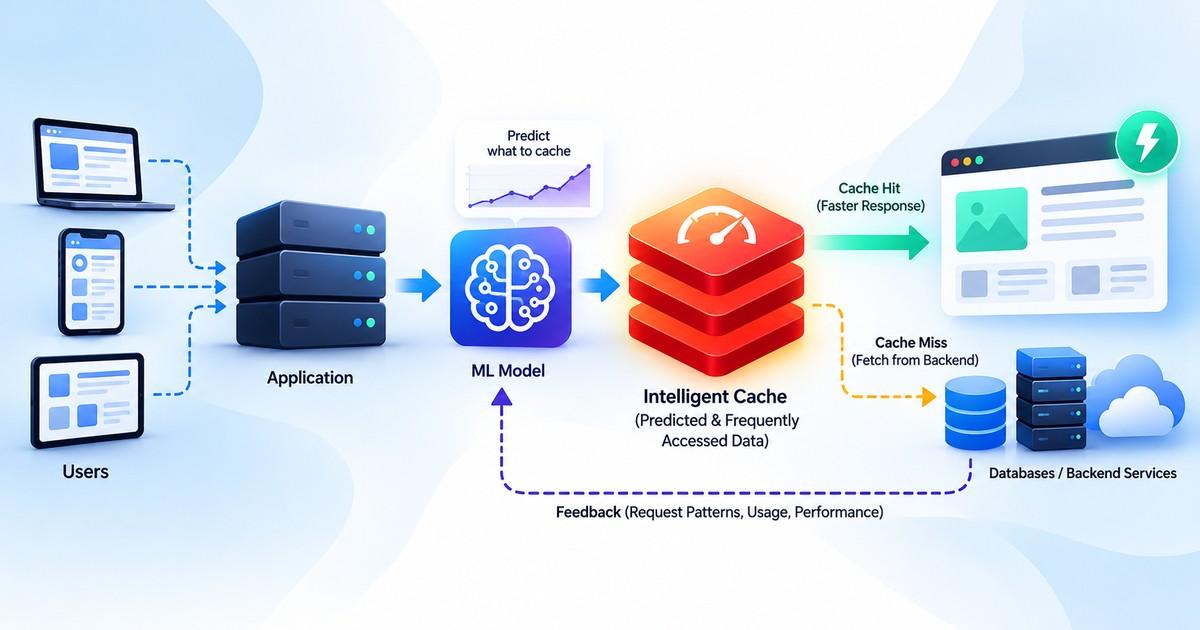
As an ML feature gains adoption, inference traffic can increase infrastructure expenditure and place additional pressure on application latency, making continuous performance optimization important for long-term sustainability. Engineers can evaluate whether requests need synchronous predictions, whether expensive transformations can be precomputed, and whether caching, batching, smaller models, or optimized runtimes can reduce computational overhead without violating the feature's quality requirements. The appropriate optimization depends on workload characteristics because techniques that increase throughput can sometimes introduce additional waiting time for individual requests.
Performance improvements should be validated against the complete user workflow rather than only the inference function, because feature retrieval, network communication, serialization, and downstream processing can consume substantial portions of the response-time budget. Teams should compare candidate configurations using representative traffic and realistic concurrency while measuring prediction quality, tail latency, memory consumption, throughput, and cost per prediction. This allows engineers to determine whether an optimization creates meaningful value without introducing hidden regressions elsewhere in the application.
Key Takeaway
Maintaining an ML feature requires continuous attention to predictive quality, application performance, data drift, inference cost, and production feedback rather than treating deployment as the end of engineering work. By monitoring model behavior alongside service health, validating candidate updates, optimizing the complete inference path, and maintaining safe rollout and rollback procedures, teams can keep predictive functionality reliable and valuable as the application and its operating environment evolve.
Conclusion
Building machine-learning features into existing applications requires a disciplined engineering approach that balances predictive capability with the stability, scalability, and maintainability of the existing software. Rather than beginning with an algorithm, teams should identify a concrete business problem, determine whether machine learning offers a measurable advantage over deterministic logic, assess available data, and define success criteria that include both predictive quality and operational performance.
Once the use case is established, the integration architecture must connect reliable data sources, feature pipelines, model inference, and application workflows through clearly defined interfaces. Engineers need to decide whether a model should execute inside the existing application or through a dedicated inference service, whether predictions must be synchronous or asynchronous, and how feature freshness, model versioning, and inference latency will affect the user experience. These decisions become easier to manage when model-specific complexity remains behind stable API contracts rather than spreading throughout the application codebase.
Testing and deployment require additional safeguards because a model can produce valid responses while delivering poor predictions or introducing unacceptable performance overhead. Conventional unit and integration tests should be combined with data validation, model-quality evaluation, training-serving consistency checks, realistic latency benchmarks, and explicit acceptance criteria. Controlled releases, shadow evaluation, feature flags, and canary deployments can then help teams introduce predictive functionality gradually while preserving a clear path to rollback if the new feature behaves unexpectedly.
The work continues after deployment because production data, user behavior, workloads, and model performance can change over time. Engineers must monitor application health alongside prediction quality, feature distributions, inference latency, infrastructure cost, and relevant business outcomes, using those observations to identify drift, investigate failures, optimize serving, and determine when model updates are justified. This continuous feedback process allows the ML feature to evolve without treating every change in model behavior as an isolated application defect.
Ultimately, successful ML integration is not simply a matter of exposing a trained model through an API, but of engineering a complete production capability that combines reliable data, maintainable software architecture, measurable predictive behavior, and safe operational controls. Teams that introduce machine learning incrementally, validate it against explicit requirements, and maintain clear ownership across the model lifecycle can improve existing applications while preserving the reliability that users and downstream services already depend on.
Frequently Asked Questions
1. What does it mean to build ML features into an existing application?
Building ML features into an existing application means incorporating predictive capabilities into established software workflows, such as recommendations, fraud detection, intelligent search, forecasting, or automated classification. The integration requires connecting the model to application data and business logic while preserving existing API contracts, deployment processes, reliability requirements, and user experiences.
2. How should engineers decide whether an application needs machine learning?
Engineers should first identify a business problem that is difficult to solve effectively using explicit rules and determine whether historical data can support a useful predictive model. Machine learning is most appropriate when the expected improvement in decision quality or automation justifies the additional complexity of model training, inference, monitoring, and maintenance.
3. What data is needed to integrate an ML feature?
The required data depends on the use case, but it commonly includes application records, historical events, user interactions, transaction information, operational logs, or other signals relevant to the prediction. Engineers also need to assess data quality, label availability, feature freshness, access permissions, and whether the necessary information can be retrieved within the application's performance constraints.
4. Should an ML model run inside an existing application or as a separate service?
An embedded model can be appropriate when inference is lightweight and the model's resource requirements align with the existing application's deployment and scaling characteristics. A dedicated inference service is often more suitable when models require substantial resources, specialized hardware, independent scaling, or frequent updates that should not require redeploying the entire application.
5. What is the role of an ML API?
An ML API provides a stable interface through which an application submits inputs and receives predictions, scores, rankings, or other model-generated outputs. It separates application logic from the model implementation, allowing engineers to update model versions and internal feature-processing logic without requiring unnecessary changes to downstream services.
6. Should predictions be generated synchronously or asynchronously?
Synchronous inference is appropriate when an application needs a prediction immediately to complete the current request, provided that model execution can reliably meet the latency target. Asynchronous inference is better suited to expensive or long-running workloads where the application can submit a job, receive an identifier, and retrieve the result after background processing completes.
7. How can engineers preserve consistency between training and production inference?
Engineers should maintain compatible feature definitions, preprocessing logic, data schemas, encoding rules, and missing-value handling across training and serving environments. Shared transformation code, versioned feature definitions, data contracts, and automated training-serving consistency tests help prevent differences that could silently reduce prediction quality after deployment.
8. What testing is required before releasing an ML feature?
Testing should combine conventional unit and integration tests with data validation, model-quality evaluation, edge-case analysis, and realistic performance benchmarks. Engineers should verify that the model meets predefined predictive requirements, that inference latency remains acceptable, and that the integration continues to respect the existing application's functional and reliability contracts.
9. How can engineers deploy an ML feature without disrupting existing functionality?
A gradual rollout can begin with offline evaluation or shadow inference, followed by a controlled canary release in which only a limited portion of production traffic uses the new feature. Feature flags, monitoring, explicit rollback triggers, and versioned model artifacts allow teams to increase exposure when results are acceptable and restore the previous behavior when regressions occur.
10. What is training-serving skew?
Training-serving skew occurs when the features or transformations used during model training differ from those applied during production inference. Differences in normalization, categorical encoding, aggregation windows, missing-value handling, or feature freshness can cause the deployed model to receive inputs that differ from the representations used during model development.
11. How should engineers monitor an integrated ML feature?
Monitoring should cover application availability, errors, latency, throughput, and resource utilization alongside model-specific indicators such as prediction distributions, confidence scores, feature statistics, and predictive quality when reliable outcomes become available. Connecting these signals helps engineers distinguish infrastructure failures from changes in data or model behavior.
12. What is model drift, and how does it affect an application?
Model drift refers to changes in model behavior or predictive effectiveness as the production environment evolves, often because user behavior, data distributions, or relationships between features and outcomes change. Engineers should monitor relevant input and outcome metrics, investigate meaningful degradation, and evaluate candidate model updates before replacing the current production version.
13. How can engineers reduce the latency of an ML feature?
Latency can be reduced by profiling the complete request path, precomputing expensive features, minimizing unnecessary network calls, caching reusable results when freshness permits, optimizing inference runtimes, and selecting models appropriate for the workload. Performance testing should measure end-to-end response time under realistic concurrency rather than focusing exclusively on the duration of model execution.
14. How should an application behave when its ML service becomes unavailable?
The application should use a predefined failure strategy that reflects the business consequences of missing or incorrect predictions, such as invoking a compatible fallback model, using a valid cached result, applying deterministic rules, or deferring processing. Timeouts, bounded retries, resource isolation, and graceful degradation help prevent inference failures from destabilizing unrelated application functionality.
15. How should an integrated ML feature be maintained after deployment?
Ongoing maintenance should include model-quality monitoring, data validation, performance optimization, model-version tracking, incident investigation, and periodic evaluation of whether retraining or architectural changes are necessary. Production observations and confirmed failure cases should feed back into automated tests and future model evaluations, allowing engineers to improve the feature while maintaining the stability and reliability of the surrounding application.