
Section 1: Why Agentic AI Is Redefining Enterprise Software
Enterprise software has undergone several transformative phases over the past two decades. Organizations first embraced digitization to replace paper-based processes, then adopted cloud computing to improve scalability and accessibility, followed by artificial intelligence to automate repetitive tasks and generate data-driven insights. Today, a new wave of innovation is emerging in the form of Agentic AI, a technology that extends beyond traditional AI by enabling software to reason, plan, make decisions, and execute complex tasks with minimal human intervention. Unlike conventional AI systems that respond to individual prompts or perform narrowly defined predictions, Agentic AI operates as an intelligent collaborator capable of pursuing objectives, adapting to changing conditions, and coordinating multiple actions to achieve meaningful outcomes.
This evolution is fundamentally changing how enterprises design and use software. Traditional enterprise applications rely heavily on users to navigate workflows, interpret information, and decide the next course of action. Agentic AI shifts much of this responsibility to intelligent software agents that can proactively identify problems, gather relevant information, recommend solutions, and execute approved actions across multiple systems. Rather than functioning as isolated AI features embedded within applications, these agents become active participants in business operations, helping employees accomplish complex work faster and with greater accuracy.
For engineering teams, this represents one of the most significant architectural changes since the rise of cloud-native applications. Building enterprise software is no longer limited to developing user interfaces and backend services; it increasingly involves designing intelligent agents capable of reasoning, interacting with APIs, maintaining contextual memory, and collaborating with both humans and other software systems. Organizations that understand this transition are beginning to redefine enterprise productivity by creating software that does not merely support work but actively contributes to completing it.
From AI Assistants to Intelligent Digital Colleagues
The first generation of enterprise AI focused primarily on assisting users. Recommendation engines suggested products, chatbots answered frequently asked questions, and predictive analytics generated forecasts to support business decisions. While these capabilities improved efficiency, they remained fundamentally reactive because they depended on users initiating every interaction. AI could provide valuable information, but employees were still responsible for interpreting recommendations, coordinating multiple systems, and completing most operational tasks manually.
Agentic AI represents a substantial shift from this assistance model toward autonomous collaboration. Instead of waiting for instructions, intelligent agents can analyze objectives, break complex problems into manageable steps, retrieve information from multiple enterprise systems, evaluate alternative approaches, and execute actions while continuously adapting to new information. This allows software to function much more like an experienced colleague than a traditional automation tool.
Consider an enterprise procurement workflow. In a conventional system, an employee reviews inventory levels, compares supplier quotations, verifies budget approvals, submits purchase requests, and tracks delivery schedules across multiple applications. An agentic AI system can coordinate these activities by identifying inventory shortages, gathering supplier information, evaluating procurement policies, preparing purchasing recommendations, initiating approval workflows, and notifying relevant stakeholders throughout the process. Employees remain responsible for strategic oversight and final decisions where appropriate, but much of the operational complexity is managed autonomously by intelligent agents.
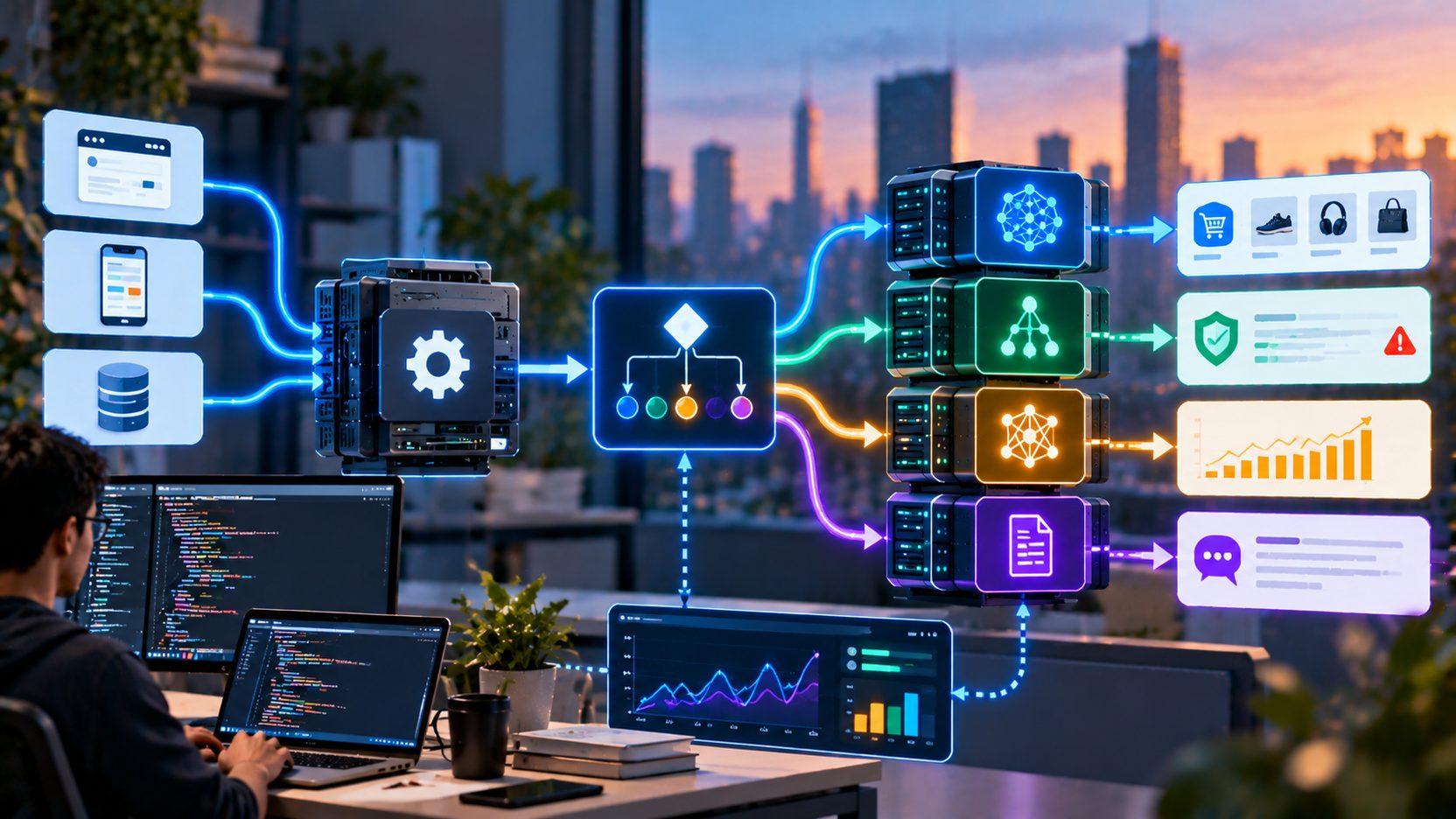
This shift also changes how enterprise applications are designed. Rather than building software around isolated features, engineering teams increasingly develop systems centered on business objectives. Intelligent agents become responsible for orchestrating workflows that span customer relationship management platforms, enterprise resource planning systems, communication tools, document repositories, and analytics platforms. The result is a more connected digital ecosystem where software actively collaborates across organizational boundaries instead of functioning as independent applications.
The growing significance of Agentic AI is reflected in research published by Gartner, which identifies autonomous AI agents as one of the most influential trends shaping the future of enterprise technology. Organizations are increasingly investing in intelligent agents capable of improving operational efficiency while enabling employees to focus on higher-value strategic work rather than repetitive coordination tasks.
Engineering Enterprise Software for Autonomous Decision-Making
The emergence of Agentic AI requires engineering teams to rethink many of the architectural principles that have guided enterprise software development for years. Traditional applications primarily respond to direct user requests, whereas intelligent agents must continuously evaluate changing environments, maintain contextual awareness, make informed decisions, and coordinate activities across distributed systems. Building these capabilities demands significantly more than integrating a large language model into an existing application.
One of the most important requirements is contextual memory. Enterprise agents must retain relevant information across multiple interactions so they can understand ongoing workflows, recognize previous decisions, and adapt their behavior based on evolving business requirements. Without persistent context, intelligent agents behave like isolated chat interfaces that repeatedly require users to provide the same information. Maintaining contextual continuity enables AI systems to participate effectively in long-running business processes that extend over days or even weeks.
Another critical consideration is orchestration. Enterprise environments consist of numerous specialized applications, each responsible for different aspects of business operations. Agentic AI must communicate seamlessly with these systems through secure APIs, retrieve accurate information, execute authorized actions, and coordinate complex workflows without compromising security or compliance. This orchestration layer becomes the foundation upon which intelligent enterprise automation is built.
Equally important is governance. As software agents gain greater autonomy, engineering teams must establish clear operational boundaries, approval mechanisms, audit trails, and monitoring capabilities to ensure that autonomous actions remain aligned with organizational policies. Intelligent agents should accelerate business processes while preserving transparency, accountability, and human oversight, particularly when decisions involve financial transactions, sensitive data, or regulatory obligations.
For software engineers, these evolving requirements create exciting opportunities to develop multidisciplinary expertise spanning distributed systems, machine learning, cloud architecture, security, workflow orchestration, and human-centered AI design. Professionals interested in understanding how autonomous AI is reshaping engineering careers should also explore "The Rise of Agentic AI: What It Means for ML Engineers in Hiring," which examines the growing demand for engineers capable of designing production-ready AI agents that operate effectively within enterprise environments.
Key Takeaway
Agentic AI represents a major evolution in enterprise software by transforming AI from a reactive assistant into an intelligent collaborator capable of planning, reasoning, and executing complex business workflows. Unlike traditional AI applications that simply respond to user requests, autonomous agents actively contribute to organizational productivity by coordinating systems, adapting to changing conditions, and supporting employees throughout multi-step processes. As enterprises continue embracing intelligent automation, engineering teams that understand how to build secure, scalable, and trustworthy Agentic AI systems will play a central role in shaping the future of enterprise software.
Section 2: The Core Technologies Powering Agentic AI in Enterprise Software
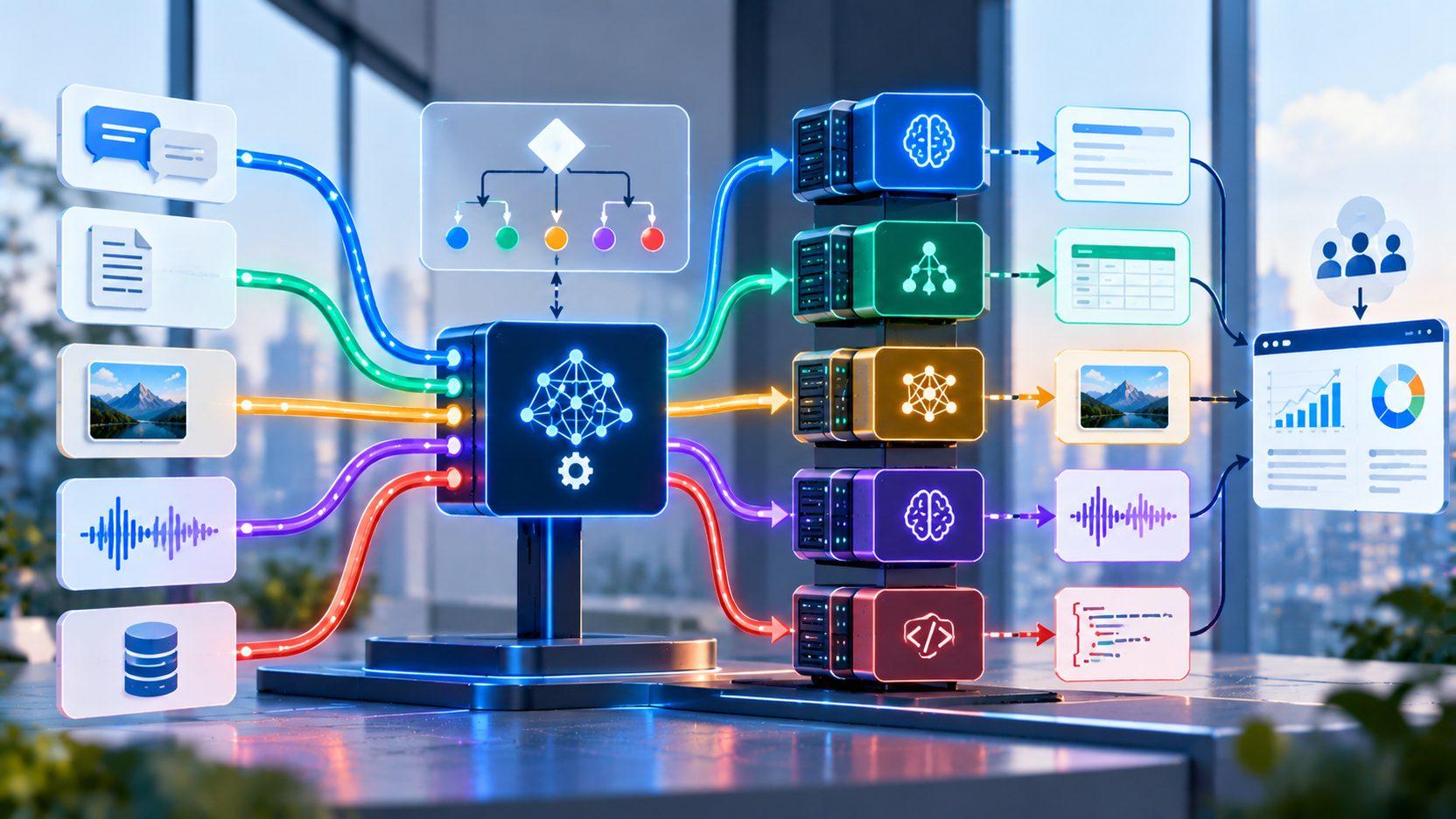
The growing adoption of Agentic AI is not being driven by a single breakthrough technology but by the convergence of several advances in artificial intelligence, cloud computing, distributed systems, and enterprise software architecture. While large language models have attracted significant attention for their conversational abilities, they represent only one component of an agentic system. An enterprise AI agent must be capable of understanding business objectives, maintaining context, reasoning through complex problems, interacting with multiple software platforms, and executing tasks while continuously adapting to changing conditions. Achieving this level of autonomy requires a carefully designed technology stack where multiple components work together seamlessly rather than relying on a single machine learning model.
For engineering teams, understanding this architecture is becoming increasingly important because building agentic applications differs significantly from developing traditional AI-powered features. Instead of creating isolated prediction models, engineers must design intelligent systems capable of planning, coordinating workflows, retrieving enterprise knowledge, invoking external tools, and making context-aware decisions. These capabilities transform enterprise software from a collection of independent applications into an interconnected ecosystem where intelligent agents actively collaborate with employees to accomplish business objectives.
Large Language Models Are the Brain, but Enterprise Agents Need Much More
Large language models (LLMs) have become the reasoning engine behind many modern agentic systems because they can understand natural language, generate human-like responses, summarize complex information, and perform sophisticated reasoning tasks. However, an LLM alone cannot function as a fully autonomous enterprise agent. While it can interpret instructions and generate recommendations, it has no inherent ability to retrieve real-time business data, access enterprise applications, execute workflows, or remember previous interactions over extended periods. Without these capabilities, it remains a conversational interface rather than an intelligent enterprise collaborator.
To overcome these limitations, engineering teams combine LLMs with additional architectural components that extend their capabilities. One of the most important additions is contextual memory. Enterprise agents must retain information about ongoing projects, previous conversations, user preferences, and completed actions so they can continue working toward long-term objectives without requiring employees to repeatedly provide the same context. Persistent memory enables agents to participate in complex business processes that span multiple sessions, departments, and enterprise applications.
Another critical capability is retrieval from trusted enterprise knowledge sources. Business decisions often depend on company-specific documentation, internal policies, technical manuals, customer records, and operational data that are unavailable within the language model itself. Modern agentic systems therefore integrate retrieval mechanisms that allow agents to access authoritative organizational knowledge before generating recommendations or taking action. This approach significantly improves response accuracy while reducing the likelihood of producing outdated or unsupported information.
According to Microsoft's AI Architecture guidance, successful enterprise AI agents combine language models with memory, orchestration, retrieval, and tool integration to create systems capable of solving real business problems rather than merely generating conversational responses. This architectural approach reflects the industry's growing recognition that production-ready Agentic AI depends on coordinated software engineering as much as advances in machine learning.
Orchestration, APIs, and Governance Turn Intelligent Models into Enterprise Agents
Once an AI system can reason effectively, the next challenge is enabling it to interact safely with enterprise software. Modern organizations rely on dozens or even hundreds of business applications, including customer relationship management platforms, enterprise resource planning systems, communication tools, analytics platforms, document repositories, and cloud services. An intelligent agent becomes valuable only when it can securely coordinate activities across these systems instead of functioning within a single isolated application.
This coordination is made possible through orchestration layers that manage how AI agents communicate with external services. Rather than embedding business logic directly within the language model, orchestration platforms determine which tools should be used, what information should be retrieved, which APIs should be invoked, and how results from multiple systems should be combined before presenting recommendations to employees. This separation between reasoning and execution improves flexibility while allowing organizations to update business workflows without retraining underlying AI models.
Governance becomes equally important as AI agents gain greater operational autonomy. Enterprise software cannot permit unrestricted automation without introducing unacceptable risks related to security, compliance, or financial decision-making. Organizations establish governance policies that define which actions agents may perform independently, which require human approval, and how autonomous decisions should be monitored throughout production. Continuous monitoring allows engineering teams to evaluate agent performance, detect unexpected behavior, investigate operational issues, and refine workflows as enterprise requirements evolve.
This combination of orchestration, secure integration, and governance enables organizations to deploy intelligent agents with confidence while preserving transparency and accountability. Rather than replacing existing enterprise software, Agentic AI enhances it by creating an intelligent coordination layer capable of connecting applications, automating workflows, and assisting employees across organizational boundaries.
As enterprises continue expanding their AI capabilities, engineering teams increasingly require expertise that spans software architecture, distributed systems, cloud infrastructure, security, and machine learning. Professionals seeking to build these multidisciplinary skills should also explore "Why ML Engineers Are Becoming the New Full-Stack Engineers," which explains how modern AI engineers combine technical disciplines to design production-ready intelligent systems capable of operating at enterprise scale.
Key Takeaway
Agentic AI is powered by an integrated technology stack that extends far beyond large language models. While LLMs provide reasoning capabilities, enterprise agents depend on contextual memory, knowledge retrieval, orchestration platforms, secure APIs, and robust governance to operate effectively within complex business environments. Engineering teams that understand how these components work together will be better equipped to build intelligent enterprise software capable of automating sophisticated workflows while maintaining the reliability, security, and transparency expected in modern organizations.
Section 3: Challenges Enterprises Must Solve Before Agentic AI Can Scale
The potential of Agentic AI extends far beyond automating repetitive tasks. Intelligent agents can coordinate business workflows, analyze enterprise data, communicate across multiple applications, and assist employees in making faster, more informed decisions. Despite these capabilities, successfully deploying Agentic AI across an enterprise is considerably more complex than integrating a chatbot or adding a large language model to an existing application. As organizations move from experimentation to production, they encounter technical, operational, and organizational challenges that determine whether intelligent agents become trusted business assets or costly proof-of-concept projects.
Many enterprises have already discovered that building an effective AI agent is only the beginning. The greater challenge lies in ensuring that autonomous systems operate reliably within environments that contain sensitive data, interconnected software platforms, strict compliance requirements, and constantly evolving business processes. Unlike conventional automation tools that follow predefined rules, Agentic AI continuously interprets new information and makes decisions based on changing contexts. This flexibility creates tremendous opportunities but also introduces new engineering responsibilities that require careful planning and governance.
For software engineers, understanding these challenges is becoming increasingly important because organizations are now hiring professionals capable of designing AI systems that are not only intelligent but also scalable, secure, and dependable. The future of enterprise software depends on solving these production challenges effectively rather than simply building increasingly capable AI models.
Reliability and Human Oversight Remain Essential for Enterprise Adoption
One of the greatest misconceptions surrounding Agentic AI is that autonomous systems should eventually eliminate the need for human involvement. While modern AI agents are becoming increasingly capable of executing complex workflows independently, enterprise environments require a level of reliability and accountability that cannot rely entirely on automated reasoning. Employees, customers, and business leaders must remain confident that AI systems will make appropriate decisions, recognize their limitations, and request human intervention whenever uncertainty or elevated risk arises.
This requirement becomes particularly important when AI agents interact with business-critical systems. An intelligent agent responsible for processing financial approvals, managing customer contracts, coordinating supply chains, or supporting cybersecurity operations cannot simply execute every action based solely on model confidence. Engineering teams must establish clear operational boundaries that define which tasks agents can complete autonomously and which decisions require human review before execution. These approval mechanisms ensure that AI accelerates business processes without reducing organizational control.
Reliability also depends on maintaining consistent behavior over time. Enterprise environments evolve continuously as policies change, new software platforms are introduced, customer expectations shift, and business priorities are updated. AI agents must adapt to these changes without producing inconsistent recommendations or unexpected actions that confuse employees. Achieving this consistency requires comprehensive testing, continuous monitoring, and structured validation processes that evaluate how agents perform across a wide variety of operational scenarios before significant updates reach production.
The importance of maintaining meaningful human oversight has been emphasized in guidance from the World Economic Forum, which highlights that successful enterprise AI combines autonomous capabilities with transparent governance and responsible decision-making. Organizations adopting Agentic AI are increasingly recognizing that long-term trust depends not on maximizing automation but on ensuring that intelligent systems remain accountable throughout their operational lifecycle.
Integration, Governance, and Organizational Readiness Determine Long-Term Success
Building an intelligent AI agent is technically impressive, but integrating that agent into an enterprise ecosystem is often the most difficult part of the implementation journey. Large organizations typically operate hundreds of interconnected applications supporting finance, human resources, customer service, sales, engineering, compliance, and operations. For an AI agent to deliver meaningful business value, it must navigate this complex digital environment while maintaining security, respecting organizational policies, and coordinating activities across multiple systems without disrupting existing workflows.
Integration requires much more than establishing API connections. Engineering teams must ensure that agents understand organizational context, interpret data consistently across different platforms, manage permissions appropriately, and maintain reliable communication between systems that may have been developed using entirely different technologies. Even minor inconsistencies in data formats, authentication methods, or workflow logic can significantly reduce an agent's effectiveness, making robust systems integration one of the most important engineering priorities for enterprise AI.
Governance becomes equally critical as autonomous capabilities expand. Organizations need comprehensive visibility into every decision made by AI agents, including which information influenced recommendations, which systems were accessed, what actions were performed, and how those actions aligned with organizational policies. Detailed audit trails, version control, monitoring dashboards, and automated compliance checks help engineering teams maintain transparency while simplifying troubleshooting and regulatory reporting. Rather than limiting innovation, these governance practices provide the operational confidence necessary to deploy increasingly sophisticated AI agents within production environments.
Organizational readiness also plays a decisive role in determining whether Agentic AI succeeds. Employees must understand how intelligent agents support their responsibilities, where human expertise remains essential, and how AI-generated recommendations should be evaluated. Engineering teams therefore collaborate closely with product managers, business leaders, security specialists, and operational stakeholders to ensure that AI solutions align with real business processes rather than introducing unnecessary complexity. Successful adoption depends as much on thoughtful implementation as it does on technical capability.
These multidisciplinary requirements are reshaping the role of AI engineers. Modern enterprise AI development increasingly combines machine learning, cloud architecture, software engineering, cybersecurity, distributed systems, governance, and product thinking into a single engineering discipline. Professionals capable of navigating this intersection are becoming highly valuable as organizations transition from isolated AI experiments to enterprise-wide intelligent automation. Readers interested in understanding how these evolving responsibilities are influencing engineering careers should also explore "The Hidden Skills ML Interviewers Look For (That Aren't on the Job Description)," which examines the broader technical and organizational competencies expected from today's AI professionals.
Key Takeaway
The widespread adoption of Agentic AI depends on much more than advances in artificial intelligence. Enterprises must build systems that combine autonomous reasoning with human oversight, integrate seamlessly across complex software ecosystems, and operate within strong governance frameworks that ensure transparency and accountability. Engineering teams that successfully address these challenges will enable organizations to deploy intelligent agents that not only automate work but also earn the confidence of employees, leadership, and customers while delivering sustainable business value.
Section 4: The Future of Agentic AI in Enterprise Software
Agentic AI is still in the early stages of enterprise adoption, yet its long-term impact is expected to rival the introduction of cloud computing and software-as-a-service platforms. Organizations are gradually moving beyond isolated AI assistants toward intelligent systems capable of managing end-to-end business processes, collaborating across departments, and continuously optimizing operations. As these capabilities mature, enterprise software will shift from being a collection of applications that employees operate to becoming an intelligent ecosystem where autonomous agents actively participate in achieving business objectives.
This transformation is redefining the role of enterprise software itself. Instead of merely providing information or automating predefined tasks, future applications will proactively identify opportunities, coordinate resources, predict operational challenges, and recommend or execute actions before employees even recognize a problem. Engineering teams therefore face a new responsibility: designing enterprise platforms that balance autonomy with transparency, innovation with governance, and automation with meaningful human oversight. Organizations that successfully achieve this balance will gain a significant competitive advantage because they will be able to respond more quickly to changing business conditions while enabling employees to focus on strategic work rather than operational coordination.
Multi-Agent Collaboration Will Become the Foundation of Intelligent Enterprises
Most enterprise AI applications today rely on individual agents designed to perform specific tasks such as answering questions, generating reports, or assisting with customer support. While these systems deliver measurable value, they represent only the first stage of Agentic AI evolution. The next generation of enterprise software will increasingly rely on multiple specialized agents working together to accomplish complex objectives that span numerous business functions.
Rather than assigning every responsibility to a single, highly complex AI system, organizations are beginning to develop ecosystems of collaborative agents, each possessing expertise within a particular domain. One agent may specialize in analyzing operational data, another may manage workflow scheduling, while others coordinate financial approvals, monitor security events, or interact with customers. These specialized agents exchange information, delegate responsibilities, and coordinate activities to achieve shared organizational goals in much the same way that human teams collaborate across departments.
Communication between agents becomes a critical architectural consideration in these environments. Intelligent systems must exchange information securely, maintain a consistent understanding of shared objectives, and resolve conflicts when multiple agents propose competing actions. Standardized communication protocols, shared memory systems, and orchestration platforms enable agents to collaborate effectively while preserving reliability and governance. Rather than functioning as isolated AI models, enterprise agents become coordinated members of a larger intelligent software ecosystem capable of solving increasingly sophisticated business problems.
This progression toward collaborative AI systems reflects a broader industry trend. According to IBM's research on AI agents and enterprise automation, organizations are increasingly investing in multi-agent architectures because they offer greater flexibility, resilience, and scalability than relying on individual AI assistants. As enterprise software continues to evolve, coordinated agent ecosystems are expected to become a defining characteristic of next-generation intelligent platforms.
Engineers Will Design AI Ecosystems Instead of Individual Applications
The emergence of Agentic AI is also reshaping the role of software engineers. Traditional enterprise software development focused on building applications with clearly defined functionality, user interfaces, and backend services. Modern AI engineering requires a much broader perspective because intelligent agents operate across multiple applications, cloud platforms, databases, communication tools, and business processes simultaneously. Engineers are therefore transitioning from application developers to architects of interconnected AI ecosystems.
This evolution requires expertise that extends well beyond machine learning. Modern engineering teams must understand distributed systems, cloud-native architecture, API design, cybersecurity, workflow orchestration, data governance, observability, and human-computer interaction. Every intelligent agent must communicate reliably with enterprise systems, manage contextual memory, respect organizational permissions, recover gracefully from unexpected failures, and provide sufficient transparency for employees to understand and trust its decisions. These multidisciplinary requirements are making AI engineering one of the most comprehensive technical roles within modern software organizations.
Continuous monitoring will become equally important as agent ecosystems grow more sophisticated. Engineering teams must observe not only individual model performance but also how multiple agents interact, share information, execute workflows, and influence business outcomes over time. Comprehensive observability platforms will enable organizations to evaluate system health, detect emerging risks, optimize agent collaboration, and maintain governance across increasingly autonomous enterprise environments.
Human oversight will remain central to this future despite significant advances in AI capabilities. Autonomous agents may perform routine operational activities independently, but strategic decisions involving financial risk, legal compliance, customer relationships, or organizational priorities will continue to require meaningful human judgment. Engineering teams must therefore design systems where AI augments human expertise rather than attempting to eliminate it. Maintaining this balance will be essential for preserving employee trust while allowing organizations to benefit from intelligent automation at scale.
As enterprises increasingly invest in Agentic AI, employers are seeking engineers who can combine software engineering, machine learning, distributed systems, cloud infrastructure, and AI governance into a unified architectural vision. Professionals preparing for senior AI Engineering and Machine Learning roles should therefore focus not only on building intelligent models but also on designing production ecosystems capable of supporting autonomous software agents. Readers interested in understanding how enterprise AI is changing engineering careers should also explore "Beyond the Model: How to Talk About Business Impact in ML Interviews," which explains why organizations increasingly value engineers who can connect technical innovation with measurable business outcomes.
Key Takeaway
The future of enterprise software lies in intelligent ecosystems powered by collaborative AI agents rather than isolated automation tools. As organizations adopt multi-agent architectures, engineering teams will shift from building individual applications to designing interconnected platforms that combine reasoning, orchestration, governance, and human oversight. Engineers who develop expertise in these emerging architectural principles will play a leading role in building enterprise software that is not only more intelligent but also more scalable, trustworthy, and capable of transforming how modern organizations operate.
Conclusion
Agentic AI represents one of the most significant advancements in enterprise software since the adoption of cloud computing and machine learning. Unlike traditional AI systems that respond to prompts or automate isolated tasks, Agentic AI introduces intelligent software agents capable of reasoning, planning, making decisions, and executing multi-step workflows with minimal human intervention. This evolution is transforming enterprise applications from passive productivity tools into proactive digital collaborators that help employees complete work more efficiently, accurately, and intelligently.
However, building successful Agentic AI solutions requires much more than integrating a large language model into an existing application. Engineering teams must design systems that combine contextual memory, workflow orchestration, secure API integrations, governance, and continuous monitoring to ensure that autonomous agents operate reliably within complex enterprise environments. Every architectural decision, from how agents access data to how they communicate with other systems, directly influences the effectiveness, security, and scalability of the final solution.
Equally important is maintaining the right balance between autonomy and human oversight. While Agentic AI can significantly reduce repetitive work and accelerate business processes, enterprise software must continue to provide transparency, accountability, and opportunities for human review when decisions involve sensitive data or high business impact. Organizations that establish clear governance frameworks, monitor agent performance, and define operational boundaries will be better positioned to deploy intelligent agents confidently while preserving employee trust and regulatory compliance.
The emergence of multi-agent systems further expands the possibilities of enterprise AI. Rather than relying on a single intelligent assistant, future organizations will deploy specialized AI agents that collaborate across departments, applications, and workflows to solve increasingly complex business problems. This shift will fundamentally change how enterprise software is designed, moving away from isolated applications toward interconnected ecosystems where intelligent agents coordinate activities across the organization.
For software engineers, this transformation presents an exciting opportunity. The next generation of AI professionals will require expertise that extends beyond machine learning into distributed systems, cloud architecture, API design, cybersecurity, MLOps, workflow orchestration, and AI governance. Engineers who understand how to build secure, scalable, and trustworthy Agentic AI systems will be among the most valuable contributors to enterprise technology over the coming decade.
Ultimately, the future of enterprise software will not be defined solely by smarter algorithms but by intelligent systems capable of working alongside people to achieve business objectives. Organizations that invest in Agentic AI today are building more than automation, they are creating adaptive, collaborative, and continuously improving digital workforces that will redefine productivity, innovation, and operational excellence in the years ahead.
Frequently Asked Questions
1. What is Agentic AI?
Agentic AI refers to artificial intelligence systems that can reason, plan, make decisions, and execute multi-step tasks autonomously to achieve specific goals instead of simply responding to individual prompts.
2. How is Agentic AI different from traditional AI?
Traditional AI typically performs isolated tasks such as predictions or answering questions. Agentic AI goes further by maintaining context, planning workflows, interacting with external systems, and completing complex objectives with minimal human intervention.
3. Why is Agentic AI important for enterprise software?
It enables enterprise applications to automate end-to-end business processes, improve employee productivity, reduce manual effort, and coordinate work across multiple business systems.
4. What technologies power Agentic AI?
Agentic AI combines large language models, contextual memory, retrieval systems, workflow orchestration, APIs, cloud infrastructure, monitoring platforms, and governance frameworks to function effectively.
5. What is contextual memory in Agentic AI?
Contextual memory allows AI agents to retain relevant information across multiple interactions, enabling them to understand ongoing projects, remember previous actions, and continue long-running workflows.
6. What role do APIs play in Agentic AI?
APIs enable intelligent agents to communicate securely with enterprise applications, retrieve business data, update records, initiate workflows, and execute approved actions across different systems.
7. Can Agentic AI replace human employees?
No. Agentic AI is designed to augment human expertise by automating repetitive and operational tasks while allowing employees to focus on strategic decision-making, creativity, and complex problem-solving.
8. What are multi-agent systems?
Multi-agent systems consist of multiple specialized AI agents that collaborate with one another to complete complex business workflows, with each agent handling a specific domain or responsibility.
9. What challenges do organizations face when implementing Agentic AI?
Common challenges include integrating with legacy systems, maintaining security, ensuring governance, managing contextual memory, monitoring autonomous decisions, and earning employee trust.
10. Why is AI governance important for Agentic AI?
Governance establishes policies, monitoring, approval workflows, and accountability mechanisms that ensure autonomous AI agents operate safely, transparently, and in compliance with organizational standards.
11. Which industries can benefit the most from Agentic AI?
Industries such as finance, healthcare, manufacturing, retail, logistics, telecommunications, cybersecurity, and enterprise software can significantly improve efficiency through intelligent workflow automation.
12. What skills should software engineers develop for Agentic AI?
Engineers should strengthen their knowledge of machine learning, distributed systems, cloud computing, API development, workflow orchestration, MLOps, cybersecurity, AI governance, and enterprise software architecture.
13. How is Agentic AI evaluated during engineering interviews?
Interviewers increasingly assess a candidate's ability to design autonomous AI systems, explain workflow orchestration, integrate enterprise applications, manage AI governance, and build scalable production architectures.
14. How will Agentic AI influence the future of enterprise software?
Enterprise software will evolve from passive applications into intelligent ecosystems where AI agents proactively coordinate workflows, support employees, optimize business processes, and adapt continuously to changing organizational needs.
15. Why should organizations invest in Agentic AI today?
Organizations that adopt Agentic AI early can improve operational efficiency, accelerate decision-making, enhance employee productivity, reduce manual workloads, and build intelligent enterprise platforms that provide a sustainable competitive advantage as AI continues to evolve.