
Section 1: Why Trustworthiness Has Become a Critical AI Metric
For many years, AI evaluation was relatively straightforward. Organizations measured model accuracy, monitored performance metrics, and compared competing approaches using standardized benchmarks. If a model achieved better results than previous versions, it was generally considered an improvement.
Modern AI systems have changed that equation.
Today's AI applications influence customer experiences, automate business processes, assist decision-making, and increasingly participate in operational workflows. In these environments, technical performance alone is no longer sufficient. Organizations must determine whether users can consistently trust the system's outputs and behavior.
Accuracy Does Not Automatically Create Trust
One of the most important realizations in modern AI development is that high accuracy does not necessarily lead to high trust.
A model may perform exceptionally well during testing yet still generate outcomes that concern users. For example, a customer support assistant may answer most questions correctly but occasionally provide highly confident incorrect information. A recommendation engine may deliver relevant suggestions while exhibiting unexplained inconsistencies. An AI assistant may solve tasks effectively while failing to explain its reasoning clearly.
In each case, technical performance metrics may appear strong even though user trust remains low.
Trustworthiness extends beyond correctness. Users evaluate whether systems behave predictably, communicate uncertainty appropriately, avoid harmful outputs, and align with expectations. These factors significantly influence adoption and long-term success.
Organizations increasingly recognize that trust must be measured independently rather than assumed as a byproduct of model performance.
The Rise of Business-Critical AI Systems
Another reason trustworthiness has become so important is the expanding role of AI within critical business processes.
Early AI deployments often focused on low-risk applications such as content recommendations or search optimization. Today, organizations are deploying AI within customer service operations, software development workflows, financial analysis systems, healthcare applications, cybersecurity platforms, and enterprise decision-support environments.
Failures within these systems can create significant consequences.
An inaccurate recommendation may affect revenue. A hallucinated response may damage customer trust. An unreliable workflow agent may disrupt operations. A biased decision system may introduce compliance risks.
As AI becomes more deeply embedded within organizational processes, trustworthiness increasingly influences business outcomes. Companies therefore need structured methods for evaluating whether systems are sufficiently reliable for specific use cases.
The question is no longer whether an AI system works. The question is whether it can be trusted to work consistently when it matters most.
Trust Directly Impacts Adoption
Even highly capable AI systems fail when users do not trust them.
Organizations frequently discover that technical excellence alone does not guarantee adoption. Employees may ignore AI recommendations. Customers may avoid AI-powered features. Decision-makers may refuse to rely on automated insights. In many cases, the underlying issue is not capability but confidence.
Trust influences whether users act on AI-generated information.
For example, a software engineer who trusts an AI coding assistant may accept recommendations quickly and integrate them into daily workflows. An engineer who doubts system reliability may spend excessive time validating outputs, reducing productivity gains significantly.
The same principle applies across industries. Trust affects utilization rates, engagement metrics, workflow adoption, and overall business value.
This growing emphasis on trustworthy systems is discussed in "Why AI Reliability Engineering Is Becoming a Critical Career Path," which explores how organizations increasingly invest in reliability, observability, and operational excellence to improve confidence in AI systems.
Building trust is increasingly viewed as a prerequisite for realizing the full value of AI investments.
Why Trust Is Becoming an Engineering Discipline
Historically, trust was often treated as a product or governance concern. Today, organizations are increasingly approaching trust as an engineering challenge.
This means defining measurable objectives, establishing evaluation frameworks, implementing monitoring systems, and continuously improving performance based on observed outcomes. Engineers are developing metrics that quantify consistency, robustness, explainability, safety, and reliability across diverse environments.
Trust is becoming something organizations actively build rather than passively hope to achieve.
As AI systems grow more complex, this engineering approach becomes increasingly necessary. Organizations need repeatable methodologies for evaluating whether systems behave as intended and identifying areas where confidence can be improved.
Key Takeaway
Trustworthiness has become a critical AI metric because modern AI systems influence important business decisions, customer experiences, and operational workflows. High model accuracy alone is no longer sufficient to guarantee adoption or success. Organizations increasingly measure trust independently through reliability, consistency, transparency, and user confidence metrics, treating trust as a measurable engineering objective rather than a subjective perception.
Section 2: The Key Metrics Companies Use to Measure AI Trustworthiness
Reliability Is the Foundation of Trust
When organizations evaluate AI trustworthiness, reliability is usually the first and most important dimension they measure. Users cannot trust a system that behaves inconsistently, produces unpredictable results, or performs well one day and poorly the next.
Reliability refers to an AI system's ability to deliver accurate and consistent outcomes across a wide variety of conditions.
For traditional machine learning systems, reliability may involve measuring prediction accuracy over time. For modern AI applications such as Large Language Models, Retrieval-Augmented Generation systems, and AI agents, the challenge is significantly more complex. These systems operate probabilistically, meaning outputs can vary even when inputs appear similar.
As a result, organizations increasingly measure reliability through a combination of technical and operational metrics. They evaluate response consistency, task completion rates, retrieval accuracy, workflow success rates, failure frequencies, and recovery performance.
For example, an enterprise AI assistant may be tested against hundreds or thousands of benchmark scenarios. Engineers analyze how often the system provides correct responses, how frequently it produces hallucinations, and whether outputs remain stable across repeated evaluations. Similarly, organizations deploying AI agents often measure whether workflows consistently reach successful outcomes without requiring human intervention.
Reliability monitoring continues long after deployment. Teams establish observability frameworks that track system behavior in production environments and identify signs of degradation before they affect users.
This focus on operational reliability reflects an important reality: users trust systems that behave predictably. Even highly capable AI applications lose credibility when outputs become inconsistent or difficult to anticipate.
Transparency and Explainability Help Users Build Confidence
Trust is not determined solely by outcomes. People also want to understand how those outcomes were generated.
This is why transparency and explainability have become central components of modern AI evaluation frameworks.
Transparency refers to the visibility organizations provide into how AI systems operate. Explainability refers to a user's ability to understand why a particular recommendation, prediction, or decision was made.
These concepts are particularly important in domains such as healthcare, finance, cybersecurity, and enterprise decision support, where stakeholders often need justification for AI-generated recommendations.
For example, an AI system that recommends rejecting a loan application may generate resistance if users cannot understand the reasoning behind the decision. Similarly, a cybersecurity analyst may hesitate to act on an AI-generated threat assessment unless the system explains which indicators contributed to the recommendation.
Organizations increasingly measure explainability by evaluating whether AI systems can provide meaningful supporting evidence, cite information sources, surface confidence levels, and present reasoning in a way that users can understand.
Large Language Models and agentic systems have introduced new challenges because their decision-making processes are often more difficult to interpret than traditional rule-based systems. As a result, many organizations now invest heavily in explainability tooling, workflow tracing, retrieval visibility, and decision auditing mechanisms.
The goal is not necessarily to expose every technical detail but to provide enough context that users can evaluate recommendations confidently.
Transparency plays a critical role in transforming AI from a black box into a system that users are willing to trust.
Safety and Risk Management Are Measured Continuously
Another major component of AI trustworthiness is safety.
Organizations increasingly recognize that AI systems must not only be effective but also avoid generating harmful, misleading, biased, insecure, or inappropriate outcomes. This requirement becomes especially important as AI systems gain access to business workflows, customer interactions, and operational decision-making processes.
Safety evaluation involves testing systems under a wide range of conditions to identify vulnerabilities and undesirable behaviors.
For example, organizations often evaluate how AI systems respond to adversarial prompts, ambiguous instructions, sensitive information requests, policy violations, and unexpected edge cases. They measure the frequency of unsafe outputs and assess whether safeguards successfully prevent problematic behavior.
Agentic AI introduces additional considerations because agents can interact with tools and external systems. Companies must evaluate whether agents remain within defined operational boundaries, avoid unauthorized actions, and respond appropriately when encountering uncertainty.
This focus on safety is creating entirely new engineering disciplines focused on governance, risk management, and operational oversight. "AI Agents in Production: Challenges, Risks, and Best Practices," explores how organizations establish safeguards and operational controls as AI systems become more autonomous and integrated into critical business processes.
Trustworthy AI systems are not merely effective, they are dependable under both normal and abnormal conditions.
User Trust and Adoption Metrics Matter as Much as Technical Metrics
Perhaps the most interesting aspect of modern trust measurement is that organizations increasingly evaluate trust through user behavior rather than technical performance alone.
Ultimately, trust exists in the minds of users. A technically impressive system may still fail if people do not believe its outputs are useful or reliable.
To address this challenge, organizations track a variety of user-centered trust indicators. These may include adoption rates, recommendation acceptance rates, workflow utilization, user satisfaction scores, escalation frequencies, feedback patterns, and engagement metrics.
For example, if employees consistently override AI-generated recommendations, it may indicate a trust problem even if the system performs well according to technical benchmarks. Similarly, declining usage rates can signal concerns about reliability, transparency, or usefulness.
User feedback often provides valuable insight into issues that technical metrics fail to capture. Organizations increasingly combine behavioral data with operational measurements to create a more complete picture of trustworthiness.
This approach reflects an important shift in how AI systems are evaluated. Trust is no longer viewed solely as a technical property. It is increasingly understood as a relationship between users and systems.
Key Takeaway
Companies measure AI trustworthiness through multiple dimensions including reliability, transparency, explainability, safety, risk management, and user adoption. Rather than relying solely on model accuracy, organizations evaluate how consistently systems perform, how clearly they communicate decisions, how safely they operate, and whether users are willing to rely on their outputs. Together, these metrics provide a comprehensive framework for assessing whether an AI system deserves trust in real-world environments.
Section 3: How Leading Organizations Build AI Trust Frameworks
Trust Cannot Be Measured Once, It Must Be Managed Continuously
One of the biggest misconceptions about AI trustworthiness is that it can be evaluated during development and then assumed to remain stable after deployment. In reality, trust is not a static property. AI systems operate within constantly changing environments where user behavior, data quality, business requirements, and operational conditions evolve over time.
As a result, leading organizations increasingly treat trust as an ongoing operational responsibility rather than a one-time validation exercise.
For example, a customer support assistant that performs well today may become less reliable if company documentation changes. An AI-powered search system may experience declining relevance as new content is added. An enterprise agent may behave differently after tool integrations are updated or workflows are modified.
Because of these factors, organizations establish continuous trust evaluation processes that operate throughout the entire lifecycle of an AI system.
These frameworks often include automated testing, production monitoring, performance benchmarking, user feedback analysis, and periodic governance reviews. Teams regularly evaluate whether systems continue meeting reliability, safety, fairness, and performance expectations.
This approach mirrors how modern organizations manage cybersecurity and software reliability. Trust is viewed as something that requires ongoing investment, monitoring, and improvement.
As AI systems become more autonomous, continuous trust management is becoming a critical operational capability.
Evaluation Pipelines Are Becoming Core Infrastructure
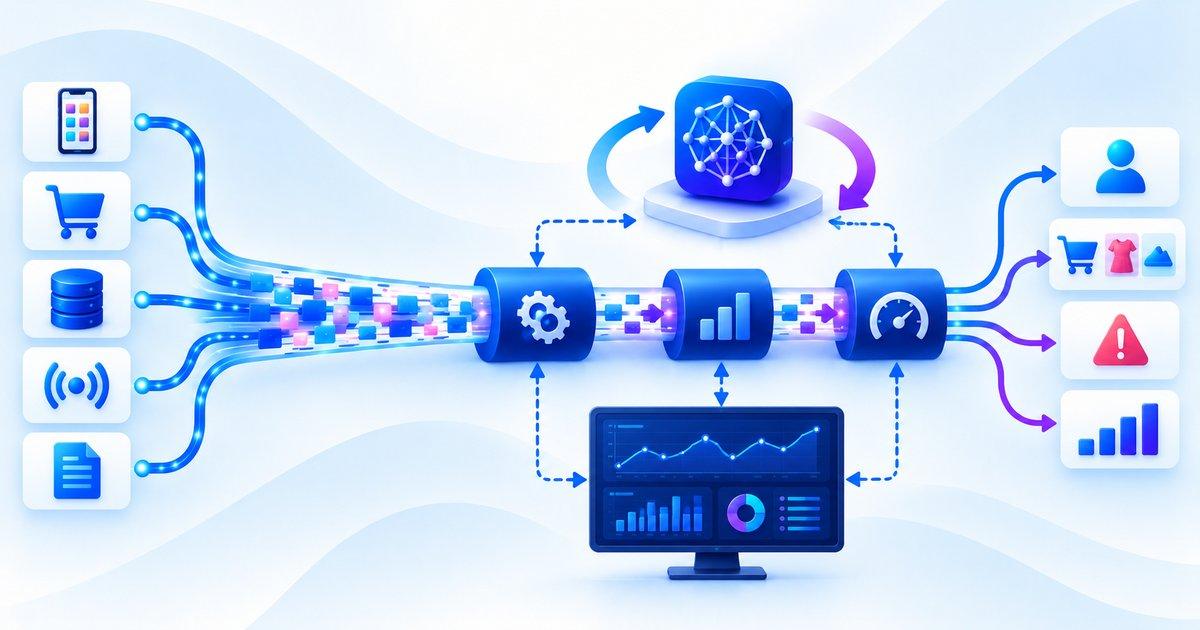
To manage trust effectively, organizations are building dedicated evaluation pipelines that function similarly to software testing frameworks.
Traditionally, software applications are validated through unit tests, integration tests, performance testing, and quality assurance processes. AI systems require similar mechanisms, but the nature of evaluation is often more complex because outputs may be probabilistic rather than deterministic.
For example, when evaluating an AI assistant, engineers may assess factual accuracy, retrieval quality, reasoning consistency, policy compliance, task completion rates, and user satisfaction across thousands of test scenarios.
Modern evaluation pipelines often include both automated and human review processes. Automated systems continuously measure operational metrics while domain experts periodically review outputs for quality, safety, and alignment with organizational objectives.
Large enterprises increasingly maintain benchmark datasets designed specifically for trust evaluation. These datasets contain representative scenarios, edge cases, adversarial inputs, and policy-sensitive situations that allow organizations to assess system behavior under realistic conditions.
The rise of agentic AI is making evaluation even more important. Unlike traditional applications, agents make decisions, select tools, execute actions, and adapt workflows dynamically. Organizations therefore need frameworks capable of evaluating not only outputs but also decision-making processes.
This evolution reflects a broader industry trend: trust evaluation is becoming an essential part of AI infrastructure rather than an optional governance activity.
Observability Is Essential for Understanding Trust
Organizations cannot improve trustworthiness if they cannot observe system behavior.
This reality has made observability one of the most important investments in modern AI deployments. Traditional monitoring tools focus primarily on infrastructure metrics such as latency, uptime, and resource utilization. While these indicators remain important, they provide limited insight into whether an AI system is behaving appropriately.
Trust-focused observability goes much deeper.
Organizations increasingly monitor retrieval quality, reasoning paths, workflow execution, tool usage, hallucination rates, policy violations, confidence scores, and task completion outcomes. These signals help teams understand not only whether a system is functioning but also whether it is behaving in a trustworthy manner.
For example, an AI research assistant may consistently return responses within acceptable latency thresholds while gradually relying on outdated information sources. Traditional infrastructure monitoring would likely miss the issue. Trust-focused observability, however, would detect declines in retrieval quality and identify potential risks before users are significantly affected.
This need for deeper visibility is driving growth in AI observability platforms and reliability engineering practices. "The New Era of AI Debugging: Diagnosing Failures in Complex Systems," explores how organizations are developing advanced tracing and monitoring techniques to understand increasingly sophisticated AI workflows.
The ability to observe system behavior in detail is becoming one of the foundations of AI trust.
Governance and Human Oversight Remain Critical
Despite advances in automation, leading organizations recognize that trust cannot be delegated entirely to technology.
Human oversight continues to play a central role in trust frameworks because many trust-related decisions involve business judgment, ethics, compliance, risk tolerance, and organizational priorities. AI systems can provide recommendations, but organizations must ultimately determine what levels of risk are acceptable and how systems should behave in sensitive situations.
As a result, many companies establish governance structures specifically focused on AI oversight. These groups often include engineering leaders, product managers, compliance specialists, legal teams, security professionals, and business stakeholders.
Governance frameworks typically define policies regarding model usage, data access, evaluation requirements, escalation procedures, auditability standards, and human review processes. They also establish accountability structures that clarify who is responsible when AI systems make mistakes or generate unexpected outcomes.
This human-centered approach is particularly important for agentic systems. As AI gains greater autonomy, organizations must ensure that humans remain involved in high-impact decisions and retain the ability to intervene when necessary.
The most successful companies view governance not as a constraint on innovation but as an enabler of responsible AI adoption. Strong oversight helps organizations scale AI more confidently because risks are understood and managed systematically.
Key Takeaway
Leading organizations build AI trust through continuous evaluation, robust observability, dedicated trust-testing infrastructure, and strong governance frameworks. Rather than treating trust as a one-time certification, they manage it as an ongoing operational process. By combining automated monitoring with human oversight, companies create systems that are not only technically effective but also reliable, transparent, and worthy of long-term user confidence.
Section 4: Why AI Trustworthiness Is Becoming a Competitive Advantage
Trust Is Emerging as a Business Differentiator
For many years, organizations competed primarily on AI capabilities. Companies focused on building models that were faster, more accurate, and more capable than competing solutions. While performance remains important, the AI market is becoming increasingly crowded. Access to advanced foundation models is expanding, and technical capabilities are becoming more widely available.
As a result, trust is emerging as a major competitive differentiator.
Organizations are discovering that users care not only about what AI systems can do but also about whether they can be relied upon consistently. An AI application that delivers impressive capabilities but occasionally produces harmful, inaccurate, or unpredictable outputs may struggle to gain widespread adoption. Conversely, a system that demonstrates consistent reliability and transparency often earns greater user confidence even if its raw technical performance is slightly lower.
This trend is especially visible in enterprise environments. Businesses are often willing to sacrifice a small amount of capability in exchange for greater predictability, explainability, and operational confidence. Enterprise leaders increasingly ask questions such as: Can we trust this system with customer interactions? Can we rely on its recommendations for business decisions? Can it operate safely at scale?
These questions are influencing purchasing decisions, vendor evaluations, and deployment strategies.
As AI adoption matures, organizations that prioritize trustworthiness are likely to gain significant advantages in customer loyalty, user engagement, and long-term adoption. Trust is becoming more than a technical objective, it is becoming a business strategy.
Regulatory Expectations Are Raising the Importance of Trust
Another reason trustworthiness is becoming a competitive advantage is the growing regulatory focus on artificial intelligence.
Governments and regulatory bodies around the world are increasing scrutiny of AI systems, particularly those that influence important decisions, process sensitive information, or interact directly with consumers. Organizations are facing new expectations regarding transparency, accountability, fairness, auditability, and risk management.
This shift is changing how companies evaluate AI investments.
Enterprises increasingly prefer AI systems that provide visibility into decision-making processes, support auditing requirements, and demonstrate compliance with evolving regulations. Trustworthy systems are often easier to govern because they provide clearer evidence regarding how decisions were made and how risks are being managed.
For example, organizations deploying AI in financial services, healthcare, insurance, and cybersecurity frequently require extensive documentation, evaluation records, monitoring capabilities, and governance controls. Trustworthiness becomes an operational necessity rather than a desirable feature.
Companies that invest in trust engineering today are often better positioned to adapt to future regulatory requirements. They have established evaluation frameworks, monitoring systems, and governance processes that support responsible AI deployment.
As regulations continue evolving, trustworthiness will likely become a key factor influencing both compliance readiness and competitive positioning.
Trustworthy AI Accelerates Organizational Adoption
One of the most overlooked benefits of trustworthiness is its impact on internal adoption.
Many AI initiatives fail not because the technology is incapable but because employees hesitate to rely on it. Users who lack confidence in system outputs often double-check recommendations, avoid automated workflows, or revert to manual processes. These behaviors significantly reduce the value generated by AI investments.
Trust changes this dynamic.
When employees believe that systems are reliable, transparent, and aligned with organizational goals, they are far more likely to integrate AI into daily workflows. Engineers adopt AI-powered development tools more readily. Customer service representatives rely on AI-generated recommendations. Operations teams automate routine activities with greater confidence.
This creates a positive feedback loop. Increased usage generates more data, which supports further optimization and improvement. Better performance strengthens trust, leading to broader adoption.
Organizations increasingly recognize that trustworthiness directly influences return on investment. A highly capable AI system that users ignore delivers little value. A trusted system that becomes embedded within workflows can transform productivity across an entire organization.
This connection between trust and adoption is explored in "From Copilots to Coworkers: The Evolution of AI Assistants in 2026," which examines how trust enables organizations to move from simple AI assistance toward deeper human-AI collaboration.
In many cases, trust is the bridge between technical capability and business impact.
The Future of AI Will Be Defined by Trust Engineering
Looking ahead, trustworthiness is likely to become one of the defining characteristics of successful AI systems.
The next generation of AI applications will be increasingly autonomous, interconnected, and influential. AI agents will participate in business workflows, interact with enterprise systems, support decision-making, and coordinate complex activities. As these capabilities expand, the consequences of failure become more significant.
Organizations therefore need structured approaches to building and maintaining trust.
This is driving the emergence of trust engineering as a dedicated discipline. Engineers are developing methodologies for evaluating reliability, monitoring behavior, measuring risk, improving transparency, and ensuring alignment with organizational objectives. Trust is becoming something that can be designed, measured, tested, and continuously improved.
The companies that succeed in the coming years will not necessarily be those with the most powerful models. They will be the organizations that build systems users can depend on consistently.
In an increasingly AI-driven world, trust may become the most valuable feature an AI product can offer.
Key Takeaway
AI trustworthiness is evolving from a technical consideration into a strategic business advantage. Organizations that invest in reliability, transparency, governance, and user confidence are better positioned to accelerate adoption, meet regulatory expectations, and create long-term value. As AI systems become more autonomous and integrated into critical workflows, trust engineering will play a central role in determining which products, platforms, and organizations succeed in the future.
Conclusion
As artificial intelligence becomes increasingly integrated into products, workflows, and business operations, trustworthiness is emerging as one of the most important determinants of AI success. The conversation around AI is no longer limited to model performance, benchmark scores, or technical capabilities. Organizations are now asking a more fundamental question: Can this system be trusted to operate reliably, responsibly, and consistently in real-world environments?
The answer to that question increasingly influences adoption, customer satisfaction, operational efficiency, regulatory compliance, and competitive advantage.
Modern AI systems are significantly more complex than traditional machine learning applications. Large Language Models, Retrieval-Augmented Generation systems, AI agents, and autonomous workflows interact with external tools, retrieve information dynamically, and participate in decision-making processes. These capabilities create tremendous opportunities but also introduce new risks related to reliability, transparency, safety, fairness, governance, and accountability.
As a result, leading organizations are developing comprehensive trust frameworks that go far beyond measuring accuracy. They evaluate reliability, monitor system behavior, analyze user trust signals, assess safety risks, implement governance mechanisms, and establish continuous evaluation pipelines. Trust is no longer viewed as an abstract concept. It is becoming a measurable engineering objective supported by infrastructure, processes, and organizational practices.
One of the most important lessons emerging from enterprise AI adoption is that trust directly affects business outcomes. Users are unlikely to rely on systems they do not trust, regardless of technical sophistication. Employees will hesitate to automate workflows. Customers will question recommendations. Decision-makers will seek additional validation. Without trust, even the most capable AI systems struggle to create meaningful value.
This reality is driving the rise of new disciplines such as AI reliability engineering, AI observability, AI governance, and trust engineering. Organizations increasingly need professionals who understand how to evaluate, monitor, and improve trustworthiness throughout the AI lifecycle.
Looking ahead, trust will likely become one of the defining characteristics of successful AI products. As models become more powerful and capabilities become more widely accessible, competitive differentiation will increasingly depend on whether organizations can build systems that users feel confident relying upon.
The future of AI will not be determined solely by intelligence. It will be determined by trust. The companies that can consistently demonstrate reliability, transparency, safety, and accountability will be the ones that earn user confidence and unlock the full potential of artificial intelligence.
Frequently Asked Questions
1. What is AI trustworthiness?
AI trustworthiness refers to the degree to which users and organizations can confidently rely on an AI system to behave reliably, safely, consistently, transparently, and responsibly in real-world situations.
2. Why is trustworthiness important in AI applications?
Trustworthiness influences adoption, user satisfaction, operational reliability, regulatory compliance, and business outcomes. Even highly capable AI systems often fail if users do not trust their outputs.
3. How is AI trust different from AI accuracy?
Accuracy measures whether outputs are correct. Trust encompasses a broader set of factors including reliability, consistency, explainability, transparency, safety, fairness, and user confidence.
4. What are the main components of AI trustworthiness?
Organizations typically evaluate reliability, transparency, explainability, safety, robustness, fairness, governance, accountability, and user trust when assessing AI trustworthiness.
5. How do companies measure AI reliability?
Companies measure reliability through metrics such as task completion rates, workflow success rates, response consistency, retrieval accuracy, hallucination frequency, uptime, latency, and operational stability.
6. What is explainability in AI?
Explainability refers to a system's ability to provide understandable reasons for its outputs, recommendations, or decisions so that users can evaluate and trust the results.
7. Why is transparency important for AI systems?
Transparency helps users understand how systems operate, what data sources they use, and how decisions are generated. Greater transparency often leads to higher trust and adoption.
8. What role does observability play in AI trust?
Observability provides visibility into AI behavior, including reasoning paths, retrieval processes, workflow execution, tool usage, and system performance. This helps organizations diagnose issues and improve trustworthiness.
9. How do companies evaluate AI safety?
Organizations test AI systems against adversarial inputs, harmful scenarios, policy violations, edge cases, security risks, and operational failures to ensure safe and responsible behavior.
10. What is trust engineering?
Trust engineering is the practice of designing, measuring, monitoring, and improving AI trustworthiness through evaluation frameworks, governance controls, observability systems, and reliability practices.
11. Why are AI agents creating new trust challenges?
AI agents can make decisions, interact with tools, execute workflows, and operate autonomously. These capabilities introduce additional risks that require stronger monitoring, governance, and evaluation mechanisms.
12. How do organizations measure user trust in AI systems?
Companies often track adoption rates, recommendation acceptance rates, user satisfaction scores, workflow utilization, feedback patterns, escalation rates, and engagement metrics to assess user trust.
13. What industries care most about AI trustworthiness?
Healthcare, finance, cybersecurity, insurance, government, enterprise software, legal services, and customer support organizations place especially high importance on AI trust because failures can have significant consequences.
14. How does AI governance support trustworthiness?
AI governance establishes policies, accountability structures, risk management processes, audit mechanisms, and oversight frameworks that help ensure systems operate responsibly and consistently.
15. What is the future of AI trust measurement?
The future will likely involve continuous evaluation systems, advanced observability platforms, automated trust monitoring, standardized governance frameworks, and dedicated trust engineering teams focused on ensuring AI systems remain reliable, transparent, and aligned with organizational goals.