
Section 1: AI Is Transforming the Foundation of Modern Cloud Computing
Cloud computing has long served as the backbone of digital transformation, enabling organizations to build scalable applications, deploy infrastructure on demand, and accelerate software development without investing heavily in physical data centers. For more than a decade, cloud providers focused primarily on improving virtualization, storage, networking, elasticity, and cost efficiency. These capabilities fundamentally changed how businesses built and operated software systems. However, the rapid advancement of artificial intelligence has introduced a new era in cloud computing, one where cloud platforms are no longer simply hosting applications but actively powering intelligent systems that continuously learn, adapt, and evolve.
Artificial intelligence has become the single largest force influencing the evolution of cloud infrastructure. Unlike traditional enterprise workloads that rely primarily on CPUs and predictable compute patterns, modern AI applications require enormous computational power, specialized hardware accelerators, high-speed networking, distributed storage architectures, and optimized data pipelines capable of supporting foundation models containing billions of parameters. Training and serving these models at enterprise scale demands infrastructure that conventional cloud architectures were never originally designed to support. As a result, every major cloud provider is redesigning its platforms around AI-first principles rather than treating AI as another application running on existing infrastructure.
The emergence of Large Language Models (LLMs), multimodal AI, Retrieval-Augmented Generation (RAG), autonomous agents, recommendation systems, and generative AI applications has dramatically accelerated this transformation. Enterprises across healthcare, finance, manufacturing, cybersecurity, retail, education, and software development increasingly rely on AI services that must process enormous amounts of structured and unstructured data while maintaining low latency, high availability, strong security, and predictable operational costs. Supporting these workloads requires cloud platforms capable of intelligent scheduling, GPU orchestration, distributed inference, automated scaling, and optimized resource allocation across geographically distributed environments.
Another important factor driving this evolution is the changing economics of AI. Traditional cloud applications generally scale according to user traffic, storage requirements, or transactional workloads. AI applications introduce entirely new cost variables, including GPU utilization, token generation, vector database queries, model inference frequency, memory consumption, and continuous evaluation pipelines. Organizations therefore require cloud platforms that intelligently optimize infrastructure usage while balancing performance against operational expenditure. AI has transformed cloud optimization from a relatively straightforward infrastructure challenge into a highly dynamic engineering discipline requiring sophisticated automation and predictive resource management.
AI Workloads Are Redefining Cloud Architecture
The rise of enterprise AI has fundamentally changed how cloud architectures are designed. Traditional cloud environments were optimized for web applications, databases, APIs, and transactional workloads that primarily relied on CPU-based processing. AI systems introduce computational requirements that are dramatically different. Training foundation models, serving generative AI applications, running multimodal inference, and supporting autonomous agents demand specialized hardware, distributed computing frameworks, and highly optimized networking capabilities capable of processing enormous volumes of data efficiently.
Graphics Processing Units (GPUs) have therefore become one of the most critical components of modern cloud infrastructure. Unlike CPUs, which excel at sequential processing, GPUs perform thousands of parallel operations simultaneously, making them ideally suited for neural network training and large-scale inference. Cloud providers now invest billions of dollars expanding GPU clusters because enterprise demand for AI compute continues growing faster than traditional infrastructure expansion. Specialized AI accelerators, including Tensor Processing Units (TPUs) and custom inference chips, further demonstrate how artificial intelligence is reshaping hardware strategies across the cloud industry.
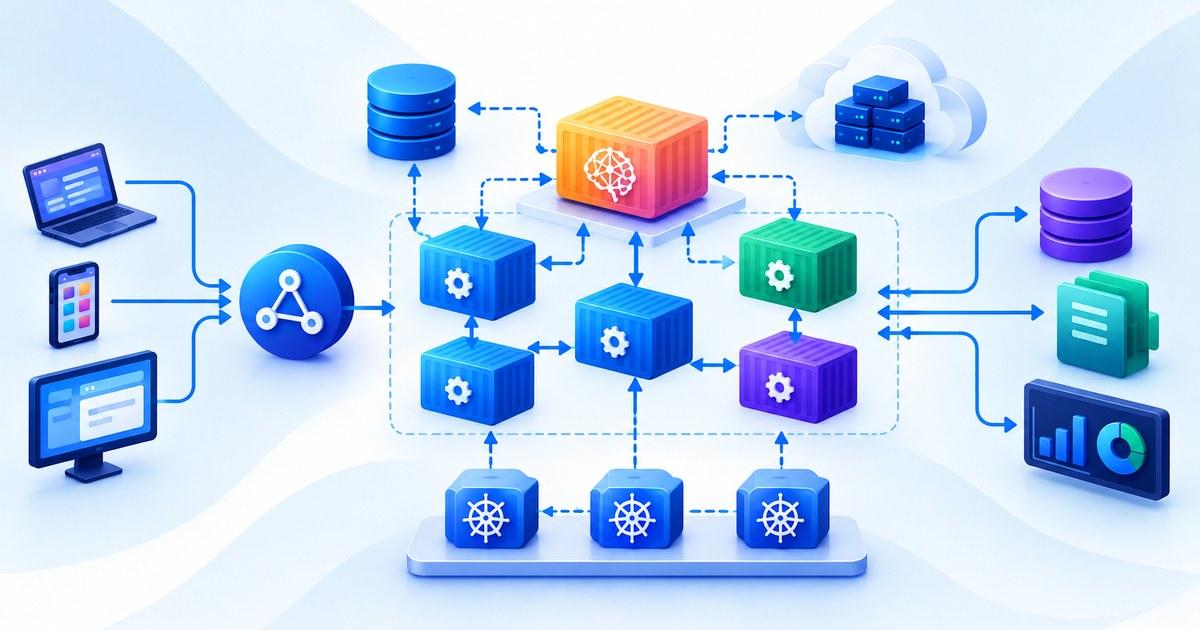
Cloud architecture has also evolved to support distributed AI workloads. Modern AI applications often involve multiple interconnected services operating simultaneously. A customer request may trigger Retrieval-Augmented Generation pipelines, vector database searches, foundation model inference, orchestration frameworks, observability platforms, security services, and business applications before generating a final response. Supporting these workflows requires highly scalable cloud architectures capable of coordinating diverse components while maintaining low latency and high reliability across geographically distributed environments.
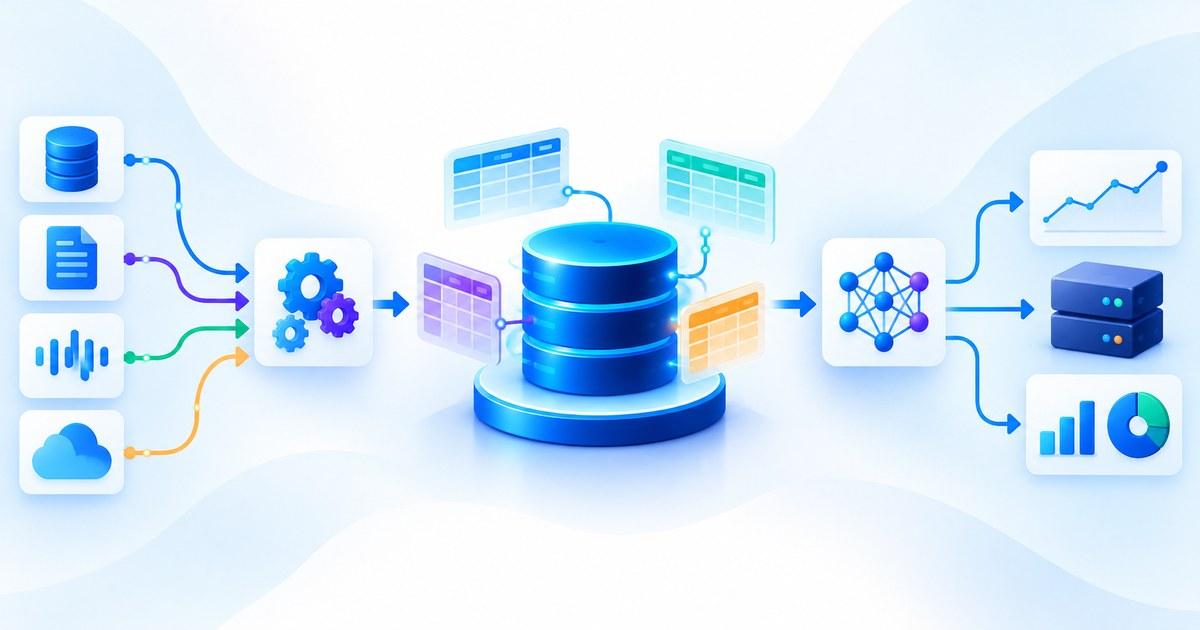
Storage architecture has undergone similar transformation. Enterprise AI systems continuously process massive datasets containing documents, images, videos, customer interactions, telemetry, and operational knowledge. Traditional relational databases alone cannot efficiently support semantic search, embeddings, or vector similarity retrieval. Consequently, cloud providers increasingly integrate object storage, distributed file systems, vector databases, high-performance caching layers, and data lake architectures specifically optimized for AI applications.
Networking has become equally important. Distributed AI training often requires thousands of GPUs communicating simultaneously across data centers. High-bandwidth, low-latency networking enables efficient synchronization between computing nodes while reducing training time for large foundation models. Technologies such as RDMA networking, high-speed interconnects, and AI-optimized network fabrics are becoming standard components of enterprise cloud infrastructure because conventional networking approaches cannot efficiently support modern AI workloads.
These architectural changes illustrate a broader industry trend. Cloud computing is no longer evolving primarily around traditional enterprise software. Instead, artificial intelligence has become the primary design constraint influencing infrastructure decisions, hardware investments, networking strategies, storage architectures, and operational automation. The cloud platforms of the next decade will increasingly be designed for AI first, with conventional workloads adapting to these intelligent environments rather than the other way around.
Readers interested in understanding how intelligent systems move from development to enterprise deployment should also explore "The Engineering Behind Autonomous AI Workflows," which examines the engineering principles, infrastructure, and production architectures required to build scalable AI-powered systems.
Key Takeaway
Artificial intelligence is fundamentally transforming cloud computing from programmable infrastructure into intelligent, AI-native platforms capable of supporting massive computational workloads, autonomous optimization, and enterprise-scale intelligent applications. As cloud providers redesign hardware, networking, storage, and operational architectures around AI, cloud engineers who understand these evolving technologies will become central to building the next generation of digital infrastructure.
Section 2: Cloud Infrastructure Is Becoming Intelligent and Autonomous
Cloud computing has traditionally relied on engineers to monitor infrastructure, allocate resources, resolve outages, optimize costs, and maintain system reliability. Although automation has played an increasingly important role over the past decade, most cloud environments still depend on predefined rules, manual interventions, and reactive operational processes. Artificial intelligence is fundamentally changing this model by enabling cloud infrastructure to become increasingly autonomous. Instead of waiting for engineers to identify problems or respond to changing workloads, modern cloud platforms are beginning to anticipate demand, predict failures, optimize resources continuously, and make operational decisions with minimal human intervention.
This transformation is occurring because enterprise AI workloads introduce levels of complexity that traditional cloud management approaches cannot efficiently handle. Modern AI applications process billions of requests, utilize thousands of GPUs simultaneously, retrieve information from distributed vector databases, orchestrate multiple foundation models, and support customers across global regions with demanding latency requirements. Managing these environments manually is becoming impractical because infrastructure conditions change continuously. AI-powered cloud platforms therefore analyze enormous volumes of operational telemetry in real time to optimize infrastructure dynamically while maintaining performance, availability, and cost efficiency.
The growing adoption of Artificial Intelligence for IT Operations (AIOps) represents one of the clearest examples of this evolution. Rather than relying solely on dashboards and manual monitoring, AIOps platforms continuously evaluate infrastructure metrics, application logs, networking behavior, hardware utilization, security events, and customer traffic patterns to identify anomalies before they develop into production incidents. Machine learning models recognize subtle operational patterns that would be nearly impossible for engineers to detect manually, enabling organizations to prevent downtime instead of merely reacting to failures after they occur.
Artificial Intelligence Is Creating Self-Managing Cloud Platforms
One of the most remarkable developments in cloud computing is the emergence of self-managing infrastructure. Traditional cloud environments depend heavily on engineers to provision resources, configure scaling policies, monitor performance, troubleshoot failures, and optimize operational efficiency. Artificial intelligence is gradually automating many of these responsibilities by enabling infrastructure to monitor itself, evaluate changing conditions, and respond intelligently without requiring constant human intervention.
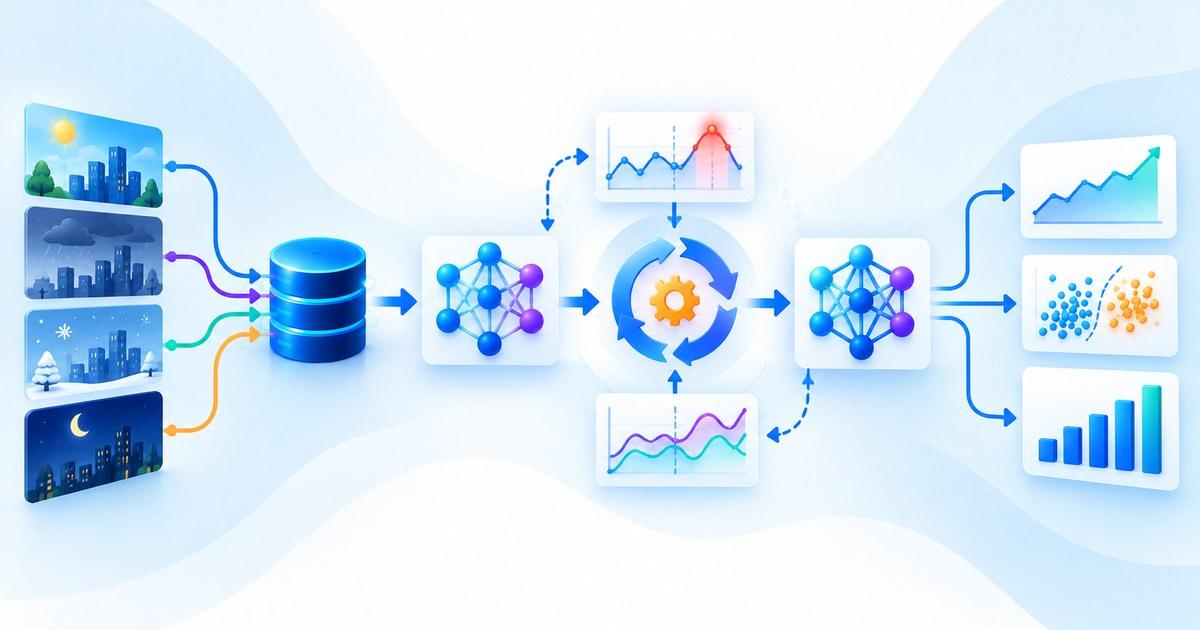
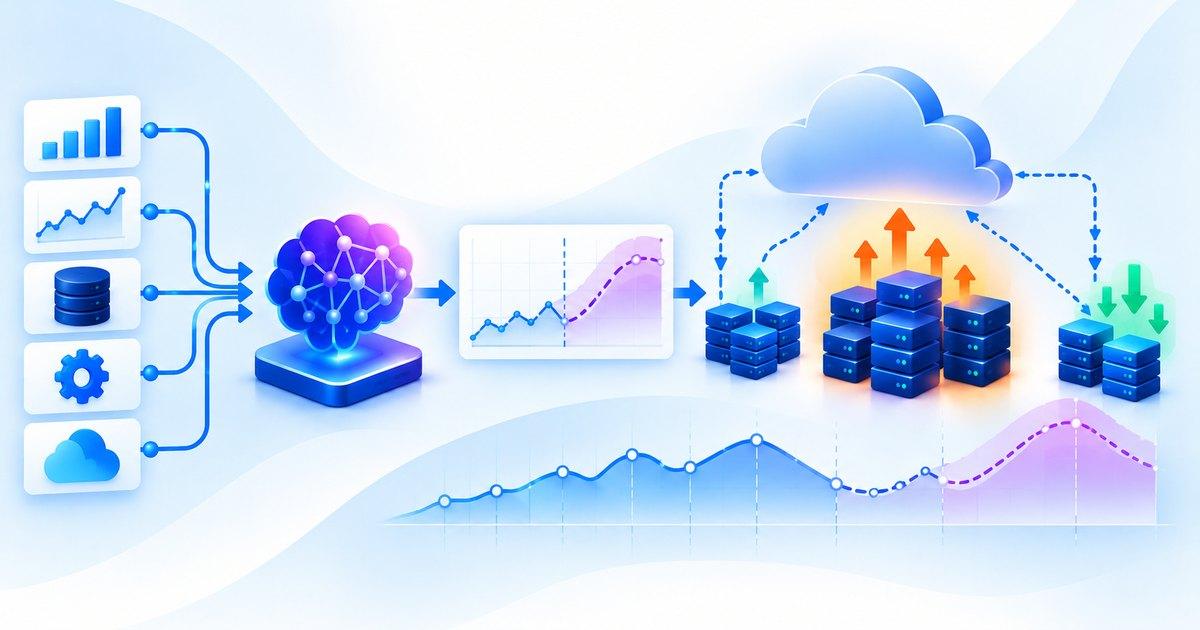
Predictive autoscaling provides a clear example of this evolution. Conventional autoscaling responds after infrastructure metrics such as CPU utilization or memory consumption exceed predefined thresholds. AI-powered cloud platforms analyze historical traffic patterns, customer behavior, seasonal trends, business events, and application telemetry to predict future demand before resource shortages occur. Instead of reacting to workload spikes, intelligent infrastructure proactively provisions computing resources, ensuring consistent performance while reducing unnecessary cloud expenditure during periods of lower demand.
Artificial intelligence is also transforming resource scheduling. Enterprise AI workloads often compete for expensive GPU resources, distributed storage systems, and high-performance networking capacity. Intelligent scheduling algorithms continuously optimize workload placement by considering infrastructure availability, energy consumption, latency requirements, geographic location, and operational priorities simultaneously. These optimizations maximize hardware utilization while improving both performance and cost efficiency across large-scale cloud environments.
Another area experiencing significant change is incident management. Modern cloud platforms process millions of infrastructure events every day, making manual analysis increasingly difficult. AI-powered operational platforms correlate logs, infrastructure metrics, application traces, deployment histories, and user activity to identify the root causes of failures within seconds. Instead of requiring engineers to investigate hundreds of disconnected alerts, intelligent systems consolidate related information, recommend corrective actions, and increasingly automate incident resolution for common operational issues.
AI Is Redefining Cloud Security, Cost Optimization, and Operational Excellence
Artificial intelligence is reshaping not only cloud infrastructure but also the operational disciplines responsible for maintaining secure, efficient, and financially sustainable cloud environments. Modern enterprises operate thousands of cloud resources across multiple providers, making manual optimization increasingly impractical. AI introduces continuous intelligence into these operational processes, allowing organizations to improve efficiency while reducing both technical risk and operational costs.
Cloud cost optimization has become particularly important as AI workloads consume expensive computational resources such as GPUs, high-performance storage, and distributed networking. Traditional cost management relies heavily on periodic reporting and manual analysis. AI-powered optimization platforms continuously evaluate infrastructure utilization, idle resources, workload patterns, storage efficiency, and application performance to recommend or automatically implement cost-saving improvements. These systems intelligently resize virtual machines, optimize GPU allocation, archive inactive data, consolidate workloads, and eliminate unnecessary cloud spending while preserving service quality.
Security has experienced an equally significant transformation. AI-powered cloud security platforms continuously analyze authentication behavior, network traffic, API usage, configuration changes, infrastructure telemetry, and application interactions to identify anomalies that may indicate malicious activity. Instead of depending solely on static security rules, intelligent detection models recognize subtle behavioral changes associated with credential compromise, insider threats, ransomware, privilege escalation, or unauthorized AI model access. This adaptive approach significantly improves an organization's ability to detect sophisticated attacks before they cause widespread damage.
Compliance and governance also benefit from intelligent automation. Organizations operating across regulated industries must continuously demonstrate adherence to security standards, privacy regulations, and internal governance policies. AI-powered governance platforms automatically evaluate cloud configurations, infrastructure deployments, identity permissions, encryption policies, and data access patterns to identify compliance risks before audits occur. Continuous monitoring reduces manual administrative effort while strengthening enterprise governance across increasingly complex cloud environments.
Operational excellence has similarly evolved. Instead of measuring infrastructure success solely through uptime, organizations increasingly evaluate customer experience, AI inference latency, business outcomes, environmental sustainability, infrastructure efficiency, and operational resilience together. Artificial intelligence enables engineering teams to optimize across these interconnected objectives simultaneously, providing deeper operational insight than traditional monitoring systems could achieve independently.
The combination of intelligent security, predictive optimization, automated governance, and AI-driven operations represents a fundamental shift in cloud computing. Rather than serving merely as infrastructure providers, modern cloud platforms are becoming intelligent operational ecosystems capable of continuously improving performance while reducing human effort across every aspect of enterprise cloud management.
Readers interested in understanding the operational complexity behind modern AI systems should also explore "The Hidden Layers of AI Engineering Nobody Talks About," which examines the infrastructure, operational practices, and engineering disciplines that enable enterprise AI applications to run reliably at production scale.
Key Takeaway
Artificial intelligence is transforming cloud operations from reactive infrastructure management into intelligent, autonomous ecosystems capable of predicting demand, optimizing resources, strengthening security, reducing costs, and maintaining operational excellence with minimal human intervention. As cloud platforms become increasingly self-managing, engineers will focus less on routine maintenance and more on designing the intelligent architectures that power the next generation of enterprise cloud computing.
Section 3: New Cloud Engineering Roles Created by the AI Revolution
Cloud computing has always evolved alongside technological innovation. The introduction of virtualization created Infrastructure Engineers. Public cloud platforms gave rise to Cloud Architects and DevOps Engineers. Containerization and Kubernetes led to Platform Engineers and Site Reliability Engineers becoming critical members of enterprise technology teams. Artificial intelligence is now driving the next major evolution of cloud careers by creating an entirely new generation of engineering specializations focused on building, managing, and optimizing AI-native cloud environments. These roles are emerging because traditional cloud expertise alone is no longer sufficient to support the computational demands of modern AI systems.
Enterprise AI workloads differ fundamentally from conventional business applications. Instead of hosting web servers and databases, cloud environments now orchestrate GPU clusters, distributed inference engines, foundation models, vector databases, autonomous AI agents, multimodal applications, and continuous model evaluation pipelines. Supporting these intelligent systems requires engineers who understand both cloud infrastructure and artificial intelligence. As organizations accelerate AI adoption, they increasingly seek professionals capable of bridging these two disciplines, creating career opportunities that were virtually nonexistent only a few years ago.
This shift reflects a broader transformation in enterprise technology. Cloud computing is no longer viewed solely as an infrastructure platform but as the operational foundation for artificial intelligence. Every AI application depends on scalable cloud services for compute, networking, storage, orchestration, monitoring, security, governance, and deployment. Consequently, cloud engineers are becoming central contributors to AI strategy rather than simply maintaining infrastructure behind the scenes.
AI Platform Engineers and AI Infrastructure Engineers Are Leading the Transformation
Among the newest cloud careers, AI Platform Engineers have become some of the most influential contributors to enterprise AI adoption. Unlike traditional Platform Engineers who primarily support software deployment pipelines, AI Platform Engineers design the infrastructure that enables data scientists, machine learning engineers, and application developers to build intelligent systems efficiently. They create model registries, feature stores, experimentation environments, inference services, evaluation pipelines, deployment automation, governance frameworks, and reusable AI development platforms that accelerate innovation across entire engineering organizations.
Their work extends well beyond infrastructure provisioning. AI Platform Engineers establish standardized workflows that simplify model deployment, automate continuous integration and continuous delivery (CI/CD) for machine learning applications, integrate observability platforms, enforce security policies, and ensure consistent governance across production AI systems. By building shared AI platforms, these engineers enable multiple teams to develop intelligent applications without repeatedly solving the same operational challenges, significantly improving organizational productivity.
Closely related is the rapidly expanding role of the AI Infrastructure Engineer. These specialists focus on the cloud environments that power AI workloads at scale. Their responsibilities include managing GPU clusters, optimizing distributed training environments, configuring high-speed networking, designing scalable storage architectures, deploying inference services, and improving infrastructure efficiency for computationally intensive AI applications. As organizations invest billions of dollars in AI hardware, AI Infrastructure Engineers ensure these expensive resources operate reliably while maximizing utilization and minimizing operational costs.
The Future Cloud Engineer Will Need AI Skills to Remain Competitive
Artificial intelligence is not replacing traditional cloud engineering skills, but it is significantly expanding the knowledge required to remain competitive. Core competencies such as networking, virtualization, Linux administration, distributed systems, Kubernetes, cloud architecture, security, and automation remain essential. However, modern cloud professionals increasingly complement these capabilities with expertise in AI infrastructure, machine learning operations, intelligent automation, and production AI services.
One area experiencing rapid growth is Cloud MLOps Engineering. These engineers manage the operational lifecycle of machine learning systems by automating model deployment, monitoring inference performance, coordinating retraining pipelines, managing feature stores, integrating observability platforms, and ensuring reliable production operation. Their responsibilities combine DevOps practices with machine learning workflows, creating one of the most valuable intersections between cloud computing and artificial intelligence.
Cloud security has also evolved significantly. AI Security Engineers specialize in protecting AI-native cloud environments against threats unique to intelligent systems, including prompt injection attacks, model theft, inference abuse, unauthorized API access, retrieval poisoning, and sensitive data leakage. As organizations increasingly deploy foundation models within cloud environments, securing AI infrastructure has become just as important as protecting traditional enterprise applications.
Cloud observability has similarly entered a new era. Engineers now monitor not only infrastructure metrics but also model latency, hallucination frequency, retrieval quality, GPU utilization, token consumption, inference throughput, customer interactions, and business outcomes simultaneously. This broader operational visibility enables organizations to optimize AI systems continuously while maintaining reliability at production scale.
Perhaps the most important skill for future cloud engineers is adaptability. Artificial intelligence continues evolving rapidly, introducing new orchestration frameworks, inference engines, cloud services, hardware accelerators, and governance requirements almost continuously. Engineers who embrace lifelong learning will adapt naturally as cloud computing evolves alongside AI, while those relying solely on traditional infrastructure expertise may find themselves increasingly limited in the opportunities available.
The cloud engineer of the next decade will therefore resemble a systems architect capable of integrating infrastructure, automation, artificial intelligence, security, observability, and business objectives into cohesive enterprise platforms. Rather than managing servers, future cloud professionals will design intelligent ecosystems capable of operating autonomously while supporting the next generation of AI-powered applications.
Readers interested in understanding how infrastructure engineering is becoming one of the fastest-growing disciplines in enterprise AI should also explore "The Rise of ML Infrastructure Roles: What They Are and How to Prepare," which explains the emerging responsibilities, technical skills, and career opportunities shaping the future of AI infrastructure engineering.
Key Takeaway
Artificial intelligence is creating an entirely new generation of cloud engineering careers centered on AI-native infrastructure, intelligent automation, GPU computing, MLOps, platform engineering, and cloud security. Engineers who combine strong cloud computing fundamentals with AI expertise will become the architects of tomorrow's intelligent cloud platforms, positioning themselves at the forefront of one of the most significant technological transformations in modern computing.
Section 4: The Future of Cloud Computing Will Be AI-Native
Cloud computing is entering its most transformative decade since the launch of the first public cloud platforms. The initial wave of cloud innovation focused on replacing physical infrastructure with virtualized computing resources that organizations could provision on demand. The second wave emphasized containers, Kubernetes, serverless computing, and cloud-native application development. The next decade will be defined by an entirely different paradigm: AI-native cloud computing. Instead of simply providing infrastructure for applications, cloud platforms will become intelligent ecosystems capable of managing themselves, optimizing resources autonomously, supporting billions of AI interactions, and continuously adapting to changing business requirements.
The transition toward AI-native cloud infrastructure is being driven by an unprecedented increase in intelligent workloads. Every industry is rapidly integrating artificial intelligence into its products and operations. Customer support platforms rely on conversational AI, healthcare organizations deploy diagnostic models, manufacturers optimize production through predictive analytics, financial institutions automate fraud detection, retailers personalize customer experiences, and software companies increasingly embed AI copilots directly into enterprise applications. These services require cloud platforms capable of delivering massive computational power while maintaining enterprise-grade reliability, security, scalability, and cost efficiency. Traditional cloud architectures were designed to host applications; AI-native cloud platforms are being designed to support intelligence itself.
One of the defining characteristics of this transformation is that cloud platforms will increasingly make operational decisions independently. Artificial intelligence will continuously evaluate infrastructure health, workload distribution, network performance, GPU utilization, energy consumption, security posture, and customer demand simultaneously. Rather than relying on predefined operational rules, cloud systems will learn from historical patterns and adapt automatically to optimize performance. Engineers will increasingly supervise intelligent infrastructure instead of manually configuring every operational parameter, enabling organizations to manage significantly larger cloud environments with greater efficiency.
Multi-Cloud AI Ecosystems and Autonomous Infrastructure Will Become the Industry Standard
One of the most significant changes expected during the next decade is the widespread adoption of multi-cloud AI ecosystems. Historically, organizations often selected a single cloud provider to simplify infrastructure management and reduce operational complexity. Modern AI development increasingly encourages a different strategy. Enterprises deploy workloads across multiple cloud providers to access specialized AI hardware, optimize regional availability, improve resilience, reduce vendor dependence, and leverage unique AI services available within different cloud platforms. Artificial intelligence itself is helping organizations manage these increasingly complex environments through intelligent orchestration and automated resource optimization.
Autonomous infrastructure will become equally important. Future cloud platforms will continuously analyze operational telemetry, infrastructure utilization, application performance, business priorities, and customer demand before automatically adjusting configurations to maintain optimal efficiency. Instead of relying on human operators to identify bottlenecks, AI-powered orchestration systems will predict failures, rebalance workloads, optimize networking paths, migrate services, and allocate GPU resources dynamically. These capabilities will significantly improve operational resilience while allowing engineering teams to focus on innovation rather than repetitive infrastructure management.
Agentic AI will further accelerate this transformation. Rather than using isolated automation scripts, organizations will deploy intelligent AI agents capable of coordinating complex operational workflows independently. Specialized agents may monitor cloud security, optimize infrastructure costs, manage Kubernetes clusters, coordinate software deployments, validate compliance policies, monitor AI models, or recover from infrastructure failures without requiring continuous human oversight. Multiple agents working collaboratively will enable cloud environments to become increasingly autonomous while remaining transparent and controllable through human governance.
Engineers Who Embrace AI Will Lead the Next Generation of Cloud Innovation
Every major technological revolution has rewarded engineers who recognized change early and developed expertise before new technologies became mainstream. Artificial intelligence is creating a similar opportunity for cloud professionals today. Organizations increasingly seek engineers who understand both cloud-native architecture and intelligent systems because future enterprise platforms depend on the seamless integration of these two disciplines. Engineers who continue focusing exclusively on traditional cloud administration may remain valuable, but those who combine cloud expertise with AI capabilities will shape the direction of enterprise technology over the coming decade.
The future cloud engineer will require a broader technical perspective than ever before. Knowledge of Kubernetes, distributed systems, networking, Linux administration, security, infrastructure automation, and cloud architecture will remain fundamental. However, these capabilities will increasingly be complemented by expertise in Large Language Models (LLMs), Retrieval-Augmented Generation (RAG), AI inference, MLOps, GPU infrastructure, AI observability, autonomous agents, cloud-native AI security, and intelligent orchestration frameworks. Engineers capable of integrating these technologies into cohesive enterprise solutions will become indispensable as organizations continue expanding their AI capabilities.
Continuous learning will therefore become one of the defining characteristics of successful cloud professionals. Artificial intelligence evolves significantly faster than most previous technology domains. New foundation models, hardware accelerators, orchestration platforms, observability tools, and AI cloud services emerge almost continuously. Engineers who actively experiment with emerging technologies, contribute to open-source AI projects, build production-ready AI applications, and strengthen their architectural thinking will consistently remain ahead of industry demand.
Another important shift involves leadership responsibilities. Cloud engineers will increasingly influence business strategy rather than simply maintaining infrastructure. Decisions involving AI platform architecture, infrastructure investment, workload optimization, governance, security, sustainability, and operational resilience will directly affect organizational competitiveness. Future technical leaders will therefore combine deep engineering expertise with strong business understanding, systems thinking, and cross-functional collaboration.
Ultimately, AI-native cloud computing represents more than another technological trend, it marks the beginning of a new computing paradigm. Just as virtualization transformed physical infrastructure into programmable resources, artificial intelligence is transforming cloud platforms into intelligent operational ecosystems capable of continuous adaptation and autonomous optimization. Engineers who embrace this transformation today will not only advance their careers but will also help design the infrastructure powering the world's next generation of intelligent technologies.
Readers interested in understanding how production AI systems evolve from research concepts into scalable enterprise platforms should also explore "From Research to Real-World ML Engineering: Bridging the Gap," which explains the engineering practices, infrastructure decisions, and operational thinking required to deploy AI successfully in production environments.
Key Takeaway
The future of cloud computing is AI-native. Intelligent cloud platforms will automate infrastructure management, optimize resources autonomously, coordinate multi-cloud ecosystems, support edge intelligence, and power nearly every major technological innovation of the next decade. Engineers who combine strong cloud computing expertise with artificial intelligence, distributed systems, automation, and continuous learning will become the architects of tomorrow's intelligent cloud infrastructure and the leaders of the next era of enterprise computing.
Conclusion
Artificial intelligence is redefining cloud computing in ways that extend far beyond faster infrastructure or improved automation. What began as a platform for virtual machines, storage, and scalable applications is rapidly evolving into an intelligent ecosystem capable of managing, optimizing, and continuously improving itself. Over the next decade, AI will become one of the primary architectural forces shaping cloud platforms, influencing everything from hardware design and networking to security, infrastructure management, software deployment, and enterprise innovation. Organizations that understand this transformation today will be significantly better positioned to compete in an increasingly AI-driven digital economy.
One of the most significant changes is the shift from traditional cloud infrastructure to AI-native cloud platforms. Early cloud environments focused on providing flexible computing resources that developers could configure manually. Modern cloud platforms increasingly incorporate artificial intelligence into their core operations, allowing infrastructure to predict workload demand, optimize resource allocation, identify operational anomalies, strengthen cybersecurity, and automate complex administrative tasks. Rather than functioning as passive infrastructure providers, cloud platforms are becoming intelligent operational systems capable of making data-driven decisions with minimal human intervention.
This evolution has been accelerated by the explosive growth of enterprise AI applications. Large Language Models (LLMs), Retrieval-Augmented Generation (RAG), autonomous AI agents, multimodal systems, recommendation engines, intelligent search platforms, and generative AI applications all depend on cloud environments capable of delivering enormous computational power while maintaining high availability, low latency, enterprise-grade security, and predictable operational costs. These requirements have fundamentally changed how cloud infrastructure is designed, shifting industry priorities toward GPU computing, distributed architectures, intelligent orchestration, high-performance networking, and AI-specific cloud services.
Frequently Asked Questions (FAQs)
1. How is AI changing cloud computing?
AI is transforming cloud computing by enabling intelligent infrastructure management, predictive autoscaling, self-healing systems, AI-powered security, automated cost optimization, and native support for enterprise AI applications such as Large Language Models and autonomous agents.
2. What is AI-native cloud computing?
AI-native cloud computing refers to cloud platforms specifically designed to support artificial intelligence workloads through specialized hardware, intelligent orchestration, GPU infrastructure, AI services, automated operations, and machine learning-driven infrastructure optimization.
3. Why do AI applications require different cloud infrastructure?
AI workloads process massive datasets, perform billions of mathematical operations, and often require distributed GPU clusters for training and inference. These computational demands exceed the capabilities of traditional CPU-focused cloud architectures.
4. Why are GPUs important in cloud computing?
Graphics Processing Units (GPUs) perform parallel computations much faster than CPUs, making them essential for training deep learning models, running Large Language Models (LLMs), processing computer vision workloads, and supporting real-time AI inference.
5. What is AIOps?
Artificial Intelligence for IT Operations (AIOps) uses machine learning to analyze infrastructure metrics, logs, events, and application telemetry to predict failures, automate incident response, optimize resources, and improve cloud reliability.
6. How does AI improve cloud security?
AI continuously analyzes user behavior, network traffic, authentication patterns, infrastructure activity, and application telemetry to detect anomalies, identify cyber threats, automate threat response, and strengthen enterprise cloud security.
7. What is predictive autoscaling?
Predictive autoscaling uses artificial intelligence to forecast future workload demand based on historical usage patterns, enabling cloud platforms to allocate computing resources before traffic increases rather than reacting afterward.
8. What new cloud engineering roles are emerging because of AI?
Emerging careers include AI Platform Engineer, AI Infrastructure Engineer, GPU Infrastructure Engineer, Cloud MLOps Engineer, AI Security Engineer, AI Observability Engineer, and AI Cloud Architect.
9. What skills should cloud engineers learn for the AI era?
Cloud engineers should strengthen their expertise in Kubernetes, distributed systems, GPU infrastructure, MLOps, AI observability, Retrieval-Augmented Generation (RAG), cloud-native AI services, automation, and AI security alongside traditional cloud technologies.
10. Will AI replace cloud engineers?
No. AI will automate repetitive operational tasks, but it will also create greater demand for engineers capable of designing intelligent cloud architectures, managing AI infrastructure, optimizing distributed systems, and developing enterprise AI platforms.
11. What is Cloud MLOps?
Cloud MLOps combines cloud engineering with machine learning operations by automating model deployment, monitoring inference performance, managing retraining pipelines, supporting AI governance, and ensuring reliable production AI systems.
12. Why are multi-cloud AI strategies becoming more common?
Organizations increasingly use multiple cloud providers to access specialized AI hardware, improve resilience, reduce vendor lock-in, optimize regional performance, and leverage unique AI services offered by different cloud platforms.
13. How will edge computing influence AI-powered cloud platforms?
Edge computing enables AI models to process data closer to users or devices, reducing latency, improving reliability, enhancing privacy, and supporting real-time applications such as autonomous vehicles, robotics, healthcare systems, and industrial automation.
14. What role will sustainability play in future cloud computing?
Future cloud platforms will increasingly use AI to optimize energy consumption, schedule workloads intelligently, improve hardware utilization, reduce carbon emissions, and support environmentally sustainable infrastructure operations without compromising performance.
15. What is the biggest opportunity for cloud engineers over the next decade?
The greatest opportunity lies in combining cloud computing expertise with artificial intelligence. Engineers who understand AI infrastructure, intelligent automation, distributed systems, GPU computing, AI security, and cloud-native architectures will lead the development of the intelligent cloud platforms that power the next generation of enterprise technology.