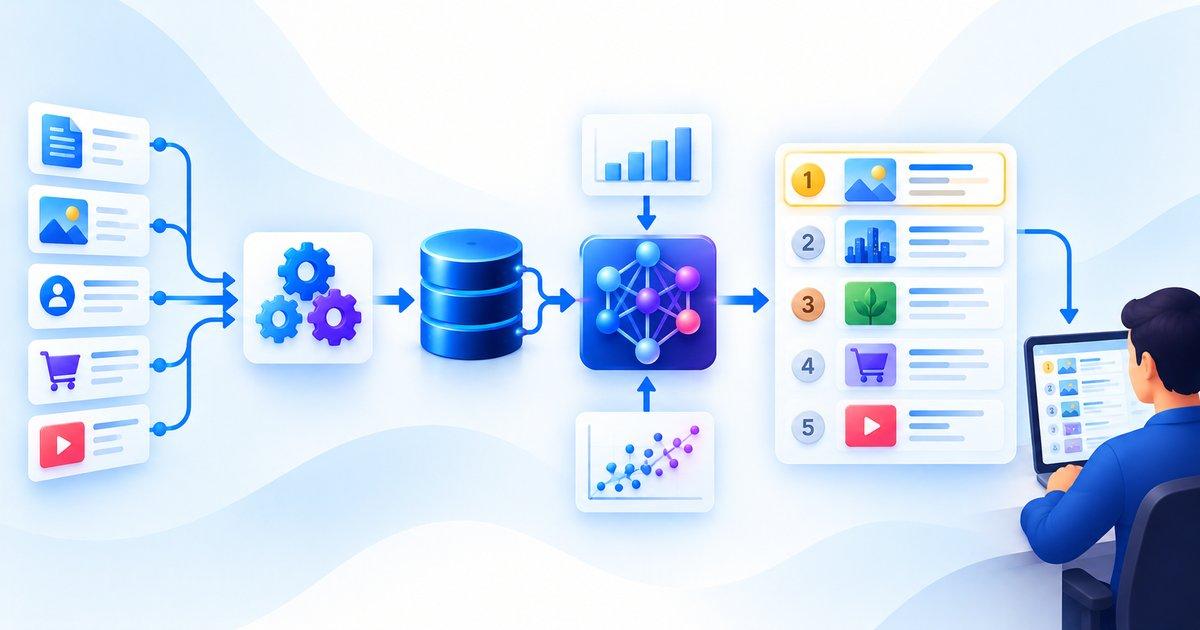
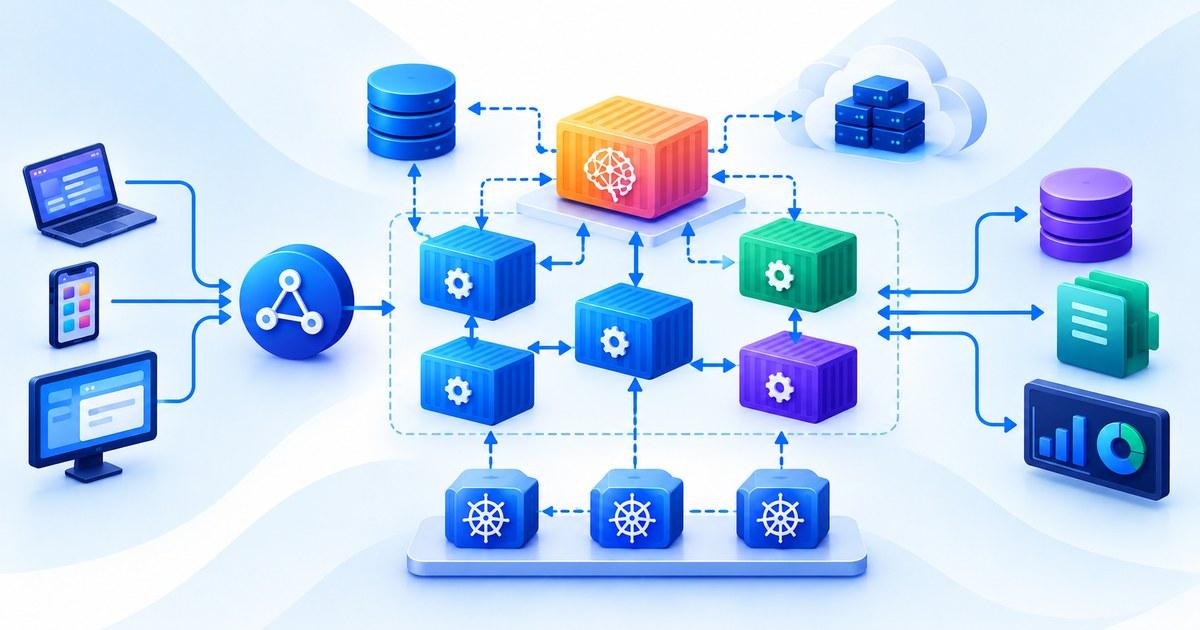
Section 1: Understanding Where Machine Learning Fits Into Distributed Systems
From Monolithic Applications to Distributed ML Components
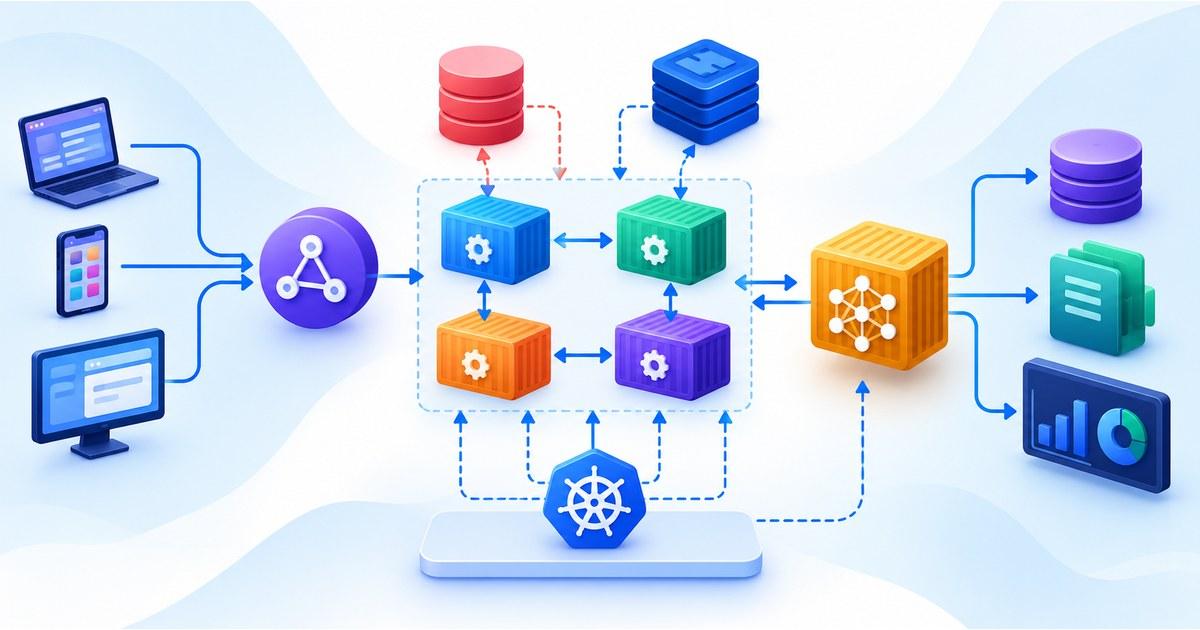
Traditional software applications often begin with a relatively straightforward architecture in which business logic, data access, and application workflows operate within a single codebase or a small number of services. As applications grow, engineering teams increasingly distribute these responsibilities across independently deployable components to improve scalability, maintainability, and fault isolation, allowing different parts of the system to evolve without requiring every component to be released together. Introducing machine learning adds another architectural dimension because prediction generation depends not only on application code and databases but also on trained model artifacts, feature transformations, inference runtimes, and the data required to produce reliable outputs.
Consider an e-commerce platform that uses machine learning to recommend products, detect fraudulent transactions, and forecast inventory requirements. Rather than embedding every model and its associated data processing directly into the main application, engineers might place recommendation inference behind a dedicated service, connect fraud detection to the transaction workflow, and run inventory forecasting through an asynchronous processing pipeline. This separation allows each workload to use appropriate computational resources and deployment schedules, although it also introduces network communication, service dependencies, data consistency requirements, and additional failure modes that must be managed across the distributed architecture.
The central engineering challenge is therefore not simply deciding where to deploy a model, but determining how model inference should interact with the rest of the application without making the overall system unnecessarily complex. A model-serving service can provide independent scaling and model version management, while an embedded model may be preferable when inference is inexpensive, local execution is important, or an additional network call would violate latency requirements. The principles discussed in “Machine Learning for Backend Engineers: What Changes When Your Code Starts Making Predictions?” provide useful context for understanding how prediction logic changes application behavior, especially when developers must account for probabilistic outputs, evolving model versions, and additional data dependencies.
Separating Business Logic, Feature Processing, and Model Inference
A reliable distributed ML architecture distinguishes business decisions from feature preparation and model inference while defining clear interfaces through which these responsibilities can interact. Business services manage application workflows, authorization, transactions, and domain-specific rules, whereas feature-processing components transform source data into model-ready inputs and inference services apply trained models to generate predictions. Keeping these responsibilities separate can reduce duplicated logic and allow model-serving infrastructure to evolve independently, provided that the interfaces between components remain stable and the additional service boundaries deliver measurable operational benefits.
For example, a fraud detection workflow might begin when a transaction service receives a payment request and validates the transaction's basic requirements, after which a feature service retrieves recent account activity and other relevant signals before a model-serving component calculates a risk score. The transaction service then applies the appropriate business policy using that score alongside deterministic rules, potentially approving the transaction, declining it, or requesting additional verification depending on the risk assessment and operational requirements. This architecture prevents the model from taking responsibility for every business decision while allowing engineers to update the risk model without rewriting the transaction-processing workflow.
The separation becomes especially useful when several applications share the same model or feature definitions, since centralized interfaces can reduce the need for each consumer to implement its own preprocessing logic or inference integration. However, excessive decomposition can increase network latency, deployment coordination, monitoring overhead, and the number of dependencies that must remain available during a request. Engineers should therefore choose boundaries according to factors such as workload characteristics, independent scaling needs, model reuse, team ownership, and failure isolation, keeping closely coupled operations together when distributing them would introduce more complexity than value.
Understanding Synchronous Requests, Asynchronous Events, and Distributed Prediction Workflows
Distributed ML systems commonly use synchronous requests when an application needs a prediction before continuing with the current operation, as occurs when a search service ranks results, a payment workflow evaluates transaction risk, or a recommendation API selects items for immediate display. In these scenarios, the caller sends a request to an inference service and waits for its response, making the model-serving latency, feature retrieval time, network overhead, and timeout configuration part of the application's end-to-end response time. Synchronous inference is therefore appropriate when the prediction is essential to completing the current interaction, provided that the entire request path can meet the required latency and availability objectives.
Other workloads do not require an immediate response and can benefit from asynchronous processing through message queues, event streams, or background jobs. A retailer generating overnight demand forecasts, for instance, can publish inventory and sales data to a processing pipeline that calculates predictions and stores the results for later consumption, avoiding the need to keep an interactive request open while computation completes. Asynchronous workflows also help absorb temporary traffic spikes and decouple producers from consumers, although they introduce additional responsibilities for message ordering, duplicate processing, retry policies, job status, and the handling of failed or delayed results.
Some applications combine both patterns to balance responsiveness with computational flexibility, using synchronous inference for the decision required immediately and asynchronous processing for supplementary analysis, large-scale scoring, or later model evaluation. An online recommendation service might return results using a low-latency model while publishing interaction events for background feature updates and future training, allowing user-facing performance to remain independent of the slower learning workflow. Choosing the correct communication pattern requires understanding when the prediction is needed, how much latency the application can tolerate, and what guarantees are required when distributed components become temporarily unavailable.
Key Takeaway
Integrating machine learning into distributed systems requires engineers to coordinate business services, feature-processing pipelines, model inference, and communication mechanisms while maintaining clear responsibilities and dependable interfaces. Synchronous requests support predictions needed immediately, whereas asynchronous workflows suit background processing and large-scale computation, with the appropriate pattern determined by latency, reliability, and workload requirements. By choosing service boundaries based on measurable needs rather than decomposing every model into a separate component, engineering teams can build distributed ML applications that remain scalable, maintainable, and operationally reliable.
Section 2: Engineering Communication, Data Flow, and Coordination Across ML Services
Designing APIs and Contracts Between Application and Model Services
Distributed ML systems rely on clearly defined communication contracts because application services, feature pipelines, and model-serving components may be developed, deployed, and scaled independently while still participating in the same prediction workflow. An application service typically sends an inference request containing the required input data or identifiers, while the model-serving service validates the request, executes the model, and returns a prediction with any relevant metadata, such as a confidence score, model version, or processing status. Designing these interfaces carefully allows individual components to evolve without forcing every downstream consumer to change whenever an internal implementation is modified.
API contracts should specify input schemas, data types, required fields, response formats, timeout expectations, and error-handling behavior, ensuring that consumers understand what each service guarantees before integrating with it. For example, a fraud detection service might return a risk score alongside a decision category, but the consuming transaction service must understand how these outputs should be interpreted and what happens when the model cannot produce a valid prediction. Versioning, backward-compatible changes, schema validation, and explicit error responses help prevent independently deployed components from silently making incompatible assumptions about the meaning or structure of model outputs.
Service contracts must also account for the operational characteristics of inference because model execution can be slower or less predictable than conventional business logic, particularly when requests require feature retrieval or specialized compute resources. Engineers should define bounded timeouts, request-size limits, authentication requirements, and appropriate retry behavior while avoiding repeated inference attempts that could amplify load during an outage. By treating model-serving interfaces as production APIs with measurable reliability objectives, teams can integrate ML capabilities into distributed applications without making application correctness dependent on undocumented assumptions or uncontrolled service behavior.
Managing Feature Retrieval, Data Consistency, and Training-Serving Compatibility
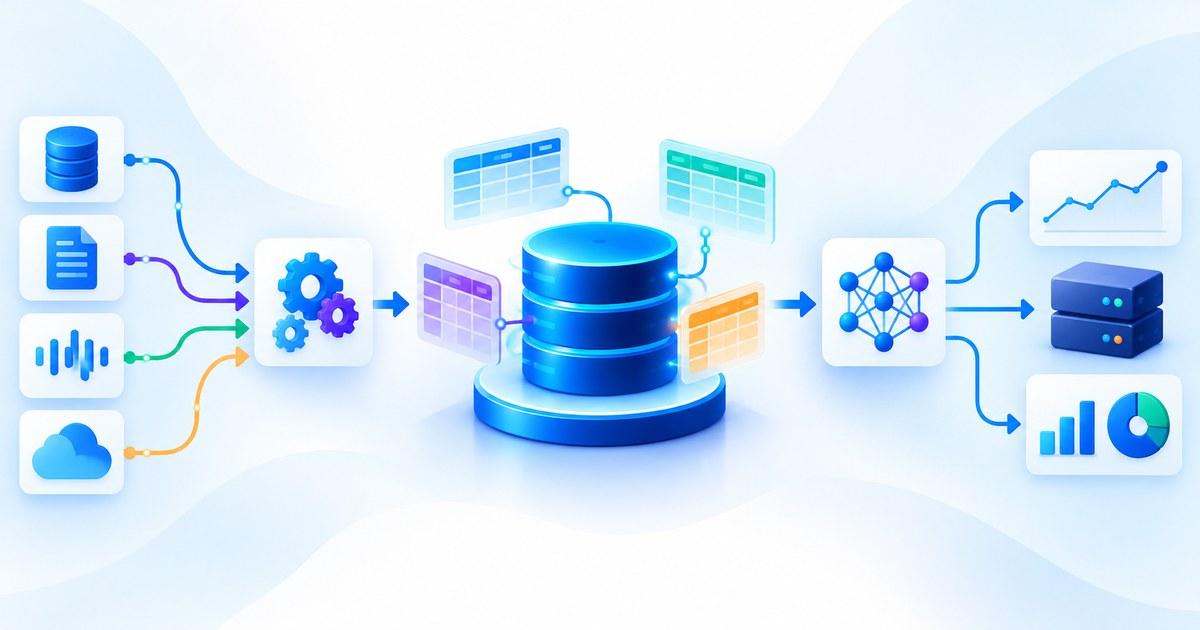
A distributed ML workflow often retrieves information from several systems before a model can generate a prediction, making feature retrieval and data consistency essential parts of the architecture rather than secondary implementation details. A recommendation service, for example, may require customer preferences from one store, product attributes from another, and recent interaction signals from a streaming pipeline, with the resulting feature values combined into a single representation before inference. If these sources update at different rates or use inconsistent identifiers, the model may receive incomplete or contradictory inputs even when each individual service appears to be functioning correctly.
Maintaining consistency requires clear feature definitions, compatible schemas, explicit timestamps, and predictable update semantics across the systems that produce and consume model inputs. A feature derived from recent transaction activity may need frequent updates, whereas a stable customer attribute may tolerate periodic refreshes, so engineers should align retrieval strategies with the freshness requirements of each feature instead of applying a uniform policy across all inputs. Shared feature definitions and appropriate storage interfaces can reduce duplicated transformations, while schema validation, lineage tracking, and freshness monitoring help identify whether a prediction problem originated in the model or in an upstream data dependency.
Training-serving compatibility becomes especially important when historical feature calculations differ from the logic used to produce inputs for live predictions, because even small discrepancies can change the behavior of a model after deployment. The practices described in “Feature Stores Explained for Software Engineers: Managing ML Features Like Production Data” are relevant here because centralized feature definitions, versioning, and compatible offline and online retrieval can help teams maintain consistent representations across development and production. However, consistency also depends on reliable source data and correct timestamp handling, making it important to validate the complete feature pipeline instead of assuming that shared storage alone guarantees equivalent model inputs.
Using Message Queues and Event Streams for Distributed ML Workflows
Message queues and event streams allow distributed ML components to exchange information without requiring every producer to wait for every consumer to finish processing a request, making them valuable for workloads that can tolerate asynchronous execution. A data ingestion service can publish customer interactions to an event stream, for example, while separate consumers update feature values, calculate behavioral aggregates, trigger model evaluations, or generate predictions for downstream applications. This decoupling allows producers and consumers to operate at different rates and can help absorb temporary workload spikes, provided that the architecture defines how events are stored, processed, retried, and acknowledged.
Asynchronous processing also introduces consistency and reliability challenges because events may be duplicated, delayed, or delivered in a different order from the sequence in which the underlying activities occurred. If a feature pipeline processes the same transaction event twice, its aggregate values may become incorrect unless the processing logic is idempotent or otherwise handles duplicates safely, while late-arriving events may require corrections to historical aggregates and materialized features. Engineers should therefore define event identifiers, timestamp semantics, retry policies, and recovery procedures, while monitoring consumer lag and processing failures to ensure that delays do not silently undermine feature freshness or downstream predictions.
Event-driven architectures are particularly useful when model inference does not need to complete within the original application request, such as overnight scoring, document classification, large-scale forecasting, and asynchronous enrichment of customer records. For interactive workloads, asynchronous processing can also support secondary operations such as logging prediction outcomes or updating future training data, allowing the primary request to return without waiting for every downstream task to finish. The communication pattern should nevertheless reflect the business requirement, since event processing introduces additional operational responsibilities and may not be appropriate when a caller needs an immediate prediction to make the current decision.
Key Takeaway
Reliable communication across distributed ML services requires explicit API contracts, consistent feature definitions, suitable synchronous and asynchronous messaging patterns, and controlled coordination when multiple models participate in the same workflow. By designing interfaces for independent evolution, handling event-processing and data-freshness challenges, and managing routing and orchestration with clear latency and failure policies, engineering teams can integrate ML components into distributed applications while preserving data consistency, operational reliability, and predictable performance.
Section 3: Building Reliable Distributed ML Systems Under Latency and Failure Constraints
Managing End-to-End Latency Across Multiple Service Dependencies
Distributed ML applications must satisfy end-to-end latency requirements across the complete prediction workflow, because the time required to return a result depends on more than the execution speed of an individual model. A typical request may involve candidate retrieval, feature lookups, model inference, post-processing, and communication with downstream services, with each operation contributing to the total response time. Even when every component performs reasonably well in isolation, sequential network calls and coordination overhead can make the complete workflow too slow for an interactive application.
Consider a search application that retrieves candidate documents, requests features from two independent services, evaluates a ranking model, and applies a final business rule before returning results. If these operations execute sequentially, their individual processing and communication times accumulate, potentially exceeding the application's latency budget even when the ranking model itself is highly optimized. Engineers can reduce unnecessary waiting by executing independent operations concurrently, combining compatible requests, minimizing network round trips, and precomputing features that do not need to be refreshed for every individual request, while preserving dependencies that genuinely require sequential processing.
Latency budgets should be allocated across the major stages of the request path so that individual services do not consume the time needed by downstream components. Monitoring percentiles such as p95 and p99 is particularly important because averages can conceal occasional but severe delays caused by resource contention, slow feature retrieval, or overloaded inference endpoints. By tracing requests across service boundaries and correlating latency with candidate counts, feature retrieval times, model execution, and downstream processing, engineers can identify bottlenecks across the complete architecture rather than optimizing a single component without improving the overall user experience.
Preventing Cascading Failures With Timeouts, Retries, and Circuit Breakers
Distributed ML workflows are vulnerable to cascading failures when an unavailable or overloaded service causes its callers to accumulate pending requests, consume excessive resources, and eventually degrade other components that depend on the same infrastructure. A model-serving endpoint experiencing high latency, for example, may cause application requests to remain open longer than expected, increasing concurrency and exhausting connection pools while incoming traffic continues to arrive. Because additional retries can amplify the load on an already struggling service, failure-handling policies must prevent temporary problems in one component from destabilizing the broader application.
Bounded timeouts help limit how long a caller waits for a dependency, while controlled retries can recover from transient failures when the operation is safe to repeat and sufficient request time remains. Retry policies should use backoff and appropriate limits rather than immediately repeating every unsuccessful request, particularly when the original operation may still be executing or when duplicate processing could affect downstream state. For non-idempotent operations, engineers should establish suitable request identifiers or deduplication mechanisms before enabling retries, ensuring that fault recovery does not introduce duplicate business actions or inconsistent feature updates.
Circuit breakers provide another layer of protection by temporarily stopping requests to a dependency when its failure rate or response behavior exceeds defined thresholds, allowing the struggling service time to recover while callers use an approved fallback or return a controlled error. Bulkheads and concurrency limits can further isolate resource consumption so that a problem in one model or feature service does not exhaust all available connections or processing capacity. Together, these controls help preserve application stability by bounding the effects of failures, although their thresholds and recovery behavior must be tested against realistic traffic patterns to avoid unnecessary interruptions when a service experiences brief fluctuations.
Handling Partial Results, Model Failures, and Graceful Degradation
Reliable distributed ML systems should define how applications behave when a required prediction cannot be produced or when only part of a multi-service workflow completes successfully. In a recommendation application, an unavailable personalization model may still allow the system to return popular or recently relevant items, whereas a search service might preserve keyword-based retrieval when its semantic ranking component fails. Such fallbacks allow applications to retain useful functionality when optional ML enhancements become unavailable, provided that the fallback results remain valid for the request and satisfy the application's essential business and safety requirements.
Partial results are particularly useful when a workflow combines several models or data sources that contribute independently to the final response. A product recommendation service may receive results from multiple category-specific models, for example, allowing it to return available recommendations from healthy components when another model times out, rather than delaying the entire response until every dependency becomes available. However, partial completion requires explicit rules for interpreting missing outputs, controlling result quality, and identifying when an incomplete response is no longer useful, especially when downstream processing expects a specific combination of predictions.
Fallback behavior must reflect the consequences of the decision being made, because proceeding without a prediction is acceptable in some applications but potentially unsafe in others. While a content discovery service might switch to a deterministic ranking method during an inference outage, a high-risk transaction system may need to request additional verification or delay the transaction rather than approve it automatically without a reliable risk assessment. The principles explored in “Graceful Degradation in AI: Designing Systems That Still Work When Models Fail” are relevant because they emphasize maintaining useful application behavior through explicit failure policies, instead of assuming that every model dependency will always be available.
Conclusion: Building Distributed Systems That Integrate Machine Learning Reliably
Integrating machine learning into distributed systems requires software engineers to think beyond model development and address the architectural, operational, and data management challenges that emerge when predictions become part of a larger application workflow. A production ML application may depend on multiple independently deployed components, including business services, feature pipelines, model-serving endpoints, message brokers, and downstream decision engines, with the reliability of the final outcome depending on how effectively these components communicate and coordinate their responsibilities. Designing this architecture requires clear service boundaries, stable interfaces, and an understanding of how inference workloads differ from conventional application logic, particularly when predictions must be generated within strict latency and availability requirements.
Communication patterns play an important role in determining how distributed ML workflows perform under real-world conditions. Synchronous APIs are appropriate when predictions are required immediately to complete an application request, while asynchronous messaging supports background inference, event-driven feature processing, and large-scale batch workloads that can tolerate delayed results. In both cases, reliable data contracts, compatible feature definitions, and predictable failure-handling behavior help prevent independently deployed components from making inconsistent assumptions about inputs and outputs. When multiple models participate in the same workflow, routing and orchestration can coordinate their execution, provided that engineers account for the additional latency, resource consumption, and failure dependencies introduced by each stage.
Reliability also depends on managing the complete prediction path rather than focusing exclusively on the model-serving endpoint. Feature retrieval delays, overloaded message consumers, unavailable model services, and shared infrastructure bottlenecks can all affect the performance of a distributed application, even when individual models continue executing correctly. Distributed tracing, structured logging, service-level monitoring, bounded retries, circuit breakers, and explicit fallback strategies allow engineering teams to identify failures and prevent localized problems from spreading through the application. Capacity planning should similarly consider shared dependencies because scaling inference replicas independently does not necessarily improve throughput when the feature store, database, or downstream service becomes the primary bottleneck.
Operational discipline becomes particularly important as models and their supporting services evolve independently. Versioned API contracts, feature lineage, controlled model releases, and rollback procedures help teams preserve compatibility when preprocessing logic, model artifacts, or prediction semantics change. Combining infrastructure observability with model-quality monitoring also makes it possible to distinguish a conventional service failure from stale features, data-quality problems, or degraded prediction behavior, supporting more targeted incident investigation and continuous improvement.
Ultimately, the most effective distributed ML architectures balance the flexibility of independently managed components with the complexity introduced by service communication and operational dependencies. Not every model requires a separate microservice, and not every prediction belongs in a synchronous request path; the appropriate design depends on business requirements, workload characteristics, latency budgets, failure consequences, and the need for independent scaling. By applying established distributed-systems principles alongside disciplined feature management, model serving, and end-to-end observability, engineering teams can build applications that use machine learning effectively while remaining scalable, maintainable, cost-conscious, and reliable in production.
Frequently Asked Questions
1. What Is Machine Learning in Distributed Systems?
Machine learning in distributed systems refers to integrating trained models into applications whose data processing, business logic, inference, and supporting infrastructure operate across multiple communicating components. These systems coordinate model-serving services, feature pipelines, APIs, and messaging infrastructure to deliver predictions as part of larger application workflows, requiring engineers to manage both conventional distributed-systems concerns and ML-specific requirements such as model versioning, feature consistency, and prediction quality.
2. Why Integrate Machine Learning With Microservices?
Integrating machine learning with microservices can allow teams to deploy, scale, and maintain model-serving components independently from the applications that consume their predictions. This architecture is particularly useful when models have distinct computational requirements, several applications share the same inference capability, or model updates follow a different release cycle from conventional business services, although the additional network communication and operational dependencies must justify the complexity introduced.
3. Should a Machine Learning Model Run Inside a Microservice or as a Separate Service?
A lightweight model may be embedded within an existing application service when local execution reduces latency and simplifies deployment, whereas a dedicated inference service can be more appropriate when model resources, versioning, scaling requirements, or consumers differ from those of the surrounding application. The decision should reflect measurable requirements such as request latency, model reuse, resource isolation, deployment independence, and fault-handling needs rather than assuming that every model must be deployed as a separate service.
4. When Should Distributed ML Systems Use Synchronous Versus Asynchronous Inference?
Synchronous inference is suitable when a prediction is required to complete the current request, such as ranking search results or evaluating transaction risk, because the application can wait for the model's response before proceeding. Asynchronous inference is more appropriate for background scoring, large-scale forecasting, document processing, and other workloads that can tolerate delayed results, provided that the architecture handles message delivery, retries, processing status, duplicate events, and eventual result retrieval reliably.
5. How Do ML Services Communicate With Other Microservices?
ML services commonly communicate through request-response APIs, event streams, message queues, or internal orchestration interfaces, depending on the latency requirements and execution model of the workflow. Well-designed interfaces define input schemas, output formats, error responses, timeouts, and versioning rules, allowing model-serving services and their consumers to evolve independently without introducing incompatible assumptions about prediction inputs or outputs.
6. What Is the Role of Feature Stores in Distributed ML Systems?
Feature stores organize reusable feature definitions and provide storage and retrieval mechanisms for the data models require during training and production inference. Offline stores support historical feature retrieval and model development, while online stores provide low-latency access to feature values during live predictions, helping distributed applications maintain consistent feature definitions and reduce duplicated transformations when the supporting pipelines are correctly implemented.
7. How Can Distributed ML Systems Maintain Data Consistency?
Data consistency can be improved through versioned schemas, explicit feature definitions, consistent entity identifiers, timestamp-aware processing, and validation across ingestion, transformation, and serving pipelines. For asynchronous workflows, engineers should also define event-ordering rules, idempotent processing behavior, duplicate-handling policies, and recovery procedures so that delayed or repeated events do not silently introduce inconsistent feature values or incorrect downstream predictions.
8. How Can Engineers Reduce Latency in Distributed ML Inference?
Engineers can reduce end-to-end inference latency by minimizing unnecessary network calls, retrieving independent features concurrently, optimizing model execution, and allocating a defined latency budget to each stage of the request path. Additional improvements may come from batching, caching suitable data, precomputing expensive features, and reducing the size of candidate sets, provided that these optimizations preserve the freshness, accuracy, and correctness requirements of the application.
9. How Should Distributed ML Systems Handle Model-Serving Failures?
Failure handling should combine bounded timeouts, controlled retries, circuit breakers, concurrency limits, and explicit fallback policies so that an unavailable model does not destabilize dependent application services. Depending on the business requirements, an application may use a simpler model, a deterministic ranking method, a sufficiently fresh cached result, or a controlled rejection or escalation path when a reliable prediction cannot be generated, with the chosen behavior defined before production deployment.
10. What Is Graceful Degradation in Distributed Machine Learning?
Graceful degradation allows an application to preserve useful functionality when an ML model or one of its supporting dependencies becomes unavailable or too slow to respond. A recommendation service might fall back to popular items when personalized inference fails, while a high-risk decision system may require additional verification instead of proceeding without a dependable prediction, making fallback behavior dependent on the consequences of incorrect or missing results.
11. How Can Multiple Models Be Coordinated in a Distributed System?
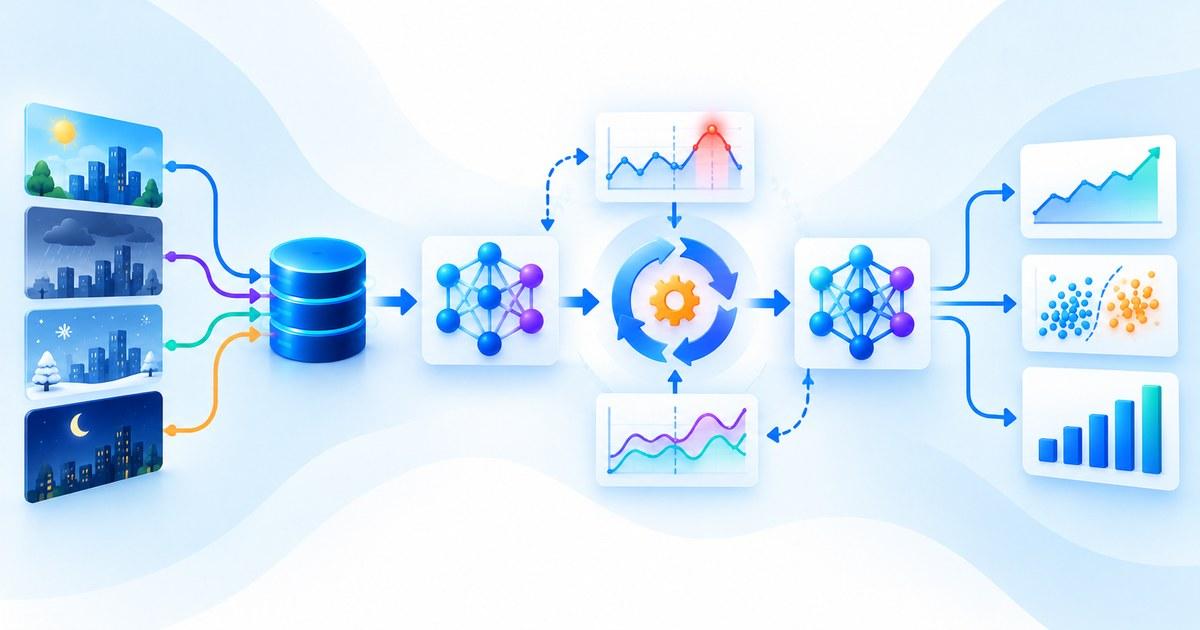
Multiple models can be coordinated through routing and orchestration components that determine which models should execute, what inputs they receive, and how their outputs contribute to the final result. A search workflow might combine candidate retrieval, relevance ranking, and a final re-ranking stage, while routing policies can direct different requests to models suited to their complexity or resource requirements, provided that the complete workflow remains within its latency and reliability budgets.
12. How Should Distributed ML Systems Be Scaled?
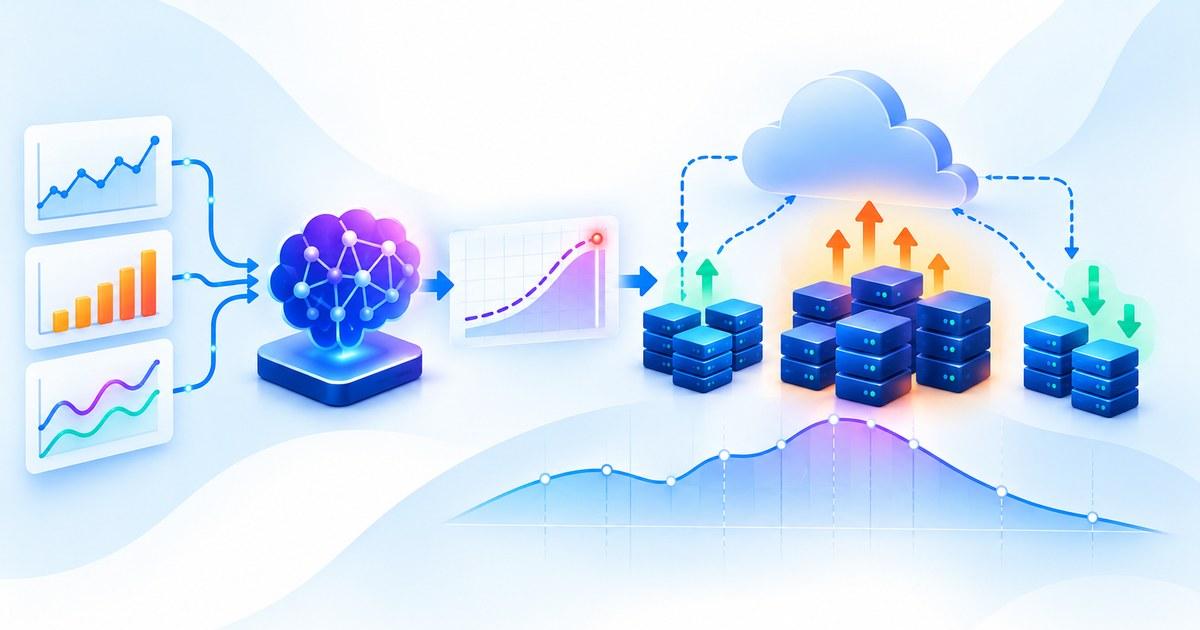
Distributed ML systems should scale individual components according to workload demand, computational requirements, and service performance, while accounting for the capacity of shared dependencies such as feature stores, databases, and message brokers. Monitoring request volume, queue depth, concurrency, latency, and resource utilization helps teams determine where additional capacity is needed, because increasing inference replicas alone may not improve throughput when another component limits the overall request-processing path.
13. How Can Engineers Monitor a Distributed ML System in Production?
Production monitoring should combine infrastructure metrics, distributed traces, structured logs, feature-quality indicators, and model-specific measurements to provide visibility into the complete prediction workflow. Tracing requests across services helps identify network and processing delays, while model-version metadata, feature freshness checks, prediction statistics, and outcome-based evaluations help distinguish infrastructure failures from data problems or degraded predictive behavior.
14. How Should Model Updates Be Deployed Across Distributed Services?
Model updates should pass through automated validation, compatibility checks, and controlled release procedures that account for the model artifact, feature definitions, preprocessing logic, and downstream consumers. Shadow deployments and canary releases allow teams to evaluate candidate models under realistic conditions before expanding production traffic, while versioned contracts and tested rollback procedures help restore a compatible configuration if the new release causes performance or reliability problems.
15. What Are the Best Practices for Designing Reliable Distributed ML Systems?
Reliable distributed ML systems use clearly defined service boundaries, stable API contracts, consistent feature pipelines, workload-appropriate communication patterns, and fault-handling policies that prevent individual failures from destabilizing the larger application. Engineering teams should also implement end-to-end observability, independent but coordinated scaling, compatible model releases, realistic capacity testing, and continuous evaluation of both prediction quality and operating cost, ensuring that the architecture remains proportionate to the application's actual requirements.