Section 1: Why Traditional Machine Learning Struggles With Continuously Arriving Data
From Periodic Training to Learning From Continuous Data Streams
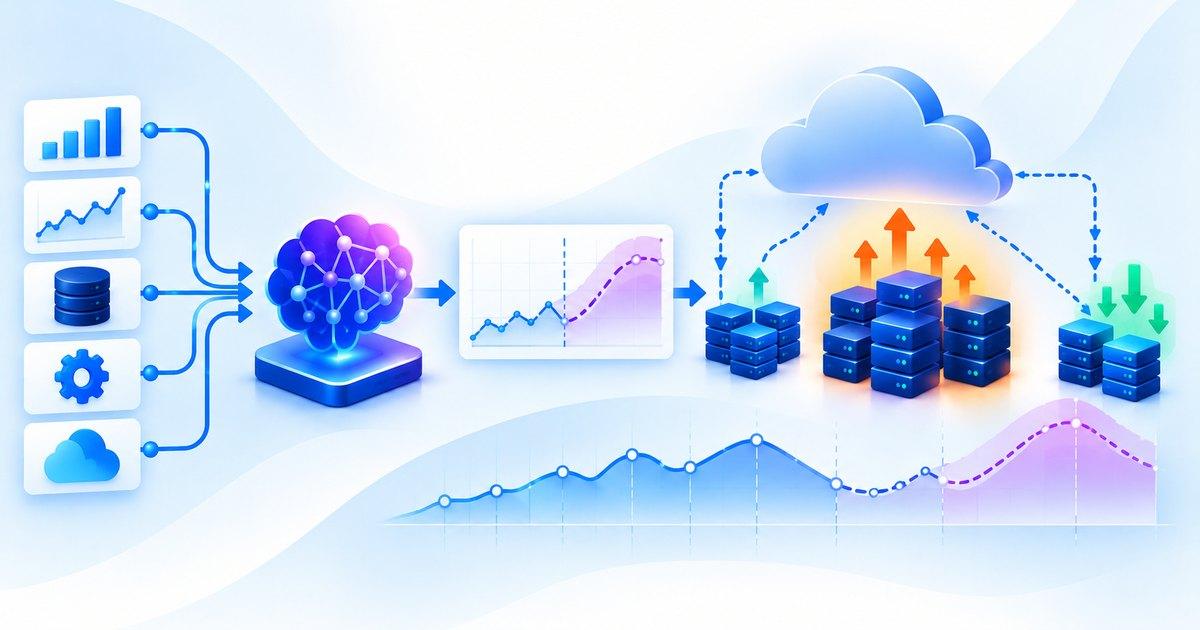
Traditional machine learning workflows generally collect historical data, prepare a training dataset, train a model, evaluate its performance, and deploy an approved version into production, with subsequent updates occurring through scheduled or manually initiated retraining cycles. This approach works well when data changes gradually and the relationships learned during training remain useful for extended periods, but it becomes less effective when applications generate rapidly changing information that can influence future predictions within seconds. Streaming machine learning addresses this challenge by incorporating continuously arriving data into the learning workflow, allowing supported models to update incrementally instead of waiting for the next complete training cycle.
Consider a fraud detection platform that evaluates thousands of financial transactions every minute, where fraudulent behavior may evolve as attackers change their strategies in response to existing security controls. A model trained on historical transactions can continue processing new requests successfully even as its predictive effectiveness gradually declines, particularly when emerging fraud patterns differ from those represented in the original training data. An incremental learning system can incorporate newly labeled transactions as they become available, updating model parameters or selected components to reflect recent evidence, provided that the learning algorithm supports incremental updates and the incoming labels are sufficiently reliable.
The same principle applies to recommendation engines, predictive maintenance systems, and operational anomaly detection, where newly observed behavior may reveal patterns that are not adequately represented in older datasets. However, streaming learning should not be confused with simply deploying a model that processes events continuously, because a fixed model can perform real-time inference without changing its parameters. True online learning requires a mechanism for incorporating new training information into the model, making the distinction between continuously processing data and continuously learning from data fundamental to designing the architecture.
Understanding the Difference Between Stream Processing and Streaming Machine Learning
Stream processing and streaming machine learning are closely related but serve different purposes within a real-time data architecture, with stream processing transforming continuously arriving events and streaming ML using incoming information for inference, training, or model updates. A stream-processing application might aggregate transactions over a rolling time window, calculate the number of failed login attempts within a short interval, or update a customer's recent activity profile, producing structured information that downstream models can consume. These calculations can be performed continuously without modifying any model parameters, demonstrating that real-time data processing alone does not constitute online learning.
Streaming machine learning can build on these pipelines by applying a trained model to each incoming event or by updating supported learning algorithms as new observations and labels become available. For example, an application may process incoming transactions through a streaming platform, calculate behavioral features using stateful processing, and pass those features to a fixed fraud detection model that returns a risk score immediately. A separate learning workflow may incorporate confirmed fraud outcomes into an incremental training process, allowing a validated model update to influence subsequent predictions without requiring the inference pipeline to retrain the model for every incoming event.
Where Real-Time Learning Creates Value: Fraud Detection, Recommendations, and Anomaly Detection
Streaming machine learning becomes particularly valuable when recent observations can provide meaningful information for decisions that must adapt faster than conventional retraining schedules allow. Fraud detection is one example because transaction behavior can change rapidly, and newly confirmed cases may reveal patterns that improve subsequent risk predictions. An incremental model can incorporate suitable labeled examples as they become available, allowing the system to adapt its learned relationships over time, although the effectiveness of this approach depends on label quality, the learning algorithm, and the ability to distinguish genuine behavioral changes from temporary noise.
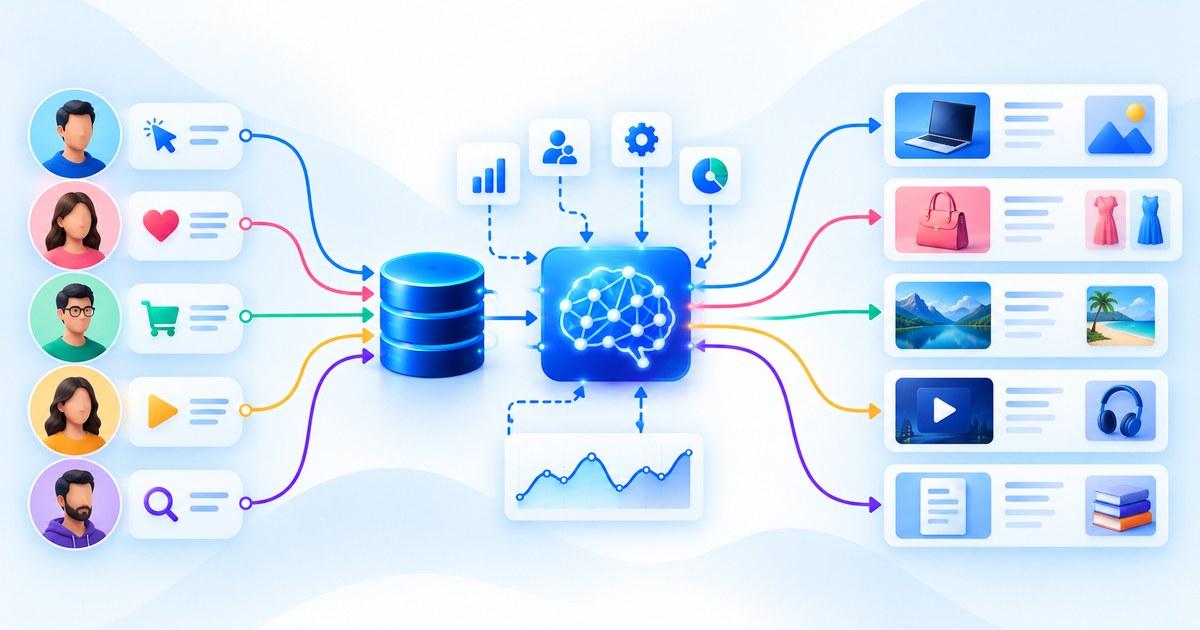
Recommendation systems provide another use case because user interests and item interactions can change during an active session, creating opportunities to update behavioral representations as new events arrive. A streaming pipeline might maintain recent interaction counts or item-interest features, while an online learning component updates model parameters when suitable feedback becomes available, allowing subsequent recommendations to reflect evolving preferences. Engineering teams must nevertheless distinguish between updating user features in real time and updating the recommendation model itself, since many systems achieve responsive personalization by refreshing features while retaining a fixed model until an evaluated replacement is ready.
Operational anomaly detection can also benefit from streaming data because applications, industrial systems, and infrastructure platforms continuously generate metrics that may reveal unexpected changes in system behavior. A model may process incoming telemetry to identify unusual patterns, while an incremental learning mechanism adapts to legitimate changes in normal operating conditions when sufficient evidence supports the update. These applications demonstrate that streaming ML is most useful when the value of incorporating new information outweighs the complexity of continuous data processing and model-state management, making workload characteristics and decision requirements essential considerations before choosing an online learning architecture.
Key Takeaway
Streaming machine learning extends conventional ML workflows by enabling supported models to incorporate new training information as data arrives, reducing dependence on complete periodic retraining cycles when the environment changes rapidly. Effective implementations distinguish event processing from actual model learning, establish reliable pipelines for feature generation and feedback collection, and manage the challenges of delayed labels, changing data, and model-state consistency. By applying continuous learning only when it provides measurable value and validating updates before they influence production behavior, engineering teams can build adaptive systems that respond to new information while preserving reliability and prediction quality.
Section 2: Building the Architecture Behind a Streaming Machine Learning System
Ingesting Events Through Message Brokers and Streaming Platforms
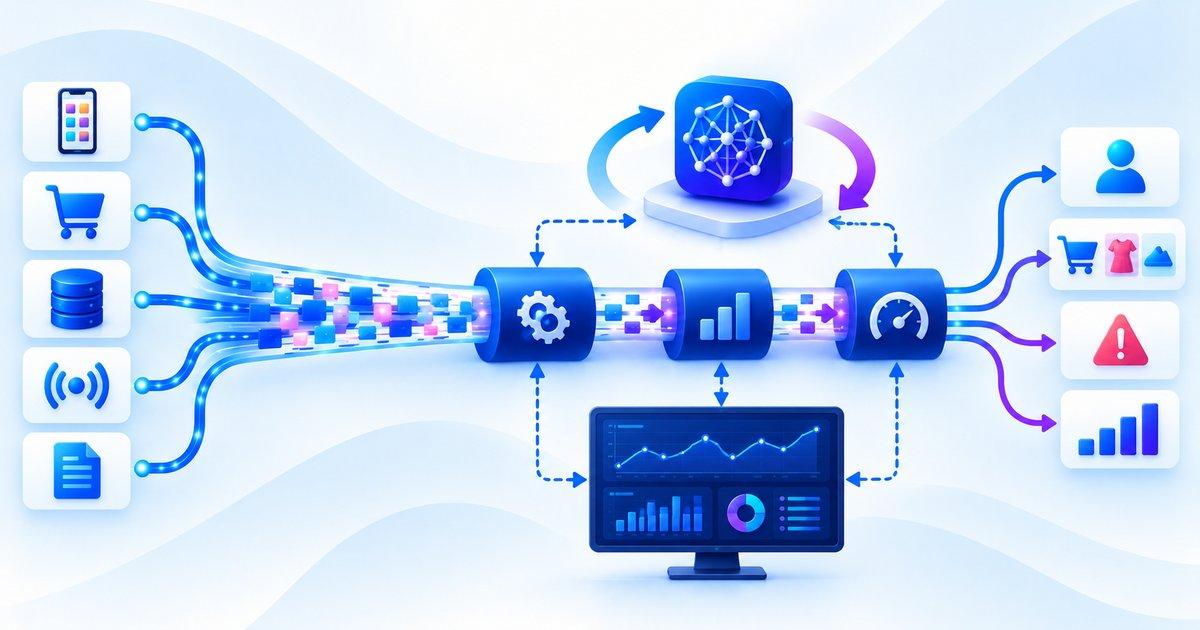
A streaming machine learning architecture begins with an event ingestion layer that captures continuously generated data from applications, databases, devices, and external systems before making it available to downstream processing components. Unlike a traditional training pipeline that primarily operates on stored datasets, a streaming architecture must accommodate incoming events with varying arrival rates, processing delays, and data volumes, requiring infrastructure that can absorb bursts while maintaining reliable delivery. Message brokers and distributed streaming platforms provide this foundation by separating event producers from consumers, allowing application services to publish interactions without waiting for every downstream feature processor or learning component to finish its work.
For example, a fraud detection platform may receive transaction events from several payment services, each publishing information such as transaction amounts, timestamps, customer identifiers, and merchant attributes. A streaming platform can distribute these events to independent consumers that calculate behavioral features, generate immediate risk predictions, maintain analytical aggregates, or prepare labeled examples for future model updates, allowing these responsibilities to scale according to their individual workloads. This separation prevents a slower training or analytics process from automatically blocking transaction ingestion, provided that the architecture defines suitable buffering, capacity limits, and failure-handling policies for each consumer.
Choosing the right ingestion design requires engineers to consider throughput, event retention, ordering requirements, replay capabilities, and the guarantees provided when producers or consumers fail. Retaining events for a defined period can support recovery and reprocessing after a downstream failure, while partitioning events by an appropriate key can preserve useful ordering for related entities, such as transactions associated with a single account. The principles explored in “ML Data Pipelines for Software Engineers: From Event Streams to Model-Ready Data” are relevant because dependable streaming ML depends on treating ingestion and event transformation as managed production infrastructure rather than assuming that incoming data will always arrive correctly and on time.
Maintaining Stateful Features With Windows, Aggregations, and Event-Time Processing
Raw events rarely contain every signal required by a streaming ML model, making feature processing necessary to convert individual observations into meaningful measures of recent behavior. A fraud detection model might require transaction frequency over the preceding ten minutes, while an operational anomaly detector may need rolling averages, error counts, or recent latency percentiles calculated from infrastructure events. Stateful stream processing allows systems to maintain these values as new events arrive, updating selected features continuously without repeatedly scanning the entire historical dataset for every incoming prediction request.
Windowing defines which events contribute to a feature calculation, with tumbling windows dividing a stream into fixed, non-overlapping intervals, sliding windows evaluating overlapping periods, and session windows grouping activity according to periods of interaction separated by defined gaps. The appropriate choice depends on the application's objective because transaction frequency over a fixed interval may require different processing semantics from a user's evolving session activity or a continuously updated infrastructure metric. Engineers must also define how window boundaries are handled so that training and inference pipelines calculate features using compatible periods and avoid introducing unexpected changes in the meaning of a feature.
Event-time processing adds another layer of complexity because the timestamp associated with an event may differ from the moment when the streaming system receives or processes it. A transaction generated earlier may arrive late because of network delays or temporary service outages, meaning that a feature calculated exclusively from processing time could represent a different historical window from the one intended by the model. Event timestamps, watermarks, late-event policies, and state-retention rules help control these differences, although the chosen configuration must balance historical accuracy with processing latency and computational overhead.
Connecting Stream Processing Pipelines to Online Learning Algorithms
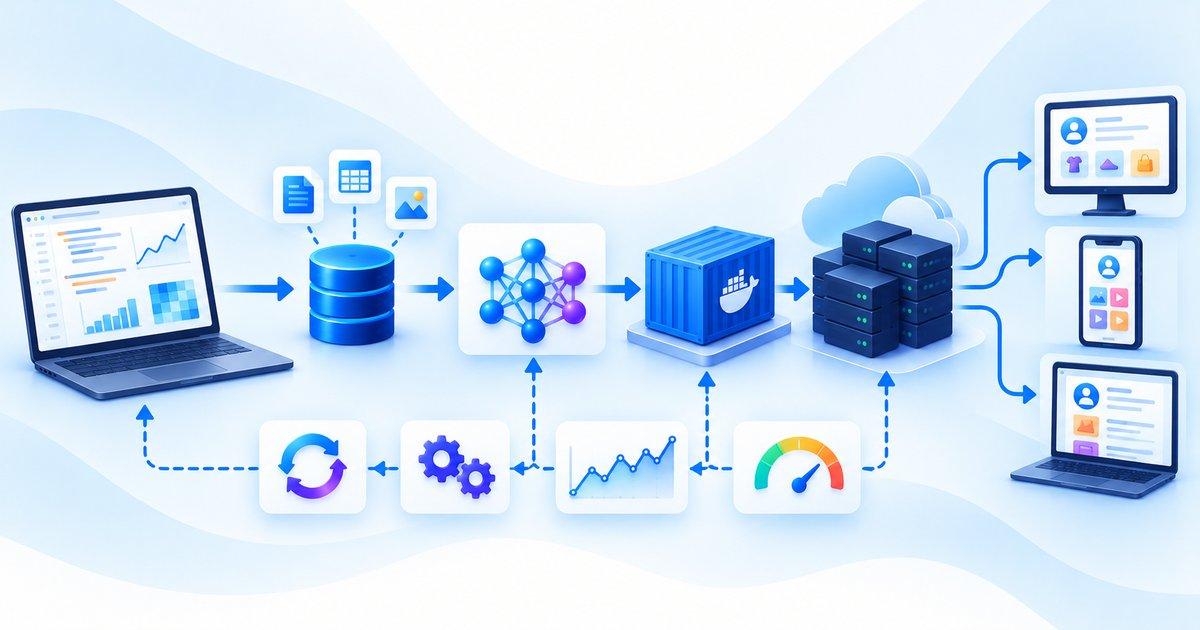
Once incoming events have been validated and transformed into suitable features, the streaming architecture can connect them to an inference service, an incremental learning algorithm, or both, depending on whether the application needs immediate predictions, continuous model updates, or a combination of these capabilities. A fixed model can consume freshly calculated features to generate predictions without changing its parameters, while an online learning component updates supported model parameters when valid training information becomes available. Keeping these responsibilities distinct allows the serving pipeline to prioritize predictable response times while the learning workflow manages model updates according to its own data, evaluation, and stability requirements.
In an incremental learning workflow, the processing pipeline may transform an incoming observation into a training example, associate it with a reliable target value when available, and pass it to an algorithm that supports partial updates. This approach can reduce the need to retrain a model from scratch whenever additional information arrives, but it also requires careful coordination between data processing and model state because concurrent updates, invalid examples, or inconsistent feature definitions can undermine reliability. Systems should therefore define how training examples are validated, how update operations are serialized or coordinated, and how a candidate model state becomes available to inference services without exposing partially applied changes.
The architecture must also manage the relationship between fast inference and slower learning operations, particularly when the labels needed for training arrive after predictions have already influenced application behavior. A recommendation model may generate results immediately while the system collects subsequent user interactions for evaluation, whereas a fraud detection model may need to wait for investigation outcomes before using a transaction as a reliable labeled example. By separating prediction generation, feedback collection, and controlled model updates, engineers can use continuous data effectively without assuming that every incoming event provides trustworthy training information or should trigger an immediate change to the deployed model.
Key Takeaway
A streaming ML architecture connects reliable event ingestion with stateful feature processing, inference services, and incremental learning workflows, allowing continuously arriving data to support timely predictions and controlled model updates. Effective implementations manage event-time semantics, windowed features, duplicate delivery, delayed labels, and model-state consistency while separating immediate inference from the slower process of evaluating and incorporating new training information. By treating the entire streaming pipeline as production infrastructure, engineering teams can build real-time learning systems that remain responsive and reliable as data volume and workload complexity increase.
Section 3: Designing Models That Learn Incrementally Without Losing Stability
Choosing Between Per-Event Updates, Mini-Batch Learning, and Periodic Retraining
Designing a streaming machine learning system requires selecting an update strategy that reflects how quickly new information becomes useful, how much computational overhead each update introduces, and how reliably the model must behave during production operation. Per-event learning updates a supported model whenever an eligible observation becomes available, allowing the system to incorporate new evidence with minimal delay, while mini-batch learning accumulates a group of observations before applying an update, reducing repeated processing overhead and providing a more stable view of recent behavior. Periodic retraining follows a different approach by rebuilding or updating a model at scheduled intervals, making it suitable when immediate adaptation provides limited benefit or when reliable labels and training data become available only after a delay.
The appropriate strategy depends on the application because not every incoming event contains enough information to justify an immediate parameter update. An anomaly detection system may process infrastructure events continuously while using a fixed model for immediate detection, then incorporate validated observations into an incremental learning algorithm when sufficient evidence supports an update. A recommendation system may instead accumulate newly labeled interactions into small batches so that its model can learn from recent behavior without reacting excessively to every click, particularly when individual interactions provide noisy or incomplete evidence about user preferences.
Engineering teams should evaluate these strategies in terms of adaptation speed, computational cost, prediction stability, and feedback availability rather than assuming that the most frequent update schedule is automatically the most effective. Per-event updates can provide rapid adaptation but increase state-management and validation complexity, mini-batches can reduce overhead while introducing some delay, and periodic retraining offers a more controlled release process when comprehensive evaluation is needed before a new model becomes active. By comparing these approaches against the workload's actual operating requirements, teams can select an update strategy that incorporates new information efficiently without creating unnecessary infrastructure demands or unstable prediction behavior.
Managing Online Feature Transformations and Model State
Incremental learning depends on consistent feature representations because a model can only incorporate new observations reliably when their inputs follow compatible definitions and transformation rules. Streaming systems frequently derive features from rolling windows, event counts, recent averages, categorical values, and other stateful calculations, making it necessary to preserve the assumptions used by the model as new events arrive. If an online feature pipeline changes its aggregation window, handles missing values differently, or processes events using inconsistent timestamp semantics, the model may receive inputs that no longer match the representations on which its existing parameters were trained.
Model state introduces another engineering concern because incremental algorithms maintain information that evolves as training observations are incorporated, including learned parameters and, depending on the algorithm, optimizer statistics or other internal state. The architecture must define how these updates are applied, how concurrent training operations are coordinated, and when a particular model state becomes available to inference services, preventing requests from observing partially applied or incompatible updates. Separating the state used by the active inference model from the state being modified by a learning process can help teams validate candidate updates before making them available, especially when the application requires predictable responses under sustained traffic.
Feature state and model state must also remain aligned when processing events that arrive late or require correction, because updating an aggregate without appropriately accounting for its historical context can produce inconsistent training examples. Engineers should preserve event timestamps, feature definitions, state-transition rules, and relevant version metadata so that observations can be associated with the appropriate feature values and model state. These practices make it easier to reproduce unexpected behavior and determine whether a prediction problem originated in the feature pipeline, the update algorithm, or the management of the deployed model.
Detecting Concept Drift and Evaluating Updates as Data Arrives
Streaming ML systems must account for changes in the relationships between input data and target outcomes, because incremental updates cannot guarantee that a model will remain reliable simply by incorporating more recent observations. Concept drift occurs when previously learned relationships become less representative of current conditions, as can happen when fraud strategies change, user preferences evolve, or the operating behavior of an application shifts following a software release. A monitoring pipeline can help identify these changes by tracking input distributions, prediction patterns, feature quality, and performance measurements as new observations and trustworthy labels become available.
Drift indicators should be interpreted carefully because a change in the distribution of incoming data does not necessarily imply that prediction quality has deteriorated, while a model may become less effective even when basic feature distributions remain relatively stable. Engineering teams should therefore distinguish early warning signals from confirmed performance degradation, using statistical comparisons to identify conditions requiring investigation and outcome-based evaluation to determine whether the model's predictive effectiveness has changed. When labels arrive late, intermediate indicators such as feature freshness, prediction distributions, and changes in workload characteristics can provide useful context, although they cannot always establish whether the latest predictions are correct.
Candidate updates should be evaluated against a suitable baseline before they influence production decisions, particularly when new observations are noisy or the environment is changing rapidly. Teams can compare the updated model with the currently deployed version using recent and representative evaluation data, examine performance across relevant subsets, and verify that improvements do not introduce unacceptable regressions in other operating conditions. The principles explored in “Adaptive ML Systems: How Models Respond When the Environment Changes” are relevant because effective adaptation requires identifying meaningful changes and selecting an appropriate response rather than continuously updating model parameters without evidence that the update improves the system.
Key Takeaway
Designing stable streaming ML systems requires balancing update frequency against computational overhead, feature consistency, feedback quality, and the risks of changing model behavior in production. Per-event learning, mini-batch updates, and periodic retraining each offer different advantages, while reliable feature transformations, model-state coordination, drift detection, checkpoints, and version management help preserve prediction quality as new data arrives. By evaluating candidate updates and maintaining explicit recovery mechanisms, engineering teams can build models that adapt to changing conditions without allowing continuous learning to become an uncontrolled source of operational instability.
Conclusion: Building Models That Learn at the Speed of Data
Streaming machine learning enables engineering teams to move beyond traditional training cycles by incorporating newly arriving information into model-learning workflows as data becomes available. In environments where user behavior, transaction patterns, infrastructure conditions, and operational workloads change rapidly, this capability can reduce the delay between observing new information and adapting predictive behavior. However, building an effective streaming ML system requires more than processing events continuously, because the architecture must coordinate data ingestion, stateful feature processing, reliable feedback collection, incremental learning, and production model management while maintaining the responsiveness and consistency expected of modern software systems.
A reliable implementation begins with a streaming architecture that captures events from application services and distributes them to the components responsible for feature calculation, inference, and model learning. Message brokers and stream-processing engines provide the infrastructure for handling continuous event flows, while stateful processing, event-time semantics, and windowed aggregations transform raw observations into meaningful features. Connecting these pipelines to online learning algorithms introduces additional requirements for managing model state, incorporating new training examples, and ensuring that updates remain compatible with the feature representations and prediction interfaces used by production applications.
Selecting the appropriate learning strategy is equally important because per-event updates, mini-batch learning, and periodic retraining offer different trade-offs in responsiveness, computational cost, and model stability. Although incremental learning can help models adapt quickly when new information is valuable, rapidly updating parameters does not automatically improve prediction quality, particularly when feedback is noisy, labels arrive late, or environmental changes temporarily distort observed patterns. Engineering teams should therefore monitor model behavior, validate update candidates when appropriate, preserve known-good versions, and establish clear criteria for determining when new information justifies a change to the deployed model.
Production reliability depends on handling the distributed-system challenges that emerge when events, features, labels, and model updates move through multiple processing components. Duplicate messages, out-of-order events, incomplete data, consumer failures, and inconsistent model state can all undermine learning quality unless the architecture incorporates suitable recovery mechanisms. Checkpointing, replayable event streams, idempotent processing, versioned artifacts, and reliable timestamp handling help preserve consistency, while monitoring processing lag, feature freshness, prediction quality, and infrastructure costs provides the evidence required to maintain the system over time.
Ultimately, streaming machine learning should be adopted when incorporating new information quickly produces meaningful operational value, rather than simply because real-time processing is technically possible. Applications such as fraud detection, recommendation systems, and anomaly detection may benefit from incremental learning when patterns evolve rapidly and trustworthy feedback becomes available, while other workloads may perform adequately with streaming inference and a fixed model or with periodic retraining. By aligning learning frequency with data characteristics, feedback reliability, performance requirements, and infrastructure budgets, engineering teams can build systems that adapt to changing conditions without sacrificing prediction quality, operational control, or maintainability.
Frequently Asked Questions
1. What Is Streaming Machine Learning?
Streaming machine learning is an approach in which continuously arriving data is processed to support real-time predictions, incremental model updates, or both, depending on the application's learning requirements. Unlike conventional workflows that depend primarily on periodically assembled training datasets, streaming ML architectures can incorporate new observations as they become available, helping suitable models respond more quickly to evolving data patterns and operating conditions.
2. How Is Streaming Machine Learning Different From Online Machine Learning?
Streaming machine learning describes ML workflows built around continuously arriving data, while online machine learning specifically refers to learning algorithms that update their parameters incrementally as new training examples become available. The two concepts often overlap, but a streaming pipeline can process events and generate predictions using a fixed model without performing online learning, making it important to distinguish continuous data processing from actual model updates.
3. How Is Streaming ML Different From Traditional Batch Machine Learning?
Traditional batch machine learning typically trains models using accumulated datasets and deploys updated versions after a training and validation cycle, whereas streaming ML can process incoming events continuously and support more frequent learning updates. Batch training remains useful when labels arrive in large collections or comprehensive evaluation is required, while streaming approaches are particularly valuable when reducing the delay between new information and model adaptation provides measurable benefits.
4. Which Applications Benefit Most From Streaming Machine Learning?
Streaming ML can be useful in fraud detection, recommendation systems, operational anomaly detection, dynamic risk assessment, and other applications where new observations may quickly change the patterns relevant to prediction. Its value depends on whether the incoming data provides useful information for immediate inference or model updates, since continuously processing data does not necessarily require continuous retraining for every application.
5. What Is the Role of Apache Kafka or Other Streaming Platforms in Streaming ML?
Streaming platforms such as Apache Kafka help applications publish, retain, and distribute events to downstream consumers responsible for feature processing, inference, analytics, and learning workflows. By separating producers from consumers and supporting event replay, these platforms can help streaming ML systems handle high-volume data flows and recover from processing failures, provided that engineers also define suitable partitioning, retention, ordering, and recovery policies.
6. What Is Stateful Stream Processing, and Why Does It Matter for ML?
Stateful stream processing maintains information across incoming events so that a system can calculate features such as rolling averages, recent transaction counts, session activity, and windowed error rates. These features help ML models interpret current observations in context, but their correctness depends on managing event timestamps, window boundaries, late-arriving data, state retention, and recovery behavior consistently.
7. What Is the Difference Between Streaming Inference and Online Learning?
Streaming inference applies an existing trained model to continuously arriving inputs to generate predictions, while online learning updates model parameters using new training information as it becomes available. An application can therefore support real-time inference without changing its model, or combine streaming inference with a separate learning workflow that updates validated model state when reliable feedback is available.
8. Which Algorithms Support Incremental Learning?
Algorithms that support incremental learning include certain linear models, online classification and regression methods, and other estimators that expose update mechanisms for incorporating new training examples. The appropriate choice depends on the task, feature representation, learning assumptions, data velocity, and stability requirements, with the selected algorithm needing to be evaluated for both predictive quality and its suitability for the production update workflow.
9. Should a Streaming ML Model Update After Every Event?
Updating after every event can be useful when individual observations provide reliable learning signals and rapid adaptation is important, but frequent updates can also increase computational overhead and cause unstable behavior when the data is noisy. Mini-batch updates or periodic retraining may be more appropriate when labels arrive with delays, multiple examples provide better learning context, or candidate models require validation before deployment.
10. How Should Streaming ML Systems Handle Delayed Labels?
Streaming ML systems should preserve event identifiers, prediction timestamps, feature versions, and relevant metadata so that eventual outcomes can be associated with the correct historical observations. Because reliable labels may arrive long after predictions are generated, the learning pipeline should validate the feedback before using it for model updates and avoid treating uncertain proxy signals as definitive training targets.
11. What Is Concept Drift in Streaming Machine Learning?
Concept drift occurs when the relationship between input features and the target outcome changes, making patterns learned from earlier data less representative of current conditions. Streaming ML systems can monitor feature distributions, prediction patterns, and outcome-based performance measurements to identify potential drift, although a change in input data alone does not necessarily establish that predictive quality has deteriorated.
12. How Can Streaming ML Systems Prevent Duplicate Events From Corrupting Model Updates?
Duplicate events can be managed through stable event identifiers, deduplication mechanisms, and idempotent processing where appropriate, preventing repeated messages from incorrectly changing feature aggregates or contributing the same training example multiple times. Engineers should also coordinate event-processing offsets with feature and model state, ensuring that recovery and replay operations do not silently introduce inconsistencies into the learning workflow.
13. How Can Engineers Maintain Model Stability During Continuous Learning?
Model stability can be maintained through controlled update frequency, data-quality validation, drift monitoring, evaluation against suitable baselines, and explicit conditions for promoting model updates into production. Checkpoints, versioned model artifacts, and rollback procedures provide additional protection by allowing engineers to restore a known-good state when an incremental update or candidate model causes unacceptable degradation.
14. How Should Streaming ML Systems Be Monitored in Production?
Production monitoring should combine event throughput, consumer lag, processing latency, feature freshness, infrastructure utilization, prediction quality, and model-update status to provide visibility into both data-processing health and learning behavior. By correlating these indicators with timestamps, model versions, and delayed outcome measurements, teams can distinguish infrastructure failures from data-quality problems and genuine deterioration in predictive performance.
15. When Should a Company Adopt Streaming Machine Learning?
A company should consider streaming ML when newly arriving information can materially improve decisions and the benefits of faster adaptation justify the additional complexity of event processing, state management, and continuous model evaluation. Before adopting online learning, teams should compare it with streaming inference using a fixed model, mini-batch updates, and scheduled retraining, selecting the simplest approach that satisfies the application's responsiveness, prediction-quality, reliability, and cost requirements.