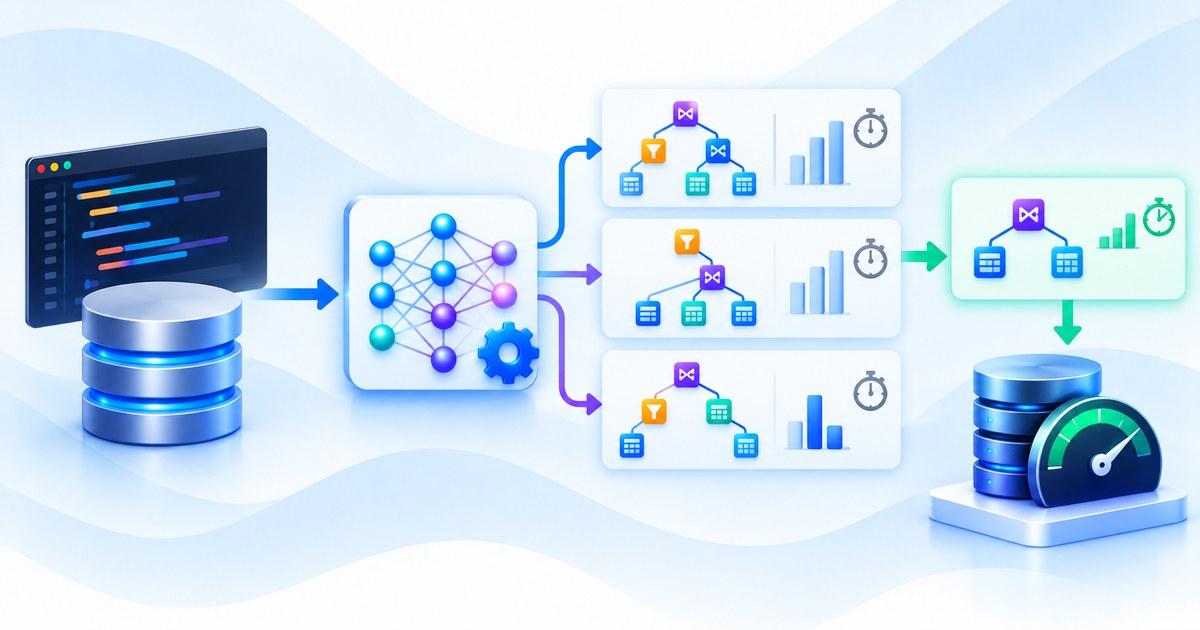

Section 1: Self-Improving AI Begins with Continuous Feedback
One of the biggest misconceptions surrounding artificial intelligence is the belief that a successful AI model is one that performs well immediately after training. While achieving high accuracy during model development is certainly important, production AI systems face a very different reality. Unlike traditional software applications whose logic remains relatively stable until developers modify the code, machine learning systems operate in environments that change continuously. Customer preferences evolve, business priorities shift, competitors introduce new products, regulations change, seasonal trends emerge, and entirely new forms of data appear every day. An AI model trained on yesterday's data cannot automatically adapt to tomorrow's environment. Without continuous learning mechanisms, even the most sophisticated models gradually lose their ability to make accurate predictions.
This challenge explains why modern AI engineering focuses less on creating perfect models and more on building systems capable of continuously learning from their environments. Self-improving AI is not a single algorithm or specialized neural network. Instead, it is an engineering philosophy centered on continuous feedback, measurement, evaluation, and adaptation. Every interaction with users, every prediction made by the system, and every business outcome generated by AI becomes valuable information that can be used to improve future performance. Rather than viewing deployment as the end of model development, successful organizations treat production as the beginning of an ongoing learning cycle.
This continuous improvement process has become increasingly important as AI systems move into mission-critical business operations. Recommendation engines influence purchasing decisions, fraud detection models protect financial institutions, predictive maintenance systems reduce manufacturing downtime, and conversational AI supports millions of customer interactions daily. In each of these applications, model performance directly affects customer satisfaction, operational efficiency, and business revenue. Even small declines in prediction quality can accumulate into significant business losses if they remain undetected for extended periods. Consequently, organizations invest heavily in engineering feedback systems that identify performance changes quickly and enable continuous improvement before problems become widespread.
Why AI Models Degrade Over Time
One of the primary reasons production AI systems require continuous improvement is data drift. Machine learning models are trained using historical datasets that represent conditions at a particular moment in time. As new information enters the system, the statistical characteristics of incoming data gradually change. Customer demographics evolve, purchasing behavior shifts, economic conditions fluctuate, and user interactions become increasingly different from the patterns represented in the original training dataset. When production data no longer resembles the information used during training, prediction accuracy naturally begins to decline.
Consider an e-commerce recommendation engine trained using purchasing behavior from two years ago. During that period, customers may have preferred desktop shopping, purchased products through seasonal promotions, and followed predictable buying patterns. Today, mobile commerce dominates many markets, social media influences purchasing decisions, and consumer expectations have changed significantly. Although the recommendation algorithm itself remains unchanged, the environment surrounding it has evolved, causing the model to operate on data it was never designed to interpret. Without updated learning, recommendations gradually become less relevant.
Closely related to data drift is concept drift, which occurs when the relationship between inputs and desired outputs changes over time. In fraud detection, for example, financial criminals constantly develop new techniques to bypass security measures. A model that accurately identified fraudulent transactions last year may fail to recognize entirely new attack strategies emerging today. Similarly, cybersecurity systems must continuously adapt because attackers constantly modify their methods. Even healthcare AI applications encounter concept drift as treatment guidelines evolve and new medical research changes diagnostic practices. These changing relationships require models to learn continuously rather than relying indefinitely on historical knowledge.
Engineering Feedback Loops That Drive Continuous Learning
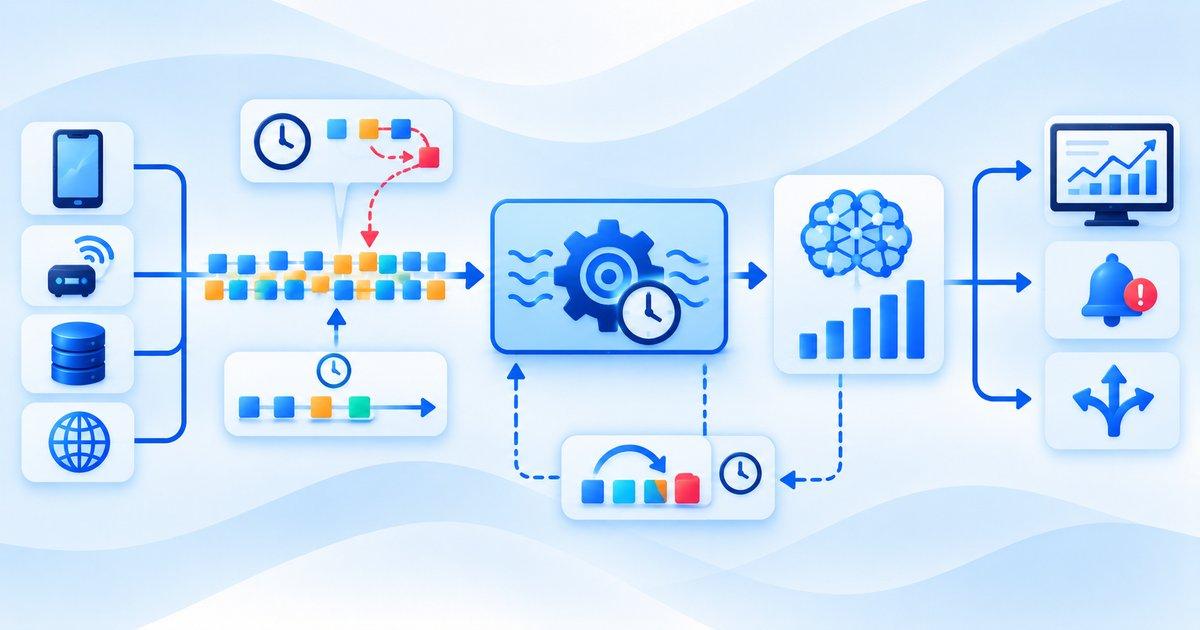
Recognizing that AI systems naturally degrade over time is only the first step. The real engineering challenge lies in building mechanisms that enable continuous improvement. This is where feedback loops become the foundation of self-improving AI systems. A feedback loop continuously collects information about how an AI model performs in production, compares predictions with actual outcomes, and identifies opportunities for improvement. Instead of assuming the model remains accurate indefinitely, engineers treat every prediction as new evidence that helps evaluate and refine future performance.
Modern AI systems typically combine both offline and online feedback. Offline feedback comes from historical business outcomes collected over time. Engineers periodically compare model predictions with confirmed results, analyze errors, retrain models using updated datasets, and validate improvements before deploying new versions into production. This controlled process ensures that every model update undergoes rigorous testing before influencing real users.
Online feedback, in contrast, captures information directly from ongoing user interactions. Customer clicks, purchases, search behavior, corrections, ratings, abandoned transactions, and explicit feedback all provide valuable signals about how effectively the AI system is performing. These interactions enable organizations to identify changing patterns much earlier than periodic retraining alone would allow. Rather than waiting months to recognize declining performance, engineering teams can detect emerging trends within days or even hours.
Readers interested in exploring how production AI systems are architected to evolve continuously should also read "How AI Engineers Design Systems That Never Stop Learning," which examines the engineering practices, monitoring strategies, and infrastructure that enable intelligent systems to improve safely and consistently throughout their lifecycle.
Key Takeaway
Self-improving AI begins with continuous feedback rather than continuous retraining alone. Because production environments constantly change through data drift, concept drift, evolving user behavior, and shifting business priorities, AI systems naturally degrade over time if left unchanged. By combining feedback loops, human oversight, online and offline learning, data quality monitoring, and continuous evaluation, engineers create adaptive AI systems capable of learning from real-world experience. These engineering principles transform machine learning models from static prediction engines into intelligent platforms that become more accurate, reliable, and valuable as they operate in production.
Section 2: Engineering Architectures That Enable Continuous Learning
Once continuous feedback begins flowing into an AI system, the next engineering challenge is determining how that information is transformed into meaningful improvements. Collecting millions of user interactions, monitoring model performance, and identifying prediction errors provide valuable insights, but they do not automatically make an AI system smarter. Improvement only happens when organizations build engineering architectures capable of converting operational feedback into reliable model updates without disrupting production systems. This is where self-improving AI moves beyond machine learning theory and becomes an engineering discipline.
Many organizations initially believe that retraining a model every few months is enough to keep an AI application accurate. While periodic retraining may work for relatively stable environments, it quickly becomes inadequate for enterprise systems operating at scale. Modern AI applications process enormous volumes of new information every day, while customer expectations, market conditions, and business priorities evolve continuously. Waiting weeks or months before updating models often allows prediction quality to deteriorate long before engineering teams recognize the problem. Consequently, successful organizations no longer treat retraining as an isolated event but instead design intelligent architectures capable of learning continuously through automated workflows.
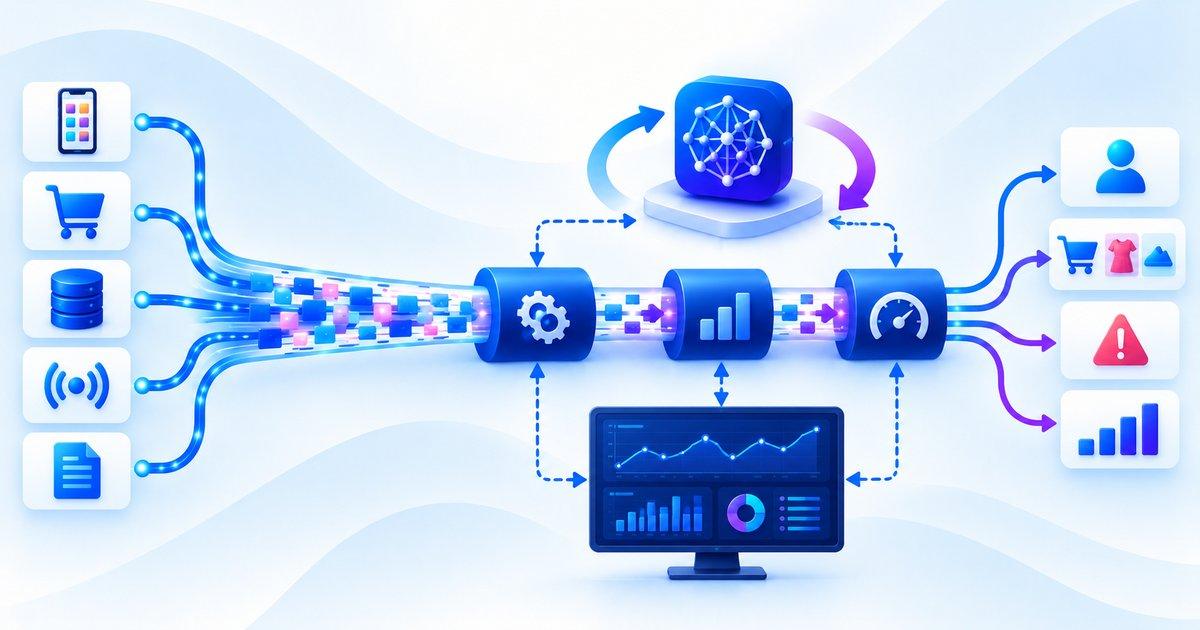
This transition has given rise to Machine Learning Operations (MLOps), which applies software engineering principles to the complete lifecycle of machine learning systems. Rather than focusing exclusively on model development, MLOps creates standardized processes that automate data preparation, model training, evaluation, deployment, monitoring, and maintenance. Every stage becomes part of an integrated engineering pipeline that ensures improvements are repeatable, measurable, and reliable. Instead of relying on manual coordination between data scientists, software engineers, and operations teams, organizations establish automated systems that continuously move models from experimentation into production while maintaining governance and quality standards.
Building Engineering Pipelines That Never Stop Learning
At the center of every self-improving AI platform are automated retraining pipelines. Rather than updating models according to fixed schedules, these pipelines monitor production performance and initiate retraining whenever meaningful changes occur. Indicators such as declining prediction accuracy, data drift, concept drift, or changing user behavior automatically trigger new training cycles. Fresh production data is collected, models are retrained, evaluation metrics are generated, and candidate models are prepared for deployment. By automating this process, organizations ensure that AI systems evolve alongside changing environments instead of falling behind them.
Supporting these pipelines requires reliable access to high-quality data, making feature stores an essential architectural component. Feature stores provide centralized repositories where validated machine learning features are created, maintained, and shared across multiple models. This ensures that the same feature definitions are used consistently during both model training and real-time inference, eliminating discrepancies that often reduce prediction quality. As organizations expand their AI initiatives, feature stores also improve collaboration by allowing engineering teams to reuse existing features rather than rebuilding them for every new project.
Continuous learning also depends on maintaining complete visibility into every model developed throughout the AI lifecycle. This is achieved through model versioning and experiment tracking, which record the datasets, feature definitions, hyperparameters, evaluation metrics, and deployment history associated with every model iteration. Engineers can compare competing approaches, reproduce successful experiments, understand why one model outperformed another, and quickly restore previous versions if unexpected issues arise. These capabilities transform machine learning development from isolated experimentation into a disciplined engineering process supported by traceability and reproducibility.
Readers interested in understanding how enterprise engineering teams design these scalable production platforms should also explore "The Engineering Behind Autonomous AI Workflows," which examines the infrastructure, orchestration strategies, and operational practices that enable intelligent systems to learn, adapt, and operate reliably at enterprise scale.
Key Takeaway
Engineering architectures are the foundation of every self-improving AI system. By integrating MLOps, automated retraining pipelines, feature stores, model versioning, CI/CD, AI observability, evaluation frameworks, rollback mechanisms, and scalable infrastructure into a unified platform, organizations enable AI systems to learn continuously without sacrificing reliability or governance. Engineers who understand these architectural principles will be equipped to build adaptive AI platforms that remain accurate, scalable, and production-ready as business requirements evolve.
Section 3: Building Reliable, Safe, and Trustworthy Self-Improving AI
As AI systems become increasingly capable of improving themselves, another engineering challenge becomes equally important: ensuring that every improvement is safe, reliable, and aligned with business objectives. A self-improving AI system that continuously learns from new data can become more accurate over time, but it can also unintentionally amplify bias, reinforce incorrect behaviors, introduce security vulnerabilities, or drift away from organizational goals if left unchecked. Continuous learning without proper governance can be just as dangerous as deploying an outdated model. Consequently, the success of adaptive AI depends not only on its ability to learn but also on the engineering mechanisms that ensure every learning cycle improves the system responsibly.
This represents one of the biggest differences between traditional software and self-improving AI. Conventional software changes only when developers intentionally modify the codebase, test the changes, and release a new version. AI systems, however, evolve based on continuously changing data, user interactions, operational feedback, and automated retraining pipelines. Every improvement introduces a new version of the model, making AI engineering an ongoing process rather than a one-time deployment. As a result, organizations must establish engineering practices that validate every update before it influences critical business decisions.
The growing adoption of AI in healthcare, finance, cybersecurity, autonomous systems, and enterprise automation has further increased the importance of reliability. In these environments, AI recommendations directly influence patient diagnoses, financial approvals, fraud detection, infrastructure monitoring, and strategic business operations. Even small prediction errors can create significant operational risks if they remain undetected. Therefore, engineering teams increasingly measure success not only by model accuracy but also by consistency, transparency, security, fairness, and operational resilience. Building trustworthy AI has become just as important as building intelligent AI.
Engineering Trust Through Governance, Monitoring, and Human Oversight
The foundation of trustworthy adaptive AI begins with AI governance. Governance establishes the policies, standards, and operational controls that guide how AI systems are developed, deployed, monitored, and continuously improved. Rather than limiting innovation, effective governance creates structured processes that allow engineering teams to introduce new capabilities confidently while maintaining accountability. Every retrained model should be documented, validated, and approved according to clearly defined organizational standards before entering production. This disciplined approach ensures that continuous learning remains aligned with business objectives rather than becoming an uncontrolled technical process.
Closely connected to governance is the growing importance of Responsible AI. As self-improving systems learn from millions of user interactions, they may unintentionally reinforce historical patterns that contain unfair or discriminatory outcomes. Without continuous monitoring, automated learning processes can gradually amplify these biases over time. Engineering teams therefore incorporate fairness evaluation into every stage of the AI lifecycle, measuring how models perform across different user groups and identifying unintended disparities before they affect customers. Responsible AI transforms fairness from an ethical aspiration into a measurable engineering objective supported by continuous evaluation.
Another critical challenge involves hallucination detection, particularly in Generative AI applications. Large Language Models occasionally produce responses that sound convincing despite being factually incorrect or unsupported by reliable evidence. In self-improving AI systems, allowing these responses to become part of future training data without validation could gradually reduce overall model reliability. Engineering teams address this risk through automated evaluation frameworks, retrieval-based verification, confidence scoring, and human review processes that identify unreliable outputs before they influence subsequent learning cycles. These safeguards help ensure that continuous improvement strengthens model quality rather than reinforcing incorrect behaviors.
Strengthening Enterprise AI Through Security, Compliance, and Continuous Benchmarking
As AI systems become deeply integrated into enterprise operations, AI security has emerged as a fundamental engineering requirement. Unlike conventional software, self-improving AI continuously interacts with new datasets, external APIs, user-generated content, and automated workflows. These interactions create opportunities for prompt injection attacks, data poisoning, model manipulation, unauthorized access, and information leakage. Engineering teams must therefore implement robust authentication, encryption, access controls, secure model serving, and continuous vulnerability assessments to protect adaptive AI systems from evolving security threats. Security becomes even more important because compromised learning pipelines can influence future model behavior rather than simply affecting a single software release.
Organizations must also ensure that adaptive AI complies with industry regulations and internal business policies. Compliance extends beyond data privacy to include auditability, documentation, transparency, and adherence to legal frameworks governing AI usage. Every retraining event, model deployment, evaluation result, and operational decision should be recorded to provide a complete audit trail. These records support regulatory reporting while enabling engineering teams to investigate incidents, reproduce previous experiments, and demonstrate that AI systems operate according to approved organizational standards.
Effective self-improving AI also depends on comprehensive risk management. Every model update introduces uncertainty because even small changes can produce unexpected outcomes under certain production conditions. Engineering teams therefore conduct structured risk assessments before deploying updated models, evaluating potential impacts on accuracy, fairness, security, customer experience, and operational stability. Combined with staged deployments and rollback strategies, proactive risk management enables organizations to innovate continuously while minimizing disruption to critical business operations.
Readers interested in exploring the often-overlooked engineering disciplines that make enterprise AI reliable should also explore "The Hidden Layers of AI Engineering Nobody Talks About," which provides a deeper look at the operational practices, infrastructure, and architectural decisions that enable intelligent systems to perform consistently at production scale.
Key Takeaway
Self-improving AI systems must be engineered to evolve responsibly, not just intelligently. AI governance, Responsible AI, hallucination detection, explainability, human oversight, security, compliance, risk management, and continuous performance benchmarking work together to ensure that every model update improves reliability while protecting users and business operations. Engineers who understand these principles will be able to build adaptive AI systems that organizations can trust, scale, and depend on in mission-critical environments.
Section 3: Building Reliable, Safe, and Trustworthy Self-Improving AI
The ability of an AI system to improve continuously is only valuable if every improvement makes the system more reliable rather than introducing new risks. While automated retraining, feedback loops, and adaptive learning allow AI models to evolve alongside changing environments, they also create new engineering challenges that do not exist in traditional software development. Every new model version has the potential to alter predictions, introduce unexpected behavior, amplify hidden biases, or expose vulnerabilities that were absent in previous deployments. Unlike conventional software, where updates occur only when developers intentionally modify the code, self-improving AI systems evolve through constant interaction with new data, user behavior, and operational feedback. This dynamic nature makes reliability an ongoing engineering responsibility rather than a one-time quality assurance activity.
As organizations increasingly deploy AI across healthcare, banking, cybersecurity, manufacturing, and enterprise operations, the consequences of unreliable AI become far more significant. A recommendation engine suggesting irrelevant products may affect customer engagement, but an AI model approving financial loans, detecting cyberattacks, or supporting medical diagnoses carries much higher stakes. In these environments, organizations cannot rely solely on model accuracy as the primary measure of success. They must ensure that AI systems remain fair, transparent, secure, compliant, and aligned with business objectives throughout their operational lifecycle. Building self-improving AI therefore requires engineering frameworks that monitor every aspect of system behavior, validate every model update, and ensure continuous learning strengthens the system instead of introducing unnecessary risk.
This requirement has shifted AI engineering beyond machine learning algorithms into a multidisciplinary practice involving governance, security, compliance, monitoring, and operational resilience. Engineers are no longer responsible only for developing intelligent models; they are equally responsible for ensuring that those models continue behaving responsibly after deployment. The most successful enterprise AI platforms are therefore designed with trust as a core architectural principle rather than treating it as an additional compliance requirement. Continuous improvement becomes valuable only when organizations can confidently verify that every new version performs better than its predecessor while maintaining reliability under real-world operating conditions.
Engineering Governance and Human Oversight into Adaptive AI
The foundation of trustworthy self-improving AI begins with AI governance. Governance provides the policies, engineering standards, and operational controls that guide how AI systems are trained, evaluated, deployed, monitored, and continuously updated. Every improvement made by an adaptive AI system should follow a structured approval process rather than being deployed automatically without validation. Engineering teams document model versions, record evaluation metrics, verify training datasets, and maintain detailed deployment histories to ensure every model update can be traced and audited. This structured approach allows organizations to innovate continuously while maintaining accountability across the entire AI lifecycle.
Equally important is the implementation of Responsible AI practices throughout the engineering pipeline. As AI systems learn from continuously expanding datasets, they can unintentionally reinforce historical biases or amplify patterns that disadvantage certain users or groups. Without ongoing evaluation, these biases may become increasingly difficult to detect because every retraining cycle builds upon previous learning. Engineering teams therefore integrate fairness assessments directly into model evaluation, continuously measuring performance across diverse user populations before approving updated models for production. Responsible AI becomes an engineering discipline supported by measurable validation processes rather than an abstract ethical principle.
Securing Enterprise AI Through Continuous Validation
As adaptive AI becomes more autonomous, AI security becomes an integral component of engineering architecture rather than an afterthought. Self-improving AI systems continuously process new datasets, interact with external applications, access enterprise knowledge bases, and communicate with APIs, creating significantly larger attack surfaces than conventional software applications. Threats such as prompt injection, data poisoning, unauthorized model access, adversarial attacks, and information leakage can compromise not only current predictions but also future learning processes. Engineering teams therefore implement secure authentication, encryption, role-based access control, continuous vulnerability assessments, and protected model serving environments to ensure that adaptive learning cannot be manipulated by malicious actors.
Closely connected to security is the growing importance of regulatory compliance. Governments and industry regulators increasingly require organizations to demonstrate transparency, accountability, and responsible management of AI systems. Every retraining event, deployment decision, evaluation result, and operational change should be recorded within comprehensive audit trails that allow organizations to reproduce model behavior and investigate unexpected outcomes. Maintaining this documentation not only supports legal compliance but also strengthens engineering practices by improving traceability, reproducibility, and operational accountability across the AI lifecycle.
Self-improving AI also demands structured risk management because every model update introduces uncertainty. Even when evaluation metrics indicate improvement, updated models may behave differently under production workloads or encounter edge cases that were absent during testing. Engineering teams therefore assess operational risks before deployment by evaluating impacts on prediction accuracy, fairness, latency, security, user experience, and business performance. Combined with staged deployments and rollback strategies, proactive risk management enables organizations to improve AI continuously while minimizing operational disruption.
Readers interested in understanding how engineering decisions around governance, compliance, and enterprise AI influence business success should also explore "The Business of AI: What Every ML Engineer Should Know Beyond Coding," which explains why modern AI Engineers must balance technical excellence with responsible AI practices, operational reliability, and business objectives. environments.
Key Takeaway
Building self-improving AI is not only about enabling continuous learning but also about ensuring every improvement is safe, reliable, and accountable. By combining AI governance, Responsible AI, explainability, human oversight, security, compliance, risk management, and continuous performance benchmarking, organizations create adaptive AI systems that can evolve confidently while maintaining trust. Engineers who master these principles will be well positioned to develop enterprise AI platforms that deliver long-term value without compromising reliability, transparency, or operational integrity.
Section 4: The Future of Adaptive AI Engineering
Artificial intelligence has already progressed from predictive analytics to Generative AI, and it is now entering an era where systems are expected to improve themselves continuously with minimal human intervention. While today's self-improving AI primarily depends on feedback loops, automated retraining, and engineering pipelines, the next generation of intelligent systems will move beyond periodic optimization toward autonomous adaptation. Future AI platforms will not simply update their models after collecting new data; they will reason about changing environments, coordinate with other AI systems, personalize their behavior over extended periods, recover from operational failures, and optimize their own performance while maintaining alignment with business objectives. This evolution represents the natural progression of adaptive AI engineering, transforming artificial intelligence from a reactive technology into a proactive engineering ecosystem.
For software engineers, this transition introduces entirely new architectural challenges. Future AI systems will operate continuously across cloud platforms, edge devices, enterprise applications, and physical environments while interacting with millions of users and countless software services. These systems must manage vast amounts of information, remember previous interactions, collaborate with multiple intelligent agents, and make decisions that balance accuracy, efficiency, security, and business priorities. Achieving these capabilities requires engineering innovations that extend far beyond traditional machine learning pipelines. The future of adaptive AI will therefore depend as much on advances in system architecture and infrastructure as on improvements in machine learning algorithms themselves.
Organizations are already investing heavily in technologies that support this vision. Research laboratories and enterprise engineering teams are developing AI agents capable of completing complex workflows independently, reasoning models that solve multi-step problems, memory architectures that preserve long-term context, and distributed AI platforms that coordinate multiple intelligent services simultaneously. These innovations indicate that self-improving AI will increasingly become an integrated ecosystem rather than a collection of isolated machine learning models. Engineers who understand these emerging technologies today will be better prepared to design the intelligent platforms that define enterprise software throughout the coming decade.
Autonomous Learning Will Define the Next Generation of AI Systems
One of the most significant developments shaping adaptive AI is the emergence of Agentic AI. Unlike traditional AI applications that respond to individual user prompts, AI agents pursue long-term objectives by planning tasks, using external tools, retrieving information, and adapting their strategies based on changing circumstances. As these systems mature, they will continuously evaluate the outcomes of their actions and refine future decisions without requiring constant human supervision. This capability represents a major step toward self-improving AI because learning becomes an integral part of daily operations rather than an isolated retraining process performed periodically by engineering teams.
Another technology expected to accelerate adaptive learning is Reinforcement Learning (RL). Unlike supervised learning, which relies on historical labeled data, reinforcement learning enables AI systems to improve by interacting directly with their environments and learning from the consequences of their actions. Every successful decision strengthens effective strategies, while unsuccessful outcomes guide future improvements. This approach has already demonstrated impressive results in robotics, recommendation systems, autonomous navigation, and game-playing AI. As enterprise AI evolves, reinforcement learning will increasingly complement traditional machine learning by enabling systems to optimize workflows dynamically while adapting to changing business conditions in real time.
Preparing Engineers for the Future of Adaptive AI
As adaptive AI systems become more autonomous, AI reasoning will become increasingly important. Current language models excel at generating fluent responses but often struggle with complex logical planning and multi-step decision-making. Reasoning models aim to overcome these limitations by evaluating intermediate steps, verifying conclusions, and selecting more reliable solutions before producing outputs. For engineers, this means future AI systems will require architectures capable of integrating reasoning engines alongside language models, creating platforms that not only generate information but also evaluate its accuracy and relevance before acting upon it.
The future will also introduce self-healing AI systems capable of identifying and correcting operational issues automatically. Rather than waiting for engineers to investigate declining performance, future AI platforms will monitor infrastructure, detect anomalies, reconfigure workflows, recover from failures, and optimize resource allocation autonomously. Combined with advanced observability platforms, these capabilities will significantly improve system reliability while reducing operational overhead. Engineers will increasingly focus on designing resilient architectures that enable intelligent systems to maintain high availability with minimal manual intervention.
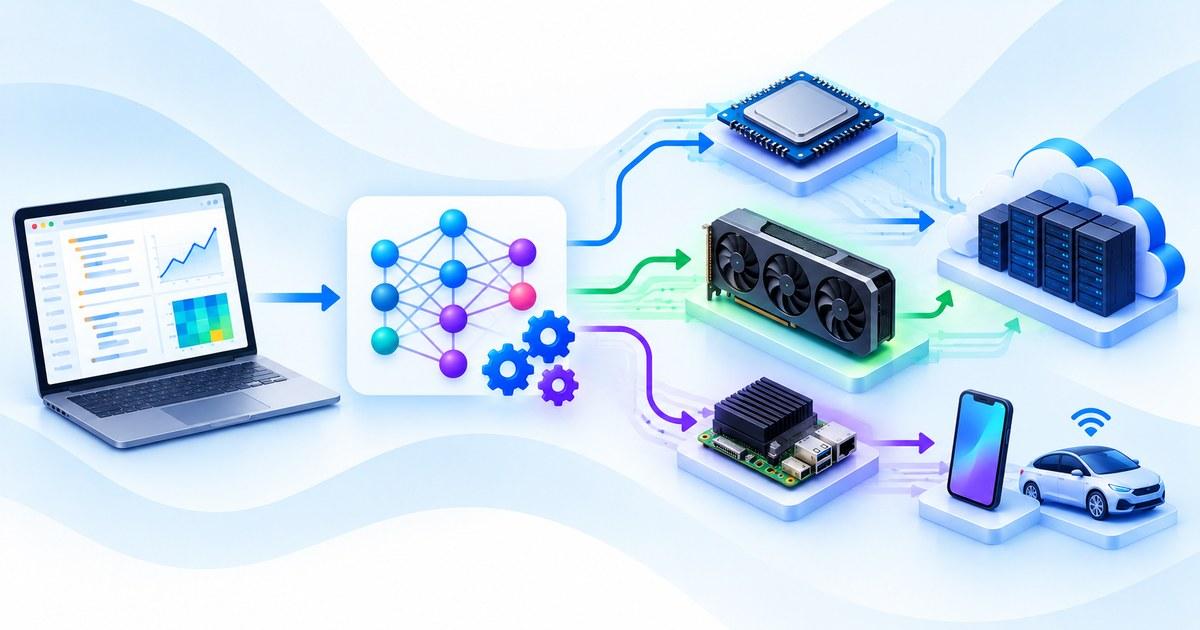
Supporting these increasingly sophisticated capabilities will require next-generation AI infrastructure. Future production environments must coordinate cloud computing resources, edge devices, GPUs, specialized AI accelerators, vector databases, memory systems, orchestration frameworks, and distributed inference engines simultaneously. Infrastructure will no longer simply host AI models; it will actively coordinate learning, reasoning, monitoring, experimentation, and autonomous optimization across entire enterprise ecosystems. Engineers responsible for designing these platforms will need expertise spanning software engineering, distributed systems, cloud architecture, cybersecurity, and machine learning operations.
Readers interested in understanding how to translate cutting-edge AI research into scalable production systems should also explore "Research to Real-World ML Engineering: Bridging the Gap," which examines how engineers can transform emerging AI technologies into reliable enterprise solutions through disciplined engineering practices.
Key Takeaway
The future of adaptive AI engineering extends beyond automated retraining toward autonomous systems capable of reasoning, learning, personalizing, collaborating, and optimizing themselves continuously. Technologies such as Agentic AI, reinforcement learning, AI memory systems, multi-agent collaboration, reasoning models, self-healing architectures, and advanced AI infrastructure will shape the next generation of intelligent software. Engineers who develop expertise in these areas will be well prepared to build enterprise AI platforms that remain adaptive, scalable, trustworthy, and capable of delivering continuous business value in an increasingly AI-driven world.
Conclusion
Self-improving AI systems represent the next stage in the evolution of artificial intelligence, shifting the focus from building highly accurate models to engineering intelligent platforms that continuously adapt to changing environments. While powerful machine learning algorithms remain important, they are only one component of a much larger ecosystem. The true strength of adaptive AI lies in the engineering practices that enable models to monitor their own performance, learn from new information, validate improvements, and evolve safely without disrupting business operations.
Throughout this article, we explored how continuous feedback serves as the foundation of self-improving AI by helping systems respond to data drift, concept drift, changing user behavior, and evolving business requirements. We also examined the engineering architectures that make continuous learning possible through MLOps pipelines, automated retraining, feature stores, AI observability, and scalable production infrastructure. Equally important are governance, Responsible AI, security, explainability, compliance, and human oversight, which ensure that every improvement strengthens trust rather than introducing unnecessary risks. Finally, emerging technologies such as Agentic AI, reinforcement learning, AI memory systems, and multi-agent collaboration demonstrate that future AI platforms will become increasingly autonomous while remaining guided by disciplined engineering principles.
Frequently Asked Questions (FAQs)
1. What is a self-improving AI system?
A self-improving AI system continuously learns from new data, user interactions, and operational feedback to improve its performance after deployment.
2. Why do AI models need continuous improvement?
Because data, user behavior, and business environments change over time, causing model performance to decline if systems are not updated.
3. What is data drift?
Data drift occurs when production data gradually differs from the data used to train the original machine learning model.
4. What is concept drift?
Concept drift refers to changes in the relationship between input data and expected outcomes, requiring models to adapt to new patterns.
5. Why are feedback loops important in AI?
Feedback loops allow AI systems to learn from real-world performance and identify opportunities for continuous improvement.
6. What is MLOps?
MLOps is the practice of automating the development, deployment, monitoring, and maintenance of machine learning systems.
7. What is AI observability?
AI observability involves monitoring model performance, prediction quality, data drift, latency, and business impact in production.
8. Why is AI governance essential?
AI governance ensures that AI systems remain transparent, compliant, secure, and aligned with organizational policies.
9. How does automated retraining work?
It uses new production data and predefined performance triggers to retrain and validate updated models automatically.
10. What role does human oversight play?
Human experts review sensitive decisions, validate model updates, and ensure AI operates responsibly in critical applications.
11. What is Agentic AI?
Agentic AI refers to systems that can plan, reason, use tools, and complete multi-step tasks with minimal human intervention.
12. How will self-improving AI impact enterprise software?
It will enable applications to adapt continuously, improve decision-making, automate workflows, and deliver better user experiences.
13. Which skills should AI Engineers develop?
AI Engineers should master MLOps, cloud computing, AI infrastructure, system design, observability, governance, and security.
14. Can self-improving AI replace engineers?
No. It enhances productivity, but engineers remain essential for designing, governing, securing, and optimizing AI systems.
15. What is the future of adaptive AI engineering?
The future lies in autonomous, trustworthy AI platforms that combine continuous learning, reasoning, multi-agent collaboration, and scalable engineering to deliver long-term business value.