Section 1: From Model Builders to System Thinkers
A Structural Shift in the Role of ML Engineers
Machine learning roles are undergoing a fundamental transformation in an AI-first world shaped by organizations like OpenAI, Google, and Meta. The traditional expectation that ML engineers primarily build and tune models is no longer sufficient to define the role.
This shift is not driven by a decline in the importance of models, but by a change in where value is created. With the rise of foundation models, automated pipelines, and generative AI systems, much of the effort that previously went into model experimentation and optimization is now significantly accelerated. Engineers are no longer spending the majority of their time implementing models from scratch. Instead, they are increasingly responsible for how those models are used, integrated, and sustained in real-world systems.
As a result, the role is expanding beyond model development into something broader and more complex. ML engineers are becoming system designers, decision-makers, and orchestrators of intelligence across products and platforms.
Why Model-Centric Thinking Is Breaking Down
For years, success in machine learning was closely tied to model performance. Improvements in accuracy, recall, or loss functions were seen as the primary indicators of progress. While these metrics still matter, they are no longer sufficient to define success in modern ML systems.
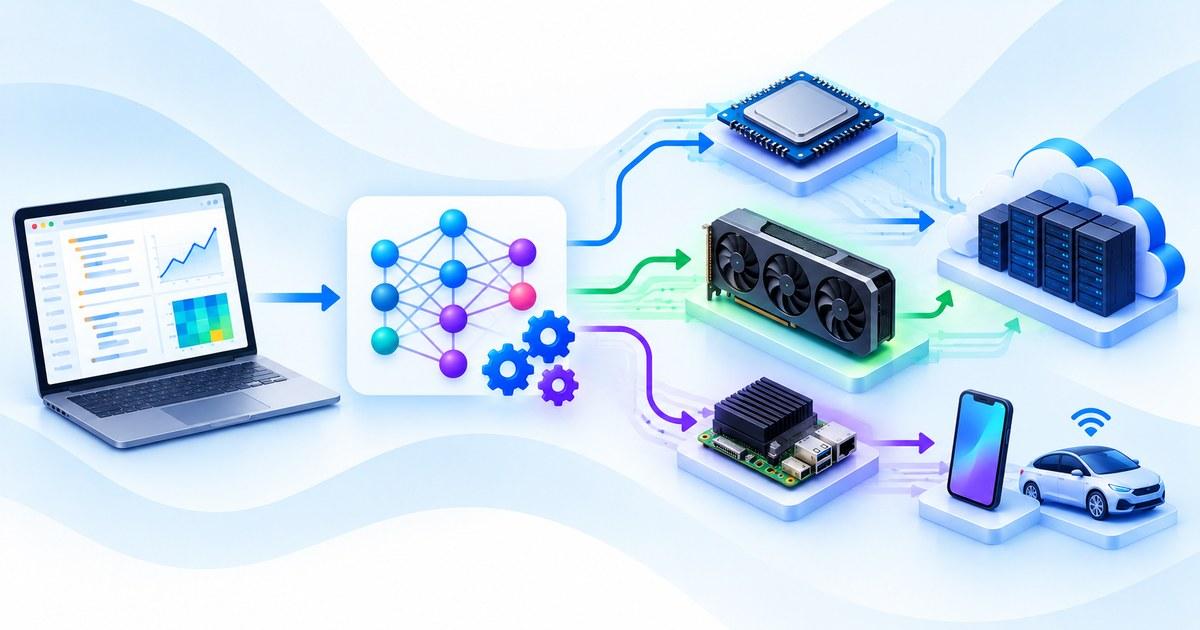
In practice, models operate within larger ecosystems that include data pipelines, deployment infrastructure, monitoring systems, and user-facing applications. A model’s effectiveness depends not only on its internal performance but also on how well it fits into this ecosystem.
A highly optimized model that cannot scale, is difficult to maintain, or introduces latency into a system may ultimately be less valuable than a simpler model that integrates seamlessly into production. This reality forces engineers to think beyond the model itself and consider the end-to-end behavior of the system.
This transition marks a departure from isolated optimization toward holistic system performance, where trade-offs between accuracy, latency, cost, and reliability become central.
The Rise of System-Level Ownership
As ML systems become more integrated into products, engineers are increasingly expected to take end-to-end ownership of what they build.
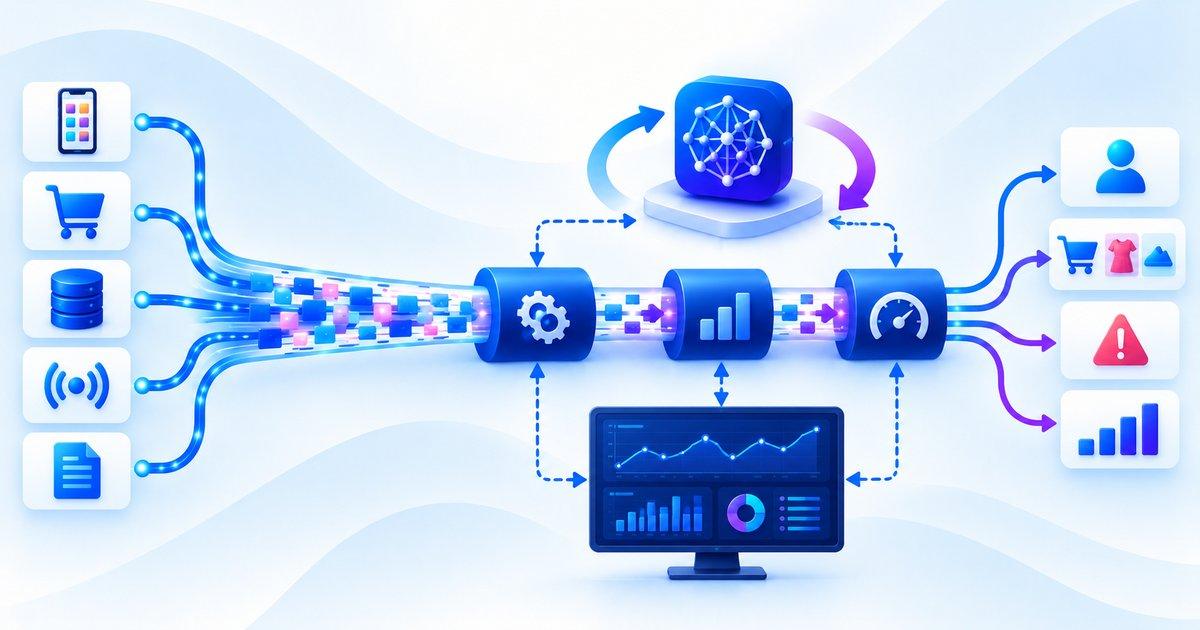
This ownership extends across the entire lifecycle of a system. It begins with understanding the data, how it is collected, processed, and validated. It continues through model development, where engineers must ensure that models are not only accurate but also robust. It then moves into deployment, where considerations such as scalability and reliability become critical. Finally, it includes monitoring and iteration, where systems must adapt to changes in data and user behavior.
This level of responsibility reflects a broader shift in engineering culture. ML engineers are no longer contributors to isolated components; they are responsible for ensuring that entire systems function effectively over time.
This shift is closely aligned with the idea that modern ML work is less about isolated modeling and more about building and maintaining intelligent systems that evolve continuously.
Integration as the New Core Skill
Another defining characteristic of ML roles in an AI-first world is the move from implementation to integration.
In earlier stages of the field, engineers often built models and pipelines from scratch. Today, many components are available as pre-built services, APIs, or reusable modules. The challenge is no longer to create everything independently, but to combine these components into cohesive, reliable systems.
This requires a different kind of expertise. Engineers must understand how components interact, how to manage dependencies, and how to ensure that the system behaves correctly under different conditions. They must also make decisions about which tools to use, balancing trade-offs between performance, cost, and maintainability.
Integration is not a simpler task than implementation. In many cases, it is more complex, as it involves coordinating multiple moving parts and ensuring that they work together seamlessly.
Continuous Learning Systems and Feedback Loops
Modern ML systems are not static. They are designed to learn and adapt over time through feedback loops.
Engineers must ensure that systems can capture real-world signals, incorporate new data, and update models accordingly. This requires designing pipelines that support continuous learning while maintaining stability and reliability.
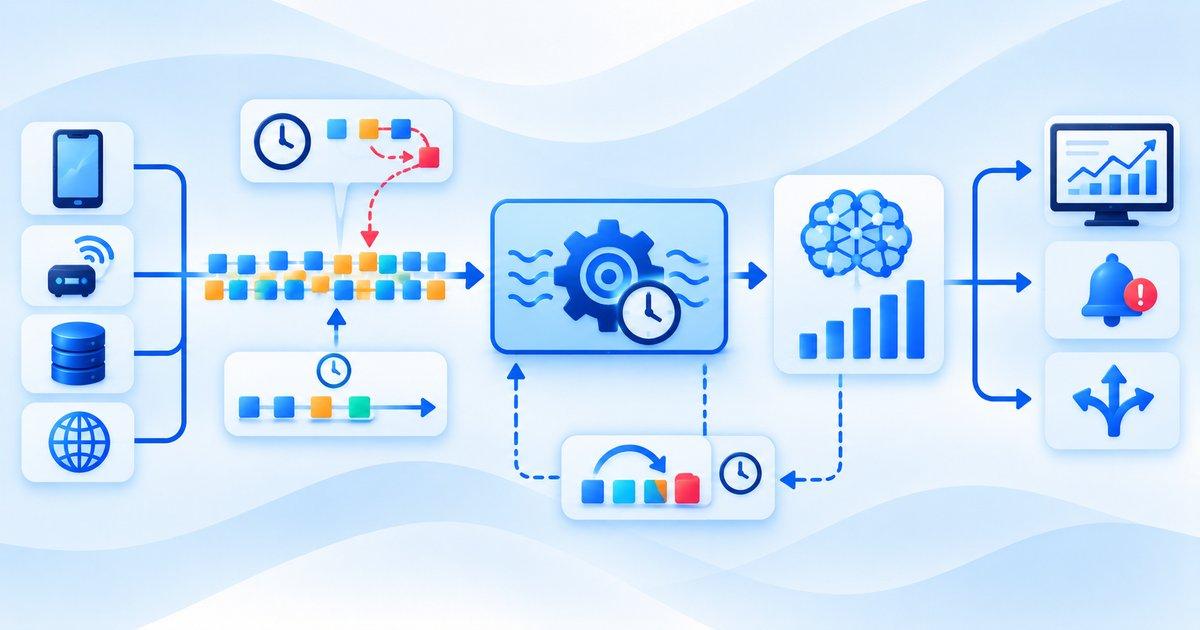
Feedback loops introduce additional complexity. Engineers must consider how updates affect system behavior, how to detect issues such as drift or degradation, and how to respond to changes effectively.
This dynamic nature of ML systems reinforces the need for system-level thinking. Engineers must design systems that are not only functional at a single point in time but also capable of evolving in response to changing conditions.
The Expanding Scope of ML Engineering
As responsibilities grow, the scope of ML engineering continues to expand. Engineers are expected to understand not only technical details but also product requirements, user behavior, and business impact.
This requires a broader perspective. Engineers must be able to connect technical decisions to real-world outcomes, ensuring that systems deliver value to users.
Collaboration becomes essential in this context. ML engineers work closely with product managers, data engineers, and other stakeholders to align technical solutions with broader goals.
This expansion of scope reflects the increasing importance of ML in shaping products and services.
Why This Transformation Is Inevitable
The shift from model builders to system thinkers is not a temporary trend. It is a natural consequence of the maturation of the field.
As machine learning becomes more integrated into everyday applications, the challenges shift from building models to deploying and managing them effectively at scale. Engineers who can navigate this complexity are better positioned to deliver meaningful impact.
This perspective is reinforced in From Research to Real-World ML Engineering: Bridging the Gap, where the emphasis is placed on the transition from theoretical model development to practical system deployment and operation in real-world environments .
The Key Takeaway
In an AI-first world, the role of the ML engineer is evolving from building models to designing and managing systems. Success depends on the ability to integrate components, handle real-world constraints, and ensure that systems deliver consistent value over time. Engineers who embrace this shift toward system-level thinking will define the future of machine learning.
Section 2: Core Skills - What ML Engineers Need in an AI-First World
Redefining What “Strong ML Skills” Actually Mean
In an AI-first world, the definition of a strong machine learning engineer is changing rapidly. At companies like OpenAI, Google, and Meta, technical ability is no longer judged purely by how well someone can implement models or optimize algorithms. Instead, it is evaluated by how effectively an engineer can navigate complexity, make decisions, and operate across systems.
This shift is driven by the reality that many traditionally “hard” tasks are now assisted by AI. Writing boilerplate code, experimenting with architectures, and even debugging pipelines can often be accelerated significantly. As these tasks become easier, the differentiator is no longer execution alone, but understanding and judgment.
Engineers are expected to move beyond task execution and demonstrate the ability to reason about systems, validate outputs, and adapt to changing requirements. This redefinition of skill is central to understanding the future of ML roles.
First-Principles Thinking as a Competitive Advantage
One of the most important skills in this new environment is first-principles thinking.
When tools can generate solutions quickly, the ability to evaluate those solutions becomes critical. Engineers must understand why models behave the way they do, how data influences outcomes, and what assumptions underlie different approaches.
This depth of understanding allows engineers to move beyond surface-level correctness. They can identify when a solution is appropriate, when it is flawed, and how it can be improved.
First-principles thinking also enables adaptability. When faced with unfamiliar problems, engineers can reconstruct solutions based on fundamental concepts rather than relying on memorized patterns. This makes them more resilient in dynamic environments.
System Design as a Core Capability
System design has moved from being an advanced skill to a core requirement for ML engineers.
Modern ML systems are complex, involving data pipelines, model training, deployment infrastructure, and monitoring systems. Engineers must understand how these components interact and how to design systems that are scalable, reliable, and maintainable.
This requires the ability to think at multiple levels of abstraction. Engineers must be able to zoom out and understand the overall architecture, while also diving into specific components when necessary.
Trade-off analysis is central to this skill. Engineers must balance competing priorities such as latency, cost, accuracy, and reliability. These decisions are rarely straightforward, and they require a deep understanding of both technical and business constraints.
Validation Thinking in an AI-Augmented World
As generative AI systems become more capable, the ability to validate outputs becomes increasingly important.
Engineers must be able to assess whether a solution is correct, whether it meets requirements, and how it behaves under different conditions. This involves testing assumptions, exploring edge cases, and understanding failure modes.
Validation thinking ensures that systems are not only functional but also trustworthy. It prevents engineers from relying blindly on generated outputs and reinforces the importance of critical evaluation.
This skill is particularly important in high-stakes applications, where errors can have significant consequences.
Data-Centric Awareness and Feedback Systems
In modern ML systems, data is often the most critical component.
Engineers must understand how data is collected, processed, and used. They must be able to identify issues such as bias, noise, and distribution shifts, and design systems that can adapt to these challenges.
Data-centric thinking also involves creating feedback loops that allow systems to improve over time. Engineers must ensure that new data is incorporated effectively and that models remain aligned with real-world conditions.
This focus on data reflects a broader shift in the field, where improvements in data quality often have a greater impact than changes in model architecture.
Working Effectively with AI Tools
A defining skill in an AI-first world is the ability to work alongside AI systems effectively.
This is not about using tools passively, but about integrating them into workflows in a way that enhances productivity and decision-making. Engineers must know how to guide these tools, interpret their outputs, and refine their results.
This requires a balance between leveraging automation and maintaining control. Engineers must be able to identify when a tool’s output is useful and when it needs to be questioned or modified.
Those who can strike this balance are able to amplify their capabilities without becoming dependent on external systems.
Communication as a Technical Skill
Communication is increasingly recognized as a technical skill in ML roles.
Engineers must be able to explain their reasoning clearly, justify their decisions, and collaborate effectively with cross-functional teams. This includes translating technical concepts into business insights and aligning solutions with user needs.
Strong communication also supports better problem-solving. By articulating their thinking, engineers can identify gaps in their understanding and refine their approach.
In an environment where collaboration is essential, communication becomes a key factor in success.
Adaptability and Continuous Learning
The rapid pace of change in machine learning makes adaptability essential.
Engineers must be able to learn new tools, frameworks, and approaches quickly. They must also be comfortable working in environments where requirements and constraints evolve over time.
Adaptability is not just about reacting to change, but about anticipating it and preparing for it proactively. Engineers who embrace continuous learning are better positioned to remain relevant and effective.
The Integration of Skills into a Cohesive Approach
What distinguishes strong ML engineers is not mastery of any single skill, but the ability to integrate multiple skills into a cohesive approach.
They combine first-principles understanding with system design, validation thinking, data awareness, and effective communication. They use AI tools to enhance their work while maintaining control over their reasoning.
This integrated skill set allows them to operate effectively in complex, dynamic environments and deliver meaningful impact.
This perspective is reinforced in Why ML Engineers Are Becoming the New Full-Stack Engineers, where the role is described as evolving toward combining multiple domains of expertise into a unified skill set .
The Key Takeaway
In an AI-first world, ML engineers need more than technical knowledge. They need the ability to think deeply, design systems, validate outputs, work with AI tools, and adapt continuously. These skills, when integrated, define what it means to succeed in the next generation of machine learning roles.
Section 3: Role Evolution - New ML Roles Emerging in the AI-First Era
From One Role to Many: The Unbundling of ML Engineering
In an AI-first world, the once broad and loosely defined role of a “machine learning engineer” is fragmenting into a set of more specialized functions. At organizations like OpenAI, Google, and Meta, the increasing complexity of ML systems has made it difficult for a single role to cover the entire lifecycle effectively.
This fragmentation is not a sign of instability, it is a sign of maturity in the field. As machine learning becomes deeply embedded in products and infrastructure, different parts of the lifecycle require focused expertise. What was once handled by a generalist is now distributed across roles that specialize in platforms, applications, data, evaluation, and system integration.
This evolution mirrors the trajectory of software engineering, where specialization emerged as systems grew more complex. ML is now following a similar path, with roles becoming more defined by responsibility and system scope rather than by broad titles.
The Emergence of ML Platform Engineers
One of the most important roles to emerge is the ML platform engineer.
As organizations scale their machine learning efforts, the need for reliable infrastructure becomes critical. ML platform engineers focus on building the systems that support experimentation, training, deployment, and monitoring. Their work enables other engineers to operate efficiently, reducing friction in the development process.
They design pipelines, manage compute resources, and ensure reproducibility across experiments. They also build internal tools that standardize workflows, making it easier for teams to collaborate and scale their efforts.
This role sits at the intersection of infrastructure and machine learning, requiring both strong engineering fundamentals and an understanding of ML workflows.
The Rise of LLM Engineers and AI Application Specialists
The rapid adoption of large language models has led to the emergence of LLM engineers and AI application specialists.
These engineers focus on adapting foundation models to specific use cases. Instead of building models from scratch, they work with pre-trained systems, refining them through prompting, fine-tuning, and evaluation.
Their work is highly iterative. They experiment with different approaches, analyze model behavior, and optimize outputs based on context. This requires a deep understanding of how models behave in real-world scenarios, as well as the ability to validate and refine results.
This role reflects a shift toward application-level intelligence, where the focus is on how models are used rather than how they are built.
ML Systems Engineers and End-to-End Responsibility
Another critical role is that of the ML systems engineer, who takes ownership of the entire lifecycle of an ML system.
These engineers bridge the gap between model development and production deployment. They ensure that models are integrated into systems that are scalable, reliable, and maintainable.
Their responsibilities include designing data pipelines, managing deployments, monitoring system performance, and handling issues such as drift and degradation. They must also ensure that systems can adapt to changing conditions over time.
This role emphasizes end-to-end responsibility, requiring a holistic understanding of both technical and operational aspects.
The Growing Importance of Data-Centric Roles
As the field evolves, the importance of data has become more pronounced, leading to the emergence of data-centric ML roles.
These specialists focus on improving data quality, designing labeling strategies, and managing datasets. They ensure that models are trained on accurate and representative data, which is often the most critical factor in system performance.
Their work also involves creating feedback loops that allow systems to learn from real-world usage. This ensures that models remain relevant and effective over time.
This shift highlights a key insight: improving data often has a greater impact than modifying models.
AI Product Engineers and Cross-Functional Integration
The integration of machine learning into products has given rise to the role of AI product engineers.
These engineers operate at the intersection of ML and product development. They are responsible for translating technical capabilities into user-facing features that deliver value.
This requires a deep understanding of both technical systems and user needs. Engineers must balance performance, usability, and business objectives, making trade-offs that align with product goals.
Collaboration is central to this role. AI product engineers work closely with product managers, designers, and other stakeholders to ensure that systems are both functional and meaningful to users.
Evaluation, Safety, and Responsible AI Roles
As AI systems become more powerful, the need for evaluation and safety-focused roles has grown.
These roles focus on assessing model behavior, identifying risks, and ensuring that systems operate within acceptable boundaries. Engineers in these roles design evaluation frameworks, monitor system outputs, and address issues such as bias and unintended behavior.
This reflects a broader shift toward responsible AI development, where ensuring reliability and trust is as important as achieving performance.
Fluid Boundaries and Hybrid Skill Sets
While these roles are becoming more defined, the boundaries between them are not rigid.
Many engineers operate across multiple areas, combining skills from different roles depending on the needs of the organization. This flexibility is a defining feature of the AI-first era.
Engineers who can navigate multiple domains, systems, data, models, and product, are particularly valuable. They bring a holistic perspective that enables better decision-making and more effective system design.
Why Understanding Role Evolution Matters
For candidates and engineers, understanding how roles are evolving is critical.
It allows them to position themselves effectively, identify the skills they need to develop, and align their career paths with industry trends. It also helps them prepare for interviews, which are increasingly tailored to specific roles and responsibilities.
This evolution is captured in The Rise of ML Infrastructure Roles: What They Are and How to Prepare, which highlights how the field is shifting toward specialized roles that focus on different layers of the ML system .
The Key Takeaway
Machine learning roles are evolving into a diverse ecosystem of specialized positions, each focused on a different aspect of building and operating intelligent systems. From platform engineering to application development, data management, and evaluation, these roles reflect the growing complexity of the field. Engineers who understand this landscape and develop relevant skills will be best positioned to succeed in the AI-first era.
Section 4: How Hiring and Interviews Are Changing for ML Roles
From Role Matching to Capability Discovery
Hiring in an AI-first world is no longer about matching candidates to predefined job descriptions. At companies like Google, Meta, and OpenAI, the process has shifted toward discovering what a candidate is capable of across different contexts, rather than verifying whether they fit into a rigid role definition.
This change reflects the evolving nature of ML work. As roles become more fluid and interdisciplinary, hiring systems must adapt to evaluate transferable thinking abilities, adaptability, and system-level reasoning. Companies are less interested in whether a candidate has performed a specific task before and more interested in whether they can learn, adapt, and solve problems in unfamiliar environments.
This shift transforms interviews from checklists into explorations of capability.
Interviews as Real-World Simulations
Modern ML interviews are increasingly designed to mirror real engineering scenarios.
Rather than asking isolated technical questions, interviewers present problems that resemble actual challenges faced by ML teams. These may involve designing systems under constraints, analyzing trade-offs, or integrating multiple components into a working solution.
The goal is to observe how candidates think in realistic situations. Interviewers are looking for signals such as clarity of reasoning, ability to handle ambiguity, and effectiveness in navigating complex problem spaces.
This approach reduces the gap between interview performance and on-the-job performance. Candidates who can operate effectively in these simulations are more likely to succeed in real roles.
The Changing Role of Coding in ML Interviews
Coding remains an important skill, but its role in interviews has evolved.
In earlier interview formats, coding performance often served as the primary signal. Today, it is one part of a broader evaluation framework. Interviewers are more interested in how candidates use coding as a tool within a larger reasoning process.
Candidates are expected to integrate coding with system design, problem framing, and communication. Writing correct code is necessary, but it is no longer sufficient to demonstrate overall capability.
This reflects the reality that in AI-first environments, many aspects of coding can be assisted or accelerated by tools, while higher-level thinking remains a uniquely human responsibility.
System Design as a Central Evaluation Axis
System design has become one of the most critical components of ML interviews.
Candidates are evaluated on their ability to design systems that are scalable, reliable, and aligned with product requirements. This includes understanding data flows, model integration, and operational considerations.
Interviewers focus on how candidates structure their designs, how they reason about trade-offs, and how they adapt to changing requirements. The emphasis is on decision-making and adaptability, rather than on presenting a perfect or exhaustive solution.
This shift reflects the increasing importance of system-level thinking in ML roles.
Evaluating Adaptability Through Dynamic Interviews
Adaptability has become a core evaluation criterion.
Interviewers often introduce changes during the discussion, such as modifying constraints, adding new requirements, or exploring alternative scenarios. These changes are designed to test how candidates respond to evolving conditions.
Strong candidates treat these changes as opportunities to refine their thinking. They reassess their approach, adjust their solutions, and maintain clarity throughout the process.
Candidates who struggle with adaptability often attempt to force their initial solution to fit new conditions, leading to inconsistencies. This highlights the importance of flexible, iterative thinking.
Communication as a Signal of Understanding
Communication plays a central role in modern ML interviews.
Candidates are expected to articulate their reasoning clearly, structure their explanations logically, and respond effectively to feedback. This is not just about presentation, it is a reflection of how well they understand the problem.
Clear communication allows interviewers to follow the candidate’s thinking process and evaluate its depth and coherence. It also enables more effective collaboration during the interview.
In many cases, communication becomes the bridge between technical ability and perceived capability.
Holistic Evaluation Through Multiple Signals
Modern hiring processes rely on a combination of signals rather than a single metric.
These signals include technical knowledge, system design ability, reasoning clarity, adaptability, and communication. Each round contributes to a broader understanding of the candidate’s strengths and weaknesses.
This holistic approach reduces the risk of overemphasizing any one aspect and provides a more accurate assessment of how candidates will perform in real-world roles.
It also reflects the complexity of ML roles, which require a combination of skills rather than expertise in a single area.
Why Candidates Must Rethink Preparation
These changes have significant implications for how candidates prepare for interviews.
Preparation can no longer focus solely on solving predefined problems or memorizing patterns. Candidates must develop the ability to think through problems dynamically, communicate effectively, and adapt to new scenarios.
This requires a deeper engagement with concepts and a shift toward understanding rather than memorization.
Candidates who align their preparation with these expectations are better positioned to succeed in modern interview processes.
This shift is captured in The Future of ML Hiring: Why Companies Are Shifting from LeetCode to Case Studies, which highlights how interviews are moving toward evaluating real-world problem-solving and decision-making rather than isolated coding performance .
The Key Takeaway
Hiring and interviews for ML roles in an AI-first world are evolving toward capability-based evaluation, real-world simulation, and holistic assessment. Success depends on the ability to integrate technical knowledge with system-level thinking, adaptability, and clear communication. Candidates who prepare with this perspective in mind gain a significant advantage.
Conclusion: Redefining Machine Learning Careers in an AI-First World
The future of machine learning roles is not about replacement, it is about elevation. In an AI-first world shaped by organizations like OpenAI, Google, and Meta, engineers are no longer defined by their ability to build models alone. Instead, they are defined by their ability to design systems, make decisions under uncertainty, and integrate intelligence into real-world applications.
Generative AI and automation have shifted the baseline. Tasks that once required significant effort, coding pipelines, tuning models, and implementing architectures, are increasingly assisted. What remains uniquely valuable is the ability to understand, validate, and guide these systems effectively. This has raised the bar for what it means to be a strong ML engineer.
The evolution of roles reflects this shift clearly. From platform engineers and LLM specialists to system-focused and product-oriented roles, the field is expanding into a diverse ecosystem of responsibilities. At the same time, the most effective engineers are those who can connect these domains, bringing a holistic, system-level perspective to complex problems.
Hiring processes are evolving in parallel. Interviews are no longer designed to test isolated skills. They are designed to evaluate how candidates think, adapt, and communicate across different contexts. The ability to reason clearly, handle ambiguity, and iterate on solutions has become more important than memorizing patterns or achieving perfect answers.
For engineers, this transformation requires a shift in mindset. Staying relevant is not about mastering a fixed set of tools, it is about building the ability to learn continuously, adapt quickly, and operate effectively in dynamic environments. It requires strong fundamentals, structured thinking, and the ability to collaborate with AI systems while maintaining ownership of decisions.
Ultimately, the future of ML careers belongs to those who can navigate complexity with clarity. Engineers who embrace system-level thinking, develop strong judgment, and align their skills with evolving industry needs will not only succeed in interviews but also play a central role in shaping the next generation of intelligent systems.
This broader shift is echoed in The Future of ML: Career Opportunities and Trends, which highlights how the field is moving toward integrated, system-driven roles that combine technical depth with real-world impact .
Frequently Asked Questions (FAQs)
1. What does an AI-first world mean for ML engineers?
It means working in environments where AI tools assist with development, requiring engineers to focus more on reasoning, system design, and decision-making.
2. Are ML engineers still relevant with generative AI?
Yes, but their roles are evolving toward system-level ownership and problem-solving rather than just model building.
3. What skills matter most in the future?
First-principles thinking, system design, validation ability, adaptability, and communication are critical.
4. How are ML roles changing?
They are becoming more specialized, with roles focused on platforms, applications, data, and system integration.
5. Is coding still important?
Yes, but it is now part of a broader skill set that includes reasoning, system design, and collaboration.
6. What is system-level thinking?
It is the ability to design and manage entire ML systems rather than focusing only on individual components.
7. How can I stay relevant in ML?
By continuously learning, focusing on fundamentals, and gaining real-world system experience.
8. What is AI-augmented workflow?
It is the integration of AI tools into engineering processes to improve efficiency and decision-making.
9. Are interviews changing for ML roles?
Yes, they now focus more on reasoning, adaptability, and real-world problem-solving.
10. What is the biggest mistake candidates make?
Focusing only on model building and ignoring system-level thinking.
11. How important is data in ML roles?
Extremely important, as data quality and feedback loops directly impact system performance.
12. What is validation thinking?
It is the ability to critically evaluate solutions and ensure they are correct, robust, and appropriate.
13. Should I specialize or stay general?
Having depth in one area while maintaining awareness across others is the most effective approach.
14. How do I prepare for future ML roles?
Focus on fundamentals, system design, real-world applications, and continuous learning.
15. What is the key takeaway?
ML careers are evolving toward system-level ownership, and success depends on adaptability, reasoning, and continuous growth.
If you approach your ML career as a continuously evolving system, refining your thinking, adapting to new tools, and aligning with industry shifts, you will be well-positioned to thrive in an AI-first world.