
Section 1: Generative AI Is Becoming the Foundation, Not the Destination
The rapid rise of Generative AI has undoubtedly become one of the defining technological milestones of the twenty-first century. Within a remarkably short period, Large Language Models (LLMs) have transformed how people write code, create content, conduct research, analyze information, and automate business processes. Organizations across nearly every industry have embraced Generative AI to improve productivity, accelerate innovation, and enhance customer experiences. What once appeared to be an experimental capability confined to research laboratories has evolved into an essential component of enterprise software, changing the expectations of businesses, developers, and consumers alike.
However, history repeatedly demonstrates that every major technological breakthrough eventually transitions from being the destination to becoming the foundation for something much larger. The internet itself was once considered revolutionary, yet today it serves as the infrastructure supporting cloud computing, mobile applications, streaming services, digital commerce, and countless other innovations. Similarly, cloud computing fundamentally changed software development, but it eventually became a standard layer within modern application architecture rather than the defining innovation itself. Generative AI is following a remarkably similar trajectory. Although it dominates today's technology conversations, it is increasingly becoming the baseline capability upon which future intelligent systems will be built.
This shift is already visible across enterprise software development. Organizations are no longer asking whether they should integrate Generative AI into their products. Instead, they are asking how AI can become an intelligent component within broader business systems capable of reasoning, planning, learning, collaborating, and operating autonomously. Generative AI has successfully demonstrated that machines can understand natural language, generate high-quality content, and assist with complex tasks. The next challenge is enabling those systems to think beyond individual prompts and contribute meaningfully to larger workflows involving decision-making, memory, collaboration, and continuous adaptation.
The maturation of enterprise AI has accelerated this transition. During the initial wave of Generative AI adoption, organizations focused primarily on experimentation. Companies developed AI chatbots, document summarizers, coding assistants, and customer support tools to explore the technology's capabilities. While these projects generated significant enthusiasm, they also revealed an important reality. Generative AI alone rarely solves enterprise challenges. Businesses require systems capable of integrating with existing applications, accessing proprietary knowledge, maintaining security, complying with regulations, collaborating across departments, and continuously improving based on operational feedback. Meeting these expectations demands technologies that extend beyond language generation.
The Limitations of Today's Generative AI Are Driving the Next Wave of Innovation
The extraordinary success of Generative AI should not obscure its current limitations. Large Language Models have demonstrated remarkable capabilities, yet they continue to face challenges that prevent them from operating as fully autonomous intelligent systems. These limitations are not signs of failure; rather, they represent the natural boundaries of a technology that is still evolving. In many ways, they are shaping the direction of the next generation of AI research and engineering.
One of the most widely discussed challenges is the limitation of context windows. Although modern language models can process significantly larger amounts of information than earlier generations, they still operate within finite context limits. Enterprise applications often require AI systems to understand years of organizational knowledge, evolving customer relationships, extensive technical documentation, and continuously changing business data. Simply increasing context size does not solve this challenge efficiently. Instead, future AI systems will require more sophisticated memory architectures capable of storing, retrieving, and reasoning over information dynamically rather than processing everything within a single prompt.
Another well-known limitation is the persistence of hallucinations. Even highly advanced language models occasionally generate responses that sound plausible but contain inaccurate or fabricated information. For consumer applications, these errors may be inconvenient. In enterprise environments involving healthcare, finance, legal services, or engineering, however, unreliable information can have significant consequences. This challenge has encouraged researchers to develop Retrieval-Augmented Generation (RAG), verification systems, reasoning architectures, and evaluation frameworks that improve factual accuracy while reducing dependence on probabilistic text generation alone.
The cost of inference presents another important obstacle to widespread AI adoption. Running advanced foundation models requires substantial computational resources, particularly for applications serving millions of users or processing large volumes of data continuously. Organizations must balance performance, latency, scalability, and operational costs while maintaining high-quality user experiences. This economic reality is driving innovation in model optimization, efficient inference techniques, specialized AI hardware, and hybrid architectures that combine different models according to task complexity rather than relying on a single large model for every request.
Readers interested in understanding why AI expertise is becoming essential across every software organization should also explore "Why Every Software Team Will Have an AI Engineer by 2030," which examines how intelligent software is reshaping engineering teams and the skills developers need to remain competitive in an AI-first future.
Key Takeaway
Generative AI has transformed software engineering, but it represents the beginning rather than the endpoint of artificial intelligence. As Large Language Models mature into foundational infrastructure, the industry's focus is shifting toward reasoning, memory, autonomous execution, AI-native software, and enterprise-scale intelligence. The limitations of today's Generative AI, including context constraints, hallucinations, inference costs, and limited reasoning capabilities, are driving the next wave of innovation. Engineers who understand this transition will be better prepared to build the intelligent systems that define the future of AI rather than simply using the tools of the present.
Section 2: The Emerging AI Technologies That Will Define the Next Decade
As Generative AI becomes a standard capability within modern software, the technology industry is already directing its attention toward the next generation of intelligent systems. The future of artificial intelligence will not be defined by larger language models alone but by technologies that can reason, plan, interact with the physical world, understand multiple forms of information simultaneously, and perform complex tasks with minimal human supervision. These emerging innovations are gradually shifting AI from being a responsive assistant into an active collaborator capable of contributing meaningfully to business operations, scientific research, and real-world automation.
For software engineers, understanding these technologies is becoming increasingly important. Just as cloud computing evolved from an emerging trend into an essential engineering discipline, many of today's experimental AI technologies are likely to become standard components of tomorrow's software architecture. Organizations are already investing heavily in these areas because they promise to solve many of the limitations associated with current Generative AI systems while opening entirely new opportunities for intelligent applications.
Rather than replacing Large Language Models, these technologies build upon them. Generative AI will continue serving as a foundational capability, while emerging AI systems combine language understanding with reasoning, memory, perception, robotics, and autonomous execution. This broader perspective helps explain why the next decade of AI innovation will involve much more than generating text or images. It will focus on building intelligent systems capable of understanding context, making decisions, interacting with their environments, and collaborating with humans over extended periods.
Agentic AI and Autonomous Systems Are Transforming Software Engineering
Among the most significant developments beyond Generative AI is the rise of Agentic AI. Unlike traditional AI assistants that respond to individual prompts, AI agents are designed to pursue goals by planning tasks, making decisions, using external tools, and adapting their actions based on changing circumstances. Instead of answering one question at a time, these systems can execute multi-step workflows with minimal human intervention.
For example, an enterprise AI agent might receive a request to prepare a quarterly sales report. Rather than simply generating text, the agent could retrieve information from multiple business systems, analyze historical sales trends, generate visualizations, draft executive summaries, schedule stakeholder meetings, and notify relevant teams once the report is complete. This level of autonomous execution represents a significant shift from today's conversational AI toward systems capable of completing entire business processes.
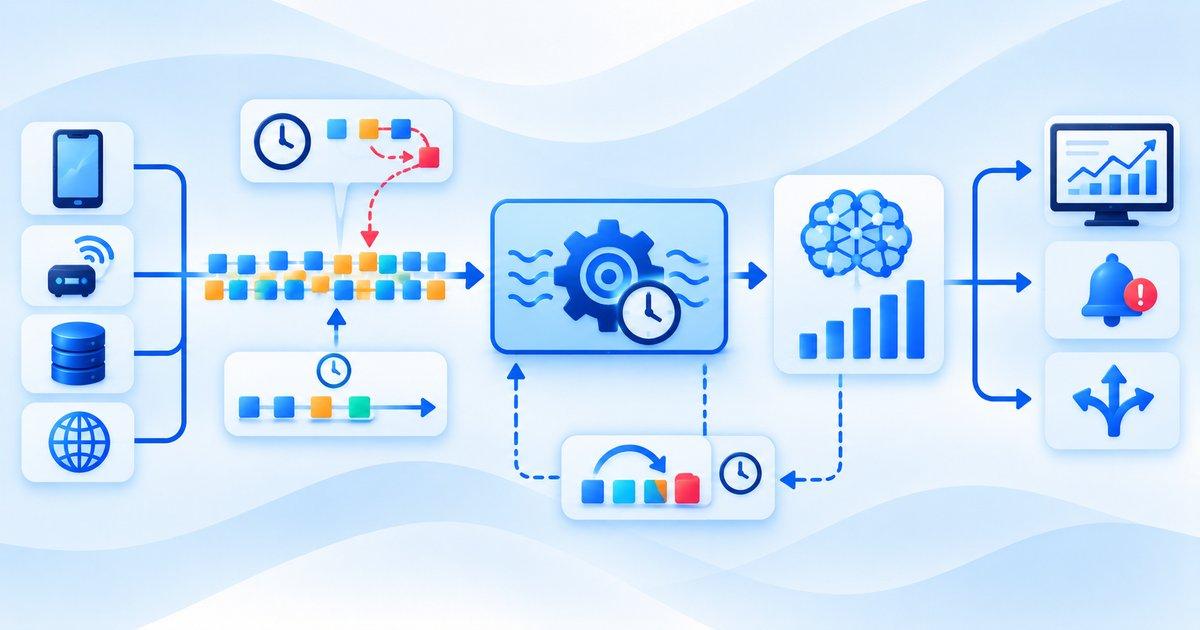
Closely related to Agentic AI is the broader development of enterprise autonomous workflows. Organizations increasingly want AI systems that coordinate repetitive operational tasks across departments while remaining aligned with business policies and security requirements. Human employees will increasingly supervise these workflows instead of performing every individual task manually. As this transition accelerates, software engineers will need to design systems capable of orchestrating multiple AI agents, integrating enterprise applications, and maintaining reliable operational oversight.
Another rapidly evolving area is AI reasoning models. Current Large Language Models excel at generating responses but often struggle with complex logical reasoning, long-term planning, and structured decision-making. Reasoning models are specifically designed to improve these capabilities by evaluating intermediate steps, testing multiple solution paths, and producing more reliable conclusions for sophisticated engineering, scientific, and business challenges. Their development is expected to significantly improve AI performance in software architecture, mathematics, scientific research, financial analysis, and strategic planning.
Multimodal Intelligence and Physical AI Will Expand AI Beyond Screens
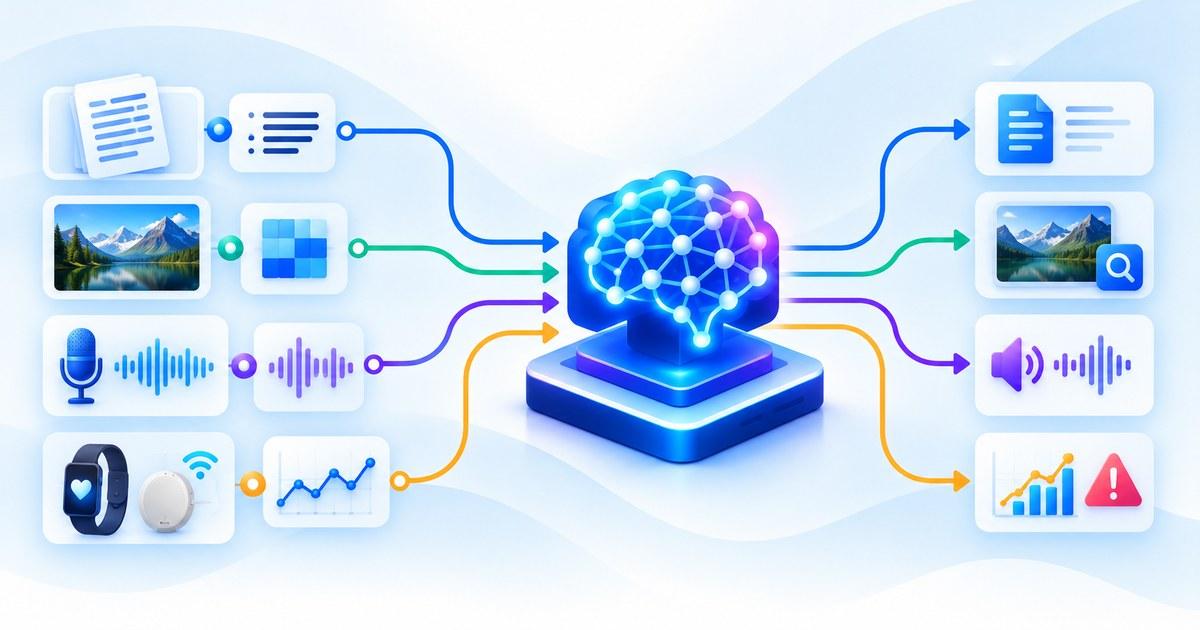
Another major transformation is the emergence of multimodal AI, which enables systems to process and combine multiple forms of information, including text, images, video, audio, and sensor data, within a unified reasoning process. Humans naturally interpret information using multiple senses simultaneously, and future AI systems are moving closer to this capability. Rather than analyzing documents separately from images or videos, multimodal models can understand relationships across different information sources to produce richer and more context-aware insights.
For software engineering, multimodal AI opens entirely new possibilities. Healthcare applications can combine medical images with patient histories to support clinical decision-making. Manufacturing systems can analyze sensor readings alongside visual inspections to detect equipment failures earlier. Educational platforms can interpret spoken explanations, written responses, and visual demonstrations together to personalize learning experiences. Customer service applications can understand screenshots, voice conversations, and support documents within a single interaction, significantly improving problem resolution.
Equally transformative is the development of Physical AI, which combines artificial intelligence with robotics and autonomous machines. Unlike digital assistants that exist entirely within software environments, Physical AI enables intelligent systems to interact directly with the physical world. Warehouses already employ AI-powered robots to manage inventory, manufacturing facilities use intelligent automation for quality inspection, and autonomous agricultural equipment optimizes farming operations using computer vision and environmental sensing.
Advances in Physical AI will also influence software engineering because intelligent machines depend heavily on cloud services, edge computing, APIs, distributed systems, and real-time decision-making. Engineers will increasingly develop software that coordinates digital intelligence with physical devices operating across factories, hospitals, transportation networks, retail environments, and smart cities.
For readers interested in understanding how modern engineering teams design the infrastructure supporting autonomous AI systems, "The Engineering Behind Autonomous AI Workflows" explores the production architectures, orchestration strategies, and engineering practices that enable intelligent systems to operate reliably at enterprise scale.
Key Takeaway
The future of artificial intelligence extends well beyond Generative AI. Agentic AI, autonomous workflows, reasoning models, world models, multimodal intelligence, Physical AI, robotics, and Edge AI are transforming intelligent software from reactive assistants into systems capable of planning, reasoning, perceiving, and acting. These technologies will redefine software engineering over the next decade, making it essential for engineers to understand not only how AI generates information but also how it reasons, collaborates, and interacts with the digital and physical worlds.
Section 3: How AI Engineering Will Change Beyond Large Language Models
As Large Language Models become increasingly integrated into enterprise software, the role of AI engineering is undergoing a significant transformation. During the first wave of Generative AI adoption, much of the industry's attention focused on selecting foundation models, optimizing prompts, and integrating APIs into applications. While these remain valuable skills, they represent only one layer of a rapidly expanding AI ecosystem. The next generation of AI products will require engineering disciplines that extend far beyond language models, demanding expertise in infrastructure, orchestration, distributed systems, security, governance, and hardware optimization.
This evolution mirrors earlier transitions in software engineering. When cloud computing first emerged, organizations initially concentrated on migrating applications to cloud platforms. As cloud adoption matured, engineers shifted their attention toward cloud-native architecture, container orchestration, observability, security, and platform engineering. Artificial intelligence is following a similar path. Today, the conversation centers on foundation models, but tomorrow, competitive advantage will depend on the engineering systems that enable those models to operate reliably at enterprise scale.
This shift is already influencing hiring practices. Organizations are increasingly searching for engineers who understand how AI systems interact with cloud infrastructure, enterprise applications, knowledge repositories, security frameworks, and business workflows. Companies recognize that an advanced language model alone does not create business value. Instead, value emerges when intelligent systems are integrated into reliable architectures capable of scaling, learning, adapting, and operating continuously under real-world conditions. Consequently, AI engineering is becoming a multidisciplinary field that combines software engineering, infrastructure management, distributed computing, cybersecurity, and data engineering into a unified discipline.
Another reason AI engineering is expanding beyond Large Language Models is the growing complexity of enterprise AI applications. Modern AI products rarely rely on a single model operating independently. Instead, they involve multiple AI services working together through orchestrated workflows that retrieve information, invoke specialized models, evaluate outputs, manage long-term memory, monitor performance, and integrate with dozens of business systems. Coordinating these components requires engineering expertise that goes far beyond machine learning theory.
AI Infrastructure and Orchestration Will Become Core Engineering Disciplines
The future of AI engineering will depend heavily on AI infrastructure, the collection of technologies that support the deployment, operation, and scaling of intelligent systems. Just as cloud infrastructure provides the foundation for modern web applications, AI infrastructure enables foundation models, autonomous agents, reasoning systems, and enterprise workflows to operate efficiently under production workloads. Rather than focusing exclusively on training models, engineers will increasingly spend their time designing the environments in which AI systems execute.
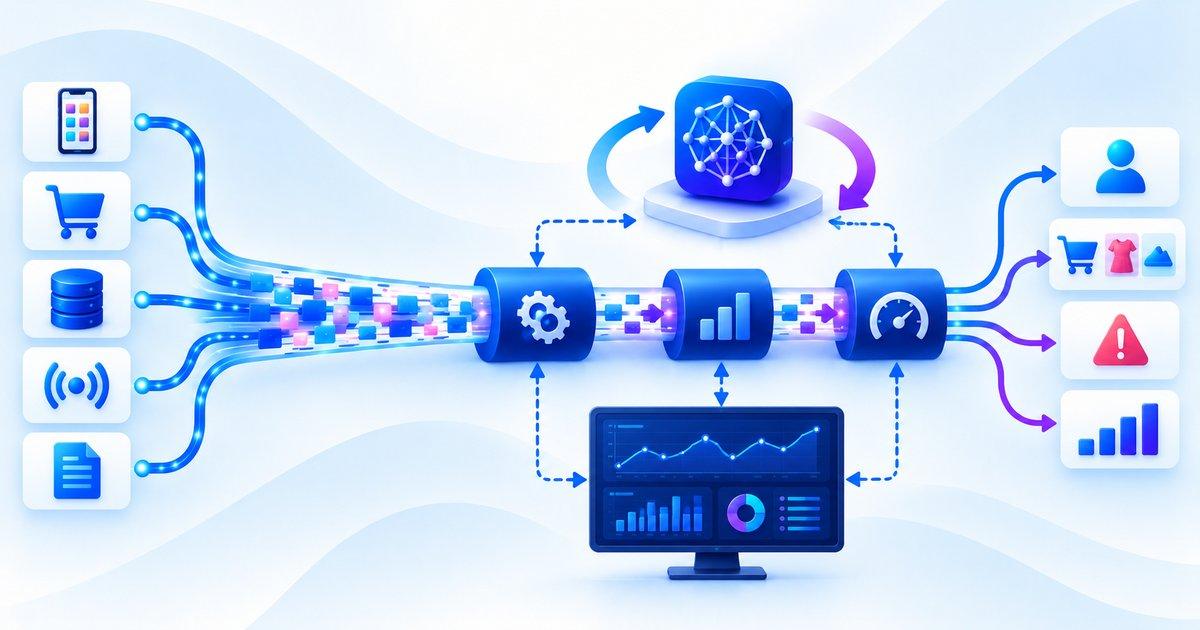
One of the most important aspects of this infrastructure is AI orchestration. Future AI applications will rarely involve a single model answering isolated questions. Instead, multiple AI components will collaborate to solve complex business problems. A customer request may trigger a retrieval system that searches enterprise knowledge, followed by a reasoning model that evaluates available information, an AI agent that performs external actions through APIs, and another model that summarizes results before presenting them to the user. Orchestrating these interactions efficiently will become a major engineering responsibility because every component must communicate reliably while maintaining performance and security.
Supporting these intelligent workflows requires robust vector databases, which have become an essential part of enterprise AI architectures. Unlike traditional databases that retrieve information using exact keywords, vector databases enable semantic search by storing mathematical representations of knowledge. This capability allows AI systems to locate relevant documents, customer records, technical manuals, or organizational policies based on meaning rather than literal text. As enterprise AI expands, vector databases will become as fundamental to AI engineering as relational databases are to traditional software development.
Another rapidly growing area is the development of memory systems for AI applications. Current language models process information primarily within their available context window, but future intelligent systems will require persistent memory capable of remembering previous conversations, organizational knowledge, user preferences, and long-term objectives. Memory architectures will enable AI agents to maintain continuity across multiple interactions while adapting their behavior based on accumulated experience. Designing these systems efficiently will require engineers to combine knowledge retrieval, storage optimization, and intelligent context management into scalable production architectures.
Security, Optimization, and Cross-Disciplinary Engineering Will Shape the Future
As AI systems become deeply embedded within enterprise operations, AI security will become one of the most critical engineering priorities. Unlike conventional software applications, AI systems interact dynamically with user-generated content, external knowledge sources, APIs, and autonomous workflows. This creates new attack surfaces, including prompt injection, data poisoning, model manipulation, unauthorized tool usage, and information leakage. Future AI Engineers must understand secure system design, identity management, encryption, access control, and runtime protection to ensure intelligent systems remain trustworthy in production environments.
Closely connected to security is the growing importance of AI governance. Governments and enterprises are introducing regulations that require greater transparency, accountability, explainability, and responsible AI deployment. Engineering teams will need to implement governance mechanisms that monitor model behavior, document decision processes, maintain audit trails, and enforce organizational policies. Rather than viewing governance as a compliance exercise, successful organizations will integrate these capabilities directly into their AI platforms, making responsible AI an inherent part of system architecture.
Operational excellence will also depend on comprehensive AI observability. Traditional application monitoring focuses on uptime, latency, and infrastructure health, but AI systems require much deeper visibility. Engineering teams must monitor model quality, hallucination rates, reasoning performance, retrieval accuracy, agent behavior, resource utilization, and customer satisfaction simultaneously. These insights enable organizations to detect performance degradation early while continuously improving production AI systems through data-driven decision-making.
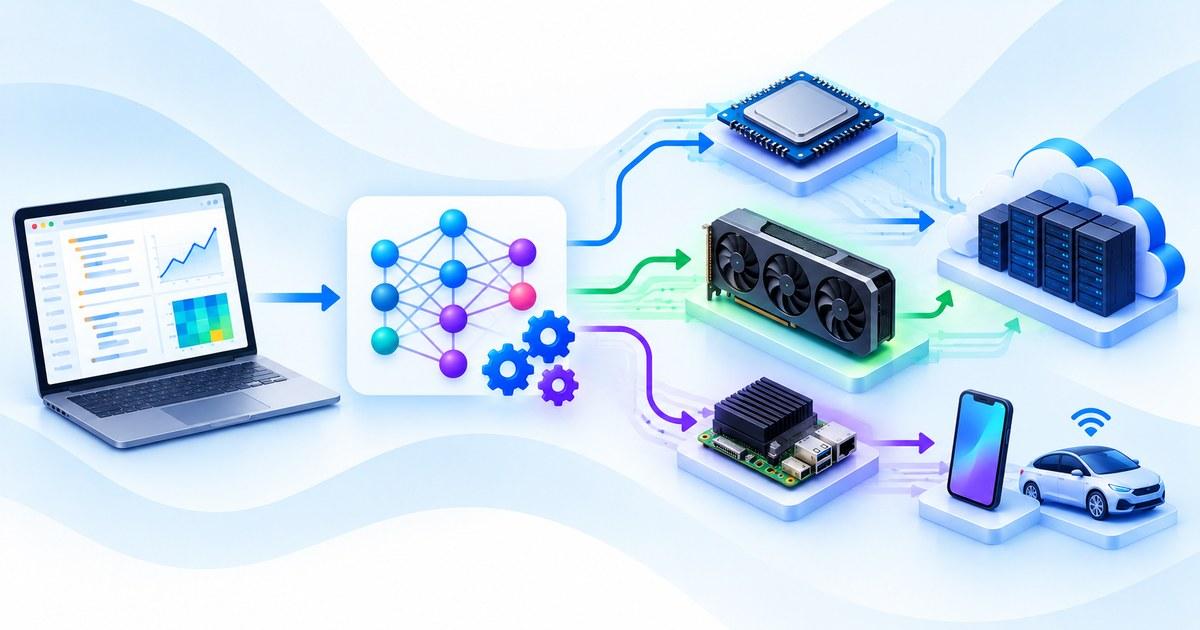
The rapid growth of AI workloads is also increasing demand for optimized Cloud AI environments and specialized AI hardware. Running advanced reasoning models, multimodal systems, and autonomous agents requires substantial computational resources, making efficient infrastructure management increasingly important. Engineers will need to understand GPUs, AI accelerators, distributed inference, workload scheduling, and cost optimization strategies to deliver high-performance AI applications while controlling operational expenses. As specialized hardware continues evolving, software engineers will work more closely with infrastructure teams to ensure applications fully utilize emerging computational capabilities.
For readers interested in exploring the engineering disciplines that quietly determine whether production AI succeeds at scale, "The Hidden Layers of AI Engineering Nobody Talks About" provides a deeper look into the infrastructure, operational practices, and architectural decisions that power today's most successful AI systems.
Key Takeaway
The future of AI engineering extends far beyond Large Language Models. AI infrastructure, orchestration, vector databases, memory systems, distributed architectures, security, governance, observability, cloud optimization, specialized AI hardware, and cross-disciplinary collaboration are becoming the core technologies that enable intelligent systems to operate successfully in production. Engineers who develop expertise across these areas will be prepared to build the next generation of AI platforms, transforming isolated models into scalable, enterprise-grade ecosystems capable of powering the future of intelligent software.
Section 4: Preparing for Technologies That Don't Exist Yet
Predicting the exact direction of artificial intelligence has become increasingly difficult because innovation is occurring at an unprecedented pace. Only a few years ago, most discussions about AI centered on supervised learning, computer vision, and recommendation systems. Today, Large Language Models, AI agents, multimodal intelligence, and autonomous workflows dominate conversations across the technology industry. Five years from now, entirely new architectures, reasoning systems, hardware platforms, and intelligent applications may redefine software engineering once again. This uncertainty presents both a challenge and an opportunity for engineers. Rather than trying to anticipate every technological breakthrough, successful professionals focus on developing skills that remain valuable regardless of how AI evolves.
The most future-proof engineers are not those who master a single framework or become experts in one specific model. Instead, they cultivate the ability to learn continuously, evaluate emerging technologies critically, and apply new capabilities to solve real business problems. Artificial intelligence is moving toward systems that combine reasoning, planning, perception, memory, and autonomy. While the implementation details will undoubtedly change over time, the underlying engineering principles of designing reliable, scalable, secure, and user-centered systems will remain constant.
This perspective requires a shift in mindset. Instead of viewing AI as a collection of tools to memorize, engineers should approach it as an evolving discipline that demands curiosity, experimentation, and adaptability. Every major technological revolution has rewarded professionals who embraced change rather than resisted it. Engineers who learned cloud computing during its early adoption became cloud architects and platform engineers. Those who adopted DevOps practices helped reshape software delivery. Similarly, the professionals who invest in understanding emerging AI technologies today will help define the next generation of intelligent systems rather than simply implementing standards created by others.
Preparing for an uncertain future also means accepting that continuous education has become part of the engineering profession itself. Unlike traditional academic learning, where knowledge remained relevant for many years, AI engineers must regularly update their understanding of new models, development frameworks, deployment techniques, hardware advancements, and enterprise best practices. Organizations increasingly value engineers who demonstrate intellectual curiosity and adaptability because these qualities enable teams to respond quickly to technological change while maintaining long-term competitive advantages.
Adaptability Will Become the Most Valuable Engineering Skill
One of the most important qualities future AI engineers can develop is a learning mindset. Artificial intelligence evolves so rapidly that relying solely on existing expertise quickly becomes a limitation. Engineers who consistently explore new research papers, experiment with emerging frameworks, evaluate different architectural approaches, and challenge their own assumptions remain far more adaptable than those who focus exclusively on established technologies. Learning should therefore become a continuous engineering practice rather than an occasional professional development activity.
Closely connected to this mindset is research literacy. Engineers do not need to become academic researchers, but they should develop the ability to interpret research publications, understand experimental results, and distinguish meaningful innovations from temporary industry trends. The AI ecosystem generates an enormous volume of announcements every week, making it increasingly important to evaluate new technologies critically rather than adopting them based solely on marketing claims. Research literacy enables engineers to identify breakthroughs that genuinely improve production systems while avoiding unnecessary complexity.
Practical experimentation is equally important. The rapid growth of open-source AI has made advanced models, development frameworks, orchestration platforms, and evaluation tools accessible to engineers around the world. Building prototypes with these technologies provides hands-on experience that cannot be gained through theoretical study alone. Engineers who regularly experiment with open-source ecosystems develop a deeper understanding of how different components interact, preparing them to integrate future innovations into production environments more effectively.
Preparing for unknown technologies also requires building adaptable skills rather than narrow expertise. Software architecture, distributed systems, cloud computing, security engineering, APIs, data management, observability, and systems thinking remain valuable regardless of which AI models dominate the market. These foundational competencies enable engineers to incorporate new technologies without redesigning their entire skill set each time the industry evolves.
Building Long-Term Careers in an AI-Driven World
Long-term success in AI engineering will depend not only on technical ability but also on maintaining an active connection with the broader technology community. Participation in AI communities exposes engineers to practical implementation experiences, emerging engineering patterns, and collaborative problem-solving. Conferences, technical forums, open-source projects, engineering blogs, and developer communities often introduce innovative techniques long before they become standard enterprise practices. Remaining engaged with these communities helps engineers anticipate future trends while expanding their professional networks.
Equally important is developing enterprise AI thinking. Organizations rarely adopt technology simply because it is innovative; they invest in solutions that improve efficiency, reduce operational costs, enhance customer experiences, and create measurable business value. Engineers who understand these objectives make better technical decisions because they evaluate new AI technologies through the lens of business outcomes rather than technical novelty. This perspective enables professionals to recommend appropriate solutions instead of implementing advanced systems that provide limited practical benefit.
Preparing for the future also involves thoughtful long-term career planning. The AI industry is expanding beyond traditional engineering roles into positions such as AI Solutions Architect, AI Platform Engineer, AI Infrastructure Specialist, AI Product Manager, AI Governance Lead, and AI Engineering Director. These opportunities require a combination of technical expertise, strategic thinking, communication skills, and cross-functional collaboration. Engineers who deliberately cultivate these broader capabilities position themselves for leadership roles as organizations expand their AI initiatives.
This naturally creates new leadership opportunities. Future AI leaders will not simply manage engineering teams; they will guide organizational AI strategy, establish responsible AI practices, mentor multidisciplinary teams, evaluate emerging technologies, and ensure intelligent systems align with business goals. As AI becomes embedded across every department, organizations will increasingly rely on technically capable leaders who can communicate effectively with executives, product managers, security specialists, legal teams, and customers alike.
Readers interested in developing the practical engineering skills required to move from theoretical AI knowledge to enterprise-ready implementation should also explore "Research to Real-World ML Engineering: Bridging the Gap," which examines how engineers can transform foundational AI concepts into scalable production systems that deliver measurable business value.
Key Takeaway
Preparing for technologies that do not yet exist requires more than mastering today's AI tools. Engineers should cultivate a continuous learning mindset, strengthen research literacy, experiment with open-source AI, build adaptable engineering skills, participate in technical communities, develop enterprise thinking, and plan for long-term leadership opportunities. As artificial intelligence continues evolving beyond Generative AI, the professionals who remain curious, adaptable, and grounded in strong engineering principles will be best equipped to shape the future of intelligent software rather than simply responding to it.
Conclusion
Generative AI has fundamentally changed the technology landscape, redefining how software is built, how businesses operate, and how engineers solve increasingly complex problems. Large Language Models have demonstrated capabilities that once seemed impossible, enabling intelligent coding assistants, enterprise copilots, conversational interfaces, and content generation systems that have become integral to modern software development. Yet, as transformative as these innovations have been, they represent only the beginning of a much larger evolution in artificial intelligence.
History consistently shows that every major technological breakthrough eventually becomes the foundation for the next wave of innovation. The internet evolved into the platform for cloud computing, cloud computing enabled modern SaaS applications, and mobile technologies transformed how people interact with digital products. In much the same way, Generative AI is becoming foundational infrastructure upon which more sophisticated intelligent systems will be built. The future of artificial intelligence will extend far beyond generating text, images, and code, moving toward systems capable of reasoning through complex challenges, maintaining long-term memory, collaborating autonomously, understanding multiple forms of information simultaneously, and interacting directly with the physical world.
Frequently Asked Questions (FAQs)
1. What comes after Generative AI?
The next phase of artificial intelligence includes technologies such as Agentic AI, reasoning models, multimodal AI, Physical AI, world models, Edge AI, autonomous enterprise workflows, and intelligent robotics. These technologies focus on reasoning, planning, autonomy, and real-world interaction rather than content generation alone.
2. What is Agentic AI?
Agentic AI refers to intelligent systems that can independently plan tasks, make decisions, use external tools, and execute multi-step workflows with minimal human intervention. Unlike traditional chatbots, AI agents work toward achieving specific goals instead of simply responding to prompts.
3. How are AI agents different from traditional chatbots?
Traditional chatbots primarily answer questions based on user prompts, whereas AI agents can retrieve information, interact with software systems, make decisions, execute tasks, monitor outcomes, and adapt their behavior throughout an entire workflow.
4. What is Multimodal AI?
Multimodal AI combines multiple forms of data, including text, images, audio, video, and sensor information, within a single model. This allows AI systems to understand context more comprehensively and deliver more accurate, intelligent responses across diverse applications.
5. What is Physical AI?
Physical AI integrates artificial intelligence with robotics and autonomous machines, enabling intelligent systems to interact directly with the physical world. Applications include manufacturing automation, warehouse robotics, autonomous vehicles, healthcare robotics, and smart infrastructure.
6. What are AI reasoning models?
AI reasoning models are designed to solve complex problems through logical thinking, planning, and step-by-step analysis rather than simply predicting the next word. They improve decision-making for engineering, scientific research, finance, and enterprise applications.
7. What are world models in artificial intelligence?
World models help AI systems develop internal representations of their environments, allowing them to predict future events, simulate possible outcomes, and make better long-term decisions in dynamic situations such as robotics, autonomous driving, and industrial automation.
8. Why is AI infrastructure becoming increasingly important?
As AI applications grow more complex, organizations need scalable infrastructure to support deployment, orchestration, monitoring, security, memory management, and distributed computing. AI infrastructure ensures intelligent systems operate efficiently in production environments.
9. How will AI engineering change over the next decade?
AI engineering will expand beyond model development to include orchestration, vector databases, memory systems, AI governance, observability, cloud optimization, distributed systems, specialized hardware, and enterprise architecture. Engineers will increasingly build complete AI ecosystems rather than isolated machine learning models.
10. Will Generative AI replace software engineers?
No. Generative AI is transforming how software is developed by automating repetitive tasks and improving productivity, but software engineers remain essential for designing architectures, solving complex business problems, ensuring security, integrating systems, and building production-ready AI platforms.
11. Which AI skills should engineers learn for the future?
Engineers should develop expertise in Python, machine learning fundamentals, cloud computing, distributed systems, AI orchestration, Retrieval-Augmented Generation (RAG), vector databases, AI security, observability, system design, and enterprise software architecture while maintaining strong problem-solving and communication skills.
12. Why is continuous learning essential for AI careers?
Artificial intelligence evolves rapidly, with new models, frameworks, hardware, and engineering practices emerging regularly. Continuous learning enables engineers to remain relevant, adopt meaningful innovations, and build solutions using the latest technologies while avoiding outdated approaches.
13. Which industries will benefit most from post-Generative AI technologies?
Healthcare, finance, manufacturing, cybersecurity, logistics, education, retail, automotive, scientific research, and enterprise software are expected to benefit significantly as autonomous AI systems improve decision-making, automation, operational efficiency, and customer experiences.
14. How can software engineers prepare for the future of AI?
Engineers should strengthen their software engineering fundamentals, explore open-source AI projects, stay informed about AI research, build production-ready applications, understand cloud-native architectures, and gain practical experience with enterprise AI deployment, security, and monitoring.
15. Why should engineers pay attention to technologies beyond Generative AI?
Generative AI is becoming foundational technology rather than the final stage of artificial intelligence. Understanding emerging innovations such as Agentic AI, multimodal intelligence, Physical AI, reasoning systems, and advanced AI infrastructure enables engineers to anticipate industry changes, develop future-ready skills, and contribute to building the next generation of intelligent software.