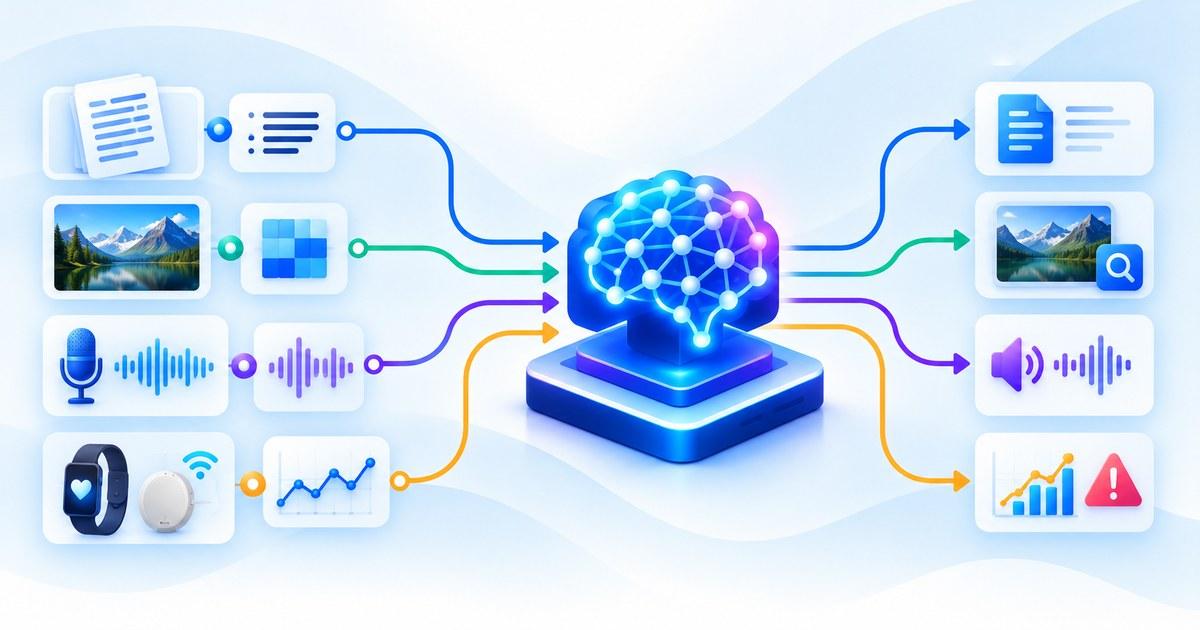

Section 1: Software Is Becoming Intelligent by Default
Software has always evolved to meet changing user expectations. In the early days of enterprise computing, applications were designed primarily to digitize manual processes and improve operational efficiency. As internet adoption accelerated, software shifted toward delivering connected experiences through web applications and cloud-based platforms. The mobile revolution then transformed how users interacted with technology, making accessibility and convenience central to product design. More recently, cloud-native architectures, DevOps practices, and microservices enabled organizations to build applications that were faster, more scalable, and easier to maintain. Today, another transformation is redefining software engineering, the rise of artificial intelligence.
Unlike previous technological shifts that focused primarily on infrastructure or application delivery, artificial intelligence is changing the very nature of software itself. Applications are no longer expected to simply execute commands or automate predefined workflows. Instead, users increasingly expect software to understand natural language, anticipate needs, generate insights, personalize experiences, and assist with decision-making. Whether someone is writing code, managing customer relationships, analyzing financial reports, creating marketing campaigns, or searching enterprise knowledge, AI has become an integral part of how modern software delivers value.
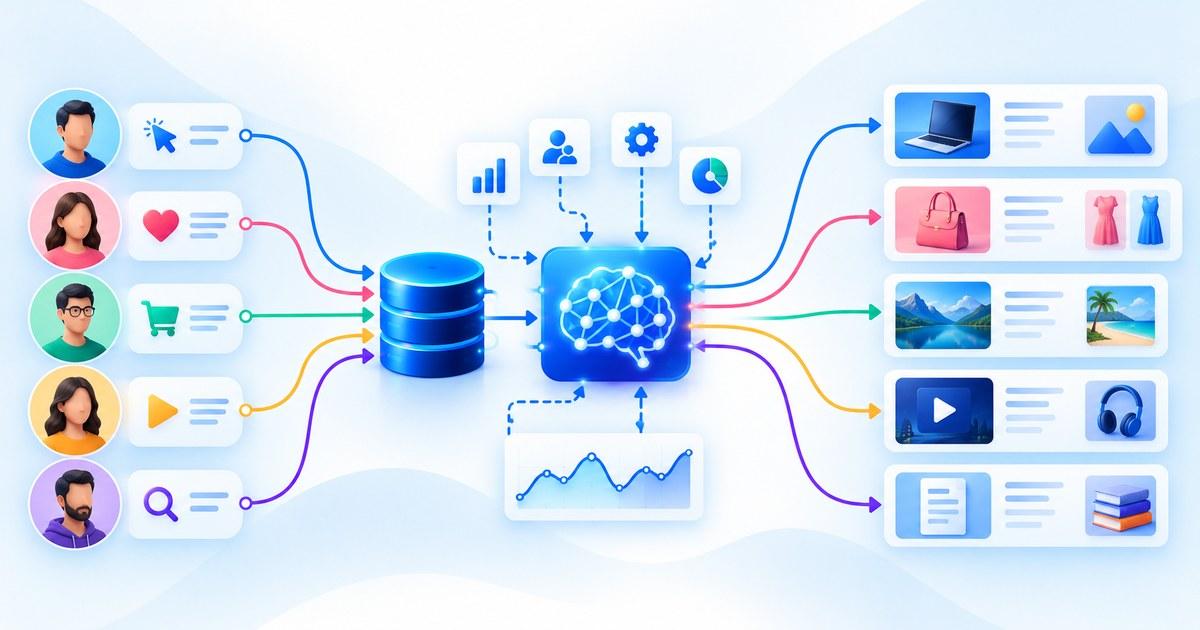
This transformation represents more than the addition of a few intelligent features. Software is gradually becoming intelligent by default. New products are being designed with AI capabilities embedded into their core architecture rather than added as optional enhancements. Organizations launching new SaaS platforms now consider conversational interfaces, recommendation engines, predictive analytics, document summarization, intelligent search, and workflow automation as standard capabilities instead of premium differentiators. Customers increasingly assume these features will exist because they have become accustomed to AI-enhanced experiences across nearly every digital platform they use.
The rapid adoption of Generative AI has accelerated this trend dramatically. Large Language Models have made it possible for software applications to understand context, generate high-quality content, summarize complex information, answer questions, and automate tasks that previously required human expertise. As these capabilities become more affordable and accessible through cloud APIs, organizations of every size are integrating AI into existing products while designing entirely new applications around intelligent interactions. This shift is fundamentally changing the skills required to build software because traditional development alone is no longer sufficient to meet evolving customer expectations.
AI-Native Applications Are Redefining Software Development
The emergence of AI-native applications marks one of the most significant changes in modern software engineering. Unlike traditional applications that perform predefined operations based on user input, AI-native products continuously interpret information, adapt to user behavior, and generate intelligent outputs that improve productivity and decision-making. Artificial intelligence is no longer supporting the application, it has become central to how the application functions.
This shift is evident across enterprise software, where organizations are redesigning products around conversational interfaces, intelligent automation, and contextual assistance. Instead of navigating complex menus or manually searching through documentation, users increasingly interact with software using natural language. Employees can ask enterprise assistants to summarize reports, retrieve company policies, generate meeting notes, analyze business data, or draft emails without needing specialized technical knowledge. The software understands intent rather than merely responding to predefined commands.
One of the strongest examples of this transformation is Microsoft's integration of AI across its productivity ecosystem. AI-powered capabilities have become deeply embedded within applications such as Microsoft 365, enabling users to draft documents, summarize lengthy email threads, generate presentations, analyze spreadsheets, and automate repetitive administrative work. Rather than existing as separate AI products, these capabilities operate seamlessly within applications that millions of professionals already use every day. This approach demonstrates how AI is evolving into a standard software capability instead of an independent feature.
Similarly, Salesforce has integrated generative AI throughout its customer relationship management platform to help sales representatives, marketers, and customer support teams work more efficiently. AI assists with drafting personalized customer communications, summarizing interactions, forecasting sales opportunities, and providing actionable recommendations based on customer data. These intelligent capabilities enhance productivity while allowing employees to focus on higher-value work instead of repetitive administrative tasks.
For readers interested in understanding what happens behind the scenes to transform intelligent ideas into production-ready applications, "The Untold Story Behind Every Successful AI Product" explores the engineering, infrastructure, and product strategies that power today's most successful AI-driven software.
Key Takeaway
Software is entering an era where intelligence is no longer optional, it is expected. AI-native applications, generative AI, recommendation engines, AI-powered productivity tools, and intelligent copilots are reshaping customer expectations across every industry. Organizations that embrace this transformation will build products that are more adaptive, efficient, and valuable, while those that treat AI as an afterthought risk falling behind. As software becomes intelligent by default, AI Engineers will become an essential part of every development team, ensuring that intelligent capabilities are integrated seamlessly into the products of the future.
Section 2: Why Every Development Team Will Need an AI Engineer
The role of an AI Engineer has evolved far beyond building machine learning models. Just a few years ago, AI specialists primarily focused on developing algorithms, training models, and improving prediction accuracy. Today, however, organizations expect AI Engineers to bridge the gap between artificial intelligence and software engineering by integrating intelligent capabilities directly into production applications. As AI becomes embedded in almost every digital product, companies no longer need isolated AI research teams, they need engineers who can collaborate with software developers, DevOps professionals, product managers, and designers to build intelligent applications that deliver measurable business value.
This shift is transforming the structure of modern engineering organizations. Traditional software teams were built around frontend developers creating user interfaces, backend engineers managing business logic, DevOps specialists maintaining infrastructure, QA engineers ensuring quality, and product managers defining customer requirements. While these roles remain essential, intelligent software introduces new technical challenges that require dedicated expertise. AI Engineers are becoming the specialists responsible for designing, integrating, deploying, and maintaining AI capabilities throughout the software development lifecycle.
Unlike data scientists, who often focus on experimentation and model development, AI Engineers concentrate on production systems. Their objective is to ensure that AI features operate reliably under real-world conditions while meeting enterprise expectations for scalability, security, performance, and maintainability. They work alongside software engineers rather than separately from them, ensuring that artificial intelligence becomes an integrated component of the application instead of an isolated service.
As organizations increasingly develop AI-native products, this collaboration becomes indispensable. Every intelligent feature, whether it is a chatbot, recommendation engine, document summarizer, fraud detection system, predictive analytics platform, or enterprise copilot, requires seamless integration with existing software architecture. AI Engineers understand both machine learning and software engineering, making them uniquely positioned to connect intelligent models with the applications that customers use every day.
AI Engineers Connect Artificial Intelligence with Modern Software Development
One of the most significant responsibilities of an AI Engineer is enabling collaboration across different engineering disciplines. Intelligent software cannot be developed in isolation because AI capabilities affect nearly every component of an application. Frontend developers create conversational interfaces and interactive user experiences, backend engineers develop APIs and business logic, DevOps teams manage cloud infrastructure, and product managers define customer requirements. AI Engineers work across all these teams to ensure that machine learning capabilities integrate naturally into the overall product architecture.
The rapid adoption of Large Language Models (LLMs) has significantly expanded this responsibility. Modern software products increasingly rely on LLMs to generate content, answer questions, summarize documents, assist developers, and automate workflows. Integrating these models into enterprise applications requires much more than sending prompts to an external API. AI Engineers evaluate model capabilities, optimize prompts, manage inference costs, monitor response quality, and ensure generated outputs align with business objectives. Their expertise enables organizations to transform general-purpose language models into reliable business solutions.
An equally important area is prompt engineering, which has become a practical engineering discipline rather than a simple experimentation technique. Well-designed prompts improve accuracy, reduce hallucinations, maintain consistent formatting, and guide models toward producing responses that satisfy enterprise requirements. AI Engineers continuously refine prompts based on user feedback and production performance, ensuring that AI systems remain reliable as business needs evolve.
Many enterprise AI applications also depend on Retrieval-Augmented Generation (RAG) to improve response accuracy. Instead of relying solely on information learned during model training, RAG systems retrieve relevant data from internal knowledge bases, documentation, or enterprise databases before generating responses. This architecture allows organizations to build AI assistants capable of answering questions using current company information while reducing hallucinations and improving trust. Designing and optimizing these retrieval pipelines has become one of the core responsibilities of AI Engineers because it combines information retrieval, vector databases, API integration, and machine learning into a unified production system.
Production AI Requires Engineering Beyond Machine Learning
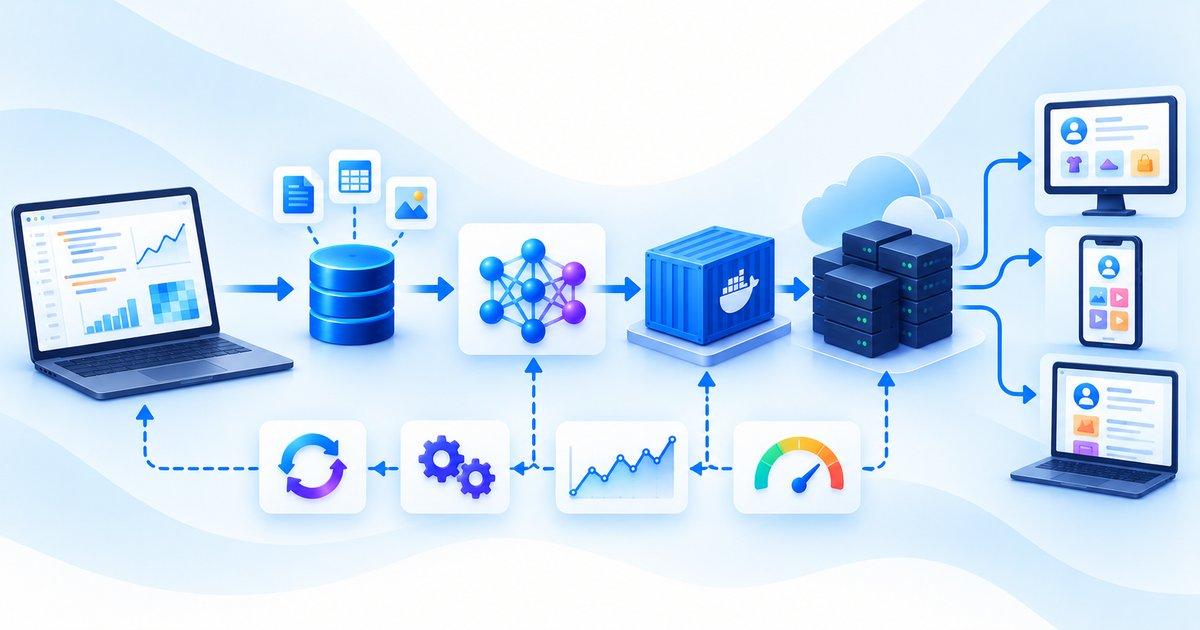
Building an intelligent feature is only one part of an AI Engineer's responsibility. Once AI capabilities reach production, they require continuous maintenance, monitoring, and optimization to remain effective. This is where MLOps becomes essential. Much like DevOps transformed traditional software development, MLOps provides the processes and tools necessary to deploy, monitor, version, retrain, and manage machine learning models throughout their lifecycle. AI Engineers use MLOps practices to automate deployments, manage model updates, and ensure that AI systems remain stable as applications evolve.
Production deployment also introduces challenges related to scalability and reliability. AI Engineers collaborate closely with DevOps teams to ensure that models operate efficiently under varying workloads while maintaining low latency and high availability. Whether an AI-powered application serves hundreds of users or millions, intelligent capabilities must respond consistently without compromising performance. Achieving this balance requires expertise in cloud infrastructure, containerization, orchestration, and distributed computing.
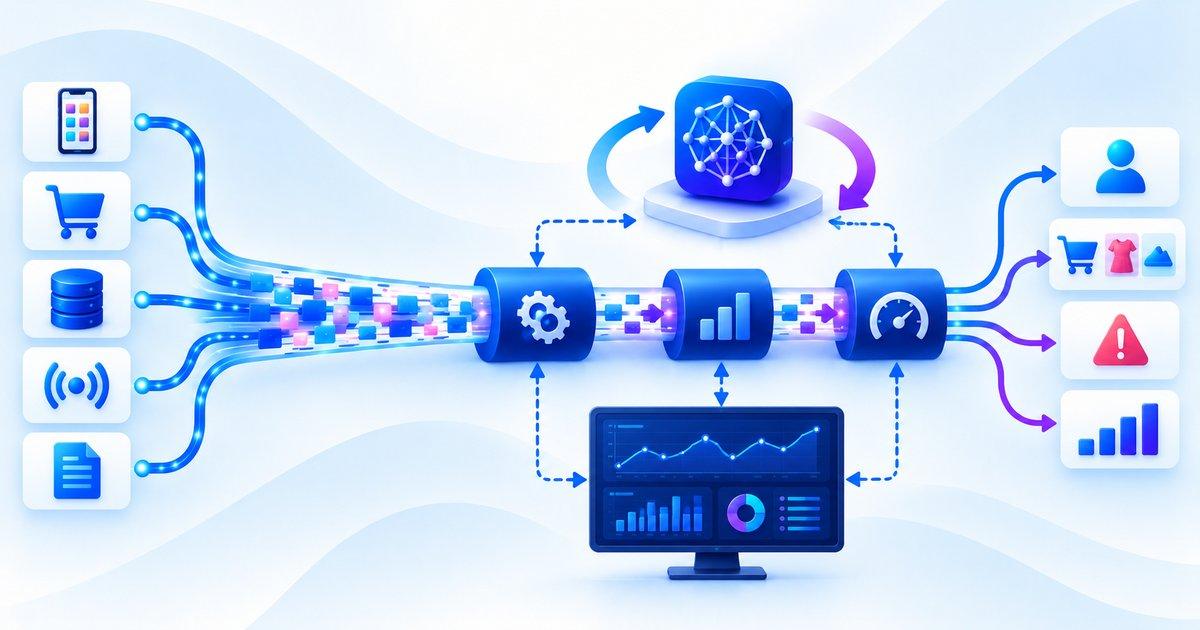
Another critical responsibility is AI monitoring. Unlike traditional software, AI systems can degrade over time because customer behavior, business conditions, and data distributions change continuously. AI Engineers monitor model accuracy, response latency, hallucination rates, user satisfaction, infrastructure performance, and operational health to detect issues before they affect customers. Continuous monitoring enables proactive improvements while ensuring AI systems remain aligned with evolving business requirements.
To understand how modern engineering teams automate, deploy, and manage these intelligent systems at enterprise scale, readers should also explore "The Engineering Behind Autonomous AI Workflows," which provides a deeper look into the infrastructure and engineering practices powering production AI.
Key Takeaway
AI Engineers are becoming the connective tissue of modern software teams. Their expertise spans LLM integration, prompt engineering, Retrieval-Augmented Generation, AI APIs, MLOps, production deployment, monitoring, and cross-functional collaboration. As organizations embed intelligence into every software product, AI Engineers will play a central role in ensuring these systems are reliable, scalable, and aligned with business goals, making them indispensable members of every development team by 2030.
Section 3: The Skills That Will Define Tomorrow's Software Engineers
The software engineer of 2030 will look very different from the software engineer of today. While expertise in programming languages, algorithms, system design, and software architecture will remain fundamental, these skills alone will no longer be enough to build the intelligent applications that businesses and customers increasingly expect. Artificial intelligence is changing not only the products developers build but also the knowledge required to build them. As AI becomes an integral part of modern software, engineers will need to combine traditional software development expertise with machine learning, cloud technologies, data engineering, and product thinking.
This evolution does not mean every software engineer must become an AI researcher or develop new machine learning algorithms from scratch. Instead, the future belongs to engineers who understand how to integrate, deploy, optimize, and manage AI capabilities within production software. Organizations are looking for professionals who can connect Large Language Models with enterprise systems, build scalable AI-powered applications, ensure secure deployments, and continuously improve intelligent features based on customer feedback. In many ways, AI is becoming another layer of the software stack, and tomorrow's engineers will need to understand that layer as thoroughly as they understand databases, APIs, and cloud infrastructure today.
The rapid pace of AI innovation also means technical skills can no longer remain static. Every year introduces more capable foundation models, improved development frameworks, better deployment tools, and new approaches to solving enterprise challenges. Engineers who embrace continuous learning will remain valuable because they can adapt to emerging technologies without losing sight of sound engineering principles. Those who rely solely on existing programming knowledge may find themselves struggling to contribute to products that increasingly depend on intelligent capabilities.
Technical Expertise Will Extend Beyond Traditional Programming
Programming will remain at the heart of software engineering, but the technologies surrounding programming are expanding rapidly. Python has become one of the most important languages for AI development because of its extensive ecosystem of machine learning libraries, data processing tools, and AI frameworks. While languages such as Java, C#, JavaScript, Go, and Rust will continue powering enterprise applications, software engineers who understand Python gain the flexibility to work across both traditional software systems and AI-driven applications.
Beyond programming languages, engineers will need a strong understanding of machine learning fundamentals. They do not necessarily need to design complex neural network architectures, but they should understand concepts such as supervised learning, embeddings, model evaluation, inference, overfitting, and data quality. This foundational knowledge enables developers to make informed engineering decisions when integrating AI into production systems while collaborating effectively with AI specialists.
Perhaps the most transformative skill is understanding Large Language Models (LLMs). As conversational AI becomes embedded in enterprise applications, engineers must know how LLMs process prompts, generate responses, manage context windows, and interact with external knowledge sources. Equally important is learning how to optimize prompts, evaluate model outputs, and select the appropriate models for different business scenarios instead of assuming that larger models always produce better outcomes.
Many enterprise AI applications also depend on vector databases, which have become essential for Retrieval-Augmented Generation (RAG). Unlike traditional relational databases, vector databases store semantic representations of information, enabling AI systems to retrieve relevant documents based on meaning rather than exact keywords. Engineers who understand embeddings, similarity search, and vector indexing will be well positioned to build enterprise AI assistants capable of delivering accurate, context-aware responses.
Business Thinking Will Differentiate Great AI Engineers
While technical expertise forms the foundation of AI engineering, the most successful professionals will distinguish themselves through their understanding of business problems and customer needs. Organizations do not invest in artificial intelligence simply to demonstrate advanced technology, they invest because AI helps improve productivity, reduce costs, automate workflows, and enhance customer experiences. Engineers who understand these business objectives create solutions that generate measurable value rather than impressive demonstrations.
This broader perspective requires familiarity with MLOps, which ensures AI systems remain reliable after deployment. Engineers must understand model versioning, automated testing, monitoring, retraining, and continuous deployment so that intelligent applications continue performing effectively as business environments evolve. Rather than viewing deployment as the final step, tomorrow's engineers will treat AI systems as continuously evolving products that require ongoing optimization.
Growing enterprise adoption also makes AI security an essential competency. AI applications increasingly process sensitive customer information, financial records, healthcare data, and proprietary business knowledge. Engineers therefore need to understand secure API design, access control, encryption, prompt injection protection, and responsible handling of confidential information. Security will become a standard engineering responsibility rather than a specialized function performed only by dedicated security teams.
Alongside security comes the importance of AI governance. Regulatory expectations surrounding artificial intelligence continue to evolve, requiring organizations to implement transparency, accountability, documentation, and compliance throughout the AI lifecycle. Engineers who understand governance principles will help organizations deploy AI responsibly while reducing operational and legal risks.
To better understand why business knowledge is becoming just as valuable as technical expertise in AI careers, readers should also explore "The Business of AI: What Every ML Engineer Should Know Beyond Coding," which examines how successful AI professionals combine engineering excellence with strategic thinking to build impactful enterprise solutions.
Key Takeaway
The software engineers who thrive in the AI-first era will be those who combine strong programming skills with expertise in machine learning, Large Language Models, vector databases, AI System Design, cloud platforms, MLOps, security, governance, and product thinking. As AI becomes a standard component of modern software, success will depend not only on technical excellence but also on the ability to understand business challenges, collaborate across teams, and continuously adapt to an evolving technological landscape.
Section 4: Preparing for an AI-First Engineering Future
The shift toward AI-first software development is no longer a prediction, it is already underway. Organizations across industries are redesigning products around intelligent capabilities, investing heavily in AI infrastructure, and restructuring engineering teams to support the growing demand for AI-powered applications. By 2030, AI will be embedded into nearly every enterprise platform, customer-facing application, and internal productivity tool. As a result, software engineers who proactively prepare for this transformation will find themselves leading some of the most innovative projects in the technology industry.
Preparing for an AI-first future is not about abandoning traditional software engineering. Strong knowledge of algorithms, software architecture, databases, distributed systems, and cloud computing will remain indispensable. What will change is how these skills are applied. Future engineers will use artificial intelligence to accelerate development, automate repetitive work, enhance user experiences, and solve increasingly complex business problems. The engineers who thrive will be those who combine their existing software expertise with AI capabilities instead of viewing them as separate disciplines.
One encouraging aspect of this transformation is that the journey into AI engineering has become significantly more accessible. The availability of open-source models, cloud-based AI services, developer frameworks, and online learning resources allows engineers to build sophisticated AI applications without requiring access to large research laboratories or expensive computing infrastructure. Success depends less on academic specialization and more on developing practical experience with production-ready AI systems.
Rather than attempting to master every emerging AI technology, software engineers should focus on building a structured learning roadmap that gradually expands both technical expertise and business understanding. Organizations increasingly value engineers who can solve real-world problems with AI, collaborate effectively across teams, and deliver measurable business outcomes. These qualities are developed through consistent practice rather than isolated learning.
Building Practical Experience Creates Career Opportunities
The most effective way to prepare for an AI-first engineering career is to move beyond tutorials and begin building production AI projects. While online courses provide valuable theoretical knowledge, employers increasingly evaluate candidates based on their ability to solve practical business challenges. Building an AI-powered document assistant, customer support chatbot, recommendation engine, intelligent search platform, fraud detection system, or workflow automation tool demonstrates far more than an understanding of machine learning concepts. It shows that an engineer can design, integrate, deploy, and maintain intelligent systems within realistic production environments.
These projects should reflect complete software engineering practices rather than isolated AI experiments. Engineers should integrate cloud services, APIs, authentication, monitoring, logging, version control, and deployment pipelines while ensuring applications remain scalable and maintainable. Demonstrating end-to-end engineering capabilities makes portfolios significantly more valuable because employers seek professionals capable of contributing throughout the entire product lifecycle.
Contributing to open-source AI projects is another powerful way to accelerate professional growth. Open-source communities expose engineers to production-quality codebases, collaborative development practices, and emerging AI frameworks used throughout the industry. Whether improving documentation, fixing bugs, developing new features, or optimizing existing systems, these contributions demonstrate technical ability while helping engineers learn directly from experienced professionals working on large-scale AI projects.
A strong AI portfolio has become one of the most effective tools for career advancement. Rather than showcasing numerous small experiments, engineers should develop a few comprehensive projects that demonstrate architectural thinking, problem-solving, and production readiness. Employers are increasingly interested in understanding how candidates approach system design, integrate AI into existing software, evaluate model performance, and optimize applications for reliability and scalability. Well-documented portfolios provide tangible evidence of these capabilities while distinguishing candidates in a competitive job market.
Continuous Learning Will Shape the Next Generation of AI Leaders
Artificial intelligence is evolving faster than almost any previous technology in software engineering. New foundation models, development frameworks, deployment platforms, and enterprise AI solutions emerge at an extraordinary pace. Consequently, successful engineers cannot rely solely on knowledge acquired during university education or early career experience. Continuous experimentation has become an essential professional habit, enabling engineers to evaluate emerging technologies, understand their practical applications, and determine how they can improve existing products.
Participation in AI communities further accelerates learning by exposing engineers to real-world implementation challenges and innovative engineering practices. Conferences, technical meetups, developer forums, open-source communities, research publications, and engineering blogs provide valuable opportunities to exchange ideas, learn from industry experts, and stay informed about rapidly changing technologies. Many breakthrough engineering techniques gain widespread adoption through these collaborative communities long before they appear in formal training programs.
However, technical knowledge alone will not define successful AI Engineers. Organizations increasingly expect engineers to solve enterprise problems rather than simply implement sophisticated algorithms. Understanding customer workflows, identifying operational inefficiencies, collaborating with business stakeholders, and measuring product outcomes will become just as important as selecting the appropriate machine learning model. Engineers who consistently align technical solutions with business objectives will contribute greater strategic value to their organizations and become trusted advisors during AI transformation initiatives.
This broader perspective naturally creates significant career growth opportunities. As AI becomes embedded across software organizations, experienced engineers will progress beyond implementation roles into positions such as AI Technical Lead, AI Solutions Architect, Staff AI Engineer, Engineering Manager, Head of AI Engineering, and Chief AI Officer. These leadership positions require a combination of technical expertise, strategic thinking, communication skills, and cross-functional collaboration. Engineers who invest in these capabilities today will be well positioned to lead tomorrow's AI-driven organizations.
For readers looking to bridge the gap between foundational machine learning knowledge and enterprise-ready engineering skills, "Research to Real-World ML Engineering: Bridging the Gap" provides valuable insights into how engineers can transition from academic concepts to building scalable, production-grade AI systems that solve real business problems.
Key Takeaway
Preparing for an AI-first future requires more than learning machine learning algorithms. Engineers should build production AI projects, contribute to open-source communities, develop strong portfolios, pursue relevant certifications, experiment continuously with emerging technologies, and cultivate a deep understanding of enterprise problem-solving. By combining technical excellence with business awareness and a commitment to continuous learning, software engineers can position themselves to become the AI leaders who will shape the future of software development well beyond 2030.
Conclusion
The software engineering industry has experienced numerous technological transformations over the past two decades, but few have the potential to reshape development teams as profoundly as artificial intelligence. Just as cloud computing, mobile development, DevOps, and microservices became fundamental components of modern software engineering, AI is rapidly evolving from an emerging capability into an industry standard. By 2030, intelligent features will no longer be viewed as optional enhancements that differentiate premium products. Instead, they will become expected capabilities integrated into nearly every software application, regardless of industry or business size. As this transformation accelerates, the presence of AI Engineers within software teams will become as commonplace as frontend developers, backend engineers, and DevOps specialists are today.
Throughout this article, we explored how software itself is becoming intelligent by default. Modern applications are increasingly expected to understand natural language, automate repetitive tasks, personalize user experiences, generate insights, and assist users in making better decisions. Organizations such as Microsoft and Salesforce have already demonstrated how artificial intelligence can be seamlessly integrated into enterprise software to improve productivity and customer experiences. These examples represent the beginning of a much broader shift in software development, where AI capabilities become embedded into the core architecture of digital products rather than existing as isolated features.
This evolution naturally changes the composition of engineering teams. AI Engineers are no longer specialists working exclusively on machine learning experiments or research initiatives. They have become cross-functional engineers responsible for integrating Large Language Models, Retrieval-Augmented Generation (RAG), AI APIs, production deployment pipelines, MLOps practices, monitoring systems, and enterprise infrastructure into modern software products. Their ability to collaborate with frontend developers, backend engineers, DevOps specialists, product managers, and business stakeholders makes them indispensable contributors throughout the entire software development lifecycle. As organizations continue adopting AI-native architectures, this collaboration will become even more critical.
Frequently Asked Questions (FAQs)
1. Why will every software team need an AI Engineer by 2030?
As AI becomes a standard feature in modern software, organizations will need AI Engineers to integrate intelligent capabilities, deploy production AI systems, optimize performance, and maintain reliable AI-powered applications across every stage of the software lifecycle.
2. What does an AI Engineer do?
An AI Engineer designs, develops, deploys, and maintains AI-powered software solutions. Their responsibilities include integrating Large Language Models, building Retrieval-Augmented Generation (RAG) systems, managing AI infrastructure, monitoring production models, and ensuring AI applications remain scalable and secure.
3. How is an AI Engineer different from a Software Engineer?
Software Engineers primarily build application logic, user interfaces, and backend systems, while AI Engineers specialize in embedding artificial intelligence into those applications. AI Engineers combine software engineering skills with expertise in machine learning, MLOps, AI deployment, and production infrastructure.
4. What skills are required to become an AI Engineer?
Essential skills include Python, machine learning fundamentals, Large Language Models (LLMs), Retrieval-Augmented Generation (RAG), vector databases, cloud computing, AI System Design, APIs, MLOps, security, and strong software engineering principles.
5. Will AI replace software developers?
No. AI is expected to enhance software development rather than replace developers. It automates repetitive tasks, assists with coding, and improves productivity, allowing engineers to focus on architecture, innovation, problem-solving, and product development.
6. Which programming languages should aspiring AI Engineers learn?
Python is the most widely used language for AI development because of its extensive ecosystem of machine learning libraries. However, languages such as Java, JavaScript, C#, Go, and Rust remain valuable for building production software and integrating AI into enterprise applications.
7. What is Retrieval-Augmented Generation (RAG)?
Retrieval-Augmented Generation (RAG) combines Large Language Models with external knowledge sources. Before generating a response, the system retrieves relevant information from databases or documents, helping improve accuracy while reducing hallucinations.
8. Why are vector databases important for AI applications?
Vector databases store semantic representations of data, enabling AI systems to retrieve information based on meaning instead of exact keyword matches. They are essential for building enterprise search, recommendation systems, and RAG-based AI assistants.
9. What is MLOps, and why is it important?
MLOps is the practice of managing machine learning models throughout their lifecycle. It includes deployment, monitoring, versioning, retraining, testing, and automation, ensuring AI systems remain reliable, scalable, and maintainable in production environments.
10. How do AI Engineers collaborate with software development teams?
AI Engineers work closely with frontend developers, backend engineers, DevOps specialists, product managers, UX designers, and business stakeholders to integrate AI capabilities into software products while ensuring performance, security, and scalability.
11. Which industries are hiring AI Engineers?
AI Engineers are in demand across industries including healthcare, finance, cybersecurity, retail, manufacturing, education, telecommunications, logistics, automotive, media, and enterprise software as organizations continue integrating AI into business operations.
12. How can software engineers transition into AI Engineering?
Software engineers can transition by learning Python, machine learning fundamentals, Large Language Models, cloud computing, AI frameworks, and MLOps while building production AI projects, contributing to open-source initiatives, and creating a portfolio that demonstrates practical AI development experience.
13. Are AI certifications useful for career growth?
Yes. Certifications from cloud providers and recognized AI platforms can strengthen technical credibility and demonstrate structured learning. However, employers generally value practical project experience and production-ready AI portfolios alongside certifications.
14. What is the future of AI Engineering careers?
The demand for AI Engineers is expected to grow rapidly as organizations adopt AI-first software strategies. Career opportunities include AI Engineer, Machine Learning Engineer, AI Solutions Architect, Staff AI Engineer, AI Technical Lead, AI Engineering Manager, and Chief AI Officer.
15. How can beginners start building production AI projects?
Beginners should start by creating real-world applications such as AI chatbots, document summarizers, recommendation systems, enterprise search tools, or workflow automation platforms. Integrating cloud services, APIs, authentication, monitoring, and deployment pipelines into these projects helps build practical skills that employers actively seek.