Section 1: Why the Next Generation of Neural Networks Is Moving Beyond Transformers
Why Transformers Became the Dominant Neural Network Architecture
Transformers fundamentally changed deep learning by introducing an attention-based mechanism that allows models to identify relationships between different parts of an input sequence. Unlike traditional recurrent neural networks, which process sequential information through evolving hidden states, Transformers can process training sequences in parallel and use self-attention to determine which tokens are relevant to one another. Their architecture combines query, key, and value representations to calculate attention scores, allowing each token to incorporate contextual information from other positions in the sequence. This capability made Transformers particularly effective for natural language processing, where understanding the relationship between words, phrases, and distant parts of a document is essential.
The Transformer architecture typically combines multi-head self-attention, positional information, feed-forward neural networks, residual connections, and normalization layers to construct increasingly sophisticated representations. Multi-head attention allows a model to learn different types of relationships simultaneously, while positional encodings or other positional mechanisms help preserve information about token order. These components provide the foundation for large language models, code-generation systems, document understanding applications, and several multimodal architectures that process combinations of text, images, and other input modalities. Their ability to scale through larger datasets, model parameters, and compute resources contributed significantly to their widespread adoption across modern AI applications.
For software engineers, the important architectural advantage is that Transformers provide a flexible mechanism for modeling contextual relationships without requiring every sequence-processing operation to follow a strictly sequential execution pattern. This makes them suitable for workloads involving language understanding, semantic search, code completion, and long-range contextual reasoning, where information from distant input positions can influence the current prediction. However, their computational characteristics also introduce limitations as sequence lengths increase and applications demand longer contexts, faster inference, and lower infrastructure costs, creating opportunities for alternative architectures that represent and process information differently.
The Computational Limitations of Self-Attention
The primary computational challenge associated with conventional dense self-attention is its quadratic scaling with sequence length. When an input contains (n) tokens, the attention mechanism calculates relationships between token positions, producing an attention matrix with dimensions (n \times n) for each attention head. Consequently, the computation and memory requirements associated with the attention matrix grow approximately as (O(n^2)), making long sequences increasingly expensive to process as their length increases. For example, increasing a sequence from 4,000 to 8,000 tokens approximately quadruples the number of token-to-token attention interactions, which can significantly increase the computational burden of processing long documents or extended conversation histories.
This limitation becomes particularly important during inference because autoregressive Transformer models frequently maintain a key-value cache containing representations from previously processed tokens. As the generated sequence grows, the cache consumes additional memory, and serving systems must allocate sufficient capacity to support concurrent requests and long-context generation. An application that handles thousands of short requests may operate efficiently with conventional attention, while another application processing extremely long documents, genomic sequences, or continuous data streams may encounter substantial memory and throughput constraints. These requirements can increase infrastructure costs and limit the number of concurrent requests that a production serving system can support.
Several optimization techniques have improved the practical efficiency of Transformer inference and training without completely eliminating the computational characteristics of dense attention. FlashAttention, for example, uses memory-efficient tiling strategies to reduce the need to materialize large attention matrices in high-bandwidth memory, while grouped-query attention and multi-query attention can reduce key-value cache requirements during inference. Other techniques, including sliding-window attention and sparse attention, restrict which token positions interact with one another, reducing computation for suitable workloads. Nevertheless, these approaches involve implementation and architectural trade-offs, and the fundamental cost of conventional dense attention remains an important consideration when processing very long sequences or operating under strict hardware constraints.
What Software Engineers Should Evaluate Before Choosing an Architecture
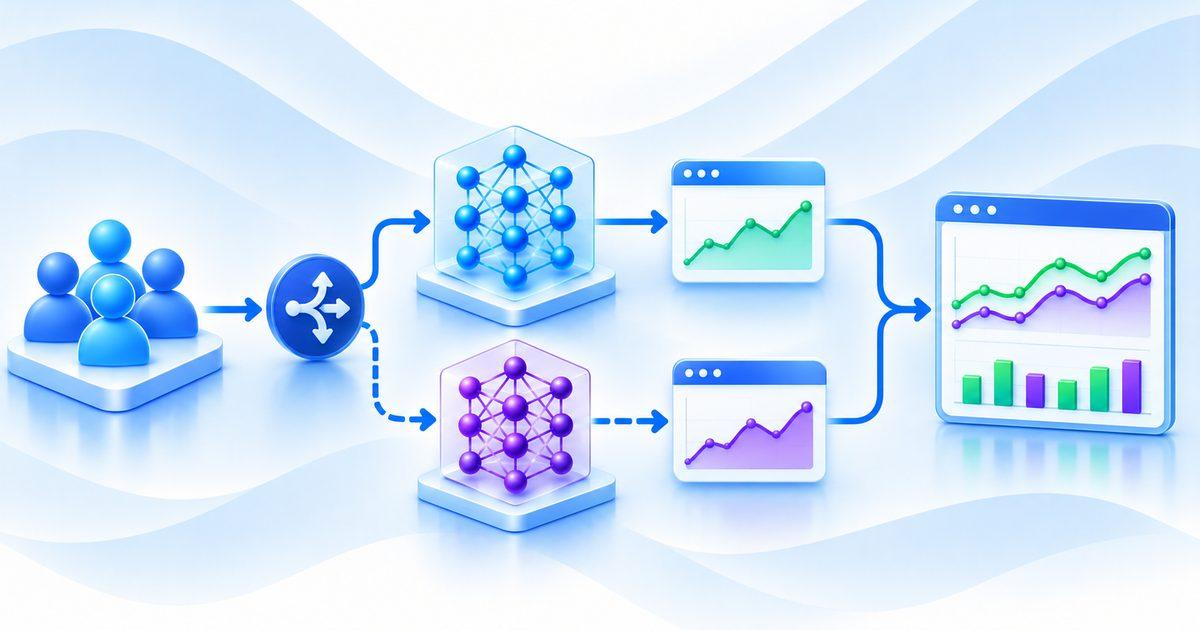
Selecting a neural network architecture requires software engineers to understand the relationship between the problem structure and the computational characteristics of the available models. Sequence length, input dimensionality, data relationships, streaming requirements, memory availability, and prediction frequency all influence which architecture may be appropriate. A long-context language-processing application has different requirements from a recommendation platform built around connected users and products, while a scientific simulation workload may require a model that learns relationships between continuous physical fields. Engineers should therefore begin by identifying how information is structured and what the model must learn before comparing architecture families.
Performance evaluation should consider more than theoretical computational complexity or the number of model parameters. Training time, time to convergence, inference latency, throughput, peak memory consumption, energy usage, and deployment cost can produce substantially different conclusions about the suitability of an architecture. A model with favorable theoretical complexity may still perform poorly in practice if its implementation lacks optimized kernels or does not use the target hardware efficiently. Conversely, a Transformer with optimized attention kernels may outperform a theoretically more efficient alternative for certain sequence lengths, batch sizes, and deployment configurations. These differences make representative benchmarking essential before selecting an architecture for production.
The decision should also account for implementation maturity and long-term maintainability, since newer architectures may have limited framework support, specialized hardware requirements, fewer optimized serving runtimes, or less established monitoring and debugging tools. The trade-offs discussed in “Model Complexity vs Business Value: Finding the Right Level of ML” are particularly relevant because adopting a more sophisticated architecture is justified only when its additional capabilities produce meaningful value relative to its computational and operational costs. Software engineers should compare candidate architectures against strong baselines using representative datasets and production-like workloads, while evaluating accuracy, reliability, inference efficiency, and infrastructure requirements together. This approach prevents architectural novelty from becoming the primary selection criterion and keeps the engineering decision focused on the actual requirements of the application.
Key Takeaway
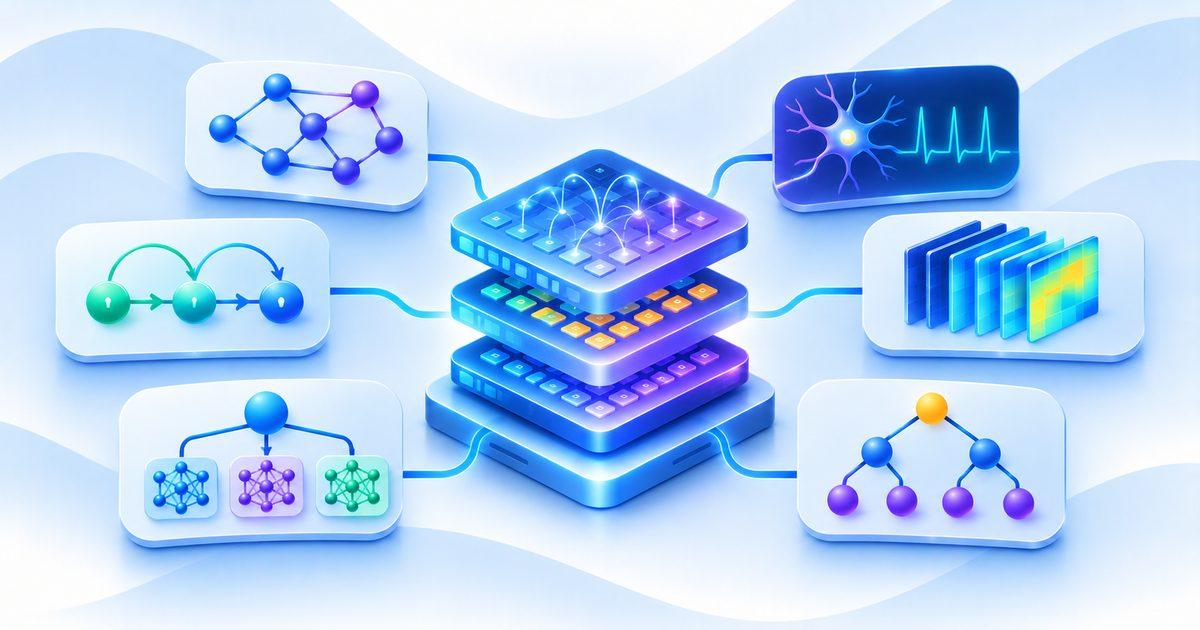
Transformers remain powerful neural network architectures because self-attention provides an effective way to model contextual relationships across sequences, but their computational and memory requirements create challenges for certain long-context and resource-constrained workloads. State-space models, recurrent architectures, long convolutions, graph neural networks, neural operators, and continuous-time models introduce alternative ways to represent and process information, each with different strengths and limitations. For software engineers, the important objective is to understand these architectural differences and evaluate them against real workload requirements, measurable performance, hardware compatibility, and production costs rather than assuming that a newer architecture is automatically better than a Transformer.
Section 2: State-Space Models, Recurrent Architectures, and Efficient Sequence Modeling
Structured State-Space Models (SSMs): Understanding the Foundation
Structured State-Space Models (SSMs) provide an alternative approach to sequence modeling by representing information through an evolving internal state rather than explicitly calculating relationships between every pair of tokens. Their mathematical foundation comes from state-space systems used in control theory and signal processing, where an internal state evolves over time in response to an external input and generates an observable output. In a simplified continuous-time representation, the system can be described through equations such as:
[
\frac{dh(t)}{dt}=Ah(t)+Bx(t)
]
[
y(t)=Ch(t)+Dx(t)
]
Here, (x(t)) represents the incoming signal, (h(t)) represents the internal state, (A) controls state evolution, (B) determines how inputs influence the state, (C) maps the state to the output, and (D) represents a direct input-to-output contribution. When these systems are adapted for machine learning, the continuous equations are discretized so that they can process sequences as a series of computational steps, allowing the model to maintain information from previous inputs through a structured state representation.
The major advantage of this formulation is that a model can summarize historical information in its hidden state instead of retaining every previous token representation for direct pairwise comparison. Earlier structured state-space architectures, including S4, demonstrated how carefully structured mathematical operations could make long-sequence processing computationally efficient. These models attracted attention in areas such as audio processing, time-series analysis, and long-range sequence modeling because they offered an alternative to the memory requirements associated with conventional attention mechanisms. However, their initial limitations in handling input-dependent selection motivated further research into architectures that could dynamically determine which information should influence the evolving state.
Mamba and Mamba-2: Selective State-Space Architectures
Mamba introduced a significant development in state-space modeling by making important state-space parameters dependent on the input sequence, allowing the model to selectively determine which information should be retained or propagated. Earlier structured state-space approaches generally relied on parameters that were fixed or less directly conditioned on individual input tokens, whereas Mamba uses input-dependent selection mechanisms to adapt its state updates according to the information being processed. This enables the architecture to distinguish between relevant and less useful information as a sequence develops, making it better suited to information-dense tasks such as language modeling, where the importance of a token depends heavily on its context.
The architecture combines state-space computation with a hardware-aware selective scan mechanism that allows the model to process sequences efficiently without constructing a conventional quadratic attention matrix. Rather than explicitly calculating all token-to-token interactions, Mamba updates and propagates structured hidden states through its sequence-processing layers, with specialized computation supporting efficient execution on modern accelerators. This design provides a different approach to long-context processing because the model does not need to maintain a full attention relationship between every pair of positions.
Mamba-2 extended this research through Structured State Space Duality (SSD), establishing a mathematical connection between structured state-space computations and certain attention-like matrix operations. This relationship enabled a revised architecture with a core computational formulation designed to improve hardware efficiency while retaining the advantages of state-space processing.
Mamba-style architectures are particularly interesting for applications involving long sequences, including language modeling, audio, genomic data, and continuous information streams, where conventional attention may create significant memory requirements. However, their practical advantages depend on model configuration, sequence characteristics, available hardware, training implementation, and the maturity of optimized kernels. Engineers should also consider architectural expressiveness and task-specific accuracy rather than assuming that linear sequence complexity automatically guarantees better performance than a well-optimized Transformer.
Hyena and Long-Convolution Architectures: Replacing Attention With Structured Filtering
Hyena explores another alternative to self-attention by using long convolutions and data-dependent gating to model relationships across sequence positions. Traditional convolutional neural networks apply filters over local neighborhoods, while long-convolution architectures extend this idea to capture information across much larger portions of a sequence. Hyena combines implicitly parameterized long convolution operators with gating mechanisms that allow the computation to be influenced by the input, creating a data-controlled alternative to conventional token-to-token attention. Instead of generating a complete attention matrix, the architecture applies structured filtering operations to transformed representations, providing a different computational route for capturing long-range dependencies.
The Hyena operator is constructed by combining input projections, convolution operations, and element-wise gating in a sequence of structured transformations. These operations allow information to propagate across long distances while using subquadratic computational approaches, making the architecture particularly relevant to workloads where attention's sequence-length scaling becomes expensive.
For software engineers, the main consideration is understanding how long convolutions differ from recurrent state updates and attention-based interactions when designing sequence-processing systems. State-space models maintain evolving representations of historical information, recurrent architectures repeatedly update compact states, and Hyena uses structured convolutional filtering combined with data-dependent gating to process sequence information. These differences influence memory usage, parallel execution, hardware requirements, and implementation complexity, making architecture selection dependent on the structure and length of the target workload. Long-convolution approaches may be attractive for applications involving large genomic sequences, audio, and other long-context data, but their effectiveness should be established through representative benchmarks rather than theoretical complexity alone.
The broader efficiency principles discussed in “Efficient ML: How to Build High-Performance Models With Less Compute” are relevant when comparing these architecture families because computational efficiency depends on more than parameter count or asymptotic complexity. Engineers should measure actual training throughput, inference latency, memory consumption, kernel performance, and accelerator utilization under realistic sequence lengths and batch sizes before selecting a long-convolution, recurrent, or state-space architecture. This evaluation helps distinguish genuine production advantages from theoretical improvements that may not translate into better performance on the infrastructure available to the engineering team.
Key Takeaway
State-space models, selective architectures such as Mamba, recurrent approaches such as RWKV, retention-based models such as RetNet, and long-convolution architectures such as Hyena demonstrate different ways to process sequences without relying entirely on conventional dense self-attention. Their computational mechanisms range from evolving hidden states and input-dependent state updates to recurrent memory, retention operations, and structured long-range filtering, creating different trade-offs in inference memory, training parallelism, hardware utilization, and model expressiveness. Software engineers should understand these distinctions and benchmark each architecture against appropriate Transformer baselines using representative workloads, because the practical value of an alternative depends on measured accuracy, latency, memory consumption, and deployment requirements.
Section 3: Graph Neural Networks, KANs, Neural Operators, and Liquid Neural Networks
Graph Neural Networks (GNNs): Learning Relationships Between Connected Entities
Traditional neural networks generally process inputs as fixed-dimensional vectors, matrices, or sequences, but many real-world datasets contain relationships between entities that cannot be adequately represented through conventional input structures. Graph Neural Networks (GNNs) address this problem by representing information as a graph consisting of nodes and edges, where nodes represent entities and edges describe their relationships. For example, a financial transaction network can represent customers, bank accounts, and transactions as interconnected entities, allowing a model to examine not only individual transaction characteristics but also the relationships between accounts and other participants in the network.
Most GNN architectures use a message-passing mechanism in which each node collects information from its neighboring nodes and combines that information with its existing representation. During successive layers, information can travel across multiple graph connections, allowing a node to learn contextual representations that incorporate information from increasingly distant parts of the graph. Graph Convolutional Networks (GCNs) aggregate neighborhood information through normalized operations, GraphSAGE introduces neighborhood sampling and aggregation strategies that support larger graphs, while Graph Attention Networks (GATs) use attention mechanisms to assign different importance to neighboring nodes. These approaches provide different methods of learning relational information, making GNNs useful for applications involving fraud detection, recommendation systems, knowledge graphs, molecular property prediction, and social-network analysis.
For software engineers, graph neural networks introduce several practical challenges that involve both model architecture and data infrastructure. Large graphs may contain millions of nodes and edges, making neighborhood sampling, graph partitioning, feature storage, and distributed computation important considerations during training and inference. Deep message-passing architectures can also experience oversmoothing, where node representations become increasingly similar after repeated aggregation, reducing the model's ability to distinguish structurally different entities. Engineers should therefore evaluate graph construction, sampling strategies, neighborhood depth, dynamic relationship updates, and inference latency when deciding whether a GNN is appropriate for a relational learning problem.
Kolmogorov-Arnold Networks (KANs): Learning Through Adaptable Functions
Kolmogorov-Arnold Networks (KANs) explore an alternative to conventional multilayer perceptrons by changing where learnable functions are represented within the network. In a standard MLP, connections generally contain scalar weights, while nonlinear activation functions are applied at the neurons after weighted aggregation. KANs instead place learnable univariate functions on network edges, with node operations combining the outputs of the incoming functions. Their design is inspired by the Kolmogorov-Arnold representation theorem, which establishes a mathematical representation for continuous multivariate functions through compositions and combinations of univariate functions, although the practical KAN architecture is a particular neural implementation rather than a direct guarantee of universal efficiency or superiority.
A common KAN implementation parameterizes learnable edge functions using spline-based representations, allowing the network to adjust the shape of these functions during training. This provides a different form of function approximation from conventional MLPs, where fixed activation functions such as ReLU or GELU are combined with learned linear transformations. Because individual edge functions can be inspected and visualized, KANs may offer useful interpretability opportunities in certain scientific and structured-data applications, particularly when engineers want to investigate how individual input variables contribute to learned relationships. Their potential applications include function approximation, scientific computing, symbolic relationship discovery, and problems where understanding the learned mathematical relationships is important.
However, KANs introduce computational and optimization trade-offs that engineers must consider before adopting them in production systems. Learning and evaluating multiple spline-based functions can increase computational overhead and memory requirements, while the choice of spline representation, grid configuration, regularization, and training procedure can influence model stability and performance. Their effectiveness also depends on dataset characteristics, input dimensionality, noise levels, and the availability of efficient implementations, meaning they should be benchmarked against well-tuned MLPs and other established baselines. Software engineers should treat KANs as an alternative architecture for selected function-approximation problems rather than assuming that their mathematical inspiration makes them universally more accurate or interpretable than conventional neural networks.
Liquid Neural Networks: Adaptive Learning for Continuous-Time Systems
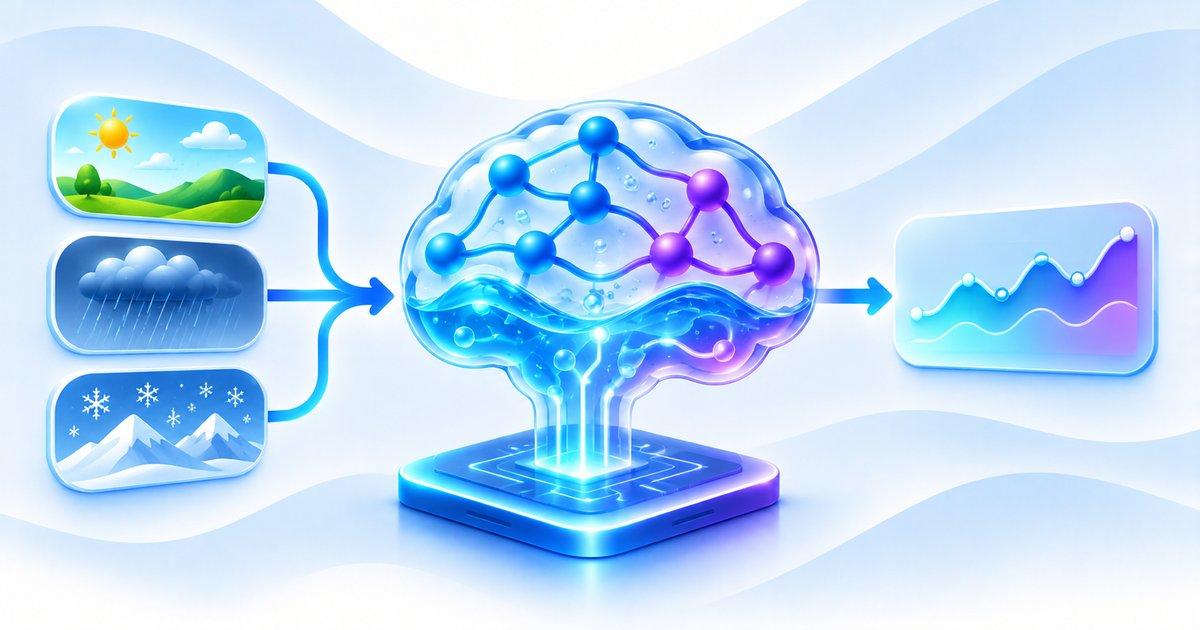
Liquid neural networks explore a different approach to neural computation by representing hidden-state evolution through continuous-time dynamical systems rather than relying exclusively on conventional discrete neural network layers. Liquid Time-Constant Networks (LTCs), for example, use differential equations to describe how internal states evolve in response to incoming signals, with learned and input-dependent dynamics influencing the effective time constants of the system. This allows the network to model changing temporal behavior through continuous-time state evolution, making the architecture relevant to applications where observations arrive at irregular intervals or where the underlying system evolves continuously rather than at strictly fixed sampling steps.
The continuous-time formulation can be useful for robotics, autonomous systems, sensor monitoring, and time-series applications in which input timing carries important information. A robot receiving sensor measurements at irregular intervals, for example, may need to estimate its changing environment while accounting for the time elapsed between observations. Liquid neural networks can represent these temporal relationships through their evolving internal states, while related approaches such as Closed-form Continuous-time (CfC) networks explore computationally efficient ways of approximating continuous-time dynamics. These architectures offer an alternative to conventional recurrent models when continuous temporal behavior is an important part of the underlying problem.
The practical implementation of liquid neural networks requires careful attention to numerical integration, solver configuration, training stability, sampling frequency, and inference latency. Differential-equation-based models may require numerical methods to evaluate state evolution, and the computational cost can vary according to the selected solver and the complexity of the dynamics being modeled. Engineers should also distinguish adaptive internal state evolution from automatic online learning, because a liquid network can change its hidden state in response to incoming observations without necessarily updating its learned parameters during every inference interaction. The principles discussed in “Machine Learning for Digital Twins: How AI Is Learning to Model the Physical World” are relevant because graph-based representations, neural operators, and continuous-time models provide different ways to represent interconnected entities and evolving physical systems within digital-twin applications.
Key Takeaway
Graph Neural Networks, Kolmogorov-Arnold Networks, neural operators, and liquid neural networks demonstrate that modern deep learning extends beyond conventional attention-based sequence modeling, with each architecture introducing a different way to represent information and learn complex relationships. GNNs focus on connected entities, KANs use learnable functions for approximation, neural operators learn mappings between function spaces, and liquid neural networks represent continuously evolving internal states. Software engineers should understand the mathematical foundations and implementation trade-offs of these architectures while evaluating their suitability through representative datasets, established baselines, numerical reliability, computational requirements, and production constraints.
Conclusion: Exploring the Future of Neural Network Architectures Beyond Transformers
Transformers have fundamentally changed modern artificial intelligence by providing an effective mechanism for learning contextual relationships across sequences, powering advances in language models, code generation, multimodal systems, and numerous other applications. However, their computational characteristics, particularly the quadratic complexity of conventional dense self-attention, create challenges for workloads involving extremely long sequences, constrained memory, and high-throughput inference. These limitations have encouraged researchers and engineering teams to explore alternative neural network architectures that approach information processing through different mathematical and computational mechanisms rather than relying exclusively on attention.
State-space models, including Mamba and Mamba-2, demonstrate how evolving internal states and input-dependent selection mechanisms can provide alternative approaches to long-sequence processing. Recurrent architectures such as RWKV and retention-based models such as RetNet explore ways to maintain information through compact states, while Hyena demonstrates how long convolutions and data-dependent gating can capture sequence relationships without conventional dense attention. Although these architectures offer interesting computational advantages, their effectiveness depends on the target workload, model configuration, implementation quality, available hardware, and the predictive accuracy required by the application.
Beyond sequence modeling, Graph Neural Networks, Kolmogorov-Arnold Networks, neural operators, and liquid neural networks illustrate how architecture design can be adapted to different mathematical structures and application requirements. GNNs learn from relationships between connected entities, KANs use adaptable univariate functions for function approximation, and neural operators learn mappings between function spaces that are useful in scientific computing. Liquid neural networks represent evolving internal states through continuous-time dynamics, making them relevant to selected applications involving irregularly sampled observations and dynamic environments. These architectures expand the range of computational approaches available to software engineers working with structured relationships, physical systems, and continuously changing data.
Hybrid architectures introduce another important direction because future neural network development does not necessarily require choosing between Transformers and alternative architectures. Combining attention with state-space layers, convolutional operations, recurrent mechanisms, or conditional computation can help models balance contextual reasoning, computational efficiency, and specialized processing requirements. Mixture-of-Experts architectures provide another example of conditional computation, although many MoE implementations continue to use Transformer attention blocks as their primary sequence-processing mechanism. Understanding these combinations helps engineers evaluate architectural design as a set of complementary computational choices rather than treating different neural network families as mutually exclusive technologies.
Ultimately, selecting a neural network architecture should be driven by the structure of the problem and the engineering requirements of the application rather than the popularity of a particular research development. Software engineers should compare candidate models using representative datasets, established baselines, realistic hardware, and consistent evaluation procedures, measuring predictive accuracy alongside training time, inference latency, throughput, memory consumption, and infrastructure costs. By developing a broader understanding of neural network architectures beyond Transformers, engineers can make better decisions about model selection, hybrid system design, computational optimization, and production deployment as the machine learning landscape continues to evolve.
Frequently Asked Questions
1. What are the main neural network architectures beyond Transformers?
Several neural network architectures provide alternatives to conventional Transformer-based processing, including structured state-space models, recurrent architectures, long-convolution models, Graph Neural Networks, Kolmogorov-Arnold Networks, neural operators, and liquid neural networks. Representative examples include Mamba, RWKV, RetNet, Hyena, GCNs, GATs, Fourier Neural Operators, and Liquid Time-Constant Networks. Each architecture uses a different computational mechanism to represent information, making its suitability dependent on the structure of the data and the requirements of the application.
2. Why are researchers exploring alternatives to Transformer architectures?
Researchers are exploring alternatives because conventional dense self-attention creates computational and memory requirements that grow quadratically with sequence length, making extremely long inputs and certain high-throughput applications expensive to process. Although optimized attention implementations have improved practical performance, alternative architectures offer different ways to manage sequence information, maintain compact internal states, or process structured relationships. The objective is not necessarily to eliminate Transformers but to identify architectures that provide better accuracy, efficiency, or scalability for particular workloads.
3. What are state-space models, and how do they differ from Transformers?
State-space models represent sequential information through an evolving hidden state that is updated as new inputs arrive, allowing the model to retain information from previous observations without explicitly calculating every pairwise token interaction. Transformers primarily use self-attention to determine how different positions in a sequence influence one another, whereas state-space architectures process information through structured state transitions and input transformations. This difference can provide computational advantages for long sequences, although actual performance depends on the architecture, hardware implementation, and complexity of the target task.
4. What is the Mamba architecture, and how does selective state-space modeling work?
Mamba is a selective state-space architecture that introduces input-dependent mechanisms allowing the model to determine which information should influence its internal state as a sequence is processed. Unlike earlier state-space approaches that generally use less input-dependent state-space parameters, Mamba dynamically adjusts important components according to the current input, helping it preserve relevant information and filter less useful signals. Its hardware-aware selective scan mechanism supports efficient sequence computation without constructing a conventional quadratic attention matrix, making it interesting for language modeling and other long-sequence applications.
5. What is the difference between Mamba and Mamba-2?
Mamba introduced selective state-space modeling through input-dependent state updates and hardware-aware sequence computation, providing an alternative to conventional attention-based sequence processing. Mamba-2 extends this direction through Structured State Space Duality, which establishes a mathematical connection between structured state-space computations and attention-like matrix operations. This formulation supports a revised computational design intended to improve efficiency and hardware utilization while preserving the advantages of state-space processing, although the practical benefits depend on implementation and workload characteristics.
6. What are RWKV and RetNet, and how do they improve recurrent sequence modeling?
RWKV combines recurrent state-based processing during inference with a structure that supports parallel computation during training, allowing it to maintain a compact state rather than an expanding Transformer-style key-value cache. RetNet uses a retention mechanism and supports parallel, recurrent, and chunkwise recurrent computation modes, providing different ways to balance training parallelism and autoregressive inference efficiency. Although both architectures explore alternatives to conventional attention, their internal mathematical mechanisms differ and should be evaluated independently against appropriate sequence-modeling baselines.
7. What is the Hyena architecture, and how does it replace self-attention?
Hyena is a sequence-modeling architecture that combines long convolutions and data-dependent gating to capture relationships across sequence positions without relying on conventional dense self-attention. Its structured filtering operations allow information to propagate across long sequences using subquadratic computational approaches, making it relevant to applications where attention-related memory and computational requirements become expensive. Its effectiveness depends on sequence characteristics, implementation quality, and the availability of efficient hardware kernels, so engineers should compare it empirically with optimized attention-based models.
8. Are recurrent neural networks becoming relevant again for modern AI applications?
Recurrent architectures are receiving renewed attention because newer approaches such as RWKV and related state-space models combine sequential state updates with computational techniques that support efficient parallel training. Their compact recurrent states can offer attractive memory characteristics during autoregressive inference, particularly for long-running sequence-processing applications. However, modern recurrent architectures differ significantly from traditional RNNs and should be evaluated according to their expressiveness, training behavior, inference efficiency, and suitability for the target workload.
9. What are Graph Neural Networks, and when should software engineers use them?
Graph Neural Networks learn from data represented as interconnected nodes and edges, using message-passing operations to aggregate information from neighboring entities. Architectures such as Graph Convolutional Networks, GraphSAGE, and Graph Attention Networks provide different approaches to learning relationships between connected entities and generating contextual node representations. They are particularly useful for fraud detection, recommendation systems, knowledge graphs, molecular property prediction, and social-network analysis, where relationships between entities contain important predictive information.
10. What are Kolmogorov-Arnold Networks, and how are they different from MLPs?
Kolmogorov-Arnold Networks use learnable univariate functions on connections between neurons rather than relying exclusively on scalar weights combined with fixed activation functions at individual nodes. Common implementations use spline-based parameterizations, allowing the model to learn adaptable function transformations that may be useful for scientific computing and selected function-approximation problems. Although their structure can provide interesting interpretability opportunities, KANs may introduce computational overhead and optimization challenges, making comparisons with well-tuned multilayer perceptrons necessary before selecting them for production applications.
11. What are neural operators, and how are they used in scientific machine learning?
Neural operators aim to learn mappings between function spaces rather than restricting the learning problem to conventional finite-dimensional input-output representations. Fourier Neural Operators use transformations in the Fourier domain, while DeepONets combine branch and trunk networks to represent relationships between input functions and output locations. These approaches have applications in fluid dynamics, heat transfer, material science, engineering simulations, and partial differential equations, where models may need to approximate solutions across different physical configurations.
12. What are liquid neural networks, and what problems are they designed to solve?
Liquid neural networks use continuous-time dynamical systems to represent how internal hidden states evolve in response to incoming observations. Liquid Time-Constant Networks model these dynamics through differential equations, making them relevant to selected applications involving irregularly sampled time-series data, sensor streams, robotics, and autonomous systems. Their internal states can evolve according to incoming information without necessarily changing the learned model parameters during every inference interaction, while numerical integration and solver configuration remain important engineering considerations.
13. Are hybrid Transformer and state-space models better than using either architecture independently?
Hybrid architectures combine complementary computational mechanisms, such as Transformer attention layers and state-space layers, to balance contextual information retrieval with efficient sequence processing. Attention can provide direct interactions between selected positions, while state-space components maintain compressed representations of sequence history, potentially making the combination useful for particular long-context workloads. However, hybrid models introduce additional architectural complexity and should be evaluated against standalone models because their performance advantages depend on data characteristics, model configuration, training stability, and hardware efficiency.
14. How should engineers benchmark alternative neural network architectures?
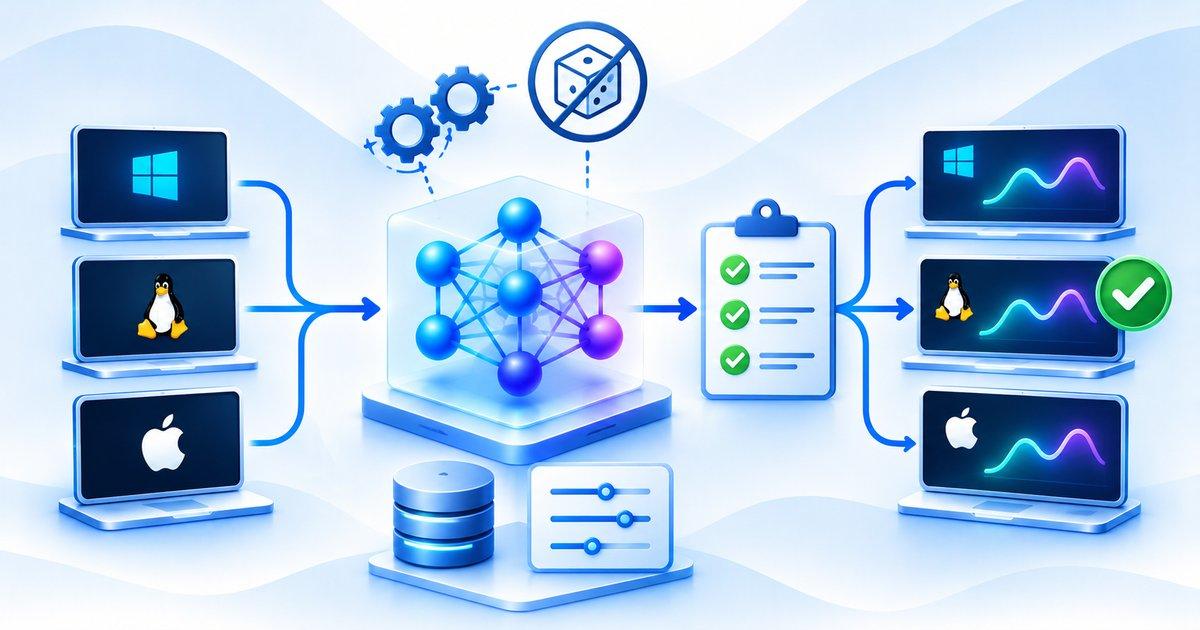
Engineers should benchmark alternative architectures using consistent datasets, preprocessing pipelines, data splits, hardware, numerical precision, and evaluation procedures so that comparisons are meaningful. Predictive metrics should be measured alongside training time, convergence behavior, inference latency, throughput, memory consumption, energy usage, and serving costs, with workload conditions such as sequence length, batch size, and request concurrency reflecting the intended production environment. Comparing architectures only through theoretical complexity or parameter count can be misleading because implementation maturity, kernel optimization, and hardware utilization significantly influence actual performance.
15. Will Transformers be replaced by newer neural network architectures?
Transformers are unlikely to become universally obsolete simply because alternative architectures offer advantages for particular workloads, since self-attention remains an effective mechanism for contextual reasoning and has a mature software and hardware ecosystem. State-space models, recurrent networks, long convolutions, graph-based architectures, and hybrid systems are expanding the available design space by addressing computational and data-structure requirements that conventional Transformers may not handle as efficiently. The direction of future machine learning development is therefore more likely to involve coexistence and specialized combinations of architectures, with engineers selecting models according to predictive quality, computational efficiency, hardware compatibility, and production requirements.