Section 1: Why AI Needs More Than One Data Source
The remarkable success of Large Language Models (LLMs) has transformed how organizations think about software applications. Instead of interacting with rigid interfaces, users can now ask questions in natural language, request summaries, generate reports, automate workflows, and receive intelligent recommendations through conversational experiences. This shift has encouraged many organizations to integrate foundation models into enterprise software with the expectation that AI alone can replace traditional search systems, business intelligence platforms, and knowledge management tools. While LLMs possess extraordinary reasoning and language generation capabilities, they were never designed to function as standalone enterprise knowledge systems.
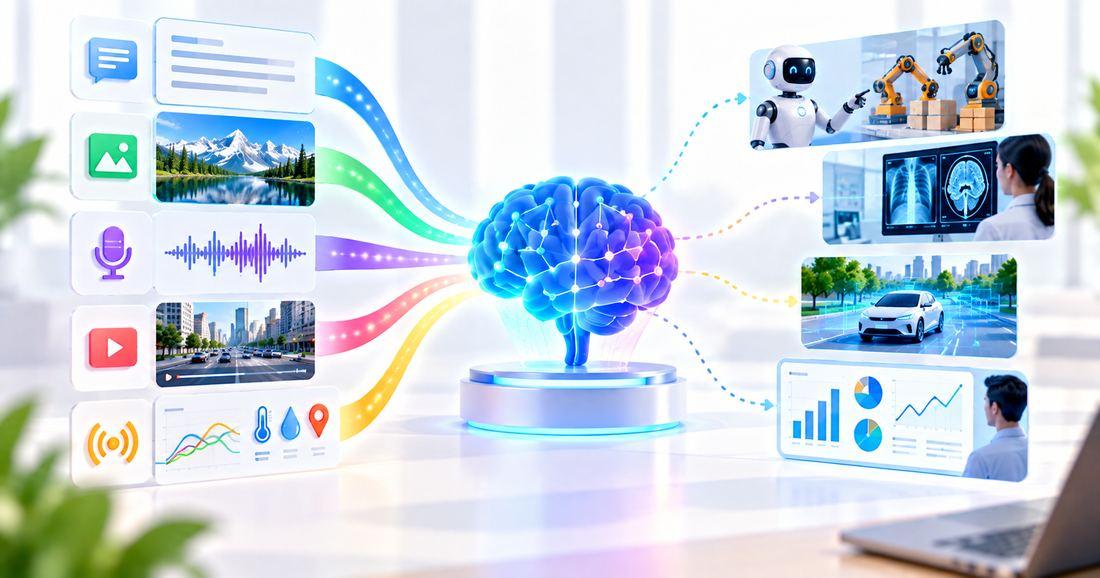
Enterprise organizations generate enormous amounts of information every day. Customer records reside inside CRM platforms, financial transactions are managed within ERP systems, engineering documentation is stored in cloud repositories, policies exist in PDFs, operational procedures appear in internal wikis, conversations take place across collaboration platforms, while emails, spreadsheets, dashboards, support tickets, and external APIs continuously generate additional business knowledge. No single database contains all the information required to answer complex enterprise questions accurately. Consequently, AI applications must move beyond relying solely on pretrained models and instead learn how to retrieve, connect, interpret, and reason across multiple sources simultaneously.
This represents one of the most significant architectural changes in modern AI engineering. Rather than treating the language model as the primary source of knowledge, successful AI applications treat it as a reasoning engine capable of synthesizing trusted information gathered from diverse enterprise systems. Context therefore becomes significantly more valuable than model size because the quality of AI responses increasingly depends on the relevance, freshness, and completeness of the information supplied to the model before it generates an answer.
The Limits of Standalone Large Language Models
Large Language Models have demonstrated an unprecedented ability to understand natural language, generate coherent responses, summarize documents, write software, translate text, and assist with complex reasoning tasks. Their impressive capabilities have encouraged many organizations to assume that deploying a sophisticated language model automatically creates an intelligent enterprise assistant. In reality, however, standalone LLMs possess several important limitations that restrict their effectiveness within production business environments.
The first limitation is static training data. Foundation models learn from enormous collections of publicly available information during training, but their knowledge represents a snapshot captured before deployment. Enterprise information changes continuously through new customer interactions, product releases, pricing updates, regulatory changes, engineering documentation, operational procedures, and business decisions. Because language models cannot automatically learn these updates, relying exclusively on pretrained knowledge inevitably creates gaps between AI responses and current organizational reality.
A second challenge involves hallucinations, where language models confidently generate information that appears plausible despite lacking factual support. Hallucinations become particularly problematic within enterprise environments because inaccurate responses may influence financial decisions, healthcare recommendations, legal analysis, software development, or customer support. Although newer models continue improving factual accuracy, hallucinations cannot be eliminated simply by increasing model size because they originate from probabilistic language generation rather than verified enterprise knowledge.
Why Context Matters More Than Model Size
As language models become increasingly powerful, many organizations assume larger models automatically produce better enterprise AI applications. In practice, context engineering often contributes more to response quality than model size itself. Even the most sophisticated model cannot answer questions accurately if it lacks access to the correct information.
Context engineering focuses on supplying language models with precisely the knowledge required for each interaction. Rather than asking AI to rely exclusively on learned parameters, engineering teams retrieve relevant enterprise documents, database records, API responses, operational metrics, and historical interactions before generating answers. The language model then reasons over this curated information rather than attempting to reconstruct knowledge from memory.
Effective information retrieval therefore becomes one of the most important components of enterprise AI architecture. Retrieval systems identify which documents, database entries, policies, emails, or knowledge articles best support a particular user request. Instead of overwhelming the model with unnecessary information, intelligent retrieval selects only the most relevant evidence, improving both response quality and computational efficiency.
Context engineering also ensures AI systems operate using fresh knowledge rather than outdated training data. Product documentation updates immediately become available to customer support assistants. Newly published engineering specifications appear within software development copilots. Revised compliance policies influence legal analysis without retraining the language model. Fresh enterprise knowledge therefore becomes a competitive advantage because AI continuously reflects current organizational reality.
Ultimately, organizations increasingly recognize that intelligently engineered context produces greater business value than simply deploying larger language models.
From Search to Reasoning
Traditional enterprise search systems primarily retrieve documents matching keywords supplied by users. Although useful, these systems often require employees to interpret multiple documents manually before answering complex questions. Modern AI applications instead combine retrieval with semantic search, enabling systems to understand meaning rather than exact keyword matches.
Semantic search retrieves conceptually related information even when different terminology is used. A query about customer churn may retrieve documents discussing subscription cancellations, retention strategies, usage analytics, and account renewals despite never containing identical keywords. This significantly improves retrieval quality because AI understands relationships between ideas rather than individual words.
Once relevant information has been retrieved, AI performs reasoning across multiple sources simultaneously. Rather than presenting isolated documents, language models compare evidence, identify relationships, summarize findings, resolve inconsistencies, and generate coherent responses supported by organizational knowledge. This transition from retrieval toward reasoning fundamentally changes enterprise software because applications increasingly assist decision-making rather than simply locating information.
Reasoning also depends upon connected information. Customer records become more valuable when combined with product documentation, support history, engineering updates, and operational metrics. Financial reports gain additional meaning when interpreted alongside market data and internal strategy documents. AI therefore generates stronger insights because it synthesizes knowledge distributed across previously disconnected systems.
Readers interested in understanding why AI expertise is becoming fundamental for building these intelligent enterprise systems should also explore "Why Every Software Team Will Have an AI Engineer by 2030," which examines how engineering teams are evolving to design next-generation AI applications.
Key Takeaway
Standalone Large Language Models cannot deliver reliable enterprise intelligence because they lack current organizational knowledge, are susceptible to hallucinations, and operate within limited context windows. Modern AI applications overcome these limitations by reasoning across structured databases, documents, APIs, emails, cloud storage, and enterprise knowledge through context engineering, semantic retrieval, and intelligent reasoning. Organizations that prioritize context over model size will build AI applications capable of delivering accurate, trustworthy, and business-ready insights across complex enterprise environments.
Section 2: Architectures That Connect Multiple Data Sources
Modern enterprise AI applications are fundamentally different from traditional software systems because they rarely depend on a single repository of information. Instead, they must retrieve knowledge from structured databases, enterprise documents, APIs, cloud platforms, customer relationship management systems, internal knowledge bases, emails, collaboration tools, source code repositories, and external services before producing a meaningful response. Simply connecting a Large Language Model to one database is no longer sufficient because enterprise questions often require information scattered across numerous independent systems. Building AI applications capable of reasoning across these diverse sources therefore requires sophisticated architectures that intelligently retrieve, organize, and synthesize knowledge before presenting it to users.
Over the past two years, enterprise AI architecture has shifted away from viewing the language model as the primary knowledge repository toward treating it as a reasoning engine supported by specialized retrieval systems. Rather than asking the model to remember everything, engineers now design pipelines that collect relevant information dynamically for every user request. This architectural approach improves response accuracy, reduces hallucinations, enables access to continuously changing enterprise information, and allows AI applications to scale across increasingly complex business environments.
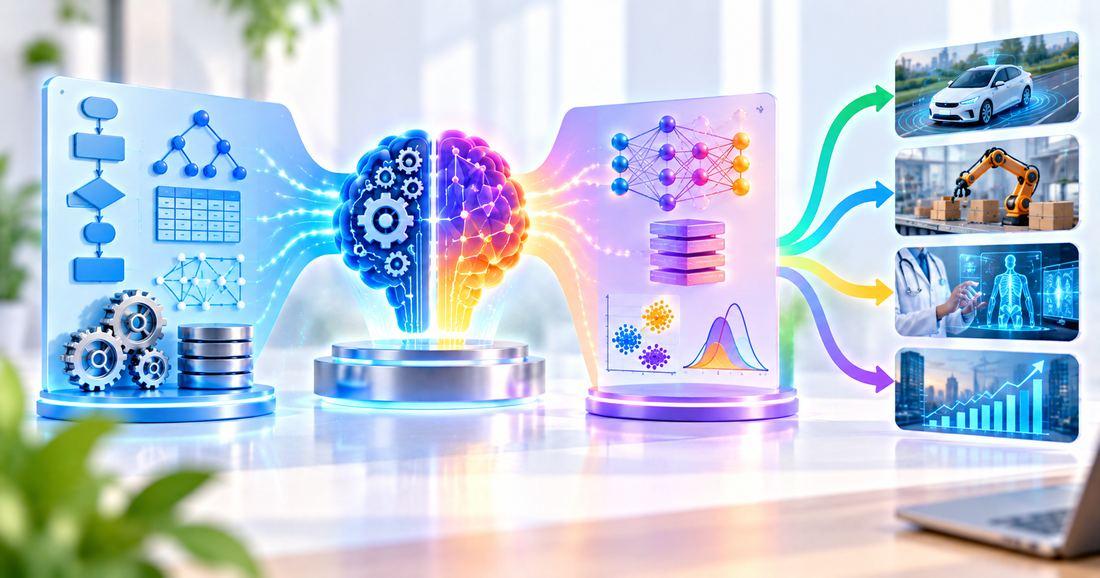
Several foundational technologies enable this transformation. Retrieval-Augmented Generation (RAG) retrieves relevant enterprise knowledge before generating responses. Vector databases make semantic search practical across millions of documents. Knowledge graphs connect related concepts across organizational information. APIs provide access to live business data, while AI orchestration platforms coordinate interactions between multiple data sources and intelligent services. Together, these components create AI systems capable of understanding enterprise knowledge far beyond the capabilities of standalone language models.
As organizations continue expanding AI adoption, these architectural patterns are becoming standard practice for production AI applications. Understanding how they work together is essential for engineers building reliable, scalable, and context-aware enterprise AI systems.
Retrieval-Augmented Generation (RAG)
Among all recent AI architectural innovations, Retrieval-Augmented Generation (RAG) has become one of the most important for enterprise applications. Instead of relying entirely on a language model's internal knowledge, RAG retrieves relevant information from trusted enterprise sources before asking the model to generate a response. This approach dramatically improves factual accuracy because the AI reasons using current organizational knowledge rather than outdated training data.
The process begins with a retrieval pipeline. When a user submits a question, the application first analyzes the request to determine what information is needed. Rather than sending the question directly to the language model, the retrieval pipeline searches enterprise knowledge repositories, identifies relevant documents, database records, technical specifications, support tickets, or policy manuals, and prepares these materials for the model.
A key component of this pipeline is the vector database. Unlike traditional relational databases that retrieve information using exact keywords, vector databases store numerical representations known as embeddings. These embeddings capture the semantic meaning of documents, allowing AI systems to identify conceptually similar information even when different terminology is used. A user searching for "employee onboarding" may retrieve documents discussing new hire orientation, HR policies, IT account setup, and training programs because semantic similarity extends beyond literal keywords.
AI Orchestration Across Multiple Sources
Connecting numerous information sources requires more than individual integrations. Enterprise AI applications increasingly depend upon sophisticated AI orchestration platforms capable of coordinating retrieval, reasoning, and tool usage across complex enterprise ecosystems.
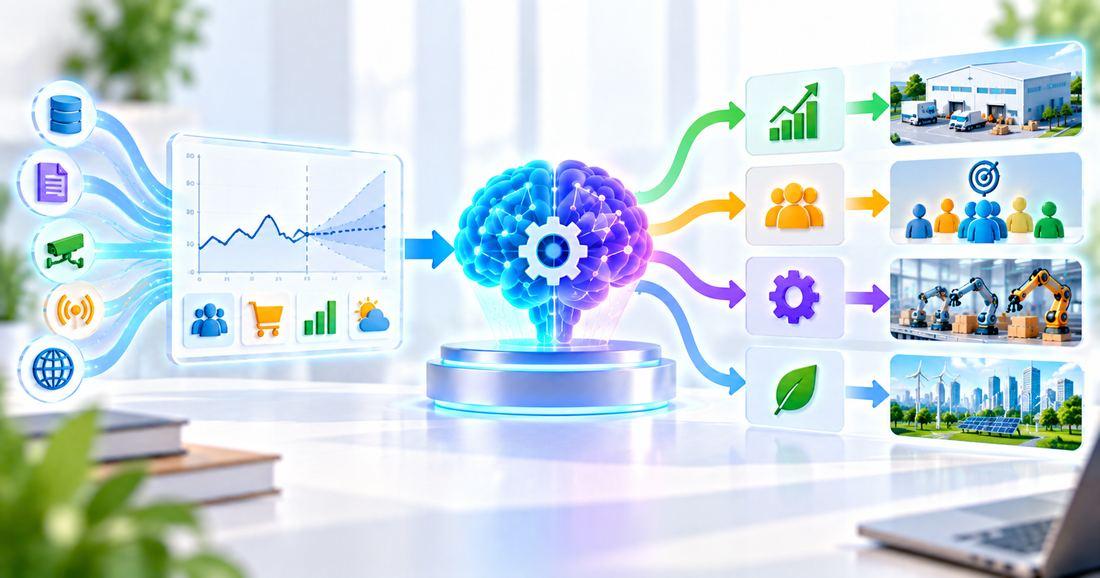
AI orchestration manages complete AI workflows rather than isolated model interactions. A single user request may require searching vector databases, querying relational databases, retrieving API responses, analyzing documents, consulting knowledge graphs, invoking specialized AI models, and generating final responses. Orchestration platforms coordinate these activities automatically while maintaining efficiency and consistency.
One important capability involves tool calling, where language models dynamically invoke external systems whenever additional information or computation is required. Instead of answering every question independently, AI applications call enterprise APIs, execute database queries, retrieve documents, calculate financial metrics, or launch specialized workflows as needed before continuing the conversation.
Supporting this process is intelligent query planning. Rather than searching every available repository simultaneously, orchestration systems determine which data sources are most relevant for each request. A financial question may prioritize ERP systems and accounting documentation, while an engineering inquiry accesses source code repositories, technical specifications, infrastructure dashboards, and deployment records. Intelligent planning improves both retrieval accuracy and system performance.
Finally, orchestration platforms perform intelligent routing, directing requests toward appropriate language models, retrieval systems, enterprise services, or specialized AI agents according to complexity, security requirements, response latency, and business context. Routing ensures enterprise AI applications remain scalable while optimizing computational resources across increasingly sophisticated AI ecosystems.
Collectively, Retrieval-Augmented Generation, vector databases, knowledge graphs, APIs, and orchestration frameworks represent the architectural foundation of modern enterprise AI. Rather than depending on increasingly larger language models, successful organizations build intelligent systems capable of retrieving, connecting, and reasoning across trusted information distributed throughout the enterprise. These architectures transform AI from a conversational interface into a comprehensive enterprise intelligence platform capable of supporting accurate, explainable, and context-aware business decision-making.
Readers interested in understanding how these architectural components work together within production AI systems should also explore "The Engineering Behind Autonomous AI Workflows," which examines the engineering principles, orchestration strategies, and enterprise architectures powering next-generation AI applications.
Key Takeaway
Modern enterprise AI applications rely on sophisticated architectures rather than standalone language models. Retrieval-Augmented Generation (RAG), vector databases, embeddings, knowledge graphs, graph databases, enterprise APIs, AI orchestration, tool calling, query planning, and intelligent routing work together to retrieve, connect, and reason across multiple trusted data sources. Organizations that build these intelligent knowledge architectures can deliver AI applications that are more accurate, context-aware, scalable, and capable of solving complex real-world business problems than systems relying solely on pretrained model knowledge.
Section 3: Engineering Challenges of Multi-Source AI Systems
Building AI applications that reason across multiple data sources is far more complex than connecting a Large Language Model to a vector database or an enterprise API. While Retrieval-Augmented Generation (RAG), knowledge graphs, semantic search, and AI orchestration provide the architectural foundation for enterprise AI, the success of these systems ultimately depends on how well they manage data quality, system performance, security, governance, and operational reliability. As organizations expand AI adoption across customer support, software engineering, finance, healthcare, manufacturing, and enterprise operations, engineering teams quickly discover that intelligent reasoning requires far more than sophisticated language models. It demands production-grade infrastructure capable of managing thousands of concurrent users, millions of documents, continuously changing business information, and strict organizational security requirements.
Unlike traditional software applications that typically retrieve information from a single database using deterministic queries, multi-source AI systems must retrieve relevant information from numerous repositories, evaluate conflicting evidence, maintain context across conversations, and synthesize knowledge into accurate responses within milliseconds. Every stage of this pipeline introduces potential engineering challenges. Documents may contain outdated information, APIs may return inconsistent results, retrieval systems may surface irrelevant context, and language models may still generate inaccurate conclusions despite receiving trustworthy data. Consequently, enterprise AI engineering increasingly focuses on building reliable systems that continuously validate, monitor, and improve AI reasoning rather than assuming intelligent models alone guarantee high-quality outcomes.
Organizations successfully deploying enterprise AI recognize that production readiness depends on engineering discipline. Data governance, observability, infrastructure optimization, security, compliance, and continuous evaluation become just as important as language model selection. These operational capabilities distinguish enterprise AI platforms from experimental prototypes and enable organizations to deliver trustworthy AI experiences at scale.
Data Quality and Information Consistency
One of the greatest challenges facing enterprise AI applications is maintaining high-quality data across multiple information sources. Enterprise knowledge rarely exists within a perfectly organized repository. Instead, information accumulates over years across databases, documents, emails, cloud storage, collaboration platforms, APIs, spreadsheets, and legacy applications. These sources frequently contain overlapping, inconsistent, or outdated information that complicates AI reasoning.
A common challenge involves duplicate data. The same customer information, engineering documentation, product specifications, or business policies may appear across several systems with slight differences. Without intelligent deduplication, retrieval systems may return multiple conflicting versions of the same information, forcing the language model to reason over inconsistent evidence.
Another critical concern is data freshness. Enterprise knowledge changes continuously through new product releases, policy updates, customer interactions, software deployments, regulatory requirements, and operational decisions. AI systems that retrieve outdated documents risk producing responses that no longer reflect current business practices. Engineering teams therefore establish automated indexing pipelines, scheduled synchronization processes, and event-driven updates to ensure retrieval systems always reflect the latest organizational knowledge.
Equally important is evaluating source reliability. Not every enterprise repository carries the same level of authority. Official engineering documentation generally deserves greater trust than informal meeting notes, while approved compliance policies outweigh draft proposals stored within collaboration platforms. AI applications increasingly assign confidence scores to different repositories, enabling retrieval systems to prioritize authoritative sources before generating responses.
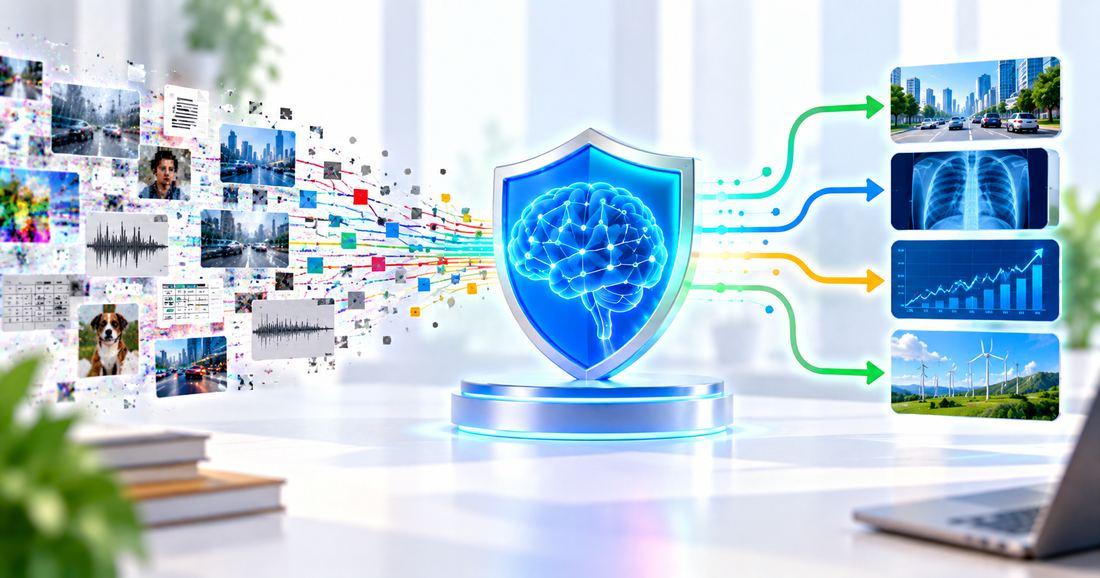
To further strengthen accuracy, organizations implement comprehensive validation mechanisms. Retrieved documents undergo consistency checks, metadata verification, version control analysis, and confidence evaluation before reaching the language model. Validation ensures AI reasons over trustworthy information rather than indiscriminately combining every available document. These practices significantly reduce hallucinations while increasing user confidence in enterprise AI systems.
Monitoring AI Reasoning
Deploying an enterprise AI application is only the beginning of its operational lifecycle. Production AI systems require continuous monitoring to ensure they remain accurate, reliable, and aligned with evolving business requirements. Consequently, AI observability has emerged as one of the fastest-growing disciplines within enterprise AI engineering.
Observability begins by monitoring overall system behavior, including inference latency, retrieval performance, prompt execution, API usage, infrastructure health, and user interactions. Beyond infrastructure metrics, organizations increasingly evaluate the quality of AI reasoning itself through specialized monitoring frameworks.
One important capability is retrieval evaluation, which measures whether AI systems consistently retrieve the most relevant information before generating responses. Engineers analyze document relevance, ranking quality, semantic search accuracy, citation completeness, and retrieval precision to identify opportunities for improving context engineering.
Organizations also implement sophisticated hallucination detection mechanisms. Responses are automatically evaluated against retrieved evidence to determine whether generated content remains supported by enterprise knowledge. Unsupported statements trigger warnings, confidence reductions, or requests for additional retrieval before responses reach end users. These safeguards substantially improve factual reliability while strengthening trust in AI-generated recommendations.
Ultimately, enterprise AI depends upon continuous improvement rather than static deployment. Engineering teams regularly analyze user feedback, retrieval failures, hallucination reports, infrastructure performance, search quality, prompt effectiveness, and operational metrics to refine every component of the AI system. Continuous iteration enables enterprise AI applications to improve steadily as organizational knowledge, business processes, and user expectations evolve.
The engineering challenges associated with multi-source AI systems demonstrate that building enterprise AI extends far beyond selecting a powerful language model. Success depends on constructing resilient architectures where data quality, performance, governance, security, and observability work together to support trustworthy reasoning across diverse organizational knowledge sources. Organizations that invest in these engineering capabilities build AI applications capable of delivering reliable intelligence at enterprise scale while maintaining the trust, security, and operational excellence required for long-term business adoption.
Readers interested in understanding how AI engineering decisions influence broader business success should also explore "The Business of AI: What Every ML Engineer Should Know Beyond Coding," which examines how engineering excellence, governance, and enterprise strategy combine to create production-ready AI systems.
Key Takeaway
Engineering multi-source AI systems requires much more than connecting a language model to enterprise data. High-quality data management, duplicate detection, data freshness, source validation, scalable retrieval, infrastructure optimization, secure access control, Responsible AI, governance, AI observability, hallucination detection, and continuous improvement collectively determine whether enterprise AI applications deliver trustworthy, scalable, and production-ready intelligence. Organizations that master these engineering disciplines will build AI systems capable of reasoning accurately across complex enterprise knowledge while maintaining the reliability, security, and performance expected in modern business environments.
Section 4: The Future of Multi-Source AI Applications
Artificial intelligence is entering a new phase of evolution where success is no longer determined solely by the sophistication of Large Language Models but by their ability to reason intelligently across diverse and continuously changing enterprise knowledge. Over the past two years, Retrieval-Augmented Generation (RAG), vector databases, semantic search, and AI orchestration have dramatically improved the quality of enterprise AI applications by allowing models to access real-time organizational information instead of relying exclusively on static training data. Yet these technologies represent only the beginning of a much broader transformation. Future AI applications will move beyond retrieving relevant documents toward understanding organizational intent, planning complex tasks, collaborating through specialized AI agents, and continuously learning from enterprise interactions.
This evolution reflects an important shift in enterprise AI architecture. Earlier AI systems functioned primarily as conversational interfaces capable of answering isolated questions. Next-generation AI applications will increasingly become intelligent collaborators capable of coordinating workflows, connecting fragmented knowledge, synthesizing insights across multiple business systems, and supporting strategic decision-making. Instead of simply responding to user prompts, AI systems will proactively gather information, evaluate multiple sources, identify inconsistencies, recommend actions, and automate sophisticated enterprise processes while maintaining transparency and governance.
Building these intelligent systems requires engineering organizations to rethink how enterprise AI is designed. Success will depend less on selecting the largest language model and more on creating architectures capable of combining structured databases, enterprise APIs, knowledge graphs, cloud platforms, real-time operational data, organizational memory, and specialized AI agents into unified reasoning systems. As organizations continue investing in enterprise AI, engineers who understand these emerging architectural patterns will become increasingly valuable because they will be responsible for building the intelligent knowledge platforms supporting the next generation of digital business.
Building the Next Generation of Enterprise AI
As enterprise AI continues evolving, engineers must develop new technical capabilities extending beyond traditional software development. Future AI systems require professionals who understand AI system architecture, including Retrieval-Augmented Generation, vector databases, knowledge graphs, orchestration frameworks, cloud infrastructure, AI observability, distributed systems, security, and governance. These multidisciplinary skills enable engineers to build intelligent applications capable of operating reliably within complex enterprise environments.
Organizations also increasingly seek engineers with expertise in enterprise AI architecture, where multiple language models, retrieval systems, APIs, autonomous agents, and operational platforms function together as integrated knowledge ecosystems. Designing these architectures requires balancing scalability, performance, security, reliability, explainability, and user experience while ensuring AI applications remain aligned with organizational objectives.
The next generation of enterprise applications will therefore look fundamentally different from today's software. Customer relationship management platforms will proactively recommend business actions, engineering environments will automatically retrieve architectural context before implementation begins, financial systems will reason across operational data and market intelligence simultaneously, while healthcare platforms will synthesize patient records, clinical research, imaging results, and treatment guidelines into comprehensive decision-support systems. AI becomes deeply embedded throughout enterprise software rather than existing as an external conversational interface.
Ultimately, these capabilities create lasting competitive advantage. As foundation models become increasingly accessible, organizations will differentiate themselves through superior enterprise knowledge architectures rather than proprietary models alone. Companies capable of intelligently retrieving, connecting, validating, reasoning over, and continuously improving organizational knowledge will build AI applications that consistently outperform competitors relying solely on increasingly powerful language models.
The future of enterprise AI will therefore not be defined by the size of language models but by the intelligence of the surrounding architecture. Multi-agent collaboration, context-aware reasoning, long-term organizational memory, adaptive planning, secure orchestration, and enterprise knowledge integration will collectively determine whether AI systems become trusted business partners capable of supporting meaningful organizational transformation.
Readers interested in understanding how emerging AI research evolves into scalable enterprise systems should also explore "Research to Real-World ML Engineering: Bridging the Gap," which examines how engineering teams transform advanced AI innovations into production-ready applications that create measurable business value.
Key Takeaway
The future of multi-source AI applications lies in intelligent architectures rather than larger language models. Multi-agent AI systems, collaborative reasoning, context-aware personalization, organizational memory, AI planning, adaptive decision-making, enterprise orchestration, and scalable AI system architecture will define the next generation of enterprise intelligence. Organizations that invest in these capabilities will build AI applications capable of retrieving, connecting, reasoning over, and continuously learning from multiple trusted data sources, creating reliable, explainable, and highly valuable business solutions that deliver sustainable competitive advantage in the AI era.
Conclusion
Artificial intelligence is rapidly evolving from a conversational technology into a comprehensive enterprise intelligence platform capable of reasoning across multiple sources of organizational knowledge. Early AI applications primarily relied on the knowledge embedded within Large Language Models, producing impressive demonstrations but often struggling with outdated information, limited organizational context, and factual inconsistencies. As enterprises began deploying AI in real business environments, it became clear that language models alone could not satisfy the accuracy, reliability, and transparency required for production systems. Modern AI applications therefore combine intelligent reasoning with Retrieval-Augmented Generation (RAG), vector databases, semantic search, knowledge graphs, enterprise APIs, and orchestration platforms to create systems capable of understanding information distributed across complex enterprise ecosystems. This architectural evolution is fundamentally changing how organizations build AI-powered products and deliver business intelligence.
Throughout this article, we explored why modern AI applications require access to multiple data sources rather than depending exclusively on pretrained models. Enterprise knowledge exists across structured databases, customer relationship management systems, enterprise resource planning platforms, technical documentation, emails, cloud storage, collaboration tools, spreadsheets, APIs, source code repositories, and numerous external services. No single repository contains all the information necessary to answer complex business questions accurately. By retrieving relevant information dynamically before generating responses, AI systems gain access to current organizational knowledge, significantly reducing hallucinations while improving response accuracy and business relevance. Context engineering therefore becomes one of the most important engineering disciplines because providing the right information to an AI model often produces greater value than simply deploying a larger foundation model.
We also examined the architectural foundations that enable AI to think across multiple knowledge sources. Retrieval-Augmented Generation provides the mechanism for retrieving enterprise information before reasoning begins, while vector databases and semantic embeddings make it possible to search millions of documents according to meaning rather than keywords. Knowledge graphs establish relationships between business entities, enabling AI to understand how customers, products, employees, policies, and operational processes connect across the enterprise. Enterprise APIs contribute real-time operational information, ensuring AI responses reflect continuously changing business conditions instead of relying solely on historical documentation. AI orchestration platforms coordinate these diverse retrieval mechanisms through intelligent routing, query planning, workflow automation, and tool calling, allowing language models to operate within highly sophisticated enterprise ecosystems rather than isolated conversational interfaces.
Equally important, we explored the engineering challenges involved in building production-ready multi-source AI applications. Enterprise AI requires much more than connecting a language model to multiple databases. Engineering teams must maintain data quality, eliminate duplicate information, ensure data freshness, evaluate source reliability, optimize retrieval performance, implement distributed search architectures, secure enterprise information through access controls, establish Responsible AI practices, and create governance frameworks that support safe and compliant AI deployment. Continuous monitoring through AI observability, retrieval evaluation, hallucination detection, and operational analytics enables organizations to refine AI systems over time while maintaining the reliability expected from mission-critical enterprise software. These engineering disciplines distinguish scalable enterprise AI platforms from experimental prototypes.
Frequently Asked Questions (FAQs)
1. What are multi-source AI applications?
Multi-source AI applications are intelligent systems that retrieve and reason over information from multiple sources such as databases, documents, APIs, emails, cloud storage, enterprise knowledge bases, and external services before generating responses.
2. Why do AI applications need multiple data sources?
Large Language Models have static knowledge and cannot automatically access current enterprise information. Multiple data sources provide real-time, organization-specific context that improves response accuracy and reduces hallucinations.
3. What is Retrieval-Augmented Generation (RAG)?
Retrieval-Augmented Generation (RAG) is an AI architecture that retrieves relevant information from external knowledge sources before passing that information to a language model, enabling more accurate and context-aware responses.
4. How do vector databases improve AI?
Vector databases store semantic embeddings that allow AI systems to retrieve information based on meaning instead of exact keyword matching. This improves search relevance, context retrieval, and overall response quality.
5. What is context engineering?
Context engineering is the process of selecting, organizing, and supplying the most relevant information to a language model before response generation. Effective context engineering significantly improves AI accuracy and reduces hallucinations.
6. How do knowledge graphs support AI?
Knowledge graphs represent relationships between entities such as customers, products, employees, documents, and business processes. They help AI understand connections across enterprise information and generate more comprehensive responses.
7. Why are APIs important in enterprise AI?
APIs provide AI systems with access to real-time business information from CRM platforms, ERP systems, cloud services, payment platforms, analytics tools, and external applications, ensuring AI responses remain current and accurate.
8. What is AI orchestration?
AI orchestration coordinates interactions between language models, retrieval systems, APIs, databases, AI agents, and enterprise tools. It manages workflows, query planning, tool calling, and intelligent routing to deliver efficient AI experiences.
9. How do AI applications reduce hallucinations?
AI applications reduce hallucinations by retrieving trusted enterprise information through RAG, validating retrieved content, using authoritative knowledge sources, monitoring responses, and providing relevant context before language models generate answers.
10. What challenges exist when integrating multiple data sources?
Common challenges include duplicate data, inconsistent information, outdated content, retrieval latency, security, access permissions, scalability, governance, data validation, and maintaining consistent reasoning across multiple enterprise systems.
11. How is AI observability used in production?
AI observability monitors model behavior, retrieval quality, inference latency, prompt execution, infrastructure performance, hallucination rates, user interactions, and overall system health to ensure enterprise AI applications remain reliable and continuously improve.
12. What is a multi-agent AI system?
A multi-agent AI system consists of multiple specialized AI agents that collaborate to perform different tasks such as retrieval, planning, analysis, workflow automation, reasoning, and decision support to solve complex business problems.
13. How do enterprises secure AI applications?
Enterprises secure AI applications through identity management, role-based access control, encrypted communication, secure APIs, governance policies, Responsible AI frameworks, audit logging, continuous monitoring, and compliance with regulatory requirements.
14. What skills are needed to build enterprise AI systems?
Engineers should develop expertise in Large Language Models, Retrieval-Augmented Generation (RAG), vector databases, knowledge graphs, cloud computing, AI orchestration, APIs, distributed systems, AI observability, security, governance, and system architecture.
15. What is the future of multi-source AI applications?
The future of multi-source AI applications lies in intelligent systems that combine multi-agent collaboration, organizational memory, adaptive reasoning, AI planning, real-time enterprise knowledge, and context-aware decision-making. Rather than relying solely on larger language models, next-generation AI will deliver superior business value by intelligently retrieving, connecting, validating, and reasoning across multiple trusted data sources to solve increasingly complex enterprise challenges.