Section 1: Understanding the Most Common AI Failure Modes
Artificial intelligence has fundamentally changed how software systems operate. Unlike traditional applications that execute deterministic business logic, modern AI systems generate predictions, recommendations, summaries, decisions, and conversational responses based on statistical reasoning rather than explicitly programmed rules. This probabilistic nature enables AI to solve problems that conventional software cannot, including natural language understanding, image recognition, autonomous reasoning, code generation, and intelligent decision support. However, the same flexibility that makes AI extraordinarily powerful also introduces a new class of engineering challenges. AI systems can fail in subtle, unpredictable, and often difficult-to-diagnose ways that differ significantly from conventional software bugs.
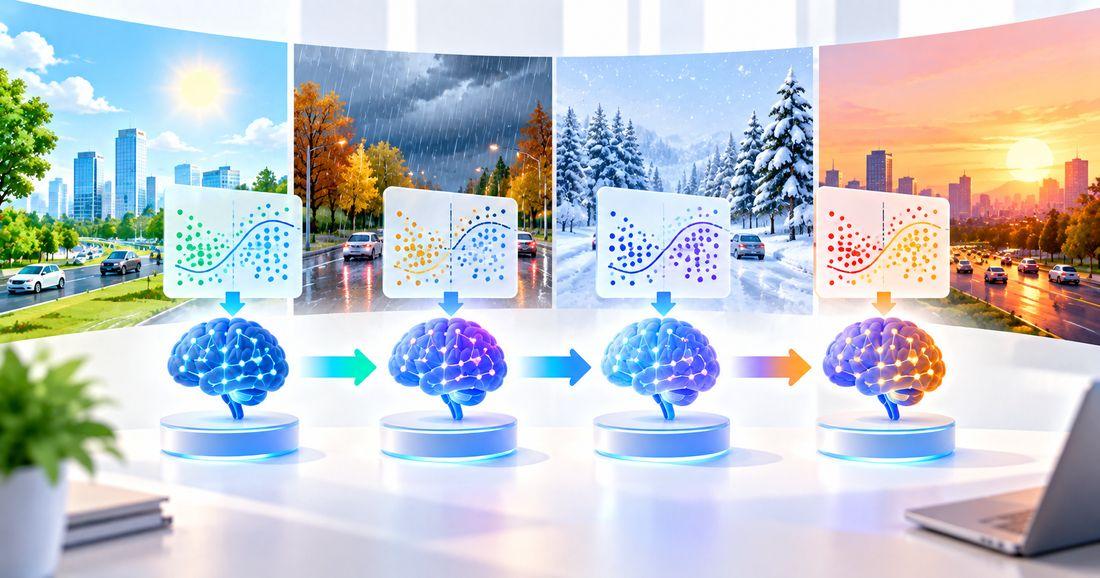
In traditional software engineering, failures generally originate from coding defects, incorrect business logic, configuration errors, or infrastructure outages. Engineers can usually reproduce these failures consistently because identical inputs produce identical outputs. AI systems behave differently. A Large Language Model may generate different responses to nearly identical prompts, retrieval systems may return varying documents depending on context, and machine learning models may gradually lose accuracy as the environment changes. These failures often emerge from interactions between models, data pipelines, infrastructure, user behavior, and enterprise knowledge rather than from a single identifiable bug. Consequently, modern AI engineering focuses not only on improving model intelligence but also on understanding, detecting, and preventing failure modes before they compromise user trust or business operations.
As AI adoption expands across healthcare, finance, cybersecurity, software engineering, manufacturing, customer support, education, and enterprise productivity, understanding these failure modes has become essential. Organizations deploying AI at scale recognize that even highly capable models can become unreliable without robust engineering practices. Reliability therefore depends not only on model quality but also on the architecture surrounding the model, including retrieval systems, infrastructure, monitoring, governance, and operational controls.
Why Modern AI Systems Fail
Among the most widely recognized AI failures are hallucinations, where Large Language Models generate information that appears confident and convincing despite being factually incorrect. Unlike traditional software, which typically produces explicit errors when required information is unavailable, language models are designed to generate coherent responses even under uncertainty. When sufficient knowledge is missing or retrieved information is incomplete, models may fabricate citations, invent technical explanations, misinterpret numerical values, or produce entirely fictional content that appears highly credible. Hallucinations become particularly dangerous in domains such as healthcare, legal research, financial advisory services, scientific analysis, and enterprise decision-making, where inaccurate information may directly influence critical business or safety outcomes.
Hallucinations occur for several reasons. Language models predict the most statistically probable sequence of words rather than verifying factual correctness against authoritative sources. Ambiguous prompts, insufficient context, conflicting knowledge, outdated training data, or poorly designed retrieval systems can all increase hallucination rates. Even highly capable frontier models occasionally generate incorrect information because probabilistic reasoning cannot guarantee factual accuracy without reliable grounding in external knowledge.
Another rapidly growing concern involves prompt injection attacks, one of the most important security challenges affecting generative AI systems. Prompt injection occurs when malicious users manipulate model behavior through carefully crafted instructions designed to override the intended system prompt or operational policies. Attackers may attempt to bypass safety restrictions, retrieve confidential enterprise information, expose hidden prompts, manipulate autonomous agents, or influence AI-generated decisions. Unlike conventional cybersecurity attacks that exploit software vulnerabilities through code execution, prompt injection exploits the natural language interface itself by convincing AI systems to disregard previous instructions or reveal protected information.
The engineering organizations leading AI adoption understand that solving these reliability challenges requires specialized expertise extending well beyond traditional software development. Readers interested in understanding why these capabilities are rapidly becoming essential across every engineering organization should also explore "Why Every Software Team Will Have an AI Engineer by 2030," which examines how AI engineering is evolving into a foundational discipline for building modern software systems.
Key Takeaway
Modern AI systems introduce failure modes that traditional software engineering was never designed to address. Hallucinations, prompt injection attacks, Retrieval-Augmented Generation failures, context window limitations, model drift, poor data quality, bias, inference failures, latency problems, and broader AI reliability challenges arise from the probabilistic nature of artificial intelligence and the complexity of production AI architectures. Understanding these failure modes is the first step toward building trustworthy AI systems, enabling engineering teams to design applications that remain accurate, secure, reliable, and resilient even as models, data, and real-world environments continue to evolve.
Section 2: Engineering Reliable AI Systems
As artificial intelligence becomes deeply integrated into enterprise software, reliability has emerged as one of the defining challenges of modern AI engineering. Organizations no longer evaluate AI systems solely by how intelligently they answer questions or generate content. They evaluate them by whether those systems consistently produce accurate, safe, secure, and trustworthy outcomes under real-world production conditions. A language model capable of generating impressive responses during demonstrations provides little business value if it hallucinates during customer interactions, produces inconsistent recommendations for financial advisors, fails under high traffic, or generates unsafe outputs within healthcare applications. Consequently, engineering reliable AI systems has become just as important as developing increasingly capable AI models.
Unlike conventional software engineering, where testing often concludes before deployment, AI engineering treats reliability as a continuous operational discipline. Modern AI systems evolve constantly as models are updated, enterprise knowledge changes, user behavior shifts, infrastructure scales, and regulations develop. Every deployment introduces new uncertainties that require continuous monitoring, evaluation, and refinement. Reliability therefore becomes an ongoing engineering process involving observability, evaluation frameworks, human oversight, guardrails, prompt optimization, intelligent routing, fallback mechanisms, production monitoring, and iterative improvement. Collectively, these engineering practices transform AI from an experimental capability into dependable enterprise infrastructure capable of supporting mission-critical business operations.
Building reliable AI systems also requires accepting an important reality: no AI model is perfect. Even state-of-the-art Large Language Models occasionally hallucinate, misunderstand user intent, retrieve incomplete information, or behave unpredictably under unfamiliar conditions. The objective of engineering is therefore not to eliminate every possible failure, which remains unrealistic for probabilistic systems, but to reduce the frequency, severity, and business impact of failures through carefully designed architectures capable of detecting, preventing, and recovering from unexpected behavior before users lose confidence in the system.
Designing AI Systems That Remain Reliable in Production
One of the most important foundations of modern AI reliability is AI observability. Traditional application monitoring focuses primarily on infrastructure metrics such as CPU utilization, memory consumption, response times, and system availability. While these measurements remain valuable, they provide only limited insight into the behavior of AI applications. AI observability extends monitoring far beyond infrastructure by capturing metrics that directly reflect model quality and user experience. Engineering teams monitor hallucination rates, retrieval accuracy, prompt effectiveness, token consumption, inference latency, response consistency, user feedback, model confidence, conversation success rates, and reasoning quality across production environments.
This comprehensive visibility enables engineers to identify subtle degradation long before users begin reporting problems. For example, a Retrieval-Augmented Generation (RAG) system may continue operating without infrastructure failures while gradually retrieving outdated enterprise documentation because indexing pipelines have stopped updating correctly. Similarly, a language model may maintain low latency while response quality steadily declines due to changes in enterprise knowledge or evolving user behavior. AI observability allows organizations to detect these hidden failures proactively, enabling rapid intervention before business operations are affected. As AI adoption expands, observability is becoming as indispensable to AI engineering as application monitoring is to cloud-native software.
Monitoring alone, however, cannot guarantee quality. Organizations must also establish rigorous AI evaluation frameworks that systematically measure model performance before and after deployment. Unlike deterministic software where correctness can often be validated through predefined unit tests, AI systems require evaluation across numerous dimensions including factual accuracy, reasoning capability, retrieval quality, safety, robustness, fairness, consistency, and user satisfaction. Engineering teams therefore develop benchmark datasets, domain-specific test suites, adversarial scenarios, regression tests, and automated evaluation pipelines capable of measuring performance continuously as models evolve.
Evaluation frameworks frequently combine automated metrics with qualitative assessment. A healthcare assistant, for example, may be evaluated according to clinical accuracy, completeness of medical explanations, adherence to treatment guidelines, and consistency across similar patient scenarios. Software engineering copilots may be assessed using code correctness, architectural quality, security recommendations, maintainability, and execution success. Financial advisory systems require validation against regulatory compliance, numerical accuracy, and risk management standards. Continuous evaluation ensures organizations detect performance regressions immediately after deploying new models or updating enterprise knowledge, preventing subtle quality degradation from accumulating unnoticed.
The organizations leading enterprise AI recognize that reliable systems emerge not from powerful models alone but from disciplined engineering practices coordinating observability, evaluation, orchestration, monitoring, and operational excellence. Readers interested in understanding how these production-ready AI workflows operate at scale should also explore "The Engineering Behind Autonomous AI Workflows," which examines the architectural principles enabling autonomous AI systems to remain dependable across complex enterprise environments.
Key Takeaway
Engineering reliable AI systems requires far more than deploying high-performing language models. AI observability, evaluation frameworks, human-in-the-loop validation, guardrails, prompt engineering, intelligent model routing, fallback mechanisms, comprehensive testing, production monitoring, and continuous improvement collectively enable organizations to reduce AI failures before deployment and manage them effectively throughout production. As AI becomes mission-critical infrastructure, these engineering disciplines will determine whether intelligent systems remain accurate, trustworthy, resilient, and capable of delivering long-term business value under real-world operating conditions.
Section 3: Infrastructure, Security, and Scalable AI Operations
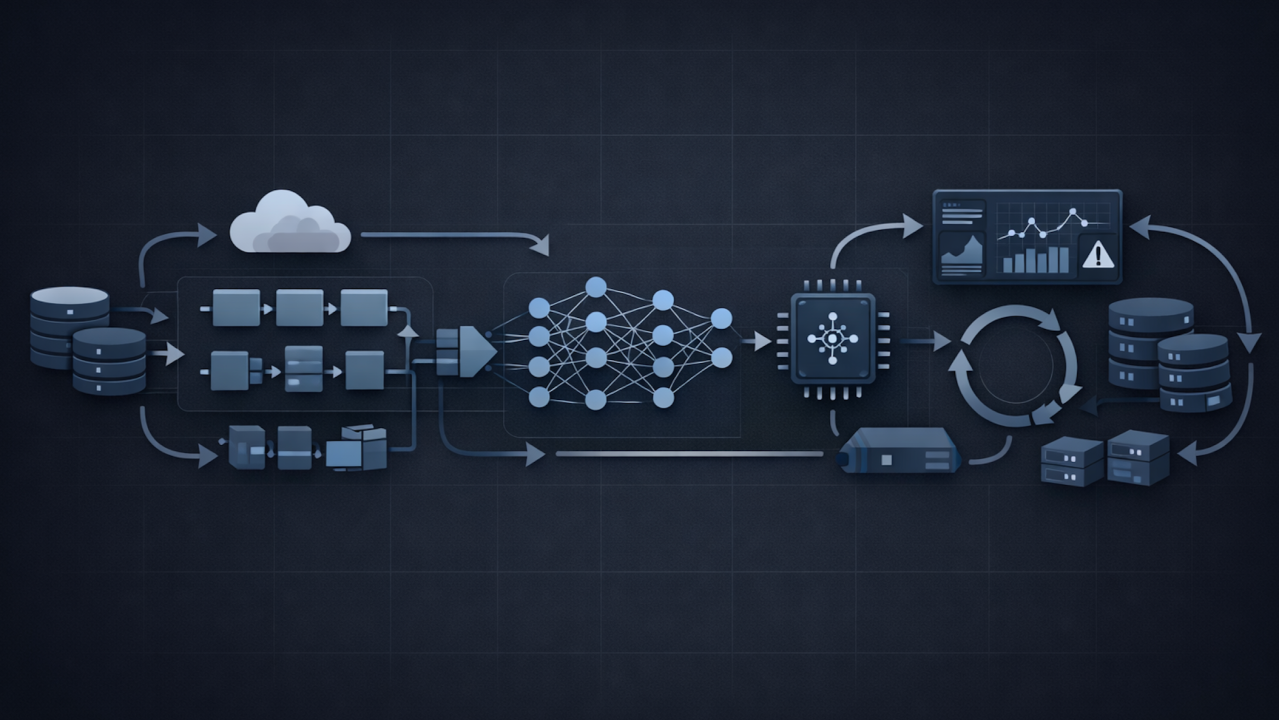
Building reliable AI systems extends far beyond selecting the right Large Language Model or designing effective prompts. While model quality determines how intelligently an AI system reasons, the long-term success of production AI depends equally on the infrastructure supporting inference, the security protecting enterprise data, and the operational practices ensuring continuous availability under real-world workloads. An AI application that performs exceptionally well during development may still fail in production if GPU resources become saturated, retrieval systems experience latency, infrastructure cannot scale with user demand, or security vulnerabilities expose sensitive organizational information. Consequently, modern AI engineering increasingly combines machine learning with cloud engineering, distributed systems, cybersecurity, platform engineering, and operations management to deliver AI systems that remain reliable, scalable, and economically sustainable.
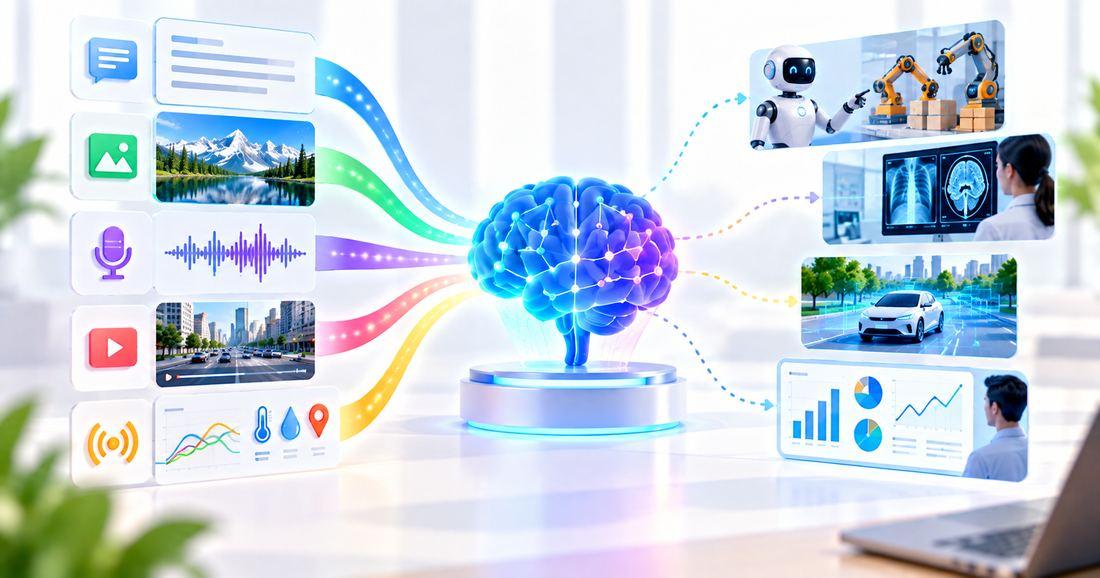
Unlike traditional enterprise applications, generative AI workloads place extraordinary demands on computing infrastructure. Large Language Models process billions of parameters during every inference request, Retrieval-Augmented Generation (RAG) systems continuously query vector databases, autonomous AI agents coordinate multiple services simultaneously, and multimodal models analyze text, images, audio, and structured data within unified workflows. Supporting these computational requirements requires sophisticated infrastructure capable of balancing performance, reliability, security, and operational cost without compromising user experience.
Organizations deploying AI at enterprise scale therefore recognize that operational excellence has become just as important as model innovation. Infrastructure engineers, platform engineers, cybersecurity specialists, AI engineers, and cloud architects now collaborate closely to ensure production AI systems remain resilient despite continuously increasing computational complexity and user demand. Reliability no longer depends solely on model intelligence; it depends on every component within the AI ecosystem functioning together efficiently.
Building Production Infrastructure for Enterprise AI
At the foundation of every modern AI platform lies GPU infrastructure, which has become the computational backbone of generative AI. Unlike traditional CPUs designed for sequential processing, Graphics Processing Units (GPUs) execute thousands of parallel mathematical operations simultaneously, making them exceptionally well suited for neural network inference and training. Every interaction with a Large Language Model, image generation system, recommendation engine, or multimodal AI application ultimately relies on GPU resources to perform billions of numerical computations within milliseconds.
However, deploying GPU infrastructure at enterprise scale introduces numerous engineering challenges. GPU memory remains limited and expensive, workloads fluctuate dramatically throughout the day, and inference requests vary significantly in computational complexity depending on prompt length, reasoning depth, and output size. Poor GPU utilization increases infrastructure costs while reducing system responsiveness. Engineering teams therefore optimize GPU scheduling, memory allocation, batching strategies, model quantization, caching mechanisms, and inference pipelines to maximize throughput without sacrificing response quality. Effective GPU management directly influences latency, operational efficiency, and the economic viability of enterprise AI deployments.
Supporting these computational workloads requires sophisticated distributed inference architectures. Single-server deployments may suffice during development, but enterprise AI applications often process millions of requests across geographically distributed user populations. Distributed inference divides AI workloads across multiple servers, GPU clusters, cloud regions, and inference endpoints, enabling organizations to maintain consistent performance despite rapidly changing demand. Rather than relying on a single inference server, production systems distribute requests dynamically while coordinating retrieval pipelines, model execution, caching layers, and response generation across numerous infrastructure components.
Distributed inference also improves operational resilience. If one inference cluster becomes unavailable because of hardware failures, maintenance, or unexpected traffic spikes, workloads can automatically shift to healthy infrastructure without interrupting user experiences. This redundancy ensures business continuity while reducing the risk of localized failures affecting global AI services. Cloud-native AI platforms increasingly depend on distributed inference because enterprise availability requirements often exceed those of traditional software applications.
Readers interested in understanding why infrastructure decisions increasingly influence the business success of enterprise AI initiatives should also explore "The Business of AI: What Every ML Engineer Should Know Beyond Coding," which examines how engineering, infrastructure, governance, and business strategy work together to create sustainable AI platforms capable of delivering long-term organizational value.
Key Takeaway
Reliable AI systems depend on far more than sophisticated language models. GPU infrastructure, distributed inference, load balancing, autoscaling, AI security, Zero Trust architecture, regulatory compliance, vector database reliability, AI cost optimization, and enterprise AI operations collectively ensure that production AI systems remain scalable, secure, resilient, and economically sustainable. As organizations continue deploying AI across mission-critical business functions, operational excellence in infrastructure and platform engineering will become just as essential as advances in model intelligence, enabling enterprises to build AI systems that users can trust under real-world production conditions.
Section 4: The Future of AI Reliability Engineering
Artificial intelligence is entering a new phase of enterprise adoption where reliability has become just as important as intelligence itself. During the first wave of generative AI, organizations focused primarily on demonstrating what Large Language Models could accomplish. Success was often measured by benchmark scores, reasoning capabilities, coding performance, or conversational fluency. While these achievements accelerated AI adoption across industries, they also revealed a critical reality: highly capable models do not automatically become reliable production systems. A model that performs exceptionally well in controlled evaluations may still hallucinate during customer interactions, retrieve incorrect enterprise knowledge, fail under infrastructure constraints, or behave unpredictably when faced with adversarial prompts. As AI increasingly powers healthcare, financial services, cybersecurity, software engineering, manufacturing, and government applications, these shortcomings can no longer be treated as acceptable experimental limitations.
This changing landscape is giving rise to an entirely new engineering discipline focused on ensuring that AI systems remain trustworthy throughout their operational lifecycle. Just as cloud computing led to the emergence of Site Reliability Engineering (SRE) to maintain highly available distributed systems, enterprise AI is creating demand for specialists responsible for monitoring, validating, securing, governing, and continuously improving intelligent systems operating at global scale. Reliability is becoming a foundational architectural requirement rather than an operational afterthought. Organizations are recognizing that sustainable AI adoption depends not only on developing increasingly powerful models but also on creating robust engineering frameworks capable of detecting failures before they affect customers, recovering automatically from unexpected conditions, and ensuring every AI interaction meets organizational standards for quality, security, and compliance.
The future of AI therefore belongs to organizations capable of building systems that users can consistently trust. This trust will emerge from advances in AI Reliability Engineering, autonomous monitoring, self-healing architectures, explainability, governance, regulatory compliance, and engineering practices specifically designed for intelligent systems operating within complex enterprise environments. These disciplines will transform AI from an innovative technology into dependable digital infrastructure supporting mission-critical business operations across every industry.
Building Trustworthy AI at Enterprise Scale
One of the most important developments shaping this future is the emergence of AI Reliability Engineering (AIRE). Inspired by the principles of Site Reliability Engineering, AIRE focuses specifically on maintaining the operational health of intelligent systems throughout production. Traditional software reliability primarily addresses infrastructure availability, application performance, and service uptime. AI Reliability Engineering extends these responsibilities by monitoring model quality, retrieval accuracy, hallucination frequency, prompt effectiveness, inference consistency, reasoning quality, fairness, and user trust alongside conventional infrastructure metrics.
AI Reliability Engineers combine expertise in software engineering, machine learning, cloud infrastructure, cybersecurity, and data engineering to ensure AI systems continue performing reliably despite evolving models, changing enterprise knowledge, fluctuating workloads, and emerging security threats. Rather than responding only after incidents occur, these engineers proactively identify potential reliability risks through continuous evaluation, automated monitoring, operational analytics, and predictive maintenance. As enterprise AI deployments continue expanding, AI Reliability Engineering will become a specialized discipline supporting every production AI platform in much the same way that Site Reliability Engineering became indispensable during the cloud computing revolution.
Supporting this discipline will be increasingly sophisticated autonomous AI monitoring. Today's monitoring platforms primarily collect metrics for human engineers to interpret. Future AI operations will rely on intelligent monitoring systems capable of analyzing telemetry continuously, recognizing abnormal behavior automatically, identifying emerging reliability risks, and initiating corrective actions without requiring constant human supervision. Instead of waiting for users to report declining response quality, autonomous monitoring systems will detect subtle increases in hallucination rates, retrieval inconsistencies, latency degradation, model drift, infrastructure bottlenecks, or security anomalies long before these issues become visible externally.
These monitoring systems will analyze enormous volumes of operational data including inference latency, GPU utilization, retrieval quality, token consumption, user satisfaction, prompt effectiveness, reasoning consistency, vector database performance, and infrastructure health simultaneously. By correlating these signals across multiple layers of the AI stack, autonomous monitoring platforms will provide engineering teams with early warnings that enable preventative maintenance rather than reactive incident management. This shift from manual observation to intelligent operational awareness will dramatically improve production reliability while reducing operational complexity.
The next evolution beyond autonomous monitoring is the emergence of self-healing AI systems. Modern cloud infrastructure already incorporates limited forms of self-healing through automated failover, container restarts, autoscaling, and workload redistribution. Future AI systems will extend these principles into model behavior itself. Instead of merely identifying failures, AI platforms will automatically recover from many operational problems without interrupting user experiences.
Readers interested in understanding how production-ready AI systems bridge the gap between cutting-edge research and enterprise deployment should also explore "Research to Real-World ML Engineering: Bridging the Gap," which examines how engineering teams transform advanced AI innovations into scalable, reliable, and business-ready production platforms.
Key Takeaway
The future of enterprise AI depends on Reliability Engineering becoming as fundamental to artificial intelligence as Site Reliability Engineering is to cloud computing. AI Reliability Engineering, autonomous monitoring, self-healing AI systems, Agentic AI safety, governance, Explainable AI, regulatory compliance, advanced engineering skills, enterprise AI maturity, and trustworthy AI collectively define the next generation of production AI systems. As organizations increasingly depend on artificial intelligence for mission-critical operations, engineering reliable, transparent, and resilient AI platforms will become the defining competitive advantage of the AI-first era.
Conclusion
Artificial intelligence has fundamentally transformed modern software by enabling systems to understand language, generate content, reason through complex problems, automate workflows, and assist humans in ways that were unimaginable only a few years ago. Organizations across healthcare, finance, cybersecurity, manufacturing, education, software engineering, and enterprise productivity are rapidly integrating AI into mission-critical operations because of its ability to improve efficiency, accelerate decision-making, and unlock entirely new digital experiences. Yet as AI moves from experimental prototypes into production infrastructure, the definition of success is changing. Building an intelligent model is no longer sufficient. Organizations must ensure that these systems remain reliable, secure, scalable, and trustworthy under real-world operating conditions where failures can directly impact customers, employees, business operations, and regulatory compliance.
Throughout this article, we explored the most common failure modes affecting modern AI systems and why they differ fundamentally from traditional software failures. Hallucinations, prompt injection attacks, Retrieval-Augmented Generation (RAG) failures, context window limitations, model drift, poor data quality, bias, inference failures, and latency issues all stem from the probabilistic nature of artificial intelligence. Unlike deterministic software, where identical inputs typically produce identical outputs, AI systems continuously interact with changing data, evolving enterprise knowledge, dynamic infrastructure, and unpredictable user behavior. These characteristics make AI failures significantly more complex to anticipate, reproduce, and debug. Understanding these failure modes is therefore the first step toward building production-ready AI systems capable of maintaining consistent performance despite constantly changing operational environments.
We also examined how engineering teams design reliable AI systems capable of minimizing these risks before and after deployment. AI observability provides visibility into model quality, retrieval accuracy, latency, hallucinations, and user experience throughout production environments. Comprehensive evaluation frameworks validate model behavior continuously rather than only before deployment, while human-in-the-loop workflows ensure expert oversight remains available for high-impact decisions. Guardrails, prompt engineering, intelligent model routing, fallback mechanisms, automated testing, production monitoring, and continuous improvement collectively create resilient AI architectures capable of detecting failures early and recovering gracefully before they significantly affect users. Reliability emerges not from any single technology but from the coordinated interaction of engineering practices operating throughout the AI lifecycle.
Beyond model behavior itself, we explored the critical role of infrastructure, security, and enterprise operations in maintaining dependable AI systems. GPU infrastructure, distributed inference, load balancing, autoscaling, AI security, Zero Trust architecture, regulatory compliance, vector database reliability, AI cost optimization, and operational governance determine whether AI platforms can sustain real-world workloads efficiently and securely. Even the most advanced language model cannot deliver business value if infrastructure becomes unavailable, security vulnerabilities expose confidential information, or operational costs become unsustainable. Modern AI engineering therefore extends well beyond machine learning into cloud computing, distributed systems, cybersecurity, platform engineering, and enterprise operations.
Frequently Asked Questions (FAQs)
1. What are AI system failure modes?
AI system failure modes are conditions where artificial intelligence produces incorrect, unsafe, unreliable, or unexpected behavior. Common examples include hallucinations, prompt injection attacks, retrieval failures, model drift, bias, latency issues, and infrastructure failures.
2. Why do Large Language Models hallucinate?
Large Language Models generate responses based on learned probability distributions rather than verified facts. When sufficient information is unavailable or retrieval systems fail to provide reliable context, models may generate plausible but inaccurate information, commonly referred to as hallucinations.
3. What is prompt injection in AI?
Prompt injection is a security attack where malicious users craft inputs designed to manipulate an AI system into ignoring its original instructions, revealing confidential information, bypassing safety mechanisms, or performing unauthorized actions.
4. How does Retrieval-Augmented Generation (RAG) fail?
RAG systems fail when they retrieve outdated, incomplete, irrelevant, duplicated, or incorrect documents from knowledge repositories. Even highly capable language models cannot generate accurate answers if the retrieved information is unreliable.
5. What is model drift?
Model drift occurs when the real-world environment changes over time, causing the data used in production to differ significantly from the data used during model training. This gradual shift reduces prediction accuracy and overall model performance.
6. Why is AI observability important?
AI observability allows engineering teams to continuously monitor hallucinations, retrieval quality, latency, inference performance, model behavior, prompt effectiveness, user satisfaction, and infrastructure health, enabling rapid detection and resolution of production issues.
7. How do engineers evaluate AI systems?
Engineers evaluate AI systems using benchmark datasets, automated evaluation frameworks, adversarial testing, regression testing, human reviews, domain-specific validation, retrieval accuracy assessments, safety testing, and continuous production monitoring.
8. What are AI guardrails?
AI guardrails are policies, validation mechanisms, safety controls, content filters, access restrictions, and governance rules that prevent AI systems from generating unsafe, non-compliant, or unauthorized responses and actions.
9. How can AI hallucinations be reduced?
Hallucinations can be reduced through Retrieval-Augmented Generation (RAG), high-quality enterprise knowledge bases, better prompt engineering, response verification, AI guardrails, human oversight, continuous evaluation, and production monitoring. Although they cannot be eliminated entirely, disciplined engineering significantly lowers their frequency and impact.
10. What is AI Reliability Engineering (AIRE)?
AI Reliability Engineering is an emerging engineering discipline focused on ensuring AI systems remain accurate, secure, observable, scalable, explainable, and resilient throughout their production lifecycle, similar to how Site Reliability Engineering ensures the reliability of cloud infrastructure.
11. How do enterprises secure AI systems?
Enterprises secure AI systems by implementing Zero Trust architecture, identity and access management, encryption, secure inference pipelines, prompt injection protection, network segmentation, continuous threat monitoring, governance policies, and regular security assessments.
12. Why is infrastructure critical for AI reliability?
Reliable infrastructure ensures AI systems maintain low latency, high availability, efficient GPU utilization, distributed inference, autoscaling, disaster recovery, and operational resilience. Without robust infrastructure, even highly capable AI models cannot consistently deliver reliable production performance.
13. What skills are required for AI Reliability Engineering?
AI Reliability Engineers need expertise in machine learning, Large Language Models, Retrieval-Augmented Generation, distributed systems, cloud computing, AI observability, cybersecurity, platform engineering, monitoring, prompt engineering, governance, infrastructure optimization, and Responsible AI practices.
14. How will AI regulations affect production AI systems?
AI regulations will require organizations to implement stronger governance, explainability, transparency, auditing, security, privacy protection, risk management, human oversight, and continuous monitoring. Engineering teams will increasingly design AI systems with regulatory compliance integrated into the development lifecycle.
15. What is the future of trustworthy AI?
The future of trustworthy AI lies in building intelligent systems that are reliable, explainable, secure, transparent, resilient, and continuously monitored. Advances in AI Reliability Engineering, autonomous monitoring, self-healing AI systems, governance frameworks, Explainable AI, and Responsible AI practices will enable organizations to deploy AI confidently across mission-critical applications while maintaining user trust and regulatory compliance.