Section 1: How AI Agents Are Changing the Traditional Software Development Lifecycle
From Code Completion to Autonomous Development Tasks
Traditional AI coding assistants primarily supported developers at the point of code creation. They could suggest the next lines of code, generate functions, explain syntax, or provide answers about programming concepts. The developer remained responsible for deciding what to inspect, which files to modify, which commands to execute, and how to verify the result.
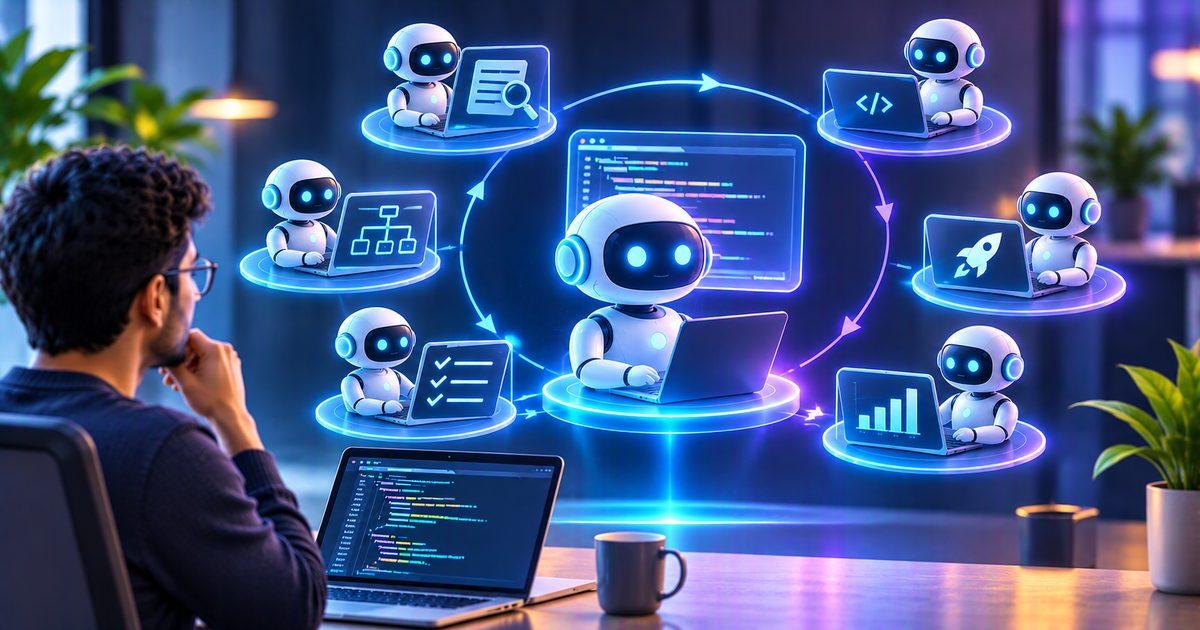
Coding agents introduce a task-oriented interaction model. A developer can describe an objective such as fixing a failing API endpoint, adding pagination to a service, or improving test coverage. The agent can then inspect the repository, identify relevant components, formulate a plan, and perform a sequence of operations.
The difference is architectural as much as functional. A code completion system generally receives a limited context and returns a suggestion. An agent operates through an execution loop involving model reasoning, tool selection, observation, and subsequent action. It can inspect command output, respond to test failures, and revise its implementation based on new information.
For example, suppose a developer asks an agent to add pagination to a customer API. The agent may first inspect the routing structure, identify the controller and database query, review existing response formats, and locate related tests. It can then modify the implementation, add pagination parameters, update tests, and run the relevant test suite.
This workflow requires the agent to understand more than the syntax of the programming language. It must recognize repository conventions, dependencies, API contracts, error-handling patterns, and architectural boundaries.
The developer's responsibility changes accordingly. Instead of manually controlling every small implementation step, the engineer increasingly defines the objective, establishes constraints, provides relevant context, and evaluates the resulting changes.
This does not mean that all development tasks should be delegated. Small edits, ambiguous requirements, sensitive architectural changes, and high-risk production modifications may still benefit from direct human implementation. The appropriate level of autonomy depends on task complexity, reversibility, and the quality of available validation.
The important shift is from AI as a code suggestion mechanism to AI as a participant in a controlled engineering workflow.
AI Agents in Requirement Analysis and Technical Planning
Software development begins before code is written. Engineers need to understand user requirements, identify technical constraints, clarify expected behavior, and determine how a proposed change fits into the existing architecture.
AI agents can assist with this discovery process by analyzing requirement documents, issue descriptions, product specifications, API documentation, and existing source code. They can identify potentially affected components, summarize dependencies, and generate an initial implementation plan.
Consider a requirement to introduce role-based access control into an existing application. An agent could inspect the authentication middleware, user model, route definitions, and authorization checks. It could identify endpoints that may need changes and prepare a dependency map for the engineering team.
An agent could also convert an unstructured product requirement into technical tasks. For example, a request to allow users to export reports might be divided into API development, background processing, file generation, storage, authorization, and interface updates.
This is particularly useful when developers work with large or unfamiliar repositories. Instead of manually searching every directory, an agent can identify relevant files and explain how different components interact.
However, requirement interpretation is not a purely technical operation. Business rules may be incomplete, stakeholder expectations may conflict, and important constraints may exist outside the repository. An agent can identify ambiguities, but it cannot reliably resolve every product decision without additional information.
A strong workflow therefore uses agents to accelerate discovery while keeping requirement ownership with product managers, engineers, and relevant stakeholders. The agent can propose a plan, but the engineering team should confirm assumptions, define acceptance criteria, and approve the implementation scope.
This is also where repository documentation becomes important. Architecture decision records, coding conventions, API specifications, and project-level instructions help agents understand the environment in which they are operating.
Automated Repository Exploration and Codebase Understanding
Modern software repositories contain much more than source code. They include configuration files, dependency manifests, build scripts, infrastructure definitions, tests, documentation, database migrations, and deployment pipelines. Understanding how these elements interact is essential before making reliable changes.
AI agents can explore repositories using search tools, file-reading operations, terminal commands, dependency inspection, and version-control history. They can identify relevant classes, trace function calls, locate configuration dependencies, and examine how similar features have been implemented.
For example, when asked to investigate a failed authentication request, an agent may inspect the API route, authentication middleware, token validation logic, user repository, and related tests. It can then connect the observed error to the relevant execution path.
Repository exploration is especially valuable during onboarding and legacy-system maintenance. A developer joining an unfamiliar codebase can use an agent to summarize module responsibilities, identify key entry points, and explain how requests move through the application.
However, repository understanding has limitations. An agent may miss dynamic behavior, runtime configuration, undocumented dependencies, or assumptions that exist only in production environments. Large repositories may also exceed practical context limits, requiring selective retrieval and summarization.
A useful engineering approach is to provide agents with structured repository context. Project instruction files can describe build commands, architectural constraints, testing requirements, naming conventions, and security expectations. These instructions help establish consistent behavior across different development tasks.
Repository exploration should also be traceable. Developers need to understand which files the agent inspected, what assumptions it made, and why it selected a particular implementation path.
As coding agents become more integrated into production development environments, the engineering process increasingly resembles a coordinated pipeline from experimentation to a deployable service. InterviewNode's guide, From Notebook to Low-Latency Service: The Engineering Journey of a Production ML Model, offers useful background on the engineering discipline required to move experimental implementations into production systems.
The Emergence of Agent-Driven Software Development Workflows
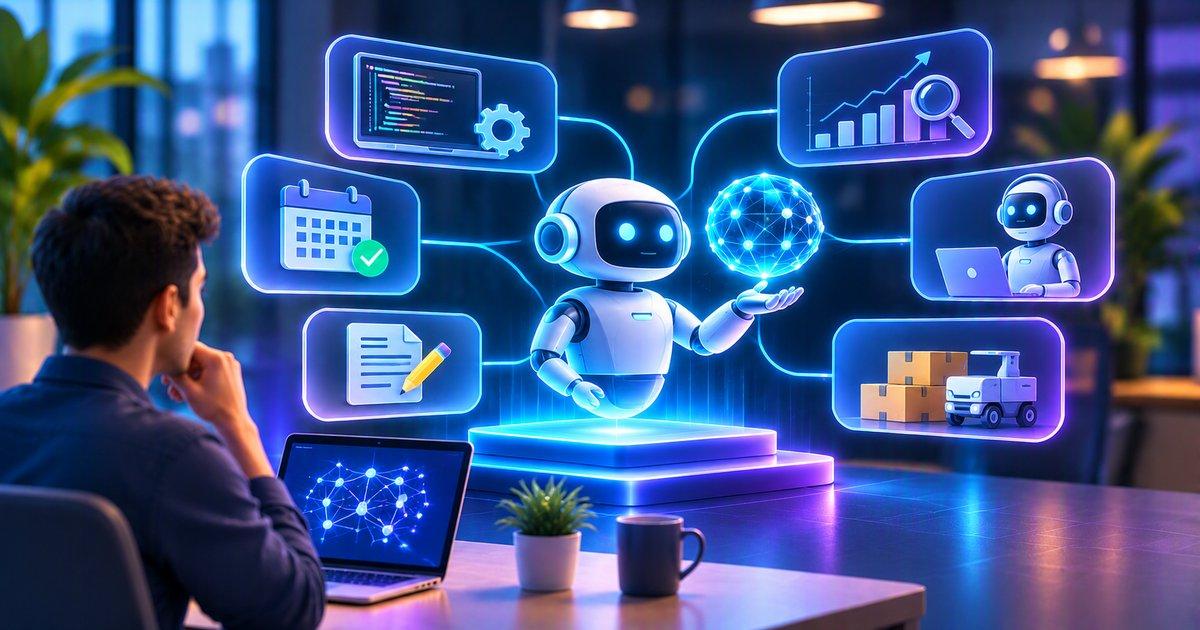
The most significant change is not the automation of one development activity. It is the ability to connect multiple activities into a continuous workflow.
A task can begin with a repository issue, move into automated investigation, continue through implementation and testing, and return as a pull request for review. Each stage provides context for the next stage, reducing the need for developers to manually transfer information between disconnected tools.
GitHub's agentic workflow initiatives illustrate this direction. Its February 2026 technical preview described repository automation for issue triage, documentation updates, code quality tasks, and CI failure investigation using coding agents within GitHub Actions.
An agent-driven workflow can also respond to events. A newly created issue may trigger classification and prioritization. A failed CI job may initiate investigation. A pull request may trigger automated review or test generation. A dependency alert may initiate impact analysis and prepare a proposed update.
The key architectural principle is that agents participate in existing engineering processes rather than operating as isolated chat interfaces. They work with repositories, issue trackers, test runners, build systems, and deployment tools.
This creates a new division of responsibility. Developers increasingly define objectives, review execution, resolve ambiguous decisions, and maintain system-level quality. Agents handle bounded implementation and analysis activities where the available context and validation mechanisms are sufficient.
The resulting workflow is not fully autonomous in every organization. Human approval remains important, particularly for production changes, security-sensitive modifications, and architectural decisions. The most effective systems combine agent execution with established engineering controls.
Key Takeaway
AI agents are expanding software development assistance from individual code suggestions to multi-step engineering tasks. They can participate in requirement analysis, repository exploration, implementation planning, and event-driven workflows. Their value comes from connecting development activities while preserving clear human ownership of requirements, architecture, and release decisions.
Section 2: How AI Agents Transform Coding, Testing, Debugging, and Code Review
AI-Driven Code Generation, Refactoring, and Implementation
Code generation remains one of the most visible applications of AI in software engineering, but coding agents make the process more contextual and iterative. Instead of generating a standalone function, an agent can inspect the surrounding implementation, understand project conventions, modify multiple files, and test the result.
A developer may delegate a task such as implementing a new API endpoint. The agent can examine existing endpoints, identify shared middleware, reuse validation patterns, create the controller logic, update routing, and generate relevant tests.
This repository-aware behavior is important because production software rarely consists of isolated functions. Changes frequently affect multiple layers, including API contracts, database models, service classes, configuration, and tests.
Agents can also assist with refactoring. They may identify duplicated logic, suggest extracting common functions, update deprecated API usage, or reorganize modules. When working across several files, they can maintain references between components and execute tests after modifications.
However, generated code must still satisfy architectural requirements. An implementation may compile and pass basic tests while introducing unnecessary abstractions, inefficient database queries, or inconsistent error handling.
Developers should therefore provide explicit constraints. Instructions might specify that the agent must preserve existing API behavior, avoid introducing new dependencies, follow established naming conventions, and include regression tests for changed functionality.
The agent should also be instructed to make incremental changes rather than rewriting large portions of the repository without justification. Smaller patches are easier to inspect, test, and revert.
A reliable code-generation workflow includes planning, implementation, validation, and review. The agent can accelerate each stage, but the developer remains responsible for determining whether the result is suitable for the application.
Automated Testing and Test-Driven Development
Testing is one of the most promising areas for AI agent integration because test runners provide observable feedback. An agent can generate test cases, execute them, inspect failures, modify code, and repeat the process.
For example, when implementing a new payment validation rule, an agent may identify the relevant service, generate unit tests for valid and invalid inputs, execute the test suite, and revise the implementation based on failures.
Agents can also help identify missing test coverage. By inspecting functions and existing tests, they can suggest edge cases involving null values, boundary conditions, invalid input, authorization failures, and unexpected external responses.
In a test-driven workflow, the agent may first generate tests from acceptance criteria, then implement the functionality needed to satisfy them. This can make requirements more concrete and help developers identify ambiguous expected behavior.
However, generated tests should not be assumed to be correct simply because they pass. An agent might create tests that mirror its own implementation assumptions rather than the actual requirements. It may also modify or weaken assertions in ways that make the test suite pass without protecting intended behavior.
Engineers should preserve independent test expectations and use mutation testing, property-based testing, integration testing, and human review where appropriate. The agent should not be allowed to redefine the success criteria simply to validate its own implementation.
The quality of testing is especially important because coding-agent benchmarks often use test outcomes as a major measure of success. SWE-bench evaluates agents on repository-level issue resolution using real software tasks and tests. Research on benchmark design also highlights limitations: passing a test suite does not necessarily establish maintainability, architectural quality, or production suitability.
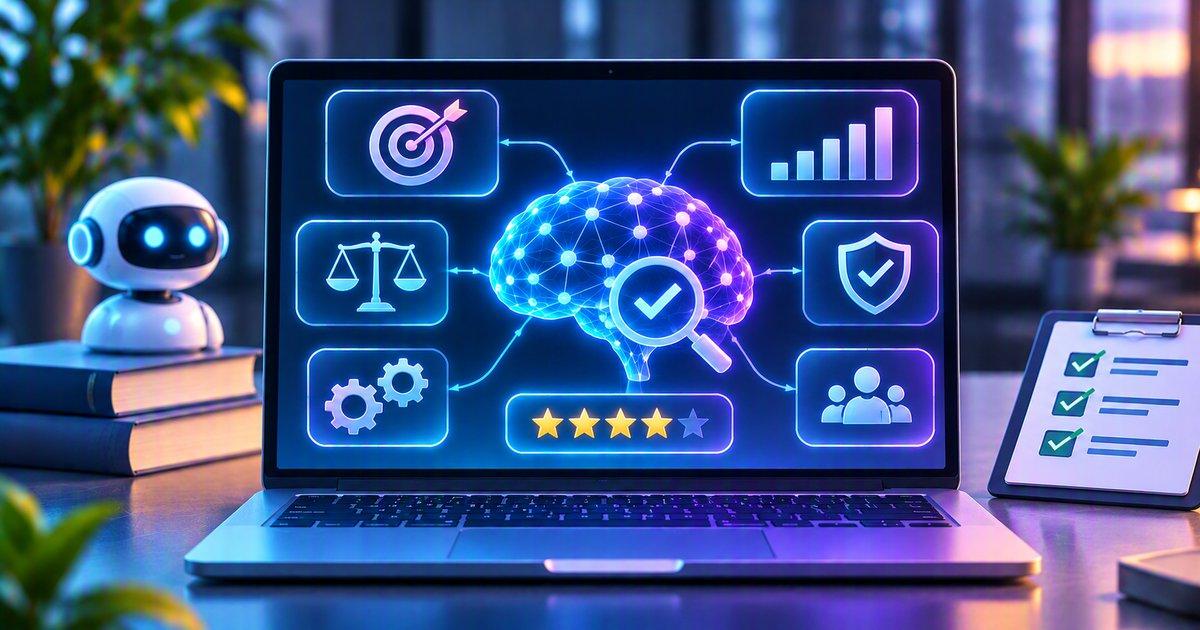
Testing should therefore evaluate both functional correctness and broader engineering quality.
Debugging, Root Cause Analysis, and Production Incident Investigation
Debugging often requires developers to correlate information across logs, traces, metrics, code changes, configuration, and infrastructure. This process can be time-consuming, particularly when the failure occurs in a system with multiple services and dependencies.
AI agents can help investigate failures by collecting relevant evidence and identifying likely causes. An agent may inspect an exception trace, locate the affected function, review recent commits, search related issues, and run a targeted test to reproduce the problem.
Consider a production service experiencing intermittent database connection failures. A debugging agent could inspect application logs, review connection-pool configuration, examine recent deployment changes, and compare error patterns across service instances. It could then prepare a list of likely causes and propose diagnostic steps.
Agents can also assist with regression analysis. If a test starts failing after a code change, an agent can inspect the commit history, compare the changed files, and identify which modifications may have affected the failing behavior.
The value is not that the agent always identifies the correct root cause. It is that it can accelerate evidence gathering and reduce the time developers spend navigating large amounts of diagnostic information.
Production debugging requires caution because logs may contain sensitive information, and an incorrect change can make an incident worse. Agents should initially operate in read-only diagnostic environments. Any remediation that changes production state should follow established approval and incident-management procedures.
Engineers should also distinguish between correlation and causation. A recent deployment may coincide with a failure without being the underlying cause. Agents should present evidence, alternative hypotheses, and confidence limitations rather than treating the first plausible explanation as definitive.
AI-Powered Code Review, Security Analysis, and Pull Request Preparation
Code review is another development activity where AI agents can provide assistance. A review agent can inspect a proposed change, compare it with repository conventions, identify potential defects, and highlight security or performance concerns.
For example, a review agent examining a new API endpoint might identify missing authorization checks, insufficient input validation, inefficient database access, or inconsistent error handling. It may also check whether relevant tests and documentation have been updated.
Agents can prepare pull request descriptions by summarizing changed files, explaining implementation decisions, listing test results, and identifying known limitations. This can reduce the administrative work involved in preparing changes for review.
Security-focused agents can inspect dependency changes, suspicious code patterns, exposed secrets, and unsafe input handling. However, AI review should complement established security tools such as static analysis, dependency scanning, secret detection, and software composition analysis.
One challenge is false positives. An agent may flag code that is valid in the application's context or overlook a subtle vulnerability. Review findings should therefore be supported by specific evidence and prioritized according to severity and confidence.
Human review remains essential because code quality involves more than local correctness. A reviewer must consider architecture, maintainability, backward compatibility, operational impact, and whether the change solves the actual problem.
GitHub's coding-agent documentation illustrates this integrated model: agents can work on assigned tasks and return changes through pull requests, where developers retain the responsibility for reviewing and approving modifications.
For a deeper understanding of validating non-deterministic outputs and testing AI-enabled systems, explore InterviewNode's guide, ML Testing for Software Engineers: How to Test Systems That Don't Always Produce the Same Output.
Key Takeaway
AI agents can participate in code generation, refactoring, testing, debugging, and code review. Their effectiveness depends on repository context, independent validation, and clear engineering constraints. Developers should treat agent-generated changes as proposed engineering work that must pass the same functional, security, and maintainability standards as human-written code.
Section 3: Integrating AI Agents Into CI/CD, DevOps, and Production Engineering
Agent-Driven Continuous Integration and Build Failure Investigation
Continuous integration systems automatically build and test software changes when developers submit commits or pull requests. They provide rapid feedback, but failed builds can still require substantial manual investigation.
AI agents can extend CI pipelines by analyzing failed jobs, inspecting logs, identifying relevant code changes, and proposing fixes. Rather than requiring a developer to manually trace every failure, an agent can gather the evidence and return a structured diagnosis.
Consider a CI pipeline that fails after a dependency upgrade. An agent could inspect the failing test output, compare the dependency manifest with the previous version, identify deprecated methods, and propose a compatibility fix.
Another useful application is automated test generation for newly modified code. When a pull request changes a particular module, an agent may identify missing tests and propose additional cases before the change is merged.
Event-driven workflows make these capabilities more practical. A failed build can trigger an investigation agent, while a new pull request can initiate documentation review or security checks. The results can be returned as comments or proposed changes.
GitHub Agentic Workflows demonstrate this direction by enabling repository automation for tasks such as CI failure investigation, documentation updates, issue triage, and code quality improvements.
The key design requirement is that the agent must not bypass the CI system's independent validation. It should propose changes, while the normal build and test pipeline determines whether those changes satisfy the repository's acceptance criteria.
AI Agents in DevOps, Infrastructure, and Deployment Operations
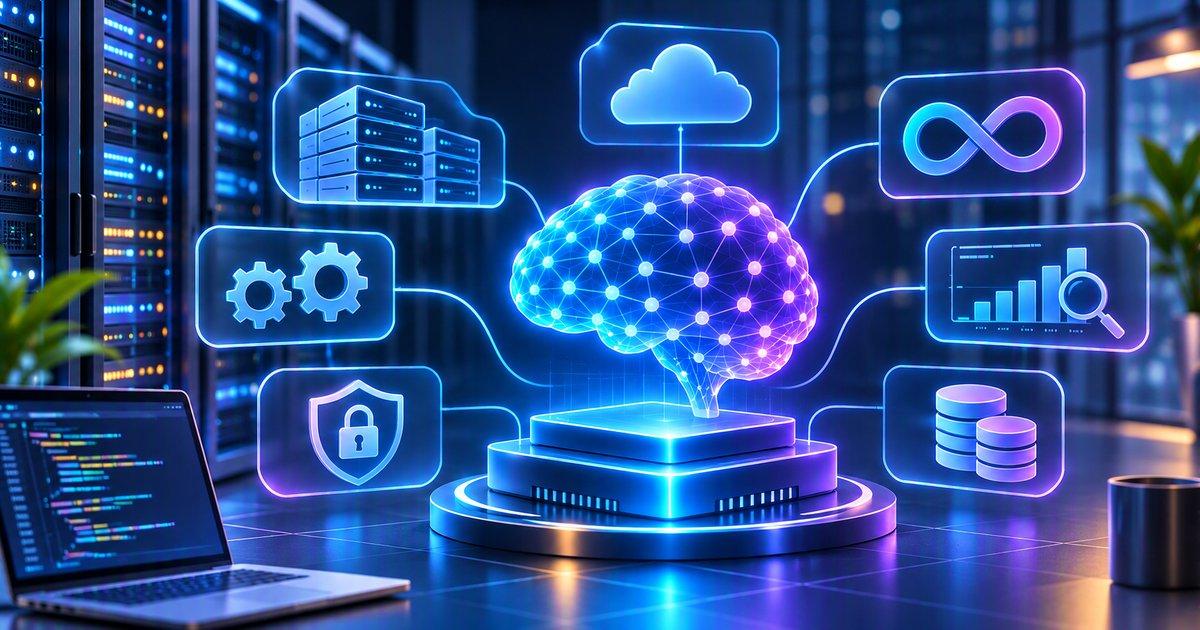
DevOps workflows involve coordination across application code, infrastructure configuration, deployment systems, monitoring platforms, and operational procedures. AI agents can assist with several of these activities by interpreting operational requests and interacting with approved tools.
An infrastructure agent might inspect deployment manifests, identify configuration inconsistencies, and propose changes to resource definitions. A monitoring agent could analyze service alerts, correlate them with recent deployments, and prepare an incident summary.
Deployment preparation is another potential application. An agent may summarize release notes, identify affected services, check whether required tests have completed, and prepare a deployment checklist.
However, the ability to propose an infrastructure change does not mean the agent should automatically execute it. Infrastructure operations can have significant consequences, including service outages, data loss, and security exposure.
A safe architecture separates analysis from execution. The agent can inspect configurations and generate a proposed patch. Deterministic policy checks can validate the change, and a human operator can approve high-impact actions.
Infrastructure agents should also have narrowly scoped credentials. A monitoring agent may need read-only access to metrics and logs, while a deployment agent may need permission to initiate a specific pipeline without having unrestricted administrative access.
Engineers should monitor operational outcomes such as deployment success rates, rollback frequency, incident recurrence, and mean time to recovery. The objective is not simply to increase automation but to improve operational reliability.
Documentation, Dependency Management, and Repository Maintenance
Software maintenance includes many tasks that are important but often receive less attention than feature development. Documentation becomes outdated, dependencies require updates, deprecated APIs accumulate, and repository instructions may no longer reflect actual implementation behavior.
AI agents can help identify and address these maintenance activities. A documentation agent may compare source code with existing documentation and propose corrections when APIs or configuration options change.
A dependency management agent can inspect package manifests, identify outdated libraries, review release notes, and prepare update pull requests. However, dependency updates must still pass compatibility, vulnerability, and regression checks.
Agents can also assist with issue triage. They may classify incoming issues, identify duplicates, suggest labels, extract reproduction steps, and route requests to appropriate engineering teams.
Another application is repository hygiene. Agents can detect missing test documentation, identify unused configuration, propose cleanup tasks, and summarize technical debt.
These tasks are particularly suitable for bounded delegation because their expected outputs can often be defined clearly. An agent can prepare a documentation change or dependency update, and the repository's normal review process can validate the result.
The important distinction is between identifying a maintenance opportunity and deciding that the proposed change is safe. Engineers must evaluate compatibility, operational impact, and whether the change is worth introducing.
Release Management, Monitoring, and Continuous Improvement
AI agents can participate in release management by collecting information required to assess whether a change is ready for deployment. They can summarize pull requests, check whether required tests have completed, identify outstanding review comments, and prepare release documentation.
After deployment, monitoring agents can analyze logs, metrics, traces, and alerts to identify unusual behavior. They may compare current service behavior with historical baselines and prepare investigation reports when anomalies occur.
For example, after releasing a new version of a payment service, an agent could monitor error rates, response latency, and transaction failures. If a metric exceeds a defined threshold, it could gather related traces and prepare a diagnostic summary for the on-call engineer.
However, agents should not replace deterministic monitoring and alerting systems. Threshold-based alerts, service-level objectives, health checks, and automated rollback conditions should remain independently enforceable.
An AI agent can provide additional context and suggest likely explanations, but it should not become the only mechanism responsible for identifying production failures.
Continuous improvement also requires learning from previous incidents. Engineering teams can use incident reports, reviewed pull requests, and evaluation datasets to identify recurring problems and improve agent instructions or tool behavior.
This creates a feedback loop between development and operations. Agent performance can be measured over time, and changes can be introduced through versioned configurations and controlled releases.
For organizations adopting these practices, production readiness depends on strong model lifecycle management, monitoring, deployment controls, and rollback procedures. InterviewNode's article, MLOps for Software Engineers: Building, Deploying, and Monitoring Machine Learning Models in Production, provides additional guidance on these operational foundations.
Key Takeaway
AI agents can extend development automation into CI, DevOps, repository maintenance, release preparation, and production investigation. The safest architecture combines agent-driven analysis and proposed actions with deterministic pipelines, independent monitoring, restricted permissions, and human approval for high-impact operations.
Conclusion
AI agents are transforming software development by expanding artificial intelligence from code suggestions into multi-step engineering activities. They can interpret requirements, explore repositories, generate implementations, write tests, investigate failures, review changes, and participate in CI/CD and production operations.
This evolution changes how engineering work is organized. Developers can delegate bounded tasks to agents, while focusing their attention on architecture, complex problem-solving, technical decision-making, and quality assurance. Teams can also integrate agents into existing development platforms, allowing issues, pull requests, test pipelines, and operational workflows to become more connected.
However, agentic development is not simply a faster way to generate code. It introduces new responsibilities around context management, execution permissions, security, observability, evaluation, and accountability. Agents can make mistakes, misunderstand requirements, and produce changes that appear correct without meeting broader engineering expectations.
The strongest development workflows will combine AI execution with deterministic engineering controls. Agents should operate within isolated environments, follow repository-specific instructions, use restricted tools, and return changes for independent validation. Tests, static analysis, security scanning, and human review should continue to determine whether code is suitable for production.
For software engineers, the opportunity is to develop the skills needed to work effectively with these systems. Understanding agent architecture, repository context, tool calling, workflow orchestration, testing, and production deployment will become increasingly valuable as organizations integrate AI into their engineering processes.
The future of software development will not be defined only by how much code AI can generate. It will be defined by how effectively engineers combine human judgment and autonomous execution to build software that is correct, maintainable, secure, and valuable.
Frequently Asked Questions (FAQs)
1. What are AI agents in software development?
AI agents in software development are systems that use language models and tools to perform multi-step engineering tasks. They can inspect repositories, generate code, run tests, analyze failures, and prepare changes for human review.
2. How are AI coding agents different from traditional AI coding assistants?
Traditional coding assistants primarily suggest code or answer programming questions. Coding agents can work toward a defined objective by planning actions, editing files, executing commands, observing results, and revising their implementation.
3. Can AI agents write and test complete applications?
Agents can assist with substantial implementation tasks and may generate multiple application components. However, complex applications still require human architectural decisions, comprehensive testing, security validation, and production review.
4. How do AI agents help with debugging?
They can inspect error logs, stack traces, source code, test failures, and recent changes to identify possible causes. They can also propose fixes and execute targeted tests, but developers must verify the diagnosis.
5. Can AI agents automatically perform code reviews?
They can review proposed changes for potential bugs, security issues, performance problems, and coding convention violations. AI review should complement human review and established static analysis tools rather than replace them.
6. How are AI agents used in software testing?
Agents can generate test cases, identify missing coverage, execute test suites, interpret failures, and propose fixes. Independent test expectations and validation remain necessary because generated tests may reproduce the assumptions of the implementation.
7. What is an agentic software development workflow?
An agentic software development workflow connects AI agents to multiple stages of software engineering. It may begin with an issue, continue through repository exploration and implementation, and finish with testing and a pull request for human approval.
8. Which tools support AI agent-based software development?
Developers can explore GitHub Copilot coding agent, Claude Code, OpenAI Codex, Cursor, and other coding-agent environments. Supporting technologies include agent orchestration frameworks, repository tools, CI/CD systems, test runners, and Model Context Protocol integrations.
9. What is the role of human developers when AI agents write code?
Developers define requirements, provide architectural direction, establish constraints, supervise execution, review changes, and remain accountable for code quality. Their technical judgment is essential when agent outputs are incomplete or incorrect.
10. Are AI agents reliable enough for production software development?
They can be useful in production workflows when tasks are appropriately scoped and supported by testing, review, permissions, and monitoring. Reliability depends on the task, repository context, model capabilities, and validation process.
11. How do developers secure AI coding agents?
Developers should use least-privilege permissions, isolated environments, protected credentials, input validation, tool restrictions, audit logs, and human approval for sensitive operations. Agents should not have unrestricted access to production systems.
12. Can multiple AI agents collaborate on a software development task?
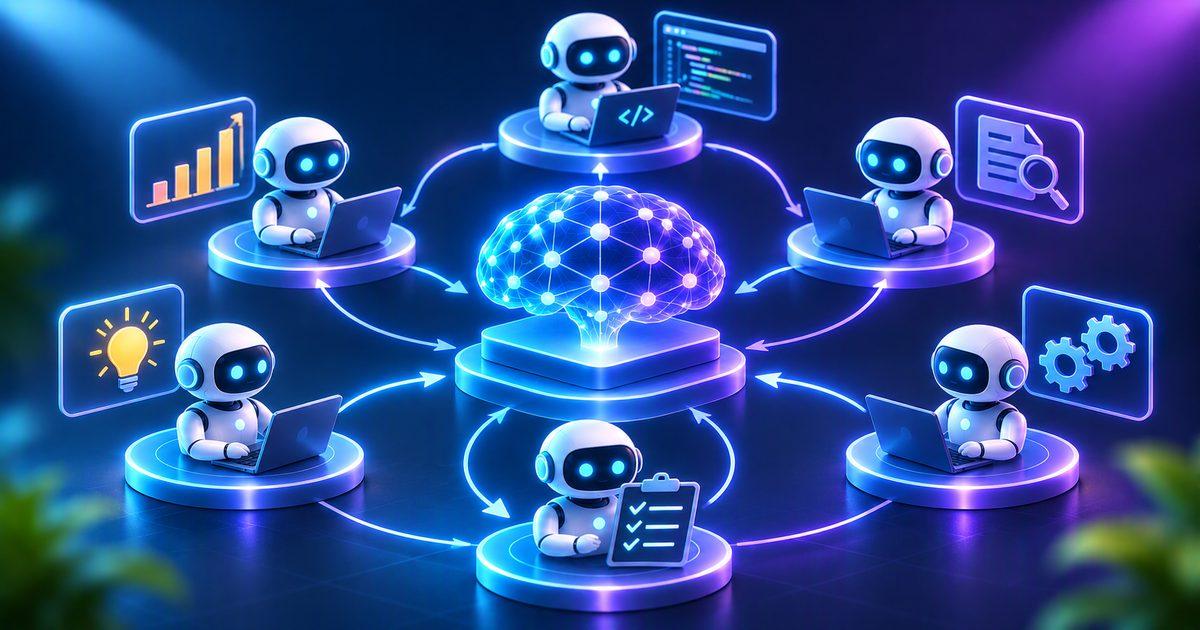
Yes. Multiple agents can specialize in planning, implementation, testing, security review, and documentation. Coordination requires clear responsibilities, structured outputs, dependency management, and independent validation.
13. Will AI agents replace software engineers?
AI agents can automate or accelerate certain development tasks, but they do not eliminate the need for engineers to understand requirements, design systems, evaluate tradeoffs, and maintain software. Engineering responsibilities are likely to evolve as automation expands.
14. How should software engineers prepare for AI-driven development workflows?
Engineers should learn coding-agent architecture, prompt and context engineering, tool calling, repository instructions, automated testing, security, CI/CD integration, and agent evaluation. Practical projects that demonstrate controlled execution are especially useful.
15. How can companies measure the productivity impact of AI coding agents?
Companies should compare development lead time, task completion rates, defect rates, review effort, deployment frequency, change failure rates, and total cost. Measuring generated code volume alone does not establish improved engineering productivity.