
Section 1: The Shift from Interface-First to Intelligence-First Products
For more than four decades, digital product design has revolved around a simple principle: create intuitive interfaces that allow users to complete tasks as efficiently as possible. Every generation of software, from desktop applications and web platforms to mobile apps and cloud-native products, focused on improving navigation, reducing friction, simplifying workflows, and making interfaces easier to understand. Designers carefully optimized buttons, menus, forms, dashboards, icons, search bars, and navigation structures because these components represented the primary way users interacted with software. Success was measured by how quickly users could find information, complete transactions, or move through predefined workflows.
This interface-centric philosophy produced many of the world's most successful digital products. Search engines organized vast amounts of information into searchable indexes, e-commerce platforms simplified online purchasing, enterprise software streamlined business operations, and mobile applications brought digital experiences into everyday life. Yet despite continuous improvements in usability, these products shared one important characteristic: users remained responsible for driving every interaction. They searched for information, selected options, navigated menus, interpreted results, and manually initiated nearly every action the software performed.
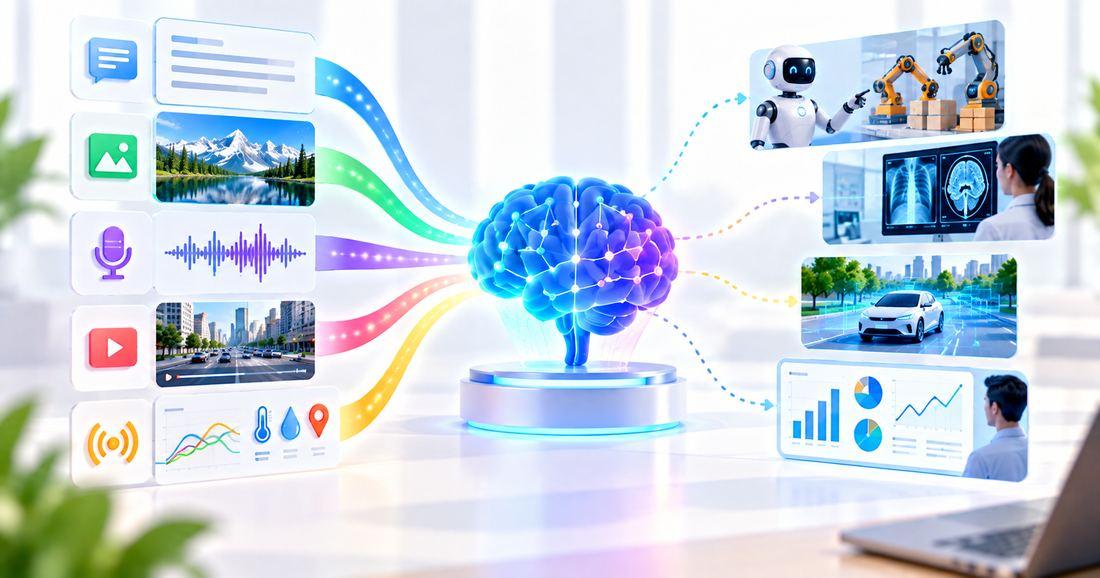
Artificial intelligence is fundamentally changing this relationship. Instead of requiring users to learn how software works, AI enables software to understand how users think, communicate, and accomplish their goals. Modern AI systems interpret natural language, recognize intent, remember context, generate recommendations, automate repetitive activities, and continuously adapt to individual behavior. This transformation shifts product design away from interfaces built around navigation toward experiences built around intelligence. Rather than asking users to navigate increasingly complex applications, AI-native products proactively assist users by understanding objectives and helping achieve them with minimal effort.
Designing Products That Understand Users
Understanding this transformation begins with examining the evolution of digital product design. Early software prioritized functionality over usability because computing resources were limited and most users possessed technical expertise. As personal computing expanded, graphical user interfaces made software more accessible by introducing windows, icons, menus, and direct manipulation. The internet shifted design toward websites capable of guiding users through increasingly complex information, while smartphones emphasized simplicity, responsive layouts, and touch-friendly interactions. Cloud computing later enabled products to synchronize information across devices and support continuous feature delivery, allowing organizations to refine products based on real-world usage data.
Throughout each of these technological shifts, product teams focused primarily on improving interfaces rather than changing the underlying interaction model. Users continued navigating applications through structured workflows where every action required deliberate interaction with predefined interface elements. Although these products became progressively more intuitive, the responsibility for operating the software remained almost entirely with the user.
These principles formed the foundation of traditional UX design. Designers invested heavily in information architecture, navigation hierarchy, visual consistency, accessibility, usability testing, interaction patterns, and cognitive load reduction. Every interface element served a carefully defined purpose intended to minimize confusion while helping users complete tasks efficiently. Dashboards organized information into logical sections, forms collected structured input, navigation menus categorized functionality, and search bars enabled information discovery. The objective was to reduce friction without fundamentally changing the relationship between users and software.
Artificial intelligence introduces an entirely new design philosophy known as AI-first product design. Rather than treating intelligence as an optional feature layered onto existing interfaces, AI-first products position intelligent capabilities at the center of the user experience. Every interaction is designed around understanding user objectives instead of merely responding to explicit commands. Users increasingly communicate with software using natural language rather than navigating predetermined workflows, allowing AI systems to interpret requests, retrieve relevant information, automate actions, and generate personalized responses dynamically.
One of the most visible manifestations of this shift is the rise of natural language interfaces. Traditional applications require users to understand interface conventions before completing tasks. An enterprise analytics platform may require selecting filters, configuring reports, navigating dashboards, and exporting results manually. AI-native systems eliminate much of this complexity by allowing users to describe objectives conversationally. Instead of configuring multiple reporting options, a manager can simply request, "Show me how regional sales performed this quarter compared to last year," and receive an immediate analysis. Natural language becomes the primary interface, reducing the learning curve while making sophisticated software accessible to a broader range of users.
Readers interested in understanding how engineering organizations are evolving to support AI-first products should also explore "Why Every Software Team Will Have an AI Engineer by 2030," which examines why AI expertise is becoming essential across modern software development teams.
Key Takeaway
Digital product design is evolving from interface-first experiences centered around menus, navigation, and predefined workflows toward intelligence-first products built around natural language, conversation, context awareness, personalization, intelligent recommendations, user intent, and proactive assistance. As artificial intelligence becomes the foundation of modern software, successful products will increasingly differentiate themselves through their ability to understand users, anticipate needs, and collaborate intelligently rather than simply presenting well-designed interfaces.
Section 2: Designing Products Around AI Collaboration
Artificial intelligence is changing digital products in ways that extend far beyond adding chatbots or automating repetitive tasks. It is fundamentally redefining the relationship between humans and software. For decades, software applications functioned as passive tools that executed instructions precisely as users entered them. Every workflow required explicit commands, manual navigation, and continuous human supervision. Users remained responsible for making decisions, interpreting information, and coordinating every stage of the task. Software provided capabilities, but humans directed every interaction.
Modern AI systems are transforming this dynamic by introducing intelligent collaboration. Rather than functioning solely as tools, AI-powered products increasingly operate as digital partners capable of understanding objectives, offering recommendations, generating solutions, automating workflows, and adapting continuously to user behavior. Instead of replacing human expertise, these systems amplify it by reducing repetitive work while enabling users to focus on creativity, strategic thinking, and complex decision-making. The goal of AI-native product design is therefore not complete automation but effective collaboration between human intelligence and artificial intelligence.
This collaborative model represents one of the most significant shifts in product design since the emergence of graphical user interfaces. Product teams are no longer designing software that simply responds to user input. They are designing experiences where AI actively participates throughout the user's journey, learning from interactions, adapting interfaces, providing contextual guidance, and continuously improving the overall experience. Designing products around AI collaboration requires balancing automation with human oversight, intelligence with transparency, and efficiency with trust. Every interaction must empower users rather than diminish their control over important decisions.
Creating Products Where Humans and AI Work Together
One of the clearest examples of this transformation is the rapid adoption of AI copilots. Unlike traditional digital assistants that perform isolated tasks through predefined commands, AI copilots function as intelligent collaborators embedded directly into users' workflows. They understand ongoing work, remember context, provide recommendations, generate content, summarize information, automate repetitive activities, and support complex problem-solving without requiring users to switch between multiple applications.
Software developers now work alongside coding copilots that explain unfamiliar code, recommend architecture improvements, generate test cases, and identify potential security vulnerabilities while programming. Business professionals collaborate with AI assistants that draft reports, prepare presentations, summarize meetings, analyze spreadsheets, and organize information according to business priorities. Customer support agents receive AI-generated response suggestions based on previous interactions, while healthcare professionals obtain evidence-based clinical summaries drawn from medical literature and patient histories. In each case, AI functions as an assistant that enhances productivity while allowing human professionals to make final decisions.
These evolving interactions illustrate the broader concept of human-AI collaboration. Rather than viewing artificial intelligence as a replacement for human expertise, modern product design increasingly treats AI as a complementary capability that augments human strengths while compensating for repetitive cognitive tasks. Humans contribute judgment, creativity, ethical reasoning, empathy, and contextual understanding, while AI contributes computational speed, pattern recognition, information retrieval, summarization, and automation. Effective collaboration emerges when products clearly define how responsibilities are shared between users and intelligent systems.
Designing for collaboration requires understanding when AI should provide recommendations instead of making decisions independently. Financial advisors benefit from AI-generated market analysis but remain responsible for client recommendations. Physicians may receive AI-assisted diagnostic insights while retaining complete authority over treatment decisions. Software architects can review AI-generated implementation strategies before selecting the most appropriate solution. Product designers therefore build systems that strengthen human expertise rather than eliminating it, ensuring users remain actively engaged throughout high-impact decision-making processes.
The emergence of Agentic AI further expands the possibilities for collaborative product experiences. Traditional AI systems respond to individual prompts one interaction at a time. Agentic AI extends these capabilities by planning, reasoning, coordinating multiple actions, and executing complex workflows to achieve broader objectives. Instead of merely answering questions, AI agents pursue goals on behalf of users while adapting continuously as circumstances evolve.
Readers interested in understanding how engineering teams build the autonomous systems powering these collaborative experiences should also explore "The Engineering Behind Autonomous AI Workflows," which examines the architectures enabling AI systems to collaborate intelligently across complex enterprise environments.
Key Takeaway
The future of digital product design centers on collaboration between humans and artificial intelligence rather than simple automation. AI copilots, human-AI collaboration, Agentic AI, workflow automation, decision support, AI-assisted creativity, adaptive interfaces, continuous learning, user trust, and Responsible AI collectively redefine how products are experienced and how work is accomplished. Organizations that design products around intelligent collaboration will create software that empowers users, enhances productivity, and delivers more meaningful, trustworthy, and adaptive digital experiences than traditional applications ever could.
Section 3: Building AI-Native Product Architectures
Artificial intelligence is transforming digital products not only through new user experiences but also by fundamentally changing the architectures that power those experiences. Traditional software architectures were designed around deterministic business logic, relational databases, REST APIs, and predictable workflows where every user interaction followed predefined execution paths. These systems excelled at processing structured information and executing well-defined operations, but they were never intended to understand natural language, generate content, reason across vast knowledge repositories, or personalize experiences dynamically. As artificial intelligence becomes central to digital products, organizations must rethink the underlying architecture itself rather than simply integrating AI models into existing software stacks.
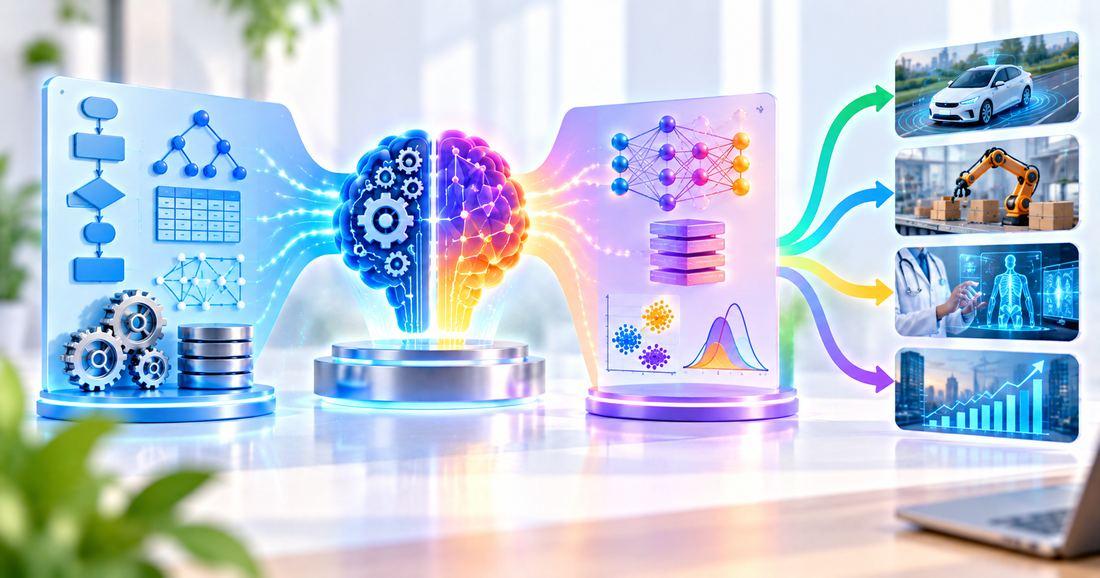
An AI-native product differs from conventional software because intelligence is embedded into every architectural layer. Instead of functioning as isolated components, Large Language Models, Retrieval-Augmented Generation (RAG), personalization engines, multimodal AI, observability platforms, enterprise knowledge systems, analytics pipelines, security frameworks, and cloud infrastructure work together to create products capable of learning, adapting, reasoning, and collaborating with users continuously. Product architecture therefore evolves from supporting transactional workflows toward supporting intelligent decision-making, contextual reasoning, and personalized user interactions at enterprise scale.
Designing these AI-native architectures requires balancing performance, scalability, reliability, security, governance, and operational efficiency while ensuring AI remains trustworthy under real-world production conditions. Product teams increasingly recognize that building intelligent experiences depends just as much on engineering robust AI infrastructure as it does on developing sophisticated models. The future of digital products will therefore be defined by architectures capable of orchestrating intelligence seamlessly across every user interaction.
Engineering the Foundation of Intelligent Products
At the center of every AI-native architecture are Large Language Models (LLMs), which provide the reasoning capabilities enabling products to understand natural language, generate content, summarize information, analyze documents, answer questions, and support conversational interactions. Unlike traditional search algorithms or rule-based systems, LLMs interpret meaning rather than simply processing keywords or predefined commands. This capability allows users to communicate with software naturally while enabling applications to understand intent, explain complex concepts, recommend solutions, and automate knowledge-intensive tasks.
However, language models alone cannot support production-grade digital products because their knowledge remains limited to information available during training. Enterprise applications require access to current organizational documents, customer records, technical documentation, operational data, compliance policies, and proprietary business knowledge that changes continuously. Consequently, AI-native architectures increasingly combine LLMs with dynamic retrieval systems capable of grounding responses in reliable organizational information rather than relying solely on learned parameters.
This architectural pattern is known as Retrieval-Augmented Generation (RAG) and has become one of the defining technologies behind enterprise AI products. Rather than generating responses exclusively from model memory, RAG retrieves relevant documents from enterprise knowledge repositories before constructing answers. This significantly improves factual accuracy while allowing organizations to keep AI systems synchronized with continuously evolving information without retraining models.
For example, a customer support assistant retrieves current product documentation before answering technical questions. A legal platform references the latest regulatory documents while analyzing contracts. Healthcare applications consult updated clinical guidelines alongside patient histories before generating recommendations. Enterprise productivity tools retrieve internal knowledge bases before assisting employees with organizational processes. By combining retrieval with generative reasoning, RAG transforms AI products from static language models into continuously updated knowledge assistants capable of supporting real-world business operations.
Readers interested in understanding how engineering decisions influence the commercial success of AI-native platforms should also explore "The Business of AI: What Every ML Engineer Should Know Beyond Coding," which examines how scalable AI architectures, infrastructure, and business strategy combine to create sustainable enterprise AI products.
Key Takeaway
Building AI-native products requires far more than integrating Large Language Models into existing software. Modern digital products depend on architectures that combine Retrieval-Augmented Generation, multimodal AI, AI observability, personalization engines, enterprise AI integration, security, scalability, product analytics, and robust AI infrastructure into unified intelligent ecosystems. Organizations that invest in these architectural foundations will build products capable of learning continuously, adapting to users, scaling efficiently, and delivering trustworthy AI experiences that redefine how people interact with digital technology.
Section 4: The Future of AI Product Design
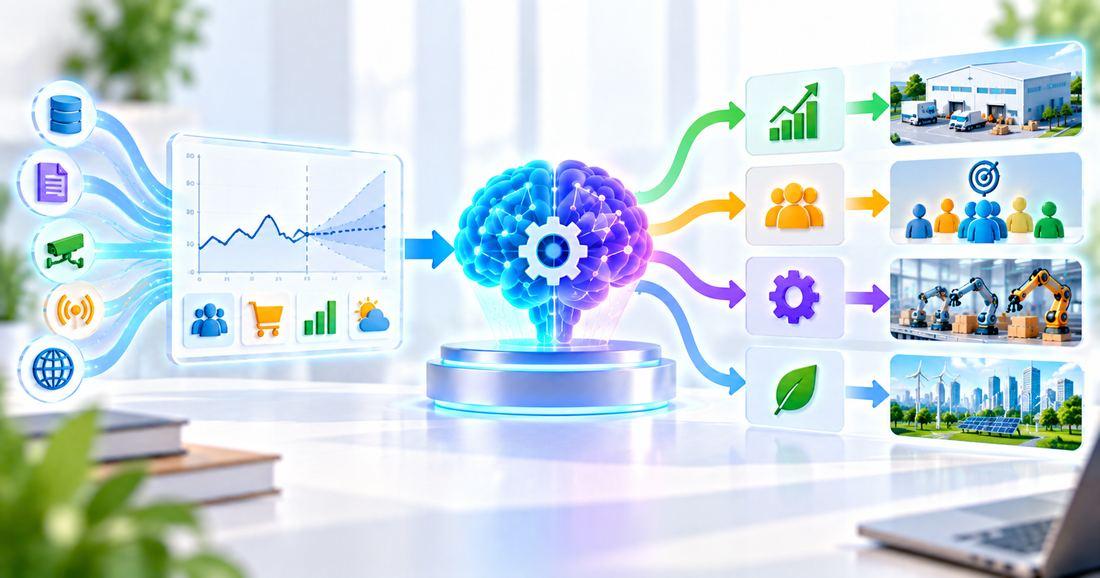
Artificial intelligence is reshaping digital products at a pace unmatched by any previous technology revolution. The first generation of AI-powered applications primarily focused on introducing isolated intelligent features such as recommendation engines, predictive analytics, virtual assistants, or automated customer support. While these capabilities significantly enhanced user experiences, they largely operated within products that were still designed around traditional interfaces and deterministic workflows. Today, however, AI is becoming the foundation upon which products are conceived, designed, developed, and continuously improved. Digital products are evolving from static applications that execute user commands into intelligent systems capable of learning, reasoning, adapting, and collaborating with people throughout every stage of the user journey.
This transformation extends well beyond technology. It is changing the responsibilities of product managers, UX designers, software engineers, researchers, and business leaders. Designing AI-native products requires interdisciplinary collaboration where technical innovation, human-centered design, ethical governance, data strategy, and operational excellence work together to create experiences that users can trust. Future products will not simply respond to user requests; they will anticipate needs, personalize interactions, automate routine work, explain recommendations, and continuously evolve based on user behavior and organizational knowledge.
The future of product design will therefore be defined by intelligence rather than interfaces. Product teams will increasingly focus on designing systems that combine human creativity with AI reasoning, ensuring technology remains transparent, responsible, and aligned with business objectives. Organizations capable of mastering this balance will create products that redefine customer experiences while establishing entirely new standards for digital innovation.
Designing Products for an AI-First Future
One of the most significant changes will be the evolution of the AI Product Manager. Traditional product managers primarily focused on defining customer requirements, prioritizing feature development, coordinating engineering teams, analyzing market opportunities, and measuring business performance. AI-powered products introduce entirely new responsibilities because intelligent systems behave differently from conventional software.
Future AI Product Managers must understand how Large Language Models, Retrieval-Augmented Generation (RAG), recommendation systems, AI observability, model evaluation, governance, and data quality influence product performance. Instead of asking whether a feature has been implemented correctly, they will ask whether AI recommendations remain accurate, whether personalization improves user outcomes, whether autonomous workflows align with business objectives, and whether AI behavior remains trustworthy over time.
Product roadmaps will increasingly include model evaluation strategies, prompt optimization, enterprise knowledge management, ethical review processes, AI monitoring, regulatory compliance, and continuous learning mechanisms alongside traditional feature planning. AI Product Managers therefore become responsible not only for delivering functionality but also for ensuring intelligent systems continue providing value throughout their operational lifecycle.
Closely connected to this transformation is the emergence of the AI UX Designer, whose role extends beyond designing visually attractive interfaces. Traditional UX designers optimized navigation structures, interaction flows, information architecture, accessibility, and usability. AI-native products require designers to create experiences where humans collaborate naturally with intelligent systems.
Designers must determine when AI should proactively provide recommendations, how conversational interfaces should maintain context, when users should retain complete control over decisions, and how products should communicate uncertainty or confidence levels. They must design interactions that make AI feel helpful without becoming intrusive, powerful without becoming overwhelming, and intelligent without reducing transparency.
Readers interested in understanding how organizations successfully transform advanced AI research into scalable enterprise products should also explore "Research to Real-World ML Engineering: Bridging the Gap," which examines how engineering teams convert cutting-edge AI innovations into reliable, production-ready systems that deliver measurable business value.
Key Takeaway
The future of AI product design will be shaped by AI Product Managers, AI UX Designers, AI Engineering, autonomous products, digital twins, AI governance, Explainable AI, and multidisciplinary product teams capable of building intelligent, trustworthy experiences. As products become increasingly adaptive, personalized, and collaborative, organizations that design around human-AI partnership rather than traditional interfaces will define the next generation of digital innovation, transforming software from static applications into intelligent systems that continuously learn, anticipate needs, and create meaningful value for users.
Conclusion
Artificial intelligence is fundamentally transforming how digital products are imagined, designed, built, and experienced. Previous generations of software focused primarily on improving interfaces, simplifying navigation, and making workflows more efficient. Whether through desktop applications, web platforms, mobile apps, or cloud-native software, product teams concentrated on helping users interact more effectively with technology. AI introduces an entirely different paradigm. Instead of designing products around menus, forms, dashboards, and predefined workflows, organizations are increasingly designing products around intelligence itself. Software is evolving from a passive tool that waits for instructions into an intelligent collaborator capable of understanding user intent, adapting to context, personalizing experiences, automating tasks, and continuously learning from every interaction.
Throughout this article, we explored how digital products are shifting from interface-first design to intelligence-first experiences. Traditional UX principles remain valuable, but they are no longer sufficient for AI-native products. Natural language interfaces, conversational experiences, context awareness, intelligent recommendations, proactive assistance, and deep personalization are redefining how users interact with software. Rather than forcing users to learn increasingly complex applications, AI enables products to understand human communication and adapt to individual goals. This shift fundamentally changes the role of product design from organizing interfaces to orchestrating intelligent experiences that reduce cognitive effort while improving productivity and user satisfaction.
We also examined how AI collaboration is becoming the defining characteristic of modern digital products. AI copilots, human-AI collaboration, Agentic AI, workflow automation, decision support, AI-assisted creativity, adaptive interfaces, continuous learning, and Responsible AI collectively create products where artificial intelligence actively supports users throughout their work rather than simply responding to isolated commands. The most successful AI products will not seek to replace human expertise but will instead amplify it by automating repetitive activities, generating valuable insights, and enabling professionals to focus on creativity, strategy, and high-value decision-making. Trust, transparency, and human oversight therefore remain essential design principles as AI assumes increasingly important roles within digital experiences.
Equally important, we explored the architectural foundations required to build AI-native products at enterprise scale. Large Language Models, Retrieval-Augmented Generation (RAG), multimodal AI, AI observability, personalization engines, enterprise AI integration, security frameworks, scalable infrastructure, product analytics, and cloud-native AI platforms work together to transform isolated AI capabilities into dependable production systems. Successful AI products require much more than powerful models. They demand architectures capable of delivering intelligent, secure, observable, scalable, and continuously improving experiences across millions of users while maintaining operational reliability and business sustainability.
Finally, we examined how AI is reshaping the future of product organizations themselves. AI Product Managers, AI UX Designers, AI Engineers, autonomous products, digital twins, AI governance, Explainable AI, and multidisciplinary product teams will become central to building the next generation of intelligent software. Future digital products will continuously learn from user interactions, personalize every experience, anticipate changing needs, automate increasingly complex workflows, and collaborate naturally with humans rather than functioning as static applications. Product teams will increasingly evaluate success not only by feature delivery but by the quality of collaboration established between users and intelligent systems.
The future of digital products will not be defined by increasingly sophisticated interfaces or larger feature sets. It will be defined by products capable of understanding users, reasoning about complex objectives, adapting to changing contexts, and delivering meaningful assistance through intelligent collaboration. Organizations that embrace AI-first product design today are not simply adding another technology capability to existing software. They are redefining the very purpose of digital products, from tools that execute instructions into intelligent partners that enhance human capability. As artificial intelligence becomes embedded throughout every layer of modern software, the organizations that successfully combine innovation, engineering excellence, Responsible AI, and human-centered design will shape the next generation of digital experiences and establish the future standard for intelligent products.
Frequently Asked Questions (FAQs)
1. What is AI product design?
AI product design is the practice of creating digital products that integrate artificial intelligence into the core user experience, enabling software to understand user intent, personalize interactions, automate workflows, and collaborate intelligently with users.
2. How is AI changing digital product design?
AI is shifting product design from interface-centric experiences toward intelligence-first products that use natural language, personalization, conversational interfaces, recommendations, automation, and adaptive workflows to improve user experiences.
3. What is an AI-first product?
An AI-first product is designed with artificial intelligence as a foundational capability rather than an additional feature. AI influences user interactions, decision-making, personalization, automation, and overall product behavior throughout the application.
4. How do AI copilots improve user experience?
AI copilots improve user experience by assisting users with content generation, coding, analysis, workflow automation, summarization, recommendations, and decision support while maintaining awareness of ongoing tasks and user context.
5. What is Agentic AI in product design?
Agentic AI refers to autonomous AI systems capable of planning, reasoning, coordinating multiple actions, and completing complex workflows with minimal human intervention, allowing products to function as intelligent collaborators rather than passive tools.
6. How does AI personalization work?
AI personalization continuously analyzes user behavior, preferences, context, historical interactions, organizational roles, and objectives to deliver customized recommendations, adaptive interfaces, and tailored experiences that evolve over time.
7. Why are conversational interfaces becoming popular?
Conversational interfaces allow users to communicate naturally using everyday language instead of navigating complex menus or forms. They simplify interactions, maintain context across conversations, and make sophisticated software more accessible and intuitive.
8. What is Retrieval-Augmented Generation (RAG)?
Retrieval-Augmented Generation (RAG) combines Large Language Models with external knowledge sources, allowing AI systems to retrieve current and relevant information before generating responses, improving factual accuracy and contextual understanding.
9. How do AI-native applications differ from traditional software?
AI-native applications embed intelligence throughout their architecture, combining Large Language Models, Retrieval-Augmented Generation, personalization, conversational AI, automation, and adaptive learning to deliver continuously evolving user experiences rather than static workflows.
10. Why is Responsible AI important in product design?
Responsible AI ensures intelligent products operate fairly, transparently, securely, ethically, and in compliance with regulations by incorporating governance, explainability, bias mitigation, privacy protection, and human oversight throughout the product lifecycle.
11. What skills do AI product designers need?
AI product designers need expertise in user experience design, conversational interfaces, AI capabilities, human-centered design, prompt engineering, personalization strategies, Responsible AI, product analytics, collaboration with AI engineers, and understanding user behavior.
12. How do enterprises build AI-native products?
Enterprises build AI-native products by integrating Large Language Models, Retrieval-Augmented Generation, multimodal AI, AI observability, scalable cloud infrastructure, security frameworks, personalization engines, governance, and continuous monitoring into modern software architectures.
13. What are the biggest challenges in AI product design?
Major challenges include maintaining user trust, ensuring explainability, preventing hallucinations, protecting sensitive data, balancing automation with human oversight, achieving scalability, reducing AI infrastructure costs, and complying with evolving AI regulations.
14. How will AI change product management?
AI will expand product management by requiring professionals to oversee AI model performance, personalization strategies, AI governance, prompt optimization, model evaluation, ethical considerations, continuous learning systems, and AI-driven product strategy alongside traditional product development responsibilities.
15. What is the future of intelligent digital products?
The future of intelligent digital products lies in systems that continuously learn, personalize experiences, anticipate user needs, automate complex workflows, collaborate naturally with humans, and adapt to changing business environments. These AI-native products will evolve from static software applications into intelligent partners that enhance productivity, creativity, and decision-making across every industry.