Section 1: Why Models That Work Offline Fail in Production
The Gap Between Training Success and Real-World Performance
A common misconception in machine learning is that a model that performs well offline will naturally perform well in production. In reality, this assumption frequently breaks down. At organizations like Google, Meta, and Amazon, a significant portion of ML engineering effort is dedicated not to building models, but to ensuring they behave reliably after deployment.
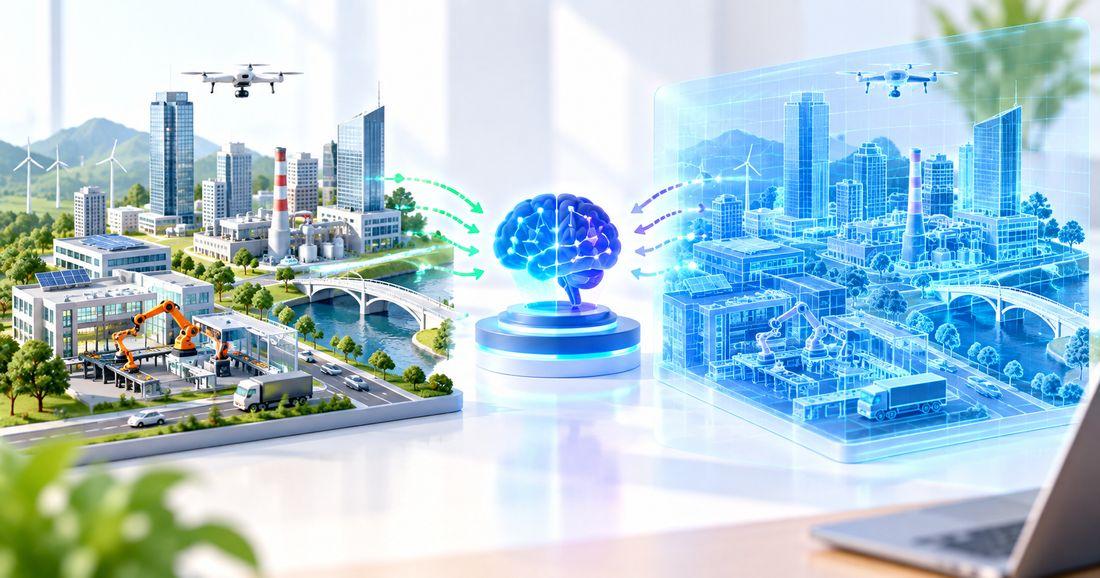
Offline environments are controlled. Data is curated, distributions are relatively stable, and evaluation metrics are clearly defined. Production environments, on the other hand, are dynamic and unpredictable. Inputs change, user behavior evolves, and systems interact in complex ways. This difference creates a gap between what a model learns during training and how it behaves in the real world.
Understanding this gap is the first step toward diagnosing why models fail in production.
Training Data vs Real-World Data
One of the primary reasons models fail is the mismatch between training data and real-world data.
During training, models learn patterns from historical datasets. These datasets are often cleaned, filtered, and structured to optimize learning. However, real-world data is rarely this clean. It may contain noise, missing values, or entirely new patterns that the model has never seen before.
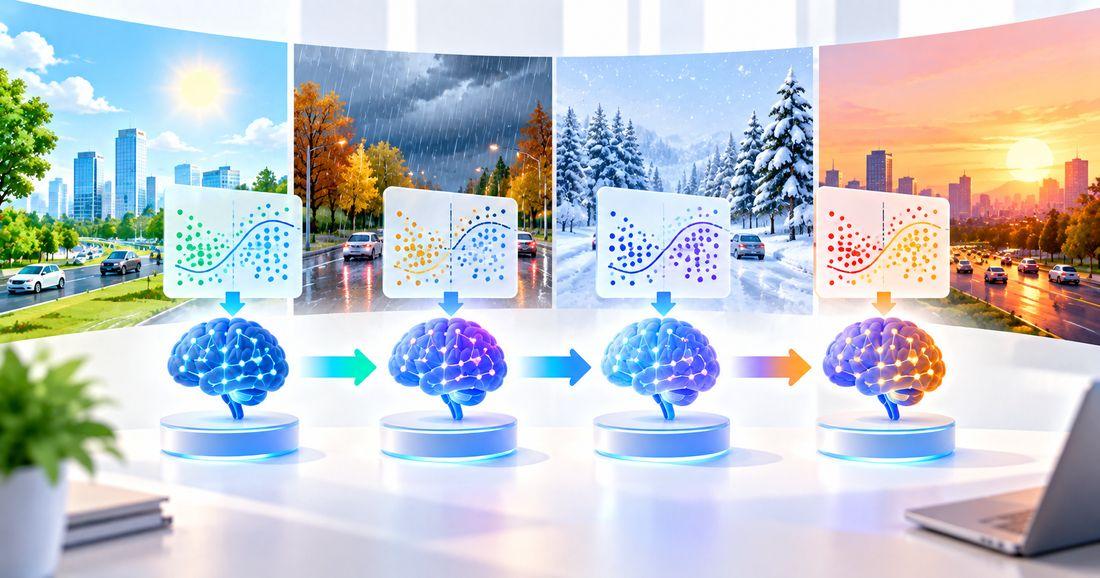
This mismatch leads to degraded performance. A model that achieves high accuracy offline may struggle when exposed to inputs that fall outside its training distribution. This phenomenon is commonly referred to as data drift or distribution shift, and it is one of the most frequent causes of production failures.
The Illusion of Stable Metrics
Offline evaluation metrics can create a false sense of confidence.
Metrics such as accuracy, precision, recall, or AUC are calculated on static datasets. They provide a snapshot of performance under specific conditions, but they do not capture how performance evolves over time.
In production, these metrics can change rapidly. User behavior may shift, new types of inputs may appear, and system interactions may introduce unforeseen variables. Without continuous monitoring, teams may not even realize that performance has degraded.
This highlights an important limitation: offline metrics are necessary but not sufficient for evaluating real-world performance.
Feedback Loops and Changing Behavior
Machine learning systems often influence the very data they rely on.
For example, a recommendation system affects what users see, which in turn influences their behavior. This creates a feedback loop where the model’s predictions shape future data. Over time, this can lead to unintended consequences, such as reinforcing biases or reducing diversity.
These feedback loops are rarely captured during training, but they play a significant role in production. Models that do not account for them may gradually drift away from their intended behavior.
System-Level Dependencies
In production, models do not operate in isolation. They are part of larger systems that include data pipelines, APIs, and other services.
Failures can occur at any point in this system. A delay in data ingestion, an error in feature computation, or a change in upstream services can all affect model performance. Even if the model itself is functioning correctly, these dependencies can introduce issues.
This means that production failures are often system-level problems, not just model-level problems. Addressing them requires a broader perspective that goes beyond algorithms.
Latency and Resource Constraints
Another factor that differentiates production from offline environments is the presence of constraints.
In production, models must operate within limits on latency, memory, and computational resources. A model that performs well offline may be too slow or too resource-intensive for real-time use.
To meet these constraints, teams often simplify models, optimize pipelines, or make trade-offs between accuracy and efficiency. These changes can affect performance, sometimes in unexpected ways.
Understanding how constraints influence model behavior is essential for successful deployment.
Lack of Monitoring and Observability
Many production failures go unnoticed because systems lack proper monitoring.
Without visibility into how models are performing in real time, it is difficult to detect issues early. Metrics may degrade gradually, making problems harder to identify.
Effective monitoring requires tracking not only model performance but also data quality, system health, and user interactions. This provides a comprehensive view of how the system is functioning.
Why Production Failures Are Common
The factors discussed above, data drift, feedback loops, system dependencies, and resource constraints, combine to make production environments inherently complex.
Unlike offline settings, where variables are controlled, production systems are constantly evolving. This makes failures not just possible, but inevitable.
The goal, therefore, is not to eliminate failures entirely, but to anticipate, detect, and respond to them effectively.
This perspective is emphasized in The Hidden Metrics: How Interviewers Evaluate ML Thinking, Not Just Code, which highlights the importance of understanding real-world system behavior rather than focusing solely on model performance .
The Key Takeaway
Models fail in production because real-world environments differ fundamentally from controlled training settings. Data changes, systems interact, and constraints introduce new challenges. Understanding these factors is essential for building robust ML systems that perform reliably beyond the training phase.
Section 2: Types of Failures - Data Drift, Concept Drift, and Silent Errors
Understanding Failure as a Spectrum, Not a Single Event
When machine learning models fail in production, the failure is rarely sudden or obvious. Unlike traditional software systems where errors often produce clear signals, ML systems can degrade gradually and silently. At organizations like Google, Meta, and Amazon, engineers treat failure not as a single event but as a spectrum of behaviors that evolve over time.
These failures can take different forms depending on how the data changes, how the environment evolves, and how the system interacts with users. Among the most common and impactful types are data drift, concept drift, and silent errors. Each represents a different way in which the assumptions made during training break down in production.
Understanding these failure modes is critical because they require different detection and mitigation strategies. Treating all failures as the same often leads to incomplete or ineffective solutions.
Data Drift: When Inputs Change Without Warning
Data drift occurs when the distribution of input data in production differs from the data used during training.
This shift can happen for many reasons. User behavior may evolve, new categories of data may appear, or external factors such as seasonality or market changes may alter the characteristics of the data. Even small changes in upstream data pipelines can introduce drift.
What makes data drift challenging is that the model itself has not changed. It continues to apply the same learned patterns, but those patterns are no longer aligned with the current data. As a result, performance degrades.
For example, a fraud detection model trained on historical transaction patterns may struggle when new types of transactions emerge. The model is not inherently flawed, it is simply operating on outdated assumptions.
Detecting data drift requires monitoring input distributions over time and comparing them to training data. Without this visibility, drift can persist unnoticed, gradually reducing model effectiveness.
Concept Drift: When the Meaning of Data Changes
While data drift involves changes in input distributions, concept drift involves changes in the relationship between inputs and outputs.
In other words, the underlying concept that the model is trying to learn has changed. This is often more subtle and more difficult to detect than data drift.
For example, consider a model predicting user preferences. Over time, user behavior may shift due to new trends, cultural changes, or external events. The same input features may now correspond to different outcomes than they did during training.
Concept drift requires models to adapt continuously. Static models trained on historical data are particularly vulnerable because they cannot adjust to new patterns without retraining.
Detecting concept drift often involves monitoring performance metrics over time and identifying patterns of degradation. However, distinguishing between noise and true drift can be challenging.
Silent Errors: When Failures Go Unnoticed
One of the most dangerous types of failure is the silent error.
Silent errors occur when a model produces incorrect outputs without triggering any obvious alarms. Unlike system crashes or explicit errors, these failures can persist undetected for long periods.
For example, a recommendation system might gradually become less relevant, leading to reduced user engagement. A classification model might start misclassifying certain categories more frequently. In both cases, the system continues to function, but its effectiveness declines.
Silent errors are particularly problematic because they often lack clear signals. Without proper monitoring, teams may not realize that performance has degraded until significant impact has already occurred.
Addressing silent errors requires a combination of monitoring, validation, and feedback mechanisms. Systems must be designed to detect subtle changes in performance and alert engineers before issues escalate.
Interplay Between Different Failure Types
In practice, these failure types rarely occur in isolation.
Data drift can lead to concept drift if changes in input distributions affect the relationship between inputs and outputs. Silent errors can emerge as a result of both data and concept drift, especially when monitoring is insufficient.
This interplay makes failure detection more complex. Engineers must consider multiple signals and understand how different types of drift interact with each other.
For example, a change in user behavior may first appear as data drift. Over time, as the model’s predictions become less accurate, it may evolve into concept drift. If not detected, this can result in silent errors that degrade system performance.
The Challenge of Detection
Detecting these failures is not straightforward.
Data drift can be identified through statistical analysis of input distributions, but this requires continuous monitoring and well-defined baselines. Concept drift is harder to detect because it involves changes in relationships rather than distributions. Silent errors are the most challenging because they often lack explicit indicators.
This is why production ML systems require robust observability frameworks. Monitoring must go beyond simple metrics and include data quality checks, performance tracking, and anomaly detection.
Without these systems in place, failures can remain hidden until they cause significant issues.
Why These Failures Are Inevitable
It is important to recognize that these types of failures are not exceptions, they are inevitable in dynamic environments.
Production systems operate in conditions that are constantly changing. Data evolves, user behavior shifts, and external factors introduce new variables. No model can remain perfectly aligned with reality indefinitely.
The goal, therefore, is not to prevent all failures but to detect and respond to them effectively. This requires designing systems that are resilient and adaptable.
Building Awareness Into the System
A key step in managing these failures is building awareness into the system itself.
This involves implementing monitoring tools, setting up alerts, and creating feedback loops that provide continuous insight into model performance. It also requires defining thresholds and metrics that can signal when something is wrong.
Engineers must think of ML systems as living systems that require ongoing maintenance and adjustment. This perspective shifts the focus from static model performance to dynamic system behavior.
Why Understanding Failure Types Matters
Understanding the different types of failures is essential for designing effective solutions.
Each failure type requires a different approach. Data drift may require updating datasets or retraining models. Concept drift may require redesigning features or adapting models. Silent errors may require improving monitoring and validation processes.
Without this understanding, teams may apply generic solutions that fail to address the root cause of the problem.
This perspective is highlighted in The Rise of ML Infrastructure Roles: What They Are and How to Prepare, which explains how modern ML systems require continuous monitoring and adaptation to handle evolving conditions .
The Key Takeaway
Machine learning models fail in production through multiple pathways, including data drift, concept drift, and silent errors. These failures are often gradual and interconnected, making them difficult to detect. Understanding these failure modes is critical for building systems that can monitor, adapt, and maintain performance over time.
Section 3: Detection - Monitoring, Alerts, and Observability in ML Systems
From Deployment to Continuous Visibility
Deploying a machine learning model is not the end of the lifecycle, it is the point at which the most critical phase begins. In production environments at companies like Google, Meta, and Amazon, the focus quickly shifts from building models to observing how they behave under real-world conditions.
Unlike offline evaluation, where performance is measured on static datasets, production systems require continuous visibility. Inputs change, systems evolve, and user behavior shifts in ways that cannot be fully anticipated. Without robust detection mechanisms, these changes can lead to gradual degradation or sudden failures.
Detection, therefore, is not just about identifying when something breaks, it is about maintaining an ongoing understanding of how the system is performing.
Monitoring as the Foundation of Reliability
Monitoring is the first layer of detection. It provides a continuous stream of information about how the model and its surrounding system are functioning.
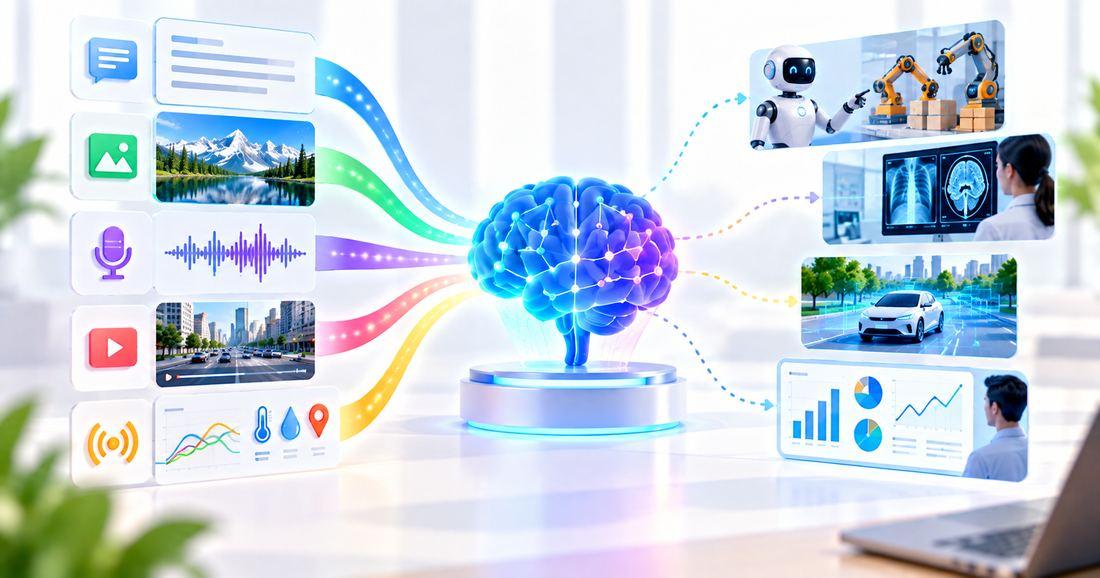
In ML systems, monitoring extends beyond traditional metrics such as uptime or latency. It includes tracking input data distributions, model outputs, and performance indicators. This broader scope is necessary because failures in ML systems often originate from subtle changes rather than explicit errors.
For example, a model may continue to produce predictions without any system-level issues, but the quality of those predictions may degrade over time. Monitoring allows teams to detect these changes early and take corrective action.
Effective monitoring requires defining the right metrics. These metrics must reflect not only technical performance but also alignment with real-world objectives.
The Role of Alerts in Early Detection
Monitoring alone is not sufficient. Data must be translated into actionable signals, which is where alerts come in.
Alerts are designed to notify engineers when certain thresholds are crossed or when anomalies are detected. They act as an early warning system, enabling teams to respond before issues escalate.
However, designing effective alerts is challenging. If thresholds are too sensitive, teams may experience alert fatigue, where frequent notifications reduce responsiveness. If thresholds are too loose, critical issues may go unnoticed.
The key is to balance sensitivity and specificity. Alerts should capture meaningful deviations without overwhelming the system with noise. This requires careful calibration and ongoing refinement.
Observability: Understanding the “Why” Behind Behavior
While monitoring and alerts provide signals, observability provides context.
Observability is the ability to understand why a system is behaving in a certain way. It involves collecting and analyzing data from multiple sources, including logs, metrics, and traces, to build a comprehensive picture of system behavior.
In ML systems, observability is particularly important because failures are often not immediately obvious. A drop in performance may be caused by data drift, feature inconsistencies, or changes in upstream systems. Observability allows engineers to trace these issues back to their source.
This deeper level of understanding is what enables effective diagnosis and resolution.
Tracking Data Quality and Distribution
One of the most critical aspects of detection in ML systems is tracking data quality.
Since models rely heavily on input data, any changes in data distribution can have a significant impact on performance. Monitoring input features, detecting anomalies, and comparing current data to historical baselines are essential practices.
For example, if a feature suddenly starts receiving values outside its expected range, it may indicate an issue in the data pipeline. Without monitoring, such issues can propagate through the system and affect predictions.
Data monitoring helps ensure that the inputs to the model remain consistent with the assumptions made during training.
Evaluating Model Performance in Production
Measuring model performance in production is more complex than in offline settings.
In many cases, ground truth labels are not immediately available. This makes it difficult to calculate traditional metrics such as accuracy or recall in real time. Engineers must rely on proxy metrics, delayed feedback, or partial labels to գնահատ performance.
This complexity requires creative approaches to evaluation. For example, comparing predictions to historical patterns, tracking user interactions, or using A/B testing can provide insights into model effectiveness.
Continuous evaluation ensures that performance issues are detected even when direct measurement is not possible.
Anomaly Detection and Pattern Recognition
Beyond predefined metrics and thresholds, anomaly detection plays a key role in identifying unexpected behavior.
Anomaly detection systems analyze patterns in data and flag deviations that may indicate issues. These systems can be particularly useful for identifying subtle changes that do not trigger standard alerts.
For example, a gradual shift in prediction distributions or a slow decline in user engagement may not cross predefined thresholds but could still signal a problem. Anomaly detection helps capture these patterns early.
This approach adds an additional layer of intelligence to the detection process.
The Importance of End-to-End Visibility
ML systems are composed of multiple components, including data pipelines, feature engineering processes, models, and serving infrastructure. Failures can occur at any point in this pipeline.
End-to-end visibility ensures that all components are monitored and that their interactions are understood. This holistic view allows engineers to identify where issues originate and how they propagate through the system.
Without end-to-end visibility, teams may focus on the model itself while overlooking issues in upstream or downstream components.
Designing Systems for Detectability
Detection is most effective when it is built into the system from the beginning.
This means designing systems with instrumentation, logging, and monitoring capabilities in mind. It also involves defining clear metrics and thresholds that reflect system goals.
Systems that are designed for detectability are easier to maintain and more resilient to failures. They provide the information needed to identify and address issues quickly.
Why Detection Is a Continuous Process
Detection is not a one-time setup. It is an ongoing process that evolves with the system.
As models are updated, data changes, and new features are introduced, monitoring and alerting mechanisms must be adjusted accordingly. This requires continuous attention and refinement.
Engineers must treat detection as a core part of the ML lifecycle, not as an afterthought.
This perspective is emphasized in ML System Design: From Model to Monitoring in Production, which highlights how effective ML systems rely on continuous observability and feedback loops to maintain performance .
The Key Takeaway
Detection in ML systems relies on a combination of monitoring, alerts, and observability. Together, these components provide the visibility needed to identify issues, understand their causes, and respond effectively. In production environments where change is constant, robust detection mechanisms are essential for maintaining reliability and performance.
Section 4: Prevention - Designing Robust ML Systems That Don’t Break Easily
Shifting from Reactive Fixes to Proactive Design
Once teams understand how ML models fail and how to detect those failures, the next step is prevention. In mature ML organizations such as Google, Meta, and Amazon, the focus is not just on fixing issues after they occur, but on designing systems that are inherently resilient.
Prevention is about reducing the likelihood and impact of failures before they happen. It requires a shift in mindset from reactive debugging to proactive system design. Instead of asking “How do we fix this when it breaks?”, teams ask “How do we design this so it doesn’t break easily?”
This shift is critical because production environments are dynamic. Failures cannot be completely eliminated, but their frequency and severity can be significantly reduced through thoughtful design.
Designing for Data Reliability
Since data is the foundation of any ML system, preventing failures begins with ensuring data reliability.
This involves validating data at every stage of the pipeline. Inputs should be checked for completeness, consistency, and correctness before they reach the model. Feature engineering steps should include safeguards to prevent unexpected values or transformations.
By catching data issues early, teams can prevent them from propagating through the system. This reduces the risk of both data drift and silent errors.
Data reliability also involves maintaining clear contracts between different components of the system. Each stage of the pipeline should have well-defined expectations for inputs and outputs, making it easier to detect and prevent inconsistencies.
Building Robust Feature Pipelines
Feature pipelines are a common source of production failures. Small changes in feature computation can have significant downstream effects on model performance.
To prevent these issues, feature pipelines must be designed with robustness in mind. This includes ensuring consistency between training and serving environments, often referred to as training-serving parity.
When features are computed differently in training and production, models may behave unpredictably. Ensuring that the same logic is used in both environments reduces this risk.
Additionally, feature pipelines should be modular and testable. This allows teams to validate individual components and identify issues before they affect the entire system.
Incorporating Redundancy and Fallback Mechanisms
No system is immune to failure, which is why redundancy and fallback mechanisms are essential.
Redundancy involves having backup systems or processes that can take over when a component fails. For example, if a primary model becomes unavailable, a simpler backup model can provide baseline functionality.
Fallback mechanisms ensure that the system continues to operate even when certain components fail. This might involve returning default values, using cached results, or switching to rule-based systems.
These strategies do not eliminate failures, but they reduce their impact, ensuring that users experience minimal disruption.
Designing for Graceful Degradation
Graceful degradation is a key principle in robust system design.
Instead of failing completely when something goes wrong, the system should degrade in a controlled manner. For example, if a complex model cannot run due to resource constraints, the system might switch to a simpler model that provides acceptable performance.
This approach ensures that the system remains functional, even under adverse conditions. It also provides time for engineers to diagnose and fix issues without causing significant disruption.
Designing for graceful degradation requires anticipating potential failure scenarios and planning how the system will respond.
Continuous Validation and Testing
Prevention also involves rigorous validation and testing.
Before deploying models, teams should test them under a variety of conditions, including edge cases and extreme scenarios. This helps identify potential weaknesses and ensures that the model behaves as expected.
In addition to pre-deployment testing, continuous validation in production is essential. This includes running checks on data quality, monitoring performance metrics, and validating outputs against expected patterns.
Testing should not be limited to the model itself. It should cover the entire system, including data pipelines, feature engineering, and serving infrastructure.
Versioning and Reproducibility
Versioning is another critical aspect of prevention.
Every component of the ML system, data, features, models, and code, should be versioned. This allows teams to track changes, reproduce results, and roll back to previous versions if issues arise.
Reproducibility ensures that models can be recreated and validated under the same conditions. This is essential for debugging and maintaining consistency across environments.
Without proper versioning, it becomes difficult to identify the root cause of failures or to restore stable states.
Automating Retraining and Updates
Since data and environments change over time, models must be updated regularly.
Automating retraining processes helps ensure that models remain aligned with current data. This reduces the impact of data and concept drift.
However, retraining must be done carefully. Automated pipelines should include validation steps to ensure that new models meet performance standards before deployment.
This balance between automation and validation is key to maintaining system stability.
Embedding Observability into Design
Prevention and detection are closely linked. Systems designed for prevention should also support observability.
This means integrating monitoring, logging, and alerting into the system from the beginning. By embedding these capabilities into the design, teams can detect issues early and respond more effectively.
Observability also supports continuous improvement. Insights gained from monitoring can inform design decisions and help refine the system over time.
Why Prevention Is a System-Level Responsibility
Preventing failures is not the responsibility of a single component or team. It requires a system-level approach that considers how different parts of the system interact.
Engineers must think beyond individual models and consider the entire lifecycle, from data ingestion to deployment and monitoring. This holistic perspective is essential for building systems that are both robust and adaptable.
The Key Takeaway
Preventing ML failures requires proactive design. By ensuring data reliability, building robust pipelines, incorporating redundancy, enabling graceful degradation, and maintaining continuous validation, teams can significantly reduce the likelihood and impact of production issues. Robust ML systems are not just built, they are carefully designed to withstand change and uncertainty.
Conclusion: From Model Building to System Thinking
Machine learning does not fail in production because models are inherently flawed. It fails because real-world environments are complex, dynamic, and interconnected. At companies like Google, Meta, and Amazon, the biggest shift in mindset is moving from thinking about models in isolation to thinking about systems in motion.
A model that performs well offline is only the starting point. Once deployed, it interacts with changing data, evolving user behavior, and multiple system dependencies. This environment introduces challenges such as data drift, concept drift, and silent errors, failures that are often subtle and difficult to detect.
What distinguishes robust ML systems is not the absence of failure, but the ability to anticipate, detect, prevent, and recover from it. Detection ensures visibility into system behavior. Prevention reduces the likelihood of issues through thoughtful design. Recovery minimizes impact when failures occur and enables systems to return to stable states quickly.
These capabilities require a shift from a purely model-centric approach to a lifecycle-oriented approach. Engineers must think about how data flows through the system, how models evolve over time, and how different components interact. This broader perspective is essential for building systems that can operate reliably in production.
Another important takeaway is that ML systems are not static. They require continuous monitoring, validation, and improvement. The work does not end with deployment, it evolves with the system. Teams that embrace this continuous process are better equipped to handle the complexities of real-world environments.
Ultimately, the question is not whether models will fail in production, they will. The real question is how well the system is designed to handle those failures. Teams that invest in detection, prevention, and recovery create systems that are not only functional but resilient.
Frequently Asked Questions (FAQs)
1. Why do ML models fail in production?
Because real-world data and environments differ from controlled training conditions.
2. What is data drift?
It is a change in the distribution of input data compared to training data.
3. What is concept drift?
It is a change in the relationship between inputs and outputs over time.
4. What are silent errors?
Failures where the model produces incorrect outputs without obvious signals.
5. How can we detect failures early?
Through monitoring, alerts, and observability systems.
6. What is the role of monitoring in ML systems?
It provides continuous visibility into data, model performance, and system health.
7. How can we prevent ML failures?
By designing robust systems with validation, redundancy, and testing.
8. What is graceful degradation?
A system design approach where functionality is reduced but not completely lost during failures.
9. What should be done when a model fails?
Detect quickly, rollback if needed, identify the root cause, and apply fixes safely.
10. Why is rollback important?
It allows quick restoration of a stable system state.
11. How often should models be retrained?
It depends on how frequently data and environments change.
12. What is observability in ML systems?
The ability to understand why a system behaves the way it does.
13. Are ML failures avoidable?
Not entirely, but their impact can be minimized.
14. What is the biggest mistake teams make?
Focusing only on model accuracy without considering system behavior.
15. What is the key takeaway?
Building ML systems is not just about models, it is about designing resilient systems that handle change effectively.
Approaching machine learning with a system-level mindset ensures that models not only perform well in controlled settings but continue to deliver value in the real world.