Section 1: Why Real-World AI Needs More Than One Type of Data
Real-world environments rarely produce information in a single format. A manufacturing facility may generate equipment telemetry, inspection photographs, maintenance reports, and operator notes. A healthcare system may contain clinical text, medical images, physiological measurements, and patient histories. An autonomous vehicle may simultaneously process camera feeds, radar, lidar, GPS signals, maps, and natural-language instructions. Each source captures a different aspect of the same underlying environment.
Traditional machine learning often handles these sources separately. A computer vision model processes images, a language model processes text, and a time-series model analyzes sensor measurements. This separation can work well when the problem itself is narrow, but it becomes limiting when important information is distributed across modalities. Multimodal machine learning addresses this challenge by allowing models to learn from multiple forms of data and, more importantly, learn the relationships between them.
Different Modalities Capture Different Information
The fundamental reason multimodal learning is useful is that different modalities describe reality from different perspectives.
Text provides semantic and contextual information. A maintenance record might explain that a machine began producing unusual noise after several hours of heavy operation. That explanation can contain causal or operational context that is not directly visible in numerical telemetry.
Images provide spatial and visual information. A camera may reveal a crack, leak, damaged component, or abnormal physical configuration that cannot be inferred directly from a single sensor measurement.
Sensors provide quantitative and temporal information. Temperature, pressure, vibration, acceleration, voltage, location, and acoustic measurements can capture subtle changes continuously and with precision.
None of these modalities necessarily provides a complete description on its own.
A useful multimodal model can learn that a particular visual pattern becomes more significant when accompanied by a specific sensor signature and a related textual observation. The objective is therefore not simply to provide the model with more inputs. It is to help the model understand how different observations describe the same underlying event.
Complementary Information Is More Valuable Than More Data
Adding more modalities does not automatically improve a model.
Suppose an image and a second image-derived feature contain nearly identical information. Combining them may increase computational complexity without providing meaningful predictive value. Similarly, a poorly calibrated sensor can introduce noise and cause the model to learn misleading correlations.
The important concept is complementarity.
A modality becomes valuable when it contributes information that other available modalities cannot adequately capture. This is why multimodal system design begins with understanding the information content of each source rather than simply collecting as many inputs as possible.
For example, an image may identify visible damage but provide little evidence about when the damage developed. A sensor stream can reveal that the machine entered an abnormal operating state hours earlier. A technician's notes may provide contextual information about what happened during that period. Together, the three modalities can describe the event much more completely.
Multiple Modalities Can Provide Redundancy
Multimodal systems can also use different information sources to cross-check one another.
Consider a visual inspection system operating in difficult lighting. The image may be ambiguous, but sensor measurements can provide additional evidence about the object's physical state. Conversely, a sensor may produce an abnormal measurement because of calibration problems while the image and operational context show no corresponding physical change.
This creates the possibility of cross-modal validation.
Agreement between modalities can strengthen confidence in a prediction. Disagreement can become a useful signal of uncertainty, data-quality problems, or an unusual event requiring further investigation.
This property can be particularly valuable in production systems where incorrect predictions are costly. Rather than treating every input as equally trustworthy, engineers can design systems that evaluate how well different sources support one another.
However, redundancy should not be confused with guaranteed reliability. Multiple modalities can share the same underlying failure or can become correlated through a common upstream error. Multimodal systems still require careful validation and monitoring.
Real-World Data Is Often Asynchronous
One of the biggest engineering challenges is that different modalities rarely arrive at identical times.
A camera may capture an image every few seconds. A vibration sensor may generate hundreds or thousands of measurements during that same period. A technician may create a written note several minutes or hours after observing the event.
The system therefore needs to determine which observations actually belong together.
This requires timestamps, entity identifiers, event windows, sequence information, and domain-specific synchronization logic.
For example, engineers may associate sensor measurements occurring within a defined time window around an image capture and then link both to the maintenance event that occurred during that period. The appropriate window depends on the physical process and the task being modeled.
Incorrect alignment can be particularly damaging because a powerful multimodal model may learn relationships that are statistically strong but physically meaningless.
The model is only as good as the relationships encoded by the training data.
From Isolated Models to Shared Understanding
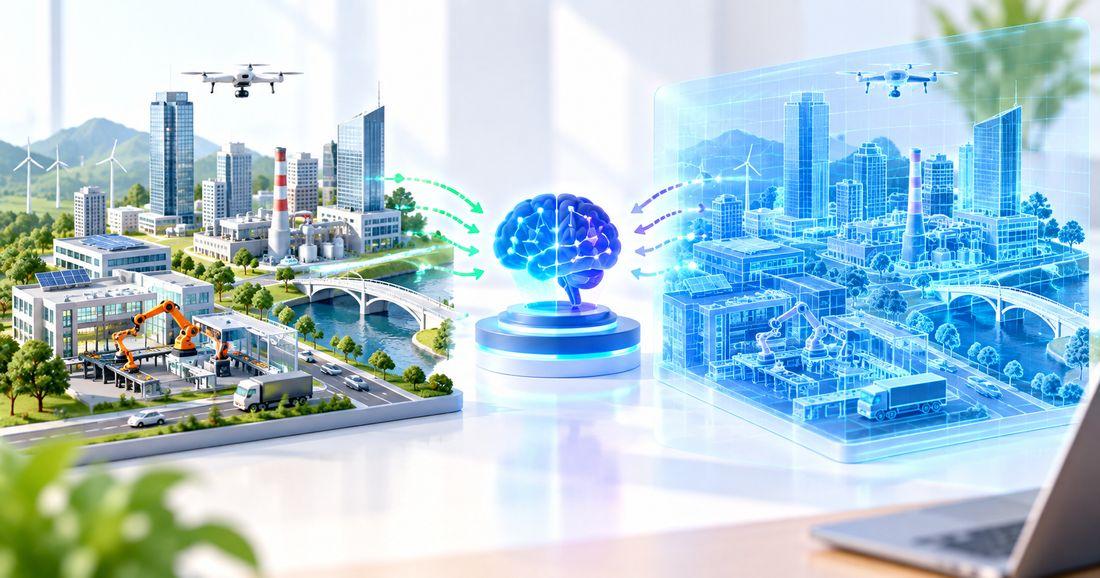
The long-term promise of multimodal machine learning is the ability to create a richer representation of an underlying environment.
Instead of building one model for images, another for text, and another for sensor streams and leaving their outputs disconnected, engineers can design systems that allow these representations to interact.
This does not mean every modality must be processed by one enormous model. Specialized models may still be responsible for encoding different inputs. The important step is creating mechanisms through which those representations can be aligned and combined.
As discussed in “Failure Modes of Modern AI Systems and How Engineers Prevent Them,” greater system capability also introduces additional failure modes. Multimodal architectures must therefore account for missing inputs, conflicting evidence, synchronization errors, distribution shifts, and modality-specific data-quality problems.
Key Takeaway
Real-world AI needs multimodal learning because important information about the same event or entity is often distributed across text, images, sensors, and other data sources. Each modality captures different aspects of reality, while their relationships can provide complementary evidence and richer context. The main engineering challenge is not simply combining inputs, but aligning them correctly and designing systems that can learn meaningful relationships without becoming vulnerable to noise, synchronization errors, or misleading correlations.
Section 2: How Multimodal Models Learn From Text, Images, and Sensors
The central challenge in multimodal machine learning is not collecting text, images, and sensor data. It is teaching a model how these fundamentally different information sources relate to one another. Text is sequential and semantic, images contain spatial structure, and sensor data is usually numerical, temporal, and noisy. A successful multimodal architecture must preserve the unique properties of each modality while creating a shared representation that allows the model to reason across them.
Modality-Specific Encoders
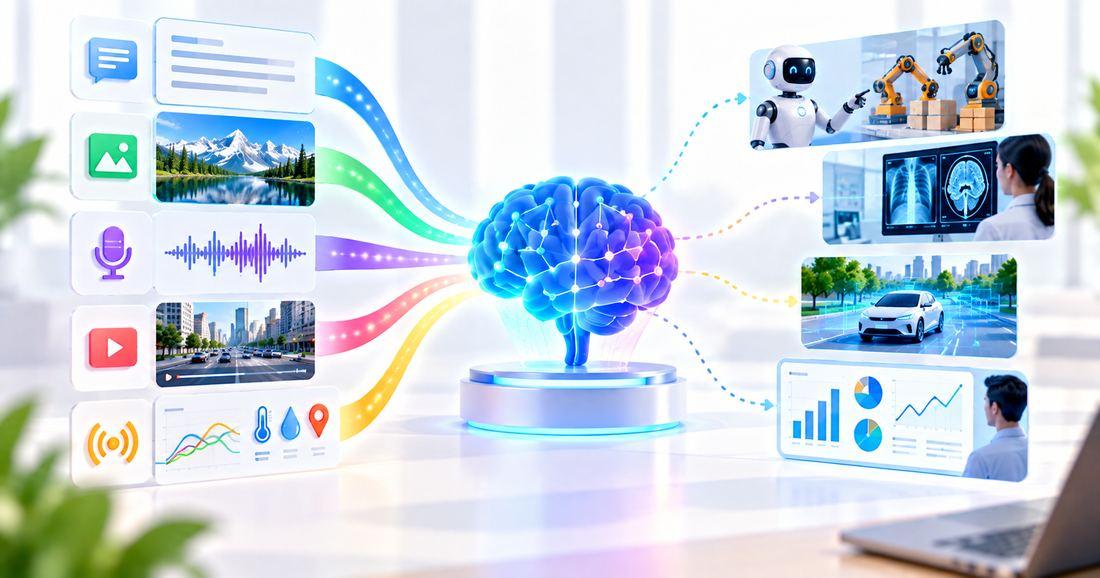
Most multimodal systems begin by processing each modality with an appropriate encoder. A text encoder converts words or tokens into numerical representations that capture linguistic meaning. A vision encoder transforms images into embeddings representing visual patterns, objects, spatial structures, and other image features. A sensor encoder processes numerical sequences and attempts to capture temporal behavior, trends, and anomalies.
Using separate encoders is important because different modalities have fundamentally different structures. Treating an image, sentence, and sensor sequence as identical inputs would discard information before the model even begins learning relationships between them.
For sensor data, temporal structure is particularly important. A single measurement may have little meaning by itself, while the sequence leading to that measurement can reveal acceleration, periodic behavior, sudden changes, or long-term trends. The sensor encoder therefore needs to preserve information about how measurements evolve over time.
Creating a Shared Representation
Once each modality has been encoded, the model needs a mechanism for connecting them. One strategy is to map different modality representations into a shared embedding space.
The objective is to make representations associated with the same underlying event or concept more closely related. An image of a damaged machine component, a technician's description of that damage, and a sensor pattern recorded during the same event should contain representations that the model recognizes as related.
Contrastive learning is one approach that can encourage these relationships. During training, the model can receive matched and mismatched examples and learn to distinguish meaningful cross-modal associations.
The important idea is that the system is learning more than individual predictions. It is learning correspondence between modalities.
Early, Late, and Intermediate Fusion
After representations are generated, engineers must determine how information should be combined. Early fusion brings representations together relatively early in the network. This allows later layers to learn detailed interactions between modalities, but differences in representation size and information density can make optimization more difficult.
Late fusion keeps the modalities largely independent until later stages. Individual models produce high-level representations or predictions that are eventually combined. This approach can simplify deployment and can make it easier to operate when some modalities are unavailable, although it may miss subtle relationships that require earlier interaction.
Intermediate fusion provides a middle ground. Modality-specific encoders first learn useful representations, after which those representations interact through additional layers. This architecture can preserve modality-specific knowledge while still allowing the model to learn detailed cross-modal relationships.
Cross-Attention and Selective Interaction
Cross-attention provides a more flexible way for modalities to interact. Instead of forcing every piece of information to influence every other piece equally, the model can learn which elements from one modality are relevant to another.
For example, a textual description mentioning surface corrosion could influence which regions of an image receive attention. A sensor sequence indicating a sudden vibration event could affect which moment in a related visual sequence becomes important.
This selective interaction is valuable because multimodal inputs can be very large. A model does not necessarily need to process every pixel, word, or sensor measurement with equal importance.
Cross-attention allows the model to learn relationships that are conditional on context.
Temporal Alignment for Sensors
Sensor data introduces another major requirement: temporal alignment.
An image captured at one moment may correspond to hundreds or thousands of sensor observations. A textual record may be written considerably later. The model therefore needs to understand which portions of a sensor sequence are relevant to the corresponding image or event.
Engineers can use temporal windows, event boundaries, sequence encoders, or learned attention mechanisms to establish those relationships. Reducing an entire sensor stream to a single average can make processing easier, but it can also remove precisely the transient patterns that make the signal useful.
The representation strategy must therefore match the time scale of the problem.
Handling Missing Modalities
A production multimodal system cannot assume that every input will always be available. Cameras fail, sensors stop transmitting, documents are missing, and network connections introduce delays.
Models can be trained with intentionally missing inputs so that they learn to operate with different combinations of modalities. A system may also use fallback models when a particular information source is unavailable.
This principle is consistent with “Graceful Degradation in AI: Designing Systems That Still Work When Models Fail,” because multimodal reliability depends on planning for partial information rather than assuming perfect inputs.
Key Takeaway
Multimodal models learn by first creating modality-specific representations and then aligning or combining them through shared embeddings, contrastive objectives, fusion strategies, and mechanisms such as cross-attention. Sensor data requires additional temporal reasoning, while missing and asynchronous inputs must be considered during design. The goal is to learn both what modalities have in common and what unique information each modality contributes to the underlying problem.
Section 3: Designing Multimodal AI Systems That Work in the Real World
Building a multimodal model that performs well in a controlled experiment is only the beginning. In production, the system must continuously process information from multiple sources that can be incomplete, noisy, asynchronous, and inconsistent. A camera may produce a lower-quality image than expected, a sensor may temporarily stop transmitting, and a text record may arrive minutes after the event it describes. Multimodal machine learning therefore requires engineers to design the entire data and inference pipeline, not just the neural network.
Data Synchronization Is a Core Engineering Problem
Different modalities rarely describe an event at exactly the same moment. A camera might capture an image at 10:00:03, while a vibration sensor records an anomaly at 10:00:08. A technician may create a written observation several minutes later. The system must determine whether these observations describe the same underlying event.
Simple timestamp matching is often insufficient.
Engineers may need temporal windows, event identifiers, entity relationships, sequence information, and domain-specific synchronization rules. In an industrial environment, for example, the correct relationship may depend on how quickly a physical change propagates through the equipment.
Incorrect alignment can create false correlations during training. A powerful model may then learn statistically useful relationships that have no meaningful connection to the real-world process.
This is why multimodal data preparation is not merely a preprocessing step. It is part of the model's learning problem.
Every Modality Has Different Data Quality Risks
Text, images, and sensor streams fail in different ways.
Text may contain incomplete descriptions, inconsistent terminology, abbreviations, or ambiguous references. Images can suffer from poor lighting, motion blur, compression, occlusion, or changes in camera position. Sensors can generate missing measurements, noise, calibration errors, irregular sampling, or physically impossible values.
These problems need to be addressed before the information reaches the fusion layer.
A multimodal model can combine information effectively only when the underlying signals are reasonably trustworthy. Giving a sophisticated model more low-quality inputs does not necessarily improve prediction. It may instead create additional opportunities for the system to learn spurious relationships.
For this reason, production pipelines should include modality-specific validation and quality monitoring alongside the shared multimodal processing layer.
Cross-Modal Drift Can Be Hard to Detect
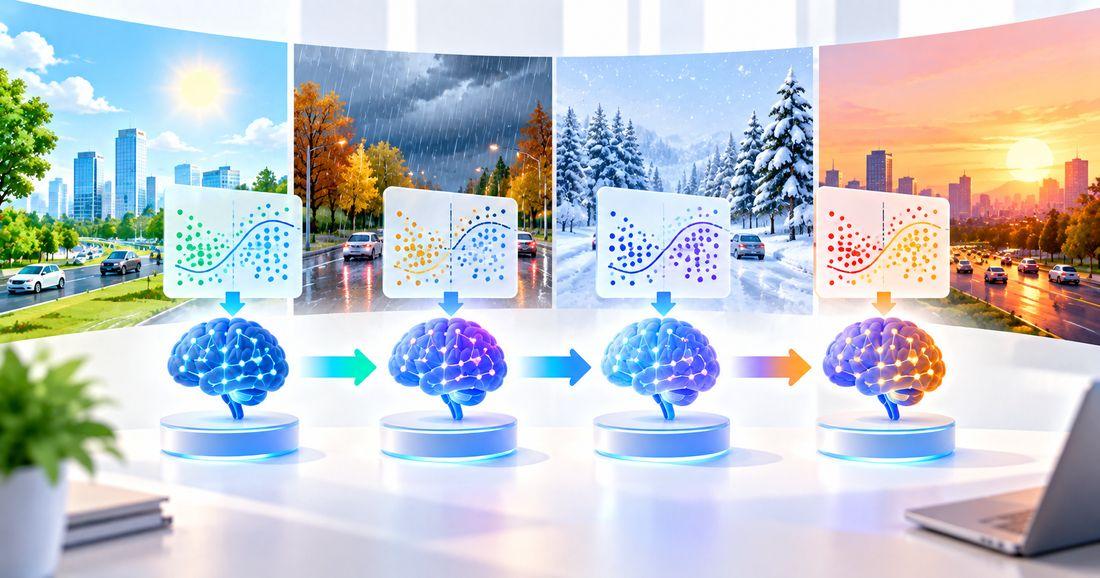
Machine learning teams are already familiar with data drift, but multimodal systems introduce another dimension: the relationship between modalities can change even when the individual modalities appear healthy.
Imagine that a manufacturing camera is repositioned after a maintenance operation. The image distribution may shift, while the machine's sensor distribution remains largely unchanged. The vision encoder may continue generating valid representations, yet the relationship between visual patterns and sensor observations may no longer match what the fusion model learned during training.
Similarly, a sensor calibration change can alter the relationship between numerical telemetry and visual evidence.
This creates cross-modal distribution shift.
Monitoring therefore needs to examine not only each modality independently but also whether the learned relationships between modalities remain stable. This connects with “Machine Learning Under Distribution Shift: What Happens When the World Changes,” because changes in production can affect individual signals as well as the interactions among them.
Missing Inputs Should Be Expected
Multimodal systems should be designed under the assumption that some information will occasionally be unavailable.
A sensor may go offline. A camera may be blocked. A document may not exist. A network connection may introduce delays. If the model can operate only when every modality is present, a single upstream failure can interrupt the entire application.
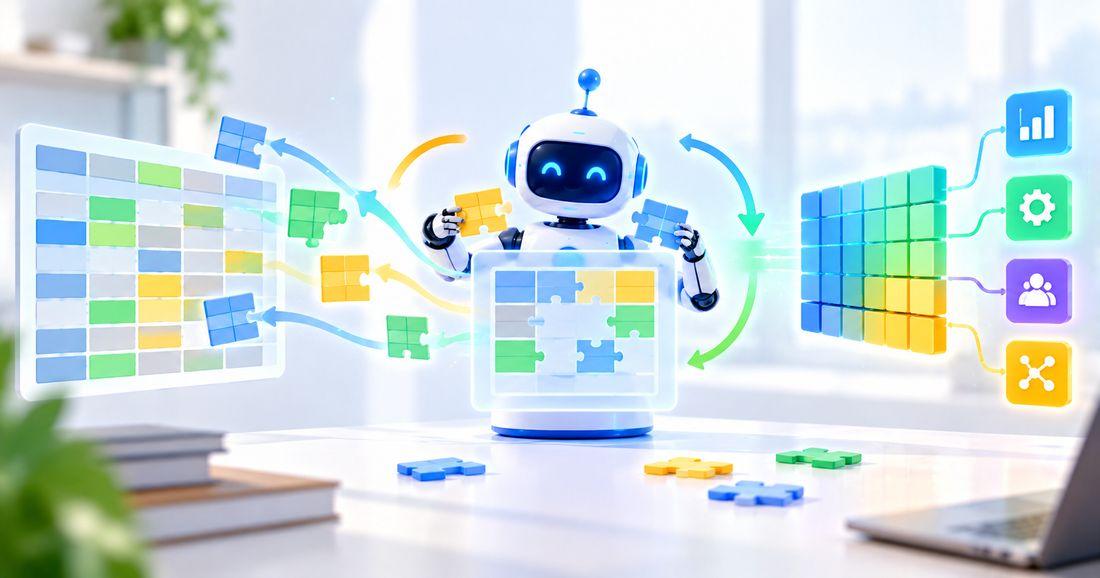
One solution is to train the system with intentionally missing modalities so that it learns to make predictions from different combinations of available information. Another is to maintain specialized fallback models that operate when a particular input source becomes unavailable.
The appropriate strategy depends on the application. A system may reduce confidence, use fewer modalities, request another observation, route the case to a human, or fall back to a simpler model.
The important principle is that missing information should be treated as part of the operating environment rather than as an impossible condition.
Evaluation Must Include Degraded Conditions
A multimodal model should not be evaluated only on ideal inputs.
Engineers should test what happens when one modality is missing, another becomes noisy, timestamps are slightly misaligned, or two modalities provide contradictory evidence.
These tests help reveal whether the model genuinely integrates multiple sources or has become overly dependent on one highly predictive modality.
This is particularly important when one input contains a hidden shortcut. An identifier, timestamp, filename, metadata field, or post-event text description can unintentionally reveal the target. The model may appear highly accurate without learning the intended relationship between modalities.
Evaluation should therefore measure performance under realistic operating conditions rather than assuming perfect data availability.
Cross-Modal Leakage Requires Careful Attention
Data leakage becomes more complicated when several information sources are available.
Consider a model that predicts whether a machine will fail within the next day. Sensor measurements from the current period may be valid, but a maintenance note written after the failure would not be available at prediction time. If that note enters the training representation, the model gains access to future information.
The same problem can occur with images, filenames, metadata, system status fields, or records created after the target event.
Engineers must therefore understand when information became available, not simply when it was stored.
Event-time semantics, data lineage, and strict temporal validation are essential for preventing these hidden forms of leakage.
Monitoring Must Cover Individual and Combined Signals
A mature multimodal system needs layered monitoring.
Teams should monitor the quality and distribution of each input independently while also evaluating the fused representation and final predictions.
For images, this can include image quality characteristics and changes in camera conditions. For sensors, it can include missingness, sampling behavior, variance, calibration, and distribution changes. For text, it can include input characteristics and shifts in terminology.
At the multimodal level, teams need to understand whether representations remain aligned and whether cross-modal agreement changes over time.
A system can therefore fail even when every individual pipeline appears operational.
Key Takeaway
Reliable multimodal AI requires much more than a capable fusion architecture. Engineers must solve synchronization, modality-specific data quality, cross-modal drift, missing inputs, leakage, and degraded-condition evaluation while monitoring both individual signals and their interactions. The most effective production systems are designed around realistic data and operational constraints, with architecture and human oversight matched to the consequences of failure.
Section 4: Why Multimodal Machine Learning Could Shape the Next Generation of AI Systems
Multimodal machine learning is more than an extension of computer vision or natural language processing. Its deeper significance comes from the fact that real-world environments generate many forms of information simultaneously. As AI systems move beyond narrow prediction tasks toward assistants, agents, robotics, industrial intelligence, and context-aware applications, the ability to reason across text, images, and sensor signals could become an important foundation for building more capable systems.
The shift is from asking a model to understand one type of input toward enabling it to construct a richer representation of the environment surrounding a task.
From Single-Modal Models to Context-Rich AI
Many traditional machine learning systems are designed around one dominant information source. A vision model receives an image, a language model receives text, and a forecasting model receives numerical time-series data. These systems can be effective, but they may lack important context that exists outside their primary modality.
Consider an industrial AI application responsible for diagnosing equipment problems. A vision model may identify visible corrosion, while a sensor model detects abnormal vibration and a language-processing system extracts relevant information from maintenance records. Each model sees part of the problem.
A multimodal system can attempt to combine these observations and build a broader representation of equipment health.
The result is potentially more than improved classification. The system can reason about relationships among observations that would otherwise remain separated across independent pipelines.
This makes multimodal learning particularly relevant for applications where the meaning of one signal depends on another.
Multimodal AI Can Strengthen AI Agents
The growth of AI agents makes multimodality increasingly important. An agent operating in a digital or physical environment may need to interpret documents, screenshots, images, voice, structured records, sensor readings, and written instructions.
A text-only system can reason about what has been described to it. A multimodal system can potentially reason about what it sees, measures, reads, and observes over time.
For robotics, this capability becomes even more important. A robot may need to combine camera images with depth measurements, location data, force sensors, object information, and natural-language instructions. Its decisions depend on integrating these signals rather than interpreting them independently.
The model therefore becomes part of a larger perception-and-reasoning system.
Multimodal Learning Can Create Richer Entity Representations
Another important opportunity is the creation of richer representations for real-world entities.
A customer is not simply a row in a database. That customer may also have emails, support conversations, transaction histories, product interactions, uploaded documents, images, and behavioral events.
Similarly, a machine is not only a set of current sensor values. Its broader representation may include technical specifications, inspection images, maintenance documents, historical telemetry, and operator observations.
Multimodal learning provides a framework for connecting these different views.
Instead of building every downstream model independently from raw sources, an organization could maintain reusable multimodal representations of important entities and events. Multiple applications could then use those representations for classification, forecasting, retrieval, anomaly detection, or decision support.
This creates a more reusable machine learning architecture and reduces the need to rediscover the same patterns independently for every task.
The Economics of Multimodal AI Will Matter
The benefits of multimodal systems must be balanced against their computational cost.
Images can contain large numbers of visual tokens or features. Long text sequences require substantial memory and processing. High-frequency sensor streams can generate enormous quantities of data, particularly in industrial and scientific environments.
Processing all of these sources simultaneously can make inference expensive and increase system latency.
Engineers therefore need to determine where multimodality creates enough value to justify the additional cost. Some applications may require all available information, while others may benefit from processing modalities conditionally.
For example, a lightweight model could first determine whether an image contains a relevant event. Only then might the system process detailed sensor history and retrieve related textual records.
This kind of staged architecture can reduce unnecessary computation.
The decision should be evaluated across predictive quality, latency, infrastructure requirements, and lifecycle cost, consistent with the broader principle in “Model Complexity vs Business Value: Finding the Right Level of ML.”
Key Takeaway
Multimodal machine learning could shape the next generation of AI by allowing systems to reason over richer representations of real-world context. Its potential extends from AI agents and robotics to industrial intelligence, multimodal retrieval, enterprise data integration, and reusable foundation models. The long-term opportunity is not simply to process more data types, but to build AI systems that understand how different information sources describe the same environment and can use that context efficiently and reliably.
Conclusion
Multimodal machine learning is changing the way engineers think about building AI systems for real-world environments. Instead of assuming that a problem can be represented through a single input type, multimodal systems recognize that important information is often distributed across text, images, sensor measurements, structured records, audio, and other signals.
The value of this approach comes from combining complementary information.
An image can reveal what is happening visually. Sensor data can show how a system is changing over time. Text can provide context, explanations, instructions, or human observations. When these sources describe the same underlying event or entity, connecting them can create a richer representation than any individual modality can provide.
However, multimodal machine learning is not simply a matter of feeding more data into a larger model.
Each modality has different characteristics. Text is sequential and semantic. Images contain spatial relationships. Sensor streams contain temporal patterns and measurement noise. These differences require modality-specific encoders, appropriate representations, alignment mechanisms, and fusion strategies.
The quality of the relationships between modalities is just as important as the quality of the individual datasets.
Frequently Asked Questions
1. What is multimodal machine learning?
Multimodal machine learning is an approach in which AI models learn from multiple types of information, such as text, images, sensor data, audio, video, or structured records. The system attempts to learn both the information contained within each modality and the relationships between different modalities.
2. Why do AI systems need multiple modalities?
Real-world events are often represented through several information sources. A machine failure, for example, may appear as an abnormal sensor pattern, visible physical damage, and a technician's written observation. Using these signals together can provide more context than relying on one source alone.
3. What are the most common modalities used in multimodal AI?
Common modalities include text, images, audio, video, structured data, and numerical or time-series sensor measurements. Modern systems can combine several modalities depending on the application.
4. How does a multimodal model process different types of data?
Different modalities are typically processed through modality-specific encoders. A text encoder handles language, a vision encoder handles images, and a sensor encoder handles numerical or temporal signals. Their representations are then aligned or combined through a multimodal architecture.
5. What is multimodal fusion?
Multimodal fusion is the process of combining representations from different modalities so that the model can use them jointly. Fusion can occur early in the architecture, later in the network, or through intermediate interaction mechanisms such as attention.
6. What is cross-attention in multimodal machine learning?
Cross-attention allows information from one modality to selectively influence how another modality is interpreted. For example, text referring to a particular object or condition can influence which parts of an image receive more attention.
7. Why is sensor data difficult to combine with text and images?
Sensor data often has a strong temporal component and may be generated at much higher frequencies than other modalities. Engineers therefore need to handle sequence length, sampling rate, timestamps, missing measurements, noise, and temporal alignment before the sensor information can be combined effectively with other inputs.
8. What happens when one modality is missing?
A robust multimodal system should have a strategy for missing inputs. It may use the remaining modalities, reduce its confidence, switch to a specialized fallback model, request additional information, or route the case for human review.
9. Can multimodal machine learning improve prediction accuracy?
It can when the additional modalities contain complementary information that is relevant to the task. However, adding more inputs does not guarantee better performance. Noisy, redundant, biased, or poorly aligned information can increase complexity without improving the model.
10. What is cross-modal alignment?
Cross-modal alignment refers to learning or establishing relationships between representations from different modalities. For example, a sensor sequence, an image, and a text description may all need to be associated with the same real-world event or entity.
11. What are the biggest challenges in production multimodal AI?
Important challenges include data synchronization, modality-specific data quality, missing inputs, cross-modal distribution shift, temporal leakage, conflicting information, computational cost, and monitoring the interactions between modalities.
12. Can multimodal models be used for AI agents?
Yes. Multimodal capabilities can allow AI agents to interpret documents, images, screenshots, speech, structured information, and environmental signals in addition to text. This can be particularly useful for agents operating in complex digital or physical environments.
13. Is multimodal AI more expensive than single-modal AI?
It can be. Images, long text sequences, video, and high-frequency sensor streams can require significant compute, memory, storage, and bandwidth. Production systems often use techniques such as selective processing, compression, caching, sampling, or model routing to control costs.
14. Where can multimodal machine learning be applied?
Applications include robotics, autonomous systems, industrial inspection, predictive maintenance, healthcare, document intelligence, customer support, cybersecurity, scientific research, retail, and enterprise AI. It is particularly useful when multiple data sources describe the same underlying entity, event, or environment.
15. What is the future of multimodal machine learning?
The field is moving toward AI systems that can reason across increasingly diverse information sources. Future systems may combine language, vision, sensor data, structured information, audio, and temporal context to build richer representations of real-world environments. The emphasis will likely shift from simply supporting multiple modalities toward using those modalities together reliably and efficiently.