Section 1: Understanding Neuro-Symbolic Machine Learning and Its Foundations
What Is Neuro-Symbolic Machine Learning?
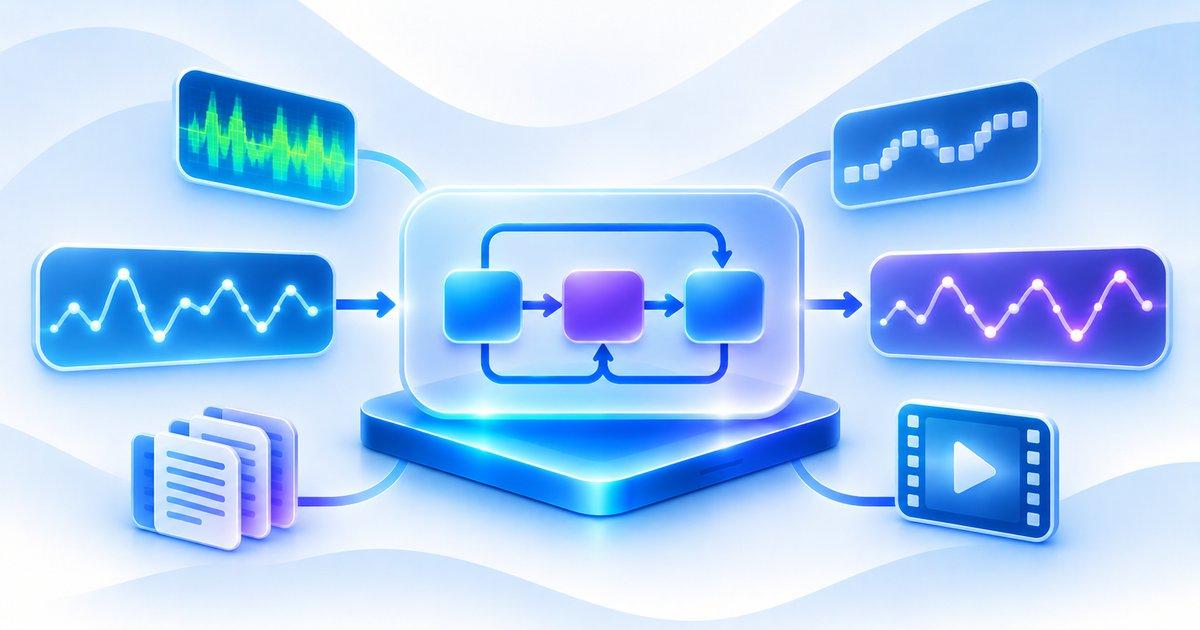
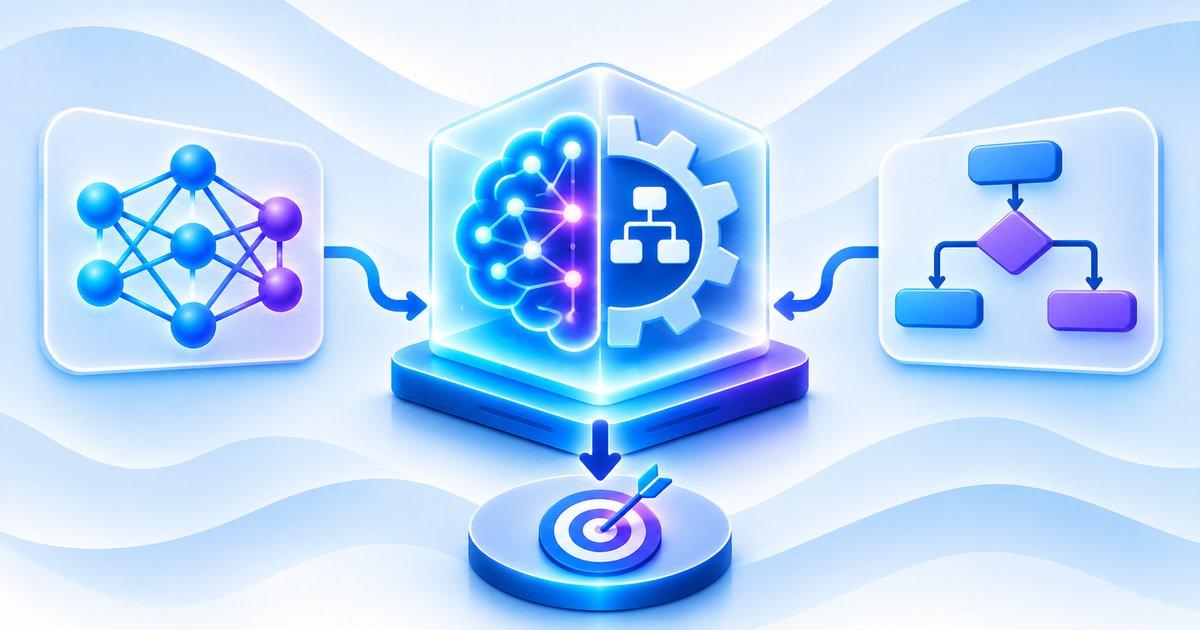
Neuro-symbolic machine learning is an approach to artificial intelligence that combines the pattern-learning capabilities of artificial neural networks with the structured knowledge representation and reasoning capabilities of symbolic systems. Neural networks learn numerical representations from examples, allowing them to recognize patterns in images, understand language, identify relationships, and make predictions from complex datasets. Symbolic systems, in contrast, represent information using explicit concepts, rules, relationships, and logical expressions that can be manipulated through formal reasoning procedures.
The central idea is to allow these two approaches to complement each other rather than treating them as competing alternatives. A neural network might analyze an image and recognize a person, a vehicle, and a traffic signal, while a symbolic reasoning component uses these identified objects and their relationships to evaluate whether a particular action follows traffic rules. The neural component handles uncertain visual perception, whereas the symbolic component evaluates structured information using defined logical relationships and constraints. This division of responsibilities makes it possible to build systems that combine data-driven recognition with explicit reasoning.
Neuro-symbolic AI is not one specific model architecture, algorithm, or software framework, but a broader research paradigm encompassing several ways of integrating neural learning with symbolic computation. Some systems use neural networks to extract symbols that are subsequently processed by a reasoning engine, while others introduce logical constraints into neural training or combine learned representations with knowledge graphs. As a result, the degree of integration can vary significantly, from loosely connected neural and symbolic modules to architectures in which learning and reasoning are jointly optimized.
Neural Networks vs. Symbolic AI: Two Different Approaches to Intelligence
Neural networks and symbolic AI approach intelligent behavior through different representation and computation mechanisms. Neural networks learn distributed numerical representations by adjusting model parameters using training data, allowing them to identify complex patterns without requiring engineers to define every relationship explicitly. This capability makes them particularly effective for perception-intensive applications such as image classification, speech recognition, natural language processing, and anomaly detection, where inputs are often noisy, incomplete, or difficult to describe through manually written rules.
However, learned numerical representations do not necessarily provide an explicit record of the rules or relationships responsible for a particular prediction. A neural model may identify a transaction as suspicious based on patterns learned from historical examples, but enforcing a precise business rule, such as rejecting transactions that violate a mandatory regulatory constraint, may require additional mechanisms. Neural networks can learn forms of reasoning and generalize beyond individual training examples, but their ability to maintain exact logical consistency or satisfy predefined constraints is not guaranteed simply by optimizing predictive accuracy.
Symbolic AI uses explicit representations such as objects, predicates, relationships, logical rules, and knowledge structures to perform structured operations. A rule-based system can represent a condition such as allowing a transaction only when an account is active and the transaction satisfies a defined authorization policy, making the relevant conditions inspectable and directly testable. This approach is useful when requirements must be expressed precisely, although traditional symbolic systems often depend on manually constructed knowledge and can struggle when information arrives as ambiguous natural language, images, or incomplete observations.
The difference therefore concerns how information is represented, acquired, and processed rather than a simple distinction between intelligent and non-intelligent systems. Neural approaches offer flexible learning from examples, while symbolic approaches provide explicit structures for representing facts and applying rules. As discussed in “Beyond Transformers: New Neural Network Architectures Software Engineers Should Understand”, the development of AI involves exploring architectural approaches that address limitations of conventional neural computation, and neuro-symbolic integration is one direction for combining learned representations with structured reasoning.
Why Combine Neural Learning With Logic and Structured Knowledge?
The motivation for combining neural networks with symbolic reasoning comes from the limitations that can emerge when complex learning tasks require both pattern recognition and precise logical decisions. A neural model trained on historical data may recognize statistical relationships effectively, but it can still produce predictions that violate known constraints or fail when familiar concepts appear in unfamiliar combinations. For example, an image recognition model may correctly identify a person holding a cup and another object on a table, yet a downstream application may need to determine whether the objects satisfy a specific relationship before executing an action. Structured reasoning provides an additional mechanism for evaluating such relationships explicitly.
Symbolic knowledge can also reduce dependence on learning every relevant relationship from large collections of examples. In a financial application, engineers may already know that certain combinations of account status, transaction permissions, and regulatory conditions determine whether an operation is allowed. Incorporating these rules into the system can guide model behavior and provide constraints that are difficult to guarantee through statistical learning alone. Similarly, a medical decision-support system may use learned models to identify patterns in clinical information while relying on structured medical knowledge and validated rules to check whether proposed conclusions satisfy defined conditions.
The integration is also useful when systems must generalize across combinations of concepts that were not frequently represented in their training data. A model that learns object representations independently may encounter difficulty when it must reason about a new combination of familiar objects and relationships, whereas symbolic representations can express those relationships in reusable forms. However, adding logic does not automatically improve every model, because symbolic rules may be incomplete, incorrect, or incompatible with noisy observations, and overly restrictive constraints can prevent valid predictions. The engineering objective is therefore to identify where learned representations are sufficient and where explicit knowledge or reasoning provides measurable value.
Key Takeaway
Neuro-symbolic machine learning combines neural networks' ability to learn patterns from complex data with symbolic systems' ability to represent knowledge through explicit facts, relationships, rules, and logical constraints. Neural networks are valuable for perception and statistical learning, while symbolic reasoning provides structured mechanisms for evaluating relationships and enforcing defined conditions. The integration can take several architectural forms, making it important for engineers to understand the underlying representations before selecting a particular approach. These foundations explain why neuro-symbolic AI is a promising direction for applications that require both flexible learning and structured reasoning.
Section 2: How Neuro-Symbolic Architectures Integrate Neural Networks and Logic
Neural Perception With Symbolic Reasoning: Turning Raw Data Into Structured Knowledge
One of the most common neuro-symbolic integration patterns uses neural networks to interpret unstructured information and symbolic systems to reason over the resulting representations. Neural models process inputs such as images, audio, and natural language to identify objects, entities, attributes, and relationships, converting complex observations into structured information that a reasoning engine can evaluate. For example, a computer vision model might detect a pedestrian, a vehicle, and a traffic signal in an image, while a symbolic component represents these observations as entities and predicates such as Pedestrian(p1), Vehicle(v1), and Signal(s1).
Once these representations are available, a reasoning engine can apply logical rules to determine whether the observed relationships satisfy particular conditions. In an autonomous driving application, the system might combine object detection results with spatial relationships and traffic rules to evaluate whether a vehicle should stop or proceed. The neural component handles perception from visually complex and potentially noisy inputs, while the symbolic component applies explicit conditions to the structured representation, creating a processing pipeline that combines learned recognition with rule-based reasoning.
An important engineering challenge in this architecture is symbol grounding, which refers to connecting symbolic concepts to the actual observations and entities represented in the input data. A neural network may identify an object with limited confidence or confuse two visually similar entities, and an incorrect symbolic representation can cause the reasoning engine to derive a logically valid but factually incorrect conclusion. Engineers therefore need mechanisms such as confidence calibration, uncertainty thresholds, entity-resolution checks, and human review for ambiguous cases, particularly when downstream decisions have significant consequences.
Logic-Guided Learning: Using Symbolic Constraints to Guide Neural Networks
Neuro-symbolic integration can also happen during model training, where symbolic knowledge and logical constraints influence how a neural network learns rather than being applied only after its predictions are generated. Domain experts may already know that certain outputs must satisfy specific relationships, such as a financial transaction being associated with a valid account or a medical classification following defined structural constraints. Incorporating this knowledge into training can encourage the model to produce outputs that are consistent with known relationships instead of relying exclusively on patterns learned from labeled examples.
One common approach is to introduce logical constraints into the model's objective function, combining conventional prediction loss with a penalty for violating selected rules. A simplified objective can be expressed as:
[
L_{\text{total}} =
L_{\text{task}}+\lambda L_{\text{logic}}
]
Here, (L_{\text{task}}) measures the model's prediction error, while (L_{\text{logic}}) represents the degree to which its predictions violate specified logical constraints, and (\lambda) controls the relative influence of the logical component. In practical systems, the logical penalty may be calculated using differentiable approximations of rule satisfaction, allowing gradients to influence model parameters during training, although the exact formulation depends on the logic representation and optimization method.
This approach is valuable when domain knowledge can restrict the space of acceptable predictions or provide useful supervision when labeled examples are limited. However, engineers must distinguish between hard constraints, which must be satisfied, and soft constraints, which express preferences or relationships that the model should generally follow. Incorrect or overly restrictive rules can prevent a model from learning valid patterns, making knowledge quality and domain validation important parts of the training process; this is closely related to the principles in “Data-Centric AI: Why Improving Your Dataset Can Beat Changing Your Model”, where improving the quality and structure of information can be as important as changing the architecture itself.
Differentiable Logic, Logic Tensor Networks, and Neural Theorem Proving
Traditional symbolic reasoning often relies on discrete operations in which logical statements are evaluated according to formal rules, but these operations are not always directly compatible with gradient-based neural optimization. Differentiable logic addresses this challenge by representing selected logical operations through continuous mathematical functions, allowing the degree of rule satisfaction to influence a neural network's training process. In fuzzy logic-based approaches, for example, a proposition may have a truth value between zero and one rather than being restricted to an exact true-or-false value, enabling the system to represent uncertainty or partial satisfaction during learning.
Logic Tensor Networks provide one approach to integrating neural representations with logical knowledge by representing objects and predicates through tensor-based functions and evaluating logical formulas using differentiable operations. Neural components can learn representations of entities and relationships, while logical formulas express the constraints that those representations should satisfy. This allows the system to optimize learned representations according to both task-specific objectives and logical knowledge, although soft satisfaction of a formula should not be confused with a formal symbolic proof under classical logic.
Neural theorem proving explores another direction by combining learned representations with the search and evaluation of logical proofs. Instead of relying entirely on manually specified symbolic search procedures, differentiable neural theorem provers can use learned embeddings and differentiable operations to guide the discovery of relationships that support a query. Probabilistic logic frameworks provide a related but distinct approach by representing uncertain facts and rules through probability-aware inference mechanisms, allowing systems to reason when information is incomplete or confidence varies. These techniques address different integration requirements, so engineers should distinguish differentiable logical optimization, neural-guided proof search, and probabilistic reasoning rather than treating them as interchangeable implementations of the same architecture.
Key Takeaway
Neuro-symbolic architectures integrate neural networks and symbolic reasoning through several distinct mechanisms, including neural perception followed by logical inference, logic-guided training, differentiable logic, neural theorem proving, and knowledge-graph integration. Each approach establishes a different relationship between learned representations and explicit knowledge, with trade-offs involving uncertainty, optimization, formal correctness, and computational complexity. Engineers must understand these distinctions when choosing an architecture because combining neural and symbolic components does not automatically guarantee accurate reasoning. Reliable systems depend on correct symbol grounding, validated logical constraints, appropriate uncertainty handling, and clear boundaries between statistical predictions and formal conclusions.
Section 3: Real-World Applications of Neuro-Symbolic Machine Learning
Computer Vision and Robotics: Combining Perception With Physical and Logical Constraints
Computer vision systems have become effective at recognizing objects, interpreting scenes, and identifying visual patterns, but many real-world applications require more than accurate object detection. A robot operating in a warehouse, for example, must identify packages, shelves, workers, and obstacles while also understanding their spatial relationships and determining which actions are physically permissible. Neuro-symbolic architectures can address this requirement by using neural networks to interpret visual information and symbolic reasoning components to evaluate relationships, constraints, and action rules before executing a decision.
Consider a robotic manipulation system that must pick up a fragile object from a table containing several other items. A neural perception model can identify the objects, estimate their positions, and classify their visual properties, while a symbolic planning component can evaluate constraints such as whether the object is accessible, whether another item obstructs the intended movement, and whether the selected action violates a predefined safety condition. This combination allows learned perception to inform structured task planning, although the reliability of the final decision still depends on accurate object recognition, spatial estimation, and valid representations of physical constraints.
Similar techniques are relevant to autonomous systems, where perception models identify pedestrians, vehicles, traffic signals, and road boundaries while reasoning components evaluate traffic rules and possible actions. Symbolic constraints can help restrict the available actions to those that satisfy specified conditions, but they cannot compensate automatically for incorrect visual observations or incomplete environmental knowledge. Engineers must therefore validate the entire perception-to-action pipeline, including uncertainty handling, sensor reliability, and the possibility that real-world conditions differ from the assumptions encoded in the symbolic rules.
Natural Language Processing and Question Answering: Moving Beyond Pattern Recognition
Natural language processing offers another important application area because understanding a question and producing a fluent response do not necessarily require the same computational capabilities as verifying the facts behind that response. Neural language models can interpret user queries, extract entities, identify relationships, and generate candidate answers, while symbolic reasoning systems can retrieve structured information and apply explicit rules to evaluate whether a conclusion follows from known facts. This integration is particularly useful in domains where an answer must reflect relationships across multiple records rather than relying only on statistical patterns learned from text.
For example, consider an enterprise question-answering system that must determine which suppliers provide components used in a particular product. A neural model can extract company names, product references, and supplier relationships from documents, while a knowledge graph stores the validated entities and connections in a structured format. A symbolic query or reasoning engine can then traverse these relationships to identify relevant suppliers, check whether the necessary conditions are satisfied, and return an answer supported by identifiable information sources. This architecture can improve traceability because the system can expose the facts and relationships used to construct an answer rather than relying entirely on generated text.
Neuro-symbolic approaches can also support semantic parsing, structured information extraction, and multi-step question answering, where natural language inputs must be converted into formal expressions that can be executed against databases or knowledge bases. However, connecting a language model to an external database or rule engine does not automatically establish a deeply integrated neuro-symbolic architecture, since the quality of reasoning depends on how neural representations, symbolic structures, and inference operations interact. Engineers should evaluate entity extraction accuracy, relationship correctness, query validity, and the reliability of the final reasoning process separately, particularly when systems operate over incomplete or frequently changing knowledge.
Mathematics, Scientific Discovery, and Formal Reasoning
Mathematical reasoning provides one of the clearest demonstrations of how neural guidance and symbolic deduction can complement each other. Neural networks can recognize mathematical patterns, suggest intermediate steps, and guide the search for possible solutions, while symbolic systems can apply formal rules and verify whether a proposed deduction follows logically from established premises. This distinction is important because generating a plausible mathematical answer is not equivalent to producing a valid proof, making explicit verification particularly valuable in applications that require rigorous reasoning.
A well-known example is <Entity value="AlphaGeometry" category="software" disambig="Neuro-symbolic theorem-proving system for geometry"/> developed by Google DeepMind, which combines a neural language model with a symbolic deduction engine to solve challenging Euclidean geometry problems. The neural component proposes useful constructions that guide the search process, while the symbolic engine applies geometric deduction rules to derive new facts and establish a proof. In its original evaluation on 30 International Mathematical Olympiad-level geometry problems, the system solved 25, demonstrating how learned search guidance can improve the effectiveness of formal symbolic reasoning. <Cite refs={["turn185164search9","turn185164search10"]}/>
The same general research direction is relevant to theorem proving, constraint-based problem solving, and certain forms of scientific reasoning, where neural methods can help identify promising hypotheses or candidate relationships and symbolic procedures can check their consistency against formal rules. In scientific applications, this could involve extracting relationships from research literature, representing them in structured knowledge systems, and evaluating whether candidate conclusions satisfy known constraints. However, the success of a specialized theorem-proving system should not be interpreted as evidence that neuro-symbolic models can independently discover and validate arbitrary scientific theories, since scientific discovery also requires empirical experimentation, domain-specific knowledge, and evidence beyond formal consistency.
Key Takeaway
Neuro-symbolic machine learning has applications across computer vision, robotics, natural language processing, mathematical reasoning, healthcare, finance, and enterprise decision systems, particularly where pattern recognition must be combined with structured relationships or explicit constraints. Neural networks provide flexible interpretation of complex inputs, while symbolic components help evaluate facts, apply rules, and derive structured conclusions. Systems such as AlphaGeometry demonstrate the potential of combining neural guidance with formal deduction, but production adoption requires careful validation of perception accuracy, knowledge quality, uncertainty, and reasoning reliability. The greatest value emerges when engineers identify a genuine need for both learning and structured reasoning rather than adding symbolic components without a clearly defined purpose.
Conclusion: Combining Neural Learning With Structured Reasoning
Neuro-symbolic machine learning represents an important direction in artificial intelligence because it brings together two capabilities that have traditionally been developed through different approaches: learning patterns from data and reasoning over explicitly represented knowledge. Neural networks provide the flexibility to interpret complex inputs such as images, audio, and natural language, while symbolic systems represent facts, relationships, logical rules, and constraints that can be evaluated systematically. By combining these capabilities, neuro-symbolic architectures aim to build systems that can learn from experience while using structured knowledge to support more consistent and traceable decisions.
The integration can take several forms depending on the requirements of the application. Neural perception followed by symbolic reasoning allows learned models to convert unstructured information into representations that reasoning engines can evaluate, while logic-guided learning introduces domain constraints into the model's training process. Differentiable logic and Logic Tensor Networks explore ways to incorporate logical relationships into gradient-based optimization, whereas neural theorem proving combines learned guidance with structured proof search. Knowledge graphs provide another integration mechanism by connecting learned entity representations with explicit relationships and facts that can support structured inference.
These approaches create opportunities across computer vision, robotics, natural language processing, mathematics, healthcare, finance, and enterprise decision systems. AlphaGeometry demonstrates how a neural model can guide a symbolic deduction engine in solving complex geometry problems, while knowledge-grounded question answering and robotic task planning illustrate other ways that learned perception can interact with structured reasoning. However, research demonstrations should not be confused with universally reliable production solutions, because practical systems must still address uncertain observations, incomplete knowledge, contradictory rules, and computational constraints.
For software engineers and machine learning practitioners, the central challenge is designing the right boundary between learning and reasoning. A system must determine which information should be inferred statistically, which requirements should be enforced through explicit rules, and how uncertainty should be handled when neural predictions are converted into symbolic facts. Engineers must also evaluate perception accuracy, logical correctness, compositional generalization, inference latency, and operational reliability independently, since a valid logical conclusion can still be wrong when its underlying information is inaccurate.
Neuro-symbolic AI should therefore be viewed as a complementary architectural approach rather than a universal replacement for neural networks or traditional symbolic systems. Its value is greatest when an application genuinely requires both flexible pattern recognition and structured reasoning, particularly when decisions depend on relationships, constraints, and domain knowledge that cannot be evaluated reliably through predictive accuracy alone. As the field develops, effective engineering will depend on combining these capabilities carefully while maintaining rigorous validation, traceability, and human oversight wherever the consequences of incorrect decisions are significant.
Frequently Asked Questions
1. What is neuro-symbolic machine learning?
Neuro-symbolic machine learning is an approach to artificial intelligence that combines neural networks with symbolic knowledge representation and reasoning. It enables systems to learn patterns from data while also using explicit facts, relationships, logical rules, and constraints to support structured decision-making.
2. How does neuro-symbolic AI combine neural networks and symbolic reasoning?
Neural networks process complex inputs such as images, text, and audio, converting them into representations that symbolic systems can use. A reasoning engine can then apply logical rules and structured relationships to evaluate those representations, while other architectures integrate symbolic constraints directly into neural network training.
3. What is the difference between neural networks and symbolic AI?
Neural networks learn numerical representations from training data and are effective at recognizing patterns in complex, unstructured inputs. Symbolic AI represents information through explicit concepts, facts, rules, and logical relationships, making it useful for structured reasoning and constraint evaluation.
4. Why is neuro-symbolic AI important?
Neuro-symbolic AI addresses situations where statistical learning alone may not provide sufficient logical consistency, structured reasoning, or explicit constraint enforcement. Combining neural learning with symbolic knowledge can help systems interpret complex information while evaluating relationships and conditions that matter to a particular application.
5. What are the main types of neuro-symbolic architectures?
Common approaches include neural perception followed by symbolic reasoning, logic-guided neural learning, differentiable logic, knowledge-graph-based reasoning, and neural theorem proving. These architectures differ in how tightly neural representations and symbolic operations are integrated, as well as whether logical knowledge influences training, inference, or both.
6. What is logic-guided learning in machine learning?
Logic-guided learning incorporates domain knowledge and logical constraints into the training process of a neural model. Engineers can introduce penalties for violating selected rules or incorporate structured relationships into the learning objective, helping the model produce outputs that better satisfy known requirements.
7. What is differentiable logic?
Differentiable logic represents selected logical operations through mathematical functions that can participate in gradient-based optimization. Some approaches use continuous truth values to represent the degree of satisfaction of a logical expression, although soft logical satisfaction should not be confused with an exact formal proof under classical logic.
8. What are Logic Tensor Networks?
Logic Tensor Networks are neuro-symbolic systems that combine neural representations with logical knowledge by expressing objects and predicates through tensor-based functions. They use differentiable operations to evaluate logical formulas, allowing learned representations to be optimized according to both data-driven objectives and specified constraints.
9. How do knowledge graphs support neuro-symbolic reasoning?
Knowledge graphs represent entities and their relationships through structured connections, allowing reasoning systems to retrieve facts and derive additional information using logical rules. Neural networks can complement these structures by extracting entities and relationships from unstructured data or learning numerical embeddings that capture patterns in the graph.
10. What is the difference between neuro-symbolic AI and large language models?
Large language models primarily learn statistical patterns from training data to interpret and generate language, whereas neuro-symbolic systems explicitly integrate learned representations with structured knowledge or reasoning mechanisms. An LLM connected to a database or external tool is not automatically a deeply integrated neuro-symbolic model, because the distinction depends on how neural computation and symbolic reasoning interact within the architecture.
11. How does AlphaGeometry use neuro-symbolic reasoning?
AlphaGeometry combines a neural language model with a symbolic deduction engine to solve challenging geometry problems. The neural component proposes useful constructions that guide the search process, while the symbolic engine applies formal geometric deduction rules to establish whether a solution can be proved.
12. What are the real-world applications of neuro-symbolic machine learning?
Potential applications include robotic task planning, autonomous systems, computer vision, knowledge-grounded question answering, mathematical theorem proving, healthcare decision support, financial compliance, and enterprise workflow automation. These applications are particularly relevant when neural pattern recognition must be combined with explicit relationships, domain knowledge, or logical constraints.
13. Does neuro-symbolic AI make machine learning models explainable?
Symbolic rules and structured reasoning can make certain parts of a system easier to inspect because engineers can examine the facts and logical conditions used to reach a conclusion. However, this does not automatically explain how a neural network produced its initial prediction, so meaningful explainability requires traceability across both neural and symbolic components.
14. What are the main challenges of building neuro-symbolic systems?
Important challenges include symbol grounding, uncertainty handling, incomplete knowledge, conflicting rules, computational complexity, and maintaining consistency between neural predictions and symbolic representations. Engineers must also address the difficulty of evaluating both predictive performance and logical correctness, particularly when systems operate on noisy or changing real-world data.
15. How can software engineers implement and evaluate neuro-symbolic AI systems?
Engineers can begin by defining the responsibilities of neural models, entity extraction components, knowledge stores, and reasoning engines, then selecting an integration approach suited to the application. Evaluation should measure neural prediction quality, logical consistency, constraint satisfaction, compositional generalization, inference latency, and end-to-end reliability, with versioning, monitoring, regression testing, and human oversight supporting production deployment.