Section 1: What Makes an AI System “Agentic”?
Moving Beyond Traditional Machine Learning
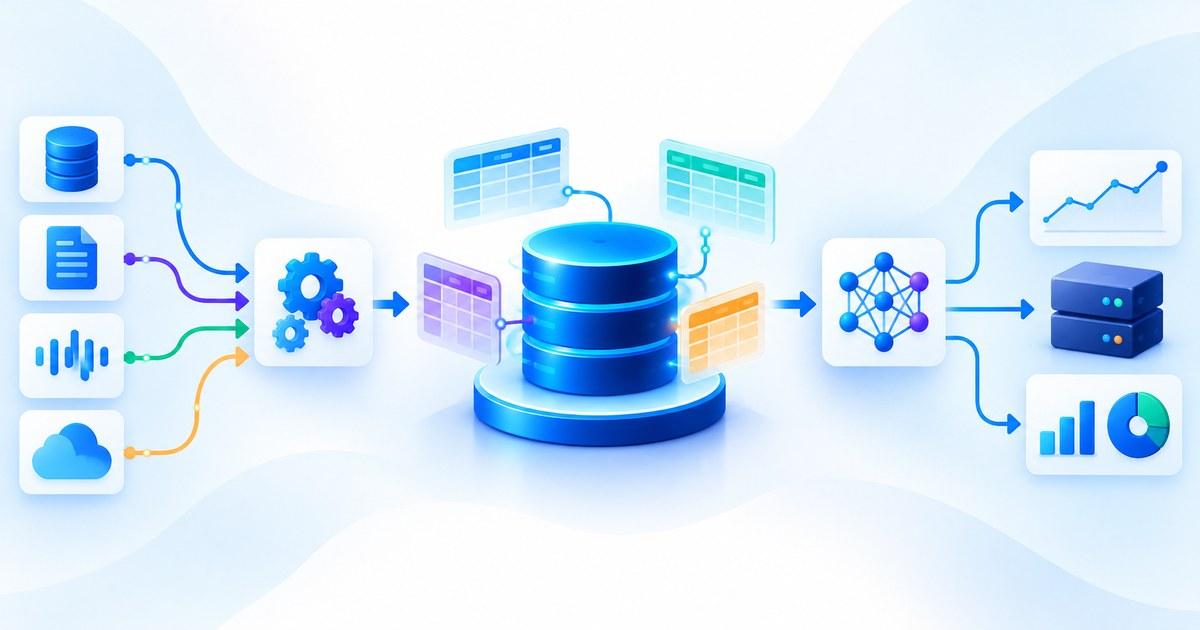
For decades, artificial intelligence systems have been built around a relatively simple principle: take an input, process it through a trained model, and generate an output. This paradigm has powered many of the most successful AI applications in modern history. Search engines use machine learning to rank results, streaming platforms recommend content based on user behavior, financial institutions detect fraud through predictive models, and retailers forecast demand using historical trends. Despite serving different business functions, all these systems share a common characteristic, they are designed to make predictions.
The rise of large language models has introduced a new category of AI systems that operate very differently. Instead of focusing solely on prediction, these systems are designed to achieve objectives. This shift may appear subtle, but it represents one of the most significant architectural changes in the evolution of artificial intelligence.
A traditional machine learning model might answer a question such as, “Is this transaction fraudulent?” An agentic system, however, can handle a broader request such as, “Investigate suspicious transactions, identify patterns, generate a report, and recommend actions for the risk team.” The difference lies not in intelligence alone but in how the system approaches problem-solving. Rather than producing a single prediction, an agentic system can coordinate multiple steps to accomplish a larger goal.
This capability is becoming increasingly important because modern business challenges rarely fit into neatly defined prediction tasks. Organizations need systems that can gather information, reason through uncertainty, interact with tools, and execute workflows that previously required human involvement. As a result, agentic AI is emerging as one of the most transformative developments in software engineering and enterprise technology.
The Defining Characteristics of Agentic Systems
An AI system becomes agentic when it possesses the ability to act with a degree of autonomy while pursuing a specific objective. Unlike traditional models that operate within fixed boundaries, agents can evaluate situations, determine what information they need, decide which actions to take, and adapt as circumstances change.
One of the defining characteristics of an agentic system is reasoning. Before taking action, the system can analyze the task, evaluate available options, and determine the most appropriate path forward. This reasoning process allows agents to tackle problems that cannot be solved through a single prediction.
Another defining characteristic is planning. Complex objectives often require multiple steps, and agents can break larger tasks into smaller, manageable actions. For example, if an engineer asks an AI assistant to investigate a production issue, the agent may first review monitoring dashboards, then analyze logs, examine recent deployments, retrieve relevant documentation, and finally generate recommendations. The workflow emerges dynamically rather than being explicitly programmed in advance.
Tool usage is another critical element. Traditional machine learning models generally operate on data provided to them during inference. Agentic systems, by contrast, can interact with external resources. They can query databases, access APIs, search documentation repositories, interact with software applications, and retrieve real-time information. These capabilities allow agents to extend their functionality far beyond the knowledge contained within a single model.
Perhaps most importantly, agents can adapt their behavior as new information becomes available. If a particular strategy fails, they can evaluate alternative approaches and continue working toward the objective. This adaptability enables them to function effectively in environments where conditions change frequently and the optimal solution path cannot be predetermined.
These characteristics collectively transform AI from a prediction engine into a goal-oriented system capable of executing meaningful work.
Why Agentic AI Is Becoming a Strategic Priority
The growing interest in agentic AI is driven by the changing nature of work itself. Many business processes involve gathering information from multiple sources, synthesizing knowledge, making decisions, and coordinating actions across different systems. Traditional machine learning can assist with individual components of these workflows, but it often struggles to manage the entire process.
Consider how software development teams operate. Engineers regularly analyze requirements, search technical documentation, review codebases, investigate issues, coordinate with stakeholders, and execute implementation plans. These activities involve reasoning, planning, and decision-making rather than simple prediction. Agentic systems are uniquely positioned to support such workflows because they can orchestrate multiple activities while maintaining awareness of the broader objective.
The same pattern appears across customer support, operations management, financial services, healthcare administration, and enterprise research. Organizations are increasingly recognizing that productivity gains come not from automating individual predictions but from automating entire workflows. This realization is driving significant investment in agentic AI platforms and infrastructure.
As a result, companies are also changing what they expect from AI engineers. Building successful agentic systems requires expertise in system architecture, orchestration frameworks, retrieval systems, tool integration, memory management, and evaluation methodologies. Understanding how these components work together is becoming just as important as understanding model training itself. This shift in hiring expectations is explored in "The Rise of Agentic AI: What It Means for ML Engineers in Hiring," which examines how the growing adoption of agentic systems is reshaping AI careers.
The future of AI is not simply about creating smarter models. It is about building systems capable of achieving meaningful objectives within complex environments. Agentic AI represents the foundation of that future.
Key Takeaway
An AI system becomes agentic when it moves beyond prediction and gains the ability to pursue goals autonomously. Through reasoning, planning, tool usage, and adaptive decision-making, agentic systems can execute complex workflows that traditional machine learning models cannot handle effectively. As businesses increasingly seek end-to-end automation, understanding what makes a system truly agentic is becoming a foundational skill for modern software and AI engineers.
Section 2: The Brain of the Agent – Large Language Models and Reasoning Engines
Why Large Language Models Sit at the Center of Agentic AI
Every agentic AI system needs a component responsible for understanding instructions, interpreting context, generating responses, and deciding what actions should be taken. In modern agent architectures, this role is typically performed by a Large Language Model (LLM). While many people assume the LLM itself is the agent, the reality is more nuanced. The LLM serves as the cognitive engine of the system, but it is only one part of a much larger architecture.
Large Language Models have become the foundation of agentic AI because they possess a unique ability to process natural language and generalize across a wide range of tasks. Unlike traditional machine learning models that are trained for specific objectives, LLMs can understand instructions, summarize information, write code, analyze documents, answer questions, and reason through complex scenarios using the same underlying architecture.
This versatility makes them ideal for agentic systems. An agent may need to interpret a user's request, determine what information is missing, evaluate possible actions, and decide which tool should be used next. These decisions require flexible reasoning capabilities that traditional machine learning models were never designed to provide.
For example, when a software engineer asks an AI assistant to investigate a production issue, the LLM interprets the request, identifies relevant information sources, formulates a strategy for investigation, and generates explanations based on the results it receives. Without the language model, the agent would lack the ability to understand goals and coordinate actions effectively.
However, it is important to recognize that an LLM alone is not sufficient to create a robust agentic system. True agents emerge when language models are combined with planning, memory, retrieval, and execution capabilities.
How Reasoning Enables Agents to Solve Complex Problems
One of the defining characteristics of agentic AI is reasoning. Traditional software systems generally follow predefined workflows, while machine learning models generate predictions based on learned patterns. Agentic systems introduce something different: the ability to evaluate a problem and determine how it should be solved.
Reasoning allows an agent to break down a complex objective into smaller tasks. Instead of attempting to solve everything at once, the system can analyze the problem, identify dependencies, determine priorities, and create a sequence of actions. This process is often referred to as task decomposition and is one of the primary reasons agentic systems can handle more sophisticated workflows than traditional AI applications.
Consider an engineering leader asking an AI system to evaluate the performance of a software team over the previous quarter. The request is not a single question but a multifaceted objective. The agent may need to collect productivity metrics, analyze deployment frequency, review incident reports, examine sprint performance, and synthesize findings into a coherent report. Reasoning enables the system to determine which steps are necessary and in what order they should occur.
This capability becomes even more important when tasks involve uncertainty. Real-world business environments rarely provide complete information upfront. Agents must often gather additional context before deciding how to proceed. The ability to evaluate intermediate results and adjust behavior accordingly is what distinguishes reasoning-based systems from traditional predictive models.
As organizations increasingly adopt these technologies, engineers are expected to understand not only how models work but also how reasoning processes are incorporated into larger AI systems. This evolution in technical expectations is discussed "LLM Engineering Interviews: How to Prepare for Prompting, Fine-Tuning, and Evaluation," which explores many of the concepts underlying modern AI development.
Reasoning transforms language models from information generators into systems capable of pursuing meaningful objectives.
The Limitations of LLMs Without Supporting Components
Despite their impressive capabilities, Large Language Models have significant limitations when operating in isolation. They do not possess real-time awareness of external systems, they cannot reliably remember information across long interactions, and they often struggle with tasks requiring precise execution. These limitations explain why successful agentic architectures include multiple supporting components beyond the LLM itself.
One major challenge is context limitation. Every language model operates within a finite context window, meaning it can only process a limited amount of information at any given time. As workflows become more complex, important details may exceed these limits. Without additional architectural mechanisms, the system risks losing critical information needed to complete its objective.
Another challenge is knowledge freshness. Language models are trained on historical data and do not automatically know about recent events, updated documentation, or changes within an organization's systems. To address this issue, agents often rely on retrieval mechanisms that provide access to external knowledge sources.
Execution is another limitation. While an LLM can describe how a task should be completed, it cannot directly interact with databases, APIs, monitoring platforms, or enterprise applications without supporting infrastructure. Tool integrations and orchestration frameworks are required to transform reasoning into action.
These limitations highlight an important architectural principle: the intelligence of an agentic system does not come solely from the language model. Instead, it emerges from the interaction between the LLM and the surrounding components that enable planning, memory, retrieval, and execution.
Why the LLM Is the Brain, but Not the Entire System
A useful way to think about agentic architecture is to compare it to the human body. The Large Language Model functions as the brain, providing reasoning, interpretation, and decision-making capabilities. However, a brain alone cannot accomplish objectives. It requires memory to retain information, senses to gather data, and muscles to execute actions.
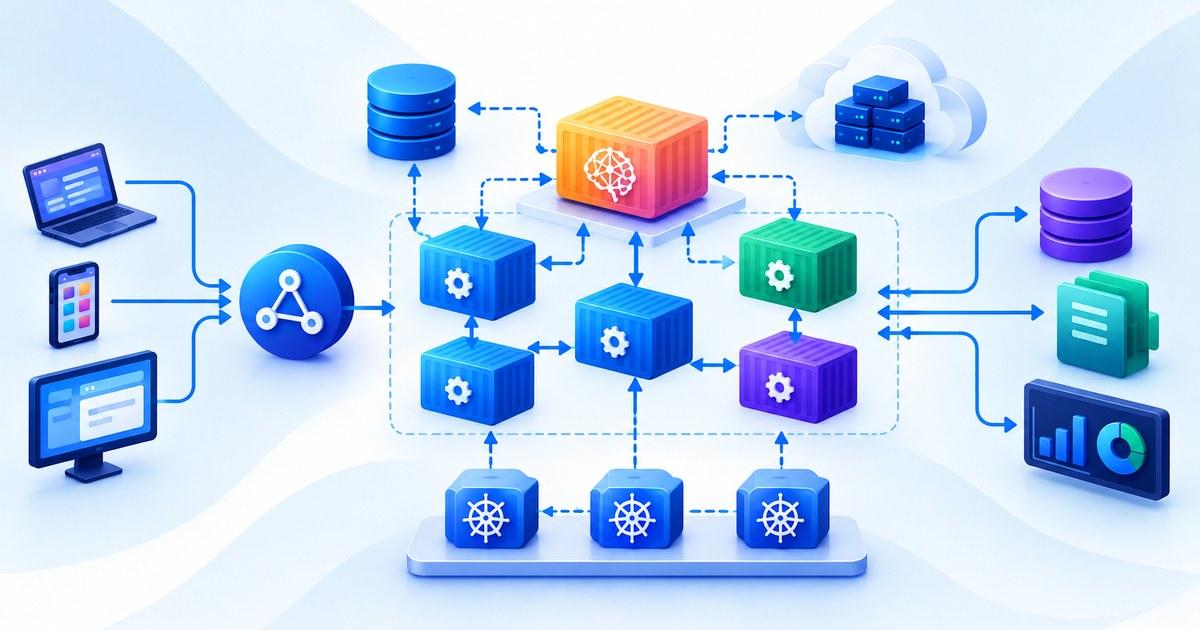
Similarly, an AI agent requires additional architectural layers to operate effectively. Retrieval systems provide access to information, memory systems preserve context, planning mechanisms organize tasks, and tools enable interaction with external environments. Together, these components transform a powerful language model into a functional agent capable of solving real-world problems.
Understanding this distinction is critical for engineers because many failed AI projects result from treating the LLM as the entire solution rather than one component within a larger system. Organizations that successfully deploy agentic AI focus on designing complete architectures rather than relying solely on model capabilities.
Key Takeaway
Large Language Models serve as the cognitive core of agentic AI systems by enabling natural language understanding, reasoning, and decision-making. However, an LLM alone is not an agent. True agentic behavior emerges when language models are combined with planning mechanisms, memory systems, retrieval pipelines, and execution frameworks. Understanding the role of the LLM, and its limitations, is essential for designing scalable and effective agentic AI architectures.
Section 3: Memory and Retrieval Systems – How Agents Remember and Access Information
Why Memory Is Essential for Agentic AI
One of the biggest differences between traditional software systems and agentic AI systems is the ability to maintain context over time. Humans naturally rely on memory to perform complex tasks. We remember previous conversations, past decisions, project requirements, and relevant experiences when solving new problems. Without memory, even simple tasks would require restarting from the beginning every time.
AI agents face a similar challenge. Large Language Models are exceptionally capable at reasoning and generating responses, but they do not inherently possess long-term memory. Every interaction occurs within a limited context window, meaning the model can only process a certain amount of information at once. Once that limit is exceeded, important details may be lost.
Imagine a software engineering assistant helping a developer build a large application over several weeks. The assistant may need to remember architectural decisions, coding conventions, feature requirements, deployment environments, and previous discussions. Without memory, the agent would repeatedly lose context and force users to re-explain information, creating a frustrating experience.
This limitation explains why memory systems have become one of the most critical components of agentic AI architecture. Memory enables agents to maintain continuity, personalize interactions, and operate effectively across extended workflows. It transforms AI from a tool that responds to isolated prompts into a system capable of participating in ongoing processes.
As agentic systems become more sophisticated, memory is increasingly viewed as a requirement rather than an enhancement. The ability to retain and utilize relevant information is what allows agents to function more like collaborators and less like traditional chatbots.
Understanding Short-Term and Long-Term Memory
Modern agentic architectures typically separate memory into two categories: short-term memory and long-term memory. Each serves a distinct purpose and contributes to the agent’s overall effectiveness.
Short-term memory refers to information that is actively being used during a conversation or workflow. This includes recent interactions, intermediate reasoning steps, task objectives, and contextual details needed to complete the current activity. In many systems, short-term memory is managed through the context window of the language model itself.
For example, when an AI agent assists an engineer with debugging a production issue, it needs to remember recent observations, diagnostic results, and previously attempted solutions. This information allows the agent to maintain a coherent investigation process without repeatedly revisiting the same steps.
Long-term memory serves a different purpose. Instead of focusing on immediate context, it stores information that may be useful in future interactions. This could include user preferences, project documentation, organizational knowledge, historical decisions, and workflow outcomes. Long-term memory enables continuity across days, weeks, or even months.
Consider a product development team using an AI agent throughout an entire software release cycle. The agent may need to remember feature specifications, sprint goals, technical constraints, and stakeholder feedback across multiple sessions. Long-term memory allows these details to remain accessible long after the original conversation has ended.
The combination of short-term and long-term memory creates a more intelligent and context-aware system. Rather than treating every interaction as an isolated event, the agent can build upon previous knowledge and provide increasingly relevant assistance over time.
Retrieval Systems Give Agents Access to External Knowledge
Memory alone is not sufficient for building effective agentic systems. Organizations generate enormous amounts of information, including technical documentation, internal wikis, databases, customer records, code repositories, and operational reports. Storing all of this information directly within an agent’s memory is neither practical nor efficient.
This challenge is addressed through retrieval systems.
Retrieval mechanisms allow agents to access external knowledge sources whenever information is needed. Instead of relying solely on what exists within the language model’s training data or memory store, the agent can dynamically search for relevant information and incorporate it into its reasoning process.
A common implementation of this concept is Retrieval-Augmented Generation (RAG). In a RAG architecture, the agent first searches a knowledge source for relevant information and then provides those findings to the language model before generating a response. This approach significantly improves accuracy, reduces hallucinations, and ensures the agent works with up-to-date information.
For example, an engineering team may use an AI assistant to answer questions about internal infrastructure. Rather than relying exclusively on model knowledge, the agent can retrieve the latest technical documentation, deployment guidelines, and operational procedures before responding. This ensures that recommendations are based on current organizational knowledge rather than outdated training data.
As retrieval systems become more important in production AI environments, engineers are increasingly expected to understand how they integrate with agentic architectures. This growing demand for system-level AI expertise is reflected in "MLOps vs. ML Engineering: What Interviewers Expect You to Know in 2025," which explores how modern AI roles increasingly require knowledge of infrastructure, deployment, and information management.
Retrieval effectively expands an agent’s knowledge beyond what can be stored in memory alone.
How Memory and Retrieval Work Together
The true power of agentic AI emerges when memory and retrieval systems work together. Memory provides continuity and personalization, while retrieval provides access to vast amounts of external information. Together, they enable agents to operate with both context awareness and knowledge flexibility.
When a user submits a request, the agent can first consult its memory to understand relevant historical context. It can then retrieve additional information from external sources before reasoning about the problem and generating a response. This combination allows the system to make informed decisions while maintaining continuity across interactions.
For example, a project management agent may remember previous sprint discussions, retrieve current project metrics from organizational systems, and generate recommendations based on both historical and real-time information. Neither memory nor retrieval alone would be sufficient to accomplish this task effectively.
As organizations scale their AI initiatives, the ability to combine memory with retrieval is becoming a defining characteristic of successful agentic systems. These components provide the foundation that allows agents to move beyond simple conversations and become valuable collaborators in complex business workflows.
Key Takeaway
Memory and retrieval systems are essential components of agentic AI architecture. Memory enables agents to maintain context and continuity across interactions, while retrieval systems provide access to current and relevant external knowledge. Together, they allow agents to reason more effectively, personalize experiences, and support complex workflows that extend far beyond the limitations of standalone language models.
Section 4: Planning, Tool Usage, and Execution – How Agents Turn Decisions into Actions
Why Planning Is the Core of Agentic Intelligence
Reasoning allows an AI agent to understand a problem, but planning enables it to solve one. Without planning, even the most advanced language model would struggle to complete complex objectives because it would have no structured approach for determining what actions should happen next. Planning acts as the bridge between understanding a goal and executing the steps required to achieve it.
In traditional software systems, workflows are typically predefined. Engineers design specific sequences of actions that the application follows under particular conditions. While this approach works well for predictable scenarios, it becomes increasingly difficult to manage when tasks involve uncertainty, changing requirements, or multiple possible paths to success.
Agentic systems address this challenge by dynamically creating plans based on the objective they receive. Instead of following a fixed workflow, the agent evaluates the task, identifies the information required, determines dependencies, and organizes actions into a logical sequence. This capability allows the system to adapt to different situations without requiring engineers to anticipate every possible scenario in advance.
For example, if an engineering manager asks an AI agent to evaluate the health of a software project, the system may first determine that it needs sprint metrics, deployment data, incident reports, and team productivity information. It can then create a plan for gathering these inputs, analyzing them, and generating recommendations. The exact workflow may vary depending on the project, but the planning process enables the agent to remain goal-oriented throughout execution.
This ability to break large objectives into smaller actionable tasks is one of the defining characteristics of agentic AI and a major reason these systems are attracting significant enterprise investment.
Tool Integration Expands What Agents Can Do
A language model can generate information, but real-world work often requires interaction with systems outside the model itself. Organizations rely on databases, APIs, monitoring platforms, code repositories, communication tools, and enterprise applications. For an AI agent to be truly useful, it must be able to interact with these external resources.
This is where tool integration becomes essential.
Tools function as extensions of an agent’s capabilities. Rather than relying solely on the information contained within its training data, an agent can use tools to retrieve current information, execute operations, and interact with business systems. This dramatically expands the range of tasks the agent can perform.
Imagine a software engineering assistant helping investigate a production incident. The agent may need to access monitoring dashboards, analyze application logs, retrieve deployment records, query cloud infrastructure, and review documentation. None of these actions can be accomplished through a language model alone. Tool integrations provide the mechanisms through which the agent interacts with these systems.
The same principle applies across industries. Customer support agents may access CRM platforms, financial agents may retrieve transaction records, and healthcare agents may review patient information stored in secure databases. The effectiveness of an agent often depends less on the sophistication of its language model and more on the quality of the tools available to it.
As organizations build increasingly advanced AI solutions, engineers are expected to understand not only model development but also how external systems can be integrated into larger AI workflows. This shift toward system-level thinking is discussed in "End-to-End ML Project Walkthrough: A Framework for Interview Success," which highlights the importance of understanding complete AI workflows rather than focusing solely on individual models.
Tool integration transforms AI agents from information generators into systems capable of interacting with the real world.
Execution Is Where Business Value Is Created
Planning and tool usage are important, but neither creates value unless actions are successfully executed. Execution is the stage where an agent carries out its plan, interacts with external systems, evaluates results, and progresses toward completing its objective.
Many people assume execution is straightforward, but it is often the most complex part of an agentic architecture. Real-world environments are unpredictable. APIs fail, data may be incomplete, systems experience outages, and information can conflict across sources. Effective agents must be capable of handling these situations while continuing to work toward the desired outcome.
Execution requires continuous feedback loops. After each action, the agent evaluates the result and determines whether additional steps are needed. If a database query returns incomplete information, the agent may perform additional searches. If a workflow encounters an error, the agent may attempt an alternative strategy. This iterative process allows the system to operate effectively even when conditions change unexpectedly.
For example, an AI-powered software development assistant may generate code, run automated tests, review error messages, modify the implementation, and retest until the desired outcome is achieved. Rather than stopping after a single action, the system continuously evaluates progress and adjusts its behavior accordingly.
This capability represents one of the most significant differences between traditional AI applications and agentic systems. Traditional models produce outputs. Agents execute workflows.
The Agent Loop: Observe, Plan, Act, and Evaluate
Most modern agentic architectures follow a recurring cycle often referred to as the agent loop. Although implementations vary, the fundamental pattern remains remarkably consistent. The agent observes its environment, plans the next action, executes that action, evaluates the result, and then repeats the process until the objective is achieved.
This iterative loop enables agents to handle tasks that cannot be solved through a single response. Instead of treating every interaction as isolated, the system continuously updates its understanding based on new information and execution outcomes. This creates a level of adaptability that traditional software systems often struggle to achieve.
The observe-plan-act-evaluate cycle is one of the reasons agentic systems are increasingly being viewed as the next evolution of enterprise automation. Rather than automating individual tasks, organizations can automate entire workflows while maintaining flexibility in how objectives are achieved.
Key Takeaway
Planning, tool integration, and execution form the operational backbone of agentic AI systems. Planning enables agents to break complex objectives into manageable tasks, tools provide access to external systems and real-world information, and execution turns decisions into meaningful actions. Together, these components create the agent loop that allows AI systems to move beyond conversation and actively achieve business objectives.
Conclusion
Agentic AI represents one of the most important architectural advancements in artificial intelligence since the rise of deep learning. While much of the public discussion focuses on the capabilities of Large Language Models, the reality is that successful AI agents are built on a much broader foundation. Language models provide reasoning and decision-making capabilities, but they are only one component within a larger system that includes memory, retrieval, planning, tool integration, and execution frameworks.
Understanding this distinction is critical for software engineers and AI practitioners. Many organizations initially approach agentic AI as a model problem, assuming that deploying a powerful LLM will automatically create an intelligent agent. In practice, production-grade agentic systems depend on carefully designed architectures that enable agents to remember information, access external knowledge, create plans, interact with software systems, and execute workflows reliably.
The architecture of an agentic system closely resembles how humans solve complex problems. We rely on memory to retain context, gather information when knowledge is incomplete, create plans before taking action, use tools to extend our capabilities, and continuously evaluate progress toward our goals. Agentic AI follows a remarkably similar pattern. The combination of these components allows agents to move beyond answering questions and begin performing meaningful work.
This evolution is particularly important because businesses are increasingly seeking automation at the workflow level rather than the task level. Traditional machine learning systems excel at prediction, classification, and recommendation, but modern organizations often need systems capable of coordinating multiple actions across diverse environments. Agentic architectures address this need by combining reasoning with execution.
Looking ahead, the future of enterprise AI will likely be defined by hybrid systems where machine learning models, large language models, retrieval pipelines, and agent orchestration frameworks work together. Engineers who understand how these components interact will be well positioned to design, build, and maintain the next generation of intelligent software systems.
As agentic AI continues to mature, architectural expertise will become just as valuable as model expertise. The engineers who understand not only how AI thinks but also how AI acts will play a central role in shaping the future of software engineering.
Frequently Asked Questions
1. What is an agentic AI system?
An agentic AI system is an AI architecture designed to achieve goals rather than simply generate outputs. It can reason about objectives, create plans, access information, use tools, and execute workflows to accomplish tasks.
2. How is agentic AI different from traditional machine learning?
Traditional machine learning focuses on making predictions from data, while agentic AI focuses on completing objectives through reasoning, planning, and action. Machine learning predicts outcomes; agents execute workflows.
3. Is a Large Language Model the same as an AI agent?
No. A Large Language Model serves as the reasoning engine within an agentic system, but an AI agent also requires memory, retrieval systems, planning mechanisms, and execution capabilities to function effectively.
4. Why do AI agents need memory?
Memory allows agents to retain context across interactions, remember user preferences, track ongoing tasks, and maintain continuity during long workflows. Without memory, agents would treat every interaction as a new conversation.
5. What is the role of retrieval in agentic AI?
Retrieval enables agents to access external information sources such as databases, documentation, knowledge bases, and enterprise systems. This ensures responses are based on current and relevant information rather than only model training data.
6. What is Retrieval-Augmented Generation (RAG)?
RAG is an architecture that combines information retrieval with language model generation. The agent retrieves relevant information first and then uses that information to generate more accurate and context-aware responses.
7. Why is planning important in agentic systems?
Planning allows agents to break complex objectives into smaller tasks and determine the sequence of actions required to achieve a goal. It helps manage multi-step workflows efficiently.
8. What are tools in an AI agent architecture?
Tools are external systems that agents can interact with, including APIs, databases, search engines, code repositories, monitoring platforms, and enterprise applications.
9. Can AI agents make decisions on their own?
AI agents can make decisions within the boundaries defined by their objectives, tools, and architectural constraints. They evaluate context and determine actions, but they are not autonomous in the human sense.
10. What is the agent loop?
The agent loop is the recurring cycle of observing information, planning actions, executing tasks, evaluating results, and repeating the process until the objective is completed.
11. Are agentic AI systems suitable for enterprise applications?
Yes. Many enterprises are using agentic systems for customer support, software development assistance, workflow automation, research, compliance, and operational management.
12. What are the biggest challenges in building agentic systems?
Common challenges include maintaining reliability, managing context, reducing hallucinations, handling tool failures, evaluating performance, controlling costs, and ensuring security and governance.
13. Do AI agents replace software engineers?
No. AI agents are designed to augment engineers by automating repetitive tasks, assisting with research, generating code, and supporting workflows. Human oversight remains essential for architecture, validation, and decision-making.
14. What skills should engineers learn for agentic AI development?
Engineers should understand Large Language Models, prompt engineering, RAG architectures, vector databases, orchestration frameworks, tool integration, memory systems, evaluation methodologies, and AI system design.
15. What is the future of agentic AI architecture?
The future will likely involve increasingly sophisticated multi-agent systems, stronger memory mechanisms, deeper enterprise integrations, and hybrid architectures that combine machine learning models, LLMs, retrieval systems, and workflow orchestration platforms to create more capable and reliable AI solutions.