
Section 1: AI Engineering Is Much More Than Building Models
Artificial intelligence has become one of the most discussed technologies in modern software development. Every week, new foundation models are released, companies announce groundbreaking AI products, and engineers eagerly experiment with the latest tools for building intelligent applications. Social media is filled with demonstrations of chatbots, autonomous agents, image generators, and coding assistants that appear to solve complex problems with remarkable ease. From the outside, AI engineering often seems centered around selecting a model, writing a few prompts, connecting an API, and delivering an application to users. While this perception has made AI more approachable, it has also created one of the biggest misconceptions in the industry, that successful AI engineering is primarily about choosing the right model.
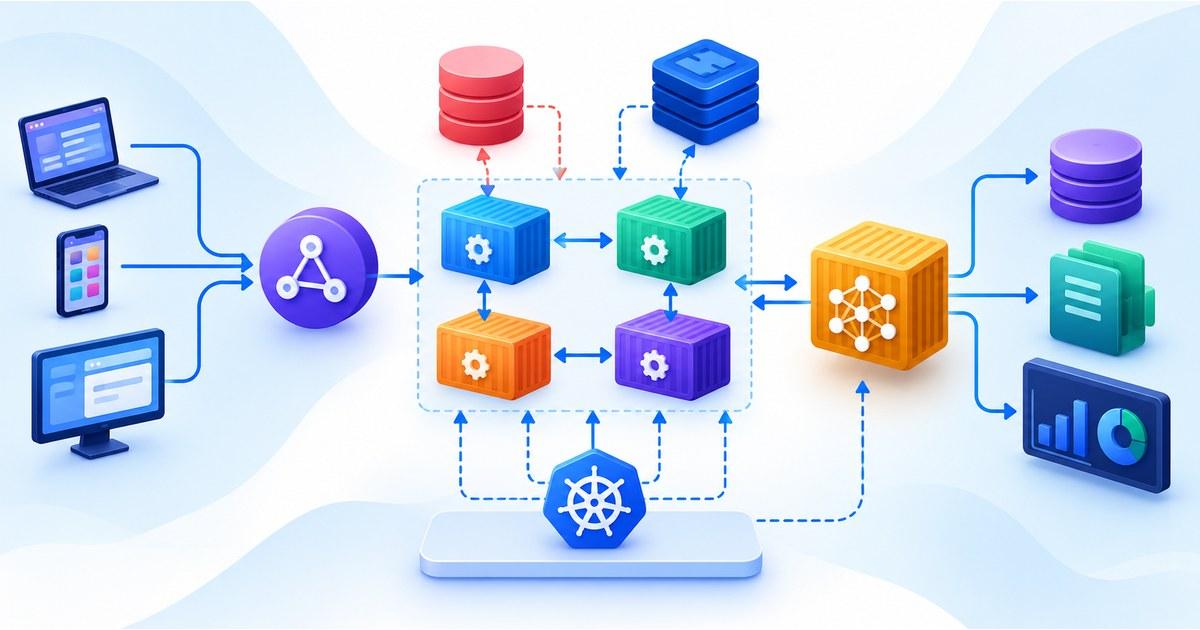
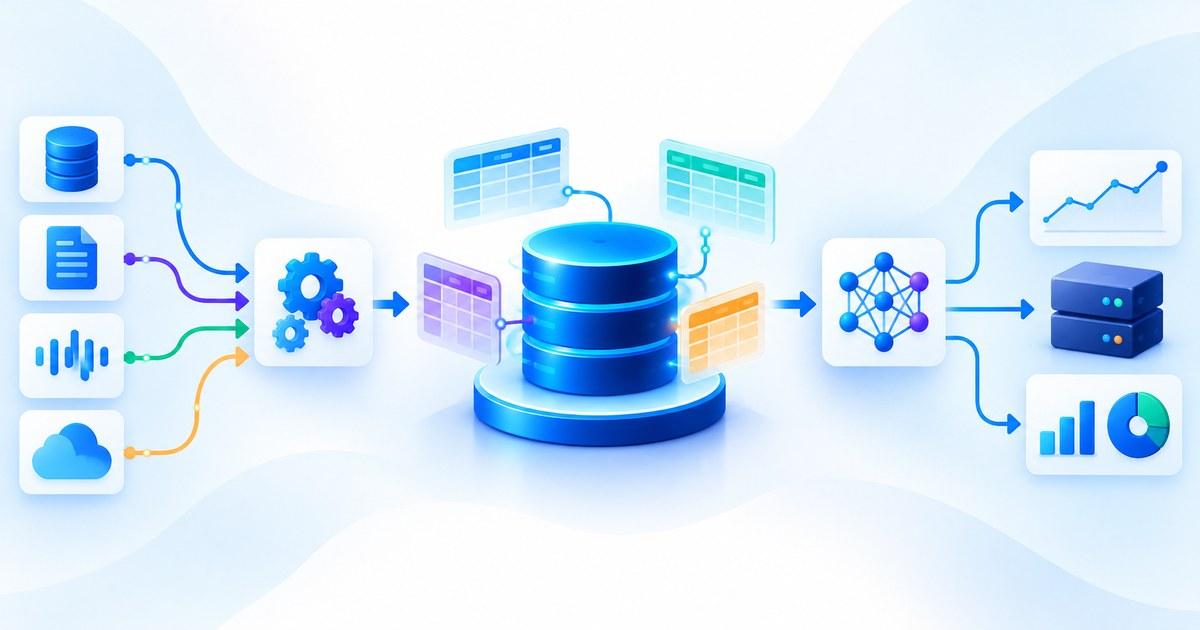
The reality is significantly more complex. Behind every reliable AI-powered application exists an extensive engineering ecosystem that most users never see. Long before a customer receives an intelligent recommendation or interacts with a conversational assistant, numerous systems work together to ensure the application remains scalable, secure, responsive, cost-efficient, and trustworthy. These hidden layers include data pipelines, orchestration frameworks, cloud infrastructure, API management, observability platforms, vector databases, governance mechanisms, monitoring systems, security controls, retrieval pipelines, caching strategies, and deployment automation. Without these components, even the most advanced machine learning model struggles to deliver meaningful business value.
This invisible engineering foundation has become increasingly important as organizations move from experimental AI prototypes to enterprise-scale deployments. Early proof-of-concept applications can often succeed with relatively simple architectures because they operate within controlled environments and limited workloads. Production systems operate under entirely different conditions. They must support thousands of concurrent users, integrate with existing enterprise software, comply with industry regulations, protect sensitive customer information, recover from infrastructure failures, and continue improving as business requirements evolve. Solving these challenges requires engineering expertise that extends far beyond machine learning itself.
The Layers Beneath Every Successful AI Product
Every production AI application consists of multiple engineering layers working together to transform raw model predictions into dependable customer experiences. The machine learning model represents only one component within this broader architecture. Beneath it lies an extensive infrastructure responsible for ensuring that intelligence can be delivered consistently under real-world conditions.
Data engineering forms one of the earliest hidden layers. Before a model can generate useful predictions, information must be collected, validated, transformed, enriched, and delivered through reliable pipelines. Enterprise data typically originates from numerous sources including transactional databases, customer relationship management platforms, cloud storage, APIs, streaming services, and external providers. Engineers build automated workflows that continuously prepare this information while maintaining quality, consistency, and compliance. Without reliable data pipelines, even highly sophisticated AI models quickly lose effectiveness because their predictions depend entirely on the quality of incoming information.
Another foundational layer involves software architecture. AI capabilities rarely operate as standalone applications. Instead, they function as services integrated within larger enterprise ecosystems. Intelligent applications communicate with authentication platforms, payment systems, analytics services, messaging queues, recommendation engines, content management systems, and business workflows through carefully designed APIs. Engineers create modular architectures that enable these services to interact efficiently while maintaining flexibility for future enhancements. This architectural discipline allows organizations to introduce new AI capabilities without disrupting existing software systems.
Why Hidden Engineering Layers Define Business Success
Organizations often invest significant resources into improving model performance while underestimating the importance of surrounding engineering systems. However, real-world deployments consistently demonstrate that operational excellence frequently contributes more to customer satisfaction than marginal improvements in model accuracy. An AI application that responds reliably within seconds creates substantially greater business value than a marginally smarter system that experiences frequent outages, unpredictable latency, or integration failures.
The hidden engineering layers also enable organizations to adapt quickly as technology evolves. Foundation models improve continuously, customer expectations change, enterprise data grows, and business priorities shift over time. Companies with modular architectures, scalable infrastructure, automated deployment pipelines, and comprehensive monitoring can adopt new AI capabilities significantly faster than organizations whose systems depend upon tightly coupled implementations. Engineering flexibility therefore becomes a strategic competitive advantage rather than merely a technical consideration.
Perhaps the most overlooked benefit of these invisible layers is their contribution to customer trust. Users rarely evaluate artificial intelligence based on benchmark scores or research papers. They remember whether applications remain reliable, whether recommendations are useful, whether sensitive information remains protected, and whether intelligent systems integrate naturally into their daily workflows. These experiences emerge not from the model alone but from the engineering ecosystem supporting it throughout its lifecycle.
Engineers entering the AI field increasingly benefit from understanding these foundational systems because modern employers value professionals capable of bridging software engineering and machine learning. Building intelligent products today requires expertise across distributed systems, cloud computing, APIs, observability, security, infrastructure automation, and operational excellence alongside traditional machine learning knowledge. This multidisciplinary perspective enables engineers to create AI applications that deliver lasting business value rather than isolated technical achievements.
Readers interested in understanding how these engineering foundations transform research into customer-facing products should also explore "From Model to Product: How to Discuss End-to-End ML Pipelines in Interviews," which explains how production engineering connects machine learning innovation with scalable enterprise AI deployments.
Key Takeaway
The most valuable work in AI engineering often happens behind the scenes. While machine learning models receive most of the attention, hidden layers such as data engineering, software architecture, cloud infrastructure, security, governance, and operational excellence determine whether intelligent applications succeed in real-world environments. Engineers who understand these invisible systems are increasingly becoming the professionals who build the next generation of reliable, scalable, and customer-focused AI products.
Section 2: The Invisible Infrastructure That Keeps AI Running
Once an AI application moves beyond experimentation and enters production, its success depends on an engineering ecosystem that is almost entirely invisible to customers. People interacting with an AI-powered search engine, coding assistant, recommendation platform, or enterprise chatbot rarely think about the hundreds of engineering decisions taking place behind every response. They simply expect the application to work instantly, produce accurate answers, remain available around the clock, and protect their information. Meeting these expectations requires far more than deploying a machine learning model. It demands an infrastructure capable of supporting intelligent systems under constantly changing real-world conditions.
This hidden infrastructure has become increasingly important as organizations deploy larger language models, Retrieval-Augmented Generation (RAG) systems, multimodal applications, and autonomous AI agents into business-critical environments. Unlike research prototypes that process a limited number of requests within controlled settings, enterprise AI systems must support unpredictable traffic, integrate with dozens of internal platforms, recover automatically from failures, maintain strict security standards, and continuously optimize operational costs. Every layer beneath the model contributes to achieving these objectives, yet these engineering components receive far less attention than the models themselves.
One reason these infrastructure layers remain overlooked is that successful engineering is often invisible. Customers notice when applications become unavailable, produce slow responses, or expose sensitive information, but they rarely recognize the sophisticated systems preventing these failures from occurring. Engineers, however, spend much of their time designing architectures that eliminate problems before users ever encounter them. Their work involves ensuring resilience, scalability, observability, maintainability, and security so that AI products consistently meet customer expectations regardless of external conditions.
Orchestration Is the Layer That Connects Everything
One of the least discussed aspects of AI engineering is orchestration. While models generate predictions and language models produce responses, orchestration determines how information flows through the entire application before customers receive an answer. It acts as the coordination layer that connects data sources, retrieval systems, reasoning engines, external APIs, business rules, and user interfaces into a single workflow capable of solving complex tasks efficiently.
Consider a modern enterprise AI assistant designed to answer employee questions. Before generating a response, the application may authenticate the user, identify access permissions, retrieve relevant documents from multiple knowledge repositories, search vector databases for semantically similar content, query structured databases for current business information, validate retrieved sources, invoke one or more language models, apply organizational policies, format the final response, log the interaction for auditing, and collect operational metrics for future analysis. Although customers experience this process as a simple conversation, dozens of independent engineering components collaborate behind the scenes within a matter of seconds.
Workflow orchestration becomes even more important as organizations adopt AI agents capable of performing multi-step tasks instead of simply generating text. Intelligent agents frequently interact with calendars, customer relationship management platforms, payment systems, ticketing applications, email services, enterprise resource planning software, and internal APIs while making decisions throughout each workflow. Engineers design orchestration frameworks that coordinate these interactions, manage dependencies, recover from failures, and ensure tasks are completed accurately without compromising security or reliability.
Another important responsibility of orchestration is handling exceptions gracefully. Real-world systems inevitably encounter unavailable services, incomplete information, API failures, invalid inputs, and changing business conditions. Rather than allowing these issues to interrupt customer workflows, orchestration frameworks implement retry mechanisms, fallback strategies, alternative execution paths, timeout controls, and human escalation processes. These capabilities ensure that AI systems remain dependable even when individual components experience temporary disruptions.
Observability and Reliability Make AI Trustworthy
Building an AI application is only the beginning of the engineering journey. Maintaining its reliability over months and years requires continuous visibility into how every component behaves under production conditions. This visibility is achieved through observability, another hidden engineering layer that plays a fundamental role in modern AI systems.
Observability extends far beyond monitoring whether servers remain online. Engineering teams collect telemetry across the entire AI stack, including API response times, inference latency, retrieval accuracy, infrastructure utilization, token consumption, workflow execution, database performance, model confidence, cache efficiency, error rates, and user interaction patterns. Together, these measurements provide a comprehensive understanding of how intelligent applications perform in real-world environments.
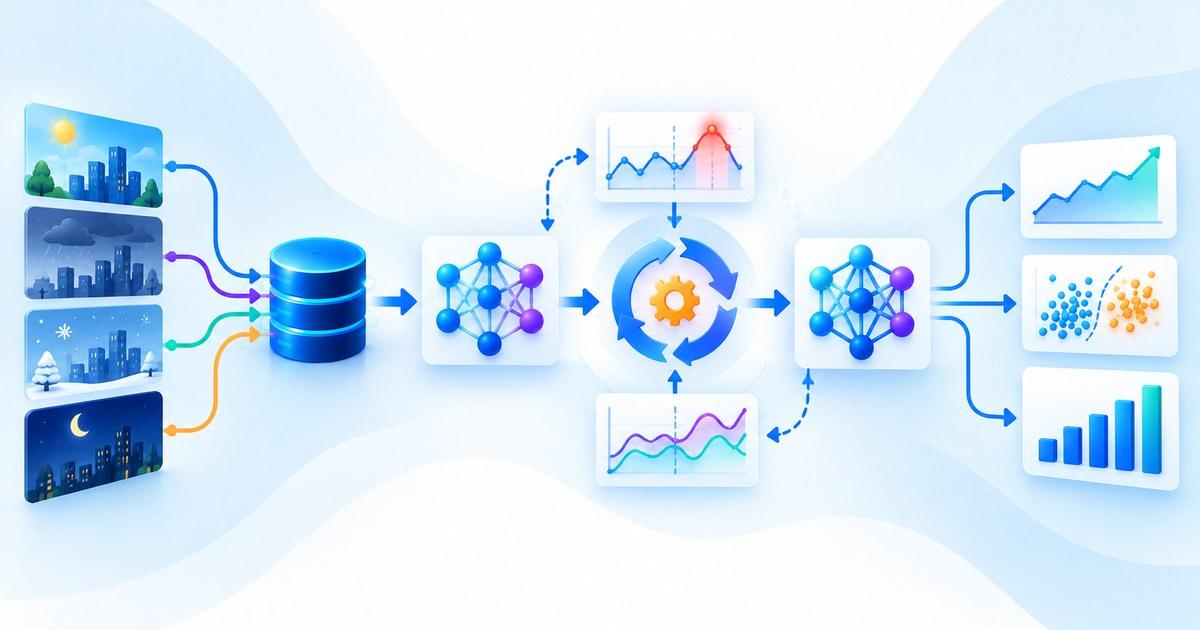
Production AI introduces unique operational challenges that make observability particularly important. Models may experience data drift as customer behavior changes over time. Retrieval systems can return outdated or incomplete knowledge. External APIs may introduce unexpected latency. Large language models occasionally generate inconsistent responses despite identical prompts. Infrastructure costs fluctuate with changing workloads. Without comprehensive monitoring, these issues can remain hidden until they begin affecting customers directly.
Reliability engineering addresses these challenges by designing systems capable of identifying and recovering from failures automatically. Engineers implement health checks, redundancy, circuit breakers, autoscaling mechanisms, distributed tracing, automated alerting, disaster recovery strategies, and rollback procedures that minimize customer disruption during operational incidents. Instead of reacting after widespread failures occur, organizations proactively identify anomalies before they develop into significant production problems.
Cost observability has also emerged as a critical discipline within AI engineering. Foundation models and large-scale inference workloads consume considerable computational resources, making operational expenses a significant business concern. Engineering teams continuously monitor token usage, GPU utilization, request efficiency, caching effectiveness, and inference optimization to ensure AI applications remain economically sustainable while maintaining high-quality customer experiences.
Ultimately, observability enables continuous improvement. Every production interaction generates valuable operational insights that engineers use to refine infrastructure, optimize workflows, improve response quality, strengthen security, and enhance customer satisfaction. Rather than treating deployment as the conclusion of development, organizations view production systems as continuously evolving platforms that become more capable through careful engineering and operational learning.
Readers interested in understanding how these production engineering practices support intelligent automation should also explore "The Engineering Behind Autonomous AI Workflows," which examines how orchestration, monitoring, infrastructure, and operational excellence work together to build scalable AI systems capable of delivering consistent business value.
Key Takeaway
Behind every successful AI product lies an invisible infrastructure responsible for coordination, reliability, scalability, and continuous improvement. Orchestration connects diverse systems into unified workflows, while observability ensures those workflows remain dependable under real-world conditions. These hidden engineering layers rarely receive public attention, yet they are the foundation upon which trustworthy, scalable, and enterprise-ready AI applications are built.
Section 3: The Operational Challenges That Separate AI Demos from AI Products
One of the biggest misconceptions about artificial intelligence is that once an AI application is deployed, the engineering work is largely complete. This belief often stems from the impressive demonstrations that dominate conferences, product launches, and social media. In these demonstrations, an AI assistant answers complex questions flawlessly, an autonomous agent completes sophisticated workflows, or a recommendation engine appears to understand customer intent perfectly. While these examples showcase the remarkable capabilities of modern models, they rarely reflect the realities of operating AI systems in production environments where customer expectations, business requirements, infrastructure limitations, and operational risks continuously evolve.
The difference between an AI demonstration and a successful AI product lies in operational excellence. Demonstrations typically occur under carefully controlled conditions using optimized datasets, stable infrastructure, predictable workloads, and limited user interactions. Production environments are significantly more demanding. Thousands of customers interact with AI systems simultaneously, enterprise data changes every minute, external services experience outages, cloud infrastructure encounters unexpected failures, regulations evolve, and cyber threats become increasingly sophisticated. Engineering teams must prepare intelligent systems to operate successfully under all these conditions while maintaining a seamless customer experience.
These operational responsibilities represent some of the most important yet least discussed layers of AI engineering. Customers rarely notice when an engineering team successfully prevents infrastructure failures, minimizes downtime, protects confidential information, or optimizes operational costs. However, they immediately notice when these systems fail. A chatbot that suddenly becomes unavailable, a recommendation engine that responds slowly during peak traffic, or an AI assistant that exposes outdated information quickly loses customer trust regardless of the sophistication of its underlying model.
Reliability, Resilience, and Performance Are Continuous Engineering Responsibilities
One of the defining characteristics of enterprise AI systems is that they are expected to remain available at all times. Customers interact with AI applications without considering the complexity required to maintain uninterrupted service. Whether someone requests coding assistance late at night, searches for products during a major sales event, or relies on an AI-powered fraud detection system during financial transactions, they expect immediate and reliable responses. Delivering this level of consistency requires extensive engineering beyond the machine learning model itself.
Reliability begins with designing systems capable of handling unexpected failures gracefully. Cloud services occasionally experience outages, APIs become temporarily unavailable, databases encounter connectivity issues, and network latency fluctuates unexpectedly. Rather than allowing these disruptions to interrupt customer workflows, engineering teams build redundant architectures with automatic failover mechanisms, intelligent load balancing, retry strategies, circuit breakers, and disaster recovery processes. These capabilities ensure that AI services continue operating even when individual infrastructure components experience problems.
Performance optimization is equally important because customer expectations continue increasing as AI applications become more widespread. Users expect conversational assistants to respond within seconds, recommendation engines to personalize content instantly, and enterprise search platforms to retrieve accurate information without noticeable delays. Achieving these expectations requires engineers to optimize every stage of the inference pipeline. Caching strategies reduce repeated computations, optimized APIs minimize communication overhead, vector databases accelerate semantic search, and intelligent routing ensures requests reach the most appropriate computational resources. Small improvements across multiple engineering layers collectively create significant enhancements in customer experience.
Scalability introduces another operational challenge that becomes increasingly complex as AI adoption grows. Traffic patterns rarely remain predictable. A product announcement, marketing campaign, seasonal shopping event, or viral social media post can generate dramatic increases in demand within minutes. Engineering teams therefore implement autoscaling infrastructure capable of allocating computational resources dynamically while maintaining consistent response times and controlling operational costs. Containerized deployments, orchestration platforms, distributed computing frameworks, and cloud-native architectures allow AI systems to expand or contract efficiently according to customer demand.
Governance, Cost Management, and Continuous Evolution Shape Long-Term Success
As AI systems become more deeply integrated into enterprise operations, engineering teams face responsibilities that extend beyond technical performance alone. Governance has emerged as one of the most significant hidden layers of AI engineering because organizations must ensure that intelligent systems operate responsibly, transparently, and in compliance with evolving legal and regulatory requirements. This responsibility becomes particularly important when AI applications influence financial decisions, healthcare recommendations, hiring processes, customer support, or other business-critical activities.
Governance begins with establishing clear policies for how AI systems access, process, and retain information. Engineers implement authentication mechanisms, authorization controls, encryption protocols, audit logs, and data lineage tracking to ensure that sensitive information remains protected throughout every interaction. These safeguards help organizations satisfy compliance frameworks while strengthening customer confidence in AI-powered products. Governance also involves maintaining transparency around model behavior, documenting deployment decisions, and creating approval processes for introducing new AI capabilities into production environments.
Another frequently overlooked challenge is operational cost management. Large language models, multimodal systems, and AI agents often require significant computational resources, making infrastructure expenses a major consideration for organizations deploying AI at scale. Engineering teams continuously evaluate token consumption, GPU utilization, inference efficiency, retrieval strategies, and caching effectiveness to optimize performance without compromising customer experience. Cost optimization is not simply about reducing expenses but about ensuring that AI systems remain economically sustainable as usage continues growing.
Continuous evolution represents the final hidden layer that distinguishes mature AI organizations. Technology advances rapidly, with new foundation models, inference techniques, orchestration frameworks, and developer tools emerging almost every month. Successful engineering teams build modular architectures that allow them to adopt these innovations without redesigning their entire technology stack. Flexible APIs, service-oriented architectures, automated deployment pipelines, and standardized interfaces enable organizations to replace or upgrade individual components while preserving application stability.
Customer feedback further drives this continuous evolution. Production telemetry, user interactions, support requests, satisfaction metrics, and business outcomes provide engineers with valuable insights into how intelligent systems perform in real-world environments. These insights guide improvements across infrastructure, retrieval pipelines, prompt engineering, workflow orchestration, security, and interface design. As a result, successful AI products become progressively more capable over time rather than remaining static after deployment.
Perhaps the most important lesson is that AI engineering is fundamentally an operational discipline as much as it is a machine learning discipline. The hidden layers of governance, resilience, cost optimization, scalability, monitoring, and continuous improvement enable organizations to transform powerful models into dependable products that customers trust every day. These responsibilities may receive less public attention than breakthroughs in model architecture, but they ultimately determine whether artificial intelligence creates lasting business value.
Readers interested in understanding how these operational responsibilities influence modern engineering careers should also explore "Research to Real-World ML Engineering," which explains how organizations transition from experimental machine learning projects to scalable production systems while highlighting the engineering skills that employers increasingly seek in AI professionals.
Key Takeaway
The hidden operational layers of AI engineering determine whether intelligent systems thrive in production or fail after deployment. Reliability, resilience, governance, cost optimization, scalability, and continuous evolution require constant engineering attention long after a model has been trained. Organizations that master these invisible disciplines build AI products that remain secure, efficient, trustworthy, and adaptable, creating lasting value for both customers and the business.
Section 4: The Future of AI Engineering Lies in Mastering the Hidden Layers
Artificial intelligence is evolving at an extraordinary pace. Every few months, the industry witnesses new foundation models, more capable reasoning systems, increasingly autonomous AI agents, multimodal applications, and innovative developer frameworks that push the boundaries of what intelligent software can accomplish. While these advancements attract considerable attention, they often overshadow a more significant trend that is quietly reshaping the future of AI engineering. Competitive advantage is no longer determined solely by who has access to the largest or most powerful models. Instead, it increasingly depends on who can build the most reliable, scalable, secure, and maintainable systems around those models.
This shift represents one of the most important developments in enterprise AI. Large language models are becoming more accessible through cloud providers and commercial APIs, reducing the exclusivity that once surrounded cutting-edge AI capabilities. As access to sophisticated models becomes more widespread, organizations must differentiate themselves through engineering excellence rather than model availability alone. The companies leading the next generation of AI products will not necessarily be those with the largest research teams but those capable of integrating intelligent systems into complex business environments while maintaining exceptional customer experiences.
The hidden layers discussed throughout this article therefore become long-term strategic assets rather than supporting technologies. Infrastructure, orchestration, observability, governance, security, scalability, deployment automation, and operational resilience collectively determine how effectively organizations can adopt new AI innovations without disrupting existing products or business operations. These capabilities allow engineering teams to evolve continuously as technology advances while maintaining the stability that enterprise customers expect.
AI Engineering Is Becoming a Systems Engineering Discipline
The next phase of artificial intelligence will be defined less by isolated breakthroughs in model architecture and more by advances in how intelligent systems are engineered, managed, and operated at scale. This evolution closely mirrors the progression of cloud computing over the past two decades. Initially, cloud adoption focused on infrastructure availability. Over time, competitive differentiation shifted toward architecture, automation, observability, developer productivity, security, governance, and operational maturity. AI engineering is now following a remarkably similar trajectory.
Modern AI products already demonstrate this transformation. Enterprise applications increasingly combine multiple language models, retrieval systems, structured databases, external APIs, autonomous agents, business workflows, and human decision-making into coordinated ecosystems capable of solving complex problems. Managing these interconnected systems requires architectural thinking that extends beyond individual machine learning models. Engineers must consider service dependencies, fault tolerance, workload distribution, data consistency, policy enforcement, infrastructure optimization, and long-term maintainability throughout every stage of development.
Platform engineering has consequently become one of the fastest-growing areas within AI organizations. Instead of building isolated AI applications independently, companies increasingly develop reusable AI platforms that standardize deployment pipelines, model serving, authentication, governance, observability, prompt management, vector storage, and infrastructure provisioning across multiple products. These shared platforms improve developer productivity while ensuring consistent security, operational reliability, and compliance throughout the organization.
Engineers Who Understand the Hidden Layers Will Shape the Future
The growing maturity of enterprise AI has fundamentally changed the skills organizations prioritize when hiring engineering talent. While expertise in machine learning algorithms remains important, employers increasingly recognize that successful AI products require professionals capable of building complete production systems rather than experimental prototypes. This shift is creating strong demand for engineers who understand the hidden operational layers that enable artificial intelligence to function reliably at scale.
Cloud architecture has become one of the most valuable competencies because nearly every enterprise AI application operates within distributed cloud environments. Engineers who understand containerization, Kubernetes, serverless computing, infrastructure automation, networking, storage optimization, and resource management can build systems capable of supporting demanding production workloads while maintaining cost efficiency. These skills complement machine learning expertise by ensuring intelligent applications remain available under continuously changing operational conditions.
Equally important is expertise in observability and operational excellence. AI systems generate enormous volumes of telemetry across infrastructure, applications, inference pipelines, retrieval systems, and customer interactions. Engineers who can interpret this information effectively are able to identify bottlenecks, detect anomalies, optimize performance, improve customer experiences, and strengthen business outcomes. Production engineering therefore becomes a continuous cycle of measurement, learning, optimization, and refinement rather than a sequence of isolated development projects.
Communication and cross-functional collaboration also represent hidden but essential engineering capabilities. Modern AI initiatives involve software engineers, machine learning engineers, platform teams, cybersecurity specialists, product managers, designers, compliance professionals, and business stakeholders working toward common objectives. Engineers capable of bridging these disciplines help organizations deliver AI products that satisfy technical, operational, regulatory, and customer requirements simultaneously. Their ability to understand the complete lifecycle of intelligent systems makes them particularly valuable as AI projects become increasingly complex.
Ultimately, the future of AI engineering will belong to professionals who appreciate that successful products are built through engineering ecosystems rather than models alone. Every reliable AI application reflects countless architectural decisions, operational safeguards, infrastructure optimizations, monitoring strategies, governance policies, and customer-focused improvements that remain largely invisible to end users. These hidden layers may rarely appear in product demonstrations or research papers, but they are the foundation upon which every successful AI business is built.
Readers interested in developing the broad engineering perspective required for modern AI careers should also explore "The New AI Playbook Every Software Engineer Should Read," which explains how software engineers can expand beyond traditional development practices and build the multidisciplinary skills increasingly required to succeed in AI engineering roles.
Key Takeaway
The future of AI engineering is being shaped not only by advances in machine learning models but also by the hidden engineering layers that support them. Organizations that invest in scalable infrastructure, platform engineering, governance, observability, automation, and systems thinking will consistently outperform those focused solely on model innovation. Likewise, engineers who master these invisible disciplines will become the architects of the next generation of enterprise AI, creating intelligent systems that are not only powerful but also reliable, secure, adaptable, and capable of delivering lasting business value.
Conclusion
Artificial intelligence is often presented as a story of increasingly powerful models, larger datasets, and breakthrough algorithms. While these advancements have undeniably accelerated innovation, they tell only a small part of what it actually takes to build successful AI products. Behind every intelligent recommendation, conversational assistant, autonomous workflow, fraud detection engine, or personalized customer experience exists an intricate engineering ecosystem that remains largely invisible to end users. These hidden layers are not secondary components supporting artificial intelligence, they are the foundation that allows AI to function reliably in the real world.
Throughout this article, we have explored how AI engineering extends far beyond model development. Training a machine learning model is merely the starting point of a much longer journey involving data engineering, software architecture, orchestration, cloud infrastructure, deployment automation, monitoring, observability, governance, security, scalability, cost optimization, and continuous operational improvement. Each of these engineering disciplines contributes directly to the quality of the customer experience, even though customers rarely recognize their existence. They simply expect AI applications to respond quickly, remain available, protect sensitive information, and consistently deliver valuable outcomes.
One of the most significant lessons from modern AI development is that technical excellence alone does not guarantee product success. Organizations frequently invest enormous effort into improving model accuracy while overlooking the engineering systems responsible for supporting those models after deployment. In practice, customers judge AI products based on reliability, responsiveness, usability, and trust rather than benchmark performance. A slightly less sophisticated model operating within a resilient, scalable, and well-designed engineering ecosystem often creates substantially greater business value than a state-of-the-art model surrounded by weak operational infrastructure.
Frequently Asked Questions
1. What are the hidden layers of AI engineering?
The hidden layers include data engineering, software architecture, cloud infrastructure, orchestration, APIs, deployment pipelines, observability, monitoring, governance, security, scalability, caching, and cost optimization. Together, they enable AI models to operate reliably in production.
2. Why do people focus mostly on AI models?
Models are the most visible part of AI development because they demonstrate intelligence directly. However, most production engineering happens behind the scenes, making it less visible despite being essential for product success.
3. What is AI orchestration?
AI orchestration is the process of coordinating models, databases, APIs, business logic, workflows, external services, and user interactions to execute complex tasks efficiently and reliably.
4. Why is observability important in AI engineering?
Observability provides visibility into infrastructure performance, inference latency, retrieval quality, token usage, system health, and user interactions, allowing engineers to detect and resolve issues before they affect customers.
5. How is AI engineering different from machine learning engineering?
Machine learning engineering primarily focuses on developing, training, and optimizing models, whereas AI engineering encompasses the entire production ecosystem, including deployment, infrastructure, integration, security, monitoring, and operational management.
6. Why is cloud infrastructure essential for AI applications?
Cloud infrastructure provides scalable computing resources, distributed storage, networking, GPU availability, autoscaling, and managed services that allow AI applications to support fluctuating customer demand efficiently.
7. What role do APIs play in AI systems?
APIs connect AI models with applications, enterprise software, databases, and external services, enabling intelligent capabilities to be integrated into real-world business workflows.
8. Why is governance becoming more important in AI?
As AI systems increasingly influence business decisions, governance ensures responsible deployment through security policies, audit trails, compliance controls, data protection, transparency, and regulatory adherence.
9. What challenges arise after deploying an AI model?
Post-deployment challenges include infrastructure failures, data drift, latency optimization, scaling, security threats, monitoring, cost management, integration issues, compliance, and maintaining consistent customer experiences.
10. How do engineering teams keep AI systems reliable?
They use redundancy, automated monitoring, health checks, disaster recovery strategies, autoscaling, distributed tracing, alerting systems, performance optimization, and continuous testing to ensure dependable operation.
11. Why is cost optimization important for AI engineering?
Large language models and GPU-intensive workloads can be expensive to operate. Engineers optimize inference pipelines, caching, model selection, resource allocation, and cloud utilization to balance performance with operational costs.
12. What skills should aspiring AI engineers develop?
Modern AI engineers benefit from expertise in machine learning, software engineering, cloud computing, Kubernetes, distributed systems, APIs, DevOps, MLOps, vector databases, AI security, observability, orchestration, and system design.
13. How do hidden engineering layers improve customer experience?
These layers reduce latency, increase reliability, enhance security, improve scalability, ensure consistent performance, and enable continuous product improvements, all of which contribute directly to customer satisfaction.
14. Why are companies hiring more systems-oriented AI engineers?
Organizations need engineers who can design complete AI platforms rather than isolated models. Systems-oriented professionals understand how infrastructure, software architecture, cloud services, monitoring, governance, and AI models work together to build production-ready applications.
15. What is the biggest takeaway about AI engineering?
The most important lesson is that successful AI products are built on invisible engineering foundations. While machine learning models provide intelligence, hidden layers such as infrastructure, orchestration, observability, governance, security, and continuous optimization determine whether that intelligence becomes a reliable, scalable, and valuable customer experience.