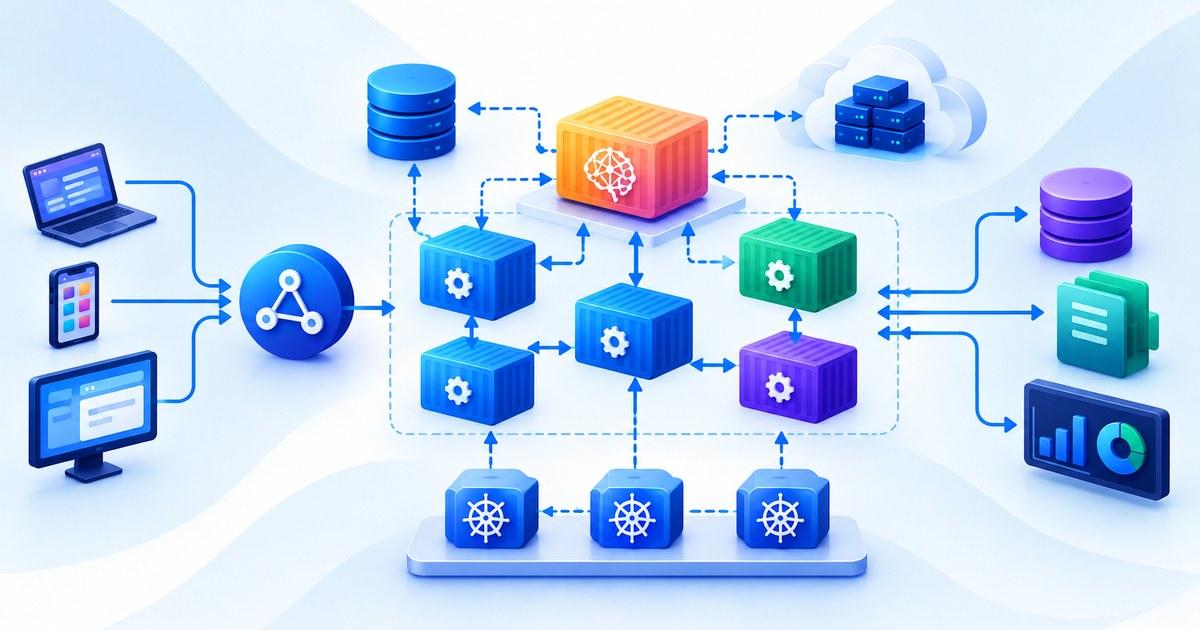

Section 1: Why Machine Learning Engineering Is No Longer Just About Building Models
The role of a machine learning engineer has changed dramatically over the past decade. Not long ago, success in the profession was largely defined by technical expertise. Engineers were expected to understand algorithms, build predictive models, optimize training pipelines, improve evaluation metrics, and deploy machine learning systems into production. These skills remain fundamental, but they are no longer sufficient for long-term career growth. As artificial intelligence becomes central to business strategy across industries, organizations increasingly expect machine learning engineers to understand not only how AI works but also why it matters to the business.
This shift has occurred because AI is no longer viewed as an isolated research initiative or an experimental technology. It has become a core driver of competitive advantage, operational efficiency, customer experience, and revenue growth. Companies invest millions of dollars in AI initiatives not because they want more sophisticated algorithms, but because they expect measurable business outcomes. Executives care about increasing customer retention, reducing operational costs, improving productivity, accelerating decision-making, and creating entirely new revenue streams. Machine learning engineers who understand these objectives can design solutions that create tangible value rather than simply demonstrating technical excellence.
The rapid adoption of generative AI has accelerated this transformation even further. Organizations are deploying large language models, Retrieval-Augmented Generation (RAG), AI copilots, autonomous agents, recommendation engines, and intelligent automation platforms across virtually every business function. These systems influence marketing, sales, customer support, finance, healthcare, manufacturing, supply chain management, cybersecurity, and human resources. As AI becomes embedded within critical business operations, engineering decisions increasingly have direct commercial consequences. Choosing a model architecture, optimizing inference latency, reducing infrastructure costs, or improving retrieval quality can affect profitability just as much as technical performance.
Every Technical Decision Has a Business Outcome
One of the biggest misconceptions among aspiring machine learning engineers is that technical excellence alone determines the success of AI projects. In reality, every engineering decision carries business implications, whether those consequences are immediately visible or not. Organizations rarely evaluate AI systems based solely on benchmark scores or research metrics. Instead, they measure how effectively intelligent systems solve business problems, improve customer experiences, reduce costs, or generate revenue.
Consider model selection as an example. A larger foundation model may deliver slightly better reasoning capabilities than a smaller alternative, but it may also require substantially greater computational resources, increase inference latency, and significantly raise operational costs. From a purely technical perspective, selecting the larger model may appear advantageous. From a business perspective, however, the increased expenses may outweigh the incremental improvement in customer experience. Machine learning engineers therefore need to understand cost-performance trade-offs rather than focusing exclusively on technical benchmarks.
Infrastructure decisions present another example. Optimizing inference pipelines, implementing caching strategies, reducing GPU utilization, improving API efficiency, and designing scalable cloud architectures all contribute directly to business outcomes. Faster response times improve customer satisfaction. Lower infrastructure costs increase profitability. Reliable systems reduce customer churn. Efficient deployment pipelines accelerate product releases. These engineering improvements create measurable business value even though customers may never recognize the technical work occurring behind the scenes.
Business Knowledge Makes Better Machine Learning Engineers
Understanding business fundamentals does not diminish the importance of technical expertise. On the contrary, it enables machine learning engineers to apply their technical skills more effectively by focusing on problems that create meaningful organizational value. Engineers who understand how businesses operate naturally build solutions that align more closely with strategic priorities while avoiding unnecessary technical complexity.
Customer understanding represents one of the most valuable business competencies. AI systems ultimately exist to improve experiences for customers, employees, or business stakeholders. Machine learning engineers who appreciate customer workflows, pain points, decision-making processes, and operational challenges can design models that solve real problems rather than optimizing abstract technical metrics. This customer-centric perspective often leads to simpler, more practical solutions that achieve greater adoption despite requiring less sophisticated algorithms.
Communication is another essential business skill. Modern AI initiatives involve collaboration among executives, product managers, software engineers, data scientists, legal teams, cybersecurity specialists, designers, and customer success professionals. Machine learning engineers who can explain technical concepts in business language help organizations make better strategic decisions while building stronger cross-functional relationships. Their ability to translate complex engineering challenges into commercial implications makes them valuable contributors during planning, prioritization, and executive discussions.
Business awareness also improves prioritization. Engineering resources are always limited, making it impossible to pursue every technical improvement simultaneously. Understanding organizational objectives helps engineers decide whether reducing inference costs, improving recommendation quality, strengthening security, accelerating deployment, or enhancing monitoring should receive greater attention at a particular stage of product development. Technical work therefore becomes aligned with measurable business impact instead of isolated engineering objectives.
Perhaps most importantly, business knowledge prepares machine learning engineers for leadership. As careers progress, engineers increasingly participate in architectural decisions, product strategy, technical roadmaps, hiring discussions, investment planning, and organizational decision-making. Leaders are expected to balance engineering excellence with commercial success, ensuring that AI initiatives remain technically robust while delivering sustainable business value. Engineers who develop this broader perspective often progress more rapidly into senior technical and leadership roles because they contribute beyond implementation alone.
Readers interested in understanding how artificial intelligence is transforming the role of engineers across modern organizations should also explore "How AI Is Quietly Changing Every Engineering Team," which explains how AI is reshaping engineering workflows, collaboration, decision-making, and the evolving expectations placed on today's machine learning professionals.
Key Takeaway
Machine learning engineering is no longer defined solely by coding, algorithms, and model development. Every technical decision influences business outcomes such as customer satisfaction, operational efficiency, scalability, and profitability. Engineers who understand business strategy alongside technical implementation become significantly more valuable because they build AI systems that solve meaningful problems, support organizational objectives, and create lasting competitive advantage.
Section 2: Business Metrics Matter Just as Much as Model Metrics
One of the biggest transitions machine learning engineers experience as they move from building models to delivering production AI systems is realizing that technical performance alone does not determine success. During academic research, online competitions, or personal projects, engineers often focus on improving metrics such as accuracy, precision, recall, F1 score, ROC-AUC, BLEU, perplexity, or validation loss. These measurements are essential because they help evaluate how effectively a model performs on a given dataset. However, inside an organization, these metrics represent only one part of a much larger picture. Business leaders ultimately evaluate AI initiatives based on the value they create rather than the technical benchmarks they achieve.
This distinction fundamentally changes how machine learning engineers should think about their work. Organizations invest in AI because they expect measurable improvements in customer satisfaction, operational efficiency, revenue generation, employee productivity, risk reduction, or competitive advantage. Executives rarely ask whether a recommendation engine improved its precision score by three percentage points. Instead, they want to know whether customers purchased more products, whether users spent more time engaging with the platform, whether churn decreased, or whether operational costs were reduced. The ability to connect engineering decisions with these business outcomes has become one of the defining characteristics of successful machine learning professionals.
Generative AI has accelerated this shift considerably. Large language models, Retrieval-Augmented Generation (RAG) systems, AI copilots, autonomous agents, and intelligent search platforms require substantial investments in cloud infrastructure, GPU resources, engineering talent, and operational support. Organizations therefore expect engineers to think carefully about return on investment rather than pursuing technical improvements without considering commercial impact. Every architectural decision influences infrastructure costs, customer experience, scalability, product adoption, and long-term sustainability.
Every AI Project Must Solve a Business Problem
One of the most common reasons AI initiatives fail is that organizations focus on building technically impressive solutions without first defining the business problem those solutions are expected to address. Machine learning engineers sometimes become deeply invested in developing increasingly sophisticated models while overlooking whether those improvements actually create meaningful value for customers or the organization. Successful AI projects reverse this process by beginning with the business objective before selecting the appropriate technical solution.
Consider an intelligent customer support platform. From an engineering perspective, the goal might appear to be maximizing response quality or minimizing hallucinations. From a business perspective, however, the organization may be trying to reduce support costs, improve customer satisfaction, shorten response times, or increase agent productivity. These objectives influence nearly every engineering decision throughout development. Engineers may prioritize retrieval accuracy over creative language generation, optimize latency instead of pursuing marginal reasoning improvements, or implement human escalation workflows to maintain customer trust. The technical architecture evolves according to business priorities rather than existing independently of them.
The same principle applies across industries. A fraud detection model aims to reduce financial losses while minimizing false positives that inconvenience legitimate customers. A recommendation engine seeks to increase engagement and purchasing behavior rather than simply improving prediction accuracy. A predictive maintenance system focuses on preventing equipment failures that disrupt business operations. An AI coding assistant strives to improve developer productivity rather than generating the longest or most sophisticated code completions. In every case, machine learning serves a clearly defined business objective.
Understanding ROI Changes Engineering Priorities
Return on investment (ROI) has become one of the most important concepts for machine learning engineers working on enterprise AI initiatives. Every AI project requires investments in infrastructure, cloud computing, engineering resources, data acquisition, monitoring systems, security, governance, and ongoing operational support. Organizations expect these investments to produce measurable returns through increased revenue, reduced expenses, higher productivity, stronger customer retention, or improved decision-making. Engineers who understand ROI naturally prioritize technical work that contributes directly to these outcomes.
Infrastructure optimization provides an excellent example. Reducing inference latency improves customer experience, but it also increases user engagement, strengthens adoption, and lowers abandonment rates. Similarly, optimizing GPU utilization or implementing effective caching strategies reduces operational costs without sacrificing performance. These improvements may appear purely technical, yet they have direct financial implications because they improve profitability while maintaining product quality.
Scalability is another important business consideration. AI applications often begin with relatively small user bases before expanding rapidly as adoption grows. Engineers who design scalable architectures from the outset enable organizations to support increasing demand without repeatedly rebuilding infrastructure. This long-term perspective reduces technical debt while allowing businesses to expand efficiently as customer usage increases.
Risk management also contributes significantly to ROI. AI systems handling financial transactions, healthcare information, enterprise knowledge, or customer data require strong governance, security, and compliance practices. Investing in these capabilities reduces the likelihood of regulatory penalties, reputational damage, operational disruptions, and customer distrust. Machine learning engineers who appreciate these business risks make architectural decisions that protect both customers and organizational value.
Perhaps the most valuable perspective ROI provides is prioritization. Engineering teams always have more opportunities than available resources. Understanding business value helps machine learning engineers determine whether improving latency, enhancing retrieval quality, strengthening observability, reducing infrastructure costs, or accelerating deployment will generate the greatest organizational impact. Technical decisions therefore become aligned with strategic objectives rather than being driven solely by engineering curiosity.
Readers interested in understanding how production engineering influences business success should also explore "What Happens Between Model Training and Customer Experience?" which explains how deployment, monitoring, infrastructure, and continuous optimization transform technical AI systems into products that deliver measurable customer and business value.
Key Takeaway
Business success is measured differently from technical success, and modern machine learning engineers must understand both. Model metrics validate technical performance, but business metrics determine whether AI initiatives achieve meaningful organizational outcomes. Engineers who align technical decisions with customer value, operational efficiency, return on investment, and long-term business strategy become significantly more effective contributors to enterprise AI initiatives and future engineering leaders.
Section 3: Every ML Engineer Should Understand How AI Makes Money
One of the biggest differences between an exceptional machine learning engineer and an average one is the ability to understand how artificial intelligence contributes to business growth. While technical expertise enables engineers to build intelligent systems, business knowledge helps them understand why those systems exist in the first place. Every AI project represents an investment, and organizations expect that investment to produce measurable returns. Whether the objective is increasing revenue, reducing costs, improving productivity, strengthening customer retention, or creating entirely new products, machine learning engineers play a direct role in achieving those outcomes through the systems they design and maintain.
Historically, many engineers viewed commercial strategy as the responsibility of executives, finance teams, or product managers. That separation has become increasingly blurred as AI has evolved from a supporting technology into a core business capability. Today, engineering teams regularly participate in product planning discussions, architecture reviews, roadmap prioritization, customer feedback analysis, and investment decisions because technical implementation directly influences commercial success. A recommendation engine that increases purchase conversions, a fraud detection platform that prevents financial losses, or an AI assistant that improves employee productivity all generate measurable business value through engineering decisions.
Generative AI has made this relationship even stronger. Organizations investing in large language models, AI agents, Retrieval-Augmented Generation (RAG), intelligent search systems, and enterprise copilots often spend substantial amounts on cloud infrastructure, model licensing, inference, storage, observability, and operational support. These investments must ultimately produce returns that justify their costs. Machine learning engineers therefore contribute not only by improving technical quality but also by ensuring that AI solutions remain economically sustainable as customer adoption grows.
AI Creates Business Value in More Ways Than Revenue
When discussing business success, many engineers immediately think about revenue generation. While increasing revenue is certainly an important objective, artificial intelligence creates value through many different mechanisms, several of which have little to do with direct sales. Organizations frequently adopt AI because it improves operational efficiency, reduces costs, strengthens decision-making, minimizes risk, enhances customer experiences, and enables employees to focus on higher-value work. Understanding these different forms of value helps machine learning engineers appreciate the broader impact of their work.
Operational efficiency is one of the most common sources of AI-driven business value. Intelligent automation reduces repetitive manual tasks, accelerates document processing, improves workflow management, automates customer support, streamlines software development, and assists employees in making faster decisions. A machine learning engineer developing an internal AI assistant may never directly influence product revenue, yet the resulting productivity improvements can save thousands of employee hours annually while allowing organizations to accomplish significantly more with existing resources.
Artificial intelligence also contributes to cost optimization. Predictive maintenance systems reduce equipment failures before they become expensive operational disruptions. Supply chain optimization models minimize inventory waste while improving delivery efficiency. Demand forecasting reduces overproduction and storage costs. Infrastructure optimization decreases cloud computing expenses through more efficient resource utilization. These improvements directly increase profitability despite generating no additional customer purchases. Engineers who recognize these outcomes understand that reducing costs can be just as valuable as increasing revenue.
Understanding Customers Makes Better Engineering Decisions
One of the most overlooked business skills for machine learning engineers is developing a deep understanding of customers. Engineers often focus primarily on datasets, algorithms, infrastructure, and deployment pipelines because these represent their immediate technical responsibilities. However, every AI system ultimately exists to solve problems for real people. Understanding those customers allows engineers to make more informed technical decisions throughout the product lifecycle.
Customer knowledge influences feature prioritization from the earliest stages of development. Engineers who understand how users interact with products can identify which improvements are likely to produce meaningful benefits and which technical enhancements may have little practical impact. For example, reducing inference latency by several hundred milliseconds may substantially improve user satisfaction for a conversational AI platform where responsiveness influences engagement. In contrast, achieving slightly higher benchmark accuracy may produce minimal observable improvement if customers already consider responses sufficiently reliable. Business awareness therefore helps engineers allocate technical effort where it matters most.
Empathy also improves product quality. Customers rarely evaluate AI systems according to machine learning metrics such as precision, recall, or perplexity. Instead, they judge products based on usefulness, reliability, simplicity, trustworthiness, and consistency. Machine learning engineers who appreciate these perspectives naturally build systems that prioritize customer outcomes rather than academic optimization objectives. They consider how explanations influence trust, how interfaces support usability, how failures should be handled gracefully, and how intelligent features integrate into existing workflows without creating unnecessary complexity.
Continuous customer feedback further strengthens engineering decisions. Modern AI products generate extensive production telemetry through user interactions, support requests, conversation histories, behavioral analytics, and operational monitoring. Machine learning engineers collaborate closely with product managers, designers, and customer success teams to interpret these signals and identify opportunities for improvement. Instead of treating deployment as the end of development, they continuously refine models, retrieval systems, prompts, infrastructure, and user experiences according to evolving customer needs.
Understanding customers also improves communication across the organization. Engineers who can explain how technical improvements enhance customer satisfaction or business outcomes build stronger relationships with executives, product managers, sales teams, and customer success professionals. Their recommendations become more influential because they demonstrate an appreciation for organizational priorities beyond technical implementation.
Ultimately, successful machine learning engineers recognize that technology is only valuable when it improves people's lives or enables organizations to achieve meaningful goals. Every model, deployment pipeline, monitoring system, and optimization effort contributes to a broader customer experience that determines whether AI creates lasting business success.
Readers interested in understanding how AI systems evolve after deployment should also explore "The Engineering Behind Autonomous AI Workflows," which examines how production infrastructure, monitoring, automation, and continuous optimization transform machine learning models into scalable business solutions that deliver long-term value.
Key Takeaway
Artificial intelligence creates business value through far more than technical innovation. Revenue growth, operational efficiency, customer retention, productivity improvements, risk reduction, and customer satisfaction all depend on engineering decisions made throughout the AI lifecycle. Machine learning engineers who understand business economics and customer needs build solutions that generate measurable organizational impact while positioning themselves for senior technical and leadership roles.
Section 4: The Future Belongs to ML Engineers Who Think Like Business Leaders
Artificial intelligence is entering a new phase of maturity. During the early years of machine learning adoption, organizations primarily sought engineers who could build models, improve prediction accuracy, and deploy scalable systems. While these capabilities remain essential, they are no longer enough to differentiate professionals in an increasingly competitive market. As AI becomes integrated into nearly every business function, companies are searching for engineers who understand not only how to develop intelligent systems but also how those systems contribute to strategic objectives. The future belongs to machine learning engineers who can combine technical excellence with business thinking.
This evolution reflects a broader shift in how organizations view artificial intelligence. AI is no longer treated as an isolated engineering initiative or an experimental research project. Instead, it has become a business capability that influences customer acquisition, operational efficiency, employee productivity, product innovation, and competitive positioning. Every investment in AI is evaluated according to the value it generates for the organization rather than the sophistication of the underlying technology. Consequently, machine learning engineers are increasingly involved in conversations that extend well beyond model development, including product strategy, financial planning, infrastructure investments, customer experience, regulatory compliance, and long-term organizational growth.
The widespread adoption of foundation models and generative AI has accelerated this transformation. Businesses now have access to many of the same powerful language models, cloud platforms, and AI development frameworks. Competitive advantage therefore depends less on possessing exclusive technology and more on implementing AI effectively within real business environments. Machine learning engineers contribute directly to this differentiation by designing reliable systems, optimizing operational costs, improving customer experiences, ensuring responsible AI deployment, and enabling organizations to scale intelligent products efficiently. Their influence extends from engineering teams into executive decision-making because technical choices increasingly determine commercial outcomes.
Communication and Collaboration Are Competitive Advantages
One of the most underestimated skills for machine learning engineers is effective communication. Many AI projects involve highly multidisciplinary teams where engineers work alongside product managers, software developers, designers, executives, legal professionals, cybersecurity specialists, marketing teams, and customer success organizations. Each group approaches AI from a different perspective, and successful projects depend on their ability to collaborate toward shared objectives. Machine learning engineers who communicate effectively across these disciplines significantly increase the likelihood of delivering successful AI products.
Business communication does not require simplifying technical concepts to the point of losing accuracy. Instead, it involves translating engineering decisions into outcomes that different stakeholders understand. Executives want to know how AI investments support strategic priorities. Product managers need clarity on technical feasibility and implementation trade-offs. Customer success teams care about user experience and adoption. Finance teams evaluate operational costs and infrastructure spending. Legal departments focus on governance, compliance, and privacy. Engineers who can explain how technical decisions influence these concerns become invaluable contributors during planning and execution.
Collaboration also improves engineering quality. Product managers provide insight into customer pain points and market opportunities. Designers contribute expertise in usability and customer interaction. Site Reliability Engineers strengthen operational resilience. Security specialists identify vulnerabilities before deployment. Customer support teams reveal recurring user challenges that may not appear in technical metrics. By working closely with these functions, machine learning engineers gain a more comprehensive understanding of how AI systems perform in production and how technical improvements affect real-world customer experiences.
Cross-functional collaboration becomes particularly important in enterprise AI projects where deployment often involves integrating intelligent systems with existing infrastructure, business workflows, compliance requirements, and organizational processes. Engineers must coordinate with multiple stakeholders to ensure AI solutions remain scalable, secure, maintainable, and aligned with business priorities. Their success increasingly depends on building relationships as much as building models.
Business Thinking Creates Long-Term Career Growth
Technical skills remain the foundation of every successful machine learning career, but long-term professional growth increasingly depends on developing a broader understanding of business strategy. Engineers who consistently advance into senior technical, architectural, and leadership positions rarely do so based solely on coding ability. They distinguish themselves by understanding how engineering investments influence organizational performance and by making decisions that maximize both technical quality and business value.
One of the most important benefits of business thinking is improved prioritization. Engineering teams constantly evaluate opportunities to enhance model performance, reduce latency, optimize infrastructure, strengthen security, improve monitoring, or introduce new AI capabilities. Since resources are always limited, understanding business priorities enables engineers to focus on initiatives that generate the greatest organizational impact. This disciplined approach ensures that technical effort remains aligned with customer needs and strategic objectives rather than being driven solely by engineering curiosity.
Business awareness also prepares engineers for emerging leadership roles. Staff Engineers, Principal Engineers, Engineering Managers, and AI Architects increasingly participate in budgeting, hiring, investment planning, vendor evaluation, technology strategy, and executive decision-making. These responsibilities require balancing innovation with operational efficiency, financial sustainability, regulatory compliance, and customer value. Engineers who have developed strong business acumen transition into these positions more naturally because they already understand how technology supports broader organizational goals.
The rapid pace of AI innovation further reinforces the importance of continuous learning. Foundation models, multimodal AI, autonomous agents, edge AI, and enterprise automation will continue reshaping industries over the coming years. Machine learning engineers who remain focused exclusively on current technical frameworks may struggle to adapt as organizational priorities evolve. Those who understand business fundamentals, however, can evaluate new technologies according to customer value, commercial viability, operational feasibility, and long-term strategic impact. This perspective enables them to remain relevant regardless of how underlying technologies change.
Ultimately, the future of machine learning engineering extends far beyond writing production code or optimizing model performance. The profession is evolving into one where engineers influence product direction, business strategy, customer experience, operational excellence, and organizational innovation simultaneously. Those who embrace both technical mastery and business understanding will not only build better AI systems but also shape how organizations compete in an increasingly AI-driven economy.
Readers interested in understanding how modern AI organizations transform technical innovation into competitive advantage should also explore "Research to Real-World ML Engineering," which explains how machine learning projects evolve from research prototypes into scalable production systems that deliver measurable business outcomes.
Key Takeaway
The next generation of successful machine learning engineers will be distinguished not only by their coding abilities but also by their understanding of business strategy, customer value, operational trade-offs, and organizational goals. Engineers who combine technical excellence with communication, collaboration, and commercial awareness become trusted partners in business decision-making, positioning themselves for leadership roles while helping organizations maximize the value of artificial intelligence.
Conclusion
Artificial intelligence has evolved from an experimental technology into one of the most important business drivers of the modern economy. Organizations across every industry are investing heavily in machine learning because they see AI as a strategic capability capable of transforming customer experiences, improving operational efficiency, reducing costs, increasing revenue, strengthening decision-making, and creating entirely new business models. In this environment, the role of the machine learning engineer has expanded significantly. While technical expertise remains the foundation of the profession, long-term success increasingly depends on understanding how engineering decisions contribute to broader business objectives.
Throughout this discussion, one theme has consistently emerged: coding is only one part of the value that machine learning engineers bring to an organization. Every model that is trained, every deployment pipeline that is optimized, every inference request that is accelerated, and every monitoring system that is implemented ultimately exists to solve a business problem. Organizations do not invest in AI simply to achieve higher accuracy scores or lower validation losses. They invest because they expect measurable improvements in customer satisfaction, operational performance, profitability, scalability, innovation, and competitive positioning. Engineers who understand these expectations naturally build systems that create greater organizational impact.
Business awareness fundamentally changes the way machine learning engineers approach technical challenges. Rather than optimizing models in isolation, they evaluate how improvements influence customer experiences, infrastructure costs, latency, operational reliability, governance, and return on investment. Instead of selecting technologies based solely on technical superiority, they choose solutions that balance performance with scalability, maintainability, security, and long-term sustainability. This broader perspective enables engineers to make decisions that benefit both the technical platform and the business it supports.
Frequently Asked Questions (FAQs)
1. Why should ML engineers learn business concepts?
Understanding business concepts helps ML engineers build solutions that align with organizational goals, prioritize high-impact work, communicate effectively with stakeholders, and create AI systems that deliver measurable business value.
2. Is coding enough to become a successful machine learning engineer?
No. Strong coding skills are essential, but organizations increasingly expect engineers to understand customer needs, product strategy, business metrics, infrastructure costs, and operational trade-offs.
3. What business metrics should ML engineers understand?
Machine learning engineers should understand metrics such as revenue growth, customer retention, customer lifetime value (CLV), operational costs, return on investment (ROI), conversion rates, productivity improvements, and customer satisfaction.
4. How does AI generate business value?
AI creates value by increasing revenue, reducing operational costs, improving customer experiences, automating repetitive tasks, enhancing decision-making, minimizing business risks, and improving organizational efficiency.
5. What is ROI in AI projects?
Return on Investment (ROI) measures whether the business benefits generated by an AI solution justify the costs associated with development, infrastructure, deployment, maintenance, and ongoing operations.
6. Why do infrastructure costs matter for ML engineers?
Cloud computing, GPUs, storage, inference, networking, and monitoring contribute significantly to AI operating expenses. Engineers who optimize infrastructure improve scalability and increase profitability.
7. How do ML engineers work with product managers?
Machine learning engineers collaborate with product managers to understand customer problems, evaluate technical feasibility, prioritize AI features, monitor production performance, and continuously improve AI products based on business goals.
8. Why is customer understanding important for ML engineers?
Understanding customer workflows, pain points, and expectations helps engineers design AI systems that solve real-world problems instead of optimizing only technical metrics.
9. What soft skills are most valuable for machine learning engineers?
Communication, collaboration, problem-solving, strategic thinking, stakeholder management, adaptability, and business awareness are among the most valuable soft skills for long-term career growth.
10. Can business knowledge help ML engineers advance their careers?
Yes. Engineers who understand business strategy often move more quickly into senior engineering, staff engineering, principal engineering, AI architecture, engineering management, and executive leadership positions.
11. How do ML engineers contribute to AI strategy?
They influence architectural decisions, infrastructure investments, model selection, deployment strategies, operational optimization, security, governance, and long-term AI scalability, all of which shape organizational AI strategy.
12. What industries benefit most from business-aware ML engineers?
Virtually every industry benefits, including healthcare, finance, retail, manufacturing, logistics, cybersecurity, education, telecommunications, automotive, media, and enterprise software.
13. How can ML engineers develop business skills?
They can study product management, finance, marketing, customer experience, data analytics, cloud economics, AI governance, and business strategy while actively participating in cross-functional projects and product discussions.
14. Will AI automate the role of machine learning engineers?
AI will automate certain coding, testing, documentation, and model development tasks, but engineers will continue to play a crucial role in system architecture, business alignment, governance, production reliability, innovation, and strategic decision-making.
15. What is the future of machine learning engineering?
The future belongs to engineers who combine deep technical expertise with business understanding, customer-centric thinking, operational excellence, and strategic leadership. As AI becomes integral to every industry, these professionals will lead the development of intelligent products that create lasting business value while shaping the future of enterprise AI.