
Section 1: Why Technology Alone Doesn't Drive AI Adoption
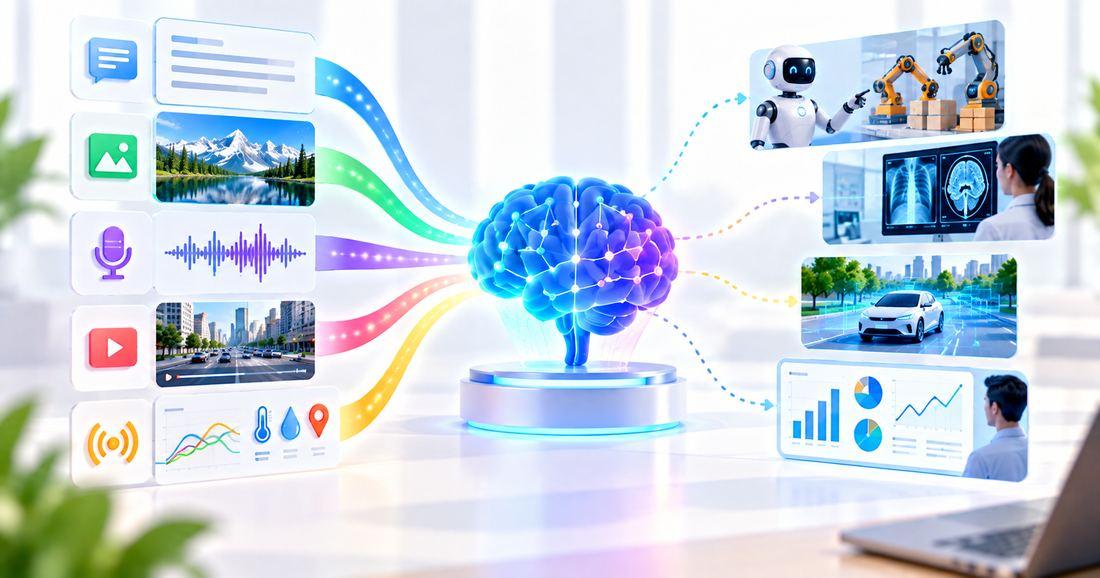
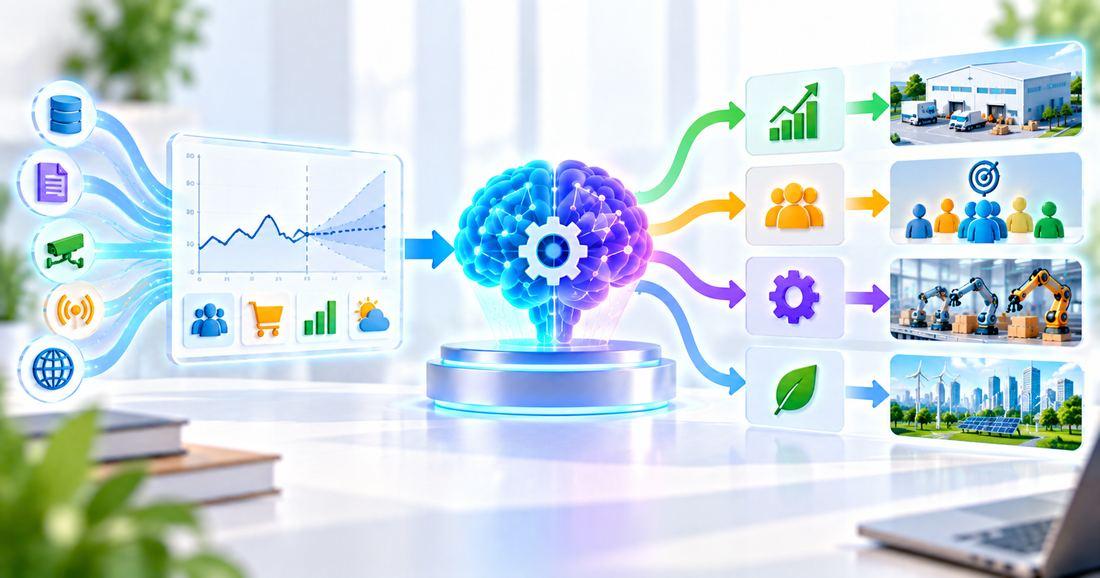
Artificial intelligence has rapidly become one of the highest strategic priorities for organizations across every industry. Businesses are investing billions of dollars in Large Language Models, AI copilots, intelligent automation platforms, predictive analytics, and enterprise AI infrastructure with the expectation that these technologies will improve productivity, accelerate innovation, reduce operational costs, and create new competitive advantages. From healthcare providers deploying AI-assisted diagnostics to financial institutions implementing intelligent risk analysis and software companies embedding AI into their products, nearly every organization is racing to integrate artificial intelligence into its operations. The widespread availability of foundation models and cloud-based AI services has also lowered the technical barriers to adoption, enabling companies of every size to experiment with generative AI more quickly than any previous enterprise technology.
Despite this unprecedented level of investment, however, many AI initiatives fail to deliver the transformational business outcomes organizations expect. Numerous companies successfully launch pilot projects, demonstrate impressive proof-of-concepts, and deploy AI-powered tools within isolated business units, yet struggle to scale these successes across the enterprise. In many cases, AI projects produce technically impressive demonstrations without creating measurable improvements in productivity, customer experience, or business performance. This disconnect highlights an important reality about enterprise AI: successful adoption depends far less on selecting the most advanced model and far more on preparing the organization itself for change.
Unlike conventional software implementations, artificial intelligence influences nearly every aspect of how an organization operates. AI changes decision-making processes, employee responsibilities, product development, customer interactions, governance, risk management, operational workflows, and long-term business strategy. Consequently, AI adoption should not be viewed as another technology deployment but as a comprehensive organizational transformation requiring leadership commitment, cultural evolution, workforce readiness, and continuous adaptation. Organizations that recognize this distinction consistently achieve greater success because they redesign how people, processes, and technology work together instead of simply introducing new AI tools into existing workflows.
The Gap Between AI Hype and Business Reality
Artificial intelligence has generated extraordinary excitement within the business community. Organizations frequently announce ambitious AI strategies, launch innovation initiatives, and invest heavily in generative AI platforms with expectations of immediate productivity gains. Industry reports often highlight remarkable advances in language models, autonomous agents, and intelligent automation, reinforcing the perception that AI can rapidly transform nearly every business process. While these technological advances are genuine, they have also contributed to unrealistic expectations regarding the speed and simplicity of AI adoption.
The reality inside many enterprises is considerably more complex. Organizations frequently succeed in developing promising prototypes but struggle to transition those pilots into sustainable production systems that deliver measurable business value. Customer service teams may experiment with AI assistants without redesigning support workflows. Engineering organizations may deploy coding assistants without updating software development practices. Business units often purchase AI tools independently without coordinating governance, security, or enterprise knowledge management. As a result, isolated successes rarely translate into enterprise-wide transformation.
This gap between technological capability and business impact exists because AI adoption is frequently treated as a technology initiative rather than an organizational one. Purchasing access to advanced language models or deploying AI-powered software does not automatically improve productivity if employees lack confidence using these tools or if existing business processes remain unchanged. Technology alone cannot transform an organization unless people understand how to incorporate it into their daily work.
Culture and Change Management Drive Long-Term Adoption
Perhaps the most underestimated aspect of AI adoption is cultural transformation. Technology can be deployed relatively quickly, but changing organizational culture requires sustained leadership, communication, and trust. Employees often experience uncertainty when AI is introduced because they may question how intelligent systems will influence their responsibilities, career development, or long-term job security. Without clear communication, these concerns frequently become barriers to adoption regardless of how technically advanced the AI solution may be.
One common challenge is employee resistance. Resistance rarely reflects opposition to technology itself. Instead, employees often hesitate because they lack understanding, fear losing control over familiar workflows, or worry that AI will replace rather than support their expertise. Organizations that ignore these concerns frequently experience low adoption despite substantial technology investments.
Effective change management addresses these challenges proactively by involving employees throughout the transformation process. Rather than imposing AI from the top down, successful organizations encourage experimentation, gather continuous feedback, celebrate early successes, provide practical training, and demonstrate how AI enhances rather than replaces human capabilities. Employees who participate in designing AI-enabled workflows become advocates for transformation rather than obstacles to change.
Over time, these efforts contribute to a broader AI-first culture where experimentation, continuous learning, collaboration, and responsible innovation become organizational norms. In AI-first organizations, employees actively seek opportunities to improve workflows using intelligent technologies, leaders encourage responsible experimentation, and cross-functional teams continuously refine AI capabilities based on operational experience. Culture therefore becomes one of the most important competitive advantages because organizations capable of adapting quickly consistently realize greater long-term value from artificial intelligence than those focusing exclusively on technology deployment.
The enterprises leading AI transformation understand that organizational readiness matters more than selecting the latest foundation model. They recognize that leadership, culture, collaboration, education, and strategic alignment create the conditions necessary for AI to generate sustainable business value at scale. Technology provides the capability, but organizational transformation determines whether that capability becomes lasting competitive advantage.
Readers interested in understanding why AI expertise is becoming essential across every modern engineering organization should also explore "Why Every Software Team Will Have an AI Engineer by 2030," which examines how AI is reshaping software teams and organizational capabilities across the technology industry.
Key Takeaway
Successful AI adoption begins with organizational transformation rather than technology selection. Leadership commitment, a clear AI vision, organizational readiness, AI literacy, cross-functional collaboration, business alignment, cultural transformation, and effective change management collectively determine whether AI initiatives evolve beyond isolated pilots into enterprise-wide capabilities. Organizations that prepare their people and processes before focusing on tools consistently achieve greater business impact, demonstrating that long-term AI success depends more on organizational adaptability than on choosing the most advanced AI model.
Section 2: Building an AI-Ready Organization
Artificial intelligence is no longer an experimental capability confined to innovation labs or research teams. As organizations move beyond isolated AI pilots, they quickly discover that scaling artificial intelligence across the enterprise requires far more than deploying new tools or integrating Large Language Models into existing workflows. Sustainable AI adoption depends on building an organization where people, processes, governance, and technology operate together within a unified AI operating model. Enterprises that successfully scale AI recognize that organizational readiness is not a one-time milestone but an ongoing capability that evolves alongside business priorities, technological advances, and workforce expectations.
Unlike previous digital transformation initiatives, AI affects nearly every business function simultaneously. Marketing teams use generative AI for campaign creation, software engineers collaborate with coding assistants, finance departments leverage predictive analytics, customer support organizations deploy AI copilots, and executives rely on AI-driven insights for strategic planning. Without a coordinated organizational framework, these independent initiatives often create fragmented tools, inconsistent governance, duplicated investments, and conflicting business priorities. Building an AI-ready organization therefore requires establishing a common operating model that enables every department to innovate while maintaining enterprise-wide consistency, security, and strategic alignment.
Building Strong Governance Through Data and Responsible AI
Every successful AI initiative depends on a reliable foundation of enterprise data. A comprehensive data strategy ensures that AI systems have access to accurate, secure, and well-governed information while preventing fragmented knowledge from limiting model performance. Organizations must establish consistent data quality standards, ownership responsibilities, lifecycle management policies, and secure access controls before deploying AI at scale. Poor data governance inevitably leads to unreliable recommendations, inconsistent outputs, and reduced user trust regardless of how advanced the underlying AI models may be.
Closely connected to data strategy is knowledge management, which has become increasingly important with the widespread adoption of Retrieval-Augmented Generation. Enterprise AI systems rely on internal documentation, policies, customer information, technical manuals, and operational knowledge to generate accurate responses. Organizations therefore invest in maintaining current, searchable, and well-structured knowledge repositories that allow AI systems to retrieve reliable information quickly. Effective knowledge management transforms organizational expertise into a strategic asset that supports every AI-powered workflow.
At the same time, organizations must establish comprehensive AI governance to ensure intelligent systems operate responsibly. Governance defines policies for model selection, deployment, monitoring, privacy, security, regulatory compliance, ethical decision-making, and operational accountability. Rather than slowing innovation, governance enables organizations to scale AI confidently because every deployment follows consistent standards for reliability and risk management.
Supporting governance is the broader commitment to Responsible AI, which ensures AI systems remain fair, transparent, explainable, and aligned with organizational values. Responsible AI includes bias mitigation, explainability, human oversight, privacy protection, and continuous monitoring to ensure intelligent systems produce trustworthy outcomes. As governments introduce AI regulations and customers increasingly expect transparency, Responsible AI becomes a competitive advantage rather than merely a compliance requirement.
Strengthening Enterprise Collaboration and Decision-Making
The final characteristic of an AI-ready organization is its ability to make informed decisions through enterprise collaboration. AI initiatives succeed when engineering, product management, legal, security, operations, finance, HR, and executive leadership work together instead of operating independently. Artificial intelligence influences every aspect of the organization, making cross-functional communication essential for aligning technical capabilities with business priorities.
This collaboration significantly improves AI decision-making. Rather than relying solely on intuition or isolated departmental perspectives, organizations combine AI-generated insights with human expertise to evaluate opportunities, prioritize investments, optimize operations, and improve customer experiences. AI becomes an intelligent decision-support system that enhances organizational knowledge while leaving strategic judgment in human hands.
Organizations that successfully build AI-ready enterprises understand that technology represents only one part of the transformation. Their long-term success comes from establishing operating models, workforce capabilities, governance frameworks, data strategies, and collaborative cultures that enable AI to scale responsibly across the business. These organizational capabilities ultimately determine whether AI becomes a collection of disconnected experiments or a sustainable competitive advantage.
Readers interested in understanding how enterprise AI workflows are engineered and orchestrated at scale should also explore "The Engineering Behind Autonomous AI Workflows," which examines the technical foundations supporting autonomous AI systems across modern enterprises.
Key Takeaway
Building an AI-ready organization requires far more than adopting advanced AI technologies. A strong AI operating model, AI Centers of Excellence, workforce transformation, employee upskilling, data strategy, knowledge management, AI governance, Responsible AI, effective decision-making, and enterprise collaboration collectively create the organizational foundation necessary for successful AI adoption. Organizations that invest equally in people, processes, and governance alongside technology will be far better positioned to scale AI responsibly and achieve long-term business transformation.
Section 3: Leading Enterprise AI Transformation
Artificial intelligence has evolved from an experimental technology into a strategic business capability that influences every aspect of enterprise operations. Organizations are no longer asking whether AI should be adopted but rather how it can be deployed at scale to improve productivity, accelerate innovation, strengthen customer relationships, and create sustainable competitive advantage. However, scaling AI across an enterprise requires far more than implementing new technologies. It demands strong leadership, cross-functional collaboration, disciplined investment, measurable business outcomes, and an organizational structure capable of supporting continuous innovation.
Many organizations successfully launch AI pilot projects but struggle when attempting to expand those initiatives across multiple business units. Early successes often remain confined to isolated departments because leadership, governance, funding, ownership, and operational processes have not evolved alongside the technology. Enterprise AI transformation therefore requires a deliberate shift from isolated experimentation toward coordinated organizational execution. The organizations achieving the greatest success recognize that AI transformation is fundamentally a leadership challenge. Technology provides the capability, but executive sponsorship, organizational agility, product ownership, and strategic investment determine whether AI becomes a long-term business advantage or simply another collection of disconnected tools.
Leading enterprise AI transformation requires organizations to align technical innovation with measurable business value while ensuring every AI initiative contributes to broader organizational objectives. This alignment depends on strong executive leadership, empowered product teams, clear success metrics, scalable operating practices, and disciplined investment strategies that enable AI to mature into a core organizational capability.
Measuring Business Impact and Scaling AI
One of the most common reasons AI initiatives lose executive support is the absence of measurable business outcomes. Organizations frequently celebrate technological achievements without demonstrating how those achievements improve operational performance. Successful enterprises therefore establish comprehensive AI metrics that connect technical performance with strategic business objectives.
Technical metrics such as inference latency, model accuracy, retrieval quality, hallucination rates, response consistency, and infrastructure utilization remain important because they indicate system health. However, enterprise leaders also focus on business KPIs that demonstrate organizational impact. Productivity improvements, customer satisfaction, employee efficiency, revenue growth, operational cost reduction, workflow automation, faster product delivery, and improved decision-making provide stronger evidence that AI investments are generating measurable value.
These metrics also support effective AI ROI evaluation. Rather than measuring return solely through direct financial savings, organizations increasingly evaluate AI according to broader business outcomes including faster innovation, improved customer retention, accelerated software delivery, enhanced employee engagement, stronger competitive positioning, and reduced operational risk. This holistic perspective recognizes that AI often creates strategic value extending beyond immediate cost reductions.
Scaling AI successfully also requires identifying which pilot projects deserve enterprise-wide expansion. Organizations evaluate adoption rates, business impact, technical reliability, governance maturity, and operational readiness before extending AI solutions across additional departments. Scaling therefore becomes a disciplined process guided by measurable evidence rather than enthusiasm alone.
Creating Organizational Agility Through Strategic Investment
Long-term AI success depends heavily on organizational agility, the ability to adapt rapidly as technology, customer expectations, and business priorities evolve. AI capabilities advance much faster than traditional enterprise software, requiring organizations to embrace continuous experimentation, iterative product development, and flexible operating models. Agile organizations encourage teams to test new ideas, evaluate results quickly, and incorporate lessons into future deployments without lengthy bureaucratic delays.
Supporting this agility requires a thoughtful AI investment strategy. Organizations that focus exclusively on purchasing the latest models often overlook equally important investments in infrastructure, governance, workforce development, knowledge management, security, and operational excellence. Sustainable AI transformation balances investment across technology, people, and organizational capabilities to ensure every deployment contributes to long-term business resilience.
Strategic investment also emphasizes reusable enterprise capabilities rather than isolated solutions. Shared AI platforms, centralized governance frameworks, common retrieval systems, standardized monitoring tools, and enterprise knowledge repositories allow future AI initiatives to build upon existing capabilities instead of starting from scratch. This approach accelerates innovation while reducing operational complexity and duplicated effort.
Ultimately, enterprise AI transformation is not measured by the number of AI applications deployed but by the organization's ability to integrate intelligence consistently into everyday business operations. Companies that align leadership, multidisciplinary teams, measurable outcomes, organizational agility, and strategic investment create AI capabilities that continue generating value long after the initial excitement surrounding new technology has faded.
Organizations seeking to understand how AI initiatives create measurable business value alongside technical excellence should also explore "The Business of AI: What Every ML Engineer Should Know Beyond Coding," which examines how business strategy, engineering, and enterprise AI combine to deliver sustainable competitive advantage.
Key Takeaway
Leading enterprise AI transformation requires much more than deploying advanced technology. Executive sponsorship, clear product ownership, multidisciplinary AI teams, meaningful AI metrics, business KPIs, disciplined AI ROI measurement, organizational agility, and strategic investment collectively determine whether AI initiatives evolve from isolated pilots into enterprise-wide capabilities. Organizations that combine strong leadership with measurable business outcomes and scalable operating practices will be best positioned to realize lasting value from artificial intelligence while building sustainable competitive advantage in the AI era.
Section 4: The Future Organization in the AI Era
Artificial intelligence is no longer simply transforming products, software, or business processes, it is fundamentally reshaping how organizations themselves are designed. Throughout previous industrial revolutions, companies adapted their organizational structures to leverage new technologies such as electricity, manufacturing automation, personal computing, the internet, and cloud computing. Each technological shift required businesses to rethink leadership models, operating structures, workforce capabilities, and decision-making processes. Artificial intelligence represents the next evolution in this progression, but its impact extends even further because AI does not merely automate physical or repetitive work; it augments knowledge work, accelerates decision-making, enables continuous learning, and changes how people collaborate across the enterprise.
As AI becomes embedded into every business function, organizations will gradually evolve from traditional enterprises into AI-native enterprises where intelligent systems support nearly every operational activity. Marketing teams will collaborate with AI to create campaigns, finance departments will use AI for forecasting and strategic planning, HR teams will leverage AI for workforce development, legal departments will automate compliance analysis, and engineering teams will build AI-powered products as a standard practice rather than a specialized capability. In this future, competitive advantage will depend less on adopting individual AI tools and more on building organizations capable of continuously adapting alongside rapidly advancing technology.
The future organization will therefore be defined by flexibility, learning, and collaboration between humans and intelligent systems. Leadership structures, workforce skills, governance frameworks, and innovation strategies will all evolve to support AI as a permanent organizational capability rather than a temporary technological initiative. Companies that embrace this transformation will become more resilient, innovative, and responsive to changing market conditions, while those that resist organizational change may struggle to realize meaningful value from AI investments despite having access to the same underlying technologies.
Becoming an AI-Native Enterprise
The defining characteristic of future organizations will be the emergence of the AI-native enterprise. Unlike organizations that simply integrate AI into isolated workflows, AI-native enterprises embed intelligence throughout every layer of the business. Artificial intelligence becomes part of customer engagement, product development, operations, finance, supply chain management, talent acquisition, cybersecurity, strategic planning, and executive decision-making. Rather than functioning as individual software applications, AI capabilities operate as an organizational intelligence layer connecting people, knowledge, and business processes.
This transformation requires organizations to redesign their operating models around intelligent collaboration instead of traditional departmental boundaries. Information flows more freely across teams because AI systems retrieve knowledge regardless of where it resides. Decision-making accelerates because leaders gain immediate access to synthesized insights drawn from enterprise-wide data. Operational efficiency improves because AI continuously identifies opportunities for automation, optimization, and process improvement. AI-native enterprises therefore become significantly more adaptive because intelligence is integrated directly into daily operations rather than remaining confined to isolated technology initiatives.
Human-AI Collaboration Becomes the New Standard
As organizations mature in their AI adoption journey, human-AI collaboration will become the foundation of everyday work. Artificial intelligence will not replace organizational leadership or employee expertise but will function as an intelligent partner that augments human capability across virtually every business function. Employees will increasingly rely on AI copilots for research, planning, content creation, analysis, forecasting, software development, customer engagement, and decision support, allowing them to focus on strategic thinking, creativity, innovation, and relationship building.
This evolution will also create entirely new AI leadership roles within organizations. Chief AI Officers, AI Strategy Directors, AI Governance Leads, AI Product Managers, AI Architects, and AI Reliability Engineers will become increasingly common as enterprises require dedicated leadership to coordinate AI strategy across multiple departments. These leaders will bridge business strategy with technological innovation, ensuring AI initiatives remain aligned with organizational objectives while maintaining governance, security, and ethical standards.
The workplace itself will become increasingly intelligent as autonomous workflows support routine operational activities. AI systems will coordinate scheduling, summarize meetings, prepare reports, monitor compliance, recommend business actions, and automate administrative processes without constant human intervention. Employees will supervise, refine, and guide these systems rather than manually executing repetitive tasks, fundamentally changing how productivity is measured and how work is organized.
Organizational Adaptability Becomes the Ultimate Competitive Advantage
As artificial intelligence becomes universally accessible, technology itself will no longer provide lasting differentiation. Most organizations will eventually gain access to similar foundation models, cloud platforms, and enterprise AI tools. The true competitive advantage will come from how effectively organizations adapt their people, leadership, governance, and operating models to leverage those technologies.
This requires increasingly mature AI governance, where policies governing ethics, transparency, privacy, security, compliance, and operational accountability become embedded throughout organizational decision-making. Governance will evolve from controlling AI deployments to enabling responsible innovation at scale. Organizations with mature governance frameworks will innovate more confidently because clear policies allow teams to move quickly while managing risk effectively.
The future workforce will also look significantly different from today's organizations. Employees will be expected to work alongside AI as naturally as they currently use cloud software, collaboration platforms, or productivity applications. Skills such as AI literacy, prompt engineering, systems thinking, critical reasoning, data interpretation, and cross-functional collaboration will become fundamental professional competencies across nearly every industry. Recruitment, performance evaluation, and career development will increasingly emphasize adaptability and the ability to collaborate effectively with intelligent systems.
Ultimately, the future of work will be defined by organizations capable of combining human creativity with artificial intelligence rather than treating the two as competing forces. Employees will contribute judgment, empathy, leadership, ethics, and innovation, while AI provides computational intelligence, automation, pattern recognition, and operational efficiency. This partnership will allow organizations to respond faster to market changes, improve customer experiences, accelerate innovation, and build more resilient businesses capable of thriving in increasingly complex environments.
Organizations that successfully embrace this transformation understand that AI adoption is not the destination but the beginning of continuous organizational evolution. Their long-term success depends on building cultures that learn constantly, leadership that adapts confidently, governance that enables responsible innovation, and workforces prepared to collaborate seamlessly with intelligent systems. These qualities, not technology alone, will define the organizations that lead the AI economy over the coming decades.
Readers interested in understanding how cutting-edge AI research becomes scalable enterprise capability should also explore "Research to Real-World ML Engineering: Bridging the Gap," which explains how organizations transform AI innovation into production-ready systems that create lasting business value.
Key Takeaway
The future organization will be defined by adaptability rather than technology alone. AI-native enterprises, human-AI collaboration, emerging AI leadership roles, autonomous workflows, continuous learning, organizational resilience, AI innovation culture, mature governance, and an AI-enabled workforce will collectively shape the next generation of successful businesses. As artificial intelligence becomes embedded into every aspect of enterprise operations, organizations that continuously evolve their people, processes, and leadership alongside technology will establish the strongest competitive advantage and become the leaders of the AI era.
Conclusion
Artificial intelligence is rapidly becoming one of the most significant drivers of business transformation in modern history. Organizations across every industry are investing heavily in Large Language Models, generative AI, intelligent automation, predictive analytics, and AI-powered decision support with the expectation that these technologies will reshape products, improve operational efficiency, and unlock entirely new business opportunities. Yet as enterprises gain practical experience with AI, one lesson has become increasingly clear: technology alone does not create transformation. While selecting capable AI models and deploying advanced platforms is important, sustainable success depends far more on an organization's ability to evolve its leadership, culture, workforce, governance, and operating model alongside technological innovation.
Throughout this article, we explored why organizational transformation is the foundation of successful AI adoption. The widespread excitement surrounding artificial intelligence has encouraged many organizations to launch ambitious AI initiatives, yet numerous projects fail to move beyond isolated proof-of-concepts because businesses underestimate the organizational changes required to support enterprise-wide adoption. Leadership commitment, a clearly defined AI vision, organizational readiness, AI literacy, cross-functional collaboration, cultural transformation, business alignment, and structured change management all determine whether AI becomes an enduring strategic capability or remains a disconnected collection of experiments. Organizations that prepare people and processes before deploying technology consistently achieve stronger business outcomes than those focusing exclusively on technical implementation.
We also examined how enterprises build AI-ready organizations capable of scaling intelligent systems responsibly. A well-defined AI operating model, AI Centers of Excellence, workforce transformation, employee upskilling, enterprise data strategies, knowledge management, AI governance, Responsible AI practices, and collaborative decision-making establish the organizational foundation necessary for sustainable AI adoption. These capabilities ensure that artificial intelligence becomes integrated into daily business operations rather than remaining isolated within innovation teams or technical departments. Successful enterprises recognize that AI readiness is not a one-time milestone but an evolving organizational capability that matures continuously as technology and business needs change.
Frequently Asked Questions (FAQs)
1. What is AI adoption?
AI adoption is the process of integrating artificial intelligence into an organization's products, operations, workflows, and decision-making processes to improve business performance, productivity, innovation, and customer experiences.
2. Why do many AI projects fail?
Many AI projects fail because organizations focus primarily on technology while neglecting leadership, organizational readiness, workforce skills, governance, business alignment, and change management required to scale AI successfully.
3. What is an AI-ready organization?
An AI-ready organization has the leadership, operating model, workforce capabilities, governance framework, data strategy, and collaborative culture needed to deploy and scale AI responsibly across the enterprise.
4. Why is leadership important for AI adoption?
Leadership establishes the strategic vision, secures executive sponsorship, allocates resources, promotes organizational alignment, and drives the cultural transformation necessary for enterprise-wide AI adoption.
5. What is an AI operating model?
An AI operating model defines how AI initiatives are prioritized, developed, governed, monitored, and scaled across an organization while ensuring alignment with business objectives and enterprise standards.
6. How do companies build AI Centers of Excellence (CoE)?
Organizations build AI Centers of Excellence by bringing together AI engineers, data scientists, product managers, architects, security specialists, legal teams, and business leaders to establish best practices, governance, reusable frameworks, and technical guidance for enterprise AI initiatives.
7. Why is AI governance necessary?
AI governance ensures artificial intelligence is deployed responsibly by establishing policies for privacy, security, compliance, model monitoring, ethical decision-making, transparency, accountability, and operational risk management.
8. How should organizations upskill employees for AI?
Organizations should provide role-specific AI education, practical training, continuous learning opportunities, and hands-on experience that help employees understand how AI enhances their work rather than replacing their expertise.
9. What is Responsible AI?
Responsible AI is the practice of designing, deploying, and managing AI systems that are fair, transparent, explainable, secure, privacy-conscious, and aligned with ethical principles and regulatory requirements.
10. How do enterprises measure AI ROI?
Enterprises measure AI ROI by evaluating improvements in productivity, operational efficiency, customer satisfaction, revenue growth, cost reduction, employee performance, innovation speed, and overall business outcomes alongside technical performance metrics.
11. What roles are needed for enterprise AI adoption?
Enterprise AI adoption typically requires AI engineers, machine learning engineers, data scientists, AI product managers, AI architects, AI governance specialists, platform engineers, security professionals, business analysts, and executive sponsors working collaboratively.
12. How can organizations overcome resistance to AI?
Organizations overcome resistance by communicating a clear AI vision, involving employees throughout the transformation process, providing practical training, addressing concerns transparently, and demonstrating how AI augments rather than replaces human capabilities.
13. What is an AI-native enterprise?
An AI-native enterprise embeds artificial intelligence into every major business function, making AI a core capability that supports decision-making, customer engagement, operations, product development, and organizational strategy rather than treating it as a standalone technology initiative.
14. How will AI change organizational structure?
AI will encourage flatter, more collaborative organizational structures built around multidisciplinary teams, AI leadership roles, cross-functional decision-making, continuous learning, and intelligent workflows that integrate humans and AI across departments.
15. What is the future of work in the AI era?
The future of work will center on collaboration between humans and AI. Employees will increasingly rely on intelligent systems for automation, analysis, content generation, and decision support while focusing their own efforts on creativity, critical thinking, leadership, innovation, and strategic problem-solving. Organizations that continuously invest in workforce development and organizational adaptability will be best positioned to succeed in the AI-driven economy.