Section 1: Understanding the Fundamental Difference Between AI Agents and Traditional ML Models
Traditional ML Models Are Built for Prediction
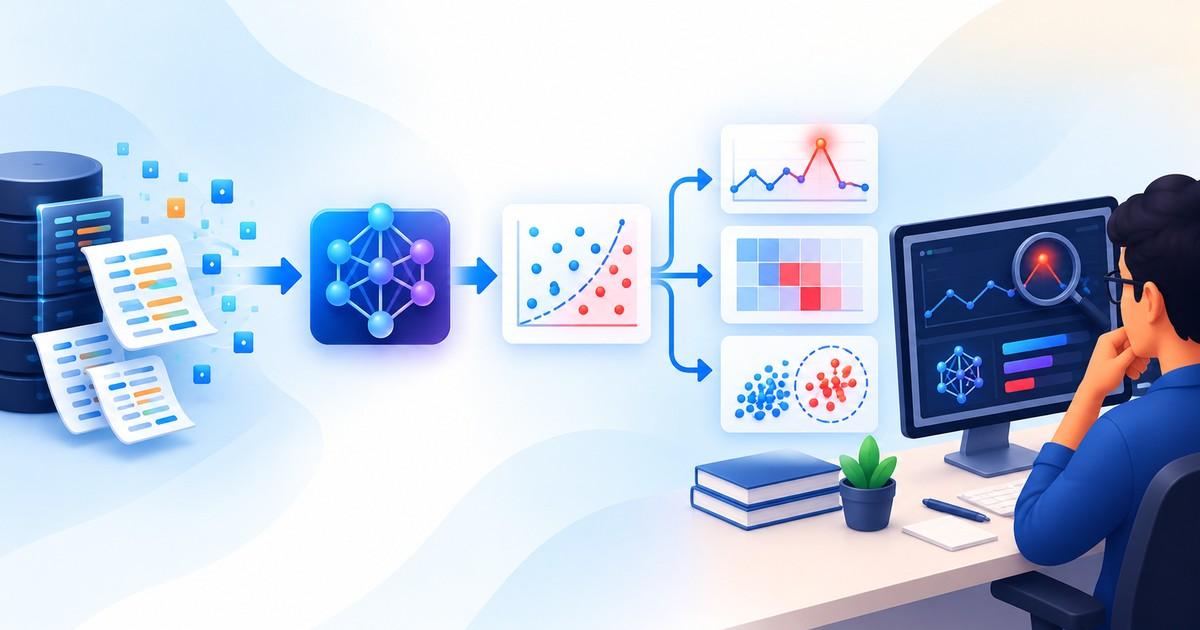
For more than a decade, traditional machine learning has been the foundation of intelligent software systems. Whether organizations are recommending products, detecting fraud, forecasting demand, or ranking search results, the underlying principle remains the same: use historical data to predict future outcomes. These systems are trained on large datasets, learn patterns from examples, and apply those patterns when presented with new information.
The defining characteristic of traditional machine learning is that it operates within a fixed scope. Engineers define a specific objective, such as predicting whether a user will click on an advertisement or determining whether a transaction is fraudulent. Once trained, the model repeatedly performs that task with consistency and efficiency. It does not decide which information to collect, determine whether additional actions are needed, or modify its objective based on changing circumstances. Its responsibility begins with the input and ends with the prediction.
This focused nature is one of the greatest strengths of traditional machine learning. Because the task is clearly defined, organizations can establish measurable success metrics and continuously optimize performance. Teams can monitor accuracy, latency, reliability, and business impact while maintaining predictable operational costs. For many business problems, especially those involving large-scale prediction tasks, traditional machine learning remains the most practical and effective solution.
Despite the excitement surrounding generative AI, it is important to recognize that many of the world's largest AI-powered products still rely heavily on traditional machine learning systems. Prediction remains one of the most valuable capabilities in modern software engineering, and for many use cases, no additional complexity is necessary.
AI Agents Are Built for Goal Achievement
AI agents represent a significant departure from the traditional machine learning paradigm. Instead of being designed solely to generate predictions, agents are designed to achieve objectives. They receive a goal rather than a narrowly defined prediction task and determine the sequence of actions required to accomplish that goal.
Unlike traditional models, agents can reason through problems, gather information from multiple sources, interact with tools, evaluate intermediate results, and adapt their behavior as new information becomes available. This enables them to handle workflows that are dynamic and difficult to predefine.
Imagine a scenario where a business leader asks an AI system to identify emerging customer concerns from support conversations and recommend areas for product improvement. A traditional machine learning model could classify the conversations into categories or assign sentiment scores. An AI agent, however, could retrieve the conversations, identify recurring patterns, compare trends across different time periods, generate summaries, and formulate actionable recommendations. The system is no longer performing a single prediction task; it is coordinating a series of actions to achieve a broader objective.
This capability makes agents particularly useful for knowledge-intensive work, workflow automation, research assistance, and complex decision-support systems. As organizations increasingly invest in agentic AI, engineering teams are expected to understand not only how these systems work but also where they provide meaningful advantages. This growing industry shift is explored in "The Rise of Agentic AI: What It Means for ML Engineers in Hiring," which discusses how employers are adapting their hiring expectations to reflect emerging AI trends.
The key distinction is that agents focus on completing goals, while traditional machine learning models focus on generating predictions.
Why Choosing the Right Approach Matters
One of the biggest misconceptions in today's AI landscape is the belief that AI agents are inherently superior to traditional machine learning systems. In reality, the effectiveness of either approach depends entirely on the problem being solved. Organizations that fail to recognize this often introduce unnecessary complexity into systems that could be solved more efficiently with simpler models.
Traditional machine learning remains the preferred choice when a problem has clearly defined inputs, outputs, and evaluation metrics. These systems are often faster, cheaper to operate, easier to monitor, and more predictable in production environments. Tasks such as recommendation ranking, anomaly detection, demand forecasting, and classification typically benefit from the efficiency of traditional machine learning architectures.
AI agents become valuable when tasks require multiple stages of reasoning, interaction with external systems, or decision-making that cannot be fully predefined. In these situations, the flexibility of agentic systems can unlock capabilities that traditional models simply cannot provide. However, this flexibility comes with trade-offs, including higher computational costs, increased system complexity, and greater challenges in evaluation and monitoring.
As organizations move beyond AI experimentation and into large-scale deployment, engineers are increasingly expected to make architecture decisions rather than simply build models. Understanding whether a problem requires prediction or goal-oriented execution is becoming a critical skill for software engineers, machine learning engineers, and AI practitioners alike. The future of intelligent systems will not be defined by choosing one approach over the other, but by knowing how to apply each technology where it creates the greatest business value.
Key Takeaway
Traditional machine learning models and AI agents solve fundamentally different types of problems. Traditional ML excels when the objective is a well-defined prediction that requires speed, scalability, and measurable performance. AI agents excel when the objective involves reasoning, planning, tool usage, and multi-step execution. The most effective engineers understand that success comes not from replacing traditional machine learning with agents, but from selecting the right approach based on the nature of the problem being solved.
Section 2: When Traditional Machine Learning Is Still the Better Choice
Not Every AI Problem Requires an Agent
The rapid rise of AI agents has created a perception that traditional machine learning is becoming obsolete. Across technology conferences, engineering blogs, and social media discussions, agentic AI is often presented as the future of intelligent systems. While agents undoubtedly unlock new possibilities, many organizations are discovering that they are not the ideal solution for every problem. In fact, a significant percentage of production AI workloads continue to rely on conventional machine learning because it remains the most efficient, reliable, and cost-effective approach.
One of the most common mistakes engineering teams make is introducing complexity where simplicity would suffice. When a business problem can be solved through a well-defined prediction, there is often little benefit in deploying a system capable of reasoning, planning, and executing multiple actions. The additional flexibility of an AI agent comes with higher computational costs, increased operational overhead, and greater unpredictability.
Consider a company building a fraud detection system for payment transactions. The objective is straightforward: determine whether a transaction is likely to be fraudulent. Historical transaction data provides labeled examples, allowing engineers to train a model that can identify suspicious patterns. Once deployed, the model generates predictions within milliseconds and can process millions of transactions daily. An AI agent capable of reasoning through every transaction would introduce unnecessary latency and dramatically increase infrastructure costs without improving outcomes.
The lesson is simple: before adopting an AI agent, engineers should ask whether the problem truly requires dynamic decision-making. If the answer is no, traditional machine learning often remains the better solution.
Prediction-Centric Problems Favor Traditional ML
Traditional machine learning excels when organizations can clearly define inputs, outputs, and success metrics. These environments provide the structured conditions that machine learning models need to deliver consistent performance at scale.
Recommendation systems illustrate this principle particularly well. When a streaming platform wants to predict which content a user is most likely to watch, the problem can be framed as a ranking task. Historical viewing behavior, engagement metrics, and user preferences become inputs, while the desired output is a ranked list of recommendations. A specialized machine learning model can process these signals efficiently and generate highly relevant results in real time.
Similarly, forecasting applications continue to rely heavily on traditional machine learning. Retailers predict inventory demand, logistics companies forecast shipment volumes, and financial institutions estimate future risk exposure. These tasks involve identifying patterns in historical data rather than reasoning through complex workflows. As a result, machine learning models remain highly effective because the objective is prediction rather than autonomous action.
The same principle applies to classification problems such as spam detection, customer churn prediction, sentiment analysis, and anomaly detection. In each case, the desired outcome can be clearly defined before the model is trained. There is little ambiguity regarding what success looks like, making traditional machine learning an ideal choice.
For engineers preparing for AI and ML interviews, understanding this distinction is increasingly important. Many hiring managers evaluate whether candidates can recognize when a problem should be framed as a prediction task rather than immediately proposing more complex AI solutions.
Understanding how to frame a business problem as a prediction task is a skill frequently evaluated in machine learning interviews. Many candidates jump directly into discussing algorithms without first defining the prediction objective, target variable, and evaluation criteria. This ability to think systematically often separates strong candidates from average ones. Engineers looking to strengthen this aspect of their interview preparation can explore "Beyond the Model: How to Talk About Business Impact in ML Interviews," which explains how successful candidates connect machine learning solutions to measurable business outcomes.
Reliability, Scalability, and Cost Efficiency Matter
Beyond technical performance, traditional machine learning offers significant operational advantages. Production systems must be evaluated not only on intelligence but also on reliability, scalability, maintainability, and cost. These factors often determine whether a solution succeeds in a real-world business environment.
Traditional machine learning models are generally easier to monitor because their behavior is relatively predictable. Engineers can track performance metrics, detect model drift, retrain models when necessary, and establish clear service-level objectives. When problems occur, root-cause analysis is often more straightforward because the system's decision-making process is constrained by its architecture.
AI agents introduce a different set of challenges. Since agents dynamically determine their actions, identical requests may produce different execution paths. This flexibility can be valuable, but it can also make debugging significantly more difficult. Engineering teams must monitor not only outputs but also reasoning chains, tool usage patterns, retrieval quality, and workflow execution. As systems grow more complex, maintaining consistency becomes increasingly challenging.
Cost considerations also play a major role. Traditional machine learning models often require relatively inexpensive inference infrastructure once training is complete. In contrast, agentic systems frequently rely on large language models, retrieval pipelines, tool integrations, and multiple reasoning steps. These additional components increase computational expenses and can substantially impact operating budgets at scale.
Organizations deploying AI products to millions of users must carefully evaluate whether the benefits of agentic capabilities justify the associated costs. In many cases, the answer is no. A highly optimized machine learning model may deliver the required business outcome more efficiently than a sophisticated agent architecture.
The Best Engineering Decision Is Often the Simplest One
One of the defining characteristics of experienced engineers is their ability to avoid unnecessary complexity. While emerging technologies create excitement, successful engineering organizations prioritize solutions that maximize business value rather than technical novelty.
AI agents are powerful because they can handle ambiguity, orchestrate workflows, and perform tasks that traditional machine learning cannot. However, many business challenges do not require those capabilities. If a system's primary objective is to predict, classify, rank, forecast, or detect, traditional machine learning often remains the most practical choice.
This reality explains why companies continue to invest heavily in machine learning infrastructure despite the rapid growth of generative AI. The future of intelligent systems is unlikely to involve replacing traditional machine learning altogether. Instead, organizations will increasingly adopt hybrid architectures where machine learning models handle prediction-heavy workloads while AI agents manage complex workflows that require reasoning and adaptability.
The engineers who thrive in this new era will not be those who automatically choose the newest technology. They will be those who understand the strengths, limitations, and trade-offs of each approach and can align technical decisions with business objectives. Recognizing when traditional machine learning is sufficient is just as important as knowing when an AI agent is necessary.
Key Takeaway
Traditional machine learning remains the best choice for problems centered on prediction, classification, ranking, forecasting, and anomaly detection. These systems provide reliability, scalability, lower operational costs, and predictable performance. Before adopting an AI agent, engineers should evaluate whether the task truly requires reasoning and multi-step decision-making. If the problem can be solved through a well-defined prediction, traditional machine learning is often the more effective solution.
Section 3: When AI Agents Become the Better Solution
Complex Workflows Require More Than Predictions
While traditional machine learning excels at generating predictions, many modern business problems involve far more than identifying patterns in data. Organizations increasingly face challenges that require gathering information from multiple sources, making decisions based on evolving context, interacting with software systems, and executing a sequence of actions before arriving at a final outcome. These scenarios expose the limitations of traditional machine learning and highlight the value of AI agents.
The fundamental reason agents excel in these environments is that they are designed around objectives rather than outputs. Instead of answering a single question, an agent can determine how to solve a broader problem. It can retrieve information, evaluate alternatives, decide which actions to take next, and adapt when new information becomes available.
Consider a software engineering manager who wants an AI-powered assistant to analyze sprint performance, identify project risks, summarize developer productivity trends, and recommend actions for the upcoming release cycle. This request cannot be solved by a single prediction model. The system must collect data from multiple tools, interpret different forms of information, reason about project status, and generate recommendations. An AI agent is naturally suited for this type of workflow because it can coordinate multiple tasks toward a single goal.
This shift from prediction-based systems to workflow-oriented systems is one of the biggest transformations occurring in artificial intelligence today. As organizations seek greater automation, they are increasingly looking for systems that can complete tasks rather than simply provide predictions.
Dynamic Decision-Making Is Where Agents Shine
One of the most important characteristics of agentic systems is their ability to make decisions during execution. Traditional machine learning systems generally follow a predefined path. They receive inputs and generate outputs according to the patterns learned during training. If circumstances change, engineers typically need to retrain the model or modify the surrounding application logic.
AI agents operate differently. They can continuously evaluate context and determine what should happen next. This ability becomes particularly valuable when workflows are unpredictable or when the optimal sequence of actions varies from one situation to another.
For example, imagine a customer support platform powered by an AI agent. When a user submits a request, the agent might first search internal documentation. If the information is insufficient, it may retrieve previous support cases. If the issue remains unresolved, the agent could gather account-specific information before drafting a personalized response. The exact workflow depends on the context of each request.
This flexibility allows organizations to automate processes that previously required significant human intervention. Instead of hard-coding every possible scenario, engineers can build systems capable of adapting to changing circumstances.
As companies continue investing in agentic AI, hiring managers are increasingly interested in candidates who understand these architectural differences. Engineers preparing for next-generation AI roles may find valuable insights in "LLM Engineering Interviews: How to Prepare for Prompting, Fine-Tuning, and Evaluation," which explores many of the technical concepts underlying modern AI applications.
The ability to reason through a problem rather than execute a fixed prediction is what makes AI agents fundamentally different from traditional machine learning systems.
AI Agents Excel in Knowledge Work and Automation
The rise of large language models has expanded the range of tasks that software systems can perform. Historically, automation worked best when workflows were highly structured and deterministic. Tasks involving ambiguity, unstructured information, or human-like reasoning remained difficult to automate effectively.
AI agents are changing that reality.
Many modern business processes involve gathering information, synthesizing knowledge, evaluating trade-offs, and generating outputs tailored to specific situations. These activities closely resemble how humans perform knowledge work. Because agents can process natural language, interact with external tools, and reason through multiple steps, they are increasingly capable of handling such responsibilities.
Organizations are beginning to deploy agentic systems for internal research, software development assistance, operational workflows, customer support, compliance reviews, and documentation management. In these environments, the value comes not from a single prediction but from the agent’s ability to complete an entire workflow.
This distinction is critical. Traditional machine learning answers questions. AI agents often complete tasks.
For software engineers, this means that future AI systems will increasingly focus on execution rather than prediction alone. Engineers building these systems must think beyond model accuracy and consider workflow design, tool integration, context management, and decision orchestration.
The most effective agents are not necessarily those with the most advanced underlying models. Instead, they are the ones that can reliably coordinate multiple components to achieve meaningful business outcomes.
The Future Belongs to Hybrid AI Systems
Although AI agents provide powerful capabilities, organizations should resist viewing them as replacements for traditional machine learning. In practice, the most successful architectures increasingly combine both approaches.
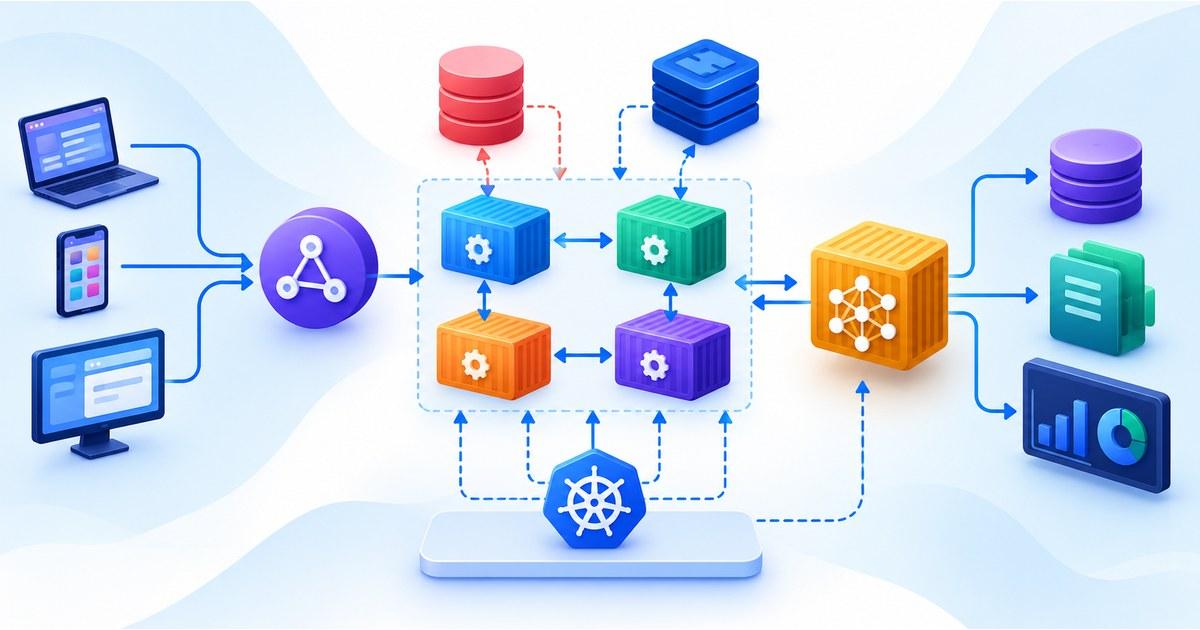
An AI agent may be responsible for orchestrating a workflow, but it often relies on traditional machine learning models to perform specialized tasks within that workflow. A recommendation model may provide personalized suggestions, a classification model may categorize incoming requests, and a forecasting model may estimate future demand. The agent then uses those outputs to make broader decisions and execute actions.
This hybrid architecture allows organizations to benefit from the strengths of both technologies. Traditional machine learning provides efficiency, scalability, and precise predictions. AI agents provide adaptability, reasoning, and workflow execution.
As enterprises move beyond experimentation and begin deploying AI systems at scale, this combination is becoming the dominant design pattern. Engineers who understand both paradigms will be better equipped to design solutions that balance intelligence, reliability, and operational efficiency.
Rather than asking whether AI agents will replace traditional machine learning, a more useful question is how the two can work together. The future of artificial intelligence will likely be built on systems where predictive models handle specialized tasks while agents coordinate end-to-end execution across increasingly complex workflows.
Key Takeaway
AI agents become the better solution when problems require reasoning, adaptability, tool usage, and multi-step execution. Unlike traditional machine learning models, which focus on generating predictions, agents focus on achieving objectives. Their ability to navigate dynamic workflows makes them particularly valuable for knowledge work, automation, and complex decision-making. However, the most effective production systems often combine AI agents with traditional machine learning models, creating hybrid architectures that leverage the strengths of both approaches.
Section 4: A Practical Framework for Choosing Between AI Agents and Traditional ML Models
Start With the Business Problem, Not the Technology
One of the most common mistakes organizations make when adopting artificial intelligence is starting with the technology rather than the problem. The excitement surrounding AI agents has encouraged many teams to redesign systems simply because agentic architectures are gaining attention. However, successful engineering organizations focus on solving business problems first and selecting the most appropriate technology second.
Before choosing between a traditional machine learning model and an AI agent, engineers should clearly define the outcome they are trying to achieve. If the objective is to predict, classify, rank, or forecast, a traditional machine learning solution is often sufficient. If the objective involves gathering information, making decisions, interacting with multiple systems, and completing a workflow, an agent-based architecture may be more appropriate.
For example, predicting whether a customer will cancel a subscription is fundamentally a machine learning problem because the output is a probability score. However, proactively preventing churn may involve analyzing customer interactions, identifying potential causes, generating personalized retention strategies, and coordinating outreach actions. The latter scenario moves beyond prediction and enters the domain of agentic systems.
The best AI architects avoid being influenced by trends and instead focus on identifying the simplest solution capable of delivering the desired business outcome.
Evaluate the Level of Reasoning Required
A useful way to distinguish between traditional machine learning and AI agents is to evaluate how much reasoning is required to solve the problem. Traditional machine learning performs exceptionally well when the relationship between inputs and outputs can be learned from historical data. Once trained, the model repeatedly executes the same task with minimal variation.
AI agents become valuable when the path to a solution cannot be fully defined in advance. These situations require systems that can assess context, determine the next action, and adapt their behavior as conditions change.
Consider a software engineer using an internal AI assistant to investigate a production issue. The system may need to analyze logs, review deployment history, examine monitoring dashboards, retrieve documentation, and generate recommendations. The exact workflow varies depending on the nature of the incident. Because the solution path is dynamic, an AI agent is far better suited to the task than a single prediction model.
As organizations increasingly adopt these technologies, engineers are expected to demonstrate architectural thinking rather than simply model-building expertise. This shift is reflected in modern interview processes, where candidates are often evaluated on their ability to choose the right solution for a business challenge. Engineers interested in strengthening this skill can explore, "MLOps vs. ML Engineering: What Interviewers Expect You to Know in 2025," which discusses how companies assess system-level thinking in AI and machine learning roles.
Understanding the reasoning requirements of a problem is often the clearest indicator of whether an agent is necessary.
Consider Operational Complexity and Cost
Technical capability is only one factor in selecting an AI architecture. Organizations must also consider operational realities such as infrastructure costs, maintenance requirements, monitoring complexity, and scalability.
Traditional machine learning systems are generally easier to manage because their behavior is predictable. Engineers can monitor model performance, retrain when necessary, and maintain relatively stable operational costs. Once deployed, these systems often support millions of predictions with minimal overhead.
AI agents introduce additional layers of complexity. They frequently rely on large language models, retrieval systems, tool integrations, memory mechanisms, and orchestration frameworks. While these components enable powerful capabilities, they also create new failure points and increase infrastructure expenses.
A solution that appears technically impressive may not be economically viable at scale. This is especially important for consumer-facing applications where millions of requests must be processed daily. In such environments, even small increases in latency or computational costs can have significant business implications.
Engineering leaders must therefore evaluate not only what an AI system can do but also what it costs to operate and maintain over time. The most successful organizations treat AI architecture as a business decision rather than a purely technical one.
Think About Long-Term Scalability
The final consideration is future growth. Many AI projects begin with a narrowly defined use case but eventually expand into broader workflows and additional capabilities. Engineers should consider whether the chosen architecture can evolve alongside business requirements.
In some cases, starting with traditional machine learning makes the most sense because the immediate problem is prediction-focused. As the product matures, agentic capabilities can be added to automate surrounding workflows and enhance user experiences. This gradual evolution often reduces risk while allowing teams to validate business value before investing in more complex architectures.
The opposite approach can create challenges. Building a sophisticated agentic system for a relatively simple prediction task may introduce unnecessary complexity from the outset. Organizations may find themselves maintaining expensive infrastructure that provides little incremental benefit.
The most successful AI strategies are rarely based on choosing one approach exclusively. Instead, they involve carefully evaluating the problem, understanding operational constraints, and designing systems that can scale intelligently as requirements evolve.
Key Takeaway
Choosing between AI agents and traditional machine learning begins with understanding the problem rather than following industry trends. Traditional ML is often the right choice for prediction-focused tasks, while AI agents are better suited for dynamic workflows requiring reasoning and decision-making. By evaluating business objectives, reasoning requirements, operational complexity, and long-term scalability, engineers can select architectures that maximize both technical effectiveness and business value.
Conclusion
The rise of AI agents has sparked one of the most important discussions in modern software engineering: should organizations continue relying on traditional machine learning models, or should they transition toward agentic systems? The reality is that this is not an either-or decision. Both technologies solve different categories of problems, and understanding their strengths is becoming a critical skill for engineers building AI-powered products.
Traditional machine learning remains the preferred choice for prediction-focused tasks where inputs, outputs, and success metrics are clearly defined. Applications such as recommendation systems, fraud detection, demand forecasting, spam filtering, and anomaly detection continue to benefit from the speed, scalability, and reliability of conventional machine learning architectures. These systems are easier to monitor, less expensive to operate, and highly effective when the objective is generating accurate predictions at scale.
AI agents, on the other hand, excel when the goal extends beyond prediction and requires reasoning, planning, tool usage, and multi-step execution. They are particularly valuable for workflow automation, research assistance, customer support operations, software development workflows, and other tasks where the path to a solution cannot be completely predefined. Their ability to adapt to changing contexts enables organizations to automate increasingly complex forms of knowledge work.
The most successful companies are not replacing traditional machine learning with agents. Instead, they are building hybrid systems that combine the strengths of both approaches. Machine learning models continue providing specialized predictions, while AI agents orchestrate workflows and make higher-level decisions. This combination delivers both efficiency and flexibility, allowing organizations to scale intelligent systems more effectively.
For software engineers, this shift represents a significant career opportunity. Understanding when to use prediction models, when to deploy agents, and how to integrate the two is rapidly becoming a valuable architectural skill. As AI adoption accelerates across industries, engineers who can make these decisions thoughtfully will play a critical role in shaping the next generation of intelligent products.
Frequently Asked Questions
1. What is the primary difference between an AI agent and a traditional ML model?
A traditional machine learning model is designed to generate predictions based on historical data, while an AI agent is designed to achieve goals through reasoning, planning, and executing multiple actions. ML models answer questions, whereas agents often complete tasks.
2. Are AI agents replacing traditional machine learning?
No. Traditional machine learning remains essential for many business applications. Most organizations are adopting hybrid architectures where machine learning models handle predictions and AI agents manage workflows requiring reasoning and decision-making.
3. When should I choose a traditional ML model?
Traditional ML is ideal when the problem involves classification, prediction, ranking, recommendation, forecasting, or anomaly detection. If the desired outcome can be clearly defined and measured, machine learning is often the most efficient solution.
4. When should I use an AI agent?
AI agents are most valuable when tasks involve multiple steps, changing contexts, information gathering, tool usage, or workflow automation. They work well when the solution path cannot be predefined.
5. Are AI agents more expensive than traditional ML systems?
In most cases, yes. Agentic systems often require large language models, retrieval systems, orchestration frameworks, and external tool integrations, which increase infrastructure and operational costs.
6. Can AI agents make decisions independently?
AI agents can make decisions within the boundaries defined by their architecture and objectives. They evaluate context, determine next actions, and adapt workflows, but they are not autonomous in the same way humans are.
7. What industries benefit most from AI agents?
Industries with significant knowledge work and workflow complexity, including software development, healthcare, finance, customer support, legal services, and enterprise operations, are seeing substantial benefits from agent-based systems.
8. Are AI agents suitable for real-time applications?
They can be, but latency must be carefully managed. Traditional ML models generally provide faster responses, making them more suitable for highly time-sensitive applications.
9. Do AI agents require machine learning models?
Often, yes. Many agentic systems rely on machine learning models for specialized tasks such as classification, recommendation, forecasting, or ranking while the agent coordinates overall workflow execution.
10. What skills should engineers learn for building AI agents?
Engineers should understand large language models, prompt engineering, retrieval-augmented generation (RAG), orchestration frameworks, tool integration, workflow design, evaluation methodologies, and system architecture.
11. How do companies evaluate AI agents in production?
Evaluation typically includes task completion rates, accuracy, user satisfaction, workflow efficiency, cost per task, latency, reliability, and the quality of decision-making throughout the execution process.
12. Are AI agents reliable enough for enterprise use?
They can be, but reliability requires strong governance, monitoring, testing, and human oversight. Many enterprises deploy agents gradually while maintaining safeguards around critical workflows.
13. What is a hybrid AI architecture?
A hybrid architecture combines traditional machine learning models with AI agents. ML models handle specialized predictive tasks, while agents orchestrate workflows and coordinate decisions across systems.
14. Will AI agents become a common interview topic?
Yes. Many companies are already evaluating candidates on topics such as LLM applications, agent design, AI workflows, prompt engineering, and system architecture involving agentic systems.
15. What is the future of AI agents in software engineering?
AI agents are expected to become increasingly integrated into development workflows, operational processes, and enterprise applications. However, their future will likely involve collaboration with traditional machine learning systems rather than complete replacement, creating more powerful and scalable AI ecosystems.