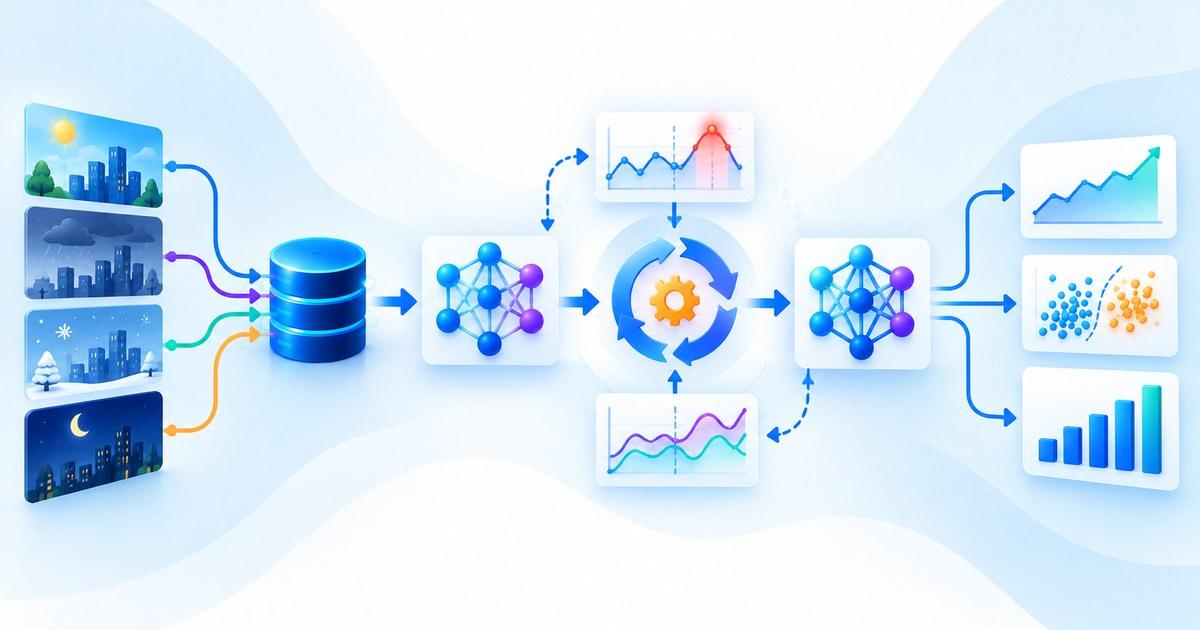
Section 1: Why Machine Learning Systems Must Adapt to Changing Environments
Why Models Trained on Historical Data Become Less Reliable Over Time
Machine learning models are trained on historical datasets that represent particular patterns, relationships, and conditions observed during a specific period, allowing them to learn associations that can support predictions on future inputs. However, production environments rarely remain unchanged after deployment, as customer preferences evolve, application workloads shift, business policies change, and external conditions introduce patterns that were not represented adequately in the original training data. A model that performed reliably during development can therefore become less effective over time, even when its implementation remains unchanged and the inference infrastructure continues operating normally.
Consider an e-commerce recommendation system trained on historical customer interactions that indicate which products users are likely to purchase together. As customer preferences shift, new products enter the market, and promotional strategies change, the relationships learned from earlier interactions may no longer represent current purchasing behavior, causing recommendations to become less relevant despite technically successful predictions. Similar problems can affect fraud detection, demand forecasting, search ranking, predictive maintenance, and customer churn models, where changing operating conditions can gradually weaken the assumptions on which earlier predictions depended.
This challenge illustrates why deploying a model should be treated as the beginning of its operational lifecycle rather than the completion of the machine learning project. Engineering teams need mechanisms for monitoring changing input data, evaluating prediction quality, collecting new outcomes, and determining when an existing model requires intervention. Adaptive ML systems address these requirements by connecting production observations with controlled processes for updating features, recalibrating predictions, retraining models, or replacing outdated model versions when measurable evidence indicates that adaptation is necessary.
Understanding Data Drift, Concept Drift, and Changing Feature Relationships
Changes in production environments can affect machine learning models in different ways, making it important to distinguish between shifts in input data and changes in the relationships that determine the correct prediction. Data drift, often discussed in terms of feature or input distribution shift, occurs when the characteristics of incoming production data differ from those represented in the reference training data. For example, a customer analytics model may encounter a higher proportion of mobile users after an application redesign, changing the distribution of device types, session lengths, and interaction patterns supplied to the model.
Although data drift can indicate that a model's assumptions deserve investigation, a change in input distribution does not automatically mean that predictive performance has deteriorated. A model may continue producing useful results despite a shift in a feature's distribution, particularly when the altered feature has limited influence on the prediction or the model remains robust to the observed variation. Engineers should therefore evaluate drift alongside feature quality, model behavior, and available outcome measurements rather than treating every statistical difference as sufficient justification for retraining.
Concept drift occurs when the relationship between the input features and the target outcome changes, meaning that patterns previously associated with a particular result may no longer hold under current conditions. In fraud detection, for instance, fraudsters may change their tactics in response to new security measures, making earlier behavioral signals less predictive of fraudulent activity even if the overall feature distributions appear relatively stable. These changes require more than simply checking whether incoming values resemble historical data, because the underlying decision patterns themselves may have evolved. The distinctions explored in “Machine Learning Under Distribution Shift: What Happens When the World Changes” help explain why adaptive systems must evaluate both changing data characteristics and the continuing relevance of learned relationships before selecting an appropriate response.
How User Behavior, Business Rules, and External Conditions Affect Predictions
Production models operate within larger systems shaped by human behavior, organizational policies, application changes, and external events, all of which can alter the information available to a model or the meaning of its predictions. A search-ranking system may initially learn from user clicks, but changes to the interface can alter click behavior without necessarily reflecting genuine differences in content relevance, introducing new patterns into the data used for subsequent evaluation. Similarly, a pricing model can become less effective when competitors change their strategies, while a demand forecasting system may struggle when seasonal patterns shift or unexpected disruptions change customer purchasing behavior.
Application changes can also affect model inputs indirectly by modifying event definitions, feature calculations, logging behavior, or the frequency with which particular interactions are recorded. A redesigned user interface might generate more interaction events, for example, making a model interpret increased event volume as stronger engagement even when users are not actually spending more meaningful time with the product. Business rule changes can introduce similar problems when the definition of a successful outcome, an eligible customer, or a high-risk transaction changes without corresponding updates to the model's training data and evaluation criteria.
External conditions create additional uncertainty because production environments can experience abrupt changes that historical observations cannot fully anticipate, including supply-chain disruptions, economic shifts, new regulations, or sudden changes in market demand. An adaptive ML system must therefore distinguish between temporary fluctuations, persistent environmental changes, and changes caused by modifications to the data collection process, since each situation can require a different response. By combining operational context with model monitoring and outcome evaluation, engineering teams can determine whether a performance change reflects a genuine deterioration in predictive relationships, a shift in application behavior, or an expected response to evolving external conditions.
Key Takeaway
Machine learning models can become less reliable as user behavior, input distributions, business rules, and external conditions evolve, making continuous production evaluation an essential part of the ML lifecycle. Adaptive ML systems respond to these changes by monitoring data and prediction behavior, identifying whether the underlying problem involves drift, defective inputs, or changing relationships, and selecting an appropriate intervention based on evidence. By distinguishing meaningful model degradation from ordinary environmental variation, engineering teams can adapt models when necessary while avoiding unnecessary retraining and preserving the reliability of production applications.
Section 2: How Adaptive ML Systems Learn From New Data
Scheduled Retraining Versus Performance-Triggered Model Updates
Adaptive ML systems need a defined strategy for incorporating new information into their models, because collecting production data does not automatically improve predictive performance unless that information is evaluated and used through an appropriate learning process. One common approach is scheduled retraining, in which a model is rebuilt at fixed intervals using newly collected data, such as daily transaction records, weekly customer interactions, or monthly demand observations. This approach provides predictable execution schedules and makes training pipelines easier to plan, particularly when labels arrive in batches and the environment changes gradually enough for periodic updates to remain effective.
However, fixed retraining schedules can introduce inefficiencies when they are poorly aligned with actual model behavior, since a model may be retrained frequently despite stable performance or remain unchanged for too long after a significant environmental shift. Performance-triggered updates address this limitation by using monitoring signals to initiate investigation or retraining when predefined conditions occur, such as sustained degradation in prediction quality, a substantial change in feature distributions, or a deterioration in business outcomes. Because not every distribution change indicates a genuine performance problem, these triggers should combine appropriate statistical indicators with outcome-based measurements whenever reliable labels are available.
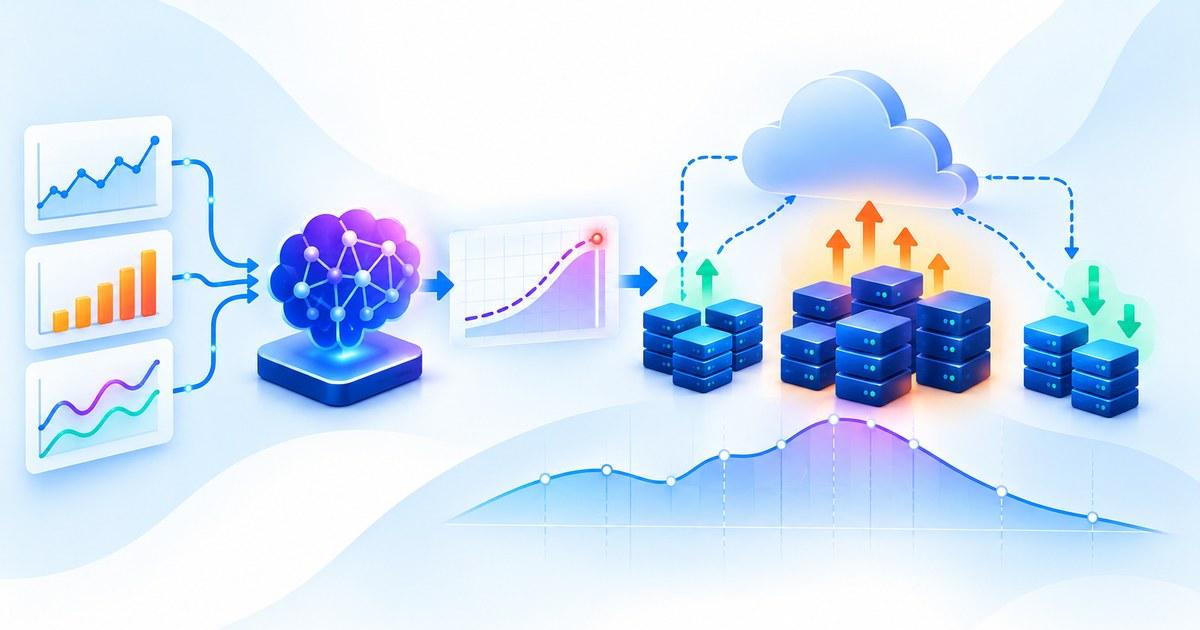
A practical implementation may combine scheduled retraining with event-driven evaluation, allowing the system to maintain a regular maintenance cycle while responding more quickly to meaningful changes in production conditions. For example, a demand forecasting system could retrain weekly using recent observations but initiate an additional evaluation when prediction errors remain unusually high across several consecutive periods, ensuring that the response is driven by evidence rather than a single noisy measurement. By separating the signals that trigger investigation from the criteria that authorize a new model release, engineering teams can make adaptation more responsive without allowing unstable monitoring data to generate unnecessary deployments.
Online Learning and Incremental Updates for Continuously Arriving Data
Online learning enables certain machine learning models to update their parameters incrementally as new observations become available, rather than requiring a complete training run whenever additional data arrives. This approach can be useful for applications such as recommendation systems, transaction monitoring, and adaptive ranking, where user interactions or operational events continuously generate information that may improve future predictions. Depending on the algorithm, an update may incorporate one observation or a small batch of observations, allowing the model to respond to recent data while reducing the computational expense associated with repeatedly processing the entire historical dataset.
Incremental learning nevertheless requires careful handling of labels, update order, data quality, and model evaluation, because newly observed inputs do not always arrive with the outcomes needed to determine whether previous predictions were correct. A fraud detection model, for instance, may receive transaction information immediately but learn whether a transaction was fraudulent only after a later investigation, creating a delay between observing an event and receiving a reliable training label. Engineering teams must therefore define how delayed feedback is associated with previous predictions and how updates are performed when labels arrive out of order, preventing the learning process from incorporating incorrect or incomplete information.
Continuous updates can also introduce challenges when recent observations are noisy, biased, or unrepresentative of the broader environment, especially if model parameters change before sufficient evidence is available to distinguish a genuine new pattern from temporary variation. Systems may address these risks through controlled update batches, validation checks, bounded update frequencies, and periodic evaluations against stable reference datasets, while maintaining the ability to restore an earlier model when performance deteriorates. The principles discussed in “Online Machine Learning: How Models Learn From Data as It Arrives” provide useful context for understanding these approaches, particularly the trade-off between incorporating recent information quickly and maintaining predictable model behavior.
Selecting Between Model Replacement, Fine-Tuning, and Adaptive Ensembles
The appropriate adaptation strategy depends on how the environment has changed, the architecture of the existing model, the availability of new training data, and the operational consequences of modifying production predictions. When the existing model remains suitable but needs to incorporate more representative observations, retraining or fine-tuning may be sufficient, provided the selected learning method supports the required update process and the new data retains enough quality and diversity to support reliable generalization. If the original model's assumptions or feature relationships have changed substantially, however, replacing it with a newly trained model or revisiting the underlying feature design may offer a better solution than repeatedly adjusting the existing parameters.
Fine-tuning can be useful when an existing model provides a strong starting point and new data introduces additional patterns within the scope of its learned representations, allowing the system to adapt without rebuilding every component from scratch. However, aggressive fine-tuning on a narrow recent dataset can cause the model to forget useful historical patterns or overfit to temporary conditions, making representative training data, validation procedures, and appropriate regularization important considerations. Complete model replacement may be preferable when a major change in the task, data-generating process, or feature representation makes the existing model unsuitable, although the replacement must still demonstrate improved performance under realistic evaluation conditions before it is deployed.
Adaptive ensembles provide another approach by combining multiple models or adjusting their relative contributions as workload characteristics evolve. For example, a forecasting system might combine a model suited to recurring seasonal patterns with another that responds more effectively to recent trends, using validated selection or weighting mechanisms to determine which predictions should receive greater influence under current conditions. While ensembles can improve robustness when different models capture complementary patterns, they also introduce greater computational costs and additional monitoring requirements, making the choice between incremental updates, retraining, replacement, and model combination dependent on measurable benefits rather than on algorithmic complexity alone.
Key Takeaway
Adaptive ML systems can incorporate new information through scheduled retraining, performance-triggered updates, online learning, fine-tuning, model replacement, or adaptive ensembles, with each approach offering different trade-offs in responsiveness, complexity, and computational cost. The appropriate strategy depends on how quickly the environment changes, whether reliable feedback is available, and how much risk the application can tolerate when model behavior changes. By validating updates against relevant performance criteria and maintaining controlled deployment and rollback processes, engineering teams can make production models more responsive to evolving conditions while preserving reliability and predictable operation.
Section 3: Designing the Architecture of an Adaptive ML System
Building Production Telemetry and Drift Detection Pipelines
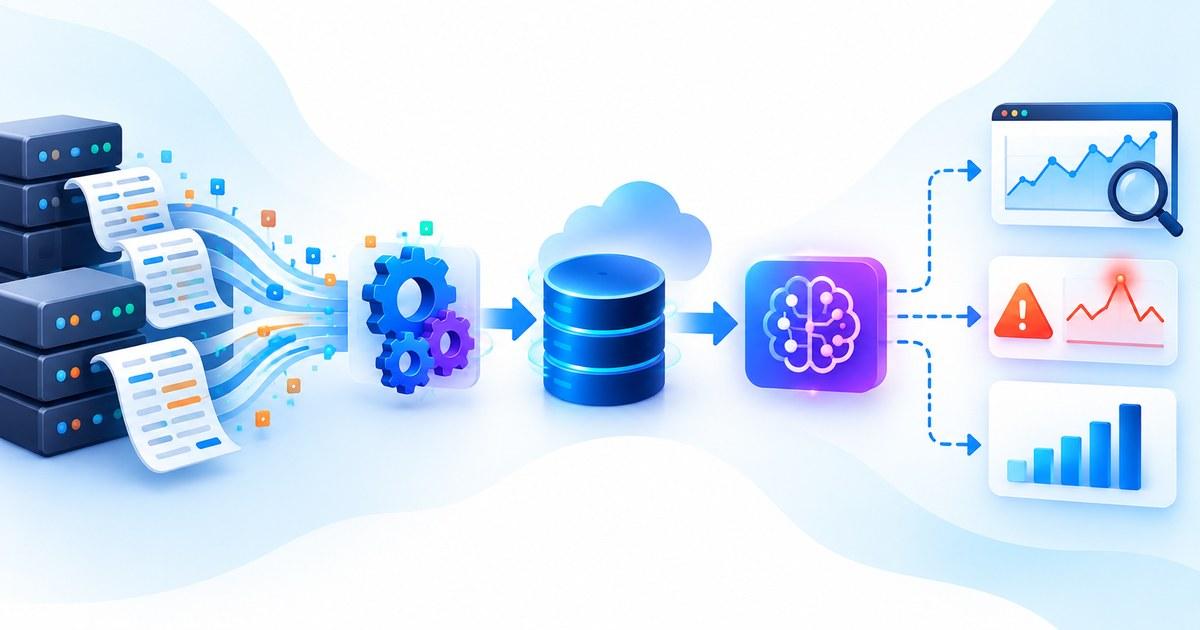
An adaptive ML system requires a production telemetry architecture that continuously captures the information needed to understand how incoming data, model predictions, and application outcomes evolve over time. Unlike a conventional deployment that primarily monitors infrastructure availability and inference latency, an adaptive system must also track feature distributions, prediction patterns, data quality, and the relationship between model outputs and observed outcomes. Engineering teams can collect these signals through application instrumentation, event streams, model-serving logs, and data pipeline monitoring, creating a consistent operational record that supports both immediate incident investigation and longer-term model evaluation.
Drift detection pipelines transform these observations into indicators that help identify when the production environment differs meaningfully from the conditions represented by the model's reference data. Statistical techniques can compare feature distributions, measure changes in categorical frequencies, or evaluate differences between recent observations and historical baselines, while performance monitoring can track the accuracy or business effectiveness of predictions once reliable labels become available. Because statistical differences alone do not establish that a model has become less useful, drift signals should generally initiate investigation or additional evaluation rather than automatically forcing a retraining operation whenever a threshold is crossed.
The architecture should also preserve enough context to explain when a change occurred, which model version was active, and which features or application components were involved, allowing engineers to connect emerging data patterns with operational events such as deployments, product changes, or upstream pipeline modifications. By combining drift indicators with service health metrics, feature-quality checks, and available outcome measurements, teams can distinguish environmental changes from ingestion failures and identify situations that genuinely require model adaptation instead of conventional engineering maintenance.
Connecting Predictions With Ground Truth and Feedback Signals
Adaptive ML systems require mechanisms for connecting production predictions with the actual outcomes those predictions were intended to estimate, because feedback provides the evidence needed to determine whether model behavior remains effective under changing conditions. When a model estimates customer churn, for example, the system must eventually associate its predictions with subsequent customer activity to evaluate whether the expected outcomes occurred, while a fraud detection model may depend on investigation results or confirmed disputes that become available considerably later than the original transaction. Establishing these connections requires reliable identifiers, event timestamps, prediction records, and outcome-processing pipelines that preserve the relationship between the original inference request and the eventual result.
Feedback does not always arrive immediately or represent an unbiased view of the environment, making its interpretation an important architectural concern. Some systems receive explicit outcomes such as verified fraud or completed purchases, whereas others rely on indirect signals such as clicks, engagement, or human decisions that may themselves be influenced by the model's recommendations. A recommendation engine that prioritizes particular products can generate more interactions with those products, creating a feedback loop in which the model increasingly observes the behavior encouraged by its own previous predictions rather than an independent representation of customer preferences. The issues explored in “The Challenge of Feedback Loops in Production Machine Learning” are particularly relevant when designing these pipelines, because feedback must be evaluated for selection bias, delayed outcomes, and the possibility that model decisions influence the data used for future learning.
Automating Model Evaluation, Retraining, and Version Management
Once production monitoring identifies a potential need for adaptation and sufficient new data becomes available, an adaptive ML architecture can initiate a controlled workflow for preparing training datasets, generating candidate models, and evaluating whether an update should be released. Automation helps coordinate these steps by connecting data validation, feature generation, training jobs, evaluation pipelines, and model registries, reducing the manual effort required to move from an observed performance problem to a tested candidate solution. However, the decision to release a new model should remain dependent on defined acceptance criteria rather than on the successful completion of the training process, since a candidate can train successfully while performing worse than the currently deployed model.
Model evaluation should compare the candidate with the production baseline using representative datasets, relevant task metrics, and any operational constraints that affect its suitability for deployment. A classification model may need to satisfy accuracy, precision, recall, or calibration requirements, while a demand forecasting model may need to demonstrate lower forecast error across both typical workloads and important peak periods. The evaluation workflow should also check for regressions across relevant user groups, data segments, or operating conditions when those differences matter to the application, helping teams avoid updates that improve aggregate performance while introducing unacceptable failures in particular contexts.
Version management provides the traceability required to understand which model was trained from which data, which evaluation results justified its release, and which configuration was active when a production prediction was generated. A model registry can store candidate artifacts alongside metadata describing training datasets, feature definitions, code revisions, and validation results, supporting reproducible releases and controlled rollback when a new version performs unexpectedly after deployment. By connecting automated retraining with approval criteria, staged releases, and version-aware monitoring, engineering teams can adapt models more efficiently while retaining control over when and how changes reach production users.
Key Takeaway
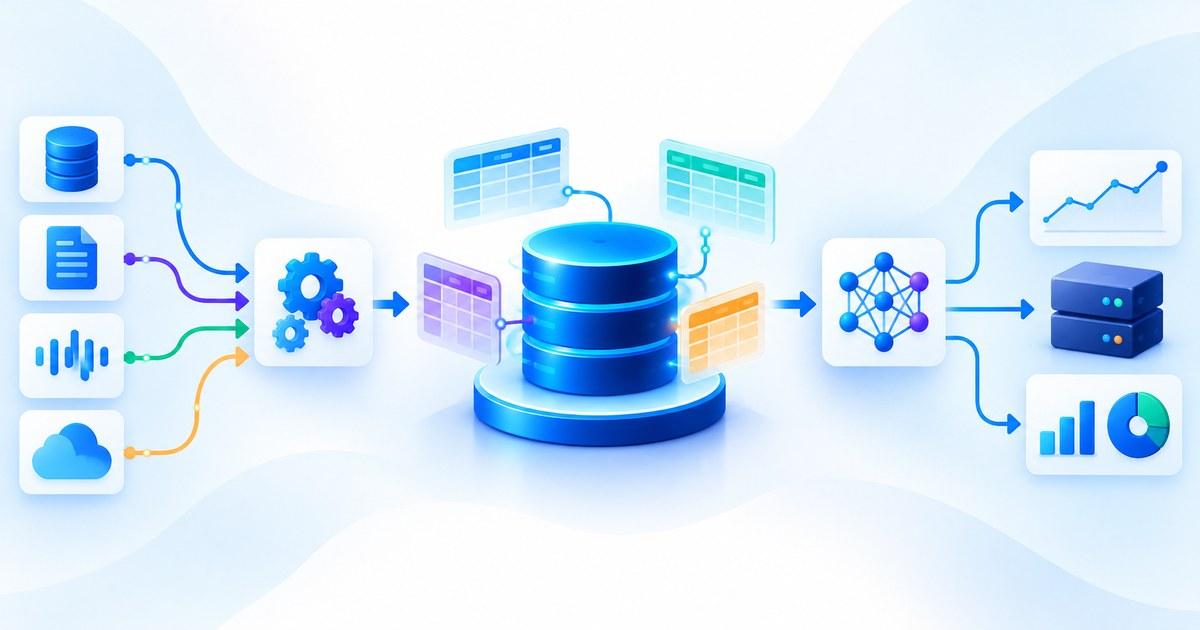
A production-ready adaptive ML architecture connects telemetry and drift detection with reliable feedback collection, automated model evaluation, version management, feature pipelines, and model-serving infrastructure. These components allow engineering teams to detect meaningful environmental changes, determine whether adaptation is justified, generate and validate candidate models, and release updates through controlled deployment processes. By preserving feedback quality, feature compatibility, and rollback capabilities throughout the workflow, teams can build systems that evolve with changing conditions without allowing automated learning to undermine production reliability.
Section 4: Operating Adaptive ML Systems Safely in Production
Validating Model Updates Before Releasing Them to Users
Operating adaptive ML systems safely requires engineering teams to validate every significant model update before it influences production decisions, because a model that responds quickly to environmental changes can still introduce regressions if its new parameters are learned from incomplete, biased, or unrepresentative data. Although automated retraining can reduce the time between detecting a performance problem and producing a candidate model, successful training does not guarantee that the updated model will generalize to future observations or satisfy the application's operational requirements. Teams should therefore compare candidate models against the currently deployed version using representative evaluation datasets, task-specific metrics, and realistic workload conditions before determining whether an update is suitable for release.
Validation should also account for changes in data distributions and business requirements, since a candidate model may improve overall accuracy while producing unacceptable results for particular user segments, transaction categories, or operating conditions. For example, an adaptive fraud detection model might improve its ability to identify a newly emerging fraud pattern while incorrectly flagging more legitimate transactions, requiring engineers to evaluate both detection effectiveness and the operational cost of false positives. By defining acceptance criteria that reflect the application's actual decision requirements, teams can prevent automated adaptation from optimizing a narrow statistical metric at the expense of broader business outcomes.
Controlled deployment strategies provide additional protection when evaluation results justify releasing a candidate model but its behavior under live conditions remains uncertain. Shadow deployment allows engineers to compare candidate predictions with those of the existing model without immediately using the candidate to influence user-facing decisions, while canary releases introduce the new version to a limited portion of production traffic before broader rollout. These techniques, combined with automated regression checks and explicit rollback criteria, help teams determine whether an adaptive update remains reliable under real operating conditions without exposing the entire application to an unvalidated change.
Preventing Feedback Loops, Data Contamination, and Unstable Adaptation
Adaptive systems can introduce new risks when the predictions they generate influence the data subsequently used to evaluate or retrain the same models, creating feedback loops that reinforce existing behavior rather than reveal how the environment is changing independently. A recommendation system that repeatedly promotes products predicted to attract engagement may generate more interactions with those products simply because users see them more often, causing the model to interpret its own previous decisions as evidence that its recommendations were inherently superior. Without appropriate controls, this process can reduce exposure to alternative products, amplify existing biases, and gradually narrow the range of information available to future model updates.
Data contamination creates another risk when training pipelines incorporate information that would not have been available at the original prediction time, improperly associate labels with observations, or mix evaluation data into the training process. These problems can make an adaptive model appear to improve during offline evaluation while delivering weaker performance in production, particularly when new data arrives continuously from multiple systems with different processing delays. Engineering teams should preserve event timestamps, prediction records, data provenance, and clear separation between training and evaluation datasets, while validating delayed labels and excluding information that would introduce future knowledge into historical training examples.
Adaptation can also become unstable when models update too frequently in response to noisy signals or short-lived changes, causing their behavior to fluctuate before sufficient evidence exists to justify each adjustment. Teams can reduce this risk through minimum evidence requirements, controlled update frequencies, validation windows, bounded parameter changes where appropriate, and explicit conditions for promoting candidate models into production. The failure-prevention practices discussed in “Failure Modes of Modern AI Systems and How Engineers Prevent Them” are relevant because reliable adaptation depends on controlling the interactions between data, model updates, deployment decisions, and downstream application behavior rather than assuming that continuous learning automatically improves system performance.
Monitoring Prediction Quality, Reliability, and Business Impact
Production monitoring for adaptive ML systems must connect infrastructure health with predictive performance and business outcomes, because a model can remain available and return valid responses while gradually becoming less useful under changing conditions. Conventional observability metrics such as latency, throughput, error rates, resource utilization, and request failures help identify operational problems, while model-oriented indicators such as feature distributions, prediction confidence, calibration, and task-specific performance provide evidence about the quality of the decisions being generated. Combining these signals allows engineers to distinguish infrastructure failures from input-data problems, changing model behavior, and genuine deterioration in predictive effectiveness.
Monitoring strategies must also account for the delay between predictions and the outcomes needed to evaluate them, since some applications provide immediate feedback while others require days or weeks before reliable labels become available. A classification model may produce predictions continuously, for example, but the final outcome may depend on a later investigation, customer response, or completed business process, making immediate performance estimates incomplete. During this interval, teams can track data quality, changes in prediction distributions, early operational indicators, and deviations from established baselines, while clearly distinguishing these warning signals from confirmed evidence of degraded model performance.
Business-level monitoring helps determine whether the adaptive system improves the outcomes for which it was deployed, rather than simply reducing statistical prediction error. Depending on the application, relevant measures may include fraud losses, customer retention, recommendation engagement, forecast accuracy, service response time, or the cost of incorrect decisions, with the selected metrics aligned to the actual operational objectives. By comparing these outcomes with an appropriate baseline and associating changes with model versions, feature updates, and environmental events, engineering teams can determine whether adaptation creates measurable value and whether further changes are justified.
Key Takeaway
Operating adaptive ML systems safely requires validated model releases, controls against feedback loops and data contamination, continuous monitoring of predictive and business outcomes, and dependable rollback and governance mechanisms. By treating every model update as a production change with measurable acceptance criteria, traceable dependencies, and explicit operational safeguards, engineering teams can respond to changing environments without allowing automatic adaptation to undermine reliability. The objective is to make models responsive enough to remain useful as conditions evolve while preserving the stability, accountability, and cost discipline expected of production software systems.
Conclusion: Building Machine Learning Systems That Evolve With Their Environment
Adaptive ML systems represent an important evolution in production machine learning because they recognize that the conditions under which models operate rarely remain constant throughout their lifecycle. Changes in customer behavior, data distributions, business requirements, and external environments can gradually weaken the relationships learned during training, making a previously reliable model less effective even when its infrastructure continues functioning normally. Maintaining model quality therefore requires engineering teams to move beyond one-time deployment toward continuous observation, evidence-based evaluation, and controlled adaptation as new information becomes available.
Building an effective adaptive ML system requires coordinated mechanisms for monitoring production data, detecting meaningful changes, collecting feedback, evaluating candidate models, and managing deployment decisions. Scheduled retraining can provide a predictable maintenance strategy, while performance-triggered updates and online learning can help systems respond more quickly when their operating conditions change. The appropriate approach depends on the speed of environmental change, the availability of trustworthy labels, the computational cost of updating models, and the consequences of making incorrect predictions, making it essential to select adaptation strategies according to measurable operational requirements rather than assuming that continuous learning is always preferable.
Production architecture plays an equally important role because adaptation involves more than changing model parameters. Telemetry pipelines, feature transformations, feedback collection, model registries, evaluation workflows, and inference services must work together to preserve compatibility between training and production environments. Reliable feature definitions, traceable model versions, representative evaluation datasets, and controlled deployment mechanisms help ensure that an updated model receives valid inputs and behaves as expected under realistic conditions. Without these supporting components, automated retraining can amplify data-quality problems, introduce unstable model behavior, or make production incidents more difficult to investigate.
Safety and governance become particularly important when models update frequently or influence consequential business decisions. Feedback loops can reinforce existing biases, delayed or inaccurate labels can contaminate new training datasets, and excessive adaptation can cause models to react to temporary fluctuations instead of genuine environmental changes. Engineering teams should therefore validate candidate models before deployment, monitor prediction quality alongside infrastructure health and business outcomes, maintain rollback mechanisms, and establish clear criteria for determining when automated adaptation is permitted or when additional human review is necessary.
The long-term value of adaptive ML systems ultimately depends on whether their ability to respond to changing conditions produces measurable improvements in reliability, predictive performance, and business outcomes. Not every environmental change requires retraining, and some problems are better addressed through data pipeline corrections, feature updates, recalibration, or adjustments to application logic. By distinguishing these possibilities and selecting the least complex intervention that resolves the underlying problem, software and ML engineers can build systems that remain responsive without introducing unnecessary computational expense or operational risk. The objective is not to make models change continuously, but to ensure that they evolve when evidence demonstrates that adaptation is necessary and beneficial.
Frequently Asked Questions
1. What Is an Adaptive ML System?
An adaptive machine learning system is a production system designed to respond to changing data, user behavior, and operating conditions by monitoring its performance and updating relevant components when necessary. Depending on the application, adaptation may involve retraining a model, updating parameters incrementally, recalibrating predictions, changing feature transformations, or replacing an outdated model with a validated alternative.
2. How Are Adaptive ML Systems Different From Traditional Machine Learning Systems?
Traditional ML deployments often use a model trained on a historical dataset that remains unchanged until an engineer initiates a new training or deployment cycle, whereas adaptive systems establish mechanisms for detecting changing conditions and responding through controlled updates. The primary difference lies in the lifecycle management and feedback architecture rather than in a particular algorithm, since an adaptive system may still use periodic retraining while monitoring production conditions to determine whether additional intervention is necessary.
3. What Is the Difference Between Data Drift and Concept Drift?
Data drift occurs when the distribution or characteristics of incoming production data change relative to a reference dataset, while concept drift occurs when the relationship between input features and the target outcome changes over time. These phenomena can occur independently or together, so engineering teams should examine input distributions, prediction behavior, and available outcome measurements before determining whether a model requires adaptation.
4. Why Do Machine Learning Models Become Less Reliable Over Time?
Models may become less reliable when customer preferences, transaction patterns, application behavior, business rules, or external conditions change the relationships on which their original training was based. Changes to data pipelines and feature calculations can also produce incompatible or misleading inputs, making it important to distinguish genuine changes in predictive relationships from data-quality failures and conventional software defects.
5. What Is the Difference Between Scheduled Retraining and Adaptive Retraining?
Scheduled retraining updates a model according to a predefined timetable, such as daily, weekly, or monthly, regardless of whether a significant performance change has been detected. Adaptive or event-triggered retraining uses monitoring evidence, such as sustained prediction degradation or meaningful changes in production conditions, to initiate additional evaluation or training, although the resulting candidate should still pass defined validation criteria before deployment.
6. What Is Online Learning in Adaptive ML Systems?
Online learning allows supported algorithms to incorporate new observations incrementally rather than requiring a complete retraining process each time additional data becomes available. This approach can support applications with continuously arriving information, such as recommendation systems and transaction monitoring, but it requires reliable update logic, appropriate handling of delayed labels, and safeguards against noisy or biased observations that could destabilize model behavior.
7. Can Adaptive ML Systems Update Themselves Automatically?
Yes, adaptive ML systems can automate data collection, drift monitoring, retraining, evaluation, and model deployment, provided that the architecture defines explicit conditions and safeguards for each stage. Fully automated updates are most appropriate when the validation criteria, rollback procedures, and operational risks are well understood, while high-impact applications may require additional approval before a candidate model can influence production decisions.
8. How Do Adaptive ML Systems Detect When a Model Needs Updating?
Adaptive systems can combine statistical drift indicators, feature-quality checks, prediction-distribution monitoring, and outcome-based performance measurements to identify conditions that warrant investigation. Because a change in input data does not automatically indicate degraded prediction quality, reliable implementations use these signals as evidence for evaluation and apply retraining or other interventions only when the observed problem justifies a change.
9. How Do Adaptive ML Systems Handle Delayed Feedback?
Systems that receive labels after predictions have been generated must associate eventual outcomes with the corresponding prediction records using reliable identifiers and timestamps, allowing model quality to be evaluated when trustworthy feedback becomes available. While waiting for labels, teams can monitor feature distributions, prediction patterns, data quality, and operational indicators as early warning signals, while avoiding the assumption that these indicators alone establish whether the model remains accurate.
10. What Role Do Feedback Loops Play in Adaptive Machine Learning?
Feedback loops connect production predictions and observed outcomes with future model evaluation and learning, allowing an ML system to incorporate evidence about how its decisions perform in the real world. However, when predictions influence the behavior being measured, the collected data can reinforce existing model preferences or biases, making it important to account for selection effects, exposure patterns, delayed outcomes, and the reliability of feedback before using it for subsequent updates.
11. How Can Engineers Prevent Adaptive Models From Becoming Unstable?
Engineers can reduce instability by requiring sufficient evidence before updating a model, limiting unnecessary update frequency, validating candidate versions against representative datasets, and monitoring performance after deployment. Maintaining a known-good model version, using staged releases, and implementing rollback conditions also helps prevent noisy feedback or temporary workload changes from introducing persistent degradation into production systems.
12. How Should an Adaptive ML System Be Designed for Production?
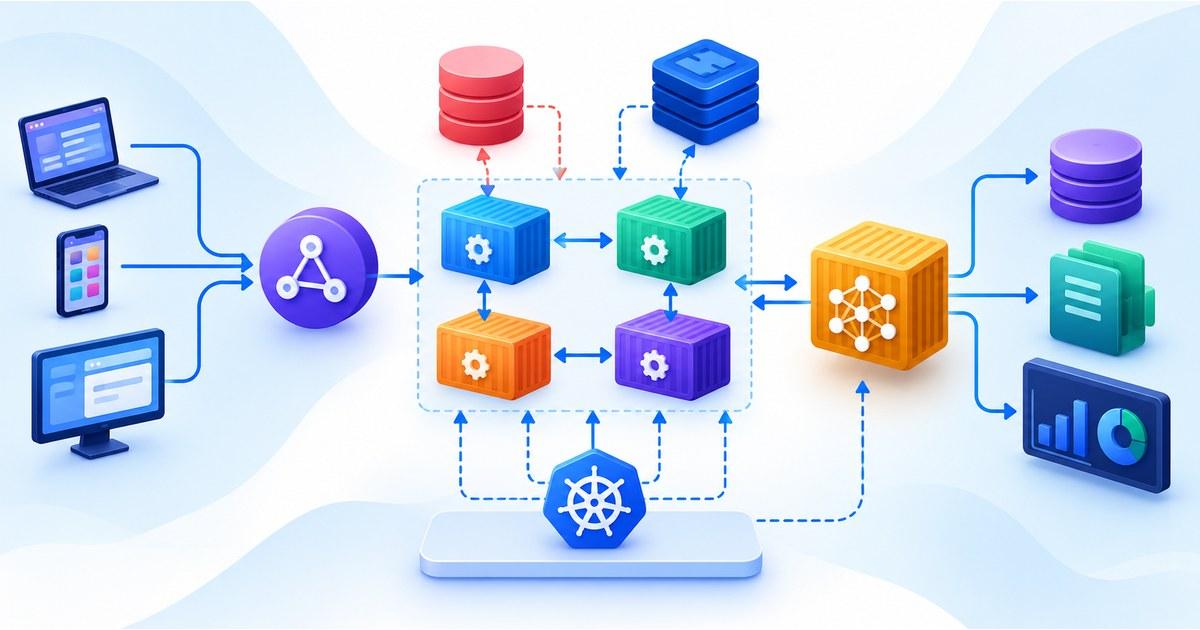
A production adaptive ML architecture typically connects telemetry collection, feature pipelines, drift monitoring, feedback processing, model training, evaluation, version management, and model-serving infrastructure through defined interfaces. This architecture should preserve data provenance and feature compatibility, validate candidate models before release, and maintain monitoring and rollback mechanisms so that adaptation remains traceable, controlled, and compatible with the application's reliability requirements.
13. How Do Adaptive ML Systems Manage Model Versioning and Deployment?
Adaptive systems should record model artifacts alongside relevant training data references, feature definitions, code revisions, configuration, and evaluation results, allowing engineers to understand how each version was produced and why it was released. Controlled deployment techniques such as shadow testing and canary releases help assess candidate behavior under realistic conditions, while version-aware monitoring and rollback mechanisms make it possible to recover when a new model performs worse than the existing production version.
14. What Are the Main Challenges of Building Adaptive ML Systems?
The main challenges include detecting meaningful environmental changes, obtaining trustworthy feedback, preventing data leakage, maintaining feature consistency, selecting appropriate adaptation strategies, and validating updates without compromising production reliability. Teams must also manage the computational cost of frequent retraining, the risk of unstable model behavior, and the governance requirements associated with automated decisions, making disciplined operational design as important as the underlying learning algorithm.
15. When Should a Company Invest in Adaptive ML Systems?
Adaptive ML systems are particularly valuable when the environment changes frequently, the consequences of stale predictions are significant, and new information becomes available that can improve future model behavior. Before investing in continuous learning infrastructure, companies should establish that changing conditions are genuinely affecting model effectiveness and determine whether simpler approaches, such as scheduled retraining, feature corrections, or recalibration, can address the problem with lower cost and operational complexity.