Section 1: Why Debugging Machine Learning Systems Is Different From Debugging Traditional Software
ML Systems Can Fail Without Producing Conventional Errors
Traditional software debugging often begins with an observable failure, such as an exception, an incorrect response, a failed database query, or a violation of an explicitly defined business rule, allowing engineers to trace the behavior back to the relevant code path. Machine-learning systems introduce a different challenge because a model can execute successfully, return a valid prediction, and satisfy every API contract while producing an incorrect or misleading result. The inference service may appear healthy from an infrastructure perspective even when the model's predictive behavior has deteriorated, making it necessary to investigate statistical quality alongside conventional software correctness.
Consider a recommendation service that suddenly starts presenting irrelevant products despite returning successful responses within its expected latency range. The cause might not be an error in the ranking algorithm itself, but a recent data pipeline change that altered feature values, an upstream service that began returning stale attributes, or a newly deployed model that behaves differently for a particular user segment. Because each component can remain technically operational, engineers need to examine the full prediction path rather than assuming that successful execution proves the feature is functioning correctly.
This distinction changes how debugging evidence is collected and interpreted because an ML failure may appear as a gradual decline in precision, an unexpected shift in prediction distributions, or degraded performance for a particular category of inputs instead of a clear application exception. Effective debugging therefore requires both conventional observability and model-aware measurements, allowing engineers to determine whether the problem originates in application logic, data preparation, model behavior, or production conditions.
Correctness Is Statistical Rather Than Exclusively Deterministic
Machine-learning models learn patterns from training data, meaning that their outputs represent learned estimates rather than guaranteed outcomes for every input. A classification model might assign a high probability to the wrong class, a ranking model might place a less relevant item above a better alternative, and a forecasting model might produce a large prediction error even when its implementation and serving infrastructure behave as intended. Debugging these systems requires engineers to distinguish between a software defect, a legitimate limitation of the model, and an unacceptable decline in predictive performance.
The appropriate investigation depends on the task because a prediction that appears incorrect in isolation may still be consistent with the model's overall performance characteristics. Engineers need to examine representative evaluation datasets, task-specific metrics, error distributions, confidence scores, and performance across relevant input segments to determine whether a failure reflects a broader pattern or an isolated mistake. A classification model, for example, might maintain acceptable overall accuracy while experiencing a substantial increase in false negatives for a less common class, making aggregate measurements insufficient for identifying the actual problem.
Debugging also becomes more complicated when model outputs change after retraining because a new artifact may produce different predictions even when the application code and API interface remain unchanged. Instead of requiring every prediction to match the previous model exactly, engineers need to establish behavioral expectations through regression datasets, quality thresholds, subgroup analysis, and controlled comparisons between model versions. These practices help distinguish acceptable changes in predictive behavior from regressions that violate the application's requirements.
Failures Can Originate Anywhere Along the Data-to-Prediction Pipeline
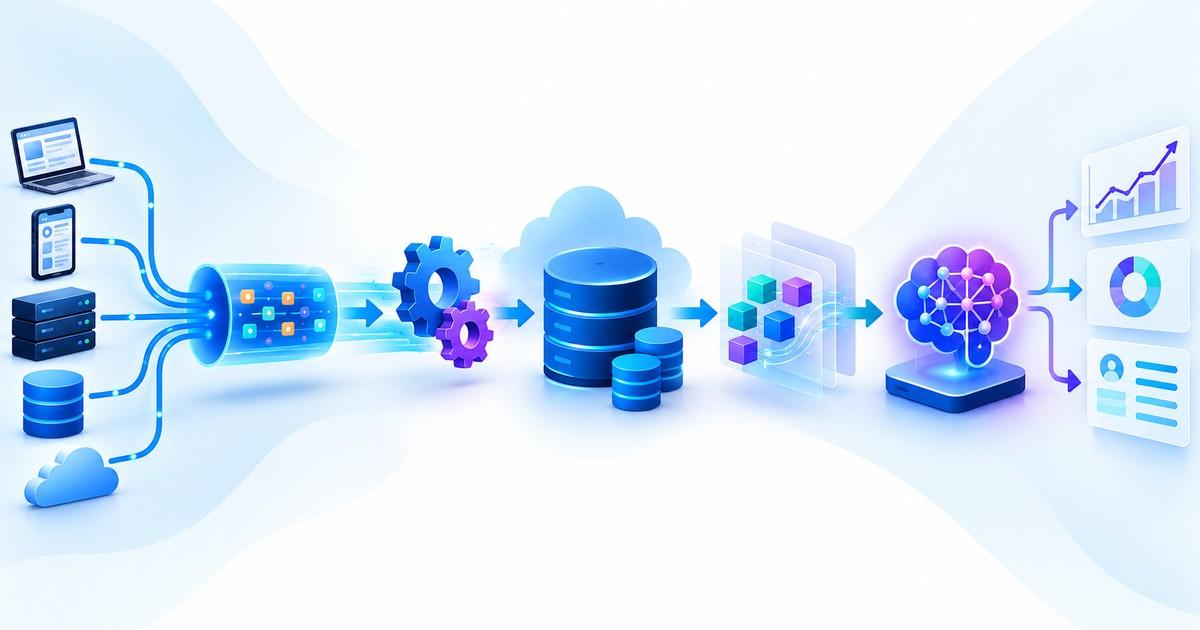
An ML system contains multiple interconnected stages, including event collection, data validation, feature engineering, dataset construction, model training, artifact deployment, inference, and downstream decision processing, each of which can introduce defects that affect the final prediction. Incorrect labels can teach a model misleading relationships, data leakage can create unrealistically strong evaluation results, and inconsistent feature transformations can cause production inputs to differ from those used during training. Because these failures often propagate through several components before becoming visible, debugging requires engineers to trace the prediction back through the complete pipeline rather than examining the model alone.
Feature engineering is a particularly important source of subtle defects because a feature can have the correct data type while representing the wrong information. A transaction-frequency feature might use a different aggregation window in production than it did during training, or a timestamp transformation might interpret time zones inconsistently, producing values that the model was never trained to interpret. Such defects can change prediction quality without triggering an exception, making feature-level validation and training-serving consistency checks essential debugging tools.
Engineers also need to account for changes in upstream systems because application releases, database migrations, event-schema modifications, and streaming pipeline failures can alter the information reaching a model. These dependencies make data lineage, versioned transformations, and reproducible datasets important because they allow investigators to identify which source records and processing steps contributed to an unexpected result. The principles discussed in “The Journey of a Dataset: From Raw Data to Production ML” are particularly relevant because tracing data through its lifecycle helps separate input-quality problems from defects in the model or inference service.
Key Takeaway
Debugging ML systems requires engineers to investigate more than code execution because a model can return technically valid predictions while data quality, feature consistency, model behavior, or production conditions have made those predictions unreliable. The most effective approach combines conventional software debugging with statistical evaluation, feature-level inspection, reproducible experiments, and end-to-end observability, allowing teams to identify whether a failure originates in the data, model, serving infrastructure, or changing environment before applying a targeted fix.
Section 2: Finding Data, Feature, and Training Pipeline Failures
Investigate Data Quality Before Changing the Model
When an ML model begins producing unexpected predictions, engineers should first establish whether the inputs and training data are correct before modifying the algorithm or retraining the model. Missing values, duplicate records, incorrect labels, inconsistent timestamps, unexpected categorical values, and changes in upstream schemas can all alter model behavior while allowing the training or inference pipeline to complete successfully. Investigating data quality first helps distinguish defects in the model from problems introduced earlier in the data lifecycle, reducing the risk of treating a faulty input pipeline with unnecessary model complexity.
Data debugging should begin by comparing the current dataset with a known-good reference, examining record counts, field distributions, null rates, duplicate frequencies, numerical ranges, and the relationships between relevant features. If a classification model suddenly produces more positive predictions than expected, for example, engineers can inspect whether a categorical field changed its encoding, whether a numerical feature contains an unexpected default value, or whether the incoming population differs significantly from the evaluation dataset. These comparisons provide evidence about whether the observed behavior reflects a data-processing defect, a legitimate change in production inputs, or a model limitation that requires further investigation.
Trace Feature Engineering and Preprocessing Errors
Feature engineering introduces another category of debugging challenges because transformations can change the meaning of model inputs without altering their schemas or data types. A feature representing recent user activity might accidentally use a different time window, a numerical field might be normalized using incorrect statistics, or a categorical encoder might map a previously unseen value to an unintended representation. Such defects can cause substantial prediction changes even when the model artifact and inference service remain unchanged, making feature-level inspection essential when unexpected behavior appears after a pipeline or application update.
A systematic investigation should compare raw inputs with the intermediate feature representations generated at each processing stage, identifying where the values begin to diverge from expected behavior. Engineers can select representative examples, reproduce their transformations step by step, and verify that missing-value handling, scaling, encoding, aggregation, and ordering follow the intended specifications. Where possible, shared transformation logic and versioned feature definitions can reduce discrepancies between independently implemented training and serving pipelines, while automated tests can prevent known transformation defects from returning in later releases.
Temporal features require particular attention because their correctness depends on what information was available at the moment the prediction should have been made. A training pipeline that includes future events or post-outcome information can create data leakage, making evaluation performance appear substantially better than the model's achievable performance in production. Debugging this problem requires examining feature timestamps, target-construction logic, observation windows, and dataset splitting procedures to verify that the model receives only information legitimately available for each prediction.
Debug Training Pipelines, Labels, and Dataset Construction
Training pipeline failures can be difficult to diagnose because the resulting model may train normally and produce apparently reasonable metrics despite being based on an incorrectly constructed dataset. Bugs in joins, filtering conditions, sampling logic, label generation, train-test splits, or aggregation code can change which examples the model observes and which relationships it learns. Engineers should therefore inspect the dataset construction process alongside the model configuration, especially when a new training run produces unexpectedly strong or weak results compared with earlier versions.
Dataset comparisons can reveal whether the number of training examples changed unexpectedly, whether particular classes became underrepresented, or whether a preprocessing change altered the distribution of important features. A sudden improvement in validation performance should also be investigated carefully because accidental overlap between training and validation examples, target leakage, or duplicate records can create misleadingly strong results. “The Hidden Role of Baselines in Successful Machine Learning Projects” is relevant here because comparing the current model with a simple reference provides a useful way to identify suspicious results that may reflect data or evaluation defects rather than genuine learning improvements.
When investigating mislabeled examples or inconsistent sampling, engineers should preserve the provenance of the affected records so that the original source events, transformation steps, labeling decisions, and resulting training examples can be reconstructed. This traceability allows the team to determine whether the problem originated in the source data, a transformation, or the dataset assembly process, while preventing an isolated defect from being mistaken for a fundamental limitation of the modeling approach.
Key Takeaway
Debugging data and training pipeline failures requires engineers to trace unexpected model behavior backward through raw records, labels, feature transformations, dataset construction, and serving inputs before deciding whether the model itself needs to change. By comparing datasets against known-good references, testing transformation logic, checking temporal correctness, reproducing individual failures, and adding regression tests for confirmed defects, teams can identify the actual source of model problems instead of masking data-related failures with unnecessary retraining or architectural changes.
Section 3: Debugging Model Performance and Production Inference Failures
Use Error Analysis to Understand Why Predictions Fail
When a model produces unexpected predictions, engineers should begin by examining individual failures alongside aggregate evaluation metrics because overall performance can conceal systematic weaknesses affecting particular inputs or user segments. Comparing incorrect predictions with successful examples can reveal patterns involving specific feature ranges, rare categories, input complexity, or data quality, helping engineers determine whether the issue originates in the model's learned behavior or in the data supplied during inference. A classification model that performs well overall but repeatedly misses a particular class, for example, may require closer examination of class imbalance, decision thresholds, labeling quality, or features that fail to distinguish the affected examples.
Prediction distributions provide another useful debugging signal because unexpected changes in the frequency of predicted classes, probability scores, or risk categories can indicate a regression even when labeled outcomes are not immediately available. Engineers can compare these distributions across model versions, deployment periods, customer segments, and input categories to identify where the behavior begins to change, while reviewing confidence scores and calibration to determine whether the model's expressed certainty remains appropriate for its observed performance.
Compare Model Versions and Investigate Regression
Model regression can occur when a newly trained or deployed model performs worse than its predecessor on important examples, even when the overall evaluation metric appears similar or improved. Engineers should compare candidate and production models using the same evaluation datasets, feature definitions, and metrics, examining differences in aggregate quality, subgroup performance, prediction distributions, latency, and resource consumption to determine whether the new version introduces an unacceptable trade-off. This comparison is particularly important when retraining uses new data or modified preprocessing, because a change in predictions may reflect a legitimate update in learned behavior or an unintended defect introduced during dataset construction.
A reproducible regression investigation should preserve the relevant model artifacts, configuration, dataset version, and input examples so that engineers can rerun the evaluation and inspect where behavior diverges. When a candidate model produces a substantially different prediction for a previously stable example, comparing intermediate feature representations and model outputs can help identify whether the change originates in preprocessing, learned parameters, or a downstream decision threshold, while controlled rollout and rollback mechanisms reduce the risk of exposing users to a newly discovered regression.
Diagnose Drift and Changing Production Data
Production model performance can deteriorate when the data encountered after deployment differs from the assumptions established during training, making data drift and changing relationships between features and outcomes important areas of investigation. Engineers should compare current feature distributions with suitable historical or training baselines, checking changes in numerical ranges, category frequencies, missing-value rates, and other characteristics that may affect model behavior. However, a distribution change alone does not prove that predictive quality has declined, so engineers should connect drift indicators with available outcome labels, error patterns, and business metrics before concluding that retraining is necessary.
The principles described in “Machine Learning Under Distribution Shift: What Happens When the World Changes” are relevant because models can become less reliable as real-world conditions evolve even when their implementation remains unchanged. Debugging should therefore investigate whether a detected shift reflects legitimate changes in the population, an upstream pipeline defect, a new feature representation, or a meaningful change in the relationship between inputs and outcomes, allowing the team to select a targeted response rather than automatically retraining the model whenever its input distribution changes.
Key Takeaway
Debugging model and inference failures requires engineers to combine individual error analysis, prediction-distribution comparisons, model-version regression testing, drift investigation, and end-to-end performance tracing. By reproducing unexpected behavior, identifying where inputs or outputs begin to diverge, and evaluating corrective changes against measurable quality and operational requirements, teams can distinguish model limitations from data defects and infrastructure problems while preventing previously resolved failures from returning.
Section 4: Building a Repeatable ML Debugging and Observability Workflow
Establish a Systematic Process for Isolating ML Failures
Effective ML debugging requires a repeatable investigation process because changing several components simultaneously can make it difficult to determine which modification actually resolves a failure. Engineers should begin by defining the observed symptom, identifying the affected model version and input population, and determining whether the problem concerns predictive quality, data integrity, inference latency, or downstream application behavior. This initial classification helps narrow the investigation to the components most likely to explain the failure rather than immediately retraining the model or modifying the inference implementation.
The next step is to reproduce the problem using a representative input, the relevant model artifact, the original feature transformations, and a sufficiently similar execution environment. By comparing the resulting prediction with the expected behavior and inspecting intermediate outputs, engineers can isolate the stage where the observed result begins to diverge from the established baseline. When the failure cannot be reproduced locally, the investigation should compare production feature values, configuration, runtime dependencies, and model versions against the development environment to identify differences that may explain the discrepancy.
A disciplined investigation should also separate evidence from assumptions by recording which potential causes have been tested and what each experiment revealed, allowing the team to avoid repeating unsuccessful approaches or introducing unrelated changes before the underlying defect is understood. This process becomes particularly valuable when multiple factors can influence model behavior, including changing datasets, preprocessing logic, deployment configuration, inference hardware, and downstream decision thresholds.
Make ML Systems Observable and Reproducible
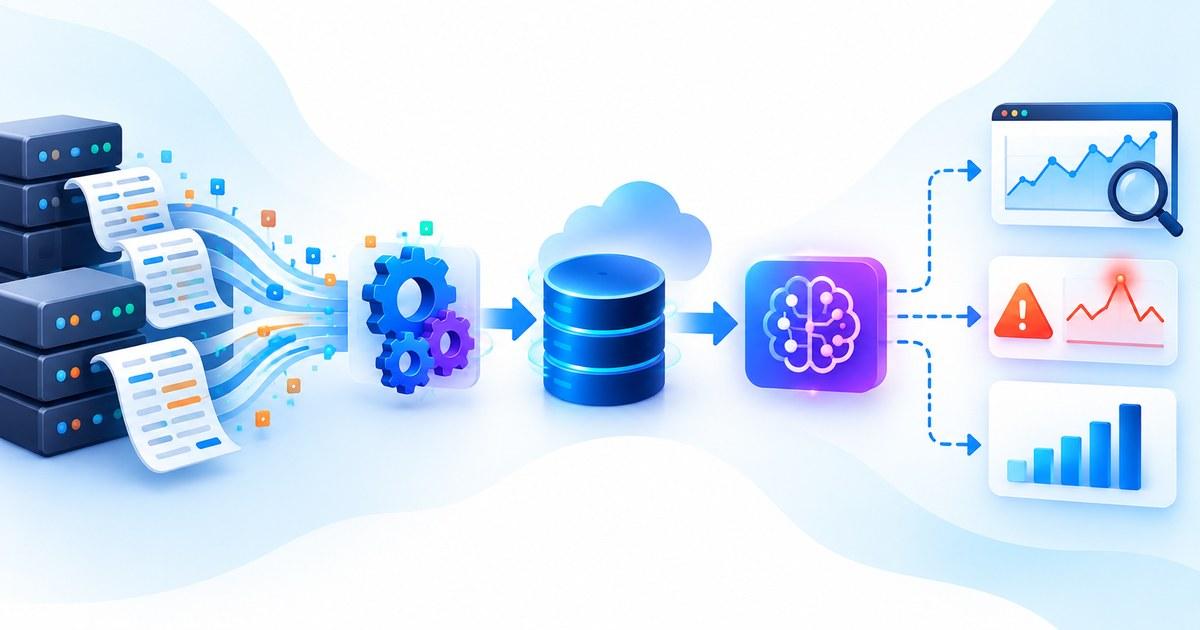
A repeatable debugging workflow depends on capturing enough information to reconstruct how important predictions were generated, making model lineage and inference observability essential components of production architecture. Engineers should track model identifiers, training-data versions, feature definitions, relevant configuration parameters, software dependencies, and deployment timestamps so that unexpected behavior can be associated with the exact artifacts and conditions involved. For individual inference requests, structured logs and traces can record safe references to input features, preprocessing outcomes, prediction metadata, latency measurements, and downstream decisions without unnecessarily exposing sensitive information.
Reproducibility also requires preserving the datasets and transformations used during training and evaluation, because a model-quality regression may originate from differences in the training examples rather than changes to the learning algorithm. Versioned datasets, transformation code, training configurations, and evaluation results allow engineers to compare model releases under consistent conditions, helping them distinguish genuine improvements from changes caused by different data samples or processing logic.
Convert Every Confirmed Failure Into a Regression Test
Once an ML failure has been identified and corrected, engineers should preserve a representative example or test condition that would reveal the same problem if it reappeared in a future release. Data validation tests can detect recurring schema or feature defects, preprocessing tests can prevent known transformation errors, and model regression suites can verify that important quality metrics remain within acceptable boundaries across candidate versions. This practice converts an individual debugging incident into a permanent improvement in the system's ability to detect similar problems earlier.
Regression testing needs to account for the probabilistic behavior of models because requiring every prediction to match an exact historical output can reject legitimate changes introduced by retraining or optimization. Engineers can instead compare task-specific metrics, prediction ranges, subgroup performance, calibration, and behavior on carefully selected examples, using deterministic assertions for stable software components and statistical acceptance criteria for the model itself. The testing principles in “ML Testing for Software Engineers: How to Test Systems That Don't Always Produce the Same Output” are particularly relevant because robust validation combines conventional software tests with statistical evaluation and data-quality controls.
Key Takeaway
A repeatable ML debugging workflow combines systematic failure isolation, reproducible artifacts, model-aware observability, regression testing, and controlled deployment practices to make unexpected behavior easier to diagnose and prevent. By recording investigation evidence, preserving the inputs and configurations associated with important failures, converting confirmed defects into automated tests, and linking production monitoring with release validation, engineers can reduce recurring incidents while making ML systems easier to understand, maintain, and improve.
Conclusion
Debugging machine-learning systems requires software engineers to investigate more than application code because failures can originate in data quality, feature transformations, training pipelines, model behavior, inference infrastructure, or changing production conditions. Unlike conventional software defects, which often produce explicit errors or deterministic failures, ML problems can remain hidden behind successful API responses while prediction quality gradually deteriorates. This makes systematic diagnosis, statistical evaluation, reproducibility, and model-aware observability essential parts of maintaining reliable production ML systems.
The most effective debugging process begins by identifying the nature of the failure before making changes. Engineers should distinguish between data-related problems, preprocessing inconsistencies, model-quality regressions, distribution shifts, and inference infrastructure issues, using representative examples and measurable evidence to narrow the investigation. Inspecting raw inputs, intermediate features, predictions, and downstream outcomes can reveal where behavior begins to diverge from expectations, preventing unnecessary retraining when the underlying issue originates elsewhere in the pipeline.
Data validation and feature consistency deserve particular attention because small processing defects can significantly affect predictions without generating conventional software errors. Incorrect labels, missing values, data leakage, inconsistent aggregation windows, and changes in categorical encoding can all undermine model performance, making versioned datasets, explicit feature contracts, automated validation, and training-serving consistency checks important safeguards. Preserving the lineage of data and transformations also allows engineers to reconstruct the conditions under which a model was trained or a prediction was generated.
Model debugging requires a combination of error analysis, regression testing, statistical evaluation, and production monitoring. Comparing model versions against representative datasets, examining performance across important user segments, tracking prediction distributions, and investigating drift can reveal problems that aggregate accuracy measurements might conceal. Engineers must also evaluate the inference infrastructure because queueing delays, memory pressure, feature retrieval failures, and hardware constraints can affect production behavior even when the model itself remains unchanged.
A repeatable debugging workflow becomes more effective when every confirmed failure contributes to better testing and observability. Reproducible artifacts, structured logs, distributed traces, model-version metadata, automated regression suites, and controlled deployment procedures help teams investigate incidents systematically and prevent previously resolved problems from returning. Shadow evaluations, canary releases, and rollback mechanisms further reduce the risk of introducing new failures when models or data pipelines are updated.
Ultimately, reliable ML debugging is a continuous engineering discipline that connects data quality, model evaluation, software testing, infrastructure observability, and production feedback. Engineers who use evidence to isolate failures, preserve reproducibility, and convert incidents into permanent improvements can build machine-learning systems that are easier to diagnose, safer to deploy, and more dependable as data, models, applications, and operating conditions evolve.
Frequently Asked Questions
1. Why is debugging machine-learning systems different from debugging traditional software?
Traditional software defects often produce explicit errors or incorrect outputs that can be traced to deterministic code paths, whereas ML systems can return successful responses while generating inaccurate predictions. Debugging therefore requires engineers to examine data quality, feature transformations, model behavior, evaluation metrics, and production conditions in addition to conventional application logs and infrastructure metrics.
2. What is the first step when an ML model starts producing incorrect predictions?
Engineers should first characterize the failure by identifying affected inputs, model versions, time periods, and relevant performance metrics before modifying the model. Comparing successful and unsuccessful examples can help determine whether the problem originates in the data, preprocessing, model behavior, inference infrastructure, or a change in production conditions.
3. How can engineers determine whether a problem comes from data or the model?
Engineers can compare current inputs and feature distributions against known-good datasets, inspect labels and preprocessing transformations, and reproduce the same predictions using a specific model artifact. If the inputs or intermediate features differ unexpectedly, the investigation should focus on the data pipeline, whereas consistently incorrect predictions from valid and correctly transformed inputs may indicate a model limitation or evaluation problem.
4. What is training-serving skew, and how can it be debugged?
Training-serving skew occurs when the transformations or feature definitions used during training differ from those applied during production inference. Engineers can diagnose it by passing representative raw inputs through both pipelines and comparing the resulting feature values, checking for differences in normalization, category encoding, missing-value handling, aggregation windows, timestamps, and feature ordering.
5. How does data leakage cause ML model failures?
Data leakage occurs when training or evaluation data contains information that would not legitimately be available when a production prediction is made. It can produce misleadingly strong offline metrics, causing engineers to deploy models that perform much worse in real-world conditions, so debugging should examine feature timestamps, target construction, dataset splitting, and potential overlap between training and evaluation examples.
6. How should engineers debug a model whose accuracy suddenly decreases?
Engineers should compare current performance with historical baselines, examine prediction and feature distributions, review recent data or model changes, and evaluate errors across important classes or user segments. This investigation helps distinguish changes in input distributions, label quality, feature processing, model behavior, and the evaluation process before deciding whether retraining or another corrective action is necessary.
7. What is model regression testing?
Model regression testing compares a new model version with an established reference to determine whether predictive behavior has improved, remained acceptable, or deteriorated. Testing can include task-specific metrics, subgroup performance, calibration, important edge cases, inference latency, and resource consumption, rather than requiring identical predictions for every input.
8. How can engineers reproduce an ML failure?
Reproducing an ML failure requires preserving the relevant input or a safe reference to it, model artifact, feature definitions, preprocessing configuration, software dependencies, and execution environment. Engineers can then replay the case, inspect intermediate transformations, and compare its outputs with expected behavior, helping isolate the defect instead of relying on incomplete recollections of a production incident.
9. What role does observability play in ML debugging?
Observability connects application behavior with model and data behavior, allowing engineers to investigate prediction failures using structured logs, traces, metrics, feature information, model versions, and available downstream outcomes. This evidence helps identify whether a problem originated in an upstream dependency, data transformation, inference runtime, model regression, or changing production conditions.
10. How can engineers debug data drift?
Engineers can compare production feature distributions, missing-value rates, category frequencies, and prediction patterns against appropriate historical or training baselines. A detected shift should then be investigated alongside available quality metrics and business outcomes because changing input distributions can indicate either legitimate environmental changes or conditions that negatively affect model performance.
11. How should engineers debug inference latency problems?
Engineers should measure the complete prediction path, including feature retrieval, preprocessing, model execution, serialization, network communication, queueing, and post-processing. Distributed traces and resource metrics can identify whether the bottleneck comes from the model runtime, upstream dependencies, memory pressure, concurrency, or infrastructure configuration, allowing the fix to target the actual source of latency.
12. Why can aggregate model metrics hide serious failures?
Aggregate metrics combine performance across many examples and can conceal degradation affecting a smaller but important category of inputs. Engineers should examine class-specific metrics, subgroup performance, error distributions, confidence behavior, and high-impact edge cases to identify problems that might be hidden by an acceptable overall accuracy or average error score.
13. What tools and practices help debug production ML systems?
Useful practices include structured logging, distributed tracing, dataset and model versioning, data validation, feature-level tests, reproducible evaluation, model monitoring, and automated regression suites. The specific tools depend on the architecture, but the key requirement is connecting predictions with the data, model artifacts, configurations, and infrastructure conditions that influenced their behavior.
14. How can engineers prevent the same ML failure from happening again?
After correcting a confirmed defect, engineers should convert the incident into an appropriate regression test, data validation rule, monitoring condition, or deployment safeguard. Preserving diagnostic evidence and documenting the failure mechanism helps teams detect similar problems earlier, while controlled releases and rollback procedures reduce the risk of reintroducing the issue through future model or pipeline changes.
15. What is the best overall approach to debugging machine-learning systems?
The most effective approach combines systematic failure isolation, reproducible experiments, data and feature validation, model-level error analysis, infrastructure tracing, and automated regression testing. By identifying the source of a failure before making changes, validating corrective actions against measurable requirements, and improving observability after each incident, engineers can reduce recurring problems and maintain more reliable ML systems throughout their production lifecycle.