
Section 1: Why Researchers Are Looking Beyond Traditional Transformers
The Strengths and Limitations of Transformer Architecture
Transformers became dominant because self-attention provides a flexible mechanism for modeling relationships between elements in a sequence. Unlike traditional recurrent networks, which process sequence elements through successive hidden-state updates, Transformers can process many positions in parallel during training.
The core self-attention operation uses three learned representations: queries, keys, and values. Given an input representation, the model projects it into these three spaces and calculates how strongly each query should attend to different keys.
The scaled dot-product attention operation is:
[
Attention(Q,K,V)=
softmax\left(\frac{QK^T}{\sqrt{d_k}}\right)V
]
Here, (Q) represents queries, (K) represents keys, (V) represents values, and (d_k) is the key dimension.
This mechanism allows each token to retrieve information from other positions in the sequence. It is especially useful when important relationships occur between distant elements.
For example, in a programming task, a variable may be declared hundreds of lines before it is used. Attention can establish a direct relationship between the declaration and its later usage. In a document-analysis task, a model may need to connect an instruction near the beginning of a document with a constraint described near the end.
However, standard full self-attention has an important computational limitation. For a sequence of length (n), calculating the complete attention matrix involves approximately (O(n^2)) interactions. The memory required to represent attention scores also grows quadratically with sequence length in conventional implementations.
Optimized attention implementations can reduce memory traffic and improve practical performance, but they do not eliminate every cost associated with long sequences. In autoregressive inference, the key-value cache also grows as new tokens are generated.
These costs become particularly important when models process large code repositories, long conversations, extended scientific documents, or high-resolution multimodal inputs.
The architectural challenge is therefore to retain the useful information-processing capabilities of attention while reducing unnecessary computation and memory requirements.
The Rise of State-Space Models
State-space models provide one alternative to conventional attention-based sequence processing.
A state-space model represents a sequence using an evolving internal state. Instead of explicitly comparing every token with every other token, it updates a hidden representation as new information arrives.
A simplified continuous-time state-space formulation can be written as:
[
\frac{dh(t)}{dt}=Ah(t)+Bx(t)
]
[
y(t)=Ch(t)+Dx(t)
]
Here, (x(t)) is the input, (h(t)) is the internal state, (y(t)) is the output, and (A), (B), (C), and (D) are system parameters.
For discrete sequence processing, the system is typically transformed into a discrete recurrence:
[
h_t=\bar{A}h_{t-1}+\bar{B}x_t
]
[
y_t=Ch_t+Dx_t
]
The model updates its state as each input arrives. This makes state-space approaches attractive for processing long sequences because they can avoid explicitly materializing a full pairwise attention matrix.
Modern selective state-space architectures, including Mamba, introduce input-dependent mechanisms that allow the model to determine what information should be retained or discarded. This is important because a fixed-state recurrent system may struggle when the relevance of information changes depending on the input.
Mamba demonstrated how selective state-space processing could provide an alternative to conventional attention for language modeling. Mamba-2 subsequently developed the structured state-space duality framework, connecting state-space models and attention through structured matrix representations. The authors reported that the refined Mamba-2 core layer was two to eight times faster than the original Mamba layer in their reported settings while remaining competitive with Transformers on language modeling tasks. These results are implementation- and workload-dependent rather than universal speed guarantees.
For engineers, the important development is that state-space models are no longer simply an alternative research direction. They have become part of a broader architectural design space in which different sequence-processing mechanisms can be combined.
Why Recurrent and Convolutional Networks Still Matter
The rise of Transformers did not make recurrent neural networks or convolutional neural networks irrelevant. These architectures remain useful because they encode different assumptions about how information should be processed.
Recurrent neural networks maintain an evolving hidden state. Each new input modifies that state, allowing the model to process sequences incrementally. Long Short-Term Memory networks and Gated Recurrent Units introduced gating mechanisms to improve the retention of useful information and reduce some limitations of basic recurrent architectures.
Convolutional neural networks use local filters to identify patterns within neighboring regions of an input. They have been particularly successful in computer vision because spatial relationships and local feature patterns are important for image understanding.
These mechanisms can complement attention. A convolutional component may extract local features efficiently before attention combines information across larger regions. A recurrent component may maintain a compact representation of historical information while attention focuses on selected interactions.
Consider an industrial monitoring system that processes high-frequency sensor readings. A convolutional component could identify local signal patterns, a recurrent or state-space component could summarize temporal behavior, and an attention component could connect important events across a longer observation window.
Such a model does not need to use attention for every operation. Each component can be assigned a role based on the structure of the data and the computational requirements.
This is one of the strongest motivations behind hybrid architecture research: different neural mechanisms can capture different forms of structure without requiring one mechanism to perform every task.
Engineers designing these systems should also understand the data-processing requirements surrounding them. The concepts discussed in “ML Data Pipelines for Software Engineers: From Event Streams to Model-Ready Data” are relevant because architecture performance depends heavily on how sequential, spatial, and event-based data is prepared and delivered to the model.
Key Takeaway
Transformers remain powerful because attention provides flexible relationships between sequence elements, but their computational costs become increasingly important for long-context workloads. State-space models, recurrent networks, and convolutional architectures offer alternative ways to process information. Hybrid architectures build on these complementary strengths by assigning different computational responsibilities to different components instead of requiring one architecture to handle every operation.
Section 2: How Hybrid Neural Architectures Combine Different Computational Approaches
Transformer and State-Space Model Combinations
One of the most visible examples of hybrid neural architecture development is the combination of Transformer attention with state-space model layers.
Transformer layers provide direct interactions between tokens. State-space layers process information through structured state updates. Combining them allows a model to use attention where explicit token-to-token relationships are valuable and state-space processing where efficient sequence handling is beneficial.
Jamba is a prominent example of this design. It combines Transformer and Mamba layers within a single language model and incorporates mixture-of-experts components in selected layers.
The architecture interleaves different layer types rather than replacing attention entirely. This creates a model in which some blocks perform attention-based processing while others use Mamba's selective state-space mechanism.
The published Jamba work describes configurations with different active parameter counts and reports high throughput and a relatively small memory footprint compared with conventional Transformer models in its evaluated settings, particularly for long-context workloads. Its reported effective context length reached 256,000 tokens. These figures describe the specific model configurations and evaluation setup, not a general guarantee for every hybrid model.
A simplified hybrid architecture could look like this:
class HybridSequenceModel:
def __init__(self):
self.layers = [
TransformerAttentionLayer(),
SelectiveStateSpaceLayer(),
SelectiveStateSpaceLayer(),
TransformerAttentionLayer(),
MixtureOfExpertsLayer(),
SelectiveStateSpaceLayer()
]
def forward(self, x):
for layer in self.layers:
x = layer(x)
return x
This pseudocode illustrates the architectural concept rather than a complete implementation. Real systems require normalization, residual connections, positional or state representations, carefully designed tensor layouts, and optimized kernels.
The most important design decision is how frequently each layer type should appear. Too many attention layers may preserve much of the original memory and compute burden. Too few may weaken the model's ability to form direct relationships between distant elements.
The optimal arrangement depends on the task, model scale, training data, and inference requirements.
Combining Attention With Neural Memory
Another direction involves combining attention with memory mechanisms that retain information beyond the immediate context window.
Traditional attention can access information within the context available to the model. However, long-context systems must manage the cost of retaining and processing large amounts of historical information.
A memory component offers a different approach. Rather than preserving every historical token in the same representation, it can maintain a compressed or learned representation of information from earlier interactions.
The Titans architecture, presented in the NeurIPS 2025 proceedings, introduces a neural long-term memory module designed to work alongside attention. The paper describes attention as a mechanism for accurate dependency modeling over the current context and neural memory as a way to retain information from longer histories.
The researchers report results on language modeling and other tasks, including experiments involving context lengths beyond two million tokens in needle-in-a-haystack evaluations. These results are specific to the reported experimental configurations and should not be interpreted as proof that every long-context task can be solved with equivalent accuracy.
The architecture is interesting because it introduces a distinction between short-term contextual access and longer-term learned memory.
A simplified conceptual representation is:
[
Output_t = Attention(X_t, M_t)
]
[
M_{t+1}=UpdateMemory(M_t,X_t)
]
Here, (X_t) represents the current input context and (M_t) represents the memory state. The memory-update function determines how new information modifies the stored representation.
In practical systems, memory management introduces its own challenges. Engineers must decide what information should be retained, how quickly memory should adapt, how irrelevant information should be forgotten, and how the system should prevent stale or incorrect information from influencing future predictions.
The key architectural opportunity is that a model may not need to repeatedly process every historical token if it can retain useful information through an appropriate memory mechanism.
Designing a Hybrid Architecture Around the Workload
A hybrid model should not be designed by randomly combining available neural layers. Its components should correspond to identifiable properties of the target workload.
For example, consider an enterprise document intelligence system that processes large technical documents. The architecture may need to identify local textual patterns, connect concepts across distant sections, and retain useful information from earlier documents.
A convolutional or local processing component may help extract local features. Attention can connect relevant sections within the current context. A memory component can retain selected information across a longer processing session.
Similarly, a time-series forecasting system may combine temporal convolution, state-space processing, and attention. Convolution can capture local patterns, state-space layers can process long sequences, and attention can identify important relationships between events.
The architecture should be selected by evaluating the actual task rather than assuming that more components automatically produce a better model.
Engineers should begin with a strong baseline, identify the dominant computational bottleneck, introduce one architectural change at a time, and measure the impact. This makes it easier to determine whether a component improves accuracy, throughput, memory usage, or latency.
It also prevents architectural complexity from becoming a substitute for evidence-based engineering.
Designing a hybrid neural architecture is only one part of building an effective machine learning system. Engineers must also consider how the model will be packaged, optimized, deployed, and integrated into production inference services. Different layer types can introduce distinct memory requirements, execution dependencies, and latency characteristics, making end-to-end performance testing essential. These considerations are explored in “From Notebook to Low-Latency Service: The Engineering Journey of a Production ML Model”, which explains the engineering practices required to move experimental models into reliable, high-performance production environments.
Key Takeaway
Hybrid architectures combine complementary computational mechanisms rather than treating neural network design as a choice between competing model families. Transformer-Mamba systems, attention with neural memory, and MoE-based combinations demonstrate how different components can share a model. The strongest designs are workload-driven: each component should solve a specific computational or representation problem, and its contribution should be measured independently.
Section 3: Where Hybrid Neural Architectures Could Transform Machine Learning
Long-Context Language Models and Code Intelligence
Long-context processing is one of the most promising applications for hybrid neural architectures.
Software engineering provides a useful example. A code intelligence system may need to analyze an entire repository containing source files, configuration files, test suites, documentation, and dependency definitions.
A traditional Transformer can model relationships between tokens, but processing very large repositories directly may create substantial attention and key-value cache costs.
A hybrid model could use state-space processing to summarize long sequences, attention to connect important code elements, and memory mechanisms to retain relevant information across stages of analysis.
For example, a coding assistant could process individual files and maintain structured summaries of their contents. When it encounters a function call, it could retrieve relevant information about the function definition, dependencies, and related tests.
This architecture could reduce the need to repeatedly process every token in a large repository, provided the memory mechanism preserves the information required for the task.
There are important limitations. A compressed representation may omit a detail that later becomes essential. A model may retain an incorrect summary or fail to identify a dependency across distant files. Consequently, hybrid architecture does not eliminate the need for retrieval, indexing, static analysis, and deterministic code tools.
For software engineering applications, the most effective systems may combine neural processing with repository search, syntax trees, dependency graphs, and test execution.
The objective is not to force a neural model to remember every detail. It is to provide the right computational mechanism for each part of the task.
Time-Series Forecasting and Streaming Data
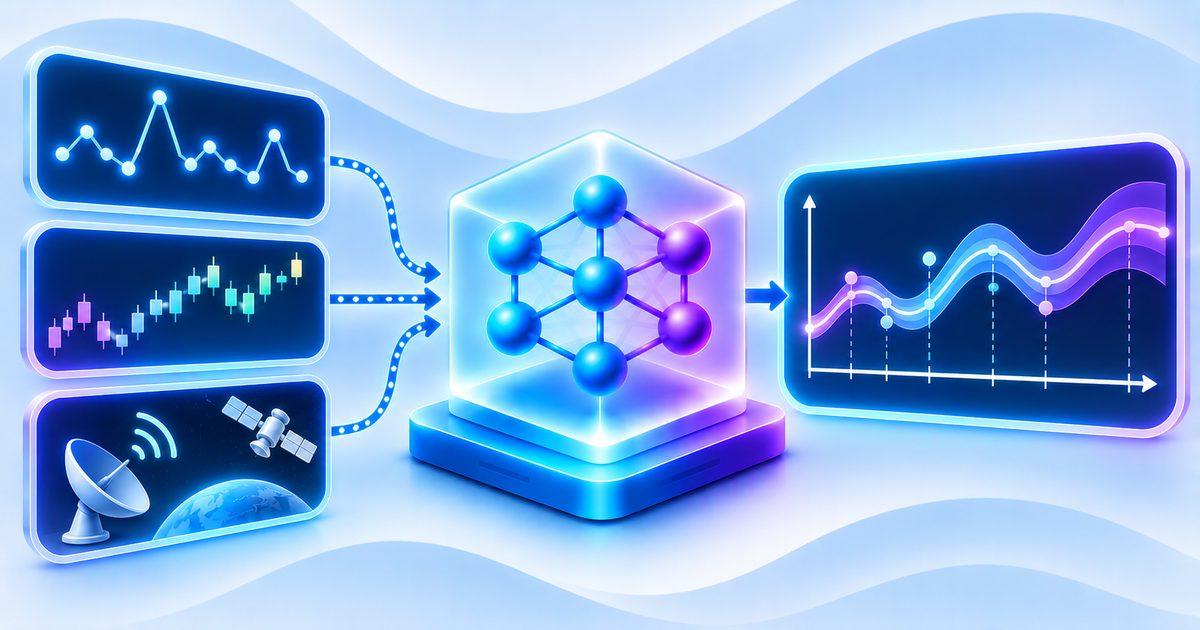
Time-series applications often involve long sequences with different temporal patterns. Financial transactions, industrial sensor readings, network traffic, and user activity streams may contain both short-term changes and long-term dependencies.
A Transformer can identify relationships across sequence positions, but processing high-volume streaming data with full attention may be unnecessarily expensive.
State-space models and recurrent components are attractive because they can maintain evolving representations as new observations arrive. Convolutional layers can capture local patterns, while attention can focus on selected relationships between events.
A hybrid forecasting model could therefore combine three processing stages.
First, a temporal convolution layer identifies local trends, periodic signals, and short-term anomalies. Second, a state-space layer processes the longer sequence and maintains a compact internal representation. Third, an attention layer identifies relevant relationships between selected time intervals or external variables.
This arrangement can be useful when the data contains different types of temporal structure.
However, engineers must account for irregular sampling, missing observations, changing data distributions, and delayed events. The architecture must also handle streaming requirements such as state persistence, recovery after service restarts, and consistent processing across distributed workers.
The benefits of hybrid sequence processing are therefore closely connected to the design of the complete data pipeline.
Hybrid architectures are particularly relevant to streaming applications because continuously arriving data requires models to balance long-term information retention with efficient processing of new observations. State-space models and recurrent components can maintain evolving representations, while attention mechanisms can identify important relationships between events across different time intervals. These design considerations connect closely with “Streaming Machine Learning: Building Models That Learn From Data in Real Time”, which explores how machine learning systems process continuous data streams and support real-time learning workflows.
Multimodal AI: Combining Vision, Language, and Audio
Multimodal AI systems must process different types of information, including text, images, audio, and video.
Each modality has different structural properties. Images contain spatial patterns, audio contains temporal and frequency-based structure, and text contains linguistic relationships. Video introduces both spatial and temporal dependencies.
A single computational mechanism may not be equally effective for every modality.
Hybrid architectures can combine convolutional processing for local visual features, attention for cross-modal relationships, and recurrent or state-space components for temporal information.
Consider a video understanding system. A vision encoder may extract spatial features from individual frames. A temporal state-space component may summarize how the scene changes over time. An attention mechanism may connect relevant events with spoken dialogue or textual instructions.
Such a system could be more efficient than applying full attention to every representation at every stage.
The architecture may also use separate modality-specific encoders followed by a shared representation layer. This allows the model to preserve the specialized processing requirements of each modality while supporting cross-modal reasoning.
The challenge is alignment. The model must connect the correct visual events with corresponding audio and text information. It must also manage differences in sampling rates, sequence lengths, and information density.
Hybrid architectures provide additional design flexibility, but successful multimodal systems still depend on high-quality training data, robust alignment mechanisms, and careful evaluation.
Key Takeaway
Hybrid neural architectures could be particularly valuable in workloads involving long sequences, multimodal inputs, streaming data, and complex temporal dependencies. Code intelligence, time-series forecasting, video understanding, scientific computing, and industrial monitoring all contain opportunities to combine specialized processing mechanisms. Their practical value will depend on whether they deliver measurable improvements in accuracy, efficiency, and reliability under real deployment conditions.
Section 4: Engineering Challenges and the Future of Hybrid Neural Networks
Training Complexity and Optimization Stability
Combining multiple neural architectures creates additional training complexity.
Different layer types may have different optimization characteristics, activation distributions, normalization requirements, and computational patterns. A Transformer attention layer and a state-space layer may respond differently to learning-rate changes, initialization, sequence length, and gradient scaling.
As a result, a model that performs well when each component is trained independently may not perform equally well when the components are combined.
Residual connections and normalization layers can help maintain stable signal propagation, but they do not automatically solve every optimization problem.
Engineers should conduct controlled experiments when introducing new components. A useful strategy is to begin with a proven baseline and replace or add one layer type at a time. This allows the team to identify which changes improve performance and which create instability.
Ablation studies are especially important. If a model combines attention, state-space layers, memory, and MoE routing, engineers should measure what happens when each component is removed or modified.
Without ablation testing, it can be difficult to determine whether performance improvements come from the new architecture, additional parameters, different training data, or increased compute.
The objective is to establish a clear relationship between architectural complexity and measurable capability.
Hardware Utilization, Memory Bandwidth, and Inference Latency
Theoretical computational efficiency does not always translate into faster production inference.
A state-space layer may have favorable asymptotic complexity, but actual performance depends on memory access patterns, kernel implementation, batch size, hardware utilization, and sequence length.
Similarly, a hybrid model may reduce the cost of attention but introduce additional operations that increase execution overhead.
For example, a model that alternates between Transformer and state-space layers may require different optimized kernels and tensor layouts. Moving data between operations can create memory traffic that reduces the expected performance benefit.
MoE routing can also introduce communication overhead when experts are distributed across multiple GPUs.
Engineers must therefore benchmark the complete model rather than comparing individual operations in isolation.
Important metrics include:
| Metric | Engineering significance |
| Time to first token | Measures initial response latency in generative systems |
| Tokens per second | Measures generation throughput |
| Peak GPU memory | Determines hardware capacity requirements |
| Key-value cache size | Measures memory required for attention-based decoding |
| Batch throughput | Measures performance under concurrent requests |
| Training throughput | Measures how quickly the model processes training data |
| Energy consumption | Helps estimate operational efficiency |
| Cost per request | Connects model performance to deployment economics |
A hybrid architecture should be evaluated across realistic workloads, including short and long sequences, different batch sizes, and varying concurrency levels.
Evaluation, Benchmarking, and Reproducibility
Comparing hybrid architectures requires careful experimental design.
A model may appear faster because it uses fewer active parameters, a different precision format, a smaller context window, or a different batch size. Another model may appear more accurate because it was trained on more data or received a larger computational budget.
Without controlled comparisons, benchmark results can be misleading.
Engineers should evaluate models using consistent datasets, sequence lengths, precision settings, hardware configurations, and inference protocols whenever possible.
They should also distinguish between prefill and decoding performance in generative models. Prefill measures the processing of the input context, while decoding measures the generation of subsequent tokens. A model may perform well in one stage and poorly in the other.
Long-context evaluation should include more than simple context-window capacity. Models should be tested on retrieval, information integration, multi-document reasoning, and tasks requiring relationships between distant sections.
For example, a model may technically accept a very large context but fail to retrieve an important detail located near the beginning of that context. Context capacity is not the same as effective information utilization.
Evaluation should also measure robustness under distribution shifts, missing data, noisy inputs, and changes in task structure.
The principles discussed in “ML Testing for Software Engineers: How to Test Systems That Don't Always Produce the Same Output” are useful when designing repeatable tests for hybrid neural systems. Model testing should cover functional correctness, performance, statistical variability, and failure behavior rather than relying on a single benchmark score.
Key Takeaway
Hybrid architectures introduce new optimization and deployment challenges, including training stability, hardware utilization, memory movement, and reproducible evaluation. Their success will depend on measured improvements under realistic workloads. Transformers are unlikely to disappear in the immediate future; instead, attention, state-space models, neural memory, convolution, and expert routing may increasingly coexist within workload-specific architectures.
Conclusion: The Future of Machine Learning May Be Hybrid by Design
The success of Transformers established attention as one of the most influential computational mechanisms in modern machine learning. However, the growing demands of long-context processing, multimodal learning, streaming inference, and large-scale deployment have encouraged researchers to investigate alternatives and combinations.
Hybrid neural architectures represent an important response to these demands. By combining Transformer attention with state-space models, recurrent processing, convolution, neural memory, and mixture-of-experts routing, researchers can design models that distribute computational work across specialized components.
Jamba demonstrates how Transformer and Mamba layers can coexist within a large language model. Mamba-2 illustrates the deeper relationship between attention and structured state-space computation. Titans explores how neural long-term memory can complement attention when processing historical information.
These developments do not establish that hybrid models will outperform Transformers in every situation. They demonstrate that architectural flexibility can create useful tradeoffs between computational efficiency, information retention, model capacity, and sequence processing.
For software engineers and machine learning practitioners, the most important lesson is to approach architecture selection as an engineering decision. Teams should identify the actual bottleneck, establish a reliable baseline, test alternative components, and evaluate the complete system under realistic conditions.
The future of machine learning may not belong to one architecture. It may belong to models that combine the strengths of several architectures, selecting the right computational mechanism for the right part of the problem.
Frequently Asked Questions (FAQs)
1. What are hybrid neural architectures?
Hybrid neural architectures combine two or more neural network designs within a single model. Examples include systems that combine Transformer attention with state-space models, convolutional layers, recurrent networks, neural memory, or mixture-of-experts components.
2. Why are researchers looking beyond Transformers?
Transformers are powerful but can become computationally expensive for long sequences because standard full self-attention has quadratic complexity in sequence length. Researchers are exploring alternatives that improve memory efficiency, throughput, and long-context processing.
3. What is the difference between a Transformer and a state-space model?
Transformers use attention to establish relationships between sequence positions. State-space models process sequences through evolving internal states. The two approaches have different computational characteristics and can be combined within hybrid architectures.
4. What is Mamba in machine learning?
Mamba is a selective state-space model architecture designed for efficient sequence processing. It uses input-dependent selection mechanisms to determine which information should influence its internal state.
5. What is Mamba-2?
Mamba-2 is an architecture based on structured state-space duality. It connects state-space models and attention through structured matrix representations and introduces a refined selective state-space layer designed for improved computational efficiency.
6. What is a Transformer-Mamba hybrid model?
A Transformer-Mamba hybrid model combines attention-based Transformer layers with selective state-space layers. The objective is to retain the useful direct interactions provided by attention while benefiting from the efficient sequence processing of state-space models.
7. What is Jamba?
Jamba is a hybrid language model architecture that combines Transformer layers, Mamba layers, and mixture-of-experts components. It was designed to provide a combination of language-modeling capability, throughput, and long-context efficiency.
8. What is a mixture-of-experts architecture?
A mixture-of-experts architecture contains multiple expert networks and a routing mechanism that selects a subset of experts for each input. Sparse activation allows the model to increase its total parameter capacity without activating every parameter for every token.
9. How do hybrid architectures improve long-context processing?
They can combine attention with state-space processing or neural memory. Attention supports direct relationships within the current context, while state-space or memory components can help retain information across longer sequences with different computational tradeoffs.
10. What is neural memory in AI models?
Neural memory refers to a learned mechanism that stores and updates information from previous inputs. Unlike simply retaining the entire token history, a neural memory component can maintain a compressed representation of relevant historical information.
11. Are hybrid neural architectures more computationally efficient than Transformers?
They can be more efficient for particular workloads, especially when long sequences make conventional attention expensive. However, actual performance depends on architecture design, hardware, implementation quality, batch size, sequence length, and memory movement.
12. Can hybrid architectures be used for computer vision?
Yes. A hybrid vision model may combine convolutional layers for local feature extraction with attention for global relationships. Other components can support temporal processing in video or cross-modal interactions in vision-language systems.
13. Are hybrid architectures useful for time-series forecasting?
They can be useful because time-series data contains local patterns, long-term dependencies, and sometimes irregular events. Convolution, state-space processing, and attention can be combined to handle different temporal structures.
14. Will hybrid neural networks replace Transformers?
There is no evidence that one architecture will replace Transformers across all machine learning tasks. Hybrid designs are expanding the available options, and future systems are likely to use different combinations based on workload and deployment requirements.
15. What should engineers consider before adopting a hybrid neural architecture?
Engineers should evaluate task requirements, sequence length, model accuracy, training stability, inference latency, memory consumption, hardware compatibility, and deployment complexity. They should also compare the hybrid model against a strong baseline using controlled experiments.