Section 1: Artificial Intelligence Is Reshaping the Engineering Career Landscape
For decades, software engineering followed a relatively predictable evolution. Developers specialized in frontend development, backend systems, mobile applications, cloud infrastructure, cybersecurity, databases, networking, and distributed computing. While these domains continued expanding, the underlying principle remained the same: engineers primarily built deterministic software systems that followed predefined business logic. Artificial intelligence has fundamentally changed this landscape. Instead of simply introducing another technology stack, AI has created entirely new categories of engineering roles that did not exist just a few years ago.
This transformation is occurring because AI systems introduce challenges that traditional software engineering was never designed to solve. Large language models, multimodal AI, Retrieval-Augmented Generation (RAG), autonomous agents, vector databases, model serving, prompt orchestration, AI observability, responsible AI, and continuous model evaluation require specialized expertise extending beyond conventional software development. Organizations can no longer rely solely on general-purpose software engineers to design, deploy, and maintain increasingly sophisticated AI ecosystems. As a result, businesses are creating specialized engineering positions focused exclusively on different aspects of the AI lifecycle.
The pace of this evolution has been extraordinary. Before the widespread adoption of foundation models, many organizations relied primarily on data scientists and machine learning engineers to build predictive models for recommendation systems, fraud detection, forecasting, and classification tasks. Today, engineering teams include AI Platform Engineers, Prompt Engineers, LLM Engineers, AI Infrastructure Engineers, AI Security Specialists, ML Observability Engineers, AI Evaluation Engineers, AI Governance Specialists, Vector Database Engineers, and AI Systems Architects. These roles continue expanding as organizations discover new operational and technical challenges associated with deploying enterprise-scale AI applications.
The Rise of Specialized AI Engineering Roles
The emergence of new AI engineering specializations reflects the growing maturity of enterprise artificial intelligence. As organizations move beyond experimentation into large-scale production deployments, they require engineers with expertise in highly focused areas of AI development and operations. These specializations exist because modern AI systems involve multiple interconnected technologies, each demanding dedicated knowledge to operate effectively.
One of the fastest-growing roles is the Large Language Model (LLM) Engineer. These professionals focus on designing applications powered by foundation models while optimizing prompting strategies, Retrieval-Augmented Generation pipelines, context management, model selection, evaluation methodologies, and inference optimization. Rather than training massive language models from scratch, LLM Engineers build production-ready applications that integrate commercial and open-source foundation models into enterprise workflows. Their work bridges machine learning engineering with modern software architecture, making them central contributors to generative AI initiatives.
Another rapidly expanding specialization is AI Platform Engineering. AI Platform Engineers build the internal infrastructure that enables organizations to develop, deploy, monitor, and scale machine learning systems efficiently. They create reusable frameworks, deployment pipelines, feature stores, model registries, experimentation environments, monitoring platforms, and governance tools that allow AI teams to deliver production systems consistently. Instead of focusing on individual models, these engineers improve the productivity of entire AI organizations by standardizing development processes and reducing operational complexity.
AI Infrastructure Engineers represent another critical specialization. Running foundation models requires high-performance computing environments capable of supporting GPU clusters, distributed inference, model serving, storage optimization, networking, and resource scheduling. Infrastructure engineers design scalable architectures that minimize latency while controlling operational costs. Their work directly influences customer experience because infrastructure efficiency determines how reliably AI products respond under real-world workloads.
Why Specialization Is Becoming a Competitive Advantage
The growing number of AI engineering specializations reflects a broader trend across the technology industry: increasing technical complexity favors deeper expertise over generalized knowledge. While broad software engineering skills remain valuable, organizations now require professionals capable of solving highly specialized problems associated with modern AI systems. Engineers who develop expertise within specific AI domains often become indispensable because their knowledge directly influences product quality, operational efficiency, scalability, and customer trust.
One reason specialization creates competitive advantage is the speed at which AI technologies evolve. Foundation models, Retrieval-Augmented Generation frameworks, multimodal AI systems, vector databases, autonomous agents, and inference optimization techniques continue advancing rapidly. Remaining current across every aspect of artificial intelligence has become nearly impossible. Engineers therefore achieve greater impact by mastering specific areas while maintaining sufficient awareness of adjacent disciplines to collaborate effectively across multidisciplinary teams.
Specialization also improves organizational efficiency. Dedicated experts solve complex technical problems more quickly because they understand the nuances of their respective domains. AI Infrastructure Engineers optimize GPU utilization and cloud architectures. LLM Engineers refine prompting strategies and retrieval systems. Governance specialists manage compliance and responsible AI practices. Platform Engineers streamline development workflows for entire engineering organizations. By distributing expertise across specialized roles, companies accelerate innovation while reducing operational risks associated with enterprise AI deployment.
Career growth increasingly reflects this trend as well. Engineers with deep expertise in rapidly growing AI disciplines often progress into senior technical positions more quickly because organizations depend on their specialized knowledge. Staff Engineers, Principal Engineers, AI Architects, and Technical Fellows frequently emerge from engineers who develop mastery within a particular technical domain before expanding into broader leadership responsibilities. Specialization therefore becomes a foundation for both technical excellence and long-term career advancement.
Importantly, specialization does not imply working in isolation. Modern AI development depends heavily on collaboration among software engineers, machine learning engineers, product managers, infrastructure teams, data engineers, security specialists, and designers. Specialized engineers contribute their unique expertise while working within multidisciplinary teams that collectively build reliable, scalable, and customer-focused AI products. The combination of deep specialization and effective collaboration has become a defining characteristic of successful AI organizations.
Readers interested in understanding how machine learning careers are evolving beyond traditional development roles should also explore "The Business of AI: What Every ML Engineer Should Know Beyond Coding," which explains why combining technical expertise with business understanding has become essential for engineers building the next generation of intelligent systems.
Key Takeaway
Artificial intelligence is creating entirely new engineering career paths rather than replacing existing ones. Roles such as LLM Engineer, AI Platform Engineer, AI Infrastructure Engineer, AI Observability Engineer, and Responsible AI Engineer reflect the increasing complexity of modern AI systems. Engineers who develop specialized expertise while collaborating across multidisciplinary teams will be best positioned to thrive as enterprise AI continues reshaping the technology industry.
Section 2: The Skills That Didn't Exist Five Years Ago Are Now in High Demand
Artificial intelligence has not only introduced new engineering roles but has also created entirely new technical skill sets that were virtually nonexistent just a few years ago. Throughout much of software engineering's history, developers built deterministic applications using programming languages, databases, APIs, cloud infrastructure, and distributed systems. While these skills remain essential, they are no longer sufficient for engineers building modern AI products. Today's intelligent systems require expertise in technologies, workflows, and engineering disciplines that have emerged specifically because of the rapid advancement of machine learning and generative AI.
This evolution reflects the increasing complexity of enterprise AI systems. Modern applications rarely rely on a single machine learning model making isolated predictions. Instead, they orchestrate multiple foundation models, vector databases, retrieval pipelines, embedding services, prompt management frameworks, observability platforms, cloud infrastructure, security controls, evaluation systems, and business applications into unified customer experiences. Every component introduces unique engineering challenges that require specialized knowledge beyond traditional software development.
The widespread adoption of Large Language Models (LLMs) has accelerated this transformation dramatically. Organizations are deploying AI assistants, enterprise search platforms, autonomous agents, intelligent document processing systems, code generation tools, and multimodal applications across nearly every department. These products demand engineers who understand context management, Retrieval-Augmented Generation (RAG), prompt optimization, inference performance, token management, model evaluation, hallucination mitigation, AI security, and production monitoring. These capabilities were rarely included in engineering job descriptions only a few years ago, yet they are now among the fastest-growing technical requirements across the technology industry.
Prompt Engineering Has Evolved into a Serious Engineering Discipline
When generative AI first became widely accessible, prompt engineering was often viewed as a simple process of asking better questions. As organizations began deploying production AI systems, however, it quickly became apparent that enterprise-grade prompting involves considerably more sophistication than conversational interactions with large language models. Today, prompt engineering has evolved into a structured engineering discipline focused on maximizing reliability, consistency, efficiency, and business value across production AI applications.
Enterprise prompt engineers design systems that consistently produce accurate, contextually relevant, and reliable responses under diverse production scenarios. They develop reusable prompting frameworks, optimize system instructions, structure multi-step reasoning workflows, manage conversational memory, implement guardrails, and reduce hallucinations while ensuring outputs remain aligned with organizational requirements. Their work extends far beyond writing prompts because every modification influences customer experience, operational costs, and overall product quality.
Prompt engineering also requires extensive experimentation. Engineers continuously evaluate different prompting strategies, chain-of-thought techniques, role-based prompting, retrieval integration, structured outputs, and response formatting to determine which approaches perform best for specific business applications. These experiments rely on systematic evaluation frameworks rather than intuition, making prompt engineering increasingly data-driven and measurable.
AI Systems Require Engineers Who Understand the Entire Lifecycle
Another major shift created by artificial intelligence is the growing importance of lifecycle engineering. Traditional software development often focused on writing code, testing applications, deploying releases, and fixing defects. AI systems require significantly broader operational oversight because their behavior continues evolving long after deployment. Engineers must therefore understand every stage of the AI lifecycle, from data preparation and model integration to monitoring, evaluation, governance, optimization, and continuous improvement.
Model evaluation has become one of the most important emerging skills. Unlike traditional applications that either function correctly or fail visibly, AI systems often produce outputs that vary in quality depending on context, user intent, retrieved information, and model capabilities. Engineers develop evaluation frameworks that measure factual accuracy, response consistency, latency, hallucination rates, customer satisfaction, and business outcomes simultaneously. Continuous evaluation allows organizations to improve AI products systematically instead of relying solely on subjective feedback.
Observability represents another rapidly growing discipline. Modern AI systems generate extensive telemetry related to prompt execution, retrieval performance, inference latency, token consumption, infrastructure utilization, model behavior, customer interactions, and operational health. Engineers monitor these signals continuously to identify anomalies, detect performance degradation, diagnose failures, and optimize production systems. Unlike conventional monitoring, AI observability focuses on understanding intelligent system behavior rather than merely tracking software availability.
Security has also evolved considerably within AI environments. Engineers increasingly address prompt injection attacks, sensitive data leakage, adversarial inputs, unauthorized model access, compliance requirements, and secure integration with enterprise knowledge bases. AI security therefore combines traditional cybersecurity principles with challenges unique to intelligent systems, creating another specialized engineering domain experiencing rapid growth.
Continuous optimization completes the lifecycle. Production AI systems require regular updates as customer expectations, enterprise data, foundation models, and business priorities evolve. Engineers refine retrieval pipelines, improve prompting strategies, optimize inference infrastructure, introduce newer models, strengthen governance, and expand automation capabilities without disrupting existing customer experiences. This continuous improvement process transforms AI engineering into an ongoing operational discipline rather than a sequence of isolated software releases.
Readers interested in understanding how AI systems evolve after deployment should also explore "What Happens Between Model Training and Customer Experience?", which examines how monitoring, infrastructure, evaluation, and production optimization ensure that machine learning models consistently deliver reliable business value in real-world environments.
Key Takeaway
Artificial intelligence has introduced entirely new engineering skills that extend well beyond traditional software development. Prompt engineering, AI lifecycle management, model evaluation, observability, security, and continuous optimization have become essential competencies for engineers building production AI systems. Professionals who invest in these emerging disciplines will be well positioned to lead the next generation of intelligent applications as enterprise AI adoption continues accelerating.
Section 3: AI Engineering Is Becoming More Collaborative Than Ever Before
One of the most significant changes artificial intelligence has introduced into software development is the way engineering teams collaborate. In traditional software organizations, responsibilities were often divided into clearly defined domains. Frontend developers focused on user interfaces, backend engineers built APIs and business logic, database administrators managed storage systems, DevOps engineers handled deployments, and security teams reviewed applications before production releases. While collaboration certainly existed, each discipline generally operated within well-established boundaries. Artificial intelligence has fundamentally changed this model by creating engineering challenges that cannot be solved effectively within isolated technical teams.
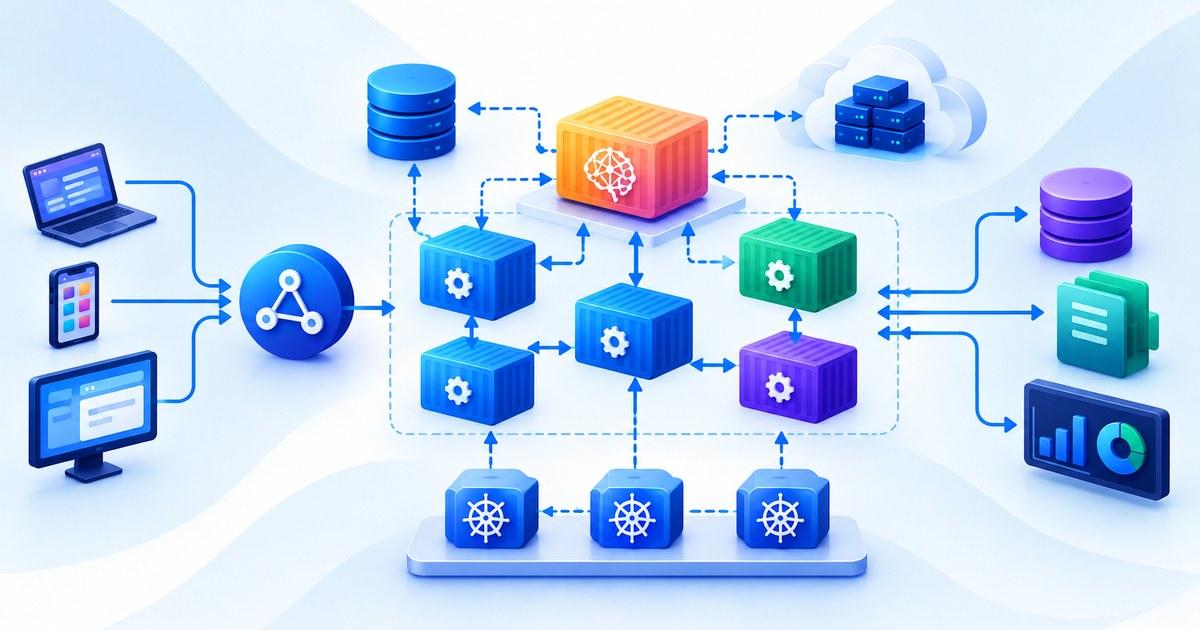
Modern AI products combine numerous technologies into a single production ecosystem. A conversational AI assistant, for example, may integrate a large language model, Retrieval-Augmented Generation (RAG), vector databases, enterprise APIs, cloud infrastructure, identity management systems, monitoring platforms, prompt orchestration frameworks, evaluation pipelines, and customer-facing interfaces simultaneously. Each component requires specialized expertise, making collaboration across engineering disciplines essential rather than optional. Successful AI systems are rarely built by individual specialists working independently; they emerge through coordinated efforts across multiple technical domains.
This shift has given rise to entirely new patterns of engineering collaboration. Machine learning engineers work closely with software engineers to integrate models into scalable production applications. AI Platform Engineers build internal tooling that accelerates experimentation and deployment for model developers. Infrastructure engineers optimize GPU clusters and cloud resources to support large-scale inference. Observability engineers continuously monitor production systems to identify performance degradation and operational anomalies. Security specialists ensure enterprise AI systems remain protected against emerging threats such as prompt injection attacks, sensitive data leakage, and unauthorized model access. Product managers coordinate customer priorities while AI researchers evaluate emerging model capabilities. Each role contributes specialized knowledge while depending heavily on expertise from adjacent disciplines.
Engineering Roles Are Becoming More Interconnected
Artificial intelligence has blurred many of the boundaries that previously separated engineering disciplines. In conventional software projects, responsibilities were often assigned according to well-defined technical domains with relatively limited overlap. Modern AI systems require much closer integration because decisions made within one specialization frequently influence multiple other areas of the product. As organizations expand their AI capabilities, engineering roles are becoming increasingly interconnected, creating new opportunities for collaboration and shared problem-solving.
Consider the relationship between LLM Engineers and AI Infrastructure Engineers. LLM Engineers focus on prompt design, retrieval pipelines, model evaluation, and application behavior, while infrastructure teams optimize GPU allocation, model serving, inference performance, networking, and cloud resource utilization. Although these responsibilities differ, they directly affect one another. A prompting strategy that significantly increases token usage may improve response quality while simultaneously increasing inference costs and reducing throughput. Infrastructure optimizations that improve latency may enable product teams to deliver more responsive customer experiences. Effective collaboration allows both teams to balance technical quality with operational efficiency rather than optimizing individual components independently.
A similar relationship exists between AI Platform Engineers and machine learning engineers. Platform teams build reusable deployment frameworks, feature stores, model registries, CI/CD pipelines, experimentation environments, and governance tools that enable faster AI development. Machine learning engineers rely on these platforms to develop and deploy models efficiently while providing valuable feedback that improves internal tooling. This continuous collaboration accelerates organizational productivity because infrastructure evolves alongside engineering requirements instead of becoming disconnected from day-to-day development.
Security has become another area where collaboration is essential. AI Security Engineers work closely with LLM Engineers, software developers, infrastructure specialists, and compliance teams to protect enterprise AI systems against evolving threats. Preventing prompt injection attacks, securing vector databases, protecting confidential information, implementing identity controls, and maintaining regulatory compliance all require coordinated efforts across multiple engineering disciplines. Security is no longer treated as a final review before deployment but as an integral part of AI system design from the earliest development stages.
The Next Generation of Engineers Will Build AI Ecosystems, Not Individual Features
Perhaps the most profound shift introduced by artificial intelligence is that engineers are no longer building isolated software features. Instead, they are constructing intelligent ecosystems composed of multiple interconnected services that continuously learn, adapt, and evolve over time. This systems-oriented approach is creating entirely new engineering mindsets while expanding the scope of technical responsibilities far beyond traditional application development.
Modern enterprise AI products rarely rely on a single model or standalone application. Instead, they integrate foundation models, Retrieval-Augmented Generation pipelines, vector search, cloud-native infrastructure, orchestration frameworks, business applications, analytics platforms, monitoring systems, governance controls, security mechanisms, and customer interfaces into unified operational environments. Engineers are responsible not only for developing individual components but also for ensuring that every part of the ecosystem works together reliably at production scale.
This broader perspective requires stronger systems thinking than ever before. Engineers evaluate how infrastructure decisions influence customer latency, how retrieval quality affects model responses, how monitoring supports continuous improvement, how governance protects enterprise data, and how operational costs impact long-term scalability. Rather than optimizing individual services independently, they design architectures that balance performance, maintainability, resilience, security, and business value across the entire ecosystem.
Continuous evolution also distinguishes AI ecosystems from traditional software. Foundation models improve regularly, enterprise knowledge changes constantly, customer expectations evolve rapidly, and new AI capabilities emerge almost every month. Engineers therefore develop architectures that support ongoing experimentation without disrupting production systems. Modular orchestration frameworks, scalable infrastructure, automated evaluation pipelines, feature flags, and comprehensive observability enable organizations to adopt new technologies while maintaining operational stability. Engineering success increasingly depends on designing systems capable of adapting to continuous change rather than remaining static after deployment.
Looking ahead, this ecosystem approach will create additional engineering specializations focused on coordinating intelligent services rather than developing isolated algorithms. Roles centered on AI orchestration, autonomous agent architecture, multimodal system integration, enterprise knowledge management, AI governance automation, and intelligent workflow optimization are already beginning to appear as organizations expand their AI capabilities. Engineers who develop strong architectural thinking alongside specialized technical expertise will be particularly well positioned to lead these emerging disciplines.
Readers interested in understanding how intelligent systems are transforming engineering careers should also explore "The Hidden Layers of AI Engineering Nobody Talks About," which examines the operational infrastructure, production systems, and multidisciplinary engineering practices that enable modern AI applications to operate reliably at enterprise scale.
Key Takeaway
Artificial intelligence is reshaping engineering not only by creating new specializations but also by transforming how engineers collaborate. Modern AI products depend on tightly integrated teams where specialists in infrastructure, machine learning, security, observability, platform engineering, and software development work together to build intelligent ecosystems. Engineers who embrace collaboration, systems thinking, and cross-functional expertise will play a central role in defining the future of enterprise AI.
Section 4: The Future of Engineering Careers Will Be Defined by AI Specialization
Artificial intelligence is not simply introducing new tools into software development, it is fundamentally redefining what it means to build a successful engineering career. Every major technological revolution has expanded the demand for specialized expertise. The emergence of cloud computing created Cloud Architects and Site Reliability Engineers. Mobile technology gave rise to Android and iOS specialists. Cybersecurity evolved into numerous disciplines such as application security, cloud security, threat intelligence, and digital forensics. Artificial intelligence is now creating an even broader transformation by generating entirely new engineering specializations while simultaneously reshaping existing technical roles across every industry.
This evolution is being driven by the rapid adoption of enterprise AI. Organizations are no longer experimenting with isolated machine learning models. Instead, they are integrating AI into customer support, software development, financial services, healthcare, manufacturing, supply chain management, cybersecurity, education, marketing, and enterprise productivity platforms. These implementations require sophisticated engineering ecosystems capable of supporting intelligent systems at production scale. Consequently, businesses are investing heavily in engineers who possess expertise in emerging AI disciplines rather than relying exclusively on traditional software engineering roles.
One of the defining characteristics of this transformation is the increasing value of technical depth. During the early stages of software engineering, professionals often advanced by becoming strong generalists capable of contributing across multiple technology stacks. Modern AI development still benefits from broad engineering knowledge, but organizations increasingly differentiate candidates based on specialized expertise in domains such as Large Language Models (LLMs), AI infrastructure, model evaluation, AI security, autonomous agents, vector databases, multimodal systems, and production observability. These areas require substantial domain-specific knowledge that extends well beyond conventional software development practices.
Generative AI has accelerated this trend dramatically because the technology itself continues evolving at an extraordinary pace. Foundation models improve every few months, new orchestration frameworks emerge regularly, enterprise AI platforms expand rapidly, and regulatory requirements continue developing across global markets. Engineers therefore cannot rely solely on skills acquired during university education or early career experience. Continuous learning has become an essential professional responsibility because new engineering disciplines continue emerging alongside advances in artificial intelligence. Engineers who embrace lifelong learning consistently position themselves ahead of industry demand while remaining valuable contributors regardless of technological change.
Continuous Learning Will Become Every Engineer's Greatest Competitive Advantage
One characteristic distinguishes nearly every successful engineer working in artificial intelligence today: a commitment to continuous learning. Unlike many traditional technology domains where core concepts remain relatively stable over long periods, AI evolves at an exceptionally rapid pace. New foundation models, open-source frameworks, orchestration techniques, evaluation methodologies, inference optimizations, multimodal architectures, and deployment strategies emerge almost monthly. Engineers who stop learning quickly discover that previously cutting-edge knowledge becomes outdated within a relatively short time.
This environment has fundamentally changed professional development. Learning is no longer limited to mastering programming languages or software frameworks. Engineers now study prompt engineering techniques, Retrieval-Augmented Generation architectures, vector search optimization, model evaluation methodologies, AI governance standards, cloud-native inference platforms, distributed GPU infrastructure, observability tools, and emerging regulatory requirements. Each new specialization builds upon existing engineering knowledge while introducing additional opportunities for career advancement.
Continuous learning also enables engineers to transition between emerging AI disciplines as technology evolves. A software engineer may develop expertise in AI infrastructure before expanding into LLM engineering. A machine learning engineer might specialize in autonomous agent orchestration or multimodal systems. Infrastructure specialists may become experts in distributed inference optimization. Rather than following rigid career paths, engineers increasingly build flexible expertise that adapts alongside industry demand.
The Next Decade Will Create Engineering Roles We Cannot Yet Imagine
History demonstrates that every major technological revolution creates professions that were previously unimaginable. Twenty years ago, few organizations employed Cloud Architects, Site Reliability Engineers, Mobile Application Developers, or Kubernetes Platform Engineers. Similarly, many of today's AI specializations, including Prompt Engineers, LLM Engineers, AI Platform Engineers, and Responsible AI Specialists, barely existed five years ago. Artificial intelligence is progressing so rapidly that the next decade will almost certainly introduce entirely new engineering careers that have not yet been formally defined.
Several trends already point toward this future. Autonomous AI agents capable of coordinating complex workflows are creating demand for engineers specializing in agent orchestration, multi-agent collaboration, memory management, and autonomous decision systems. Multimodal AI integrating text, images, audio, video, and robotics will require specialists focused on cross-modal reasoning, real-time inference, and intelligent interaction design. Enterprise knowledge systems will continue expanding, increasing demand for engineers experienced in knowledge graphs, semantic retrieval, enterprise search, and intelligent information management.
Advances in AI governance will generate additional opportunities. As governments introduce new regulations governing transparency, explainability, privacy, fairness, and accountability, organizations will require engineers capable of embedding these principles directly into production AI systems. Similarly, AI security will evolve into increasingly sophisticated disciplines addressing adversarial attacks, model integrity, confidential computing, and secure enterprise deployment. Each advancement in AI capabilities naturally creates corresponding engineering challenges requiring dedicated expertise.
The emergence of AI-native development environments will further reshape software engineering itself. Developers increasingly collaborate with AI copilots capable of writing code, generating documentation, debugging applications, creating tests, and automating repetitive engineering tasks. Rather than replacing software engineers, these technologies shift human responsibilities toward architecture, validation, orchestration, governance, optimization, and strategic decision-making. Engineers will spend less time implementing routine functionality and more time designing intelligent systems that coordinate increasingly capable AI components.
Ultimately, predicting every future specialization is impossible because technological innovation consistently produces unexpected opportunities. What remains clear, however, is that organizations will continue seeking engineers capable of combining deep technical expertise with adaptability, collaboration, and continuous learning. Those qualities will remain valuable regardless of which new engineering disciplines emerge over the coming years.
Readers interested in understanding how modern AI careers are evolving beyond traditional machine learning roles should also explore "Research to Real-World ML Engineering," which examines how engineers transform research breakthroughs into scalable production systems while developing the multidisciplinary skills required by today's AI organizations.
Key Takeaway
Artificial intelligence is creating one of the most significant expansions of engineering careers in modern technology. As new AI capabilities emerge, they continuously generate new specializations, technical disciplines, and leadership opportunities. Engineers who invest in continuous learning, develop deep expertise within emerging AI domains, and strengthen their ability to collaborate across multidisciplinary teams will be best positioned to lead the next generation of intelligent systems and shape the future of engineering itself.
Conclusion
Artificial intelligence is transforming engineering in ways that extend far beyond automation and productivity improvements. While much of the public conversation focuses on AI's ability to generate code, answer questions, or automate repetitive tasks, the most significant long-term impact is the emergence of entirely new engineering disciplines. Every major technological revolution has expanded the software industry by creating specialized roles that previously did not exist, and AI is following the same pattern on an even larger scale. Rather than reducing opportunities for engineers, artificial intelligence is reshaping career paths and creating specialized domains that demand new technical expertise.
Throughout this discussion, one central theme has remained consistent: modern AI systems are fundamentally different from traditional software applications. Building production-grade AI solutions involves much more than training machine learning models or integrating APIs. Enterprise AI products require expertise in Large Language Models (LLMs), Retrieval-Augmented Generation (RAG), vector databases, prompt engineering, inference optimization, AI observability, cloud infrastructure, governance, security, model evaluation, autonomous agents, and continuous production monitoring. Each of these areas has evolved into a distinct engineering discipline because intelligent systems introduce challenges that conventional software development was never designed to address.
This growing complexity has changed how organizations build technology teams. Instead of relying solely on general-purpose software engineers, companies increasingly assemble multidisciplinary engineering organizations where specialists collaborate to solve different aspects of the AI lifecycle. AI Platform Engineers develop reusable infrastructure, LLM Engineers optimize generative AI applications, Infrastructure Engineers manage high-performance computing environments, Observability Engineers monitor intelligent systems in production, Responsible AI Engineers ensure compliance and fairness, while Security Engineers protect AI systems from emerging threats. Together, these professionals create ecosystems capable of supporting enterprise-scale artificial intelligence.
Frequently Asked Questions (FAQs)
1. How is AI creating new engineering specializations?
AI introduces new technical challenges involving foundation models, vector databases, prompt engineering, model evaluation, infrastructure optimization, governance, and observability. These challenges require dedicated expertise, leading to the creation of entirely new engineering roles.
2. What are some of the newest AI engineering roles?
Some of the fastest-growing roles include LLM Engineer, AI Platform Engineer, AI Infrastructure Engineer, AI Observability Engineer, Prompt Engineer, Responsible AI Engineer, AI Security Engineer, Vector Database Engineer, and Autonomous Agent Engineer.
3. Why can't traditional software engineers handle all AI responsibilities?
Modern AI systems combine multiple technologies, including machine learning models, cloud infrastructure, retrieval systems, orchestration frameworks, monitoring platforms, and governance controls. Their complexity requires engineers with specialized expertise across different areas.
4. What is an LLM Engineer?
An LLM Engineer develops applications powered by Large Language Models, focusing on prompt design, Retrieval-Augmented Generation (RAG), model evaluation, context management, inference optimization, and production deployment.
5. What does an AI Platform Engineer do?
AI Platform Engineers build the internal tools, deployment pipelines, experimentation environments, feature stores, model registries, and infrastructure that enable AI teams to develop and deploy intelligent systems efficiently.
6. Why has prompt engineering become an engineering discipline?
Enterprise AI applications require prompts that are reliable, scalable, cost-efficient, secure, and consistently accurate. Designing these systems involves experimentation, evaluation, optimization, and integration with production workflows.
7. What is AI observability?
AI observability involves monitoring model behavior, inference latency, hallucinations, retrieval quality, infrastructure performance, token usage, and customer interactions to ensure AI systems remain reliable after deployment.
8. How important is AI security?
AI security has become essential because intelligent systems face unique threats such as prompt injection attacks, data leakage, model manipulation, unauthorized access, and adversarial inputs that traditional security practices alone cannot address.
9. Will AI specialization replace general software engineering?
No. General software engineering remains the foundation of AI development. Specializations build upon traditional engineering skills rather than replacing them.
10. Do engineers need machine learning experience for every AI role?
Not necessarily. While machine learning knowledge is valuable, many AI specializations emphasize cloud infrastructure, distributed systems, security, observability, software architecture, platform engineering, or product integration rather than model development itself.
11. How does collaboration change in AI engineering teams?
AI projects require close collaboration among software engineers, ML engineers, infrastructure teams, product managers, security specialists, designers, and business stakeholders because intelligent systems depend on tightly integrated technologies.
12. Which AI engineering specialization has the strongest future demand?
Demand is growing across several areas, including LLM Engineering, AI Infrastructure Engineering, AI Platform Engineering, AI Security, Autonomous Agent Engineering, AI Observability, and Responsible AI. The strongest opportunities often depend on industry needs and organizational priorities.
13. How can engineers prepare for these emerging AI careers?
Engineers should strengthen software engineering fundamentals while learning AI concepts such as LLMs, Retrieval-Augmented Generation, vector databases, prompt engineering, cloud-native AI infrastructure, MLOps, AI security, and production monitoring through practical projects and continuous learning.
14. Will AI continue creating new engineering roles in the future?
Yes. As autonomous agents, multimodal AI, robotics, edge AI, enterprise automation, and AI governance evolve, entirely new engineering disciplines are expected to emerge, creating additional career opportunities across the technology industry.
15. What is the most valuable skill for engineers entering the AI era?
The most valuable skill is adaptability. Engineers who combine strong technical fundamentals with continuous learning, specialization, systems thinking, collaboration, and problem-solving will be best positioned to succeed as artificial intelligence continues creating new technologies, new engineering disciplines, and new career opportunities.