
Section 1: Why Trust Became the Most Important Problem in AI
AI Systems Are Moving From Experiments to Critical Infrastructure
The first wave of generative AI products was driven largely by excitement around capability. Companies focused heavily on building systems that could generate text, summarize information, answer questions, write code, and automate workflows at unprecedented speed. Early adoption prioritized innovation and user growth because the technology itself felt revolutionary.
In 2026, the industry is entering a very different phase.
AI systems are no longer operating only as experimental assistants or novelty applications. They are increasingly embedded into enterprise operations, financial systems, healthcare workflows, cybersecurity platforms, developer infrastructure, hiring systems, recommendation engines, and customer support operations. AI is becoming operational infrastructure.
This transition dramatically changes what organizations expect from intelligent systems.
Earlier AI products could tolerate occasional hallucinations or inconsistent outputs because users viewed them as productivity tools rather than mission-critical systems. Today, enterprises increasingly require AI systems that are reliable, explainable, observable, auditable, and controllable under real-world operational conditions.
Trust has therefore become one of the biggest challenges in artificial intelligence.
Organizations deploying AI at scale increasingly ask difficult questions. Why did the system make a particular decision? What information influenced the output? Can reasoning pathways be inspected? How are permissions enforced? Can humans override automation behavior? How do companies monitor hallucinations and runtime failures? Can AI systems operate safely inside regulated environments?
These concerns are reshaping AI product architecture itself.
Modern AI engineering increasingly focuses not only on intelligence but also on governance infrastructure, observability systems, policy enforcement, explainability frameworks, and operational controls. AI products are evolving from purely generative systems into accountable operational platforms.
This shift is especially important for enterprise adoption because trust directly affects whether organizations allow AI systems to participate in high-impact workflows.
Transparency Is Becoming a Competitive Advantage
One of the biggest lessons organizations learned during early AI adoption is that opaque systems create operational risk. Large language models can generate highly convincing outputs, but their reasoning processes are often difficult to interpret directly. This creates major challenges in environments where accuracy and accountability matter significantly.
As a result, transparency is rapidly becoming one of the most valuable competitive differentiators in AI product development.
Modern AI companies increasingly build systems capable of explaining outputs, tracing retrieval sources, surfacing reasoning pathways, monitoring model behavior, and exposing operational telemetry dynamically during runtime.
Retrieval-augmented generation systems accelerated this trend significantly. Instead of relying only on static model knowledge, modern AI products increasingly retrieve contextual information dynamically before generating outputs. This allows systems to reference source material more transparently while improving factual grounding.
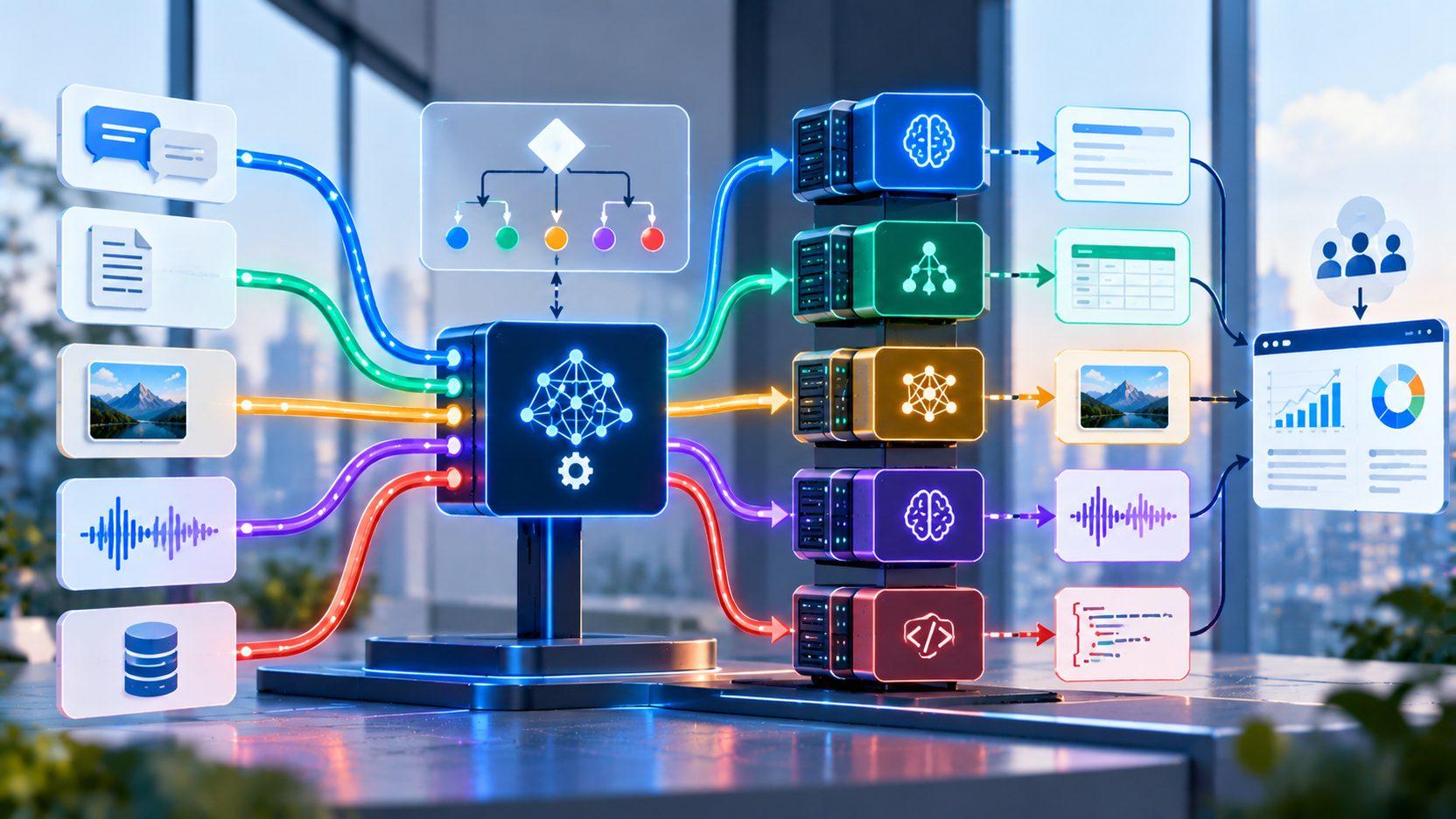
Another major trend involves explainable orchestration workflows. AI products increasingly separate retrieval systems, planning layers, memory systems, and execution frameworks into observable runtime pipelines rather than relying entirely on opaque end-to-end generation.
This makes debugging and governance significantly easier.
For example, enterprise copilots increasingly display retrieved documents, reasoning traces, citations, workflow actions, confidence indicators, and operational logs directly to users during interactions. This improves trust because users can evaluate how systems reached conclusions rather than blindly accepting generated outputs.
Transparency is also becoming important for hiring and operational governance. Organizations increasingly prioritize engineers capable of understanding responsible AI deployment and observability infrastructure. This trend closely aligns with ideas explored in The New Rules of AI Hiring: How Companies Screen for Responsible ML Practices, where responsible AI operations and governance awareness are becoming core technical expectations.
The future of AI competition will likely involve trustworthiness as much as raw capability.
Enterprises Want Control, Not Just Automation
Another major shift shaping AI product design is the growing demand for operational control. Earlier AI products focused heavily on automation and autonomous execution. However, enterprises increasingly realized that unrestricted automation can create serious operational and regulatory risks.
Organizations deploying AI systems inside sensitive workflows need strong governance mechanisms.
This means modern AI products increasingly include permission systems, workflow approvals, human-in-the-loop checkpoints, escalation policies, role-based access controls, audit logging, and runtime policy enforcement frameworks directly inside product architecture.
Control is becoming especially important as autonomous agents become more common.
AI systems increasingly interact with APIs, infrastructure systems, enterprise databases, financial workflows, and operational tooling environments. Without governance layers, autonomous execution introduces unacceptable levels of operational uncertainty.
For example, enterprise AI agents increasingly operate within bounded execution environments where systems can retrieve information and suggest actions but require explicit approval before making infrastructure changes or triggering high-risk workflows.
Another important trend involves adaptive control systems. Organizations increasingly customize AI autonomy levels dynamically depending on workflow sensitivity, user roles, compliance requirements, and operational context.
This creates layered trust architectures where AI capability expands gradually as organizations gain confidence in system reliability.
The future of enterprise AI will therefore likely revolve around controlled intelligence rather than unrestricted autonomy.
Key Takeaways
AI systems are increasingly treated as operational infrastructure rather than experimental tools.
Transparency is becoming critical because organizations require explainable and observable AI workflows.
Enterprises increasingly prioritize governance, permissions, and operational control over unrestricted automation.
AI observability infrastructure is becoming foundational for trust and runtime monitoring.
The future of AI product design will depend heavily on balancing intelligence with accountability, reliability, and governance.
Section 2: How AI Companies Are Building Transparency Into Modern AI Products
Explainability Is Becoming a Core Product Requirement
One of the biggest changes happening across the AI industry is that explainability is no longer treated as an optional feature. In earlier generations of AI products, organizations primarily focused on output quality and capability demonstrations. As AI systems became more deeply integrated into enterprise operations, companies realized that high-performing systems are not enough if users cannot understand or trust their behavior.
This shift is especially important for industries where operational accountability matters significantly. Financial systems, healthcare platforms, cybersecurity tools, legal technologies, and enterprise automation workflows increasingly require visibility into how AI systems make decisions.
Modern AI products therefore increasingly expose reasoning pathways directly to users.
For example, retrieval-augmented AI systems often display source documents, citations, contextual references, confidence indicators, and retrieved evidence alongside generated outputs. Instead of asking users to trust model responses blindly, companies increasingly provide mechanisms to inspect the contextual foundation behind generated answers.
Another major trend involves workflow transparency. Autonomous systems and AI agents increasingly surface operational steps during execution rather than hiding orchestration logic completely. Users can often observe which tools were called, what retrieval actions occurred, and how workflows progressed during runtime execution.
This dramatically improves operational trust.
Another important factor is error analysis. AI systems inevitably make mistakes, especially in complex enterprise environments. Explainable infrastructure allows engineers and users to understand why failures occurred instead of treating AI outputs as completely opaque black boxes.
Companies are also investing heavily in observability tooling capable of monitoring hallucinations, retrieval drift, output inconsistencies, and workflow anomalies dynamically during production operation. This operational telemetry improves reliability while helping organizations refine governance systems continuously.
As AI adoption grows, explainability is rapidly becoming one of the defining characteristics separating enterprise-grade AI platforms from lightweight consumer experimentation tools.
Human-in-the-Loop Systems Are Becoming the Default Enterprise Model
One of the biggest misconceptions surrounding modern AI is the assumption that companies are aggressively replacing humans with fully autonomous systems. In reality, most enterprise AI deployments increasingly rely on human-in-the-loop architectures designed to balance automation with oversight and operational safety.
This model is becoming dominant because organizations want productivity improvements without sacrificing governance and accountability.
Human-in-the-loop systems allow AI products to automate repetitive reasoning tasks while keeping humans responsible for high-impact decisions. AI copilots may draft content, retrieve contextual information, summarize workflows, or recommend actions, but users increasingly maintain approval authority before execution occurs.
This approach is especially common in sensitive enterprise environments.
For example, AI systems operating inside financial workflows may generate risk assessments or anomaly detections while requiring human validation before transactions are blocked or escalated. Healthcare AI systems may assist with diagnostics and information retrieval while clinicians remain responsible for final medical decisions.
Another major reason companies prefer this architecture is trust calibration. Enterprises often adopt AI gradually, expanding automation only after systems demonstrate reliability consistently over time. Human oversight provides a safety layer while organizations evaluate operational performance under real-world conditions.
Adaptive autonomy is becoming increasingly important as well. Many modern AI systems dynamically adjust automation levels depending on workflow sensitivity, user permissions, operational context, and confidence thresholds. Routine low-risk workflows may execute automatically while complex or uncertain scenarios trigger human review.
This layered control architecture helps organizations scale AI responsibly while reducing operational risk.
Another important trend is collaborative intelligence. Companies increasingly design AI systems not as replacements for human workers but as operational partners capable of augmenting decision-making, reducing cognitive overload, and accelerating workflows without removing human accountability entirely.
The future of enterprise AI will likely involve increasingly sophisticated collaboration between intelligent systems and human oversight rather than unrestricted autonomous execution.
Governance Infrastructure Is Becoming a Competitive Differentiator
As AI systems become more operationally integrated into businesses, governance infrastructure is becoming one of the most important competitive differentiators across the industry.
Earlier AI products often prioritized capability demonstrations and rapid deployment. In 2026, organizations increasingly evaluate whether AI systems can operate safely, transparently, and predictably inside real-world environments.
This shift is forcing companies to build governance directly into product architecture.
Modern AI systems increasingly include permission frameworks, policy engines, audit logging systems, runtime access controls, approval workflows, compliance monitoring, and operational safeguards as foundational infrastructure layers.
Role-based access control has become especially important. AI systems increasingly interact with enterprise databases, internal tools, infrastructure systems, customer information, and operational workflows. Organizations therefore require granular permission management controlling what systems can access and execute during runtime.
Another major trend involves policy-aware orchestration. AI agents increasingly operate within predefined operational boundaries where governance frameworks restrict actions dynamically depending on organizational rules and compliance requirements.
For example, an enterprise AI assistant may retrieve sensitive information but remain restricted from modifying infrastructure settings or executing financial transactions without additional approval layers.
Observability systems are becoming deeply integrated into governance infrastructure as well. Organizations increasingly monitor model behavior continuously to detect hallucinations, policy violations, unusual retrieval behavior, and operational anomalies before risks escalate significantly.
The growing importance of responsible operational AI closely aligns with trends explored in Explainable AI: A Growing Trend in ML Interviews, where interpretability, governance, and operational trust are becoming core engineering priorities.
The companies that succeed long term may not simply be those with the most capable models. Increasingly, they will be organizations capable of building the most trustworthy and governable AI ecosystems.
Trustworthy AI Requires Infrastructure, Not Just Better Models
One of the clearest lessons emerging from enterprise AI adoption is that trust cannot be solved through larger models alone. Even highly capable systems require operational infrastructure supporting transparency, governance, observability, and control.
This means the future of AI product development will likely focus heavily on orchestration quality, monitoring systems, explainability frameworks, runtime safeguards, and human collaboration architectures.
AI trust is therefore becoming an infrastructure problem as much as a machine learning problem.
Key Takeaways
Explainability is becoming a core requirement for enterprise-grade AI systems.
Human-in-the-loop architectures remain dominant because organizations prioritize oversight and operational safety.
Governance infrastructure increasingly includes permissions, policy enforcement, observability, and auditability systems.
Adaptive autonomy allows organizations to balance automation with human control dynamically.
The future of trustworthy AI depends heavily on operational infrastructure rather than model capability alone.
Section 3: Why Control and Governance Are Becoming Central to AI Product Design
AI Autonomy Without Governance Creates Operational Risk
One of the biggest lessons companies learned during the rapid expansion of generative AI is that powerful systems without operational safeguards can create significant business risk. Earlier AI adoption cycles focused heavily on automation, productivity gains, and model capability. In 2026, organizations increasingly recognize that intelligent systems require strong governance frameworks before they can operate safely at enterprise scale.
This is especially important as AI systems become more autonomous.
Modern AI products increasingly interact with APIs, enterprise databases, cloud infrastructure, customer information systems, financial workflows, and internal operational tooling. Autonomous agents are beginning to coordinate tasks, retrieve information, execute workflows, and trigger downstream actions dynamically during runtime.
Without governance controls, this creates serious operational uncertainty.
For example, an AI assistant with unrestricted access to enterprise systems could accidentally expose sensitive information, trigger incorrect workflow actions, or operate outside organizational policy boundaries. Even highly capable models can produce unreliable outputs when operating across complex real-world environments.
As a result, enterprises increasingly prioritize bounded autonomy instead of unrestricted automation.
Modern AI systems are increasingly designed around controlled operational environments where permissions, execution boundaries, approval layers, and escalation workflows are enforced directly through infrastructure architecture. AI products now operate more like managed operational systems than open-ended conversational tools.
Another important trend is risk-aware orchestration. AI systems increasingly evaluate confidence scores, workflow sensitivity, contextual uncertainty, and operational impact dynamically before executing actions. High-risk decisions often require additional approval layers or human review before workflows continue.
This creates adaptive governance systems where autonomy expands or contracts depending on operational context.
The future of enterprise AI will therefore likely depend heavily on how effectively organizations balance intelligent automation with runtime control and operational safeguards.
Permission Systems and Access Controls Are Becoming Foundational
One of the biggest architectural changes in enterprise AI products is the growing importance of permission-aware infrastructure. Earlier AI systems often operated primarily through generalized interaction models where access boundaries were relatively simple. Modern AI products increasingly require highly granular access management because they interact directly with sensitive operational systems.
Role-based access control is becoming foundational infrastructure.
AI systems increasingly evaluate what information users can access, which workflows agents can execute, which APIs can be called, and what operational actions are allowed dynamically during runtime. Permissions are no longer treated as simple application settings. They are becoming active orchestration layers integrated deeply into AI execution systems.
For example, enterprise copilots may retrieve financial data for senior managers while restricting access for other employees. Infrastructure agents may monitor cloud environments while remaining blocked from executing deployment changes without explicit authorization. Customer support agents may access troubleshooting workflows while remaining restricted from sensitive billing operations.
Another major trend involves context-aware permissions.
Modern governance systems increasingly adjust operational boundaries dynamically depending on workflow sensitivity, organizational roles, regulatory requirements, and runtime conditions. This allows AI products to maintain flexibility while reducing operational risk significantly.
Audit logging is becoming equally important. Organizations increasingly require visibility into how AI systems accessed information, what decisions were made, which workflows executed, and how operational states evolved during runtime interactions.
This operational traceability improves compliance, security, and incident investigation capabilities significantly.
Security infrastructure is also evolving rapidly because AI systems increasingly represent operational entry points into enterprise ecosystems. Companies now treat AI governance as part of broader cybersecurity architecture rather than as an isolated machine learning problem.
The rise of operational AI governance closely aligns with broader industry trends explored in Security in Machine Learning: Interview Questions You Don’t Expect, where secure deployment, infrastructure safety, and governance awareness are becoming essential engineering priorities.
The future of AI infrastructure will likely depend heavily on permission-aware runtime orchestration systems capable of balancing flexibility with operational control.
AI Observability Is Becoming the Backbone of Trustworthy Systems
One of the biggest reasons governance became so important is because AI systems behave probabilistically rather than deterministically. Traditional software systems generally follow predefined logic paths that are easier to predict and debug. AI systems generate outputs dynamically based on context, retrieval behavior, orchestration workflows, and model inference.
This creates significant operational complexity.
Organizations therefore increasingly rely on observability infrastructure to monitor AI behavior continuously during production operation. AI observability platforms are becoming one of the most important infrastructure layers supporting trustworthy intelligent systems.
Modern observability systems track hallucination rates, retrieval quality, token usage, inference latency, workflow execution paths, tool usage behavior, runtime anomalies, and policy violations dynamically across AI environments.
Another major trend involves execution tracing.
Enterprise AI systems increasingly expose operational telemetry showing how workflows evolved during runtime interactions. Organizations can inspect which documents were retrieved, which tools were called, how reasoning chains progressed, and where failures occurred inside orchestration pipelines.
This visibility dramatically improves operational trust.
Another important capability is anomaly detection. Observability systems increasingly identify unusual model behavior, retrieval drift, permission misuse, and infrastructure irregularities automatically before failures escalate into larger operational incidents.
AI evaluation systems are becoming more sophisticated as well. Organizations increasingly simulate adversarial prompts, governance failures, retrieval inconsistencies, and policy edge cases continuously during deployment testing.
This operational testing helps companies refine runtime safeguards before systems scale broadly.
The future of AI trust will therefore depend heavily on infrastructure capable of monitoring and governing intelligent behavior continuously under production conditions.
Responsible AI Is Becoming a Product Strategy, Not Just a Compliance Requirement
One of the clearest long-term trends in AI product development is that responsible AI is no longer treated only as a legal or ethical discussion. It is increasingly becoming a core product strategy.
Organizations now understand that trust directly affects adoption.
Companies deploying AI products at scale increasingly compete based on reliability, transparency, governance quality, and operational safety rather than model capability alone. Enterprise customers increasingly prefer systems that are observable, controllable, and explainable under real-world conditions.
The future of successful AI companies will therefore likely depend heavily on their ability to operationalize trust through infrastructure, governance systems, and runtime accountability mechanisms.
Key Takeaways
Unrestricted AI autonomy creates operational risk in enterprise environments.
Permission-aware infrastructure and role-based access control are becoming foundational AI architecture layers.
AI observability systems continuously monitor runtime behavior, reasoning quality, and governance compliance.
Execution tracing and auditability improve operational trust significantly.
The future of AI products will increasingly depend on governance infrastructure, transparency, and controlled operational intelligence.
Section 4: The Future of Trustworthy AI Systems and What Companies Are Prioritizing Next
AI Products Are Moving Toward Layered Trust Architectures
One of the most important long-term shifts happening in artificial intelligence is the move toward layered trust architectures. Earlier AI products often operated through relatively simple interfaces where models generated outputs directly from prompts with limited runtime governance. In 2026, enterprise AI systems are becoming significantly more sophisticated because organizations now understand that trust must be engineered systematically across every infrastructure layer.
This means trustworthy AI is no longer treated as a single feature. Instead, companies increasingly design multiple layers of operational safeguards working together simultaneously.
Modern AI systems increasingly combine retrieval validation, policy enforcement, runtime monitoring, role-based permissions, workflow approvals, anomaly detection, human oversight, and observability infrastructure into unified operational ecosystems. Each layer helps reduce different categories of risk.
For example, retrieval systems may validate contextual grounding before inference occurs. Runtime orchestration frameworks may restrict high-risk actions dynamically. Observability systems may detect hallucinations or abnormal behavior during execution. Human review systems may intervene during sensitive workflows requiring additional verification.
This layered architecture creates significantly more resilient operational environments.
Another major trend involves confidence-aware AI behavior. Modern systems increasingly evaluate uncertainty dynamically during runtime. If confidence levels fall below acceptable thresholds, systems may escalate workflows to humans, retrieve additional context, reduce automation privileges, or request clarification instead of continuing autonomous execution blindly.
This adaptive trust model is becoming increasingly important because enterprises want AI systems that behave conservatively under uncertainty rather than attempting to answer every request with equal confidence.
Another important factor is operational resilience. AI products increasingly operate inside environments where failures carry real business consequences. Layered trust architectures allow organizations to isolate failures, contain operational risk, and maintain governance even when individual components behave unpredictably.
The future of enterprise AI will therefore likely depend heavily on multi-layered operational trust systems rather than standalone model capability alone.
AI Governance Will Become Deeply Integrated Into Product Infrastructure
One of the clearest trends shaping next-generation AI products is that governance is becoming infrastructure rather than policy documentation alone. Earlier discussions around responsible AI often focused heavily on ethics frameworks and compliance guidelines. Modern enterprises increasingly operationalize governance directly through technical architecture.
This is fundamentally changing how AI systems are designed.
Modern AI platforms increasingly integrate governance layers directly into orchestration pipelines, retrieval systems, runtime execution environments, observability infrastructure, and access management frameworks. Governance is no longer external to the product. It is becoming part of the product itself.
For example, AI systems increasingly include embedded policy engines capable of evaluating operational rules dynamically during runtime interactions. These systems may restrict sensitive actions, enforce organizational compliance standards, filter unsafe outputs, or modify workflow behavior automatically depending on context.
Another major trend involves governance-aware retrieval systems.
Enterprise AI increasingly retrieves information selectively depending on permissions, compliance requirements, data sensitivity, and user roles. This prevents AI systems from exposing unauthorized information while maintaining contextual intelligence.
Operational auditing is becoming equally important. Organizations increasingly require AI systems capable of logging reasoning workflows, execution traces, retrieval pathways, and runtime decisions continuously. This improves accountability significantly while supporting compliance and incident investigation workflows.
Another important shift is cross-functional governance collaboration. AI governance increasingly involves engineering teams, infrastructure groups, security operations, legal departments, compliance organizations, and product leadership working together continuously rather than treating governance as a purely legal concern.
The growing importance of operational governance closely aligns with trends explored in The Rise of ML Infrastructure Roles: What They Are and How to Prepare, where scalable infrastructure governance and operational AI reliability are becoming major engineering disciplines.
The future of trustworthy AI will therefore likely depend on deeply integrated governance ecosystems embedded directly into runtime architecture.
Enterprise Customers Are Prioritizing Reliability Over Hype
Another major shift happening across the AI industry is that enterprise buyers increasingly prioritize reliability and operational stability over marketing hype around raw model capability.
During the early generative AI boom, companies competed aggressively on benchmark scores, parameter counts, and headline-grabbing demonstrations. In 2026, enterprise customers increasingly care about whether systems operate consistently inside real-world environments.
This changes product priorities significantly.
Organizations now evaluate AI systems based on runtime observability, hallucination control, permission management, auditability, workflow transparency, governance infrastructure, and operational resilience rather than simply conversational quality alone.
Another important trend is deployment conservatism. Many enterprises now adopt AI gradually through bounded operational workflows instead of attempting broad autonomous deployment immediately. Companies increasingly expand AI responsibility incrementally as trust grows over time.
For example, organizations often begin with retrieval-based assistants and low-risk workflow automation before allowing systems to participate in infrastructure orchestration or sensitive operational execution.
This gradual deployment model rewards companies capable of delivering highly reliable infrastructure rather than purely experimental capability.
Another major factor is regulatory pressure. Governments and enterprise regulators increasingly scrutinize AI deployment involving sensitive industries such as healthcare, finance, hiring, cybersecurity, and legal operations. This creates additional incentives for companies to prioritize operational transparency and governance infrastructure.
The future winners in enterprise AI may therefore not simply be organizations with the largest models. Increasingly, they will likely be companies capable of building the most trusted operational ecosystems.
Trust Will Become the Foundation of AI Adoption
One of the clearest long-term lessons emerging from modern AI development is that intelligence alone is not enough. AI systems must also be governable, explainable, observable, and operationally controllable if organizations are expected to trust them inside critical workflows.
This means trust is rapidly becoming the foundation of AI adoption itself.
The companies capable of operationalizing trust through infrastructure, governance, observability, and transparency will likely define the next generation of enterprise AI platforms over the coming decade.
Key Takeaways
AI systems are increasingly designed around layered trust architectures combining multiple operational safeguards.
Governance is becoming deeply integrated into runtime infrastructure rather than existing only as policy documentation.
Enterprise customers increasingly prioritize reliability, transparency, and operational resilience over AI hype.
Observability, permission systems, and runtime policy enforcement are becoming foundational infrastructure layers.
The future of AI adoption will likely depend heavily on how effectively organizations engineer trust into intelligent systems.
Conclusion
Artificial intelligence is entering a new phase where trust, transparency, and operational control are becoming just as important as raw capability. Earlier generations of AI products focused heavily on speed of innovation, conversational fluency, and automation potential. In 2026, organizations increasingly recognize that intelligent systems must also be observable, governable, explainable, and reliable if they are expected to operate inside real-world enterprise environments.
This shift is fundamentally changing how AI products are designed.
Modern AI systems are no longer isolated chatbots or experimental assistants. They increasingly function as operational platforms connected to enterprise workflows, customer systems, infrastructure environments, financial operations, and organizational decision-making processes. As AI moves deeper into production infrastructure, the consequences of unreliable behavior become significantly more serious.
This is why trust has become one of the most important priorities in modern AI engineering.
Companies are increasingly building layered trust architectures combining retrieval validation, runtime monitoring, observability systems, permission management, governance frameworks, policy enforcement engines, human oversight workflows, and auditability infrastructure together into unified operational ecosystems.
Transparency is becoming especially important. Organizations increasingly want visibility into how AI systems retrieve information, reason through workflows, coordinate tools, and generate outputs during runtime interactions. Explainability is no longer treated as an optional feature. It is becoming a foundational requirement for enterprise AI adoption.
Another major trend is the rise of controlled autonomy. Enterprises increasingly prefer bounded automation environments where AI systems operate within predefined operational limits rather than executing unrestricted actions independently. Human-in-the-loop systems remain common because organizations still prioritize accountability and operational oversight for sensitive workflows.
Observability infrastructure is also becoming foundational. Modern AI platforms increasingly monitor hallucinations, retrieval quality, workflow execution, token usage, policy violations, runtime failures, and reasoning consistency continuously during production operation. This operational telemetry allows organizations to improve reliability while detecting risks early.
Perhaps the biggest long-term lesson is that trust cannot be solved through larger models alone. The future of AI products will likely depend heavily on infrastructure quality — including governance systems, runtime controls, permission frameworks, retrieval grounding, observability layers, and operational transparency mechanisms.
The organizations that succeed in the next era of AI may not simply be those with the most powerful models. Increasingly, they will be companies capable of building the most trusted intelligent systems.
Frequently Asked Questions
1. Why is trust important in AI systems?
AI systems increasingly operate inside critical workflows where unreliable behavior can create financial, operational, and security risks.
2. What does trustworthy AI mean?
Trustworthy AI refers to systems that are reliable, explainable, observable, governable, and operationally controllable.
3. Why are enterprises cautious about autonomous AI?
Autonomous systems can make unpredictable decisions, so enterprises require safeguards before allowing unrestricted operational execution.
4. What is AI transparency?
AI transparency involves giving users visibility into how systems retrieve information, reason, and generate outputs.
5. What are human-in-the-loop AI systems?
These systems combine AI automation with human oversight, allowing people to review or approve sensitive decisions.
6. Why is explainability important in AI?
Explainability helps organizations understand how AI systems reach conclusions and improves operational trust.
7. What is AI observability?
AI observability involves monitoring runtime behavior, hallucinations, retrieval quality, latency, and workflow execution continuously.
8. What are layered trust architectures?
Layered trust architectures combine multiple safeguards such as monitoring, permissions, policy enforcement, and human oversight together.
9. Why are permission systems important in AI?
Permission systems restrict what AI products can access or execute during runtime operation.
10. What is bounded autonomy?
Bounded autonomy allows AI systems to automate workflows within predefined operational limits and governance rules.
11. How do retrieval systems improve trust?
Retrieval systems ground AI outputs using external contextual information instead of relying only on model memory.
12. Why is governance becoming part of AI infrastructure?
Organizations increasingly embed governance directly into runtime systems to enforce compliance and operational safety dynamically.
13. What industries care most about AI trust?
Healthcare, finance, cybersecurity, legal technology, enterprise operations, and infrastructure platforms prioritize trustworthy AI heavily.
14. What engineering skills are important for trustworthy AI?
Observability engineering, MLOps, infrastructure governance, AI security, retrieval systems, and runtime orchestration are highly valuable.
15. What is the future of trustworthy AI?
The future points toward highly observable, governable, explainable, and operationally resilient AI systems integrated deeply into enterprise infrastructure.