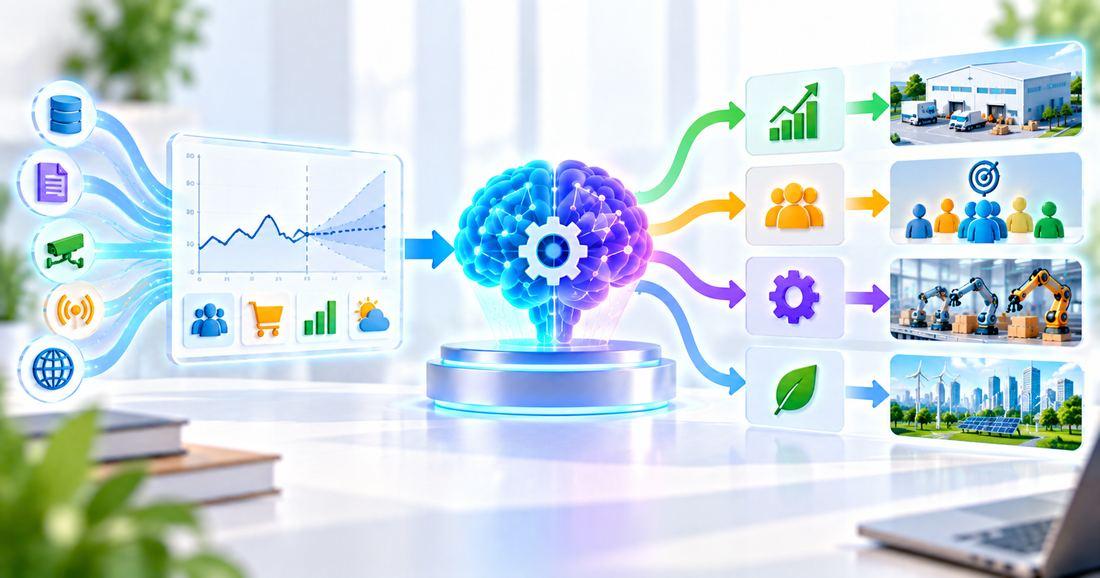

Section 1: Why Every Engineering Team Is Becoming an AI Team
Software engineering has always evolved in response to technological innovation. Every major advancement, from object-oriented programming and agile methodologies to cloud computing, DevOps, containers, and platform engineering, has fundamentally changed how engineering teams build software. Each transformation introduced new tools, workflows, and responsibilities while requiring engineers to continuously develop new skills. Artificial intelligence represents the next and perhaps the most significant transformation because it is changing not only the technologies engineers use but also the way software itself is designed, developed, tested, deployed, and maintained.
Unlike previous technology shifts that primarily improved infrastructure or software delivery, AI is actively participating in engineering work. Large Language Models (LLMs), AI coding assistants, intelligent documentation systems, automated testing platforms, and AI-powered development environments are becoming integral parts of everyday engineering workflows. These technologies do not simply accelerate coding; they influence architecture discussions, product planning, debugging, code reviews, system design, deployment strategies, and operational monitoring. As a result, traditional software engineering teams are gradually evolving into AI engineering teams where intelligent systems work alongside human engineers throughout the entire software development lifecycle.
This transformation is not driven by the ambition to replace developers but by the growing complexity of modern software. Today's engineering organizations build distributed cloud applications, manage microservices architectures, support millions of users, and deploy software continuously across multiple environments. These responsibilities require engineers to process enormous amounts of technical information while maintaining speed, quality, security, and reliability. Artificial intelligence provides the computational assistance necessary to manage this complexity, allowing engineering teams to focus on solving business problems rather than spending valuable time on repetitive development tasks.
The Evolution of Modern Engineering Teams
Software engineering has undergone continuous transformation over the past several decades. Traditional engineering teams were primarily responsible for writing application code, managing databases, and deploying software manually onto on-premises servers. Development cycles were lengthy, releases occurred infrequently, and infrastructure management often remained separate from software development. As businesses demanded faster innovation and greater scalability, engineering practices evolved dramatically.
The emergence of cloud computing transformed software architecture by enabling elastic infrastructure, distributed applications, and globally scalable services. Shortly afterward, DevOps eliminated the historical separation between development and operations, encouraging continuous integration, continuous deployment, infrastructure automation, and closer collaboration between technical teams. Platform engineering further accelerated this evolution by providing reusable infrastructure, standardized developer environments, and internal platforms that allowed software engineers to focus more directly on delivering business value.
Artificial intelligence represents the next stage of this evolution. Rather than simply improving deployment pipelines or infrastructure management, AI enhances the engineering process itself. Engineers now collaborate with intelligent systems capable of understanding code, generating documentation, recommending architectural improvements, explaining unfamiliar technologies, and automating repetitive development activities. Engineering teams are therefore evolving from organizations that primarily build software into organizations that build software alongside artificial intelligence.
AI Is Transforming the Software Development Lifecycle
One of the most visible impacts of artificial intelligence is its influence across every stage of the Software Development Lifecycle (SDLC). During planning, AI assists product managers by analyzing customer feedback, identifying recurring feature requests, and generating user stories from business requirements. During architecture discussions, intelligent systems summarize technical documentation, compare design alternatives, and recommend implementation strategies based on established engineering practices.
Development itself has changed significantly through AI-assisted coding. Modern coding assistants generate boilerplate code, suggest implementations, explain unfamiliar APIs, optimize algorithms, and identify potential bugs before execution. Instead of manually writing every function from scratch, engineers increasingly review, refine, and extend AI-generated implementations while concentrating on solving higher-level architectural and business challenges.
AI also improves technical documentation, an area traditionally neglected because of time constraints. Intelligent assistants automatically generate API documentation, explain system behavior, summarize pull requests, create onboarding guides, and maintain architectural documentation as software evolves. This reduces knowledge silos while making complex systems significantly easier for engineering teams to understand.
Code quality benefits from AI-powered code reviews that identify security vulnerabilities, performance bottlenecks, maintainability concerns, coding standard violations, and architectural inconsistencies before software reaches production. Rather than replacing human reviewers, AI performs an initial analysis that allows engineers to focus discussions on broader architectural decisions and business logic.
Engineering Culture in an AI-First World
Technology alone cannot transform engineering organizations without corresponding changes in engineering culture. Successful AI adoption requires teams to embrace collaboration with AI as a normal aspect of software development rather than viewing intelligent systems as experimental tools or potential replacements for developers.
This cultural evolution encourages continuous learning because AI technologies advance rapidly. Engineering organizations invest in regular education, experimentation, internal knowledge sharing, and collaborative problem-solving so developers remain confident using emerging AI capabilities. Teams that continuously refine their workflows adapt much faster than organizations treating AI as a one-time productivity enhancement.
AI also drives a significant productivity transformation. Routine coding, documentation, debugging, and testing consume substantially less engineering effort, allowing teams to spend more time designing innovative features, improving customer experiences, strengthening security, and enhancing software reliability. Productivity is increasingly measured by business outcomes rather than the volume of code written.
Ultimately, these changes cultivate an AI engineering mindset. Engineers no longer evaluate success solely according to technical implementation but according to how effectively they combine human expertise with artificial intelligence to solve meaningful problems. Curiosity, adaptability, architectural thinking, collaboration, and continuous improvement become defining characteristics of AI-first engineering organizations.
The engineering teams leading this transformation recognize that AI is not another developer tool added to existing workflows. It is fundamentally changing how engineering organizations think, collaborate, innovate, and deliver software. Those capable of integrating AI into every stage of software development will consistently outperform teams relying solely on traditional engineering practices because they combine human creativity with intelligent automation to create faster, smarter, and more resilient software delivery processes.
Readers interested in understanding why AI expertise is becoming indispensable across modern software organizations should also explore "Why Every Software Team Will Have an AI Engineer by 2030," which examines how AI is reshaping engineering teams, technical roles, and the future of software development.
Key Takeaway
Every engineering team is gradually becoming an AI team because artificial intelligence now influences every stage of the software development lifecycle. From AI-assisted coding, intelligent documentation, automated testing, and code reviews to prompt engineering, systems thinking, continuous learning, and AI-first engineering culture, software development is evolving into a collaborative discipline where humans and AI work together. Organizations that embrace this transformation will build more innovative, productive, and resilient engineering teams capable of delivering higher-quality software in an increasingly AI-driven world.
Section 2: Building AI-Native Engineering Organizations
Artificial intelligence is no longer an optional productivity tool used by a handful of developers. It is rapidly becoming part of the engineering foundation upon which modern software organizations operate. As engineering teams move beyond experimenting with AI coding assistants, they begin redesigning entire development workflows around intelligent collaboration. This transformation is creating a new generation of AI-native engineering organizations where artificial intelligence supports planning, architecture, implementation, testing, deployment, documentation, and operational monitoring as an integrated capability rather than an isolated tool.
Unlike traditional engineering organizations, where software development depended almost entirely on manual coding and human coordination, AI-native organizations treat AI as an engineering platform that enhances every stage of product development. Engineers increasingly rely on AI to retrieve organizational knowledge, generate implementation strategies, automate repetitive tasks, improve software quality, and accelerate decision-making. However, becoming an AI-native engineering organization requires much more than purchasing access to Large Language Models or deploying coding assistants. Organizations must redesign engineering workflows, build supporting infrastructure, establish governance frameworks, and create development environments where AI operates securely and consistently across every engineering team.
Engineering leaders therefore face a broader organizational challenge. Their objective is no longer simply introducing AI tools but creating an engineering ecosystem where developers, intelligent systems, infrastructure, and organizational knowledge work together to improve productivity, software quality, and innovation at enterprise scale.
AI Copilots Become Everyday Development Tools
Perhaps the most visible change within modern engineering organizations is the widespread adoption of AI copilots as everyday development companions. Earlier generations of developer tools primarily focused on syntax highlighting, code completion, debugging support, and static analysis. AI copilots extend these capabilities significantly by understanding natural language, interpreting project context, explaining unfamiliar code, generating implementations, and assisting engineers throughout the entire development lifecycle.
Modern developers increasingly use AI copilots for coding assistance, allowing them to generate boilerplate implementations, create reusable components, optimize algorithms, and accelerate feature development. Rather than replacing engineering expertise, copilots reduce repetitive implementation work so engineers can focus on architectural decisions, scalability, business logic, and customer value. This shift enables engineering teams to deliver software faster without sacrificing quality.
AI copilots also improve documentation generation, one of the most time-consuming yet frequently neglected engineering activities. Intelligent assistants automatically generate API documentation, summarize pull requests, explain architectural changes, create onboarding materials, and maintain technical documentation as software evolves. As a result, engineering knowledge becomes easier to discover and maintain, reducing dependency on individual experts and improving collaboration across distributed teams.
Another major advantage involves knowledge retrieval. Enterprise engineering organizations maintain enormous volumes of documentation, design specifications, architecture decisions, coding standards, operational playbooks, and historical discussions. AI-powered retrieval systems enable developers to ask natural language questions and receive accurate answers drawn from internal knowledge repositories rather than manually searching through multiple documentation platforms. This dramatically reduces context-switching while accelerating problem resolution.
Collectively, these capabilities significantly improve developer productivity. Engineers spend less time searching for information, writing repetitive code, maintaining documentation, or understanding unfamiliar systems. Instead, they devote more attention to innovation, architecture, performance optimization, and solving complex technical challenges that require human judgment.
Governance and Responsible AI Development
As AI becomes embedded within engineering processes, organizations must establish robust AI governance frameworks that balance innovation with security, compliance, and operational reliability. Engineering teams increasingly rely on AI to generate production code, access proprietary documentation, analyze customer information, and support architectural decisions, making governance an essential organizational capability rather than a regulatory formality.
One important consideration is secure AI usage. Organizations define policies governing which AI platforms developers may use, what information may be shared with external services, how prompts should be managed, and how generated code should be validated before production deployment. These policies reduce security risks while encouraging responsible adoption throughout engineering teams.
Protecting code privacy has also become increasingly important. Proprietary source code, intellectual property, customer information, and internal documentation represent valuable organizational assets. Engineering organizations therefore deploy private AI environments, role-based access controls, encryption, and secure knowledge repositories that allow developers to benefit from AI without exposing confidential information to unauthorized systems.
Governance also supports regulatory compliance, ensuring AI-generated software satisfies industry standards, security requirements, licensing obligations, and organizational coding policies. AI-generated implementations undergo the same rigorous review processes as manually written software, maintaining engineering quality while benefiting from intelligent automation.
Ultimately, governance enables organizations to adopt AI confidently because engineers understand how intelligent systems should be used responsibly. Rather than limiting innovation, governance establishes consistent practices that allow AI capabilities to scale safely across increasingly large engineering organizations.
Engineering organizations that successfully build AI-native environments recognize that transformation depends on much more than adopting coding assistants. Their competitive advantage comes from redesigning workflows, investing in infrastructure, enabling enterprise knowledge, and establishing governance frameworks that allow artificial intelligence to become a permanent engineering capability rather than a temporary productivity experiment.
Readers interested in understanding how autonomous AI systems coordinate complex engineering workflows should also explore "The Engineering Behind Autonomous AI Workflows," which examines the architectures, orchestration strategies, and engineering principles enabling AI-powered software development at enterprise scale.
Key Takeaway
Building an AI-native engineering organization requires much more than introducing AI coding assistants. AI copilots, redesigned engineering workflows, enterprise LLM infrastructure, vector databases, internal developer AI platforms, AI observability, secure AI usage, code privacy, compliance, and strong governance collectively create an engineering ecosystem where artificial intelligence enhances every stage of software development. Organizations that invest in these organizational and technical foundations will build engineering teams capable of delivering software faster, more securely, and with significantly greater innovation in the AI era.
Section 3: Leading Engineering Transformation Through AI
Artificial intelligence is no longer changing only how individual developers write code, it is transforming how engineering organizations are structured, managed, measured, and scaled. As AI capabilities become embedded throughout the software development lifecycle, engineering leaders face challenges that extend far beyond technology adoption. They must rethink organizational structures, redefine engineering roles, establish new productivity metrics, standardize AI usage, and ensure that AI initiatives create measurable business value rather than isolated productivity improvements. The engineering organizations that succeed in the AI era will not simply deploy coding assistants; they will redesign their operating models so that humans and artificial intelligence collaborate seamlessly across every engineering function.
Many organizations have already introduced AI tools into their development environments, yet adoption often remains inconsistent. Some teams embrace AI-powered development enthusiastically, while others continue relying on traditional workflows. Different business units may use different AI platforms, follow inconsistent governance policies, or duplicate infrastructure investments without coordination. These fragmented approaches limit the organization's ability to scale AI effectively. Engineering transformation therefore requires deliberate leadership that aligns people, processes, technology, and business objectives around a unified AI strategy.
Successful engineering leaders recognize that AI adoption is fundamentally an organizational transformation rather than a software upgrade. They establish multidisciplinary engineering teams, measure AI-driven business outcomes, standardize engineering platforms, and create operating models that encourage continuous learning and innovation. Their objective is not merely to help developers write code faster but to build engineering organizations capable of delivering better products, improving customer experiences, and adapting continuously as AI technologies evolve.
The Rise of AI Engineering Roles
One of the most visible consequences of AI adoption is the emergence of entirely new engineering roles. Traditional software organizations were primarily composed of software engineers, DevOps engineers, quality assurance specialists, architects, and platform engineers. While these roles remain essential, modern engineering teams increasingly require specialists capable of designing, deploying, governing, and maintaining AI systems throughout production.
The role of the AI Engineer has become central to this transformation. AI engineers integrate Large Language Models, Retrieval-Augmented Generation (RAG), prompt orchestration, model evaluation, AI observability, and inference pipelines into enterprise software. Their responsibilities extend beyond machine learning because they combine software engineering, cloud infrastructure, distributed systems, and AI application development into production-ready solutions.
Alongside AI engineers, organizations increasingly rely on AI Platform Engineers responsible for building the infrastructure that enables AI adoption across multiple engineering teams. They develop internal AI platforms, manage enterprise LLM access, optimize inference infrastructure, maintain vector databases, establish monitoring frameworks, and create reusable AI services that reduce duplicated effort throughout the organization.
The emergence of AI Product Engineers further illustrates how engineering is evolving. Unlike traditional product engineers who primarily implement application features, AI Product Engineers combine product thinking with AI expertise to design intelligent user experiences, conversational interfaces, recommendation systems, AI copilots, and autonomous workflows. Their work requires close collaboration with product managers, designers, data scientists, and business stakeholders to ensure AI capabilities solve meaningful customer problems.
Traditional Machine Learning Engineers also continue playing a vital role by developing training pipelines, optimizing models, managing feature engineering, and supporting model deployment. Increasingly, however, their work overlaps with broader AI engineering disciplines as organizations integrate generative AI into mainstream software products. Together, these emerging roles demonstrate that engineering organizations are becoming multidisciplinary ecosystems where AI expertise is distributed across multiple specialized functions rather than isolated within research teams.
Creating Business Value Beyond Faster Coding
Although AI significantly accelerates software development, its greatest value extends far beyond writing code more quickly. The most successful engineering organizations leverage AI to increase innovation by enabling teams to experiment more rapidly, evaluate architectural alternatives efficiently, prototype new products faster, and solve increasingly complex technical challenges. Engineers spend less time performing repetitive implementation work and more time creating differentiated customer experiences.
This shift directly improves customer impact. Faster development cycles allow organizations to respond quickly to changing market demands, deliver new features more frequently, improve software reliability, personalize user experiences, and resolve customer issues more efficiently. AI therefore contributes not only to engineering productivity but also to greater customer satisfaction and stronger competitive positioning.
Organizations also achieve significant gains in engineering efficiency. AI reduces repetitive work, improves knowledge sharing, strengthens documentation, accelerates onboarding, streamlines testing, and optimizes deployment processes. Engineering teams become more effective because intelligent systems eliminate friction throughout the software development lifecycle while allowing specialists to concentrate on high-value engineering activities.
Ultimately, these improvements create lasting competitive advantage. As AI tools become widely available, sustainable differentiation will depend less on access to technology and more on an organization's ability to integrate AI effectively into engineering culture, operational processes, leadership practices, and product strategy. Engineering organizations that redesign themselves around AI collaboration will consistently outperform those treating AI as merely another development tool.
The organizations leading this transformation understand that engineering excellence in the AI era is measured not by the volume of code produced but by the quality of products delivered, the speed of innovation, the resilience of engineering systems, and the ability to combine human expertise with intelligent automation to create lasting business value.
Readers interested in understanding how engineering decisions influence organizational growth and business success should also explore "The Business of AI: What Every ML Engineer Should Know Beyond Coding," which explains how AI engineering, business strategy, and enterprise transformation work together to create sustainable competitive advantage.
Key Takeaway
Leading engineering transformation through AI requires much more than adopting intelligent development tools. Emerging AI engineering roles, modern productivity metrics, enterprise-wide AI adoption, cross-functional collaboration, AI Centers of Excellence, standardized engineering platforms, and a relentless focus on business outcomes collectively enable organizations to evolve from traditional software teams into AI-native engineering organizations. Companies that successfully align engineering leadership, technology, and organizational strategy will build more innovative products, deliver greater customer value, and establish a lasting competitive advantage in the AI-driven future of software engineering.
Section 4: The Future of AI-First Software Engineering
Artificial intelligence is redefining what it means to be a software engineer and, more importantly, what it means to be an engineering organization. Over the past several decades, engineering excellence has largely been measured by technical expertise, architectural knowledge, coding ability, and the capacity to build reliable software systems. These qualities will remain essential, but the widespread adoption of AI is expanding the scope of engineering far beyond writing code. Future engineering teams will increasingly focus on orchestrating intelligent systems, designing AI-native applications, managing autonomous development workflows, and ensuring that artificial intelligence operates safely, reliably, and ethically across every stage of the software lifecycle.
This transformation marks the beginning of a new era where engineering organizations evolve from traditional software development teams into AI-first engineering organizations. Rather than viewing AI as an external productivity tool, future teams will embed intelligence into their development environments, engineering processes, infrastructure, and organizational culture. Engineers will spend less time implementing repetitive functionality and more time solving architectural challenges, designing resilient systems, validating AI-generated outputs, and creating products that combine human creativity with machine intelligence.
The future of software engineering therefore belongs to organizations that continuously adapt. Technology will continue evolving rapidly, but organizations capable of integrating AI into their engineering practices, leadership models, and workforce development strategies will consistently outperform competitors that rely solely on traditional development approaches. The defining characteristic of engineering excellence will no longer be how much code teams produce, but how effectively they leverage AI to build secure, scalable, innovative, and customer-focused software.
Autonomous Software Development Becomes Reality
One of the most significant developments shaping the future is the emergence of autonomous software development. Today's AI coding assistants primarily generate code snippets, explain implementations, and assist with debugging. Future AI systems will extend these capabilities by coordinating complete development workflows involving planning, architecture, implementation, testing, deployment, documentation, and operational monitoring with minimal manual intervention.
These systems will increasingly operate through AI agents capable of performing multi-step engineering tasks. An engineer may define a business requirement, after which multiple specialized agents collaborate to analyze technical specifications, generate implementation plans, create production-ready code, write automated tests, validate security requirements, update documentation, and prepare deployment pipelines. Human engineers remain responsible for architectural decisions, business logic, and quality assurance, but AI agents dramatically reduce the manual effort required to execute routine engineering activities.
Future engineering platforms will also support self-improving systems that continuously learn from previous development cycles. AI will analyze production incidents, customer feedback, code review outcomes, deployment performance, and testing results to recommend architectural improvements, optimize development practices, and prevent recurring engineering issues. Rather than treating every project independently, engineering organizations will build intelligent systems that become progressively more effective with each software release.
Supporting these capabilities will be intelligent development environments where source code, documentation, architectural knowledge, operational data, infrastructure, and organizational expertise are integrated into unified AI-powered workspaces. Developers will interact conversationally with their engineering environment, retrieving relevant knowledge, generating implementations, understanding complex systems, and resolving technical challenges without leaving their primary development tools.
Preparing Engineers for the Next Decade
The next decade will require engineers to develop capabilities extending well beyond programming expertise. Strong software engineering fundamentals remain essential, but professionals must also understand how intelligent systems influence application architecture, engineering workflows, and product development.
Future engineers should prioritize developing AI engineering skills such as prompt engineering, Large Language Models, Retrieval-Augmented Generation (RAG), AI observability, AI-assisted software development, model evaluation, vector databases, AI security, and intelligent workflow orchestration. These competencies will become increasingly valuable as AI-native software becomes the industry standard.
Organizations must also advance their AI engineering maturity by integrating AI into governance, infrastructure, engineering culture, developer experience, and business strategy rather than treating AI as an isolated productivity initiative. Mature organizations establish reusable AI platforms, standardized engineering practices, continuous monitoring, and governance frameworks that support enterprise-scale AI adoption.
This transformation will create significant future career opportunities. Roles including AI Software Engineer, AI Platform Engineer, AI Reliability Engineer, AI Product Engineer, Prompt Engineer, AI Security Engineer, AI Infrastructure Architect, and AI Developer Experience Engineer will become increasingly common as enterprises expand their AI capabilities. Engineers capable of combining traditional software expertise with AI engineering will enjoy growing demand across nearly every industry.
Ultimately, the long-term industry transformation extends beyond engineering itself. AI will influence how products are conceived, how teams collaborate, how software is maintained, and how organizations compete. Companies that redesign engineering around human-AI collaboration will deliver higher-quality software, innovate more rapidly, and respond more effectively to changing customer expectations. Those treating AI merely as an optional coding assistant will struggle to match the speed and adaptability of AI-native competitors.
The engineering organizations leading the next decade will not necessarily be those employing the largest engineering teams or writing the greatest volume of code. They will be the organizations that successfully combine human expertise, intelligent automation, continuous learning, and organizational adaptability into unified engineering ecosystems capable of evolving alongside artificial intelligence.
Readers interested in understanding how advanced AI research becomes production-ready engineering capability should also explore "Research to Real-World ML Engineering: Bridging the Gap," which examines how engineering teams transform AI innovation into scalable, reliable, and enterprise-ready software systems.
Key Takeaway
The future of software engineering will be defined by AI-first organizations where autonomous development, AI agents, intelligent development environments, human-AI collaboration, continuous learning, and organizational adaptability become standard engineering practices. Engineers will increasingly act as architects, orchestrators, and strategic decision-makers who guide intelligent systems rather than perform every implementation task manually. Organizations that invest in AI engineering maturity, workforce development, and collaborative engineering cultures today will be best positioned to lead the next generation of software innovation and establish lasting competitive advantage in the AI era.
Conclusion
Artificial intelligence is transforming software engineering more profoundly than any technological shift since the adoption of cloud computing and DevOps. For decades, engineering excellence was defined by technical expertise, efficient coding practices, scalable architectures, and reliable software delivery. While these capabilities remain essential, AI is fundamentally changing how engineering teams create software by introducing intelligent systems that actively participate throughout the development lifecycle. Coding assistants, Large Language Models, autonomous development agents, AI-powered testing, intelligent documentation, automated code reviews, and AI-enhanced DevOps are no longer experimental technologies. They are rapidly becoming foundational components of modern engineering organizations, enabling teams to deliver software faster while improving quality, collaboration, and innovation.
Throughout this article, we explored how traditional engineering teams are evolving into AI-first organizations. The journey begins with recognizing that AI is not replacing software engineers but transforming the way engineering work is performed. Modern engineering teams increasingly collaborate with intelligent systems that automate repetitive implementation tasks, retrieve organizational knowledge, generate documentation, support architectural decisions, and improve software quality. This transformation requires engineers to develop new skills such as prompt engineering, AI-assisted development, systems thinking, and understanding Large Language Models while embracing a culture of continuous learning and human-AI collaboration. Engineering organizations that successfully integrate these capabilities become more productive because engineers spend less time on repetitive work and more time solving complex technical and business problems.
We also examined the organizational changes required to build AI-native engineering teams. Successful organizations do not simply deploy AI coding assistants; they redesign engineering workflows so artificial intelligence contributes meaningfully during planning, architecture, implementation, testing, deployment, and operations. Enterprise AI infrastructure, vector databases, internal developer platforms, AI observability, secure governance frameworks, and Responsible AI practices collectively create development environments where AI can operate consistently, securely, and at scale. These investments transform AI from an individual productivity tool into an enterprise engineering capability that benefits every development team while maintaining security, compliance, and operational excellence.
Frequently Asked Questions (FAQs)
1. What is an AI engineering team?
An AI engineering team is a software engineering team that integrates artificial intelligence into every stage of the software development lifecycle, using AI to support coding, testing, documentation, deployment, monitoring, and decision-making while engineers focus on architecture, innovation, and problem-solving.
2. How is AI changing software engineering?
AI is transforming software engineering by automating repetitive development tasks, improving code quality, generating documentation, assisting with architecture, accelerating testing, enhancing debugging, and enabling engineers to collaborate with intelligent systems throughout the development lifecycle.
3. Will AI replace software engineers?
No. AI is augmenting software engineers rather than replacing them. Engineers remain responsible for system architecture, business logic, security, creativity, strategic decision-making, and validating AI-generated outputs while AI automates repetitive implementation tasks.
4. What skills do AI-first engineers need?
AI-first engineers should develop skills in prompt engineering, Large Language Models (LLMs), Retrieval-Augmented Generation (RAG), AI-assisted development, AI observability, cloud computing, distributed systems, systems thinking, and software architecture alongside traditional programming expertise.
5. What are AI coding copilots?
AI coding copilots are intelligent development assistants that help engineers generate code, explain implementations, identify bugs, create documentation, write tests, suggest optimizations, and improve developer productivity through natural language interactions.
6. How does AI improve developer productivity?
AI improves productivity by reducing repetitive work such as boilerplate coding, documentation, debugging, testing, knowledge retrieval, code reviews, and research, allowing engineers to focus on high-value engineering activities and product innovation.
7. What is AI-native software development?
AI-native software development is an engineering approach where artificial intelligence is integrated throughout planning, architecture, coding, testing, deployment, monitoring, and maintenance rather than being treated as an isolated development tool.
8. How do engineering teams adopt AI?
Engineering teams adopt AI by integrating coding assistants, AI-powered testing, intelligent documentation, enterprise AI platforms, governance frameworks, developer training, and standardized workflows into their software development processes.
9. What infrastructure supports AI engineering?
AI engineering relies on Large Language Model platforms, vector databases, Retrieval-Augmented Generation (RAG), AI observability tools, cloud infrastructure, orchestration frameworks, enterprise knowledge repositories, and secure internal AI platforms.
10. Why is AI governance important for engineering teams?
AI governance ensures AI is used securely and responsibly by establishing policies for code privacy, model usage, data protection, compliance, monitoring, security, and validation of AI-generated software before deployment.
11. What new engineering roles are emerging because of AI?
Organizations are increasingly hiring AI Engineers, AI Platform Engineers, AI Product Engineers, AI Infrastructure Engineers, AI Reliability Engineers, Prompt Engineers, AI Security Engineers, and AI Developer Experience Engineers to support enterprise AI adoption.
12. How should engineering leaders prepare for AI?
Engineering leaders should invest in workforce upskilling, AI platforms, governance frameworks, cross-functional collaboration, AI Centers of Excellence, standardized engineering practices, and continuous experimentation while aligning AI initiatives with business objectives.
13. What metrics measure AI engineering success?
AI engineering success is measured using developer productivity, software quality, deployment frequency, AI adoption rates, developer experience, code reliability, security improvements, customer impact, operational efficiency, and overall business outcomes.
14. What is the future of software engineering?
The future of software engineering will revolve around AI-first organizations where engineers collaborate with AI agents, intelligent development environments, autonomous workflows, and continuously evolving engineering platforms to build software more efficiently and innovatively than ever before.
15. How can engineers prepare for AI-driven development?
Engineers can prepare by strengthening software engineering fundamentals while learning AI-assisted development, prompt engineering, LLM integration, cloud-native architecture, AI governance, distributed systems, and continuous learning practices. Engineers who embrace human-AI collaboration and adapt to evolving technologies will be well positioned for long-term success in the AI-driven software industry.