
Section 1: Why This Distinction Matters More Than Ever
Two Worlds of Machine Learning: Products vs Platforms
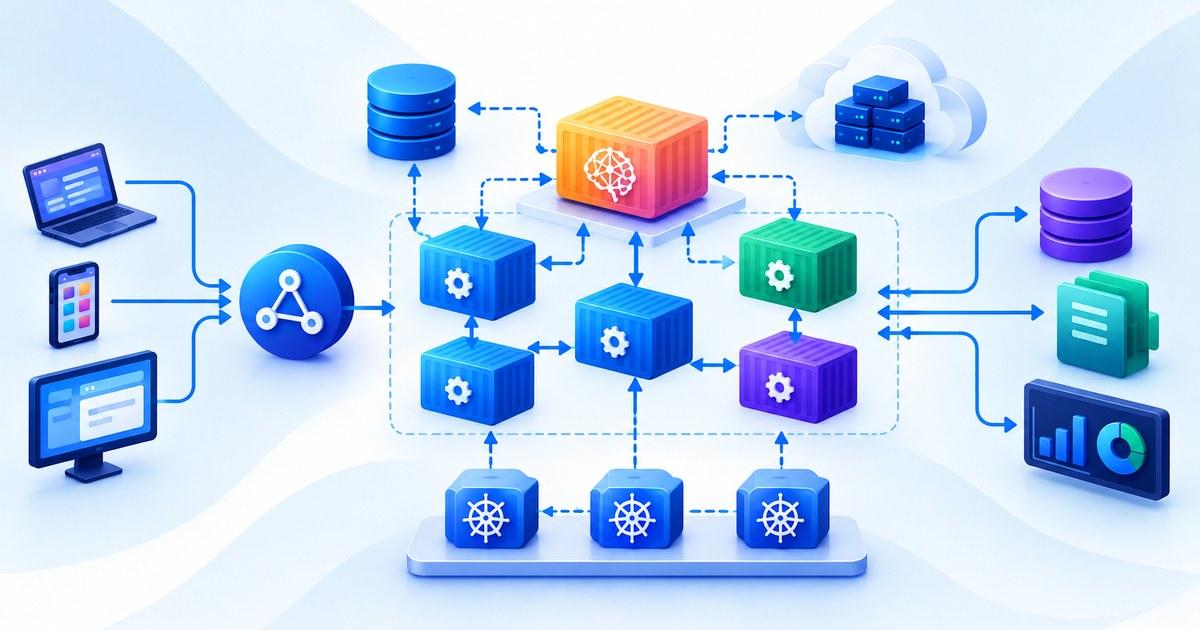
When candidates prepare for machine learning interviews, they often assume that all ML roles evaluate the same skills: modeling, data, and system design. In reality, there is a sharp and important distinction between teams that build AI-powered products and teams that build internal ML platforms.
At companies like OpenAI or TikTok, AI product teams focus on delivering end-user experiences. Their systems directly interact with users, and success is measured through engagement, satisfaction, and real-world impact.
In contrast, internal ML platform teams at organizations like Google or Meta focus on building the infrastructure and tooling that enable other teams to develop, train, and deploy models efficiently.
This difference fundamentally changes what is being evaluated in interviews. Product teams care about how well you connect ML to user value, while platform teams care about how well you design scalable, reliable systems.
The Product Mindset: Delivering User-Facing Intelligence
AI product teams operate in environments where user experience is the ultimate metric. The model is not the end goal, it is just one component in a system designed to deliver value to users.
In these systems, decisions are driven by questions such as:
- Does the feature improve user engagement?
- Is the response fast and reliable?
- Does the system behave safely and predictably?
- Can we iterate quickly based on feedback?
For example, building a recommendation system or an AI assistant involves more than selecting the right model. It requires integrating multiple components, including data pipelines, ranking systems, safety mechanisms, and feedback loops.
Candidates are expected to demonstrate an understanding of how ML systems operate in dynamic, real-world environments. This includes handling noisy data, adapting to changing user behavior, and balancing multiple objectives such as accuracy, latency, and cost.
Another defining characteristic of product teams is iteration speed. Systems are continuously updated based on user feedback and experimentation. Candidates who emphasize A/B testing, online metrics, and rapid iteration demonstrate strong alignment with product thinking.
The Platform Mindset: Enabling ML at Scale
Internal ML platform teams operate at a different layer of abstraction. Their goal is not to build features directly, but to create systems that allow other teams to build features more efficiently.
These systems include components such as:
- Feature stores
- Training pipelines
- Model serving infrastructure
- Experimentation platforms
The focus here is on scalability, reliability, and standardization. A platform system must handle large volumes of data, support multiple teams, and operate consistently under varying conditions.
Candidates are expected to think in terms of infrastructure and abstractions. This includes designing APIs, ensuring data consistency, and managing distributed systems.
Unlike product teams, where rapid iteration is key, platform teams prioritize stability and reproducibility. Changes must be carefully managed to avoid breaking downstream systems.
Another important aspect is developer experience. Platform systems are used by engineers, and their usability directly impacts productivity. Candidates who consider usability and abstraction demonstrate deeper understanding.
Why Candidates Often Get This Wrong
One of the most common mistakes candidates make is applying the same preparation strategy to both types of roles. This often leads to misaligned answers during interviews.
For example, a candidate interviewing for a product role may focus heavily on model architecture without discussing user impact or system integration. Conversely, a candidate interviewing for a platform role may focus on feature design without addressing scalability or reliability.
This mismatch signals a lack of understanding of the role’s requirements.
The distinction is emphasized in Machine Learning System Design Interview: Crack the Code with InterviewNode, where the evaluation criteria shift depending on whether the system is user-facing or infrastructure-focused .
Strong candidates adapt their thinking based on the role. They recognize that the same ML concepts must be applied differently depending on the context.
The Core Mental Model: Who Is Your User?
The simplest way to understand the difference is to ask a single question:
Who is the user of the system?
For AI product teams, the user is an end consumer. The system must be intuitive, responsive, and valuable.
For ML platform teams, the user is another engineer. The system must be reliable, scalable, and easy to use.
This distinction influences every design decision:
- In product systems, latency directly affects user experience.
- In platform systems, throughput and reliability are more critical.
- In product systems, experimentation drives improvement.
- In platform systems, stability and consistency are prioritized.
- In product systems, metrics focus on engagement and satisfaction.
- In platform systems, metrics focus on system performance and reliability.
Candidates who anchor their answers around the end user of the system consistently provide more relevant and compelling responses.
Implications for Interview Preparation
Understanding this distinction allows candidates to prepare more effectively.
For product roles, preparation should focus on:
- Designing real-time systems
- Modeling user behavior
- Balancing multiple objectives
- Incorporating feedback loops
For platform roles, preparation should focus on:
- Distributed systems design
- Data pipelines and storage
- Scalability and fault tolerance
- API and abstraction design
In both cases, system design remains central, but the emphasis shifts based on the role.
The Key Takeaway
AI product teams and ML platform teams operate in fundamentally different environments, and interviews are designed to reflect these differences. Success depends on your ability to recognize the context, adapt your thinking, and design systems that align with the goals of the team.
Section 2: Core Concepts - Product Metrics vs System Metrics, Online vs Offline Systems, and Abstraction Layers
Product Metrics vs System Metrics: What Are You Optimizing For?
One of the most fundamental differences between AI product teams and internal ML platform teams lies in what success looks like. This is captured through the metrics each team prioritizes, and it directly shapes how systems are designed, evaluated, and iterated.
In AI product teams at companies like TikTok or OpenAI, success is defined through user-centric metrics. These include engagement, retention, session time, conversion rates, or task completion success. These metrics are inherently tied to user behavior and often involve multi-objective optimization.
For example, a recommendation system is not simply optimizing for click-through rate. It must balance watch time, diversity, user satisfaction, and long-term retention. Optimizing one metric in isolation can degrade others, leading to suboptimal user experience. Candidates interviewing for product roles are expected to understand how these metrics interact and how trade-offs are managed.
Another important characteristic of product metrics is that they are noisy and indirect. User behavior does not always reflect true intent. A user might watch a video out of curiosity but not find it valuable. This makes evaluation more complex, requiring experimentation and careful interpretation of signals.
In contrast, internal ML platform teams at organizations like Google or Meta operate with system-centric metrics. These include latency, throughput, uptime, data freshness, and resource utilization. These metrics are more deterministic and directly measurable.
For example, a feature store is evaluated based on how quickly it serves features, how consistently it maintains data integrity, and how reliably it supports downstream systems. The focus is on performance, reliability, and scalability, rather than user engagement.
This difference has significant implications for system design. In product systems, you may accept slightly higher latency if it improves recommendation quality. In platform systems, latency violations may be unacceptable regardless of other benefits.
Candidates who clearly distinguish between user-driven metrics and system-driven metrics demonstrate a strong understanding of the role they are interviewing for.
Online vs Offline Systems: Real-Time Interaction vs Batch Processing
Another critical distinction lies in how systems operate over time, specifically, the balance between online and offline components.
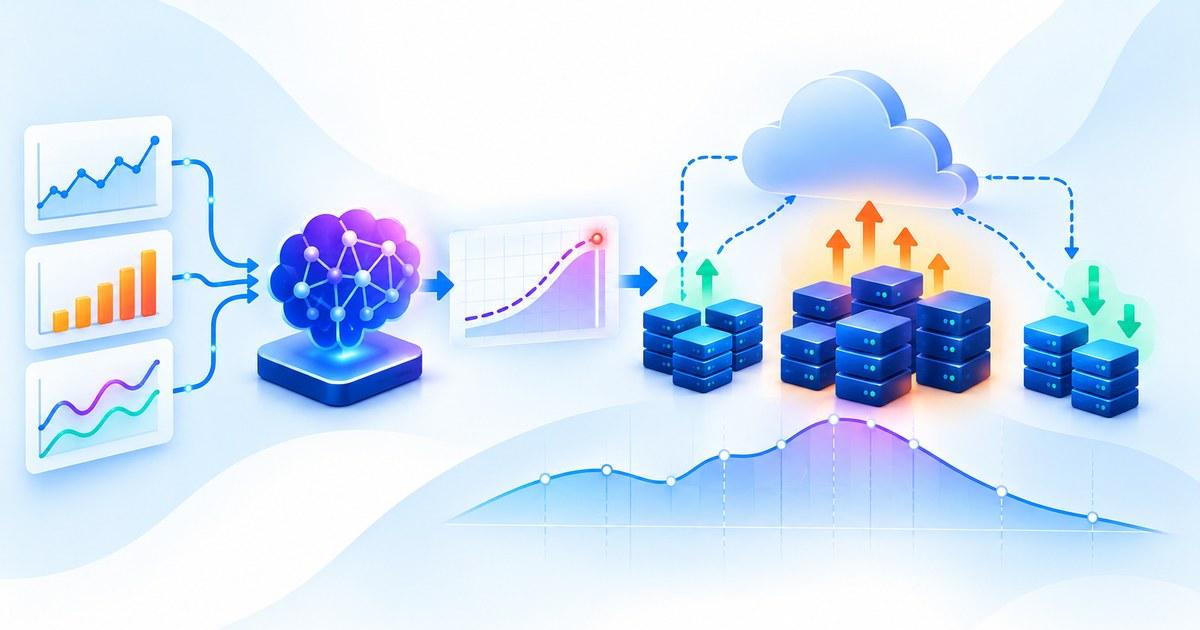
AI product systems are heavily oriented toward online processing. They must respond to user interactions in real time, updating recommendations or predictions as behavior changes. This requires low-latency pipelines, real-time feature updates, and efficient inference systems.
For instance, when a user interacts with content, the system must immediately incorporate that signal into future recommendations. This creates a continuous feedback loop, where every interaction influences subsequent outputs. Candidates are expected to understand how streaming systems, real-time feature stores, and fast inference pipelines enable this behavior.
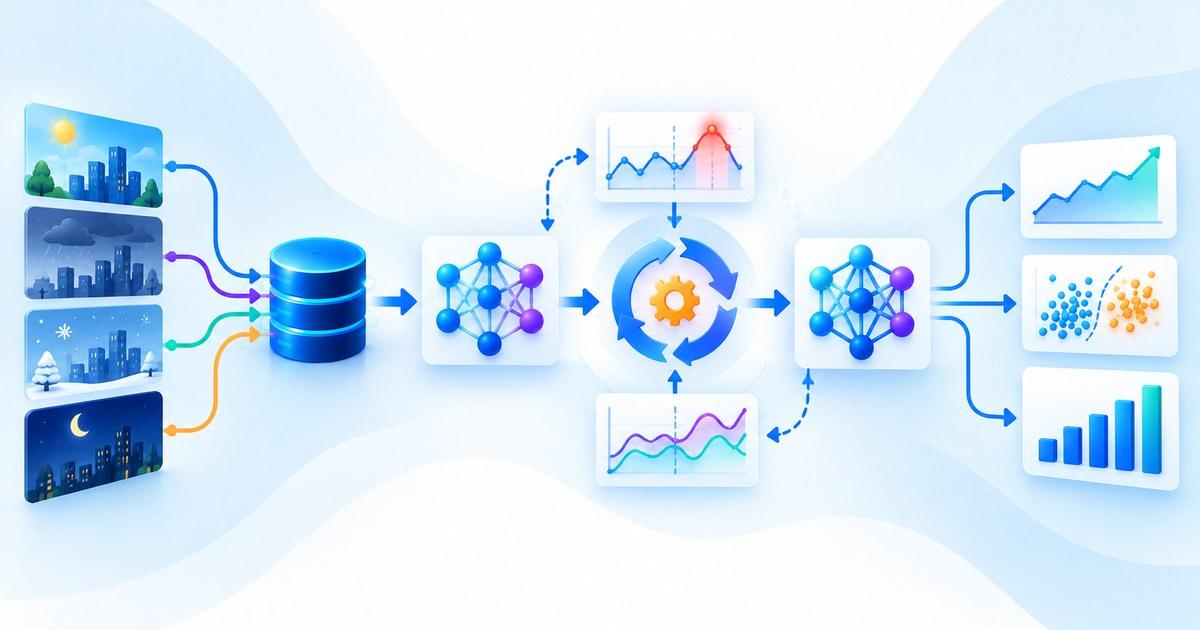
However, offline components still play a role in product systems. Models are typically trained offline using historical data, and periodic updates are deployed to production. The challenge is ensuring consistency between offline training and online inference, a common source of system failures.
In contrast, ML platform systems often emphasize offline processing and batch workflows. These systems are responsible for data ingestion, transformation, and model training at scale. While online components exist, they are often secondary to the broader pipeline.
For example, a training pipeline may process large datasets in batch mode, performing feature engineering and model training over hours or days. The focus is on throughput and reproducibility, rather than real-time responsiveness.
That said, modern platform systems increasingly support hybrid architectures, combining offline and online components. For example, a feature store may provide both batch features for training and real-time features for inference. Candidates who understand this hybrid nature demonstrate deeper system awareness.
The key difference is in priority. Product systems prioritize online responsiveness, while platform systems prioritize offline scalability and consistency.
Abstraction Layers: Product Logic vs Infrastructure Design
Abstraction is another area where the two types of teams diverge significantly. Both rely on abstractions, but the nature and purpose of those abstractions differ.
In AI product teams, abstractions are often built around user-facing functionality. These include components such as ranking systems, personalization layers, and feedback loops. The goal is to encapsulate complexity while enabling rapid iteration.
For example, a ranking system may abstract away the details of feature computation and model inference, allowing product engineers to focus on improving user experience. These abstractions are often flexible and evolve quickly as the product changes.
Candidates are expected to think in terms of end-to-end workflows, connecting data, models, and user interactions into a cohesive system. The emphasis is on integration and adaptability.
In contrast, ML platform teams build abstractions that enable reuse and standardization across multiple teams. These include APIs, frameworks, and infrastructure components that provide consistent interfaces for common tasks.
For example, a feature store abstracts the complexity of data retrieval, ensuring that features are consistent between training and inference. A model serving platform abstracts deployment, allowing teams to deploy models without managing infrastructure directly.
These abstractions must be robust, scalable, and generalizable. They are designed to handle a wide range of use cases and must maintain stability over time. Candidates are expected to think in terms of API design, backward compatibility, and system boundaries.
Another important aspect is ownership and responsibility. In product systems, teams often own the entire stack for a specific feature. In platform systems, ownership is shared, and changes can impact multiple teams. This requires careful design and coordination.
Candidates who understand how abstraction layers differ between product and platform teams, and how they influence system design, demonstrate strong architectural thinking.
Bridging the Two Worlds: Where Product Meets Platform
While the distinction between product and platform teams is clear, in practice, the two are deeply interconnected. Product teams rely on platform systems for data, training, and deployment, while platform teams must understand product requirements to build effective tools.
This creates a feedback loop between product needs and platform capabilities. For example, if a product team requires real-time personalization, the platform team may need to build streaming feature pipelines. Conversely, limitations in platform infrastructure can influence product design decisions.
Candidates who can bridge these two perspectives demonstrate a higher level of maturity. They understand not only how to design systems within a specific context but also how those systems interact with the broader ecosystem.
This perspective is increasingly valuable as ML systems become more complex and integrated.
The Key Takeaway
The core concepts distinguishing AI product teams and ML platform teams, metrics, system timing, and abstraction layers, shape every aspect of system design and evaluation. Product teams optimize for user impact and real-time responsiveness, while platform teams optimize for scalability, reliability, and standardization. Success in interviews depends on your ability to align your thinking with these priorities and design systems accordingly.
Section 3: System Design - Comparing Product ML Systems vs ML Platform Architectures
Designing AI Product Systems: Real-Time, User-Centric Pipelines
When designing systems for AI product teams at companies like TikTok or OpenAI, the architecture is centered around a single goal: delivering value to users in real time.
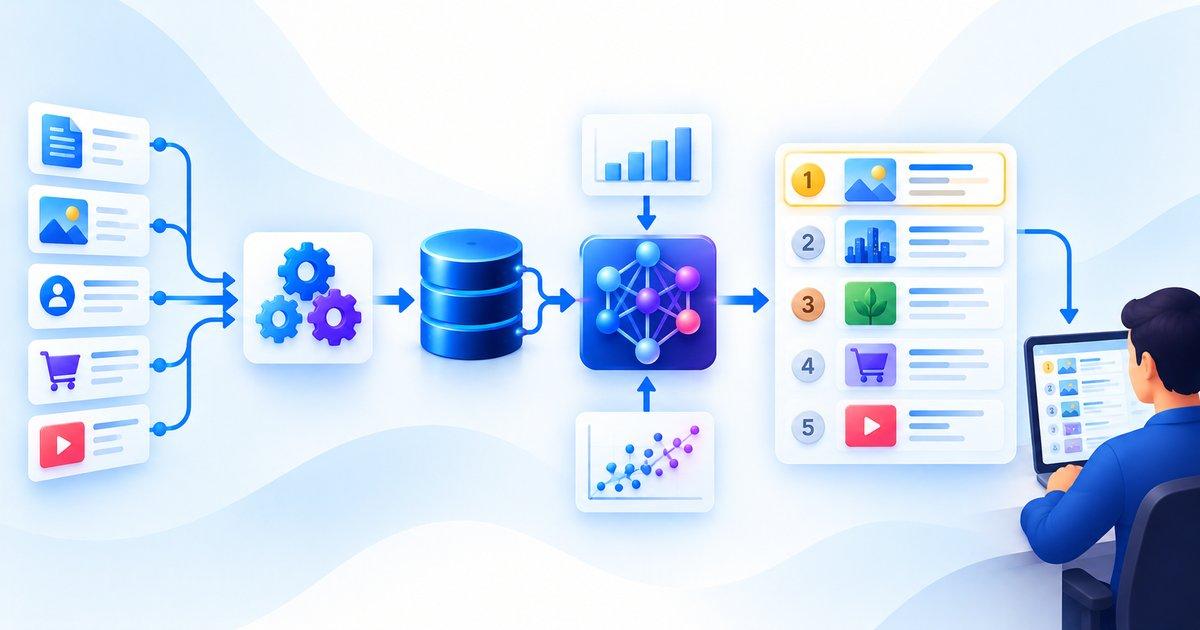
The system typically begins with user interaction events, clicks, watch time, queries, or inputs. These events are captured and processed through a streaming pipeline, enabling the system to react immediately to changes in user behavior. This real-time ingestion is critical because user intent is highly dynamic, and stale data can quickly degrade system performance.
From there, the system updates user state and features, often using a combination of short-term session signals and long-term historical data. This dual representation allows the system to balance immediate intent with broader preferences.
The next stage is candidate generation, where a subset of relevant items is retrieved from a large pool. This step prioritizes efficiency, as it must operate under strict latency constraints. Techniques such as embedding similarity or heuristic filtering are commonly used.
Following candidate generation is the ranking stage, where more complex models evaluate and order the candidates based on predicted user engagement. This stage integrates multiple signals, including user features, content features, and contextual information.
Finally, the system delivers the ranked output to the user, completing the loop. As the user interacts with the output, new data is generated, feeding back into the system. This creates a continuous feedback loop, enabling rapid adaptation.
A defining characteristic of product systems is the need to balance latency, accuracy, and user experience. For example, a more complex model may improve prediction quality but increase response time. Candidates are expected to reason about these trade-offs explicitly.
Another important aspect is experimentation. Product systems are constantly evolving, and A/B testing is used to evaluate changes. This requires infrastructure for tracking metrics, running experiments, and analyzing results.
Ultimately, product system design is about integrating multiple components into a cohesive pipeline that responds to user behavior in real time.
Designing ML Platform Systems: Scalable, Reliable Infrastructure
In contrast, ML platform systems at organizations like Google or Meta are designed to support multiple teams and workflows. The architecture is focused on scalability, reliability, and standardization.
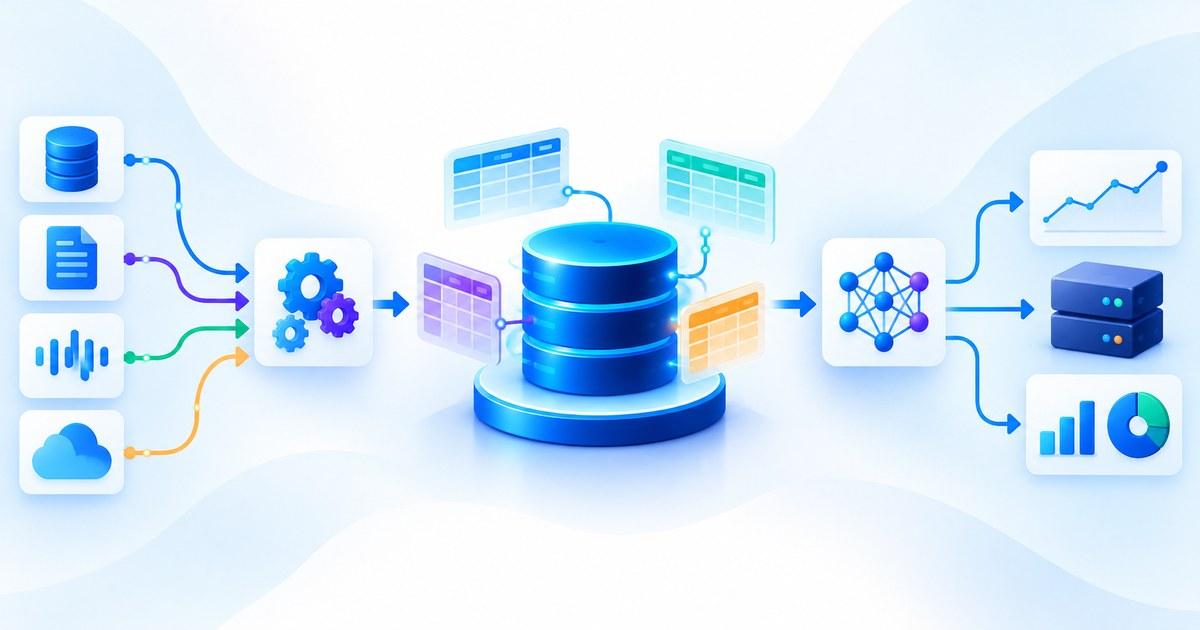
The system typically begins with data ingestion, where raw data from various sources is collected and stored. This data is then processed through batch pipelines, performing transformations and feature engineering.
A key component is the feature store, which ensures that features used during training are consistent with those used during inference. This reduces discrepancies and improves model reliability.
Next is the training pipeline, where models are trained using large-scale datasets. This process is often resource-intensive and must be optimized for throughput and efficiency. Candidates are expected to understand how distributed systems and parallel processing are used in this stage.
Once models are trained, they are deployed through a model serving infrastructure. This system must handle versioning, scaling, and monitoring, ensuring that models are available and performant.
Another critical component is the experimentation platform, which allows teams to test different models and configurations. This includes tracking metrics, managing experiments, and ensuring reproducibility.
Unlike product systems, platform systems prioritize stability and consistency. Changes must be carefully managed to avoid disrupting downstream systems. This requires robust testing, monitoring, and rollback mechanisms.
Another important aspect is abstraction. Platform systems provide APIs and tools that simplify complex tasks, enabling other teams to focus on their specific use cases. Candidates are expected to think in terms of reusable components and clean interfaces.
The importance of scalable and reliable infrastructure is emphasized in Scalable ML Systems for Senior Engineers – InterviewNode, where platform design focuses on enabling multiple teams while maintaining performance and consistency .
Key Architectural Differences: Speed vs Stability
While both product and platform systems share common components, data pipelines, models, and serving layers, their priorities differ significantly.
Product systems are optimized for speed and adaptability. They must respond to user interactions in real time and evolve quickly based on feedback. This leads to architectures that emphasize streaming, low latency, and rapid iteration.
Platform systems, on the other hand, are optimized for stability and scalability. They must support multiple teams and handle large volumes of data reliably. This leads to architectures that emphasize batch processing, fault tolerance, and standardization.
Another key difference is scope of ownership. Product teams often own end-to-end systems for specific features, while platform teams build shared infrastructure used by many teams. This influences how systems are designed and maintained.
Candidates who clearly articulate these differences demonstrate strong system design skills.
Trade-Off Thinking: What Interviewers Are Looking For
At a deeper level, both types of systems require strong trade-off reasoning, but the nature of those trade-offs differs.
In product systems, trade-offs often involve:
- Latency vs model complexity
- Personalization vs diversity
- Exploration vs exploitation
In platform systems, trade-offs often involve:
- Flexibility vs standardization
- Performance vs cost
- Consistency vs scalability
Candidates are expected to identify these trade-offs and explain how they influence design decisions.
Strong candidates do not just describe architectures, they explain why certain choices are made and how they align with system goals.
Bridging the Gap: Designing with Both Perspectives
The most effective engineers understand both product and platform perspectives. They recognize that product systems rely on platform infrastructure, and platform systems must evolve based on product needs.
For example, a product team may require real-time personalization, which necessitates changes in platform infrastructure to support streaming data. Conversely, platform limitations may constrain product design.
Candidates who can bridge these perspectives demonstrate a higher level of maturity and are often more successful in interviews.
The Key Takeaway
System design for AI product teams and ML platform teams differs in architecture, priorities, and trade-offs. Product systems focus on real-time user experience and rapid iteration, while platform systems focus on scalability, reliability, and enabling other teams. Success in interviews depends on your ability to design systems that align with these goals and clearly articulate the trade-offs involved.
Section 4: How Interviews Differ - Question Patterns and Answer Strategy for Product vs Platform Roles
How AI Product Interviews Are Structured
Interviews for AI product teams at companies like TikTok or OpenAI are designed to evaluate whether a candidate can translate machine learning capabilities into real user value. The structure of these interviews reflects the realities of building systems that operate in dynamic, user-facing environments.
A typical product-oriented interview begins with an open-ended problem such as designing a recommendation system, a chatbot, or a personalization feature. The ambiguity in these questions is intentional. Candidates are expected to clarify requirements, define success metrics, and establish constraints before proposing a solution. This initial phase is critical because it demonstrates whether the candidate understands that product systems are not just technical artifacts, but solutions to user problems.
As the discussion progresses, interviewers often introduce changes to the problem. They may ask how the system should adapt if user behavior changes, if engagement drops, or if latency becomes an issue. These follow-up questions are not meant to trick the candidate but to evaluate how well they can iterate and adapt their design.
Another common pattern is the focus on metrics and evaluation. Candidates are expected to discuss how the system’s success is measured, both offline and online. This includes understanding A/B testing, interpreting user signals, and balancing competing objectives such as engagement and diversity.
The interview may also explore failure scenarios. For example, what happens if recommendations become repetitive, or if the system starts surfacing low-quality content? Candidates who proactively address these issues demonstrate a deeper understanding of real-world systems.
Ultimately, product interviews are less about arriving at a single correct answer and more about demonstrating the ability to reason under ambiguity, prioritize user impact, and iterate effectively.
How ML Platform Interviews Are Structured
In contrast, interviews for ML platform teams at organizations like Google or Meta are structured around evaluating a candidate’s ability to design robust, scalable infrastructure.
These interviews often begin with a system design problem focused on building a platform component, such as a feature store, a training pipeline, or a model serving system. Unlike product interviews, the problem scope is usually more defined, but the depth of technical detail expected is significantly higher.
Candidates are expected to break down the system into components, define data flow, and explain how each part interacts with others. The emphasis is on clarity, structure, and completeness.
As the discussion progresses, interviewers probe deeper into specific aspects of the system. They may ask about data consistency, fault tolerance, scalability, and performance optimization. These questions are designed to assess whether the candidate understands the complexities of building systems that operate reliably at scale.
Another important aspect of platform interviews is edge case handling. Candidates are expected to consider scenarios such as partial failures, data corruption, or resource constraints. Addressing these scenarios demonstrates a strong understanding of system reliability.
Unlike product interviews, where iteration speed is emphasized, platform interviews prioritize stability and correctness. Candidates are expected to design systems that can operate consistently over long periods and support multiple teams.
The evaluation is more deterministic. Interviewers look for clear reasoning, well-defined architectures, and a strong grasp of distributed systems concepts.
Answering Product vs Platform Questions: A Shift in Thinking
The difference between product and platform interviews is not just in the questions, it is in the thinking process required to answer them effectively.
In product interviews, answers should be structured around user impact. This means starting with the problem from the user’s perspective, defining what success looks like, and designing a system that delivers that value. The discussion should naturally incorporate elements such as real-time adaptation, feedback loops, and experimentation.
Candidates should also demonstrate flexibility. As new constraints are introduced, the system design should evolve. This reflects the iterative nature of product development.
In platform interviews, answers should be structured around system robustness and scalability. This involves clearly defining components, explaining data flow, and addressing potential failure points. The focus is on building a system that is reliable, efficient, and maintainable.
Candidates should demonstrate depth. This includes understanding how systems behave under load, how data is managed, and how consistency is maintained. The ability to reason about these aspects in detail is a key differentiator.
Another important difference is how trade-offs are discussed. In product interviews, trade-offs often involve balancing user experience with technical constraints. In platform interviews, trade-offs involve balancing performance, cost, and reliability.
Common Misalignment: Why Candidates Fail
One of the most common reasons candidates underperform is misalignment between their answers and the role.
In product interviews, candidates sometimes focus too much on model architecture or technical details, neglecting the user experience. This results in answers that are technically sound but lack relevance to the problem.
In platform interviews, candidates may focus on high-level concepts without providing sufficient detail. This results in answers that lack depth and fail to demonstrate engineering rigor.
Another common issue is failing to adapt during the interview. Candidates may stick to their initial design even when new constraints are introduced. This signals rigidity and a lack of real-world problem-solving ability.
Strong candidates avoid these pitfalls by aligning their thinking with the role and adapting their approach as the discussion evolves.
What Interviewers Are Really Evaluating
At a deeper level, both types of interviews are designed to evaluate how you think, not just what you know.
In product interviews, interviewers are looking for:
- The ability to connect ML systems to user value
- Comfort with ambiguity and iteration
- Understanding of real-time systems and feedback loops
In platform interviews, interviewers are looking for:
- Strong system design fundamentals
- Ability to build scalable and reliable systems
- Attention to detail and edge cases
This aligns with insights from The Hidden Metrics: How Interviewers Evaluate ML Thinking, Not Just Code, where the emphasis is on reasoning, system awareness, and practical decision-making .
The Key Takeaway
AI product and ML platform interviews differ not only in the problems they present but in the way candidates are expected to think and respond. Product interviews emphasize user impact, adaptability, and real-time systems, while platform interviews emphasize scalability, reliability, and engineering rigor. Success depends on recognizing these differences and aligning your approach accordingly.
Conclusion: What This Distinction Really Signals to Interviewers
The difference between interviewing for AI product teams and internal ML platform teams is not just about different questions, it reflects a deeper shift in what companies are trying to evaluate.
At organizations like OpenAI or TikTok, AI product roles are fundamentally about turning machine learning into user value. The strongest candidates are those who can connect models, data, and systems into experiences that are responsive, reliable, and meaningful for users. These interviews are less about theoretical correctness and more about practical impact under real-world constraints.
On the other hand, internal ML platform roles at companies such as Google or Meta are about enabling scale. Here, the focus shifts toward building systems that are robust, reusable, and capable of supporting multiple teams and workloads. The evaluation emphasizes engineering discipline, system reliability, and the ability to design abstractions that stand the test of time.
What makes this distinction critical is that it changes the signal interviewers are looking for. In product interviews, they are evaluating whether you can think like a product engineer who understands users, adapts quickly, and iterates based on feedback. In platform interviews, they are evaluating whether you can think like an infrastructure engineer who builds systems that are stable, scalable, and efficient.
The strongest candidates are not those who memorize the most concepts, but those who can align their thinking with the role. They recognize the context of the problem, adjust their approach, and design systems that reflect the priorities of the team.
Another important insight is that modern ML systems increasingly blur the line between product and platform. Product features depend heavily on platform infrastructure, and platform systems must evolve based on product needs. Candidates who understand this interplay demonstrate a higher level of system thinking and are often better positioned for senior roles.
This perspective is reinforced in The Hidden Metrics: How Interviewers Evaluate ML Thinking, Not Just Code, where the emphasis is on context-aware reasoning and practical decision-making, rather than isolated technical knowledge .
Ultimately, succeeding in these interviews is about demonstrating that you can operate effectively within the specific environment of the role. Whether you are building user-facing systems or the infrastructure behind them, your ability to reason about systems, handle trade-offs, and adapt to constraints is what sets you apart.
Frequently Asked Questions (FAQs)
1. What is the main difference between AI product and ML platform roles?
AI product roles focus on building user-facing features, while ML platform roles focus on building infrastructure and tools for other teams.
2. Are the interview processes completely different?
They share some overlap, especially in system design, but the focus and evaluation criteria differ significantly.
3. Do I need strong ML knowledge for both roles?
Yes, but product roles emphasize application and user impact, while platform roles emphasize systems and infrastructure.
4. Which role is more focused on system design?
Both require system design, but platform roles require deeper understanding of distributed systems and scalability.
5. How should I prepare for product roles?
Focus on real-time systems, user behavior modeling, and experimentation frameworks.
6. How should I prepare for platform roles?
Focus on data pipelines, distributed systems, scalability, and reliability.
7. What kind of questions are asked in product interviews?
Questions often involve designing recommendation systems, personalization features, or AI-driven applications.
8. What kind of questions are asked in platform interviews?
Questions typically involve designing infrastructure such as feature stores, training pipelines, or model serving systems.
9. How important are trade-offs in these interviews?
Trade-offs are critical in both types of interviews, but the nature of trade-offs differs based on the role.
10. Can I prepare for both roles at the same time?
Yes, but you should structure your preparation to address the specific requirements of each role.
11. What is the biggest mistake candidates make?
Using the same approach for both roles without adapting to the context of the interview.
12. How do I identify the type of role during an interview?
Pay attention to the problem framing, user-focused problems indicate product roles, while infrastructure-focused problems indicate platform roles.
13. What differentiates strong candidates?
Strong candidates align their thinking with the role, demonstrate system-level reasoning, and clearly articulate trade-offs.
14. Is coding equally important for both roles?
Coding is important for both, but platform roles may emphasize systems and backend engineering more.
15. What is the key takeaway from this comparison?
The key takeaway is that success depends on understanding the role’s context and adapting your thinking accordingly.
If you can consistently align your thinking with the role, whether it is delivering user value or building scalable infrastructure, you will not only perform better in interviews but also position yourself as a versatile engineer capable of operating across the full spectrum of modern ML systems.