Section 1: Why AI Debugging Is Different from Traditional Software Debugging
For most of the history of software engineering, debugging followed a relatively predictable process. When a bug occurred, engineers examined logs, reproduced the issue, traced the execution path, identified the faulty logic, and implemented a fix. While some problems were complex, the underlying assumption remained the same: software systems behaved deterministically. Given identical conditions, the same code would generally produce the same outcome.
Modern AI systems challenge this assumption.
Unlike traditional applications, AI systems often operate probabilistically. They rely on machine learning models, retrieval systems, orchestration frameworks, and dynamic decision-making processes that can produce different outcomes even when presented with similar inputs. This shift is fundamentally changing how engineers diagnose and resolve failures.
The Move From Deterministic to Probabilistic Systems
Traditional software systems are typically built around explicit rules. Developers define logic that specifies exactly how the system should behave under particular conditions. When an issue occurs, engineers can often trace the failure back to a specific line of code or configuration change.
AI systems operate differently.
Large Language Models, recommendation systems, ranking algorithms, and AI agents generate outputs based on learned patterns rather than predefined rules. Even when infrastructure and code remain unchanged, outputs may vary because model behavior is inherently probabilistic.
This creates new debugging challenges. An issue may not be reproducible in the same way as a conventional software bug. A model may generate an inaccurate response in one scenario and a correct response in another, even though the inputs appear similar. Engineers must therefore investigate not only code and infrastructure but also data, context, prompts, retrieval results, and model behavior.
The debugging process becomes less about identifying a single defect and more about understanding why the system made a particular decision.
Modern AI Systems Contain Multiple Layers of Complexity
Another reason AI debugging is becoming more challenging is that modern AI applications rarely consist of a single model.
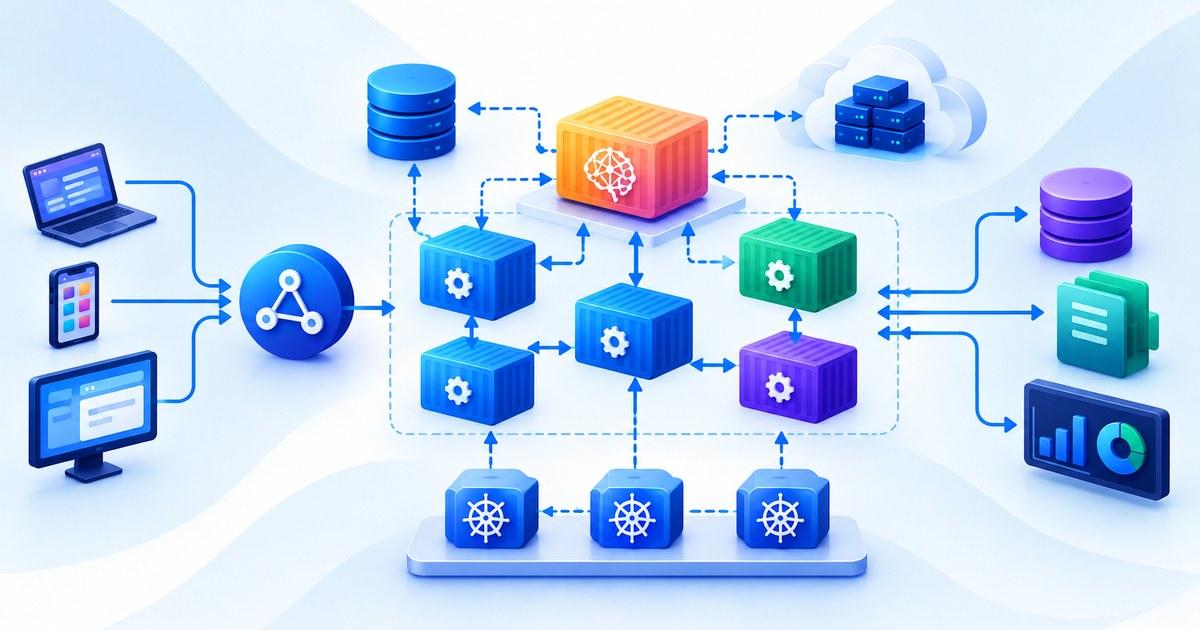
A typical production AI system may include user interfaces, orchestration frameworks, retrieval pipelines, vector databases, memory systems, external APIs, monitoring infrastructure, and multiple machine learning models working together. Each layer introduces potential failure points.
For example, an AI assistant may provide an incorrect answer even though the language model itself is functioning correctly. The real issue may originate from outdated retrieval data, incomplete context, a vector search failure, or a tool integration problem. Without visibility into each component, identifying the true source of the problem becomes extremely difficult.
This complexity is one reason organizations are increasingly investing in observability and reliability practices for AI systems. Engineers must understand how information flows through the entire architecture rather than focusing solely on individual models.
As AI ecosystems continue to grow, debugging increasingly resembles systems engineering rather than traditional software troubleshooting.
Failures Often Span Multiple Components
One of the most frustrating aspects of AI debugging is that failures frequently emerge from interactions between components rather than isolated defects.
Consider an AI agent responsible for answering technical support questions. The user receives an incorrect recommendation. At first glance, the language model appears to be at fault. However, deeper investigation reveals that the retrieval system surfaced outdated documentation, which the model then incorporated into its response. The root cause was not the model itself but the information provided to it.
These cascading failures are becoming increasingly common as organizations deploy more sophisticated AI architectures.
Engineers therefore need a broader debugging mindset. Instead of asking, "Which component failed?" they often need to ask, "How did multiple components interact to produce this outcome?"
This system-level perspective is becoming a critical skill for AI professionals. "AI Reliability Engineering Is Becoming a Critical Career Path," explores how organizations are increasingly seeking engineers who can diagnose and manage failures across entire AI ecosystems rather than focusing solely on model development.
Understanding interactions between components is often the key to identifying the true source of production issues.
Why Observability Is Becoming Essential
Traditional debugging often relies on logs and error messages. While these tools remain valuable, they are often insufficient for modern AI systems.
Engineers need visibility into prompts, retrieval results, model outputs, execution paths, tool interactions, memory states, and workflow decisions. Without this information, diagnosing failures becomes largely guesswork.
As a result, observability is becoming one of the most important areas of investment in AI engineering. Organizations are building systems that track how agents reason, which documents are retrieved, how tools are used, and where workflows diverge from expected behavior.
This shift reflects a broader reality: debugging AI systems requires understanding not just whether a system failed, but how it arrived at its decision.
Key Takeaway
AI debugging differs fundamentally from traditional software debugging because modern AI systems are probabilistic, multi-layered, and highly interconnected. Failures often emerge from interactions between models, retrieval systems, orchestration frameworks, and external tools rather than isolated defects. As AI architectures become more complex, engineers must adopt a system-level debugging mindset and invest heavily in observability, tracing, and reliability practices to diagnose failures effectively.
Section 2: The Most Common Failure Modes in Modern AI Systems
Model Failures Are Only the Beginning
When users encounter an incorrect response from an AI system, the immediate assumption is often that the model made a mistake. While models can certainly fail, modern AI architectures have become so complex that model-related issues represent only one category of failure among many.
In traditional machine learning applications, debugging frequently focused on data quality, feature engineering, model training, or deployment issues. Today's AI systems operate within much larger ecosystems that include retrieval mechanisms, memory systems, orchesation layers, tool integrations, and external services. As a result, diagnosing failures requires engineers to examine every stage of the workflow rather than focusing exclusively on the model itself.
For example, an AI-powered customer support assistant may provide an incorrect answer even though the language model is functioning exactly as designed. The real issue could originate from outdated documentation in the knowledge base, incomplete retrieval results, corrupted embeddings, or a context window limitation that prevented critical information from reaching the model.
This shift is changing how engineers approach troubleshooting. Rather than asking whether the model is wrong, they must investigate how information moved through the system and identify where the quality degradation occurred. In many production environments, the model is merely the final consumer of information generated by multiple upstream components.
Understanding this broader perspective is essential because focusing solely on model performance often leads teams to overlook the actual source of the problem.
Retrieval Failures Are One of the Biggest Sources of Errors
The widespread adoption of Retrieval-Augmented Generation (RAG) has significantly improved the usefulness of AI applications. By allowing models to access external knowledge sources, organizations can provide more accurate, current, and domain-specific information. However, retrieval systems have also introduced an entirely new category of debugging challenges.
Many AI failures originate not from generation but from retrieval.
If an AI system retrieves irrelevant, incomplete, duplicated, or outdated information, the model will often generate responses based on those inputs. Even highly capable models struggle when they are provided with poor context. In these situations, engineers may incorrectly blame the model when the underlying issue is actually retrieval quality.
For example, imagine an enterprise AI assistant designed to answer questions about internal infrastructure. A user asks about deployment procedures, and the assistant provides outdated instructions. Upon investigation, engineers discover that the retrieval system surfaced an obsolete document instead of the latest operational guide. The model faithfully used the information it received, but the retrieval layer failed to provide the correct context.
These issues become particularly challenging because retrieval failures are often invisible to end users. Users only see the final answer and have no visibility into which documents were retrieved or how relevance rankings were determined.
This is one reason observability tools are becoming increasingly important in AI environments. Engineering teams need visibility into retrieved documents, similarity scores, ranking mechanisms, and context assembly processes to diagnose retrieval-related failures effectively.
As AI applications increasingly rely on external knowledge, retrieval debugging is becoming just as important as model debugging.
Agentic Systems Introduce Decision-Making Failures
The rise of AI agents has introduced another layer of complexity. Unlike traditional AI applications that generate responses directly, agents make decisions about how tasks should be completed. They determine which tools to use, what information to retrieve, which actions to perform, and how workflows should progress.
This decision-making process creates entirely new failure modes.
An agent may choose an inefficient execution path. It may use the wrong tool for a task. It may gather insufficient information before taking action. It may prematurely terminate a workflow without fully completing the objective. In some cases, the individual components function correctly while the overall workflow still fails because the agent made poor decisions.
Consider a software engineering assistant tasked with investigating a production issue. The agent may successfully access logs, monitoring systems, and deployment records. However, if it prioritizes irrelevant evidence while overlooking critical indicators, it may generate an incorrect diagnosis despite having access to the necessary information.
These failures are particularly difficult to debug because they involve reasoning rather than straightforward technical defects. Engineers must analyze the sequence of decisions made by the agent and determine whether alternative choices would have produced better outcomes.
As organizations increasingly deploy autonomous and semi-autonomous systems, understanding agent reasoning paths is becoming a critical aspect of AI debugging.
The growing importance of agent reliability is also influencing hiring expectations. Engineers who can analyze workflow behavior and diagnose system-level issues are becoming highly valuable. "The Rise of Agentic AI: What It Means for ML Engineers in Hiring," explores how organizations are adapting to this new generation of AI systems.
Infrastructure and Integration Problems Often Mimic AI Failures
One of the most overlooked aspects of AI debugging is that many apparent AI failures are actually infrastructure failures.
Modern AI systems depend on databases, APIs, vector stores, cloud services, orchestration frameworks, authentication systems, and monitoring platforms. Problems within any of these components can negatively affect AI behavior.
For example, a retrieval system may appear inaccurate because a vector database indexing process failed. A language model may seem inconsistent because an API timeout prevented complete context from being delivered. An AI agent may generate incomplete results because a downstream service returned partial data.
These failures can be particularly misleading because the symptoms often appear within AI outputs. Users see incorrect responses and assume the model is responsible, while the underlying issue originates elsewhere in the architecture.
This reality reinforces an important principle: debugging AI systems requires understanding the entire stack. Engineers must evaluate infrastructure health, service dependencies, data pipelines, retrieval quality, orchestration behavior, and model outputs simultaneously.
As AI systems continue growing in complexity, successful debugging increasingly depends on the ability to think like a systems engineer rather than focusing solely on machine learning components.
Key Takeaway
Modern AI failures rarely originate from a single source. Retrieval issues, agent decision-making errors, infrastructure problems, integration failures, and context limitations often contribute as much as model behavior itself. Effective AI debugging requires engineers to analyze entire workflows, trace information flow across components, and identify where failures emerge within increasingly complex AI ecosystems.
Section 3: Observability and Tracing – The New Toolkit for AI Debugging
Why Traditional Monitoring Is No Longer Enough
For years, software engineers relied on monitoring systems that tracked metrics such as uptime, latency, error rates, CPU utilization, memory consumption, and database performance. These measurements remain essential for operating modern applications, but they are no longer sufficient for debugging AI systems.
A traditional application typically fails in observable ways. An API may return an error, a service may become unavailable, or a database query may fail. In contrast, AI systems can appear perfectly healthy from an infrastructure perspective while simultaneously producing poor results. A Large Language Model may generate inaccurate responses, a retrieval system may surface irrelevant documents, or an AI agent may follow an ineffective reasoning path, all while infrastructure dashboards indicate that everything is functioning normally.
This distinction is one of the biggest challenges facing modern AI teams. Engineers can no longer rely solely on operational metrics to evaluate system health. They must also understand the quality of decisions being made within the AI workflow.
For example, consider an enterprise AI assistant that begins providing less helpful answers over time. Traditional monitoring tools may show that response latency is stable, API availability remains high, and infrastructure resources are healthy. However, users continue reporting poor experiences. The real issue may stem from declining retrieval quality, outdated documentation, prompt changes, or subtle shifts in user behavior.
Without visibility into these factors, teams struggle to diagnose problems effectively.
This reality has given rise to a new category of engineering practices focused on AI observability. These practices aim to provide visibility into how information flows through AI systems, enabling engineers to understand not only whether a system is running but also whether it is producing high-quality outcomes.
Tracing the Entire AI Workflow
One of the most important developments in AI debugging is the adoption of end-to-end tracing.
In traditional software systems, distributed tracing helps engineers follow requests as they move through multiple services. A similar concept is now being applied to AI architectures. Instead of tracing only infrastructure interactions, engineers trace the entire AI workflow from user input to final output.
This process provides visibility into each stage of execution. Teams can examine the original prompt, retrieved documents, context assembly process, model responses, tool interactions, agent decisions, and final outputs. By following the complete workflow, engineers can identify where quality degradation occurs.
For example, suppose an AI-powered research assistant generates an incorrect summary. End-to-end tracing may reveal that the retrieval system surfaced incomplete information, causing the language model to generate an inaccurate conclusion. Alternatively, tracing might show that the correct documents were retrieved but an orchestration layer truncated important context before it reached the model.
Without workflow tracing, these issues can be extremely difficult to identify because the final output provides little insight into how the system arrived at its conclusion.
As AI systems become more sophisticated, tracing is evolving from a troubleshooting technique into a foundational operational capability. Organizations increasingly recognize that they cannot improve what they cannot observe.
Understanding Reasoning and Decision Paths
The emergence of AI agents has introduced an additional layer of debugging complexity. Traditional AI applications typically generate outputs directly from inputs. Agentic systems, however, make decisions throughout the execution process. They determine which tools to use, which information to retrieve, how tasks should be prioritized, and what actions should happen next.
This means engineers must now debug reasoning processes rather than simply debugging outputs.
Imagine an AI agent tasked with investigating a production incident. The agent retrieves logs, accesses monitoring systems, reviews deployment records, and generates recommendations. If the final diagnosis is incorrect, the failure may not originate from any individual component. Instead, the problem may stem from how the agent interpreted evidence and prioritized information.
To address these challenges, organizations are increasingly investing in reasoning observability. This involves recording intermediate decisions, execution steps, retrieval choices, and workflow transitions. Engineers can then analyze the agent's reasoning path to determine where the process diverged from expected behavior.
This capability is becoming especially important as AI systems gain greater autonomy. When agents make decisions independently, understanding why those decisions occurred becomes just as important as evaluating whether the final result was correct.
The ability to diagnose reasoning failures is rapidly becoming a valuable skill for modern AI engineers. This growing emphasis on system-level analysis aligns with broader industry trends discussed in "The Hidden Metrics: How Interviewers Evaluate ML Thinking, Not Just Code," which explores how companies increasingly value engineers who can reason about system behavior rather than focusing solely on implementation details.
As AI workflows become more complex, debugging will increasingly involve understanding decision-making processes rather than merely identifying technical defects.
Building a Culture of AI Observability
Technology alone is not enough to solve AI debugging challenges. Organizations must also develop operational practices that prioritize visibility, accountability, and continuous learning.
Leading AI teams increasingly treat observability as a core design principle rather than an afterthought. They instrument systems from the beginning, collect workflow data, establish evaluation frameworks, and create processes for investigating failures systematically. This proactive approach enables teams to identify issues before they become widespread problems.
A strong observability culture also encourages collaboration across disciplines. Debugging AI systems often requires expertise from machine learning engineers, software engineers, platform teams, product managers, and reliability specialists. Shared visibility into system behavior helps these groups work together more effectively when diagnosing issues.
As AI becomes increasingly integrated into business operations, organizations that invest in observability will gain a significant advantage. They will be better equipped to understand system behavior, improve reliability, and build trust in AI-powered products.
Key Takeaway
Traditional monitoring tools are no longer sufficient for debugging modern AI systems. Engineers need end-to-end tracing, reasoning visibility, workflow observability, and detailed insight into how information moves through AI architectures. As AI systems become increasingly complex and autonomous, observability is emerging as one of the most important capabilities for diagnosing failures, improving reliability, and operating intelligent systems at scale.
Section 4: Best Practices for Diagnosing and Preventing AI System Failures
Adopt a Systems Thinking Approach to Debugging
One of the most important shifts engineers must make when working with modern AI systems is moving from component-level troubleshooting to systems-level analysis. Traditional debugging often focuses on identifying the single piece of code responsible for a failure. In AI environments, this approach is frequently insufficient because failures often emerge from interactions between multiple components rather than isolated defects.
A modern AI application may include a language model, retrieval pipeline, vector database, orchestration framework, memory layer, external APIs, monitoring systems, and business applications. When something goes wrong, the visible symptom may appear in one part of the system while the root cause exists somewhere entirely different.
For example, an AI assistant generating inaccurate responses may initially appear to have a model quality problem. However, deeper investigation could reveal that the retrieval layer is providing outdated information or that context assembly is excluding critical documents before they reach the model. Engineers who focus exclusively on the final output may spend significant time optimizing the wrong component.
Systems thinking encourages engineers to analyze information flow across the entire architecture. Rather than asking which component failed, they ask how the system behaved as a whole and where quality degraded during execution. This perspective significantly improves root-cause analysis and reduces the likelihood of implementing superficial fixes that fail to address underlying problems.
As AI architectures become increasingly interconnected, the ability to think holistically about system behavior is becoming one of the most valuable debugging skills in the industry.
Build Evaluation Frameworks Before Problems Occur
Many organizations invest heavily in debugging tools only after production incidents begin affecting users. While reactive troubleshooting remains necessary, leading AI teams increasingly recognize the value of proactive evaluation frameworks.
A strong evaluation framework provides continuous visibility into system quality long before users report problems. Rather than relying solely on customer feedback or incident reports, organizations establish benchmarks that measure retrieval accuracy, response quality, workflow completion rates, hallucination frequency, tool reliability, and overall task success.
For example, an enterprise AI assistant may regularly process a standardized set of evaluation queries designed to test knowledge retrieval, reasoning quality, and execution consistency. Comparing current performance against historical baselines allows teams to identify degradation before it becomes a major operational issue.
This approach is particularly important because AI failures are often subtle. Infrastructure monitoring may indicate healthy operations while output quality steadily declines. Without evaluation mechanisms, these issues can remain undetected for extended periods.
Modern AI engineering increasingly treats evaluation as an ongoing operational process rather than a one-time validation exercise. Organizations that invest in continuous measurement gain significantly better visibility into system health and can respond more quickly when performance begins to deteriorate.
The shift toward proactive evaluation is also influencing hiring expectations. Companies increasingly value engineers who understand not only model development but also how AI systems should be measured in production environments. This evolution is discussed in "The Hidden Skills ML Interviewers Look For (That Aren’t on the Job Description)," which explores how practical operational thinking is becoming a critical differentiator in AI careers.
Effective debugging often begins long before failures occur.
Create Feedback Loops Between Users and Engineering Teams
One of the most overlooked sources of debugging insight is the user community itself. While technical monitoring systems provide valuable operational data, users frequently identify quality issues long before automated metrics detect them.
AI systems interact directly with people, and user experiences often reveal problems that are difficult to capture through traditional monitoring. A recommendation system may technically function as expected while generating irrelevant suggestions. An AI assistant may produce factually correct responses that users find unhelpful. An agent may complete workflows successfully while creating unnecessary friction during the process.
These issues rarely appear in infrastructure dashboards.
Organizations that excel at AI debugging establish strong feedback loops between users and engineering teams. They collect structured feedback, analyze recurring complaints, monitor satisfaction metrics, and investigate patterns that indicate emerging quality problems.
This feedback becomes particularly valuable when diagnosing ambiguous failures. If users consistently report that responses feel less useful, engineers can investigate retrieval quality, prompt design, context management, and workflow behavior before the issue escalates into a larger problem.
The most effective AI teams treat user feedback as an essential observability signal rather than a secondary source of information. By combining technical telemetry with human insights, they gain a more complete understanding of system performance.
As AI products become increasingly central to customer experiences, incorporating user perspectives into debugging workflows will become even more important.
Design AI Systems for Debuggability and Resilience
Perhaps the most important best practice is designing systems with debugging in mind from the very beginning. Many production challenges become difficult to resolve because architectures were built without sufficient visibility into system behavior.
Debuggable systems expose critical information about prompts, retrieval results, context assembly, reasoning steps, tool interactions, workflow execution, and final outputs. They generate meaningful logs, preserve execution histories, and provide engineers with the information necessary to reconstruct incidents accurately.
Resilience is equally important. AI systems should anticipate failures rather than assuming ideal conditions. Retrieval services may become unavailable. APIs may fail. Models may generate unexpected outputs. Context windows may overflow. Designing systems that can recover gracefully from these situations significantly improves operational reliability.
For example, an AI agent encountering incomplete information should communicate uncertainty rather than generating potentially misleading conclusions. A retrieval failure should trigger fallback mechanisms rather than causing an entire workflow to collapse. These safeguards not only improve user experiences but also make debugging substantially easier.
The future of AI engineering will increasingly depend on the ability to build systems that are observable, resilient, and diagnosable. Organizations that prioritize these principles will be better positioned to scale AI adoption while maintaining reliability and trust.
Key Takeaway
Effective AI debugging requires more than troubleshooting individual failures. Engineers must adopt systems thinking, establish continuous evaluation frameworks, leverage user feedback, and design architectures that prioritize observability and resilience. As AI systems become increasingly complex, the organizations that invest in debuggability from the outset will be the most successful at maintaining reliable, trustworthy, and scalable AI applications in production environments.
Conclusion
Artificial intelligence is fundamentally changing the nature of debugging. For decades, software engineers worked primarily with deterministic systems where failures could often be traced back to specific lines of code, configuration changes, or infrastructure issues. Modern AI systems operate very differently. They are probabilistic, dynamic, and composed of multiple interconnected components that interact in complex ways.
As organizations deploy Large Language Models, Retrieval-Augmented Generation systems, AI agents, vector databases, orchestration frameworks, and memory layers, the challenge of diagnosing failures has become significantly more complicated. A poor output may originate from a retrieval issue, a reasoning failure, an orchestration problem, a context limitation, an infrastructure dependency, or some combination of these factors. The visible symptom is rarely the true root cause.
This reality is creating a new era of AI debugging, one that requires engineers to think beyond individual models and adopt a system-wide perspective. Success increasingly depends on understanding how information flows through AI architectures, how decisions are made, and how failures emerge across multiple layers of the stack. Traditional monitoring tools remain important, but they are no longer sufficient on their own. Engineers now need observability platforms, workflow tracing, reasoning analysis, evaluation frameworks, and user feedback loops to effectively diagnose issues.
The rise of agentic AI is accelerating this shift. Unlike traditional machine learning systems that generate predictions, agents make decisions, execute actions, and coordinate workflows. Debugging these systems requires visibility not only into outputs but also into planning processes, tool interactions, execution paths, and intermediate reasoning steps. As autonomy increases, understanding why a system behaved a certain way becomes just as important as determining whether the outcome was correct.
For software engineers, ML engineers, platform engineers, and AI reliability professionals, debugging is becoming one of the most valuable skills in modern AI development. Organizations are increasingly looking for engineers who can identify root causes across complex architectures, improve system reliability, and ensure AI-powered products remain trustworthy in production environments.
The future of AI will not be defined solely by better models. It will also be defined by our ability to understand, diagnose, and improve increasingly sophisticated intelligent systems. Engineers who master AI debugging will play a critical role in ensuring that the next generation of AI applications is not only powerful but also reliable, explainable, and scalable.
Frequently Asked Questions
1. What is AI debugging?
AI debugging is the process of identifying, diagnosing, and resolving issues within AI systems, including machine learning models, retrieval systems, AI agents, orchestration frameworks, and supporting infrastructure.
2. How is AI debugging different from traditional software debugging?
Traditional software debugging focuses on deterministic systems where identical inputs typically produce identical outputs. AI debugging involves probabilistic systems where outputs may vary and failures often emerge from interactions between multiple components.
3. Why are AI systems harder to debug?
AI systems often involve models, retrieval layers, memory systems, vector databases, APIs, orchestration frameworks, and external tools. Failures can occur at any layer, making root-cause analysis significantly more complex.
4. What is the most common source of AI failures?
Many failures originate from retrieval systems, poor context, incomplete data, integration issues, orchestration problems, or reasoning errors rather than the underlying model itself.
5. What is Retrieval-Augmented Generation (RAG) debugging?
RAG debugging focuses on diagnosing issues related to document retrieval, ranking quality, embedding generation, context assembly, and how retrieved information influences model outputs.
6. Why is observability important for AI systems?
Observability provides visibility into prompts, retrieval results, reasoning steps, tool usage, workflow execution, and outputs, allowing engineers to understand how AI systems behave internally.
7. What is AI workflow tracing?
Workflow tracing tracks how information moves through an AI system, from user input to final output. It helps engineers identify where failures occur during execution.
8. How do engineers debug AI agents?
Debugging AI agents involves analyzing reasoning paths, planning decisions, tool interactions, retrieval choices, execution workflows, and final outcomes to determine where behavior diverged from expectations.
9. What role do logs play in AI debugging?
Logs remain important but are no longer sufficient on their own. AI debugging often requires additional information such as prompts, retrieved documents, intermediate decisions, and execution traces.
10. What is a reasoning failure in an AI system?
A reasoning failure occurs when an AI system interprets information incorrectly, prioritizes irrelevant evidence, makes flawed decisions, or follows an ineffective execution strategy despite having access to the necessary information.
11. How can organizations improve AI debugging capabilities?
Organizations can invest in observability platforms, tracing tools, evaluation frameworks, structured logging, user feedback systems, and reliability engineering practices designed specifically for AI environments.
12. Why is systems thinking important in AI debugging?
AI failures often emerge from interactions between multiple components rather than isolated defects. Systems thinking helps engineers analyze the entire workflow rather than focusing on a single layer.
13. What skills are needed for AI debugging?
Important skills include machine learning fundamentals, software engineering, observability, distributed systems, retrieval architectures, AI reliability engineering, incident response, and system design.
14. Will AI debugging become a dedicated engineering role?
Many organizations are already creating specialized roles focused on AI reliability, observability, production operations, and AI infrastructure. AI debugging expertise is becoming a highly valuable specialization.
15. What is the future of AI debugging?
The future of AI debugging will involve advanced observability platforms, automated tracing, reasoning analysis, reliability engineering frameworks, and sophisticated monitoring systems capable of diagnosing failures across increasingly autonomous and complex AI ecosystems.