Section 1: Why Traditional Machine Learning Is No Longer Enough
The World Changes Faster Than Most AI Systems Can Adapt
For many years, machine learning systems were built using a straightforward workflow. Organizations collected historical data, trained models, evaluated performance, deployed the models into production, and retrained them periodically when accuracy began to decline.
This approach worked well when environments changed slowly.
A recommendation engine could learn customer preferences from historical behavior and continue generating relevant suggestions for months. A forecasting model could rely on stable trends to predict future demand. Fraud detection systems could identify suspicious activity using patterns observed over long periods.
Today's environment is fundamentally different.
Consumer preferences evolve rapidly. New products enter markets constantly. Business processes are updated regularly. User expectations change as technology advances. Economic events, social trends, and competitive pressures can alter behavior almost overnight.
As a result, the assumptions many traditional machine learning systems rely upon quickly become outdated.
A recommendation model trained six months ago may no longer reflect what customers want today. A pricing model may fail to capture changing market conditions. An enterprise AI assistant may struggle if organizational knowledge evolves faster than the model's understanding.
The challenge is no longer simply building accurate models.
The challenge is maintaining accuracy in environments that never stop changing.
Organizations increasingly recognize that intelligence must evolve continuously if it is going to remain useful over time.
Data Drift Is Quietly Undermining AI Performance
One of the biggest obstacles facing production AI systems is data drift.
Data drift occurs when incoming data begins to differ from the information used during model training. Even small changes can gradually reduce performance.
For example, user behavior on an e-commerce platform may shift due to changing preferences. Search patterns may evolve as new topics become popular. Customer support interactions may reflect new products, services, or policies. Financial transaction patterns may change because of economic conditions.
Initially, these changes are often difficult to detect.
Models continue generating predictions and recommendations. Systems remain operational. Dashboards may show normal performance. However, beneath the surface, accuracy gradually deteriorates.
The result is often a slow decline in business value.
Recommendations become less relevant. Customer experiences become less personalized. Predictions become less reliable. AI systems that once delivered strong results begin producing weaker outcomes.
Leading organizations now invest heavily in monitoring and operational infrastructure to detect these shifts before they become major problems.
This growing emphasis on operational intelligence is explored in "MLOps vs. ML Engineering: What Interviewers Expect You to Know in 2025," which examines how modern AI systems require continuous monitoring, observability, and adaptation to remain effective in production environments.
As AI adoption expands, managing drift is becoming one of the most important challenges in machine learning.
Scheduled Retraining Creates a Knowledge Gap
Many organizations attempt to address changing conditions through periodic retraining.
While retraining remains an essential part of machine learning operations, it often struggles to keep pace with modern environments.
Large-scale models require substantial computational resources. Data pipelines need time to collect and validate information. Evaluation processes can be lengthy. Governance requirements may introduce additional delays.
By the time a model is retrained and deployed, the environment may have changed again.
This creates a knowledge gap.
The system operates using yesterday's understanding while users interact in today's reality.
For fast-moving applications, this delay can have significant consequences. Fraud detection systems may miss emerging attack techniques. Personalization platforms may fail to recognize new interests. Business forecasting models may rely on assumptions that are no longer valid.
Organizations increasingly realize that waiting weeks or months between learning cycles is becoming less practical.
The future of AI depends on reducing the distance between observation and adaptation.
The Rise of AI Agents Is Accelerating the Need for Continuous Learning
The emergence of AI agents is making continuous learning even more important.
Unlike traditional machine learning applications that generate isolated predictions, agents interact with dynamic environments over extended periods. They complete workflows, assist users, coordinate tasks, retrieve information, and make decisions that influence future outcomes.
These systems encounter change constantly.
A customer support agent may need to understand new policies immediately. An enterprise assistant may interact with rapidly changing documentation. A workflow automation agent may operate across systems that evolve daily.
Static models struggle in these situations because their knowledge becomes outdated quickly.
Continuous learning offers a path forward.
Instead of periodically updating intelligence, organizations can create systems that incorporate new information as it becomes available. Learning becomes an ongoing process rather than a scheduled event.
As AI agents become more autonomous and capable, this ability to adapt continuously will likely become one of the defining characteristics of successful intelligent systems.
Key Takeaway
Traditional machine learning was built for relatively stable environments, but modern businesses operate in a world of constant change. Data drift, evolving user behavior, shifting market conditions, and the rise of AI agents are exposing the limitations of static learning approaches. Organizations are increasingly moving toward continuous learning systems that can adapt as conditions evolve, making ongoing intelligence one of the most important frontiers in the future of machine learning.
Section 2: How Continuous Learning Systems Actually Work
Moving From Periodic Updates to Continuous Adaptation
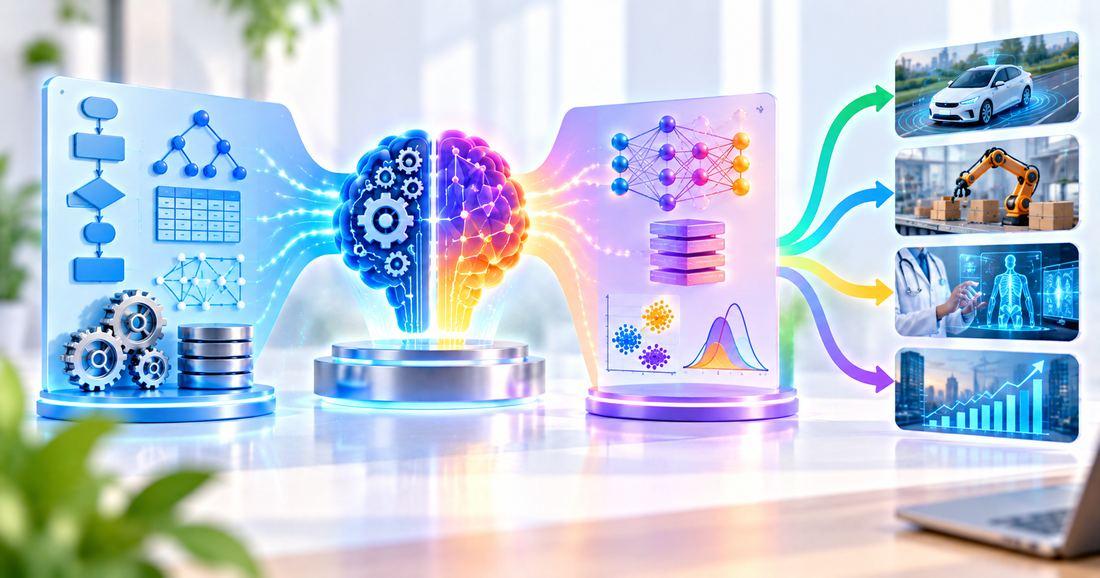
Traditional machine learning systems follow a predictable cycle.
Data is collected, models are trained, performance is evaluated, and deployment occurs. Once the system is in production, it often remains unchanged until the next scheduled retraining cycle.
Continuous learning systems operate differently.
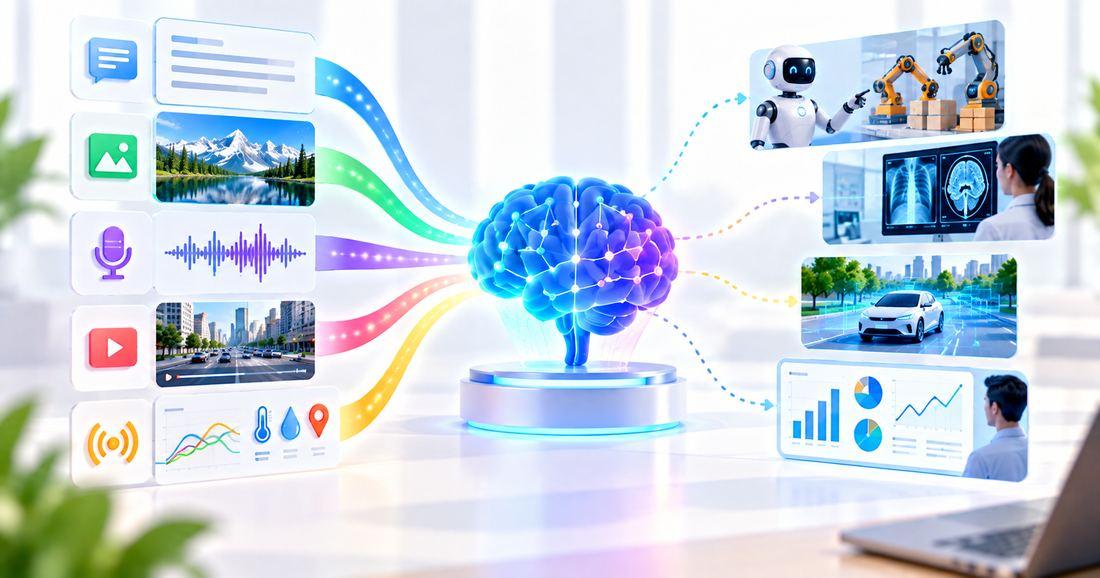
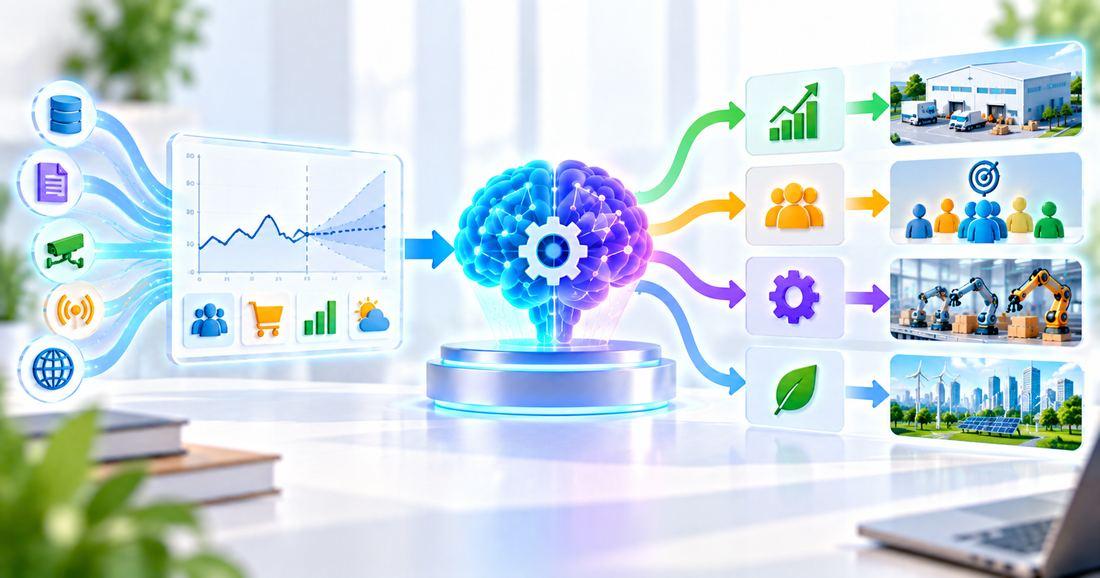
Instead of treating learning as a separate phase, they integrate learning directly into ongoing operations. New information flows into the system continuously, allowing models to update their understanding as conditions evolve.
This creates a fundamental shift in how intelligence is delivered.
Rather than relying solely on historical knowledge, continuously learning systems remain connected to current realities. They monitor user behavior, observe changing conditions, collect feedback, and adjust their internal representations accordingly.
For example, an e-commerce recommendation system may learn from recent purchases, browsing activity, and engagement patterns. A fraud detection platform may identify emerging attack techniques as they appear. A customer support system may incorporate newly published documentation without waiting for major retraining cycles.
The goal is simple:
Reduce the gap between what the system knows and what is happening in the real world.
Organizations increasingly view this capability as essential because the pace of change continues accelerating across nearly every industry.
Feedback Loops Are the Foundation of Continuous Learning
At the center of every successful continuous learning system is a feedback loop.
A feedback loop allows the AI system to observe the outcomes of its actions and use those outcomes to improve future decisions.
Humans learn through feedback constantly.
We make decisions, observe results, adjust behavior, and refine our understanding over time. Continuous learning systems attempt to replicate this process at scale.
For example, a recommendation engine can track whether users engage with suggested content. A search platform can monitor which results users select. An AI assistant can observe corrections, follow-up questions, and user satisfaction signals.
These interactions generate valuable information.
The system learns not only what users requested but also whether its responses were effective.
Over time, this creates a cycle of improvement.
The more interactions the system observes, the more accurately it can adapt to changing preferences and behaviors.
Organizations increasingly recognize that feedback data is often as valuable as training data because it provides direct insight into how systems perform in real-world environments.
Without strong feedback mechanisms, continuous learning becomes difficult because the system lacks reliable signals about what should change.
Online Learning and Incremental Updates
One of the key technologies enabling continuous learning is online learning.
Traditional machine learning typically uses batch learning, where models are trained using large datasets at specific intervals.
Online learning takes a different approach.
Instead of waiting for large retraining cycles, the model updates incrementally as new information arrives.
Each interaction becomes an opportunity for learning.
For example, a recommendation platform may adjust user profiles after every interaction. A fraud detection system may incorporate newly identified attack patterns immediately. A personalization engine may refine recommendations based on recent behavior rather than relying solely on historical trends.
This approach offers several advantages.
First, adaptation happens faster.
Second, systems remain more aligned with current conditions.
Third, organizations can reduce the delay between observing changes and responding to them.
However, online learning also introduces challenges.
If not carefully managed, systems may overreact to short-term fluctuations or temporary trends. Organizations therefore need mechanisms that distinguish meaningful behavioral changes from random noise.
The most successful continuous learning architectures balance responsiveness with stability.
Data Infrastructure Becomes a Strategic Asset
Continuous learning is not simply a modeling challenge.
It is also an infrastructure challenge.
Organizations cannot build adaptive systems without reliable mechanisms for collecting, processing, validating, storing, and distributing data in near real time.
This requirement has increased the importance of modern data platforms.
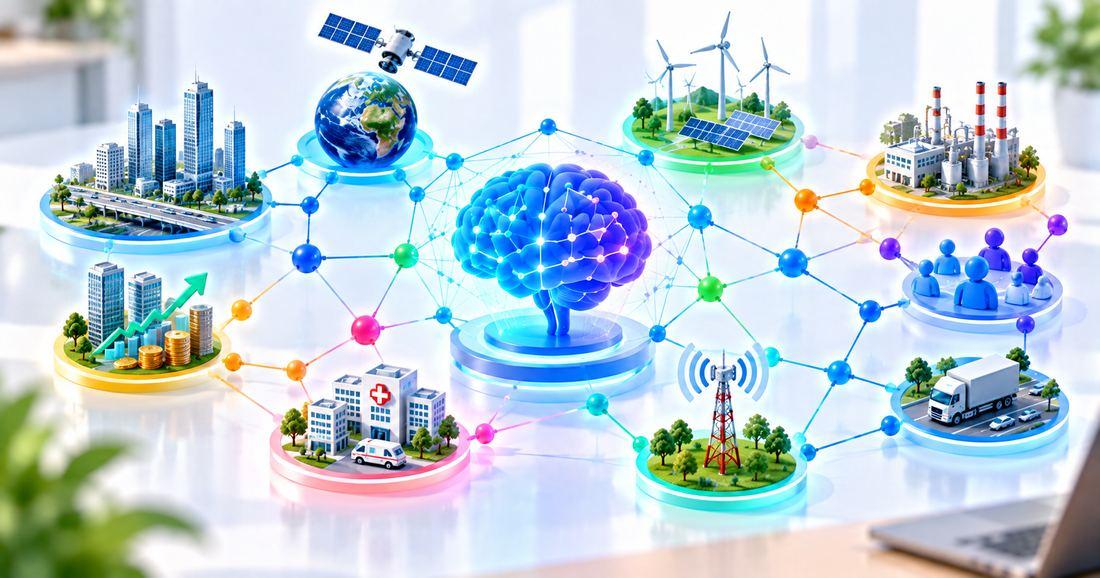
Streaming architectures, event-driven systems, feature stores, observability tools, and real-time analytics platforms have become critical components of continuous learning ecosystems.
For example, if a recommendation engine needs to respond to changing user behavior within minutes, the underlying infrastructure must capture behavioral signals immediately and make them available for decision-making.
Similarly, fraud detection systems often require near-instant access to new transaction data. AI agents may need continuously updated organizational knowledge. Enterprise assistants may depend on rapidly changing operational information.
The growing importance of adaptive infrastructure is discussed in "Scalable ML Systems for Senior Engineers – InterviewNode," which explores how production machine learning increasingly depends on robust data architectures, observability frameworks, and scalable operational systems.
As continuous learning becomes more common, infrastructure quality will increasingly determine how effectively organizations can adapt.
Continuous Learning Requires Strong Governance
While continuous adaptation offers significant benefits, it also introduces new risks.
A system that learns continuously is constantly changing.
This raises important questions.
How do organizations ensure that updates improve performance rather than degrade it?
How can they detect unintended behavior?
How should new information be validated before influencing decision-making?
Leading companies address these concerns through governance frameworks.
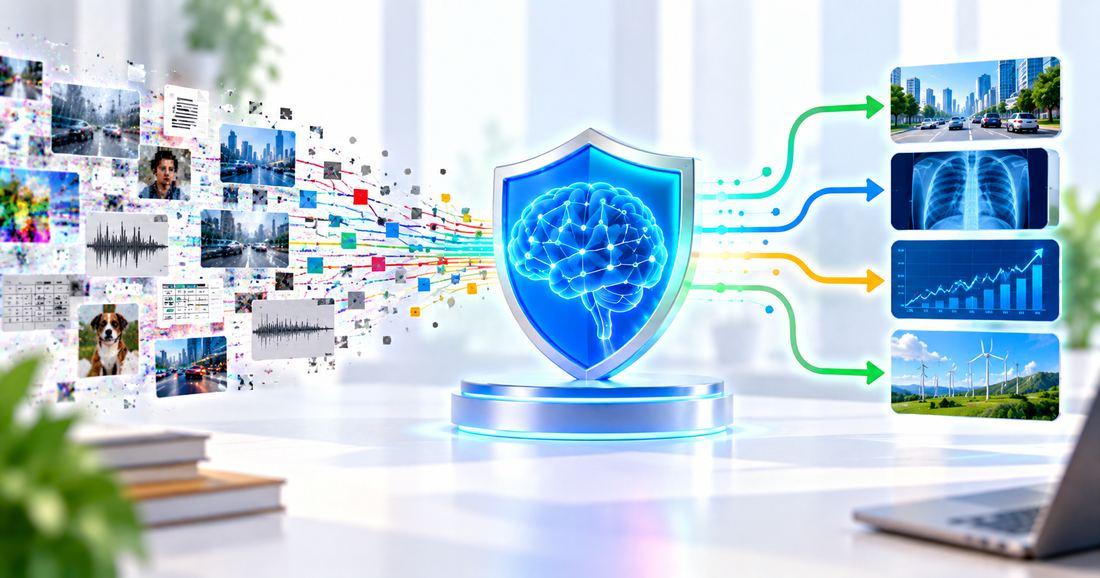
Monitoring systems track performance continuously. Validation pipelines evaluate incoming data. Human oversight ensures that adaptation remains aligned with business objectives. Experimentation frameworks help teams test changes safely before deploying them broadly.
Continuous learning therefore requires more than automation.
It requires disciplined operational practices that balance innovation with reliability.
Organizations that master this balance are better positioned to build systems that evolve rapidly while maintaining trust and stability.
Key Takeaway
Continuous learning systems work by combining feedback loops, online learning techniques, real-time data infrastructure, and governance frameworks. Unlike traditional models that rely on periodic retraining, these systems adapt continuously as new information becomes available. As organizations seek AI solutions capable of keeping pace with changing environments, continuous learning is emerging as one of the most important architectural principles in modern machine learning.
Section 3: The Business Impact of Continuous Learning AI Systems
Companies That Learn Faster Gain a Competitive Advantage
Throughout the history of technology, competitive advantage has often been determined by how quickly organizations can respond to change.
In the age of artificial intelligence, this principle is becoming even more important.
Markets evolve rapidly. Customer expectations shift continuously. Competitors launch new products. User behavior changes unexpectedly. Organizations that rely on static machine learning systems often struggle to keep pace with these developments.
Continuous learning changes the equation.
Instead of waiting for quarterly model updates or lengthy retraining cycles, organizations can respond to new information almost immediately. Their systems learn from customer interactions, operational data, market signals, and behavioral changes as they occur.
This capability creates a significant advantage.
For example, an e-commerce platform with continuously learning recommendation systems can identify emerging product trends before competitors. A financial institution can adapt fraud detection systems as attack patterns evolve. A streaming platform can recognize changing content preferences and adjust recommendations in real time.
In each case, the organization gains the ability to learn from reality faster than competitors.
This is increasingly becoming a strategic differentiator.
Companies are no longer competing solely on the quality of their models. They are competing on the speed at which those models can adapt.
Personalization Improves Dramatically With Continuous Learning
One of the most visible applications of continuous learning is personalization.
Traditional personalization systems often rely heavily on historical behavior. While this approach can be effective, it may fail to capture rapid shifts in user interests.
Consider how quickly preferences can change.
A customer researching travel options may suddenly become interested in luggage, hotels, or vacation experiences. A streaming user may shift from documentaries to sports content. A business user may adopt entirely new workflows after changing roles.
Static systems often take time to recognize these changes.
Continuously learning systems can respond much faster.
By incorporating recent interactions into decision-making processes, organizations can create experiences that feel more relevant and responsive. Recommendations remain aligned with current interests rather than outdated assumptions.
This directly influences customer satisfaction.
Users are more likely to engage with products that understand their evolving needs. Businesses benefit through improved retention, stronger engagement, and increased lifetime value.
The growing importance of adaptive personalization is explored in "Beyond the Model: How to Talk About Business Impact in ML Interviews," which highlights how machine learning success is increasingly measured through business outcomes rather than model metrics alone.
Continuous learning helps bridge the gap between technical performance and customer value.
AI Agents Become Significantly More Effective
The emergence of AI agents is one of the strongest drivers behind continuous learning.
Unlike traditional machine learning systems that make isolated predictions, agents operate within dynamic environments where conditions change continuously.
An enterprise AI agent may interact with documentation, workflows, policies, software platforms, and human users. Each of these components evolves over time.
Without continuous learning, the agent's knowledge gradually becomes outdated.
Policies change. Procedures evolve. New tools are introduced. Business priorities shift.
As a result, static agents often experience declining effectiveness.
Continuous learning helps solve this problem.
Instead of relying solely on historical training data, agents can incorporate new information as it becomes available. They remain aligned with current business realities and can adapt to evolving operational requirements.
This capability is particularly important as organizations deploy increasingly autonomous systems.
The future of AI agents depends not only on reasoning and planning but also on their ability to learn continuously from changing environments.
Organizations that successfully combine agent architectures with continuous learning will likely unlock significant productivity gains.
Continuous Learning Supports Better Decision-Making
One of the most important benefits of continuous learning is improved decision quality.
Business decisions are only as good as the information supporting them.
When machine learning systems rely on outdated knowledge, decision quality often declines. Predictions become less accurate. Recommendations become less relevant. Operational insights become less reliable.
Continuous learning helps reduce this problem.
By incorporating fresh information continuously, systems maintain a more accurate understanding of current conditions. This allows organizations to make decisions based on recent realities rather than historical assumptions.
For example:
- Supply chain systems can respond to changing demand patterns.
- Financial platforms can adjust risk models as markets evolve.
- Healthcare systems can incorporate new clinical information.
- Customer service platforms can adapt to emerging issues.
These improvements often generate significant business value.
Organizations can identify opportunities earlier, reduce operational risks, improve customer experiences, and respond more effectively to changing conditions.
As AI becomes increasingly integrated into strategic decision-making, the ability to learn continuously may become one of the most valuable capabilities an intelligent system can possess.
Key Takeaway
Continuous learning delivers business value by helping organizations adapt faster, improve personalization, enhance AI agent performance, and support better decision-making. Companies that can continuously incorporate new information into their AI systems gain a significant advantage because their intelligence remains aligned with changing realities. As machine learning becomes more deeply embedded within business operations, the ability to learn continuously is evolving from a technical capability into a strategic necessity.
Section 4: The Future of Continuous Learning and What It Means for ML Engineers
The Shift From Static Models to Living Systems
One of the most profound changes occurring in artificial intelligence is the transformation of machine learning models from static assets into living systems.
Historically, machine learning projects followed a predictable lifecycle. Teams collected data, trained models, deployed solutions, and periodically updated them when performance declined. Once deployed, models often remained unchanged for extended periods.
Continuous learning fundamentally alters this approach.
Future AI systems will increasingly resemble adaptive organisms rather than traditional software applications. They will continuously observe environments, incorporate new information, evaluate outcomes, and refine their understanding over time.
This shift has major implications for organizations.
Success will no longer be determined solely by who builds the best model initially. Instead, competitive advantage will increasingly depend on who can create systems that learn, adapt, and improve the fastest.
Companies that embrace this model will be able to respond more effectively to changing customer expectations, evolving market conditions, and emerging business opportunities.
The future of AI is therefore not merely about building intelligence.
It is about building intelligence that evolves.
Continuous Learning Will Power the Next Generation of AI Agents
The rise of AI agents is accelerating the need for adaptive learning systems.
Today's agents can already perform tasks such as retrieving information, generating content, interacting with software tools, and automating workflows. However, many of these systems still rely heavily on static knowledge.
As organizations deploy agents into increasingly complex environments, this limitation becomes more apparent.
An enterprise AI assistant may encounter new policies every week. A customer support agent may need to understand newly launched products immediately. A workflow automation agent may interact with systems that change constantly.
Static learning approaches struggle in these situations.
Continuous learning enables agents to remain aligned with current realities. Instead of relying solely on historical training data, they can absorb new information, adjust behavior, and improve performance as environments evolve.
This evolution is explored in "The Rise of Agentic AI: What It Means for ML Engineers in Hiring," which discusses how future AI systems will increasingly require adaptability, reasoning, and continuous improvement capabilities.
As AI agents become more autonomous, continuous learning will likely become one of their most important characteristics.
ML Engineers Will Need New Skills
The emergence of continuous learning systems is also changing the role of machine learning engineers.
Historically, ML engineering focused heavily on model training, feature engineering, algorithm selection, and offline evaluation.
While these skills remain valuable, future AI systems require a broader perspective.
Engineers increasingly need expertise in:
- Real-time data processing
- Streaming architectures
- Feedback loop design
- Observability platforms
- Online learning systems
- AI governance frameworks
- Agent architectures
- Production monitoring
- Experimentation infrastructure
The challenge is no longer simply creating accurate models.
The challenge is building systems capable of learning safely and reliably over long periods of time.
This shift is discussed in "Why ML Engineers Are Becoming the New Full-Stack Engineers," which highlights how modern ML professionals are increasingly expected to understand infrastructure, operations, product requirements, and system-level design in addition to machine learning itself.
The engineers who thrive over the next decade will likely be those who understand both intelligence and the infrastructure required to sustain it.
Trust, Governance, and Stability Will Become Critical
While continuous learning offers significant advantages, it also introduces new responsibilities.
A system that changes continuously is inherently more difficult to manage than a static model.
Organizations must ensure that learning improves performance rather than creating instability. New information must be validated. Feedback loops must be monitored. Adaptation mechanisms must align with business objectives.
Without proper safeguards, continuously learning systems can develop unintended behaviors.
For example, recommendation engines may overreact to short-term trends. Personalization systems may amplify noise rather than meaningful signals. AI agents may adapt in ways that conflict with organizational goals.
This makes governance increasingly important.
Future AI platforms will require strong monitoring systems, automated validation pipelines, human oversight mechanisms, and clear operational controls.
The most successful organizations will balance adaptability with reliability.
They will build systems that learn continuously while remaining transparent, trustworthy, and predictable.
In many ways, this balance may become one of the defining challenges of the next generation of machine learning.
Key Takeaway
The future of machine learning is moving toward continuously evolving systems that adapt in real time rather than relying on periodic retraining cycles. AI agents, real-time infrastructure, streaming architectures, and adaptive intelligence are accelerating this transition. At the same time, organizations must address challenges related to governance, stability, and trust. For ML engineers, this evolution creates new opportunities to build intelligent systems that not only make predictions but also learn, adapt, and improve continuously throughout their lifecycle.
Conclusion
Machine learning is entering a new era.
For years, the dominant paradigm involved training models on historical data, deploying them into production, and periodically retraining them when performance declined. This approach enabled tremendous advances across industries, but it was built for a world that changed relatively slowly.
Today's environment is different.
Customer preferences evolve continuously. Business processes adapt rapidly. Markets shift unexpectedly. New products emerge constantly. AI agents interact with dynamic systems that generate fresh information every second. In such an environment, intelligence that remains static quickly loses relevance.
This reality is driving the rise of continuous learning.
Rather than treating learning as a periodic event, organizations are increasingly building systems that adapt continuously through feedback loops, real-time data pipelines, online learning mechanisms, and adaptive infrastructure. These systems can respond to changing conditions faster, maintain relevance longer, and generate greater business value than traditional machine learning approaches.
The implications are profound.
Recommendation engines become more personalized. Fraud detection systems become more resilient. Enterprise AI assistants remain aligned with current knowledge. Autonomous agents adapt to evolving workflows. Decision-making systems operate with fresher information and stronger contextual awareness.
However, continuous learning is not simply a technical upgrade.
It represents a fundamental shift in how AI systems are designed, deployed, and managed. Success increasingly depends on infrastructure, observability, governance, experimentation, and operational discipline. Organizations must ensure that adaptation improves performance without sacrificing stability, reliability, or trust.
For machine learning engineers, this transformation creates exciting opportunities.
The future will require expertise that extends beyond model development into streaming architectures, real-time data systems, feedback loop design, agent frameworks, monitoring platforms, and adaptive intelligence. Engineers who understand how to build systems that learn continuously will play a central role in the next generation of AI innovation.
Perhaps the most important lesson is that the future of machine learning is not about building models that are accurate today.
It is about building systems that remain intelligent tomorrow.
As AI becomes increasingly embedded within products, services, and business operations, the ability to learn continuously will evolve from a competitive advantage into a fundamental requirement. Organizations that master this capability will be best positioned to thrive in a world where change is the only constant.
Frequently Asked Questions
1. What is continuous learning in machine learning?
Continuous learning refers to AI systems that continuously adapt and improve using new data, feedback, and environmental changes rather than relying solely on periodic retraining cycles.
2. How is continuous learning different from traditional machine learning?
Traditional machine learning typically uses batch training and scheduled updates. Continuous learning systems incorporate new information incrementally and adapt while operating in production.
3. Why is continuous learning becoming important?
Modern environments change rapidly. User behavior, market conditions, business processes, and data distributions evolve constantly, making static models less effective over time.
4. What is data drift?
Data drift occurs when incoming data differs significantly from the information used during training, causing model performance to degrade.
5. Can continuous learning eliminate model retraining?
Not entirely. Many systems still require periodic retraining, but continuous learning can reduce dependence on large retraining cycles by enabling ongoing adaptation.
6. What role do feedback loops play in continuous learning?
Feedback loops provide information about how users interact with systems and whether outcomes are successful, enabling models to improve over time.
7. What is online learning?
Online learning is a machine learning approach where models update incrementally as new data arrives rather than waiting for large batch-training processes.
8. How does continuous learning improve personalization?
By incorporating recent user interactions, continuously learning systems can adapt recommendations and experiences to reflect changing preferences more quickly.
9. Why are AI agents driving demand for continuous learning?
AI agents operate in dynamic environments where information, workflows, and objectives change frequently. Continuous learning helps them remain effective and relevant.
10. What infrastructure is needed for continuous learning?
Organizations typically require streaming data platforms, event-driven architectures, feature stores, observability tools, monitoring systems, and feedback collection mechanisms.
11. What are the risks of continuous learning?
Potential risks include overfitting to recent data, adapting to noisy signals, unintended behavioral changes, instability, and governance challenges.
12. How do organizations ensure continuously learning systems remain reliable?
They use monitoring frameworks, validation pipelines, experimentation systems, human oversight, governance controls, and performance tracking mechanisms.
13. Which industries benefit most from continuous learning?
E-commerce, finance, cybersecurity, healthcare, autonomous systems, enterprise software, digital media, logistics, and customer support platforms all benefit significantly.
14. What skills will ML engineers need in a continuous learning world?
Key skills include streaming systems, MLOps, observability, feedback loop design, online learning, agent architectures, real-time analytics, and AI governance.
15. Is continuous learning the future of AI?
Many experts believe so. As environments become more dynamic and AI systems become more autonomous, the ability to learn continuously is expected to become a foundational capability for next-generation intelligent systems.