
Section 1: Why User Behavior Changes and Why ML Systems Struggle With It
Machine learning systems learn from patterns observed in historical data, but human behavior is rarely static. Users change their preferences, habits, purchasing decisions, search behavior, and interactions with products over time. External events can accelerate these changes, while the ML system itself can influence how users behave.
This creates a fundamental challenge for production machine learning: the patterns learned from yesterday's users may not accurately describe today's users.
A model can therefore remain technically operational while gradually becoming less effective. The software continues generating predictions, but the assumptions behind those predictions become weaker as user behavior evolves.
Understanding why this happens is essential for designing ML systems that can adapt without becoming unstable.
User Behavior Is Not Static
Several forces can change user preferences and habits.
A customer's interests may evolve naturally. Someone who previously purchased one category of products may begin purchasing something completely different. A user's content preferences may change as their circumstances, interests, or goals change.
Seasonality can create another form of behavioral change. Shopping patterns can differ substantially during holidays, weekends, or other recurring periods. A model trained primarily on one period may perform differently during another.
The user life cycle also matters. A new customer may behave differently from a long-term customer. A person who has just joined a service may explore broadly, while an established user may repeatedly engage with a smaller set of features.
Market conditions can also change behavior. Pricing changes, economic conditions, competitor actions, product launches, and shifts in consumer expectations can all alter the patterns represented in production data.
These changes do not necessarily mean that an ML model is defective. They mean that the environment in which the model operates is dynamic.
A model trained on historical behavior is therefore always making an implicit assumption that the future will remain sufficiently related to the past.
When that assumption weakens, production performance can deteriorate.
Behavioral Drift and Concept Drift
Changes in user behavior can appear in different forms.
One type involves changes in the input patterns the model receives. For example, users may begin searching for different terms, purchasing different products, or interacting with a platform in new ways.
This resembles data or covariate drift, where the distribution of model inputs changes.
A more significant problem occurs when the relationship between behavior and outcome changes. This is concept drift.
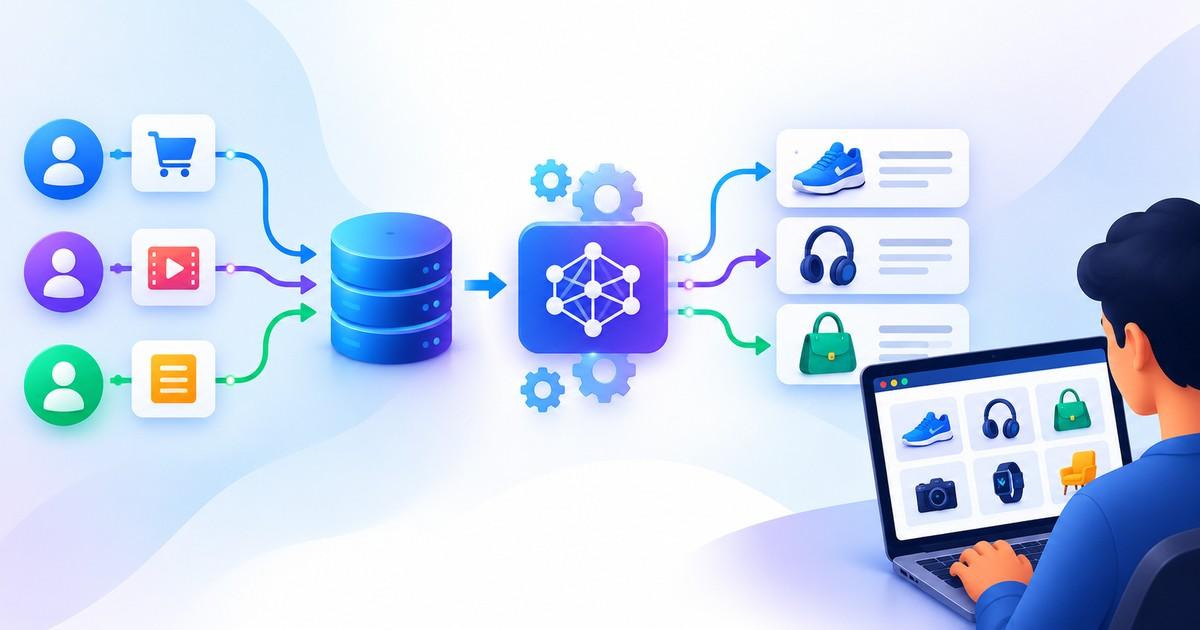
Consider a recommendation model that has learned that certain interactions strongly predict future purchases. If users change how they browse or if the product catalog changes, those same interactions may no longer have the same predictive meaning.
The model may still receive the same type of feature but need to interpret it differently.
New behaviors can also appear that were absent from the original training data. New product categories, new search patterns, new forms of interaction, or new customer segments can introduce cases for which the model has limited experience.
Emerging preferences can be particularly challenging because they may begin as rare signals. A small group of users may adopt a new behavior before it becomes widespread. If the system relies heavily on historical patterns, it may initially overlook that change.
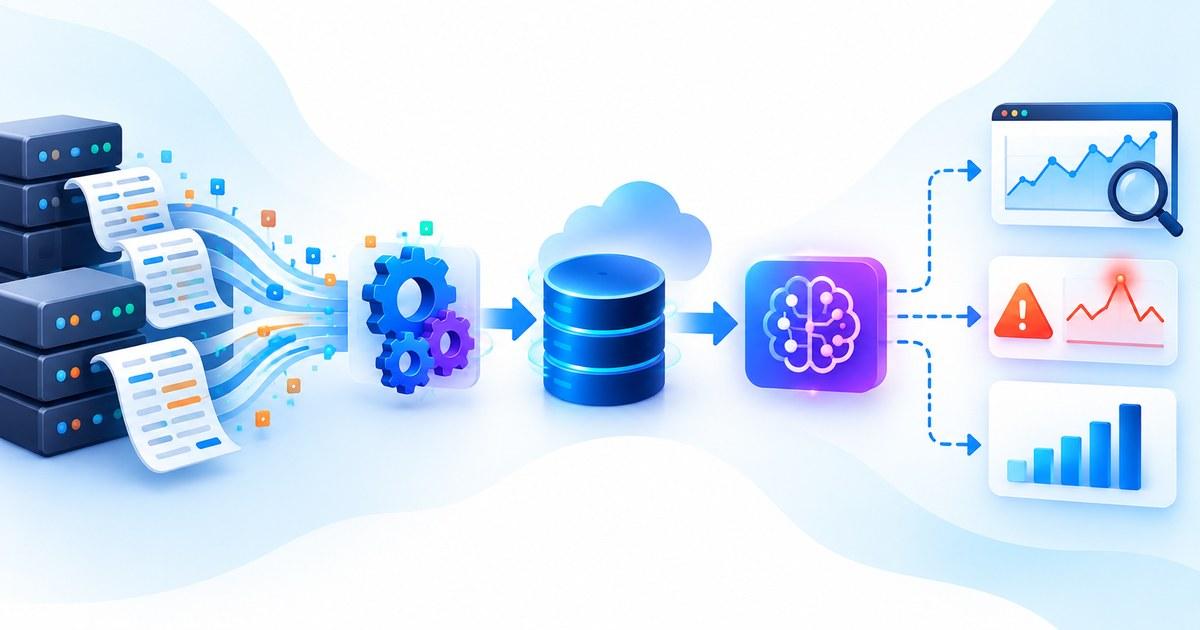
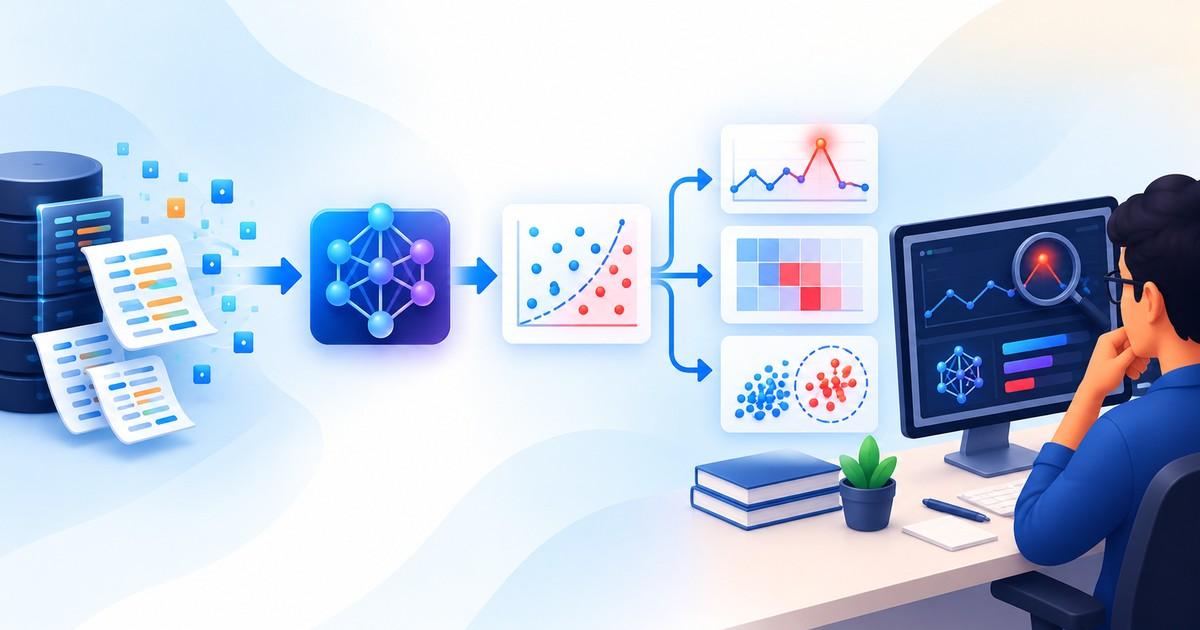
Detecting these shifts requires more than monitoring model accuracy. Teams need to observe how the underlying user population and interaction patterns are evolving.
Why Historical Data Becomes Outdated
Historical datasets are valuable because they provide evidence about how users behaved in the past. But they inevitably contain old patterns.
A dataset may overrepresent products that were popular several years ago, customer behaviors that no longer exist, or business processes that have since changed.
New users can further change the population. Their behavior may differ systematically from the users represented in the historical training dataset.
Product changes can be even more disruptive. When a platform introduces a new feature, redesigns a workflow, or removes an existing capability, historical interaction patterns may no longer be directly comparable.
External events can accelerate the process. A major market event, product launch, regulatory change, or unexpected disruption can cause users to behave very differently over a short period.
The result is a growing gap between the historical training environment and the current production environment.
This does not mean that old data should automatically be discarded. Historical information can provide important long-term patterns and prevent the model from overreacting to temporary changes.
The challenge is finding the right balance between historical stability and current relevance.
Production ML teams therefore need mechanisms for detecting behavioral changes, evaluating whether those changes affect model performance, and deciding when recent information should influence future training.
This challenge is closely related to distribution shift. "Machine Learning Under Distribution Shift: What Happens When the World Changes" examines how changes in production environments can make previously learned patterns less reliable and why ML systems need mechanisms to detect and respond to those changes.
Key Takeaway
User behavior changes because of preferences, habits, seasonality, life-cycle effects, market conditions, product changes, and external events. The problem becomes more complex when ML systems themselves influence what users see and do, creating feedback loops that alter future training data. Historical data therefore becomes an increasingly imperfect representation of current behavior. Robust ML systems must continuously monitor behavioral patterns and determine when changes are temporary, meaningful, model-induced, or significant enough to require adaptation.
Section 2: How ML Systems Detect Changing User Behavior
Detecting changes in user behavior is one of the most important responsibilities of a production machine learning system. A model cannot adapt to behavioral change if the organization cannot first determine that the change is happening.
The challenge is that user behavior naturally fluctuates. Some changes are temporary, such as seasonal purchasing patterns or a short-lived trend. Others represent persistent changes in preferences, product usage, or customer expectations. Still others are caused directly by the model itself.
A strong ML system therefore needs to distinguish normal variation from meaningful behavioral change. This requires monitoring behavioral signals, analyzing important user segments, identifying feedback loops, and combining statistical evidence with product and business context.
Monitoring Behavioral Signals
User behavior generates many signals that can help ML teams understand how the production environment is changing.
Clicks can reveal changes in what users find interesting. Search systems and recommendation engines often monitor click patterns to determine whether users are engaging with the results being presented.
Purchases provide stronger evidence of commercial intent in many settings. Changes in purchasing patterns can indicate shifts in preferences, pricing sensitivity, product demand, or customer composition.
Sessions can reveal changes in engagement. A decline in session frequency or duration may indicate that user expectations or product experiences have changed.
Search queries are particularly useful for identifying emerging behavior. New terminology, product categories, or changing query patterns may reveal shifts before they become obvious in broader business metrics.
Engagement signals can include views, shares, saves, repeat visits, or other product-specific interactions. Each signal represents a different aspect of user behavior and should be interpreted according to the business context.
The important point is that teams should not monitor these signals only as aggregate numbers. They should examine how distributions change over time.
For example, a change in the total number of clicks may be less informative than a shift in which categories users click, which products receive attention, or which search intents are becoming more common.
This makes behavioral monitoring a combination of volume, distribution, and trend analysis.
Detecting Changes in User Segments
Aggregate metrics can hide important changes because different users may behave very differently.
A model may appear stable across the entire population while becoming less effective for a particular cohort.
New users, for example, may behave differently from returning users. New customers typically have limited interaction history, while established customers have richer behavioral signals.
Geographic differences can also matter. Preferences and product usage can vary substantially across regions, meaning a shift in the composition of the user population can change aggregate behavior even when individual regional patterns remain stable.
Teams should also compare customer segments based on lifecycle stage, product usage, purchasing behavior, or other relevant characteristics.
A recommendation model might continue performing well for existing users while struggling with newly acquired users whose behavior differs from the historical training population.
Segment-level analysis can therefore reveal distribution changes that aggregate monitoring misses.
This is particularly important when the business itself is changing. A new product launch may attract a different customer population. A marketing campaign may introduce users with different characteristics from the existing customer base. A geographic expansion may expose the model to new behavior.
The system should therefore monitor not only whether user behavior changed, but which users changed and how.
Distinguishing Noise From Meaningful Change
Not every behavioral change should trigger a model update.
Short-term fluctuations can occur because of seasonal effects, temporary promotions, holidays, one-time events, or unusual external circumstances.
For example, a sharp increase in searches for a particular product during a holiday period does not necessarily indicate a permanent change in user preference.
Teams therefore need to distinguish temporary noise from persistent trends.
One useful approach is to examine changes over multiple time windows. A behavior that appears only briefly may require observation, while a pattern that persists for several periods may indicate a more fundamental shift.
Business events should also be considered. A sudden change in purchasing behavior may be explained by a pricing change rather than a change in customer preference.
Product launches, marketing campaigns, supply constraints, interface changes, and policy changes can all alter observed behavior.
This is why behavioral drift cannot be diagnosed from statistics alone. Product and domain context can be essential for interpreting the signal.
The strongest systems combine:
Behavioral monitoring + Segment analysis + Exposure tracking + Business context
The result is a more reliable distinction between a true change in the environment and a temporary fluctuation.
Once meaningful change is detected, the next question becomes how the model should adapt. Some systems may need recent data, some may benefit from online learning, and others may require a complete retraining cycle.
"The Challenge of Feedback Loops in Production Machine Learning" provides relevant context because model-driven exposure can alter the very behavioral data used to monitor and retrain production systems.
Key Takeaway
ML systems detect changing user behavior by monitoring clicks, purchases, sessions, searches, engagement patterns, and segment-level distributions rather than relying only on aggregate metrics. Teams must also track model-driven exposure to identify feedback loops and selection bias. The critical challenge is distinguishing meaningful, persistent behavioral change from seasonal or temporary variation. The strongest systems combine behavioral data, segment analysis, exposure information, and business context before deciding that a model needs to adapt.
Section 3: How ML Teams Adapt to Changing User Behavior
Detecting that user behavior has changed is only the first step. The more difficult engineering problem is deciding how the model should respond.
A model that reacts too slowly can become outdated, while a model that reacts too aggressively can overfit temporary behavior and become unstable. This makes adaptation a balance between historical knowledge and current evidence.
ML teams use several strategies, including retraining with recent data, online and incremental learning, personalization, and feedback from users and domain experts.
Retraining With Recent Data
The most common adaptation strategy is to periodically retrain the model using newer production data.
Traditional retraining may use all available historical data, but this is not always optimal when user behavior changes rapidly. Older observations may represent behavior that is no longer relevant.
A rolling window can address this by training the model on a recent period—for example, the latest several weeks or months. As new data arrives, older observations gradually leave the training window.
This allows the model to focus more strongly on current behavior.
However, using only recent data can create another problem. The model may lose useful long-term patterns or become overly sensitive to temporary events.
Teams can therefore use recency weighting, where recent observations receive greater influence while historical examples remain part of the training process.
The appropriate balance depends on how quickly behavior changes.
A recommendation system operating in a rapidly changing content environment may benefit from stronger emphasis on recent interactions. A customer-lifecycle model may need more historical information because long-term behavior remains important.
Scheduled retraining provides a predictable operating model. Teams may retrain daily, weekly, or monthly depending on the application.
Alternatively, event-driven retraining can occur when performance degrades beyond an acceptable threshold, a significant distribution change is detected, or enough high-quality new labels become available.
The key is to avoid retraining simply because new data exists. New observations need to demonstrate that the model can benefit from adaptation.
Online and Incremental Learning
Some environments change too quickly for conventional batch retraining. In these situations, online learning or incremental learning can allow the model to adapt more continuously.
Instead of collecting a large dataset and retraining from scratch, an online model updates its parameters using individual observations or small batches.
This can be useful when user behavior changes rapidly.
For example, a recommendation system may learn from a user's latest interactions rather than waiting for the next scheduled training cycle.
Streaming data can provide the inputs needed for such systems. New clicks, purchases, searches, or other interactions can flow into an incremental learning pipeline.
However, continuous adaptation introduces significant risks.
A model can learn from a temporary anomaly, incorrect interaction, or poor-quality label. If the system updates too aggressively, these errors can influence subsequent predictions.
Teams therefore need strong controls around update frequency, learning rates, data quality, and model checkpoints.
Not every application requires fully online learning. Incremental or mini-batch updates can provide a useful compromise by incorporating recent data frequently without modifying the model after every individual event.
The appropriate strategy depends on the speed of behavioral change and the cost of model instability.
Personalization and Context
Not all behavioral change should be handled by updating the entire model.
Sometimes the better strategy is to make predictions increasingly personalized.
A global model may learn general patterns across the user population, while user-specific or session-specific signals adapt predictions to current behavior.
For example, a recommendation system can combine long-term user preferences with recent session activity. A customer may historically prefer one category but demonstrate a strong short-term interest in another.
User-specific models can capture persistent individual preferences, while session behavior provides more immediate context.
Contextual signals can include recent interactions, time, device, location, current query, or other information relevant to the immediate decision.
This allows systems to respond to behavioral changes without completely retraining the underlying model.
The architecture may therefore combine:
Global model + User history + Recent behavior + Context
This is particularly effective in personalization systems because user behavior can vary substantially between individuals.
However, personalization can also create feedback loops. If the system repeatedly recommends the same type of content, it may receive more interactions with that content and become increasingly confident in the user's preference.
Teams therefore need exploration mechanisms to ensure that the system continues discovering new interests.
Human and Product Feedback
Machine learning systems can also adapt using human and product feedback.
Users may explicitly indicate that a recommendation was useful or irrelevant. They may provide ratings, corrections, preferences, or other forms of feedback.
These signals can supplement implicit behavioral information such as clicks and purchases.
Expert review becomes particularly valuable for domains where labels are difficult to obtain automatically. Specialists can identify cases where model predictions are incorrect and provide reliable labels for future training.
This is especially useful when new user behavior creates patterns that historical data does not adequately represent.
Active learning can make this process more efficient by identifying examples where additional human labeling is expected to be particularly valuable.
Product changes also matter. A product manager may recognize that customer behavior changed after a new feature was introduced, while a domain expert may explain why the new behavior is expected.
The ML team can then determine whether the model needs new features, updated training data, a different objective, or another adaptation strategy.
This makes behavioral adaptation a cross-functional activity rather than simply a retraining task.
The complete loop becomes:
Observe behavior → Detect change → Gather evidence → Adapt → Validate → Deploy
The adaptation should always be measured against an appropriate baseline. A new model should demonstrate that it improves current behavior without creating unacceptable degradation elsewhere.
This is particularly important when behavioral changes are connected to model-driven feedback loops. "How ML Teams Decide When to Retrain a Model" provides relevant context on how model teams use drift, new data, performance changes, and business signals to determine whether model updates are justified.
Key Takeaway
ML teams adapt to changing user behavior through recent-data retraining, rolling windows, recency weighting, online and incremental learning, personalization, contextual signals, and human feedback. The right approach depends on how quickly behavior changes and how costly adaptation errors are. Strong systems balance current behavior with historical information, validate updates before deployment, and use feedback carefully so that adaptation improves the model without creating instability or reinforcing undesirable patterns.
Section 4: Building ML Systems That Adapt Without Losing Control
Adapting to changing user behavior is necessary for many production machine learning systems, but continuous adaptation creates a fundamental engineering challenge: how can a model respond to new behavior without becoming unstable, biased, or overly dependent on recent data?
A system that adapts too slowly may become outdated. A system that adapts too quickly can overreact to temporary trends, noisy interactions, or behavior caused by its own recommendations.
The strongest ML systems therefore combine adaptation with controls. They balance recent and historical information, update models safely, monitor business impact, and continuously evaluate whether the system is improving the outcomes that matter.
Balancing Adaptation and Stability
The first challenge is finding the right balance between recent and historical data.
Recent user behavior is often more relevant because preferences and contexts change. However, relying too heavily on the newest observations can cause a model to overreact to temporary events.
Consider a recommendation system that experiences an unusual spike in interest in a particular product category. That spike could represent a genuine long-term trend, a temporary promotion, or a seasonal event. If the model immediately treats it as a permanent preference shift, recommendations may become less relevant once the event ends.
Teams can use recency weighting to address this problem. Newer observations can receive greater influence while older examples continue contributing to the model.
Learning rates can provide another control for online or incremental systems. A lower learning rate makes the model change more gradually, while a higher rate allows faster adaptation.
The appropriate balance depends on the application. A rapidly changing environment may justify faster adaptation, while a relatively stable customer behavior model may benefit from stronger historical influence.
Exploration is equally important. A system that always follows existing predictions may stop discovering new preferences. Controlled exploration gives the model opportunities to learn about alternatives.
This creates a balance between:
Exploit what the model already knows + Explore what it may not know
Model stability should therefore be treated as an explicit design objective rather than an accidental property.
Safe Model Updates
Even when new data indicates that the model should change, updates should be introduced carefully.
A champion-challenger architecture allows the current production model to remain the champion while a newly adapted model becomes the challenger.
The challenger can first be evaluated using historical or recent holdout data.
Shadow deployment provides another level of validation. The candidate model receives live production inputs but does not control the actual user experience. Engineers can compare its predictions with those of the existing model under real conditions.
A canary release can then expose a small percentage of users to the updated model. This allows teams to observe whether the change improves relevant metrics without risking the entire production environment.
Rollbacks are essential when models adapt frequently. A production system should be able to restore a known-good model version quickly if the updated model performs unexpectedly.
Model updates should also preserve lineage. Teams should be able to identify which data, features, training configuration, and model version produced a particular behavior.
These controls are particularly important when the model learns continuously because the production model is no longer a static artifact.
Monitoring Business Impact
Adapting to user behavior is only useful when it improves business outcomes.
Technical metrics can show whether the model changed, but they do not necessarily show whether the product improved.
A recommendation system may generate higher click-through rates while reducing long-term retention. A personalization system may increase short-term engagement while reducing content diversity. A pricing system may improve conversion while reducing margins.
Teams therefore need to monitor several layers of impact.
Engagement can reveal whether users interact differently with the new system.
Conversion can indicate whether increased engagement produces valuable actions.
Retention can reveal whether improvements persist over time rather than simply increasing short-term activity.
Revenue can provide a direct measure of economic impact where appropriate.
Teams should also monitor guardrail metrics. An adaptation that increases engagement but creates excessive latency, customer complaints, operational workload, or other negative effects may not be a genuine improvement.
This is why experimentation is important. Controlled A/B tests can help determine whether changes in user behavior or business outcomes are actually caused by the new model.
Long-term evaluation matters because some behavioral changes appear beneficial initially but create undesirable feedback over time.
The strongest systems therefore evaluate both immediate and downstream outcomes.
Designing for Continuous Behavioral Change
The final step is designing the ML architecture and organization around the assumption that user behavior will continue changing.
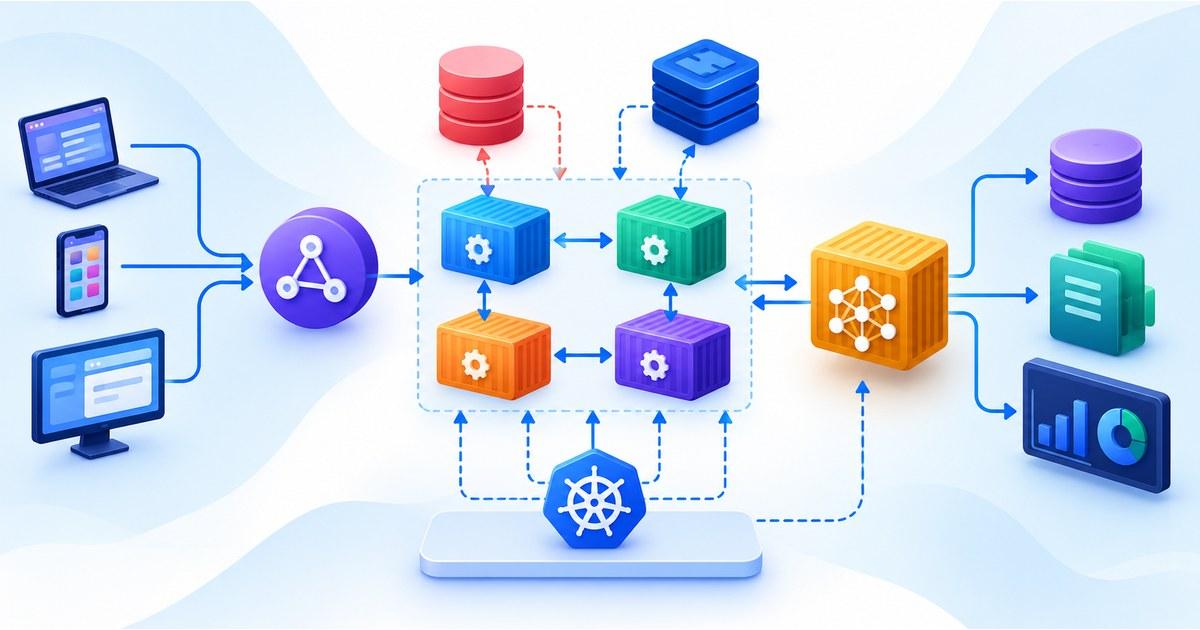
MLOps provides the infrastructure needed for automated training, evaluation, deployment, monitoring, versioning, and rollback.
An adaptive system should also have clear mechanisms for collecting new data and outcomes. Feedback must be validated before it becomes part of future training.
Adaptive architectures can combine global models with user-level or session-level signals, allowing the system to respond to individual changes without constantly replacing the entire model.
Model governance remains important as well. Teams need to define which changes can happen automatically and which require human review.
For example, updating a user-specific recommendation score might be automated continuously, while changing the underlying model architecture may require a formal validation and deployment process.
Continuous evaluation should also be treated as part of product management. Teams need to reassess whether the model is still solving the correct business problem as user expectations and product goals evolve.
This creates a long-term lifecycle:
Observe → Detect → Adapt → Validate → Deploy → Monitor → Repeat
The key is that adaptation should occur inside clearly defined boundaries.
The goal is not to create a model that changes as quickly as users do. It is to create a system that changes as quickly as necessary while remaining stable, observable, and economically valuable.
This principle is closely connected to the broader challenge of feedback loops. "The Challenge of Feedback Loops in Production Machine Learning" examines how model decisions can influence user behavior and future training data, making controlled exploration, exposure monitoring, and governance essential.
Key Takeaway
Production ML systems need to adapt to changing user behavior without losing control. The strongest systems balance recent and historical data, adaptation speed and stability, exploration and exploitation, and automation and human oversight. Safe deployment methods such as champion-challenger testing, shadow deployment, canary releases, and rollbacks reduce the risk of behavioral adaptation. Most importantly, teams should evaluate adaptation through business outcomes, not model changes alone, so that the system continuously evolves while preserving reliability, stability, and long-term user value.
Conclusion
Machine learning systems operate in an environment where user behavior is continuously changing. Preferences evolve, new products appear, external events alter demand, and users adapt to the systems themselves. As a result, a model that performs well on historical data can gradually become less effective in production.
The first lesson is that user behavior should be treated as a dynamic signal rather than a fixed property. Historical datasets provide valuable information, but they are snapshots of previous behavior. New users, changing customer segments, product launches, seasonal patterns, and external events can all alter the distribution of interactions.
This creates challenges such as behavioral drift, data drift, and concept drift. A model may encounter new input patterns, or the relationship between existing features and outcomes may change. Detecting these changes requires continuous monitoring of clicks, purchases, searches, sessions, engagement, and other behavioral signals.
Aggregate statistics are not enough. A model can appear stable overall while performing poorly for new users, particular customer segments, regions, products, or lifecycle stages. Segment-level monitoring provides a more detailed view of where behavior is changing and whether those changes matter.
The problem becomes even more complex because the model itself can influence user behavior. Recommendations affect what customers see, search rankings affect what they click, and pricing systems affect purchasing decisions. These interactions create feedback loops in which model outputs influence the future data used to evaluate or retrain the model.
This means production data is not always a neutral representation of user preferences.
ML teams therefore need to distinguish genuine behavioral change from behavior caused by model-driven exposure. Exploration, controlled experimentation, exposure logging, and careful analysis of feedback can help prevent the system from becoming trapped in self-reinforcing patterns.
When meaningful behavioral change is confirmed, organizations have several adaptation options. Recent-data retraining, rolling windows, recency weighting, online learning, incremental learning, personalization, contextual signals, and human feedback can all play a role.
Frequently Asked Questions (FAQs)
1. Why does changing user behavior affect machine learning models?
ML models learn patterns from historical behavior. When user preferences, habits, product usage, or customer populations change, those historical patterns may no longer accurately represent production behavior.
2. What is behavioral drift in machine learning?
Behavioral drift refers to meaningful changes in how users interact with a product, service, or system over time. These changes can reduce the accuracy or usefulness of models trained on older behavior.
3. What is the difference between behavioral drift and concept drift?
Behavioral drift describes changes in observed user behavior. Concept drift occurs when the relationship between inputs and outcomes changes, potentially requiring the model to learn a different mapping.
4. How can ML systems detect changing user behavior?
Teams can monitor clicks, searches, purchases, sessions, engagement, conversion patterns, feature distributions, and segment-level behavior and compare them across appropriate historical periods.
5. How do recommendation systems adapt to changing preferences?
They can incorporate recent interactions, contextual signals, personalization, updated training data, online learning, incremental updates, and controlled exploration to adapt to evolving interests.
6. How does personalization help handle changing behavior?
Personalization allows a system to combine general population-level knowledge with recent user-specific behavior, making predictions more responsive to individual changes without necessarily retraining the entire global model.
7. Should models always prioritize recent user data?
No. Recent data can better represent current behavior, but relying too heavily on it can cause models to overreact to temporary trends or noise. Teams often balance recent observations with historical information.
8. When should ML teams retrain models because of behavior changes?
Retraining may be appropriate when behavioral changes are persistent and materially affect model performance or business outcomes, especially when sufficient high-quality new data is available.
9. What is online learning and when is it useful?
Online learning updates a model incrementally as new data arrives. It is useful when the environment changes rapidly and the value of incorporating recent information justifies the additional complexity and risk.
10. How do feedback loops affect user-behavior models?
Model decisions can influence what users see and do. That behavior then becomes future training data, potentially reinforcing the model's previous decisions and creating selection or exposure bias.
11. How can teams distinguish seasonal behavior from permanent change?
Teams can compare behavior across multiple time periods, use historical seasonal patterns as baselines, and incorporate product, marketing, pricing, and external-event context before treating a change as permanent.
12. How can ML systems adapt without becoming unstable?
Teams can control learning rates, use recency weighting, combine recent and historical data, limit update frequency, maintain model checkpoints, and validate changes through controlled deployment strategies.
13. How should changing user behavior be monitored in production?
Monitoring should cover behavioral distributions, segment-level patterns, model performance, prediction distributions, data quality, exposure, feedback, and business outcomes rather than relying on one aggregate metric.
14. What role does experimentation play in adapting to user behavior?
A/B tests and other controlled experiments help determine whether a new model or intervention actually causes an improvement rather than simply coinciding with a change in user behavior.
15. How can organizations build ML systems that remain effective as users change?
They should build systems around continuous monitoring, reliable feedback, appropriate retraining or online learning, personalization, controlled experimentation, safe model deployment, and ongoing business evaluation. The goal is to adapt to meaningful changes while preserving stability and long-term user and business value.